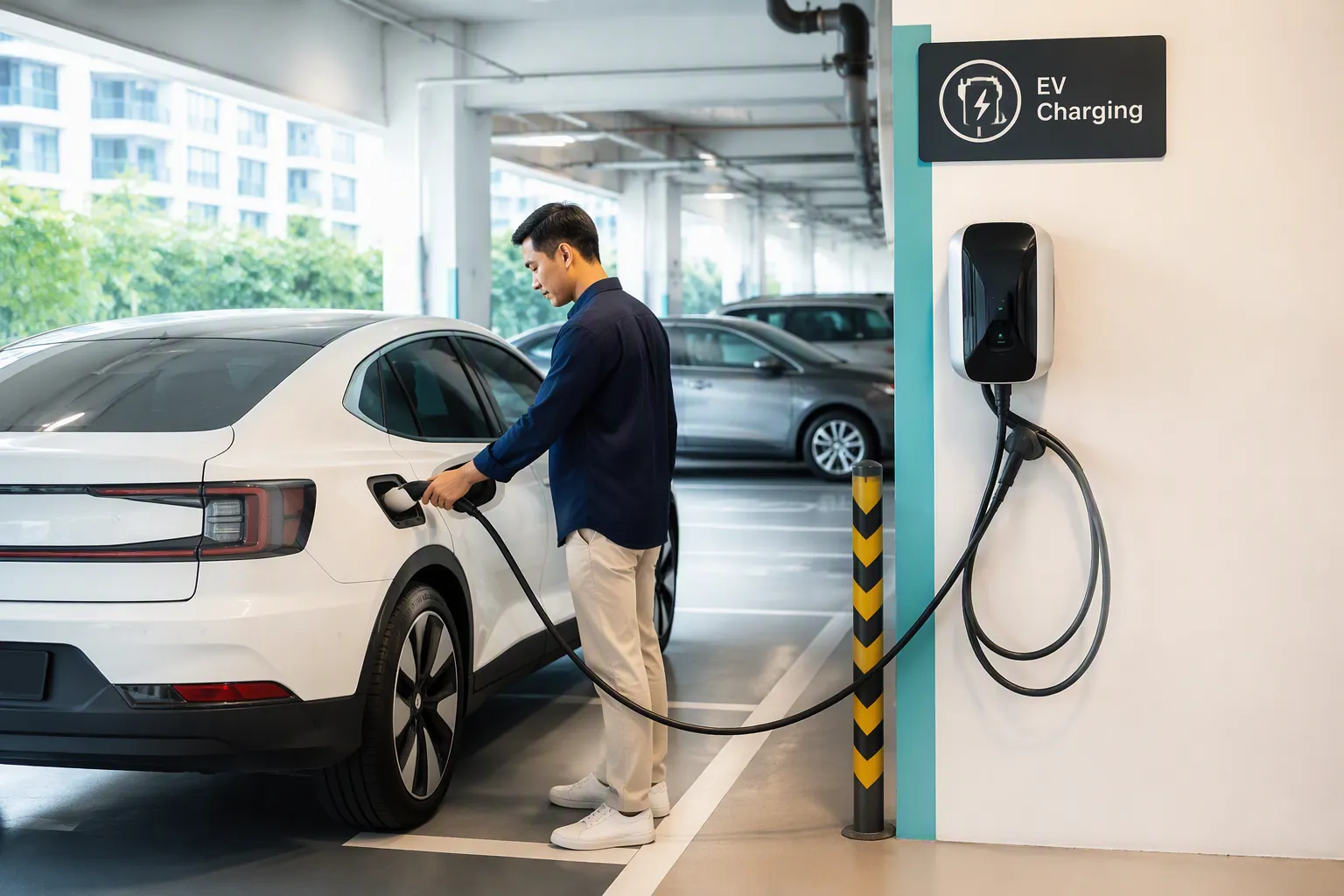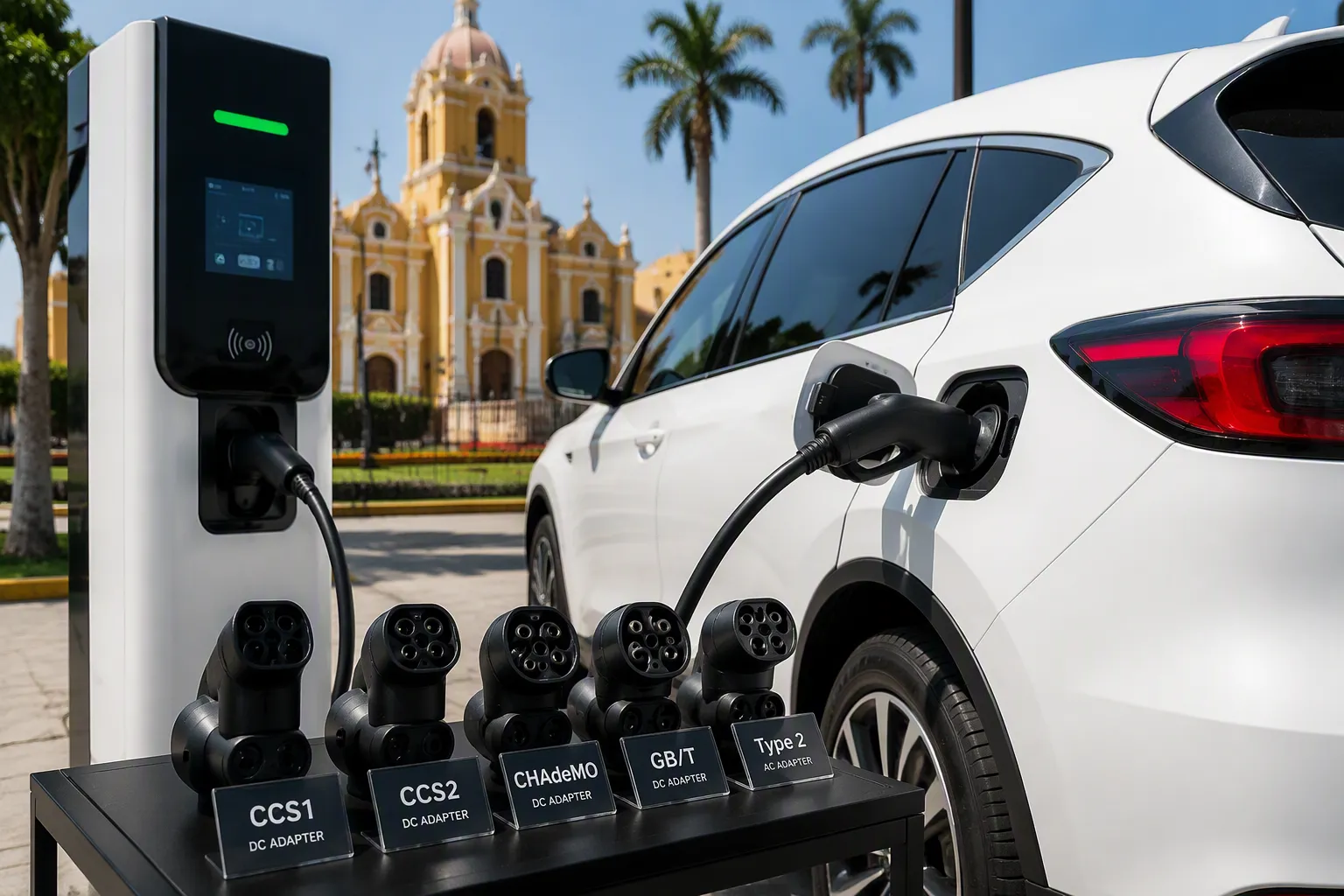

Das Laden eines Elektrofahrzeugs zu Hause fügt einer monatlichen Stromrechnung typischerweise zwischen 30 und 80 US-Dollar hinzu. Diese endgültigen Ladekosten schwanken basierend auf dem spezifischen Fahrzeug, den Fahrgewohnheiten und den lokalen Stromtarifen. Für die meisten Besitzer stellt der Betriebskosten eines Elektrofahrzeugs einen erheblichen finanziellen Vorteil im Vergleich zu den Ausgaben für Benzin dar.
Anmerkung: Die richtige ev-Ladegerät ist der Schlüssel für effizientes Laden zu Hause. Hersteller von EV-Ladegeräten bieten viele EV-Ladelösungen, einschließlich einfacher tragbare ev-ladegeräte, um Fahrern zu helfen, das Laden ihres Autos zu Hause zu steuern und ihre endgültige Rechnung zu beeinflussen.
Die einfache Formel für die Kosten zum Laden eines Elektroautos
Die Berechnung der monatlichen Kosten für das Aufladen eines Elektroautos ist unkompliziert. Sie erfordert kein komplexes elektrotechnisches Wissen, nur grundlegende Arithmetik. Die endgültigen Kosten hängen von drei Hauptvariablen ab, die jeder EV-Besitzer leicht finden kann.
Die drei Schlüsselzahlen verstehen
Im Kern hängen die Kosten für das Laden zu Hause davon ab, wie viel Energie das Fahrzeug verbraucht und welchen Preis diese Energie hat. Ein Besitzer muss diese drei Schlüsselwerte identifizieren, um seine monatlichen Ladekosten.
- Die Standardformel zur Berechnung der EV-Ladekosten umfasst
- Die Energieeffizienz des Fahrzeugs
- Die insgesamt im Monat gefahrenen Meilen
Den lokalen Stromtarif
Die Effizienz Ihres Autos (kWh/Meile).
Der Effizienzwert eines Fahrzeugs quantifiziert, wie viel elektrische Energie es für das Zurücklegen einer Meile verbraucht. Diese Kennzahl wird in Kilowattstunden pro Meile (kWh/Meile) gemessen. Man kann es sich als elektrisches Äquivalent zu "Gallonen pro Meile" bei einem Benzinauto vorstellen. Eine niedrigere kWh/Meile-Zahl bedeutet ein effizienteres Elektrofahrzeug, das für die gleiche Strecke weniger Energie benötigt.
Ihre monatliche Fahrleistung.
Die Gesamtzahl der in einem Monat gefahrenen Meilen ist ein direkter Multiplikator für den Energieverbrauch. Ein Fahrer, der lange Strecken pendelt, verbraucht natürlich mehr Strom als jemand, der nur lokale Besorgungen erledigt. Diese Variable verbindet die tatsächlichen Gewohnheiten eines Fahrers mit der endgültigen Rechnung.
Ihr Stromtarif ($/kWh).
Die letzte Variable ist der Strompreis, ausgedrückt in Dollar pro Kilowattstunde ($/kWh). Dieser Tarif wird vom lokalen Versorgungsunternehmen festgelegt und ist auf jeder monatlichen Stromrechnung zu finden. Diese Zahl stellt die tatsächlichen Kosten der zum Laden des Fahrzeugs verwendeten Energie dar.
Alles zusammenfügen: Eine Schritt-für-Schritt-Berechnung.
Nachdem die drei Schlüsselzahlen ermittelt wurden, wird die Berechnung der monatlichen Ladekosten zu einem einfachen, zweistufigen Prozess. Diese Berechnung liefert eine klare Schätzung, wie viel ein Elektrofahrzeug zur Stromrechnung beitragen wird.
Schritt 1: Gesamten monatlichen Energieverbrauch berechnen.
Die Formel lautet:
Bestimmen Sie zunächst die Gesamtmenge an Energie, die das Elektrofahrzeug in einem Monat verbrauchen wird. Dies geschieht durch Multiplikation der monatlich gefahrenen Meilen mit dem Effizienzwert des Autos.
Monatlich gefahrene Meilen x Fahrzeugeffizienz (kWh/Meile) = Gesamte monatliche Energie (kWh).
Dieses Ergebnis zeigt die gesamten Kilowattstunden Energie, die benötigt werden, um das Fahrzeug für den Monat zu betreiben.
Schritt 2: Gesamte monatliche Kosten berechnen.
Die Formel lautet:
Berechnen Sie als Nächstes die Gesamtkosten für die verbrauchte Energie. Dieser Schritt wandelt die Kilowattstunden aus Schritt 1 durch Multiplikation mit dem lokalen Stromtarif in einen Dollarbetrag um.
Gesamte monatliche Energie (kWh) x Stromtarif ($/kWh) = Gesamte monatliche Ladekosten ($).
Diese endgültige Zahl ist die geschätzten monatlichen Kosten für das Laden des Elektrofahrzeugs zu Hause und vermittelt ein klares Bild der finanziellen Auswirkungen des Heimladens.
Faktor 1: Die Batterie und Effizienz Ihres Elektrofahrzeugs Das spezifische Elektrofahrzeug, das ein Besitzer fährt, ist einer der größten Faktoren für die. endgültigen Ladekosten.
. Genau wie Benzinautos unterschiedliche MPG-Werte haben, hat jedes Elektrofahrzeugmodell einen einzigartigen Effizienzwert. Die Batteriegröße eines Fahrzeugs und sein Energieverbrauch beeinflussen direkt, wie viel Strom für eine bestimmte Strecke benötigt wird.
Wie die Effizienz von Elektrofahrzeugen gemessen wird.
Das Verständnis der EV-Effizienz beginnt mit einigen Schlüsselbegriffen. Diese Metriken sind die Grundlage für die Berechnung des Energieverbrauchs und der damit verbundenen Kosten.
Was ist eine Kilowattstunde (kWh)?. Eine Kilowattstunde (kWh) ist die Standardeinheit zur Messung von Energie.
. Es ist kein Maß für die Leistung, sondern für die insgesamt über einen Zeitraum verbrauchte oder gespeicherte Energiemenge.
- Was eine kWh für ein Elektrofahrzeug bedeutet:.
- Sie misst die Menge an Energie, die während des Ladevorgangs in eine EV-Batterie übertragen und gespeichert wird. Sie definiert die Batteriekapazität des Fahrzeugs, ähnlich dem Volumen eines Benzintanks..
- Eine höhere kWh-Kapazität bedeutet im Allgemeinen eine größere Reichweite.
Eine Batterie mit einer Kapazität von 60 kWh kann theoretisch eine Stunde lang 60 Kilowatt Leistung liefern.
Den kWh/Meile-Wert Ihres Autos finden Hersteller und Behörden messen die Effizienz von Elektrofahrzeugen auf zwei Hauptarten. Eine gängige Metrik ist, Meilen pro Kilowattstunde (Meilen/kWh) , wobei eine höhere Zahl eine bessere Effizienz anzeigt. Die US-Umweltschutzbehörde (EPA) verwendet jedoch oft. Kilowattstunden pro 100 Meilen (kWh/100 mi) . Für einfachere monatliche Berechnungen rechnen viele Besitzer dies in. kWh pro Meile (kWh/mi).
um. Bei dieser Metrik ist eine niedrigere Zahl besser, da sie bedeutet, dass das Auto weniger Energie für eine Meile verbraucht.
Ein Besitzer kann den offiziellen Effizienzwert seines Fahrzeugs auf der Website der EPA FuelEconomy.gov, auf dem Fahrzeugfensteraufkleber oder in der Bedienungsanleitung finden.
Effizienz beliebter Elektrofahrzeugmodelle.
| Fahrzeugtyp | Modell | Die Effizienz variiert bei verschiedenen Arten von Elektrofahrzeugen erheblich. Limousinen sind typischerweise am effizientesten, während größere SUVs und Trucks aufgrund ihrer Größe und ihres Gewichts mehr Energie verbrauchen. Dies wirkt sich direkt auf die langfristigen Ladekosten des Fahrzeugs aus. |
|---|---|---|
| Typische Effizienz (kWh/Meile) | Limousine | 0.25 |
| Polestar 2 | 0.31 | |
| Tesla Model 3 RWD | Hyundai Ioniq 5 | 0.30 |
| Ford Mustang Mach-E | 0.33 | |
| SUV | Truck | 0.45 |
| Ford F-150 Lightning | 0.48 |
Rivian R1T.
How Your Driving Style Affects the Cost of Charging
A driver’s habits behind the wheel can cause the real-world Ladekosten to differ from official estimates. An aggressive driving style consumes more energy, while a smooth approach conserves it.
Aggressive vs. Smooth Driving
Rapid acceleration is a primary factor that drains an EV battery more quickly. Harsher actions require more power, reducing overall efficiency. A smooth and steady driving style is crucial for maximizing an EV’s range and minimizing charging needs. The difference in behavior is clear when comparing driving patterns.
| Metrisch | Aggressive Driver | Eco-Driver |
|---|---|---|
| Accelerator Use | Frequently pushes pedal past 70% | Rarely pushes pedal past 90% |
| Pedal Movement | Rapid and frequent changes | Slow and deliberate movements |
The Impact of Speed on Range
Higher speeds dramatically increase energy consumption. An EV uses significantly more energy to travel at 75 mph than it does at 55 mph. This is due to increased aerodynamic drag and rolling resistance. For long highway trips, maintaining a moderate speed is a simple way to extend range and reduce the frequency of charging stops.
Using Regenerative Braking
Most electric vehicles feature regenerative braking. This smart technology captures kinetic energy that is normally lost during deceleration and braking. The system converts this energy back into electricity, which it then uses to partially charge the battery. 🔋 Effective use of regenerative braking can improve a vehicle’s overall efficiency by 10-20%, lowering the total energy needed from the grid and reducing the final cost.
Factor 2: Your Driving Habits and Mileage
The distance an owner drives each month directly impacts the total charging cost. More miles require more energy, which translates to a higher electric bill. Accurately calculating monthly mileage is a critical step in forecasting the expense to charge an electric vehicle.
How to Calculate Your Monthly Miles
An owner can use several methods to determine their monthly driving distance. Combining these approaches often yields the most accurate estimate.
Using Your Car’s Odometer
The most precise way to track mileage is by using the vehicle’s odometer. An owner can record the odometer reading at the beginning of a month and again at the end. The difference between these two numbers is the exact mileage for that period. For a reliable average, a driver can also reference past service records. These documents often show mileage history, allowing for the calculation of an annual average that can be divided by 12 for a monthly figure.
Estimating Based on Your Daily Commute
For many drivers, the daily commute makes up the bulk of their mileage. An owner can calculate this portion easily.
- Measure the round-trip distance from home to work.
- Multiply that distance by the number of days worked per month.
Beispiel: A 25-mile round-trip commute driven 20 days a month equals 500 miles of commute-related driving.
Factoring in Weekend Trips and Errands
Commuting is only part of the picture. An owner must also account for non-work-related driving, such as grocery runs, social activities, and weekend trips. A simple way to do this is to track all miles driven during a typical week. Multiplying this weekly total by four provides a solid monthly estimate that includes all driving habits. This comprehensive number is essential for an accurate charging forecast.
Typical Monthly Mileage Examples
Driving needs vary greatly from person to person. Understanding where one fits among common driver profiles helps put the potential cost of EV ownership into perspective.
The Low-Mileage Commuter (Under 500 miles/month)
This driver primarily uses their EV for short commutes, local errands, and occasional weekend outings. Their low mileage results in a minimal impact on their monthly electric bill, making the cost to charge very low.
The Average American Driver (Around 1,000 miles/month)
This profile represents a typical driver with a moderate daily commute and regular weekend activities. This mileage is a common benchmark for estimating the average monthly charging expense for an EV.
The High-Mileage Road Warrior (Over 1,500 miles/month)
This individual drives long distances for work or frequently takes road trips. While their charging needs are higher, the fuel savings compared to a gasoline vehicle become even more significant at this level of use.
Factor 3: Your Local Electricity Rates
An EV owner’s location is a major factor in the final cost to charge an electric car. Electricity rates vary significantly across the country, meaning the same EV driven the same number of miles can have a different impact on a monthly electricity bill depending on the state. Understanding local energy prices is essential for accurately forecasting charging expenses.
How to Find Your Electricity Rate
An owner must first identify their specific electricity rate, measured in dollars per kilowatt-hour ($/kWh). This figure is the foundation for calculating the cost of charging.
Reading Your Utility Bill
The most direct method is to examine a recent utility bill. The statement will detail the total kWh consumed and the total charges. An owner can find the rate listed as a line item, often labeled “Price to Compare” or “Supply Charge.”
Checking Your Utility Company’s Website
Utility company websites are a valuable resource. Most have a section dedicated to residential pricing plans. An owner can log into their account or browse public rate schedules to find the current cost per kWh for their service area.
Understanding “Blended” Rates
Many bills do not show a single flat rate. Instead, they include various charges like supply, delivery, and taxes. To find a practical “blended” rate, an owner can divide the total dollar amount of their bill by the total kWh used.
Blended Rate Formula:
Total Bill Amount ($) / Total Energy Used (kWh) = Blended Rate ($/kWh)This provides a comprehensive cost per kWh that accounts for all fees.
National Average vs. Your Actual Rate
While a national average provides a useful benchmark, an owner’s actual rate is what truly matters. As of 2025, the average U.S. residential electricity rate is approximately 17.0 cents per kilowatt-hour. However, this figure masks wide regional differences.
States with the Highest Electricity Costs
States like Hawaii, California, and those in New England often have rates well above the national average. In these areas, the cost of charging an electric car will be higher, making strategies to reduce consumption even more critical.
States with the Lowest Electricity Costs
Conversely, states such as Washington, Texas, and parts of the Midwest often enjoy lower energy prices. EV owners in these regions benefit from a lower overall cost to charge their vehicles.
Zeitvariable Tarife (Time-of-Use, TOU)
Many utility companies offer special rate plans that can significantly lower the cost of charging an EV. Time-of-Use (TOU) plans are one of the most effective tools for managing this expense.
What Are TOU Plans?
A TOU plan adjusts the cost of electricity based on the time of day. A utility charges more for energy during “peak” hours when grid demand is high and less during “off-peak” hours when demand is low. This structure encourages shifting energy use to times when the grid is less stressed.
Identifying Peak vs. Off-Peak Hours
The specific hours for each period vary by utility, but a general pattern exists.
- Hauptverkehrszeiten: Typically occur on weekdays when people return from work and school, often from 4 p.m. to 9 p.m.
- Außerhalb der Hauptgeschäftszeiten: Usually late at night, from around 9 p.m. until 7 a.m., and all day on weekends.
How TOU Plans Can Lower the Cost of Charging an Electric Car
TOU plans are ideal for EV owners. By scheduling their vehicle to charge exclusively during off-peak hours, drivers can take advantage of the lowest available electricity rates. This simple habit can dramatically reduce the monthly cost of charging, making the switch to an EV even more financially beneficial. Most modern EVs and home chargers allow for easy scheduling, making this an effortless way to save money.
How Your EV Charger Choice Impacts Cost and Efficiency

The type of EV charger an owner uses directly affects both convenience and the final charging cost. While all chargers deliver electricity to the vehicle, their speed, efficiency, and installation requirements differ significantly. Understanding these differences helps an owner select the best charging solution for their needs.
Level 1 Charging (120-Volt Outlet)
Was ist ein Level-1-Ladegerät?
A Level 1 charger is the most basic charging method. It uses a standard 120-volt household wall outlet. These chargers are often portable and come included with the purchase of a new electric vehicle. They require no special installation.
Charging Speed and Convenience
Level 1 charging is convenient but very slow. It is best suited for plug-in hybrids with smaller batteries or for EV owners who drive very few miles daily.
| Characteristic | Beschreibung |
|---|---|
| Leistung | 1 bis 1,8 kW |
| Aufladegeschwindigkeit | 3-7 miles of range per hour |
| Volle Ladezeit | 22-40 hours for a Battery Electric Vehicle (BEV) |
| Typische Anwendungsfälle | Overnight charging for low-mileage drivers |
Is Level 1 Less Efficient?
Yes, Level 1 charging is the least efficient method. The longer charging duration leads to greater energy loss as heat and during the power conversion process. Studies show Level 1 efficiency can be as low as 88%, meaning some electricity is wasted and does not make it into the car’s battery.
Level 2 Charging (240-Volt Outlet)
What is a Level 2 Charger?
A Level 2 charger is the most common home charging solution. It operates on a 240-volt circuit, similar to an electric dryer or oven. Technologically advanced providers like TPSON offer a range of these EV charging solutions.
Faster Charging Speeds
Level 2 units provide much faster charging speeds. A typical 7 kW Level 2 charger can add 25-30 miles of range per hour. This speed allows most EV owners to fully charge their vehicle overnight, even from a nearly empty battery.
Installation Costs and Considerations
Installing a Level 2 charger requires a licensed electrician. The process involves running a dedicated 240-volt circuit from the home’s electrical panel to the charger’s location. The total cost varies based on the charger unit, labor rates, and whether the home’s electrical panel needs an upgrade.
Efficiency Gains with Level 2
Level 2 charging is more efficient than Level 1. The higher power transfer rate reduces the total time the car’s onboard systems must be active during a charge. This results in less energy waste, with efficiency ratings often reaching 92% or higher. This improved efficiency can lead to a lower overall cost to charge the EV.
Does a Faster Charger Use More Electricity?
A common question is whether a faster charger consumes more total Strom for a full charge. The answer lies in understanding the difference between power and energy.
Understanding Power vs. Energy
- Power (kW): Kilowatts measure the Satz of energy transfer. Think of it as the speed of water flowing from a hose. A Level 2 charger has a higher kW rating, so it “fills” the battery faster.
- Energy (kWh): Kilowatt-hours measure the total amount of energy stored. This is like the total volume of a swimming pool. The battery’s capacity (kWh) determines how much energy it can hold.
The Myth of Higher Consumption
A faster charger does not use more total energy to fill the same battery. It simply delivers that energy in less time. In fact, due to its higher efficiency, a Level 2 charger often uses slightly less total electricity from the wall to deliver the same amount of energy to the battery compared to a Level 1 unit.
Real-World Examples of the Cost to Charge an Electric Car at Home

Applying the formula with real-world data shows how the Kosten für das Aufladen eines Elektroautos varies. The following examples illustrate the monthly expense for different vehicles, locations, and driving habits. Each scenario highlights the significant savings over gasoline.
Example 1: A Tesla Model 3 in California
A driver in California owns a Tesla Model 3 RWD. They drive an average of 1,000 miles per month. California has a high average electricity rate.
Calculating the Monthly Cost
The calculation uses the car’s efficiency and the local electricity rate to find the total charging cost.
- Fahrzeug-Effizienz: 0.25 kWh/mile
- Monthly Miles: 1,000 miles
- Stromtarif: $0.29/kWh
The monthly charging cost is $72.50.
(1,000 miles x 0.25 kWh/mile) x $0.29/kWh = $72.50
Comparing to Gasoline Costs
This driver’s EV charging cost offers substantial savings compared to a similar gasoline sedan.
| Metrisch | Tesla Model 3 (EV) | Honda Civic (Gas) |
|---|---|---|
| Monatliche Kilometrierung | 1,000 | 1,000 |
| Fuel Efficiency | 0.25 kWh/mile | 35 MPG |
| Fuel Price | $0.29/kWh | $5.00/gallon |
| Monatliche Kosten | $72.50 | $143.00 |
Example 2: A Ford F-150 Lightning in Texas
A contractor in Texas uses a Ford F-150 Lightning for work. They drive about 1,500 miles per month. Texas has a lower-than-average electricity rate.
Calculating the Monthly Cost
The larger truck consumes more energy, but the low electricity rate helps manage the cost of charging.
- Fahrzeug-Effizienz: 0.48 kWh/mile
- Monthly Miles: 1,500 miles
- Stromtarif: $0.14/kWh
The monthly cost to charge the truck is $100.80.
(1,500 miles x 0.48 kWh/mile) x $0.14/kWh = $100.80
Comparing to Gasoline Costs
Even for a high-mileage truck, the savings are significant. The owner saves over $150 each month by choosing to charge at home.
Monthly Savings: The gasoline equivalent would cost approximately $253. This electric truck saves the owner about $152 per month.
Example 3: A Hyundai Ioniq 5 in Florida
A low-mileage commuter in Florida drives a Hyundai Ioniq 5. They travel around 500 miles per month for errands and short trips.
Calculating the Monthly Cost
This driver’s low mileage results in a very low cost to ein Elektroauto zu Hause.
- Calculate Energy Use: 500 miles x 0.30 kWh/mile = 150 kWh
- Calculate Total Cost: 150 kWh x $0.15/kWh = $22.50
Comparing to Gasoline Costs
For a low-mileage driver, the monthly charging expense is minimal. The cost is less than half of what they would spend on gasoline for a comparable SUV. This makes home charging an extremely affordable option.
Top Strategies to Minimize Your Charging Bill
An EV owner can actively manage their monthly charging bill. Simple adjustments to charging habits can lead to significant savings. These strategies focus on charging at the right time, choosing the right plan, and using the right type of charger.
Charge During Off-Peak Hours
One of the most effective ways to lower charging costs is to charge the vehicle when electricity is cheapest. Utility companies often offer lower rates during periods of low demand, known as off-peak hours.
How to Find Your Off-Peak Window
An owner can find their utility’s off-peak hours by visiting the company’s website or calling customer service. These hours are typically late at night, often starting around 9 p.m. and ending early in the morning. Charging during this window can dramatically reduce the Kosten für das Aufladen eines Elektroautos.
Using Your EV’s Scheduled Charging Feature
Most modern EVs and smart chargers make it easy to take advantage of off-peak rates. Owners can use their vehicle’s infotainment system or a dedicated app to set a charging schedule. For example, the CITA EV App allows users to schedule charging sessions to begin automatically during off-peak hours. This ensures the car is always ready by morning while minimizing the cost. This simple automation makes saving money effortless.
Sign Up for a Special EV Rate Plan
Many utilities offer rate plans designed specifically for electric vehicle owners. These plans provide even deeper discounts for off-peak charging.
How to Check for EV Plans with Your Utility
An owner should check their utility provider’s website for information on special EV rate plans. These are often advertised as a way to save money on home charging. A quick phone call to the utility can also provide details on available options and enrollment.
Types of EV Rate Plans (TOU, Tiered)
The most common type is a Time-of-Use (TOU) plan, which offers lower prices during off-peak hours. Some utilities may also offer tiered rates, where the price per kWh increases after a certain amount of energy is used. For an EV owner, a TOU plan is almost always the most beneficial option.
Avoid Relying on Public DC Fast Chargers
While convenient, public DC fast chargers are the most expensive way to charge an EV. Home charging remains the most economical choice.
The High Cost of Convenience
The cost to charge an electric car at a public charging point is significantly higher than residential rates. Public fast charging can cost between $0.45 and $0.85 per kWh. In contrast, off-peak home charging rates can be as low as $0.08 per kWh. This price difference makes frequent use of public charging a major factor in a higher monthly bill.
Wann Schnellladung sinnvoll ist
Public charging is essential for long-distance road trips. It provides the speed needed to get back on the road quickly. However, for daily driving needs, an owner should rely on their more affordable home charging solution to keep the overall cost of charging low.
Precondition Your Car While Plugged In
An owner can further reduce the monthly cost of charging by using a feature called preconditioning. This intelligent strategy prepares the vehicle for a drive while it is still connected to the charger. It uses grid power to handle the most energy-intensive tasks before the car is unplugged. This simple habit optimizes the battery for the road and preserves its range, leading to direct savings.
What is Preconditioning?
Preconditioning is the process of remotely heating or cooling an EV’s cabin and battery to their optimal temperatures before a trip begins. An owner typically activates this feature through the vehicle’s mobile app 15 to 30 minutes before they plan to leave. The system uses electricity from the wall outlet instead of draining the battery.
This process is crucial for efficiency. Preconditioning an EV’s cabin and battery while plugged in draws electricity from the mains, not the car’s battery. This ensures the battery starts the journey with a full charge, preserving the predicted driving range von Anfang an.
Durch diesen Schritt steigt der Fahrer in eine vorklimatisierte Kabine ein, ohne Reichweite zu opfern. Die Energie der Batterie dient dann primär dem Antrieb, nicht der Klimatisierung. Dies macht den gesamten Lade- und Fahrzyklus effizienter.
Batterieleistung bei heißem oder kaltem Wetter sparen
Extreme Temperaturen sind ein Hauptfaktor für die Batterieleistung. Eine zu heiße oder zu kalte Batterie arbeitet weniger effizient und kann einen erheblichen Reichweitenverlust erfahren. Vorkonditionierung setzt genau hier an und senkt die Gesamtbetriebskosten.
- Bei kaltem Wetter: Eine kalte Batterie kann kann die Reichweite eines Elektrofahrzeugs um bis zu 30 % reduziert werden.. Die Vorkonditionierung erwärmt die Batterie auf ihre ideale Betriebstemperatur. Diese Maßnahme maximiert ihre Effizienz und Leistungsabgabe vom Fahrtbeginn an. Das bedeutet auch, dass die Heizung, ein großer Stromverbraucher, den Großteil ihrer Arbeit mit Netzstrom erledigt.
- Bei heißem Wetter: Hohe Temperaturen können die Batterie ebenfalls belasten. Die Vorkonditionierung kühlt die Kabine und das Batteriepaket. Dies verhindert, dass die Klimaanlage zu Fahrtbeginn einen großen Teil der vollen Ladung verbraucht.
Letztendlich verlagert die Vorkonditionierung den Energiebedarf für die Klimatisierung von der Batterie auf das Stromnetz. So bleibt die maximale gespeicherte Energie für die Fahrt erhalten. Ein Fahrer, der sein E-Auto vorkonditioniert, wird feststellen, dass er seltener laden muss, was die monatlichen Kosten direkt senkt.
Die endgültige monatliche Rechnung für das Laden zu Hause liegt typischerweise zwischen 30 und 80 €. Der Fahrer hat die Ladekosten letztlich selbst in der Hand. Die Effizienz des Fahrzeugs, die gefahrene Strecke und der lokale Strompreis bestimmen diesen Betrag. Das Laden eines E-Autos zu Hause ist fast immer günstiger als der Kauf von Benzin.
Intelligente Gewohnheiten wie das Laden zu Schwachlastzeiten mit einer leistungsfähigen E-Auto-Ladestation senken die Ladekosten weiter. Eine hochwertige Ladestation ist der Schlüssel zum effizienten Laden.
FAQ
Ist es günstiger, ein E-Auto zu Hause oder an einer öffentlichen Station zu laden?
Das Laden zu Hause ist deutlich günstiger. Der Fahrer zahlt den niedrigen Haushaltsstrompreis. Öffentliche DC-Schnelllader verlangen einen Aufpreis für den Komfort und eignen sich daher am besten für Langstreckenfahrten, nicht für das tägliche Laden.
Wie lange dauert es, ein E-Auto zu Hause zu laden?
Die Ladezeit hängt vom Ladetyp ab.
- Stufe 1 (120V): Fügt 3–7 Meilen Reichweite pro Stunde hinzu.
- Stufe 2 (240V): Fügt 25–30 Meilen Reichweite pro Stunde hinzu und ermöglicht eine vollständige Ladung über Nacht.
Verbraucht das Laden eines E-Autos viel Strom?
Der Verbrauch einer E-Auto-Ladestation ist vergleichbar mit anderen Großgeräten wie einem Elektroherd. Eine Level-2-Ladestation verwendet etwa 7.200 Watt. Das Laden zu Schwachlastzeiten minimiert die Auswirkungen auf die Stromrechnung.
Kann ich einfach eine normale Steckdose zum Laden meines Autos verwenden?
Ja, ein Fahrer kann eine normale 120-Volt-Steckdose mit einem Level-1-Ladegerät nutzen. Diese Methode ist sehr langsam und weniger effizient. Sie eignet sich am besten für Plug-in-Hybride oder Fahrer mit sehr geringer Tageslaufleistung.
Muss ich meinen Hausanschlusskasten upgraden?
Für die Installation einer Level-2-Ladestation kann ein Upgrade notwendig sein. Ein Elektriker muss die Kapazität des Hausanschlusskastens prüfen. Viele moderne Häuser haben ausreichend Kapazität und benötigen kein Upgrade.
Wie wirkt sich das Wetter auf meine Ladekosten aus? 🌡️
Extreme Kälte oder Hitze verringern die Batterieeffizienz, sodass für die gleiche Strecke mehr Energie benötigt wird. Dies erhöht die Ladehäufigkeit und die Kosten. Das Vorkonditionieren des Fahrzeugs während es angeschlossen ist, hilft, diesen Effekt zu minimieren.