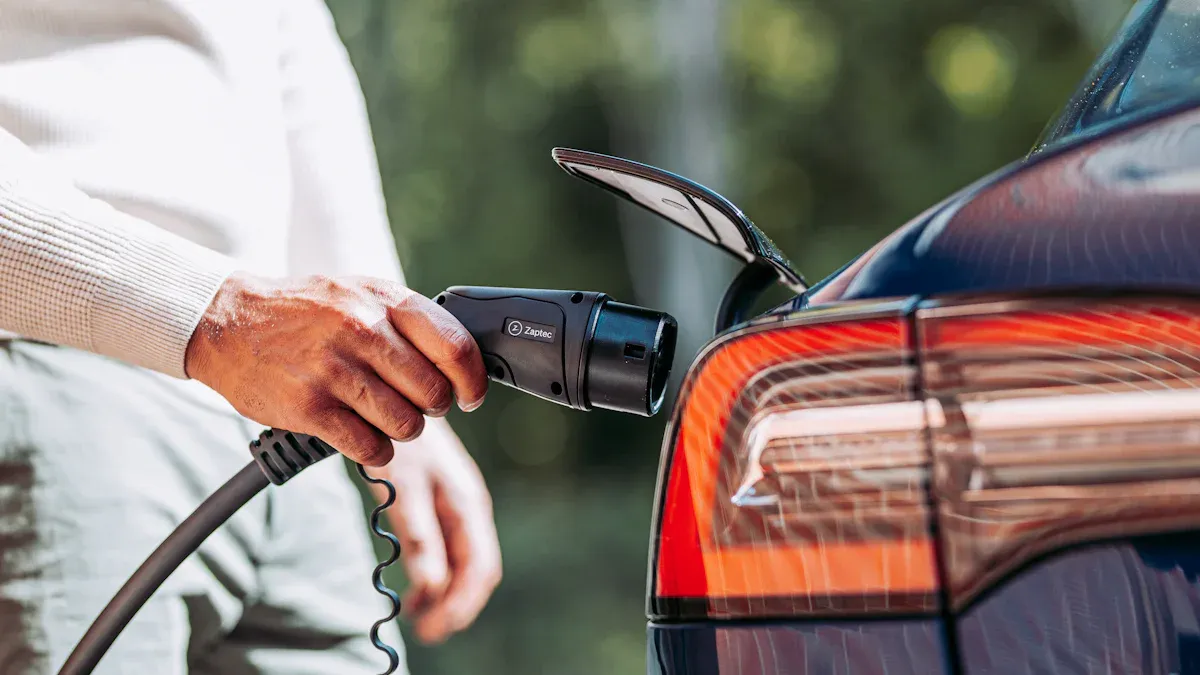
In 2025, the total cost for an installer to set up a standard 7kW home AC wall charger in the UK will range from £850 to £1,500. This price includes both the Cargador EV unit and professional installation by a certified electrician. The Society of Motor Manufacturers and Traders (SMMT) predicts a 22.8% increase in Battery Electric Vehicle (BEV) registrations for 2025, underscoring the growing need for home Soluciones de recarga de vehículos eléctricos. This surge in demand also benefits Fabricantes de cargadores para VE and those offering cargadores portátiles para vehículos eléctricos.
Nota: The UK government’s Electric Vehicle Chargepoint Grant (EVCG) has supported the installation of numerous home charging points since April 2022, helping more EV owners access convenient home charging.
| Métrica | Value (as of October 1, 2025) |
|---|---|
| Total sockets funded by EVCG since April 2022 | 28,383 |
| Total funding for socket installations and infrastructure | £19.2 million |
| Socket installations in the last 12 months | 12,557 |
This guide meticulously breaks down every cost factor, from the specific charger model to labor and potential grants, helping you accurately estimate your total expense for your electric car.
The All-In EV Charger Installation Cost in the UK (2025)
Comprender la total EV charger installation cost is essential for budgeting. The final price combines the hardware with the professional labor required for a safe and compliant setup. Prices vary based on the complexity of the job and the features of the chosen charger.
Total Estimated Cost Range
The average cost to install an EV charger can be categorized into two main tiers. These tiers depend on the specifics of the property and the owner’s requirements for the charging station.
Paquete de instalación estándar
A standard installation package is the most common scenario for UK homeowners. The average electric car charger installation cost for this package typically falls between £850 and £1,500. This price point assumes a straightforward setup. For example, some companies offer a bundled deal. A charger like the Rolec WallPod:EV HomeSmart might cost around £1,249 fully installed. This price covers the unit and a simple installation without needing extra-long cables or drilling through difficult walls.
Premium Installation Package
A premium or complex installation involves additional work that goes beyond the standard scope. The EV charger installation cost for these jobs can range from £1,500 to over £2,000. This higher cost accounts for challenges like long cable runs, consumer unit upgrades, or groundworks. The EV charger installation prices increase with each added complexity.
The following table illustrates the typical EV charger installation prices for a 7kW charger in the UK.
| Tipo de cargador | Potencia nominal | Typical Installation Cost (Standard) | Typical Installation Cost (Complex) |
|---|---|---|---|
| 7 kW (Most Common) | Rápido | £800 – £1,500 | £1,500 – £2,000 |
What a Standard Price Includes
A quoted price for a standard electric car charger installation covers several key components. These elements ensure the EV charging system is safe, functional, and certified. Homeowners should confirm these items are included in their quote.
The AC Wall Charger Unit
The charger unit itself makes up a significant portion of the total cost. This includes the main housing, internal electronics, and charging socket or cable. Technologically advanced providers like TPSON offer smart charging features that can influence the unit’s price. The choice of a specific ac wall charger model is a primary factor in the overall expense for the EV owner’s car.
Standard Cabling and Materials
A standard installation includes a set amount of materials needed to connect the charger to the home electrical system.
- Up to 10 meters of high-quality electrical cable.
- Cable clips to neatly secure the wiring to a wall.
- Drilling through one standard brick or plasterboard wall.
- Basic plastic trunking to protect exposed sections of the cable.
Professional Labor and Testing
A certified electrician performs the physical installation and all necessary safety checks. This labor is a critical part of the EV charger installation cost. The electrician will:
- Mount the EV charger unit securely at the agreed-upon location.
- Run the cable from the consumer unit (fuse box) to the charger.
- Install a new dedicated circuit breaker within the consumer unit.
- Conduct comprehensive testing to ensure the charging system is operating correctly and safely for the electric car.
Safety Certifications (EICR)
Importante: A compliant installation must be certified. Upon completion, the electrician issues an Electrical Installation Certificate (EIC) or a Minor Electrical Installation Works Certificate (MEIWC). This document proves the work meets the UK’s BS 7671 wiring regulations. It is vital for home insurance and warranty purposes, confirming the safety of the new electric charging point for your car. The electrician also notifies the local building control authority as required.
Cost Breakdown Part 1: The AC Wall Charger Unit

The charger itself is the centerpiece of your home charging setup. The hardware cost varies significantly based on power, features, and brand. Understanding these differences is the first step in budgeting for your home EV charging points.
7kW Chargers (The Home Standard)
Most UK homes use a single-phase electricity supply. This makes a 7kW charger the default choice, providing about 30 miles of range per hour of charging. This speed is perfect for overnight charging for any electric car.
Budget-Friendly Models (£450 – £600)
Basic chargers in this price range offer a no-frills solution. They perform the core function of charging your EV safely and efficiently. These units typically lack smart features like app control or scheduling. They are a solid choice for EV owners who simply want to plug in their car and have it ready by morning.
Smart Chargers with App Control (£600 – £800)
Smart chargers offer greater control and can lead to lower running costs. These units connect to your home Wi-Fi, allowing you to manage your charging sessions via a smartphone app. Key features often include:
- Remote scheduling to take advantage of off-peak electricity tariffs.
- Tracking energy usage and charging cost.
- Compatibility with all Type 2 electric vehicles.
- Voice control integration with systems like Alexa.
Technologically advanced providers like TPSON offer smart charging features that enhance the user experience. The ability to control charging remotely makes these home EV charging points a popular choice.
Premium & Solar-Integrated Chargers (£750+)
Premium chargers offer advanced functionality, with a higher cost to match. Many models in this category can integrate with home solar panel systems. This feature allows the charger to direct surplus solar energy to your car, offering free, green charging.
| Charger Name | Price (from) | Max Charging Speed | Integración solar | Característica principal |
|---|---|---|---|---|
| Myenergi Zappi | £779 + installation | 7.4kW or 22kW | Sí | Integrates with renewable energy sources |
| Ohme Home Pro | £999 with installation | 7,4 kW | Sí | Dynamic charging technology |
| Pod Solo 3S | £999 fully installed | 7.0kW | Sí | 5-year warranty |
22kW Chargers (For Three-Phase Power)
A 22kW charger can charge an EV up to three times faster than a 7kW unit. However, it requires a three-phase electricity supply, which is rare in UK homes but more common in commercial properties.
Hardware Costs (£600 – £1,200)
The hardware cost for a 22kW charger is higher due to its advanced components. Prices can start around £600 for a basic model and exceed £1,600 for commercial-grade pedestal units with dual sockets and payment systems. An electrician can advise on the best model for your needs.

Understanding Three-Phase Supply
Upgrading a home to a three-phase supply is a major and expensive project. The process involves applying to the local Distribution Network Operator (DNO) and significant electrical work. An electrician must replace main supply cables and install a new meter, making the total installation cost much higher. This option is generally only practical for those with very high power demands.
Tethered vs. Untethered Charger Costs
The choice between a tethered (cable attached) and untethered (socket only) ac wall charger affects both cost and convenience.
Tethered Charger Costs and Benefits
A tethered charger has a permanently attached charging cable. This is highly convenient; you just park your car and plug in. The cost is often slightly higher due to the included cable. The main drawback is a lack of flexibility if you switch to an EV with a different connector type in the future.
Untethered Charger Costs and Benefits
An untethered charger, or socketed unit, provides a universal Type 2 socket. This offers a cleaner look and maximum flexibility, as you can use any compatible cable. This is ideal for households with multiple EV models or for future-proofing your home EV charging points. The downside is needing to get your own cable out for every charging session.
Which Type is Right for You?
Consejo: Choose a tethered charger for ultimate convenience if you plan to stick with one car connector type. Opt for an untethered charger if you value a tidy aesthetic and the flexibility to charge any type of electric car. An electrician can help with the final installation decision.
Cost Breakdown Part 2: Installation & Labor Fees

The hardware is only one part of the equation. The instalación profesional and labor fees make up a significant portion of the final bill. These fees cover the electrician’s time, expertise, and the certification required for a safe and compliant home charging setup for your electric car.
How Much to Install an Electric Car Charger: Standard Fees
Most installers quote a price based on a “standard installation.” This provides a baseline cost, but it is crucial to understand what this includes and what might add extra charges. Knowing this helps homeowners accurately budget for how much to install an electric car charger.
Defining a “Standard” Installation
A standard installation assumes a straightforward job with no complications. According to UK regulations and OZEV guidelines, a compliant installation must meet specific criteria.
- The charger must be mounted on a permanent structure.
- The unit must be located within 10 meters of the consumer unit (fuse box).
- The cable route must not involve drilling through more than one standard wall.
- The home consumer unit must have a spare way and adequate RCD protection.
- The property must have a modern electrical supply and earthing arrangement.
An electrician will verify these points during a survey. A standard installation ensures the new EV charging point is safe for your car and home.
Typical Labor Price (£400 – £600)
For a standard job, the typical costes de instalación for labor fall between £400 and £600. This fee covers the certified electrician’s work to mount the EV charger, run the cable, make the final connections, and conduct all necessary safety tests. This price also includes the cost of issuing an Electrical Installation Certificate, which validates the safety and compliance of the work for your electric car.
Factores que aumentan los costes de instalación
Any deviation from the standard installation criteria will increase the final cost. An electrician will identify these issues during a pre-installation survey and provide an updated quote.
Long Cable Runs
If the distance between your consumer unit and the desired charger location exceeds the standard 10 meters, the cost will rise. Installers typically charge an additional £10 to £20 per meter for the extra armored cable and labor.
Complex Wall Drilling
Drilling through simple brick or plasterboard is standard. However, routing a cable through thick stone, reinforced concrete, or multiple interior walls requires more time and specialized tools, increasing the labor cost.
Groundworks and Trenching
If the cable must run underground to a detached garage or a freestanding charging post, trenching is necessary. This is a significant job that can add £30 or more per meter to the installation costs, plus the cost of the post itself.
Consumer Unit (Fuse Box) Upgrades
Many older UK homes have fuse boxes that cannot safely support a new 7kW EV charger circuit. Upgrading a consumer unit to a modern 100A board typically costs between £500 and £1,200. This upgrade ensures your home electrical system can handle the increased load from EV charging.
Installing a Dedicated Earth Rod
Some properties require a dedicated earth rod for the EV charger to ensure safety. This involves driving a copper rod into the ground near the charger, which adds a small additional cost for materials and labor.
Difficult Access or Remote Locations
If your property is in a remote area, the electrician may add a travel surcharge. Similarly, if the consumer unit or charger location is in a hard-to-reach space, the increased labor time will be reflected in the final price for the electric car charging installation.
Understanding Your Property’s Electrical System
Before an EV charger installation, a homeowner must understand their property’s electrical system. An electrician will perform a full survey, but having basic knowledge helps in anticipating potential costs and requirements for a safe configuración de carga doméstica. This assessment ensures the system can handle the new electric load from charging a car.
Checking Your Main Fuse Rating
The main fuse is the gatekeeper of your home’s electricity supply. It protects the entire system from drawing too much current. Its rating is a critical factor for any EV charger installation.
Why a 100A Fuse is Often Required
A 7kW EV charger adds a continuous load of about 32 amps to a home’s electrical system. Installers will check the property’s main fuse, which is often 60A, 80A, or 100A. A 100A fuse is often preferred to ensure the system can handle the EV charging demand on top of regular household appliance usage. If the property’s total expected demand exceeds 60 amps, the electrician must submit a G99 application to the local Distribution Network Operator (DNO) for approval before work can begin.
How to Check Your Fuse Rating
The rating is usually printed on the fuse itself, located in the service head (the main box where the supply enters your home).
Precaución: Never attempt to remove the main fuse yourself. This is extremely dangerous. Only a qualified electrician or DNO representative should access it.
If an upgrade is needed (e.g., from 60A to 100A), the DNO performs this work. The electrician can help initiate the request. The DNO will discuss any costs, though simple fuse swaps are often free.
Assessing Your Consumer Unit
The consumer unit, or fuse box, is the central hub of your home’s electrical circuits. It must have the capacity and modern safety features to support a new EV charging point.
Identifying Spare Ways for the Charger
An EV charger requires its own dedicated circuit. This means there must be a “spare way” (an empty slot) in the consumer unit where the new circuit breaker for the charger can be installed. An electrician will confirm this during the site survey.
The Need for RCD Protection
Residual Current Devices (RCDs) are life-saving devices that prevent fatal electric shocks. UK regulations (BS 7671) mandate specific RCD protection for EV charging circuits. An EV can introduce DC leakage currents, which can disable standard RCDs. For this reason, a Type A RCD is the minimum, but a Type B may be required depending on the charger and car. Technologically advanced providers like TPSON often build this protection directly into the charger.
| Modo de carga | Voltage Supply | Minimum RCD Requirement |
|---|---|---|
| Mode 3 | Single phase | Type A (30mA 2-pole RCCB) |
| Mode 3 | Three phase | Type B (30mA 4-pole RCCB) |
| Mode 4 | Three phase | Type B (30mA 4-pole RCCB) |
An electrician will determine the correct RCD type to ensure the safety of your electric car charging setup.
Single-Phase vs. Three-Phase Supply
The type of electricity supply to a property dictates the maximum charging speed possible. Most UK homes have a single-phase supply, which is perfectly adequate for a 7kW charger.
Identifying Your Supply Type
A homeowner can often identify their supply type with a quick visual check:
- Fuses: A single-phase supply typically has one large 100A fuse at the service head. A three-phase supply will have three.
- Meter Wires: A single-phase meter usually has two thick wires entering it, while a three-phase meter has four.
- Bills: Your electricity bill may also state your supply type.
When in doubt, a qualified electrician can confirm the supply type instantly.
Implications for Charger Choice
The supply type directly impacts the choice of EV charger.
- Single-Phase: Supports chargers up to 7.4kW, ideal for overnight charging of any electric car.
- Three-Phase: Can support powerful 22kW chargers, offering much faster charging. This supply is rare in residential properties and more common in commercial buildings.
Cost Breakdown Part 3: Available Grants and Savings
While the initial outlay for an EV charger installation is a key consideration, several grants and savings opportunities can significantly reduce the overall cost. Homeowners can leverage government schemes and smart energy tariffs to make home charging more affordable.
The EV Chargepoint Grant
The UK government continues to support the transition to electric vehicles through targeted financial aid. The EV Chargepoint Grant is designed to assist specific residents with the cost of a new charger.
Who is Eligible in 2025?
The EV Chargepoint Grant specifically targets people living in rental properties and flats. To qualify, an applicant must meet several key criteria:
- They live in a flat they own or a rented residential property.
- The property has a dedicated, private off-street parking space.
- They own or have primary use of an eligible electric car for at least six months.
- The property is in the UK, and the installation is for an existing home, not a new build.
Nota: Homeowners living in single-family houses are generally not eligible for this grant. An electrician can confirm eligibility during the initial survey.
Grant Value (Up to £350)
The EV Chargepoint Grant provides a contribution of up to £350 toward the cost of a single socket charger and its installation. This discount is applied directly to the invoice by the installer, reducing the upfront payment required from the customer.
How to Apply Through Your Installer
The application process is streamlined and managed by the certified installer.
- The homeowner chooses an OZEV-authorized electrician or installation company.
- The installer helps the customer complete the necessary eligibility checks online.
- Once eligibility is confirmed, the installer applies for the grant on the customer’s behalf.
- The grant amount is deducted from the final installation cost.
VAT Reductions on Installation
Understanding how Value Added Tax (VAT) applies to your EV charger installation is crucial for budgeting. While the installation service itself is subject to standard VAT, ongoing savings are available.
Current VAT Rules for Energy-Saving Materials
The installation of an EV charger does not currently qualify for the 0% VAT rate applied to some other energy-saving materials like solar panels or insulation. Therefore, homeowners should expect the standard 20% VAT to be applied to the installation service and hardware cost.
How VAT Relief Affects Your Final Bill
The primary VAT-related saving comes from the electricity used for home charging. The domestic electricity supply, including the power used for charging an electric car, is taxed at a reduced VAT rate of 5%. This provides a significant long-term saving compared to the 20% VAT rate applied at most public charging stations.
Off-Peak Electricity Tariffs
The most effective way to reduce the running cost of an electric car is by using a smart charger combined with a specialized EV energy tariff.
How Smart Charging Reduces Running Costs
A smart charger connects to the internet, allowing an EV owner to control charging sessions remotely via an app. Technologically advanced providers like TPSON offer chargers with these capabilities. This technology enables scheduling, so the car only draws power during off-peak hours when electricity rates are at their lowest, dramatically cutting the cost of each charging session.
Finding the Right EV Energy Tariff
Many UK energy suppliers offer tariffs designed for EV owners. These plans feature a window of several hours overnight with very low electricity rates, often between 7p and 9p per kWh. Popular options include tariffs from Octopus Energy, British Gas, and E.ON Next. A qualified electrician can ensure your home electrical system is ready for this type of smart charging.

Choosing the right tariff and using a smart charger ensures every home charging session for your car is as cheap as possible.
Calculating Your Total AC Wall Charger Cost
To understand the final price, it helps to see how costs add up in different scenarios. The following examples break down the total expense for a instalación de cargadores de VE domésticos, from a simple setup to a more complex project.
Example 1: Standard Installation
Scenario Details
A homeowner has a modern semi-detached house with a driveway. The consumer unit is on the ground floor, and the desired location for the EV charger is on the exterior wall, just 8 meters away. The home electrical system is up to date.
Itemized Cost Breakdown
- Smart Charger Unit: A 7kW smart charger from a provider like TPSON costs approximately £650.
- Standard Installation Labor: En electrician quotes a standard fee of £500 for the installation.
Final Price Calculation
The total cost for this straightforward home charging installation is clear.
Total Cost = £650 (Charger) + £500 (Installation) = £1,150
Example 2: Complex Installation
Scenario Details
An owner of an older property needs a charging point for their electric car in a detached garage. The garage is 20 meters from the house, and the home consumer unit is outdated and requires an upgrade. This installation involves significant extra work.
Itemized Cost Breakdown
- 7kW Tethered Charger: £700
- Base Installation Fee: £500
- Consumer Unit Upgrade: £750
- Groundworks & Trenching (15m): £450
Final Price Calculation
The additional requirements substantially increase the final price for this EV charging setup. The electrician provides a detailed quote reflecting the complexity.
Total Cost = £700 + £500 + £750 + £450 = £2,400
Example 3: Rented Flat with Grant
Scenario Details
A tenant lives in a ground-floor flat in the UK with a dedicated off-street parking space. They want to install an ac wall charger for their new electric car. As a tenant, they are eligible for the government’s EV Chargepoint Grant.
Itemized Cost Breakdown
The total cost to buy and install the socket is £950. The EV Chargepoint Grant offers a discount of £350 or 75% off the cost, whichever is lower. En OZEV-approved electrician handles the grant application.
- Untethered Smart Charger: £600
- Standard Installation: £350
- Subtotal: £950
- EV Chargepoint Grant: -£350
Final Price Calculation
The grant significantly reduces the upfront expense for the tenant’s home charging installation. The electrician deducts the grant amount directly from the final bill, making the process seamless for the EV owner.
Final Price = £950 (Subtotal) – £350 (Grant) = £600
How to Find a Qualified UK Installer
Selecting the right professional is the most critical step in the installation process. Knowing how to find a local ev charger installer who is certified and experienced ensures a safe, compliant, and reliable setup for your electric car.
Why You Need a Certified Electrician
Hiring a certified electrician is not just a recommendation; it is a legal and safety requirement in the UK. An unqualified person can create serious fire and electrical shock hazards.
OZEV Approval Explained
OZEV approval signifies that an installer is authorized to claim government grants on behalf of eligible customers. The EV owner does not apply directly. Instead, the OZEV-approved installer handles the entire process, from verifying eligibility to deducting the grant from the final quote. These professionals are required to:
- Install only approved EV charger models.
- Test every charger to confirm it is fully functional and safe.
- Manage all grant claim documentation.
- Agree to receive regular updates from OZEV on standards and regulations.
Safety and Warranty Implications
A professional installation guarantees compliance with strict UK safety standards, protecting your home, your car, and your charger’s warranty. A certified electrician must adhere to multiple regulations.
All domestic electric work, including EV charger installation, falls under Part P of the Building Regulations. This work must be completed by a registered competent person who can self-certify its compliance.
Key standards include the IET Wiring Regulations (BS 7671) and the IET Code of Practice for Electric Vehicle Charging. A qualified electrician understands the specific requirements for an EV circuit, such as dedicated RCD protection and correct cable sizing, to prevent overheating from the continuous high-current load of charging an electric car.
Checklist for Getting an Accurate Quote
To receive a fast and accurate quote, an EV owner should provide the installer with key information upfront. This preparation helps the electrician assess the job’s complexity without an initial site visit.
Provide Charger Preference
An owner should specify their preferred type of charger. Informing the installer whether they want a basic unit, a tethered model, or a smart charger from a provider like TPSON helps determine hardware costs.
Measure Distance to Consumer Unit
The homeowner should measure the distance from the consumer unit (fuse box) to the desired location for the EV charger. Installations requiring more than 10 meters of cable typically incur extra costs, so this measurement is essential for an accurate quote.
Take Clear Photos of Key Areas
Clear photos allow an electrician to perform a remote survey. An owner should take pictures of the following:
- The consumer unit, with circuit labels visible.
- The main incoming fuse and electricity meter.
- The proposed location for the new charger.
- The gas and water bonding points (look for a green and yellow earth wire).
Note Any Obstacles or Complexities
Finally, the owner should inform the installer of any potential challenges. This includes details like needing to drill through thick stone walls, running a cable to a detached garage, or having difficult access to the consumer unit. This information prevents surprise costs and ensures the final price for the electric car charger is comprehensive.
Investing in a home AC wall charger is a key step for EV owners in the UK. The total cost for a home EV charging installation typically ranges from £850 to £1,500. An owner’s final price depends on the charger’s features, the complexity of the installation, and grant eligibility. A proper home EV charging setup by a certified electrician ensures safety and unlocks the convenience of charging an electric car at home, offering significant savings over public charging. An EV owner should use the checklist to get an accurate quote from a qualified installer.
PREGUNTAS FRECUENTES
¿Cuánto tarda una instalación estándar de un cargador EV?
A certified electrician typically completes a standard home EV charger installation in two to four hours. The process includes mounting the unit, running the cable, making electrical connections, and performing safety tests. Complex jobs involving trenching or fuse box upgrades will take longer.
Can an EV owner install the charger themselves?
No, an EV owner cannot legally install their own charger in the UK. This work falls under Part P of the Building Regulations. A qualified and certified electrician must perform the installation to ensure safety, compliance, and warranty validity for the electric car.
What is the typical lifespan of a home EV charger?
A quality home EV charger should last for about 10 years. Its lifespan depends on the model’s build quality, usage frequency, and environmental exposure. Many chargers come with a manufacturer’s warranty of three to five years, offering peace of mind for the owner.
Do smart chargers really save an owner money?
Yes, smart chargers significantly reduce running costs. Technologically advanced providers like TPSON offer units that allow owners to schedule charging during off-peak hours. This practice takes advantage of cheaper electricity tariffs, lowering the coste de recargar un coche eléctrico.
Is a 7kW charger fast enough for most drivers?
A 7kW charger is ideal for most UK drivers. It adds approximately 30 miles of range per hour of charging. This speed is more than sufficient to fully charge an electric car overnight, ensuring it is ready for the next day’s commute.
What happens if the installer finds unexpected issues?
If an electrician discovers issues like an outdated consumer unit or the need for an earth rod, they will stop work. They will explain the problem, detail the required extra work, and provide an updated quote before proceeding with the installation.