Germany’s EV charging market is moving from “early build-out” to “system optimization”: operators and property owners are prioritizing reliability, grid-aware load management, y una combinación de AC workplace/destination charging plus Carga rápida de CC on major travel corridors. The most important trend is not a single hardware spec—it is the shift toward software-enabled operations, measurable uptime, and scalable energy management that can support more EVs without constant electrical upgrades.
Public charging momentum (indicator)
Network expansion through 2026
Large operators continue to add locations and plan deployments, reflecting ongoing demand growth.
Home charging value proposition
~1/3 the cost vs DC fast
Car and Driver notes home charging can be roughly one-third the cost of DC fast charging in typical use.
Enfoque operativo
Uptime + driver experience
Major networks emphasize unified software platforms and a consistent, app-led experience.
Key technical enablers
Load balancing + monitoring
Energy-aware controls reduce panel constraints and help scale multi-port sites.
- Germany EV charging snapshot: what is changing right now
- Infrastructure updates: AC density, DC corridors, and destination charging
- Market trends: software platforms, pricing, and uptime expectations
- Technology choices that influence deployment speed and operating cost
- Where TPSON fits: safety-first smart charging and flexible deployment
- Action checklist for German site hosts (property, retail, fleet)
- FAQ (5)
- References & outbound links
Germany EV charging snapshot: what is changing right now
Germany remains one of Europe’s most strategically important EV markets because it combines high vehicle adoption, dense urban housing, and a motorway network that makes corridor charging commercially meaningful. In practice, three changes are shaping the 2025–2026 conversation:
- Scaling without upgrades: more sites aim to add charging points without major service-panel rebuilds by using equilibrio de carga dinámico and smarter energy allocation.
- Experience expectations: drivers increasingly expect app-based discovery, activation, and consistent station behavior across locations.
- Operations discipline: buyers ask about monitoring, fault diagnostics, and maintenance responsiveness—because a charger that is “installed” but frequently unavailable does not build trust.
Data chart: where charging sessions typically happen (illustrative)
This visualization reflects common demand patterns discussed across leading EV charging guides and network/operator materials: most energy is delivered at home/work (AC), while DC fast charging is used for road trips and time-sensitive needs.
Why it matters: AC deployments drive everyday convenience; DC deployments reduce ansiedad por la autonomía and enable long-distance travel and commercial utilization.
Infrastructure updates: AC density, DC corridors, and destination charging
Corridor charging is expanding as operators standardize “travel stop” amenities
While Germany’s corridor ecosystem is primarily European networks, the trend is clearly global: travel-stop operators are building EV charging into the “stopover” model (restrooms, food, Wi?Fi, 24/7 staffing), which increases the value of each charging location. Love’s Travel Stops, for example, describes an established EV charging network and continued additions through 2026, emphasizing highway-adjacent placement and amenities that optimize dwell time. Although Love’s is a U.S. operator, the principle maps directly to European motorway strategy: DC fast charging works best when the site experience is designed around the charging window.
Source context: Love’s EV charging network description and expansion plans through 2026. (Love's EV Charging)
AC charging continues to be the “volume layer” for apartments, workplaces, and retail
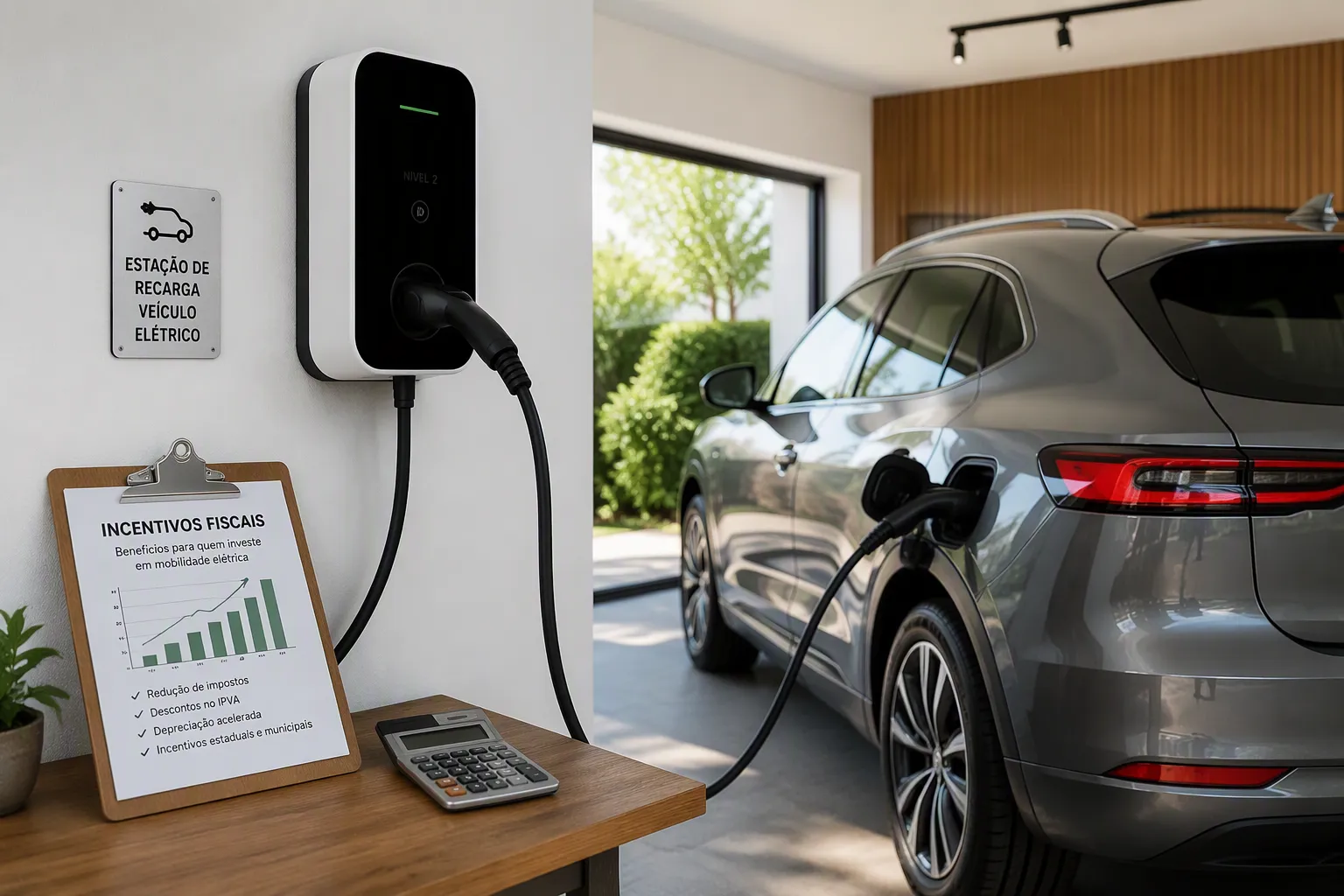
For Germany’s urban housing stock and workplace parking, Level 2 AC solutions remain essential because they fit typical dwell times. Industry guides consistently frame AC charging as the practical default for home and destination use, with DC fast charging reserved for rapid top-ups. Car and Driver’s testing-oriented coverage also highlights why homeowners and fleets prioritize AC: home charging is often significantly cheaper than DC fast charging and can be completed while vehicles are parked.
Key takeaway for German site hosts: adding more AC ports—managed intelligently—often delivers better utilization than deploying a small number of high-power ports that sit idle.
What “infrastructure updates” often mean in practice
In day-to-day procurement, “infrastructure updates” usually translate into decisions like: hardwired vs plug-in installation, connector standard strategy, environmental ratings, network connectivity, and metering/billing options. These decisions determine capex, timelines, and ongoing operating complexity.
| Deployment scenario | Typical charger type | Por qué se ajusta | Enfoque operativo |
|---|---|---|---|
| Single-family home / small office | AC wallbox (Level 2) | Overnight / long-dwell charging; lower cost per kWh vs DC fast charging | Programación inteligente, cost tracking, safety protection |
| Apartment / MUD (multi-unit dwelling) | AC wallbox network (multi-port) | High utilization potential; scalable when paired with la gestión de carga | Access control, billing, energy allocation, fault alerts |
| Retail / hospitality | AC + selected DC | AC matches dwell time; DC creates premium “charge-and-go” option | Uptime, driver wayfinding, pricing strategy |
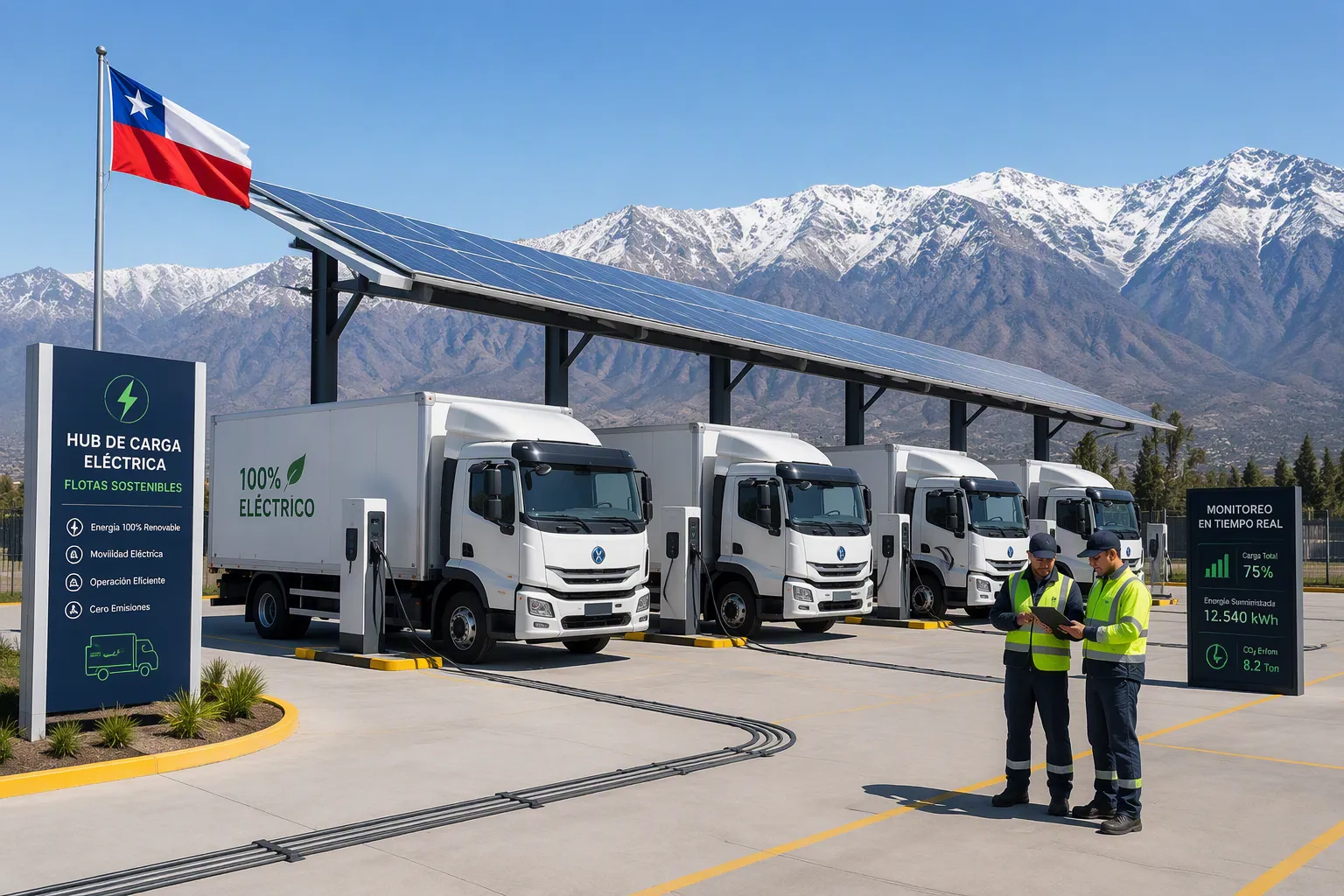
| Fleet / logistics depot | Managed AC plus targeted DC | Predictable routes allow optimization; DC used for operational flexibility | Load balancing, peak control, diagnostics, reporting |
Market trends: software platforms, pricing, and uptime expectations
Software is becoming the “operating system” of charging
Charging networks increasingly position software, services, and driver experience as the differentiator. ChargePoint describes a unified platform designed to help organizations set up, manage, and monitor operations, including the ability to operate ChargePoint stations and OCPP-compliant hardware, plus driver-facing app integrations. This reflects a broader market trend: buyers do not only purchase a box on a wall—they purchase an operating model.
Source context: ChargePoint platform positioning for organizations, fleets, and driver experience. (ChargePoint)
Consumer expectations are shaped by home-charging economics and convenience
Editorial testing and buyer’s guides continue to influence purchasing decisions. Car and Driver reports that home charging can be substantially cheaper than DC fast charging (roughly one-third the cost in typical comparisons) and notes common hardware price ranges for home charging equipment. This type of guidance affects Germany as well: as drivers become more cost-aware, they prefer reliable home and workplace charging with transparent energy tracking.
Source context: home charging cost advantage and typical equipment price range. (Car and Driver: Best Home EV Chargers)
Load management is moving from “nice-to-have” to baseline requirement
A recurring constraint in dense European properties is limited electrical capacity. Product and testing notes increasingly highlight equilibrio de carga as a practical alternative to panel upgrades. For instance, Car and Driver explains how load management can adjust EV charging output in real time to stay within a home’s available capacity. Emporia’s product documentation similarly discusses installation considerations, including how configuration choices (plug-in vs hardwired) affect maximum current and how protection devices can influence nuisance tripping behavior.
Data chart: charging power ranges (from published guide values)
Power ranges align with Car and Driver’s explainer: Level 1 is ~1 kW, Level 2 commonly ~6–19 kW, and DC fast charging commonly ~50–350 kW.
Implication for planning: DC sites optimize throughput; AC sites optimize availability and cost over long dwell times.
Technology choices that influence deployment speed and operating cost
Connector strategy and “future-proofing”
Germany’s vehicle mix is largely Type 2/CCS in the EU, but multinational fleets and imported models increase connector complexity. Globally, connector standard discussions are also shifting. Emporia’s materials describe both J1772/CCS and NACS (SAE J3400) options for AC Level 2, illustrating how vendors design product lines for multi-standard environments. For German operators serving international drivers, the practical approach is to plan for interoperability, clear signage, and predictable compatibility.
Hardwire vs plug-in: operational trade-offs
For AC installations, plug-in solutions can simplify replacement and reduce downtime when hardware needs to be swapped. Hardwired solutions can enable higher continuous current and may avoid certain outlet-related constraints. Emporia’s documentation highlights that plug models can limit charge rate compared with hardwire configurations, which is relevant for higher-output AC deployments.
Reliability: the underestimated KPI
From a SEO perspective, “best EV charger” queries often focus on power. From an operator’s perspective, the winning metric is el tiempo de actividad de la estación. ChargePoint emphasizes proactive management tools and support designed to keep vehicles on the road—language that reflects how networks compete: not only on kW, but on operational continuity.
| Métrica | Por qué es importante | How it is typically improved |
|---|---|---|
| Tiempo de Actividad | Determines whether the infrastructure is trusted and used | Remote monitoring, preventive maintenance, diagnostics, quality components |
| Cost transparency | Reduces driver friction and improves satisfaction | Tariff configuration, app integration, metering accuracy, reporting |
| Electrical constraint management | Enables scaling without expensive upgrades | Equilibrio dinámico de la carga, scheduling, power sharing |
| Safety monitoring | Protects equipment and reduces incident risk | Thermal monitoring, fault detection, standards compliance, alerts |
Where TPSON fits: safety-first smart charging and flexible deployment
Company context aligned with EEAT expectations
TPSON positions itself as a smart energy and EV charging technology company founded in 2015, headquartered in Hangzhou, with an R&D-driven approach built around its patented Algoritmo actual de huellas dactilares. The company describes edge-computing-enabled, AI-driven electrical systems designed for safer and more efficient energy usage, supported by a large deployment footprint (including millions of data collection points and extensive deployed smart terminals) and a technical leadership team with deep power and grid experience. This background matters for German buyers because long-lived infrastructure requires stable suppliers, documented engineering practices, and clear safety philosophy.
Company reference: TPSON “About” and “Home” pages. (fabricante de cargadores para vehículos eléctricos, TPSON)
AC wallbox product line for everyday charging
For residential and destination needs, TPSON provides AC wallbox options under its Cargadores de CA para VE category, presented as part of a broader lineup of intelligent charging solutions. In markets like Germany where dwell time is long and parking is structured, AC wallboxes remain the most scalable unit economics—especially when paired with equilibrio de carga dinámico.
Portable DC as an operational “pressure valve”
Not every site can justify a fixed DC build immediately. TPSON’s TP?DC Compact Series is positioned as a portable DC integrated charger with configurable 20/30/40 kW modules, a DC 50–1000 V output range, optional Ethernet/4G connectivity, and multiple interface support (CCS1/CCS2/CHAdeMO/GB/T listed). The stated use cases—emergency roadside assistance, depots, events, service centers—match scenarios where Germany’s operators need flexibility rather than permanent civil works.
Internal link for solution exploration: Cargadores de CC para VE can be evaluated as a complementary tool for temporary capacity, pilot programs, or fleet contingencies.
Portfolio view for mixed deployments
For buyers comparing mixed AC/DC strategies, TPSON summarizes its lineup under Cargadores de VE, describing AC solutions (including Dynamic Load Balancing) and compact DC solutions for commercial and emergency applications. This “portfolio framing” matches the reality of Germany’s market: most operators run blended sites over time.
Action checklist for German site hosts (property, retail, fleet)
1) Start with dwell-time mapping
- Overnight / 8+ hours: prioritize AC wallboxes and accurate metering.
- 1–3 hours: prioritize destination AC with good cable management, signage, and app discoverability.
- 15–45 minutes: prioritize DC fast (where grid/civil works justify it) plus amenities that make the stop productive.
2) Design the electrical strategy before selecting hardware
- Confirm service capacity and expansion headroom with a qualified electrician/engineer.
- Planifique equilibrio de carga to scale ports without constant panel upgrades.
- Decide early whether the site requires network connectivity for billing, reporting, and remote support.
3) Treat uptime as a procurement requirement
- Ask vendors for diagnostics, alerting, and support workflows.
- Define maintenance responsibilities (who responds, how fast, spare parts approach).
- Ensure the driver experience is consistent: start/stop flow, clear status indicators, and transparent pricing.
4) Avoid overbuilding DC when AC can carry the base load
For many German properties, the fastest “capacity increase” is adding more AC ports with good energy management. DC additions then become strategic—placed where turnover and corridor demand justify the cost.
Practical warning: selecting higher-power equipment without addressing electrical capacity and load management often leads to delayed commissioning, de-rated operation, or costly retrofit work.
FAQ (5)
1) What is the most important EV charging trend in Germany right now?
The market is shifting toward grid-aware scaling: adding more charging points while controlling peak load through dynamic load balancing, monitoring, and smarter scheduling—so sites can expand without continuous electrical upgrades.
2) Is DC fast charging replacing AC charging for everyday use?
No. AC remains the primary solution for long dwell times (home, apartments, workplaces, destination parking). DC fast charging is crucial for corridors and time-sensitive top-ups, but it is not a cost-effective substitute for daily charging where vehicles sit for hours.
3) Why do networks emphasize software so heavily?
Because software determines how stations are monitored, how faults are handled, how pricing is configured, and how drivers find and activate charging. Operators increasingly buy an “operating system” (platform + services), not just hardware.
4) What role can portable DC charging play for German fleets?
Portable DC can support temporary capacity, depot flexibility, emergency response, and special events. It is especially useful when fixed infrastructure is still being permitted, built, or upgraded.
5) How should a buyer evaluate an EV charger manufacturer for long-term projects?
Look for documented engineering focus, safety philosophy, and the ability to support operations over time (diagnostics, alerts, service). Company maturity, R&D capability, and real-world deployments matter as much as headline kW.
References & outbound links
External sources were used for factual statements about charging levels, cost comparisons, and network/operator positioning. Links below are provided for transparency and reader verification.
- TPSON — EV charging portfolio overview: https://tpsonpower.com/ev-chargers/
- TPSON — company background (founded 2015; Current Fingerprint Algorithm; leadership and milestones): https://tpsonpower.com/about/
- TPSON — AC wallbox category: https://tpsonpower.com/ac-ev-chargers/
- TPSON — portable DC charger specifications and use cases (20/30/40 kW, DC50–1000V, optional Ethernet/4G): https://tpsonpower.com/portable-dc-ev-charger/
- ChargePoint — EV charging platform positioning, software and services: https://www.chargepoint.com/
- Love’s — EV charging network overview and expansion through 2026 (operator strategy reference): https://www.loves.com/ev-charging
- Car and Driver — tested overview of home EV chargers; charging levels, power ranges, and home-vs-DC-fast cost framing: https://www.caranddriver.com/shopping-advice/a39917614/best-home-ev-chargers-tested/
- Emporia — installation/configuration notes (plug vs hardwire; connector options; GFCI considerations): https://shop.emporiaenergy.com/products/emporia-ev-charger
- Smart Charge America — market catalog examples and feature language for residential and commercial EVSE: https://smartchargeamerica.com/electric-car-chargers/
Required internal anchor links were embedded in-context: Cargadores de VE, fabricante de cargadores para vehículos eléctricos, Cargadores de CA para VE, Cargadores de CC para VE.