An electric vehicle DC charger delivers direct current power to an electric car’s battery, enabling rapid energy transfer. DC charging bypasses the vehicle’s onboard converter, sending electricity straight to the battery. This process results in significantly faster charging times compared to traditional AC charging. The importance of DC charging continues to rise as the number of rapid chargers grows. For example, the table below shows a 7.4% increase in DC fast charging ports in Q2 2024, reflecting strong support from EV charger manufacturers and increasing demand from vehicle owners.
| Time Period | Increase in DC Fast Charging Ports |
|---|---|
| Q2 2024 | 7.4% |
Electric Vehicle Direct Current (DC) Charging Explained
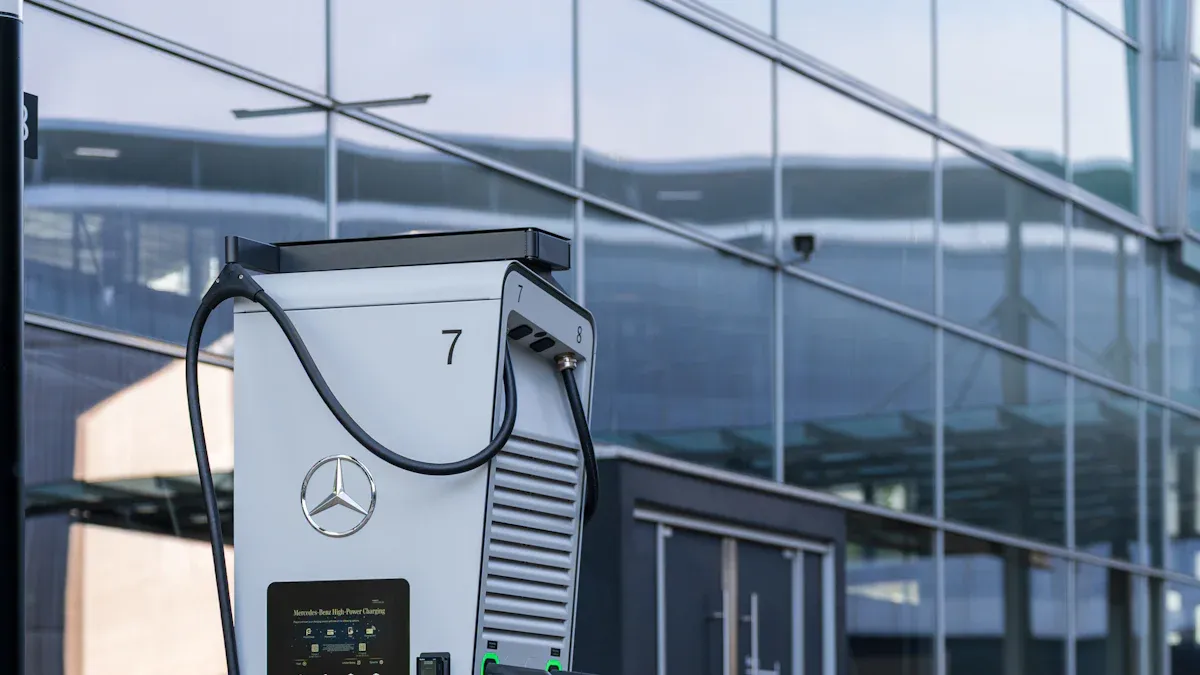
What is Direct Current (DC)?
Direct current refers to the flow of electric charge in a single direction. Unlike alternating current, which changes direction periodically, direct current maintains a constant polarity. This characteristic makes direct current ideal for applications that require stable and predictable energy delivery.
How DC Powers Electric Vehicle Batteries
Electric vehicle batteries store and release energy using direct current. The battery’s internal chemistry relies on a steady flow of electrons to charge and discharge efficiently. When a charger supplies direct current, the battery receives energy without the need for conversion. This direct transfer supports optimal charging performance and reduces energy loss.
Why DC Enables Fast Charging
Direct current enables fast charging because it delivers energy directly to the battery. The charger bypasses the vehicle’s onboard AC-to-DC converter, which often limits the maximum charging rate. By providing direct current at higher power levels, a DC charger can replenish an electric car’s battery much faster than standard AC charging methods. This speed proves essential for drivers who need to minimize downtime during long trips or busy schedules.
How DC Chargers Work for Electric Vehicles
DC chargers play a critical role in the rapid charging of electric vehicles. These chargers convert grid power into a form suitable for battery storage and deliver it efficiently to the vehicle.
Power Conversion Process in DC Charging
The power conversion process in DC charging involves several key steps:
- The charger receives electrical power from the grid, which typically arrives as alternating current.
- The system transforms this alternating current into direct current using specialized DC-DC power converters.
- The initial conversion stage focuses on reducing harmonic content and minimizing reactive power drawn from the grid. This step helps maintain a stable DC bus voltage.
- The final stage controls the current or voltage delivered to the battery, ensuring safe and efficient charging.
This multi-stage process allows the charger to supply the precise energy required by the electric vehicle battery.
DC Charging Station Components
A typical DC charging station includes several essential components:
- Power electronics modules that handle the conversion from alternating current to direct current.
- Cooling systems that manage heat generated during high-power charging sessions.
- Communication interfaces that allow the charger to interact with the vehicle and monitor charging status.
- Safety mechanisms that protect both the charger and the electric vehicle from faults or overloads.
Note: Modern DC chargers often feature user-friendly displays and secure payment systems, making the charging experience convenient for all EV drivers.
DC Charging vs AC Charging for Electric Vehicles
Key Differences Between DC and AC Charging
Electric vehicle owners often encounter two main types of charging: DC and AC. Each method uses different technology and delivers power in unique ways. Understanding these differences helps drivers choose the best charger for their needs.
Charging Speed Comparison
Charging speed stands out as the most noticeable difference between DC and AC charging. DC chargers deliver energy much faster than AC chargers. The following table compares typical charging times for a 40 kWh battery:
| Charger Type | Charging Time (for 40 kWh battery) |
|---|---|
| AC (3.3 kW) | Up to 13-14 hours |
| AC (7.2 kW) | About 7 hours |
| DC | 0% to 80% in about 50 minutes |
Most electric car drivers prefer DC charging when they need a quick boost. AC charging works well for overnight charging at home, but DC chargers provide rapid energy transfer for those on the go.
A closer look at popular electric vehicle models highlights this difference even further:
| Electric Vehicle Model | Estimated AC Charge Time (0% – 100%) | Estimated DC Charge Time (10% – 80%) |
|---|---|---|
| Tesla Model Y (RWD) | 6 hours 12 mins | 29 minutes |
| Volkswagen ID 4 (GTX) | 7 hours | 27 minutes |
| MG 4 | 7 hours 42 mins | 32 minutes |
| BMW i4 (eDrive35) | 6 hours 6 mins | 30 minutes |

Note: DC charging reduces wait times dramatically, making it ideal for busy schedules and long-distance travel.
How Power is Delivered to Electric Vehicles
The way each charger delivers power also differs. AC chargers supply alternating current to the vehicle. The onboard charger inside the electric car then converts this to direct current, which the battery can store. This conversion process limits the maximum charging speed.
DC chargers, on the other hand, convert alternating current from the grid into direct current within the charging station itself. The charger then sends this direct current straight to the battery, bypassing the vehicle’s onboard charger. This direct approach allows for higher power delivery and faster charging.
The table below summarizes the primary technical differences:
| Feature | AC Charging | DC Charging |
|---|---|---|
| Type of Current | Alternating Current (AC) | Direct Current (DC) |
| Charging Efficiency | Less efficient, longer charging time | More efficient, shorter charging time |
| Hardware Requirements | Standard charging hardware | More powerful hardware required |
| Network Connection | Typically low-voltage network | Often connected to medium-voltage network |
| Communication Systems | Basic communication | Advanced communication for optimized control |
| Battery Management System (BMS) | Standard BMS | Advanced BMS for safe and efficient charging |
| Cooling Technologies | Basic cooling | Advanced cooling technologies |
Why DC Charging is Faster for Electric Vehicles
DC charging technology offers a significant speed advantage over AC charging. This advantage comes from two main mechanisms.
Bypassing the Onboard Charger
The onboard charger in an electric vehicle has a limited capacity. When using AC charging, the onboard charger must convert alternating current to direct current before the battery can store the energy. This conversion process slows down charging and restricts the maximum power the battery can receive.
DC chargers bypass the onboard charger entirely. The charging station handles the conversion from alternating current to direct current. As a result, the charger can deliver much higher power directly to the battery.
Direct Battery Connection with DC Charging
Direct current from a DC charger connects straight to the battery. This direct connection allows the charger to supply energy at a much faster rate. The vehicle’s battery management system monitors the process to ensure safety and efficiency.
DC charging stations use advanced communication systems and cooling technologies to manage the high power levels involved. These features protect the battery and maintain optimal charging conditions.
Tip: Drivers who need to minimize downtime during travel should seek out DC chargers for the fastest charging experience.
Advantages of DC Charging for Electric Vehicles
Speed and Convenience of DC Charging
Shorter Charging Times with DC
DC charging offers a significant reduction in charging times for electric vehicles. Drivers experience much faster energy transfer compared to traditional AC chargers. A dc fast charger can replenish an electric car’s battery to 80% in approximately 30 minutes. This rapid charging capability allows drivers to spend less time waiting and more time on the road. The direct current supplied by these chargers bypasses the vehicle’s onboard converter, enabling ultra-fast charging and supporting the needs of modern electric cars with high-capacity batteries.
Tip: Many public charging stations now feature dc fast chargers, making quick top-ups accessible during daily routines or travel.
Ideal for Long Electric Vehicle Trips
Long-distance travel becomes much more practical with dc charging. Drivers can stop at highway stations equipped with dc fast chargers and recharge their vehicles quickly. Rapid charging minimizes downtime, allowing travelers to continue their journeys without lengthy interruptions. DC charging stations along major routes alleviate concerns about running out of battery, making electric vehicle road trips more convenient and enjoyable.
DC fast charging enables an electric vehicle to reach up to 80% charge in about half an hour. This efficiency helps drivers plan longer trips with confidence, knowing that reliable charging infrastructure supports their travel needs.
Practical Benefits of DC Charging
Reducing Range Anxiety for Electric Vehicle Owners
Range anxiety remains a common concern for many electric vehicle owners. DC charging addresses this issue by providing quick access to energy, especially in high-use scenarios. The presence of dc fast chargers along highways and in urban areas reassures drivers that they can recharge their vehicles rapidly if needed. This convenience encourages more people to consider switching from conventional vehicles to electric options.
- DC charging stations charge EVs significantly faster than AC chargers, allowing for an 80% charge in about 30 minutes.
- The convenience of fast charging attracts more EV owners to locations with dc chargers, improving customer satisfaction.
- The presence of dc fast chargers along highways alleviates concerns about running out of battery during long trips.
Supporting High-Use Scenarios
DC charging proves especially valuable for busy individuals and commercial fleets. Drivers can quickly charge their vehicles while shopping, dining, or running errands, enhancing the overall customer experience. Fleet operators benefit from rapid charging, keeping electric vehicles on the road and minimizing downtime.
- Drivers can quickly charge their vehicles while engaging in other activities, enhancing convenience.
- DC fast chargers encourage more drivers to switch to electric vehicles by facilitating faster charging.
- Locations with public charging stations equipped with dc fast chargers see increased traffic from EV owners.
Ultra-fast charging technology continues to evolve, supporting the growing demand for efficient and reliable charging solutions. As more public charging stations adopt dc fast chargers, the practical benefits for electric vehicle owners will only increase.
Disadvantages and Considerations of DC Charging
Cost and Accessibility of DC Chargers
Higher Installation Costs for DC Charging Stations
Installing a dc charger for an electric vehicle involves significant upfront investment. Specialized equipment and higher power capacities drive costs well above those for standard AC chargers. The following table compares installation and maintenance expenses:
| Aspect | AC Chargers (Avg.) | DC Chargers (Avg.) |
|---|---|---|
| Initial Installation Cost | $500 – $2,000 (per unit) | $2,000 – $50,000 (per unit) |
| Long-Term Maintenance Expenses | $100 – $500 annually | $500 – $2,000 annually |
| Cost-Effectiveness in Different Scenarios | Residential and commercial use where overnight charging is common | Public and commercial use where fast charging is essential |
Operators must consider these costs when planning public or commercial charging infrastructure. The need for advanced power electronics and robust cooling systems further increases the financial burden.
Limited Availability of DC Chargers
Drivers often find fewer dc charging stations compared to AC options. This limited availability can create challenges for electric car owners, especially in rural or less developed areas. Common disadvantages include:
- High upfront infrastructure costs due to specialized equipment and higher power capacities.
- Potential strain on the power grid during peak charging times, risking overloads and increased utility costs.
- Limited availability of dc charging stations compared to more common AC chargers.
Urban centers and major highways typically offer better access to fast charging, but many regions still lack adequate coverage. This gap can affect the convenience and practicality of owning an electric vehicle.
Impact of DC Charging on Battery Health
Potential for Increased Battery Wear
Frequent use of dc fast charging can impact battery longevity in an electric car. High power levels generate significant heat, which is detrimental to battery health. Repeated exposure to high charging currents strains battery cells and may lead to increased wear and tear. Fast charging can also create voltage imbalances within the battery pack, contributing to gradual degradation.
- Heat generation during dc charging can harm battery health.
- Increased wear results from repeated high-current charging sessions.
- Voltage stress may accelerate battery deterioration.
Studies show that frequent rapid charging increases battery deterioration by about 0.1 percent on average. While this effect remains minor, proper temperature management is crucial for maintaining battery performance.
Manufacturer Recommendations for DC Charging
Major EV manufacturers provide specific guidelines to help owners preserve battery health. The table below summarizes recommendations from leading brands:
| Manufacturer | Recommendation |
|---|---|
| Tesla | Daily charge limit of 80–90%; 100% only for long-distance travel. |
| Hyundai/Kia | Charge up to 80% to extend battery lifespan, especially with fast charging. |
| Nissan | Minimize frequent DC fast charging; avoid regular 100% charges to prevent degradation. |
| Ford | Default setting of 90% for Mustang Mach-E; stay below for daily charging. |
| Volkswagen | 80% cap for daily use; full charges allowed when necessary. |
Manufacturers advise limiting the frequency of dc charging and avoiding regular full charges. Following these recommendations helps extend battery life and ensures reliable performance for the electric vehicle.
Typical Use Cases for DC Charging in Electric Vehicles
Road Trips and Travel with DC Charging
Highway DC Charging Stations
Highway corridors have become essential locations for dc fast charger deployment. These stations enable electric vehicle drivers to recharge quickly during extended travel. Most highway dc charging stations offer power outputs between 50 kW and 350 kW, allowing an electric car to reach 80% battery capacity in just 20 to 40 minutes. This rapid charging capability minimizes interruptions and keeps long-distance journeys efficient. Transportation hubs and major routes often feature these high-speed chargers, supporting the growing demand for reliable charging infrastructure.
Note: Highway dc charging stations play a critical role in reducing range anxiety for drivers on long trips.
Quick Top-Ups for Electric Vehicles
Many drivers rely on dc fast chargers for quick top-ups during travel. These chargers provide a convenient solution when time is limited. For example, a short stop at a rest area equipped with a dc charger can add significant range in less than half an hour. This flexibility supports both planned and spontaneous trips, making electric vehicle ownership more practical for those who travel frequently.
The table below highlights common scenarios where dc charging proves most valuable:
| Scenario | Description |
|---|---|
| Extended travel | Essential for long-distance travel, allowing quick charging to minimize interruptions during trips. |
| Fleet operations | Needed for quickly charging multiple vehicles to reduce downtime for fleet operations. |
| Rideshare services | Important for rideshare drivers to minimize disruption while working, especially near transit locations. |
Urban and Commercial DC Charging
Fleet Charging Needs for Electric Vehicles
Commercial fleets depend on dc fast chargers to maintain operational efficiency. Fleet operators use these chargers to recharge multiple vehicles rapidly, reducing downtime and maximizing productivity. In urban environments, dc charging stations with power options from 80 kW to 120 kW are common in parking facilities and commercial enterprises. These chargers support high-use scenarios, such as delivery services and rideshare fleets, where vehicles must return to service quickly.
- Charging speed in urban environments is optimized for parking facilities and commercial use.
- Commercial applications utilize dc fast charging networks with power outputs ranging from 50-350 kW.
Public Fast DC Charging Networks
Public charging infrastructure continues to expand in cities and commercial areas. Public charging networks deploy dc fast chargers to meet the needs of both private and commercial users. These networks offer ultra-fast charging, enabling drivers to recharge their electric vehicles while shopping, dining, or working. The availability of public charging stations with high-speed dc chargers encourages more people to adopt electric vehicles and supports the transition to cleaner transportation.
The table below compares dc charging environments:
| Environment | Power Options | Charging Speed | Applications |
|---|---|---|---|
| Urban | 80 kW to 120 kW | Efficient for parking facilities and commercial enterprises | Tailored for urban environments |
| Commercial | 50-350 kW | 80% battery capacity in 20-40 minutes | Rapid recharging for commercial applications |
| Highway | 50-350 kW | High-speed charging for long-distance travel | Primary deployment in highway corridors and transportation hubs |
Tip: Ultra-fast charging technology in public charging networks makes electric vehicle ownership more convenient for everyone.
Factors Affecting DC Charging Speed for Electric Vehicles
DC Charger Power Output
Kilowatt Ratings of DC Chargers
The power output of a DC charger plays a central role in determining how quickly an electric vehicle can recharge. Public charging stations offer a range of power ratings, each designed to meet different needs. The table below outlines common kilowatt ratings, their typical applications, and the range they can add in a short session.
| Power Rating | Description | Charging Time | Range Added |
|---|---|---|---|
| 50 kW | Entry-level fast charger | ~30 minutes | ~100 miles |
| 100 kW | Mid-range charger | ~30 minutes | ~200 miles |
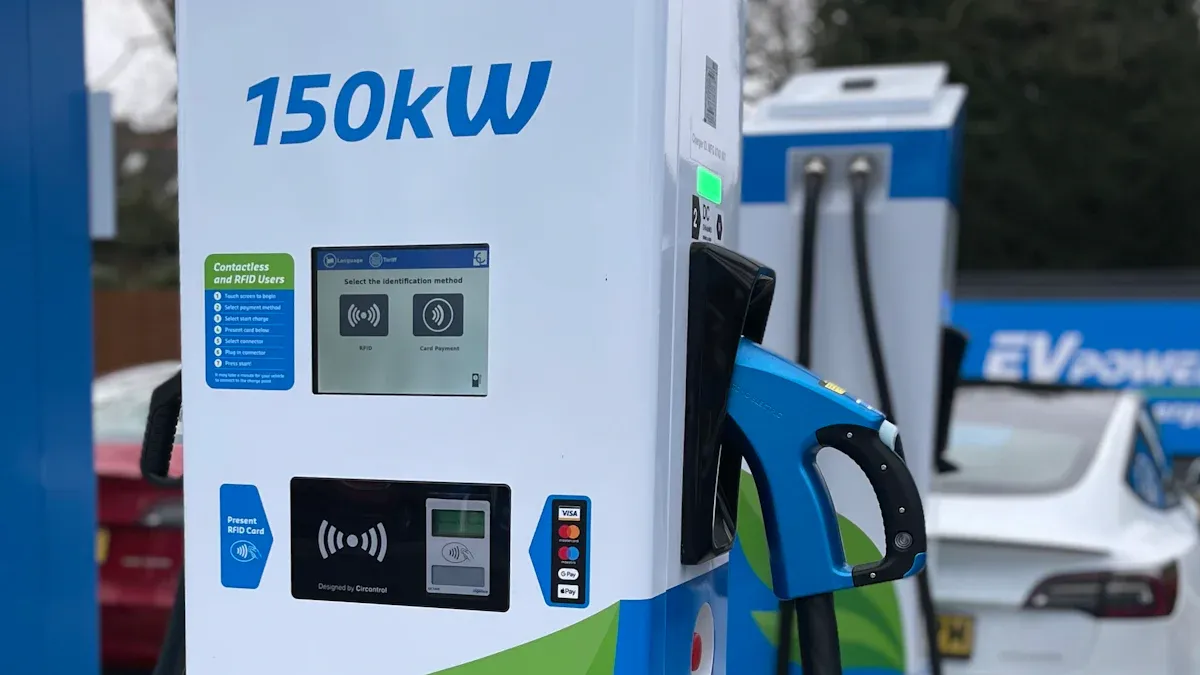
| 150 kW | High-power charger | ~20-30 minutes | ~300 miles |
| 350 kW | Cutting-edge fast charger | Varies | Designed for latest EVs |

A higher kilowatt rating allows the charger to deliver more energy in less time. However, not every electric vehicle can accept the maximum output from the most powerful chargers.
Maximum Supported DC Charging Speeds
The actual charging speed depends on both the charger’s power output and the vehicle’s charge acceptance rate. Each EV model has a maximum rate at which it can safely receive energy. For example, a car that supports up to 100 kW will not benefit from a 150 kW charger beyond its own limit. The charging curve of each vehicle also affects speed, as the battery may not draw maximum power throughout the entire session.
Note: The power output of a DC charger, measured in kilowatts, directly influences charging speed. The vehicle’s charge acceptance rate and unique charging curve also play important roles.
Electric Vehicle Battery Size and State
Battery Capacity and DC Charging
Battery capacity, measured in kilowatt-hours (kWh), determines how much energy an electric vehicle can store. Larger batteries require more time to charge, even with a high-power charger. For instance, a 40 kWh battery will reach 80% much faster than a 100 kWh battery at the same charging station. Drivers should consider both battery size and charger output when planning charging stops.
- Small batteries charge quickly but offer less range.
- Large batteries provide more range but need longer charging sessions.
State of Charge Impact on DC Charging Speed
The state of charge (SOC) refers to how full the battery is at any given moment. As the battery approaches its maximum SOC, the charging speed typically decreases. This slowdown protects the battery from excessive heat and potential damage. Most electric vehicles automatically reduce charging speed after reaching 80% SOC. At this point, switching to a level 2 charger can be just as efficient for topping off the battery.
Tip: For the fastest results, drivers should use DC charging to reach 80% and then switch to slower charging for the final 20%.
The interplay between charger power, battery capacity, and SOC shapes the overall charging experience for every electric vehicle owner.
DC Charging Connectors and Standards for Electric Vehicles
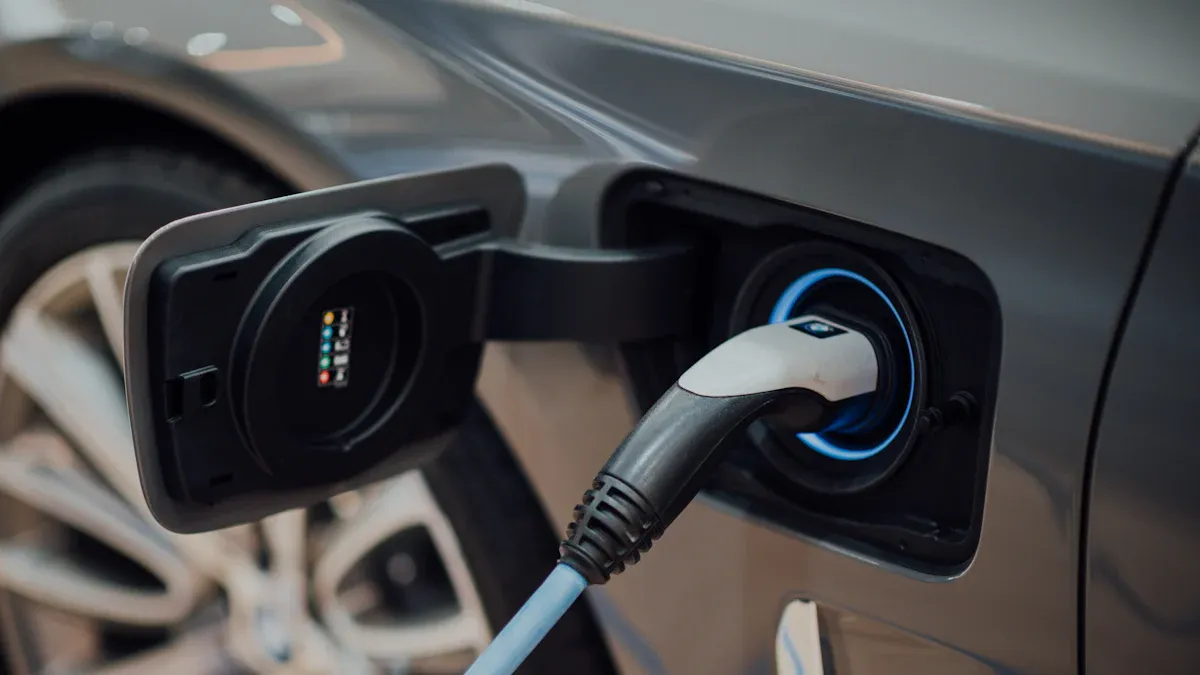
Common DC Connector Types
Electric vehicle charging relies on several connector types. Each connector supports different standards and regions. The most widely used DC charging connectors include CCS, CHAdeMO, and Tesla Supercharger.
CCS (Combined Charging System) for DC Charging
CCS stands as the most popular connector for DC charging in North America and Europe. This system combines AC and DC charging in one plug, making it versatile for many electric vehicles. Automakers favor CCS because it supports high-power charging and offers compatibility with most public charger networks. CCS connectors follow standards such as SAE J1772 in North America and IEC 62196 in Europe.
CHAdeMO DC Charging Connector
Japan developed the CHAdeMO connector to support rapid DC charging. Many Japanese electric vehicles use this connector, including models from Nissan and Mitsubishi. CHAdeMO allows for bi-directional charging, which means the vehicle can supply power back to the grid. Although its use is declining in some regions, CHAdeMO remains important for legacy EVs and certain Asian markets.
Tesla Supercharger DC Connector
Tesla uses its own proprietary connector for Supercharger stations. This connector supports high-speed DC charging for Tesla vehicles. Tesla’s network provides fast and reliable charging, especially for long-distance travel. Recently, Tesla introduced the North American Charging Standard (NACS), which aims to increase compatibility with other EVs.
Tip: Drivers should check their vehicle’s connector type before visiting a public charger to ensure compatibility.
The table below shows the most widely used DC charging connector standards by region:
| Region | Connector Standard |
|---|---|
| North America | SAE J1772 |
| Europe | IEC 62196-1,2,3 |
| China | GB/T 20234.1,2,3-2011 |
| Japan | CHAdeMO |
Compatibility Considerations for DC Charging
Connector standards vary by region, which impacts electric vehicle compatibility. Drivers must understand these differences to avoid charging issues.
Regional Differences in DC Charging Standards
Each region enforces its own standards for DC charging connectors. China mandates the GB/T standard for all EVs, creating a unified infrastructure. Europe and North America favor CCS, while Japan relies on CHAdeMO. These differences can cause compatibility challenges for vehicles traveling across borders or using chargers outside their home region.
The following table highlights how regional standards affect compatibility:
| Standard | Region | Compatibility Impact |
|---|---|---|
| GB/T | China | Mandatory for all EVs, unified infrastructure |
| CCS | Global | Dominant in many regions, potential compatibility issues for GB/T EVs |
| CHAdeMO | Global | Limited use, may cause issues for GB/T EVs |
| NACS | Global | Emerging standard, compatibility concerns for GB/T EVs |
Note: Regional standards shape the design of public charger networks and influence which vehicles can use each station.
Adapter Use for DC Charging
Adapters help bridge compatibility gaps between different connector types. Some EV owners carry adapters to connect their vehicles to chargers with different standards. However, not all adapters support high-power DC charging, and some may not work with every vehicle model. Manufacturers recommend using approved adapters to ensure safe and efficient charging.
- Adapters can enable charging at stations with different connectors.
- Not all adapters support fast DC charging.
- Always verify adapter compatibility with the vehicle and charger.
Drivers who travel internationally or use multiple charger networks benefit from understanding adapter options and regional standards.
Best Practices for Using DC Chargers with Electric Vehicles
Preparing Your Electric Vehicle for DC Fast Charging
Battery Preconditioning for DC Charging
Drivers can maximize the efficiency of a dc fast charger by preparing the electric vehicle’s battery before arriving at the station. Battery preconditioning involves warming or cooling the battery to its optimal temperature range. Many modern EVs offer a preconditioning feature that activates when the driver selects a charging destination in the navigation system. This process helps the battery accept higher charging rates, reducing overall charging time. Drivers should check the vehicle’s manual to understand how to enable preconditioning. Keeping the battery between 10% and 50% state of charge before using a dc fast charger also ensures the fastest energy transfer.
Monitoring DC Charging Sessions
Active monitoring during a charging session helps maintain safety and efficiency. Most electric vehicles display real-time charging progress on the dashboard or a connected app. Drivers should watch the charging rate and battery percentage, aiming to charge up to 80% for optimal speed and battery health. Exceeding this level often results in slower charging and increased battery wear. Monitoring allows drivers to disconnect promptly when charging completes, freeing the charger for others and preventing unnecessary idle fees.
Tip: Use navigation apps to locate compatible dc fast chargers and plan stops based on battery needs.
Safety and Etiquette at DC Charging Stations
Proper Connection Procedures for DC Charging
Safe use of a dc fast charger starts with following the correct connection steps. Drivers should park carefully, ensuring the vehicle aligns with the charger. Before plugging in, they should read the instructions displayed at the station and confirm the connector type matches the vehicle. Turning off the engine before connecting the charger is essential. After plugging in, drivers authenticate payment and start the charging session. When finished, they must stop the session, unplug the connector, and return it to its holder. These steps help prevent equipment damage and ensure a smooth charging experience.
Sharing DC Charging Stations
Public charging etiquette improves the experience for all electric vehicle owners. Drivers should move their vehicles promptly after charging completes, especially at busy locations. This practice allows others to access the charger without unnecessary delays. When reversing into a charging bay, drivers should use mirrors and remain aware of their surroundings. Families with children should keep them safe and away from charging equipment. If any issues arise, contacting customer care ensures quick resolution. Respecting these guidelines fosters a cooperative environment at public charging stations.
Note: Reading the EV manual and station instructions before charging helps drivers avoid mistakes and ensures safe operation.
How to Find DC Chargers for Electric Vehicles
Locating DC Charging Stations
Drivers seeking to find DC chargers for their electric vehicles have access to a variety of tools and resources. The most effective methods combine technology and strategic planning to ensure convenient access to charging infrastructure.
Mobile Apps for Finding DC Chargers
Mobile apps play a vital role in helping drivers locate DC charging stations. These apps display real-time information about charger availability, location, and compatibility. Popular platforms allow users to filter results by charger type, including DC fast chargers, and view details such as parking availability and user convenience. Many apps also provide navigation assistance, guiding drivers directly to the nearest electric car charging station. By leveraging these digital tools, EV owners can quickly find DC chargers that meet their needs.
Online Maps and Resources for DC Charging
Online maps and dedicated websites offer another reliable way to find DC chargers. These resources often include comprehensive databases of public charging stations, electric car charging station locations, and charge point details. Some platforms use multicriteria decision-making frameworks to evaluate potential sites, considering factors like proximity to high-traffic areas and accessibility. This approach ensures that drivers can identify the most suitable charging station for their journey. Many websites also provide updates on new installations and maintenance schedules, helping users plan ahead.
Tip: Combining mobile apps with online maps increases the chances of finding available DC chargers, especially in unfamiliar areas.
Planning Electric Vehicle Trips with DC Charging
Effective trip planning helps drivers avoid running out of charge and ensures a smooth travel experience. Strategic use of charging infrastructure supports both daily commutes and long-distance journeys.
Route Planning for DC Charger Access
Drivers should understand their vehicle’s range and plan routes around available public charging stations. It is advisable to give a buffer, such as charging every 110 miles if the range is 125 miles, to prevent unexpected stops. Identifying the type of charger required, whether a DC fast charger or a Level 2 charger, allows for efficient charging during travel. Many drivers schedule charging sessions during meal breaks or while shopping at locations with electric car charging stations. Checking for charging availability at destinations, including hotels and attractions, further enhances trip reliability.
- Plan routes based on charger locations and vehicle range.
- Schedule charging during convenient stops, such as meals or shopping.
- Verify charger compatibility before starting the journey.
Charging Network Memberships
Memberships in charging networks offer additional benefits for electric vehicle owners. These programs provide access to exclusive charging stations, discounted rates, and priority service at busy locations. Many networks support both public charging and home charging options, allowing drivers to manage charging needs efficiently. Memberships often include features like reservation systems and real-time updates on charger status. By joining a network, drivers gain peace of mind and improve access to reliable charging infrastructure.
| Charging Network | Benefits | Access Type |
|---|---|---|
| Network A | Discounted rates, priority | Public charging |
| Network B | Reservation system | Home charger, public |
| Network C | Real-time updates | Charge point access |
Note: Membership in a charging network simplifies the process of finding DC chargers and enhances the overall electric car charging experience.
A DC charger delivers rapid energy to an electric vehicle, making it essential for modern electric transportation. DC charging stands apart from AC charging by offering faster charging times and direct battery connection. Drivers benefit from reduced wait times, but they must consider installation costs and battery health. Choosing the right charger and following best practices ensures a reliable electric car experience. DC charging supports the growth of the electric vehicle market and helps more people transition to electric mobility.
FAQ
What is the main difference between DC and AC charging for electric vehicles?
DC charging delivers direct current straight to the battery, enabling faster charging. AC charging supplies alternating current, which the vehicle converts to direct current internally. DC chargers bypass the onboard converter, resulting in much shorter charging times.
Can all electric vehicles use DC fast chargers?
Not every electric vehicle supports DC fast charging. Compatibility depends on the vehicle’s hardware and connector type. Drivers should check the owner’s manual or manufacturer’s website to confirm if their model accepts DC charging.
Does frequent DC fast charging harm the battery?
Frequent use of DC fast charging can increase battery wear over time. High charging currents generate more heat, which may reduce battery lifespan. Manufacturers recommend limiting DC fast charging to preserve battery health.
How long does it take to charge an EV with a DC fast charger?
Most DC fast chargers can bring an electric vehicle battery from 10% to 80% in 20 to 40 minutes. Charging speed depends on the charger’s power output and the vehicle’s maximum charge acceptance rate.
Are DC charging stations available everywhere?
DC charging stations are more common in urban areas and along highways. Rural regions may have limited access. Drivers should use apps or online maps to locate nearby DC fast chargers before planning long trips.
What connector types do DC chargers use?
Common DC charging connectors include CCS, CHAdeMO, and Tesla’s proprietary connector. The connector type varies by region and vehicle model. Drivers must ensure compatibility between the charger and their electric vehicle.
Is it safe to leave an EV plugged into a DC charger after charging completes?
Most DC chargers automatically stop supplying power when charging finishes. However, leaving the vehicle plugged in can block access for others and may incur idle fees. Drivers should disconnect and move their vehicle promptly after charging.
Do DC fast chargers work in extreme weather conditions?
Modern DC fast chargers operate reliably in a wide range of temperatures. Built-in cooling and heating systems protect both the charger and the vehicle’s battery. Charging speed may decrease in very cold or hot conditions to maintain safety.