Individuals often ask if they can safely install a home EV charger without professional help. Safety remains the top concern when working with electrical systems in the home. Many EV charger manufacturers recommend that only those with strong electrical skills attempt self-installation.
Tip: Always consult local experts before starting any installation project.
Home EV Charger Self-Installation: Is It Safe and Feasible?
Assessing Your Electrical Skills and Experience
Required Electrical Knowledge for Installation
Before starting a home EV charger installation, individuals must evaluate their electrical skills. Industry experts recommend that only those with significant experience in residential wiring attempt this task. Many safety organizations highlight several risks:
- The low trip threshold of ground-fault circuit interrupters (GFCIs) can cause frequent nuisance trips, especially outdoors.
- Ambiguity exists around whether a licensed electrician must perform the installation, which raises compliance and safety concerns.
- Unpermitted installations may occur, leading to hazardous situations and compromised safety standards.
Professional installation by a licensed electrician ensures proper wiring, code compliance, and safe practices that protect both the home and its occupants. Certified electricians with EV experience also provide better warranties and peace of mind.
Tools and Equipment Checklist
A successful installation requires the right tools and equipment. Essential items include:
- Voltage tester and multimeter
- Wire strippers and cutters
- Drill and mounting hardware
- Personal protective equipment (PPE) such as gloves and safety glasses
- Approved circuit breakers and residual current devices (RCDs)
- Properly rated cables and connectors
Understanding Safety and Compliance Requirements
Local Permit and Code Compliance
Every home EV charger installation must meet national and local regulations. The following table outlines key standards:
| Requirement Type | Standard Reference | Description |
|---|---|---|
| EV Charging Installation | IEC 60364-7-722 | Requirements for special installations or locations |
| EV Charging Station | IEC 61851 series | Compliance for mode 3 and 4 charging stations |
| Residual Current Devices | IEC 61008-1, IEC 61009-1 | Standards for RCDs used in installations |
| Overcurrent Protective Device | IEC 60947-2, IEC 61009-1 | Standards for circuit protection devices |
| Socket-outlet/Vehicle Connector | IEC 60309-1, IEC 62196 series | Standards for connectors used in EV charging |
| Charging Current Configuration | IEC 60364-7-722.311 | Guidelines for maximum charging current configuration |
Installers must ensure an appropriate power supply, a dedicated circuit with correct RCB and MCB protection, and a connection to the property’s earthing system or PME fault detection.
Homeowner Association and Insurance Rules
Homeowner associations may have specific rules about visible installations or modifications to shared property. Insurance providers often require proof of compliance with local codes and may deny claims if the installation does not meet safety standards.
When Professional Installation Is Recommended
Complex Electrical Systems and Main Fuse Checks
Attempting a DIY EV home charger installation is extremely risky. The high voltage can cause severe injury or fire hazards from improper wiring.
Professional electricians perform load calculations, following NEC Article 220, to determine if the electrical service can handle the additional EV charging load. They also check the main fuse and ensure the system can support the charger safely.
Warranty, Insurance, and End-to-End Service
DIY work can void the charger’s warranty and may not be covered by homeowner’s insurance in the event of an accident.
Experienced, qualified, and specialist EV charger installation experts strongly urge homeowners not to install a charger themselves unless they have the relevant qualifications, experience, and knowledge of the rules and regulations to do so safely and compliantly.
Professional installation significantly reduces safety risks compared to DIY attempts. Licensed electricians ensure proper wiring, code compliance, and safe installation practices that protect your home and family.
Step-by-Step Home EV Charger Installation Guide
Planning Your Installation
Choosing the Right Home EV Charger (IP65, IK10 ratings)
Selecting the appropriate home EV charger is the foundation of a safe and efficient installation. Manufacturers recommend evaluating both current and future charging needs before making a decision. Chargers with IP65 and IK10 ratings offer robust protection against dust, water, and physical impact, making them suitable for both indoor and outdoor environments. He or she should consider the vehicle type, charging speed requirements, and compatibility with the electrical system. Proper grounding and circuit protection must be prioritized to ensure safety and compliance with regulations.
Tip: Always choose a charger that meets industry standards for durability and electrical safety.
Selecting a Safe and Accessible Installation Location
A safe and accessible location for the charger enhances convenience and minimizes hazards. The ideal spot is near the parking area, allowing the cable to reach the vehicle’s charging port without stretching or tangling. The charger should connect to a dedicated 240-volt outlet with sufficient amperage. Installers must avoid placing the charger near combustible materials or water sources. For outdoor installations, maintaining a mounting height of at least 24 inches ensures accessibility and compliance with safety codes. Indoor installations require a minimum height of 18 inches, with a maximum reach of 48 inches for easy access.
- Choose a location close to the parking spot.
- Ensure the charger is protected from weather and physical damage.
- Maintain clearances as specified by the National Electrical Code.
Preparing for Safe Installation
Inspecting Your Electrical Panel and Main Fuse Sizes
Before starting the installation, the installer must inspect the electrical panel to confirm it can handle the additional load from the EV charger. A thorough check-up helps prevent overloaded circuits and fire hazards. The main fuse size determines whether the panel can support a Level 2 charger. If the panel lacks capacity, upgrades may be necessary to meet safety standards. He or she should verify that a dedicated circuit breaker is available for the charger, enhancing protection and reliability.
Calculating Power Needs and Surge Protection
Accurately calculating power needs is essential for a successful installation. Different EVs require varying amounts of energy, so understanding the vehicle’s specifications helps in selecting the right charger. Underestimating energy requirements can lead to complications and inefficient charging. Surge protection devices safeguard the charger and home electrical system from voltage spikes, reducing the risk of damage. Installers must ensure compliance with local regulations and industry standards during this phase.
- Assess the vehicle’s charging requirements.
- Install surge protection to prevent electrical hazards.
- Confirm that the electrical system supports the charger’s power demands.
Installation Process and Safety
Shutting Off Power and Using Personal Protective Equipment
Safety remains paramount during the installation process. The installer must shut off power at the main panel before beginning any work. Personal protective equipment, such as insulated gloves and safety glasses, protects against electrical shock and injury. He or she should verify that all tools and materials meet industry standards for electrical work.
Alert: Never attempt installation without proper PPE and confirmation that the power is off.
Mounting the Charger and Cable Management (up to 15 meters)
Mounting the charger securely according to manufacturer guidelines ensures stability and longevity. The installer should use appropriate hardware and verify that the mounting surface can support the charger’s weight. Effective cable management prevents tripping hazards and protects the cable from damage. For installations requiring longer cable runs, up to 15 meters, the cable should be routed neatly and secured with clips or conduits.
- Secure the charger to a stable surface.
- Route the cable to avoid sharp bends and exposure to moisture.
- Use cable management accessories to maintain organization.
Running Electrical Wiring and Isolation Switch Requirements
Running electrical wiring from the panel to the charger requires precision and attention to detail. The installer must use cables rated for the charger’s current load and follow manufacturer instructions. Isolation switches provide an additional layer of safety, allowing the charger to be disconnected quickly in case of emergency. Proper grounding and bonding, as mandated by the National Electrical Code, protect against electrical faults.
- Use appropriately rated cables for the installation.
- Install an isolation switch near the charger for emergency shut-off.
- Ensure all connections are secure and compliant with safety standards.
Connecting to the Circuit Breaker Safely
The final step involves connecting the charger to the dedicated circuit breaker. The installer must verify that all connections are tight and that the breaker matches the charger’s amperage requirements. Ground-fault circuit interrupter (GFCI) protection is required for outdoor and damp locations to prevent electric shock. After completing the wiring, the installer should double-check all connections before restoring power.
Note: Secure connections and proper breaker sizing are critical for safe operation and compliance with regulations.
Testing and Final Safety Checks
Powering Up and Initial Testing Procedures
After completing the installation of a home EV charger, the installer must follow a systematic approach to ensure the charger operates safely and efficiently. He or she should begin by restoring power at the main panel. The installer must verify that the charger display lights up and that the system does not show any error codes. The installer should connect the EV to the charger using the cable, observing the charging indicator and listening for any unusual sounds.
A functional test confirms that the charger delivers the correct voltage and current to the EV. The installer should monitor the cable for excessive heat and check that the cable connectors fit securely. He or she must inspect the cable for any signs of damage or wear. The installer should confirm that the charger communicates with the EV and initiates charging without interruption.
The following table outlines the standard procedures for testing and final safety checks:
| Step | Description |
|---|---|
| Functional Test | The electrician will test the charger to ensure it’s functioning correctly. |
| Safety Check | All electrical connections will be inspected to verify safety standards. |
| Final Inspection | If required by local regulations, a final inspection will be conducted to ensure compliance with building codes. |
Tip: Always use the cable provided by the manufacturer for initial testing. This ensures compatibility and reduces the risk of installation errors.
Troubleshooting Common Installation Issues
During the initial testing phase, installers may encounter several common issues. If the charger fails to power up, the installer should check the circuit breaker and verify that all connections remain secure. He or she must inspect the cable for loose wires or damaged insulation. If the EV does not begin charging, the installer should examine the cable connectors and ensure the charger settings match the vehicle’s requirements.
Overheating of the cable may indicate an undersized wire or a faulty connection. The installer should replace any cable that shows signs of excessive heat or wear. If the charger displays error codes, the installer must consult the manufacturer’s manual and follow recommended troubleshooting steps. He or she should verify that the isolation switch operates correctly and that the charger disconnects safely when required.
Installers must address any safety concerns before using the charger regularly. He or she should document all installation steps and test results for future reference. The installer should schedule a final inspection if local regulations require it. Inspectors will review the installation, focusing on cable management, electrical connections, and compliance with safety standards.
Alert: Never ignore warning indicators or unusual cable behavior during testing. Immediate troubleshooting prevents long-term damage and ensures safe operation.
Installers who follow these procedures can ensure a safe and reliable home EV charger installation. Proper cable management and thorough safety checks protect both the home and the EV from electrical hazards.
Safety Precautions for Home EV Charger Installation
Electrical Safety Best Practices
Personal Protective Equipment and Safe Work Habits
Electrical safety forms the foundation of every successful home EV charger installation. The Electrical Safety Foundation International recommends several best practices to reduce risks during installation:
- A licensed electrician should evaluate the electrical system before purchasing an EV.
- The electrical service, panel, and wiring must meet the demands of the charger.
- Only a licensed professional should install charging equipment, following all local and national codes.
- Keep the charger and cable away from combustible materials and high-traffic areas.
- Never use extension cords for charging. Inspect the cable and plug regularly for damage.
He or she should always wear personal protective equipment, including insulated gloves and safety glasses, when handling electrical components. Safe work habits, such as verifying that power is off before touching any cable, help prevent accidents. The installer must keep the workspace dry and organized to avoid tripping hazards and accidental contact with live wires.
Avoiding Overloaded Circuits and Fire Hazards
Overloaded circuits present a significant fire risk during EV charger installation. The installer must confirm that the electrical panel can support the additional load. Each charger requires a dedicated circuit with the correct breaker size. The cable must match the charger’s amperage rating to prevent overheating. Regular inspection of the cable for signs of wear or damage ensures long-term safety. He or she should never daisy-chain outlets or use makeshift wiring solutions. Proper cable management keeps the installation neat and reduces the risk of accidental damage.
Compliance with National and Local Codes
National Electrical Code (NEC) Guidelines
Compliance with the National Electrical Code remains essential for every home EV charger installation. The NEC outlines requirements for wiring methods, cable protection, and GFCI protection in wet or outdoor locations. Installers must use cables rated for the charger’s current and environmental conditions. The NEC also mandates proper grounding and bonding to prevent electrical faults. He or she should review the latest NEC updates before starting the installation to ensure full compliance.
Local Building Codes and Inspection Requirements
Local building codes often add specific requirements beyond the NEC. These may include mounting height, distance from flammable materials, and weatherproofing for outdoor installations. The installer must obtain all necessary permits before beginning work. Failure to secure permits can result in legal issues and fines. Local inspectors will review the installation for compliance with both national and local regulations.
The following table highlights common code violations found during home EV charger installations:
| Code Violation | Description |
|---|---|
| Electrical Panel Capacity | Insufficient capacity to support the EV charger load, leading to potential overload and hazards. |
| Installation Guidelines | Non-compliance with mounting height, distance from flammable materials, and weather protection. |
| Permit Requirements | Failure to obtain necessary permits can result in legal issues and fines. |
| GFCI Protection | Lack of Ground Fault Circuit Interrupter protection, which is crucial for safety in wet areas. |
Installers should address these issues before scheduling an inspection. Proper cable selection and management play a critical role in meeting code requirements.
Inspection and Approval Process
Scheduling and Passing Inspection
After completing the installation, the installer must schedule an inspection with the local authority. Most major U.S. cities require an electrical permit for any Level 2 charger installation. The permit is often available online. If the installation involves structural changes, a building permit may also be necessary. Only a licensed electrician or a qualified homeowner may perform the installation.
The inspection process typically follows these steps:
- Obtain all required permits before starting the installation.
- Ensure the installation meets local electrical codes and safety standards.
- Schedule an inspection with the local building department.
- Prepare all documentation, including cable specifications and load calculations.
Passing inspection confirms that the installation meets all safety and compliance requirements.
What Inspectors Look for in Home EV Charger Installations
Inspectors focus on several key areas during the approval process. They check that the electrical panel has enough capacity for the charger. The inspector verifies that the cable is properly rated and installed according to code. GFCI protection must be present in wet or outdoor locations. The inspector also examines cable management, mounting height, and distance from combustible materials. Weatherproofing and secure mounting are essential for outdoor installations. The inspector reviews all permits and documentation to confirm compliance with local and national regulations.
The following table summarizes typical inspection requirements:
| Requirement | Description |
|---|---|
| Electrical Inspection | Confirms compliance with NEC, local codes, GFCI protection, panel load calculations, and weatherproofing. |
| Electrical Permit | Required for Level 2 charger installation, obtainable online. |
| Building Permit | Needed if structural modifications are made during installation. |
| Licensed Electrician | Installation must be performed by a licensed electrician unless the homeowner is qualified. |
Tip: Preparing all documentation and ensuring proper cable management increases the likelihood of passing inspection on the first attempt.
Home EV Charger Installation Costs and Savings
Breakdown of Installation Expenses
Tools, Materials, and Permit Fees
A homeowner planning a home EV charger installation must budget for several core expenses. The main costs include the charger equipment, labor, and permitting fees. The following table presents a typical cost breakdown:
| Expense Type | Estimated Cost Range |
|---|---|
| Charger Equipment | $400 to $1,200 |
| Installation & Labor | $400 to $1,300+ |
| Permitting Fees | $50 to $300 |
He or she should also consider the price of basic tools, mounting hardware, and approved cable. Permit fees vary by region, reflecting local regulations and compliance requirements.
Surge Protection and Cable Management Costs
Surge protection devices and cable management accessories add to the total installation cost. Surge protectors help safeguard the charger and home electrical system from voltage spikes. Cable management solutions, such as conduits and clips, keep the cable organized and reduce hazards. These items typically cost between $100 and $300, depending on the length of cable and the complexity of the installation.
DIY vs. Professional Installation Cost Comparison
Potential Savings and Avoiding Costly Mistakes
DIY installation can reduce labor expenses, but it introduces risks. An individual may save up to $1,300 by installing the charger without hiring an electrician. However, mistakes often lead to additional costs. Common errors include neglecting electrical capacity, poor charger placement, and non-compliance with local regulations. The table below highlights frequent costly mistakes:
| Mistake | Description |
|---|---|
| Neglecting electrical capacity | Failing to ensure the home’s system supports the charger |
| Poor placement of the charger | Installing in an inconvenient location |
| Non-compliance with codes | Ignoring local building codes |
| Using low-quality materials | Cutting costs on cable and wiring |
| Overlooking future needs | Not planning for upgrades or additional EVs |
| Improper installation | Leading to inefficiencies and higher energy consumption |
| Warranty and insurance issues | DIY may void warranties or affect insurance coverage |
Professional installation costs more upfront but provides reliability and peace of mind. An electrician ensures proper cable selection, compliance with regulations, and safe operation.
Long-Term Value and Maintenance Considerations
A professionally installed home EV charger offers long-term value. Proper installation reduces the risk of future repairs and ensures the charger operates efficiently. Maintenance costs remain lower when the cable and charger meet industry standards. Homeowners who invest in quality installation avoid expensive modifications and benefit from warranty coverage.
Incentives, Grants, and Rebates
Federal and State Programs for Home EV Charger Installation
In 2025, federal and state programs will help offset installation costs for home EV chargers. The federal 30C EV Charger Tax Credit allows homeowners to claim up to 30% of installation expenses, with a maximum benefit of $1,000. Many states offer rebates covering up to half of the installation cost. Local programs provide additional financial assistance, encouraging EV adoption and supporting charging infrastructure.
Utility Company Rebates and Local Incentives
Utility companies in major metropolitan areas offer substantial rebates for home EV charger installation. The table below summarizes current rebate programs:
| Utility Company | Rebate Amounts | Additional Information |
|---|---|---|
| Liberty | Up to $1,500 for Level 2 charging | Learn more |
| MCE | Up to $4,500 per port | Learn more |
| Orange County Power Authority (OCPA) | Up to $1,000 | Learn more |
| Pasadena Water & Power (PWP) | $600 for WiFi enabled, $200 for non-WiFi | Learn more |
| PG&E | 50% to 100% of project costs | Learn more |
| Southern California Edison (SCE) | Up to $4,200 for panel upgrades | Learn more |
| SMUD | Up to $1,000 for installation | Learn more |
| Sonoma Clean Power (SCP) | Free Level 2 charger (shipping costs apply) | Learn more |
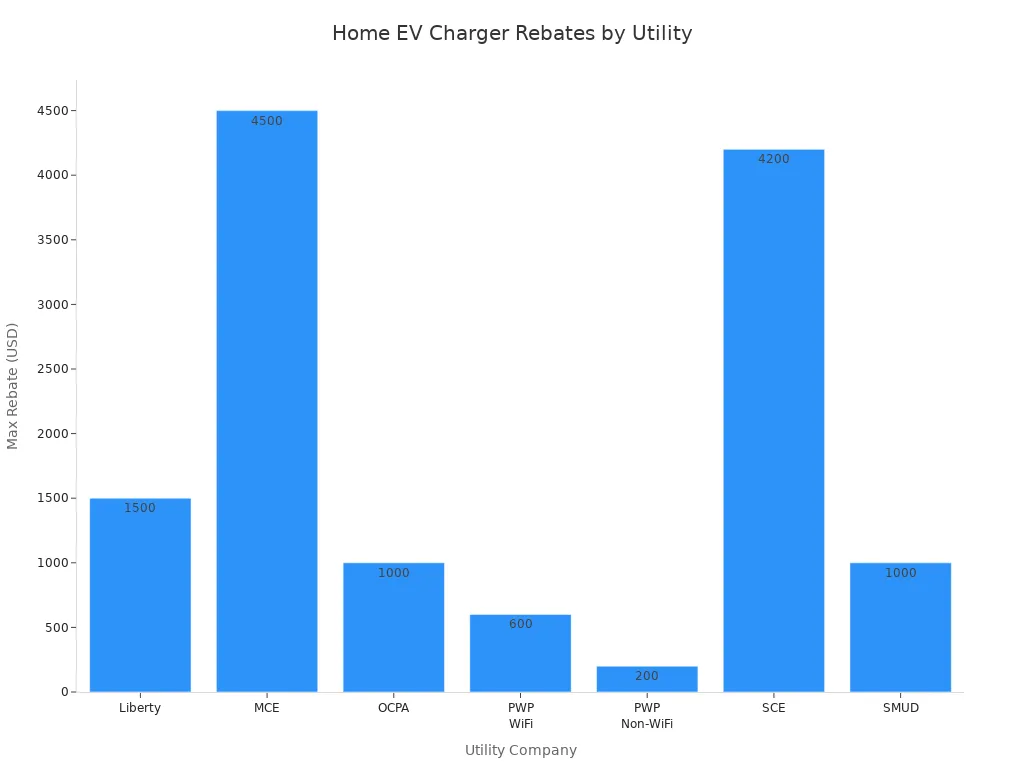
Homeowners should research available incentives before starting installation. These programs can significantly reduce the total cost and make EV charging more accessible.
DIY vs. Professional Home EV Charger Installation
Pros and Cons of Self-Installation
Cost Savings and Flexibility
Many homeowners consider a DIY approach to installing a home EV charger because it can reduce upfront costs and offer more flexibility in scheduling. Installing the charger without hiring an electrician may save between $500 and $1,200. Home charging also provides convenience, reduces range anxiety, and allows for reliable charging compared to public stations. Most modern chargers are weatherproof, so outdoor installation is possible. The following table summarizes the main advantages and disadvantages:
| Advantages | Disadvantages |
|---|---|
| Charging at home is convenient and reduces range anxiety | Installation can be costly in older homes needing upgrades |
| Most chargers are weatherproof for outdoor use | Renters may face restrictions on installation |
| Home charging is more reliable than public stations | Off-street parking is necessary |
Risks, Responsibilities, and Safety Concerns
DIY installation comes with significant risks and responsibilities. Overloading circuits with a high-powered charger can cause overheating or fire hazards, especially in homes with older wiring. Using an unsuitable extension cord for the cable increases the risk of overheating and fire. Handling the cable with wet hands can lead to electric shocks. Practical hazards, such as tripping over the cable or forgetting to unplug, may cause accidents or damage. Homeowners must ensure compliance with local regulations, as code violations can result in fines or legal issues. A licensed electrician is often required for Level 2 charger installation to maintain safety and warranty protection.
Benefits of Hiring a Professional Installer
Expertise, Compliance, and Warranty Support
A professional installer brings expertise and ensures compliance with all local and national regulations. Licensed electricians minimize risks associated with high-voltage installations and guarantee that the cable is installed correctly. Many manufacturers require professional installation to keep the charger warranty valid. For example, some warranties do not cover damage from improper installation, so DIY work could void coverage. Professionals also ensure that the installation meets all code requirements, which is essential for insurance and liability protection.
| Benefit | Description |
|---|---|
| Safety and Compliance | Ensures installations meet safety standards and obtain necessary permits, reducing risks |
| Warranty and Insurance | Protects against voiding warranties and impacts on insurance coverage |
| Expertise and Experience | Professionals have the knowledge and skills to ensure high-quality installations |
| Time Savings | Professionals complete installations quickly, saving homeowners time and effort |
| Efficiency and Reliability | Optimizes installation for performance, ensuring faster and more consistent charging |
| Peace of Mind | Provides assurance that the installation is done correctly, reducing worries about issues |
End-to-End Service and Peace of Mind
Professional installers manage every step, from evaluating the electrical panel to securing permits and testing the charger. They select the correct cable, install surge protection, and ensure the charger operates efficiently. This end-to-end service reduces stress for the homeowner and provides peace of mind. Homeowners can trust that the installation meets all safety standards and will not create future problems.
Making the Right Choice for Your Home
Evaluating Your Situation and Electrical System
Before deciding between DIY and professional installation, homeowners should assess their electrical system and personal skills. They need to check if the panel can handle the extra load and if the cable routing is straightforward. If the home has outdated wiring or limited capacity, a professional should handle the installation. Homeowners must also consider if they can meet all compliance requirements and manage the risks of working with high-voltage cables.
Key Questions to Ask Before Deciding
- Does the home’s electrical panel support the charger’s power needs?
- Can the cable be installed safely and neatly?
- Are all local regulations and permit requirements understood?
- Will DIY installation affect the charger’s warranty or insurance coverage?
- Is the homeowner comfortable managing the risks of high-voltage cable work?
Tip: When in doubt, consult a licensed electrician to ensure a safe and compliant installation.
Essential Safety Tips for Successful Home EV Charger Installation

Planning and Preparation
Double-Checking Requirements and Permits
A homeowner must review all requirements before starting a home EV charger installation. He or she should confirm that the charger matches the vehicle’s specifications and that the electrical panel supports the increased load. Local regulations often require permits for new installations. Skipping this step can result in fines or failed inspections. The installer should gather all necessary documentation, including charger specifications and electrical diagrams, to streamline the approval process.
Tip: Always verify permit requirements with local authorities before purchasing equipment.
Preparing for Inspection and Approval
Preparation for inspection ensures compliance and safety. The installer should organize all paperwork, including permit receipts and installation plans. He or she must check that the charger location meets code requirements for mounting height and distance from combustible materials. Scheduling an inspection early helps avoid delays. Inspectors look for proper cable management, secure mounting, and adherence to regulations.
Avoiding Common Installation Mistakes
Overloading Circuits and Skipping Permits
Many installation failures stem from overloaded circuits and missing permits. He or she should avoid connecting the charger to an existing circuit that cannot handle the extra load. This mistake can cause circuit trips or fire hazards. Attempting a diy installation without a licensed electrician often leads to improper wiring and safety violations. Skipping permits and inspections may result in legal issues and costly repairs.
Common mistakes include:
- Not ensuring the electrical panel can handle the increased load.
- Skipping necessary permits and inspections.
- Attempting installation without professional guidance.
Improper Cable Management and Surge Protection
Proper cable management reduces physical hazards and improves reliability. The installer should avoid placing the charger too far from the parking area, which can lead to entangled cords and tripping risks. He or she must secure the cable with clips or conduits and inspect for physical damage. Surge protection devices help prevent power surges that can damage the charger or vehicle. Neglecting these steps increases the risk of failed inspections and long-term safety issues.
Frequent hazards include:
- Physical damage to the cable or port.
- Power surges from inadequate protection.
- Poor routing or unsecured cable placement.
Post-Installation Safety Checklist
Final Safety Checks and Charger Registration
After installation, the installer should perform a thorough safety check. He or she must inspect all connections, verify that the cable is undamaged, and confirm that the charger operates correctly. Registering the charger with the manufacturer ensures warranty coverage and access to support. The installer should document the installation process and keep records for future reference.
| Safety Check | Action Required |
|---|---|
| Cable Inspection | Check for wear, damage, or overheating |
| Charger Functionality | Confirm proper operation and communication |
| Documentation | Record installation details and permits |
| Registration | Register charger for warranty and support |
Monitoring Performance and Maintenance
Ongoing monitoring helps maintain safety and compliance. The homeowner should check the charger’s performance regularly and inspect the cable for signs of wear. Planning for future upgrades, such as higher-capacity chargers, ensures continued reliability. Routine maintenance and prompt attention to issues protect the home and vehicle from electrical hazards.
Note: Regular maintenance and monitoring extend the life of the charger and reduce the risk of unexpected failures.
Homeowners should prioritize safety when installing a home ev charger. They must follow all local codes and schedule inspections to avoid legal issues. The following table highlights essential risks and benefits:
| Risk/Benefit | Description |
|---|---|
| Electrical Hazards | Improper installation can cause shocks, overheating, or fires. |
| Voiding Your Warranty | DIY work may void warranties and lead to expensive repairs. |
| Home Insurance Risks | Unapproved changes can result in denied insurance claims. |
| Legal and Compliance Issues | Non-compliance may lead to fines. |
| Safe and Compliant Installation | Professional installation ensures safety standards. |
Tip: Seek professional help if the electrical system seems outdated or if code requirements are unclear.
FAQ
Can a homeowner install a home EV charger without a permit?
Local codes usually require a permit for home EV charger installation. He or she should contact the local building department before starting the project. Permits help ensure safety and compliance with regulations.
What safety gear should someone use during installation?
He or she should wear insulated gloves, safety glasses, and non-conductive footwear. Personal protective equipment reduces the risk of electrical shock and injury during installation.
When should a homeowner hire a certified electrician?
A homeowner should hire a certified electrician if the electrical panel needs upgrades, the wiring is outdated, or local codes require professional installation. This ensures compliance and safety.
How long does a typical installation take?
Most installations take between two and four hours. The process may take longer if the electrical panel requires upgrades or if the charger location is far from the panel.
What is the role of an experienced ev installer?
An experienced ev installer evaluates the home’s electrical system, selects proper equipment, and ensures the charger meets all safety standards. He or she also manages permits and inspections.
Can a recognised installer help with rebates and incentives?
A recognised installer often assists with rebate applications and documentation. He or she understands local programs and helps homeowners maximize available incentives.
Is surge protection necessary for home EV chargers?
Surge protection is recommended. It protects the charger and vehicle from voltage spikes and electrical surges, reducing the risk of damage.