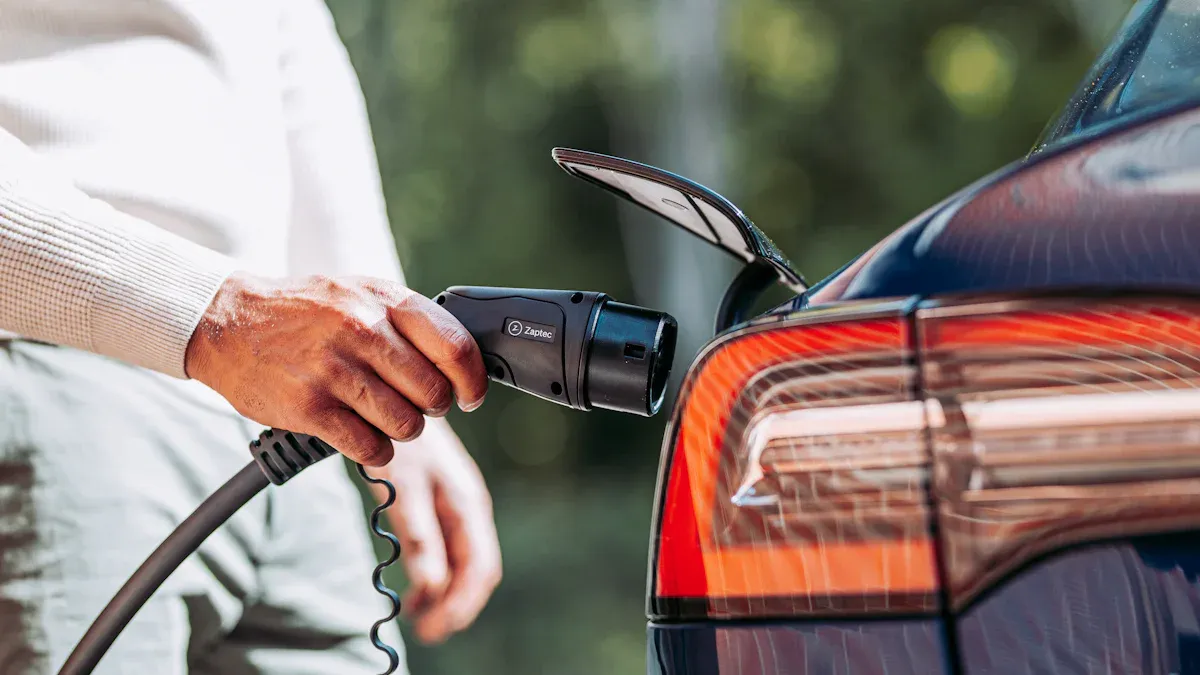
An EV driver’s primary concern in Argentina is grid stability. A charging box must handle power fluctuations effectively. The most critical feature is built-in Overvoltage and Undervoltage Protection (OVP/UVP). This function is non-negotiable for safe charging. It automatically disconnects the EV-Ladegerät from the supply during unsafe voltage events. This protects both the charger’s internal components and the vehicle’s sensitive battery system from permanent damage.
The country’s electrical grid has shown vulnerability.
- A massive 2019 power failure affected nearly 50 million people in Argentina and neighboring countries.
- This unprecedented event stemmed from transmission line failures.
This history underscores the need for robust EV-Ladelösungen. Hersteller von EV-Ladegeräten like TPSON design products, including tragbare EV-Ladegeräte, with these protective features to ensure reliability.
Essential Built-in Protections for Your Charging Box

A charging box must do more than just deliver power; it must manage that power safely. For the Argentinian grid, this means having a multi-layered defense system built directly into the unit. These internal safeguards are the first and most important line of defense for your vehicle and home.
Overvoltage and Undervoltage Protection (OVP/UVP)
How It Shields Your Charger and EV
Overvoltage and Undervoltage Protection (OVP/UVP) acts as a vigilant gatekeeper for your EV’s charging system. This function continuously monitors the incoming voltage from the electrical grid.
- During an overvoltage event (a voltage surge), the protection circuit instantly disconnects the power supply. This prevents excessive electricity from reaching and damaging the charger’s sensitive electronics or your vehicle’s battery management system.
- During an undervoltage event (a brownout), it also disconnects the power. Insufficient voltage can cause components to draw more current to compensate, leading to overheating and a heavy electrical load.
This dual-action shield ensures the charger only operates within a safe, predefined voltage window.
Why It’s Critical for Argentina’s Grid
Argentina’s grid experiences voltage levels that can deviate from the standard 220V. OVP/UVP is not a luxury but a necessity. It provides a robust defense against the grid’s inherent instability. For a standard 230V AC system, undervoltage protection typically activates if the voltage drops below 180V, preventing damage from low-power conditions. Advanced DC fast chargers operate across a much wider voltage range, but still rely on these protections to manage the electrical load safely.
| Produktmodell | Ausgangsspannungsbereich |
|---|---|
| TP-DC 20kW | DC50-1000V |
| TP-DC 30kW | DC50-1000V |
| TP-DC 40kW | DC50-1000V |
Without this feature, your equipment is exposed to the unpredictable nature of the local grid, risking costly repairs.
Transient Voltage Surge Suppressors (TVSS)
Defending Against Sudden Spikes
While OVP/UVP handles sustained high or low voltage, a Transient Voltage Surge Suppressor (TVSS), or surge protector, defends against a different threat: extremely brief, high-energy spikes. These transients can be caused by lightning strikes near power lines, or by large appliances cycling on and off elsewhere on the grid. A TVSS absorbs and diverts this harmful excess electricity away from your charger in milliseconds, protecting its delicate microprocessors.
OVP/UVP vs. Surge Protection
It is crucial to understand the different roles these two protections play. They work together to provide comprehensive safety against grid instability.
OVP/UVP: Manages sustained voltage fluctuations (seconds, minutes, or hours) by disconnecting the load. It protects against brownouts and longer-term overvoltage from the grid. Surge Protection (TVSS): Manages instantaneous voltage spikes (microseconds or milliseconds) by absorbing the excess energy. It protects against sudden, sharp jolts of electricity.
A quality charging solution from a provider like TPSON will incorporate both to handle the full spectrum of power quality issues on the Argentinian grid.
Ground Fault and Overcurrent Protection
Preventing Electrical Shock Hazards
Ground fault protection is a critical safety feature that saves lives. A Ground Fault Circuit Interrupter (GFCI) monitors the flow of electricity in the circuit. It measures the current going to the charger and compares it to the current returning. If it detects even a tiny imbalance—meaning some electricity is leaking to the ground, perhaps through moisture or a person—it breaks the circuit. This action happens incredibly fast, often within 25 milliseconds, to prevent a dangerous electrical shock. This rapid response is essential for any device handling a high electrical load, especially one used outdoors or in a garage.
Stopping Overheating and Fire Risk
Overcurrent protection guards against the charger drawing more electricity than the circuit can safely handle. This condition can occur due to a fault in the charger, the vehicle, or the wiring. The protection mechanism, typically a circuit breaker or fuse, trips and cuts the power. This action stops the wires from overheating, which prevents the insulation from melting and drastically reduces the risk of an electrical fire. It ensures the charging load never exceeds the capacity of your home’s electrical system or the charger’s own components, protecting your property from a significant fire hazard related to the grid.
Key Features for Reliable and Convenient Charging
Beyond core protections, certain features enhance a charging box’s reliability and convenience, especially in a region with an unstable grid. These functions provide automation and intelligence, turning the charging process from a manual task into a seamless experience. They ensure your vehicle is always ready while protecting your home’s electrical system from excessive demand.
Automatic Restart After Power Outages
The “Set It and Forget It” Benefit
An automatic restart function is essential for peace of mind. After a power outage, a charger with this feature will not require manual resetting. It automatically resumes the charging session once it verifies the grid is stable. This “set it and forget it” capability means a driver can plug in their vehicle at night and trust it will be fully charged by morning, regardless of any brief power interruptions overnight.
Ensuring a Full Charge Overnight
This feature does more than just restart; it intelligently assesses the grid’s health before resuming. Advanced chargers from providers like TPSON monitor grid frequency to ensure stability. The system responds to grid variations to protect the vehicle.
- It continues normal operation if the frequency is stable (49.8-50Hz).
- It may increase the charging rate if the frequency is high (above 50.2Hz) and the vehicle can accept it.
- It performs an immediate 100% reduction in charging if the frequency drops critically (below 49.5Hz).
- It implements a 50% power reduction if the frequency is low (49.5-49.8Hz). This ensures the charger only operates when the grid can safely support the load.
Smart Charging Capabilities
Scheduling Charges for Off-Peak Hours
Smart charging allows users to schedule sessions for specific times, typically overnight. This strategy, known as peak shaving, shifts electricity demand to off-peak hours when the grid has more capacity and electricity costs are often lower. By avoiding peak demand periods, users can significantly lower their electricity demand charges. This practice of peak shaving not only reduces electricity costs but also lessens the strain on the local grid during times of high demand. This demand charge reduction is a key benefit of smart energy optimisation. Effective peak shaving helps manage overall energy demand.
Using Load Balancing to Prevent Overloads
Load balancing is a critical feature for households, especially those with multiple EVs or other high-demand appliances. This technology acts as an intelligent power management system, preventing circuit overloads by dynamically distributing the available electrical load. It constantly monitors the main supply’s electricity demand and adjusts power delivery to the charger in real-time. For example, if total consumption approaches 95% of the site’s capacity, the system automatically reduces the charging speed to avoid power peaks and tripping breakers. This optimisation of the electrical load is key for peak shaving.
This intelligent management of demand ensures the total power consumption remains within safe limits. The system relies on several components updating at high speeds to manage the load and respond to grid conditions.
| Komponente | Funktion | Update Frequency |
|---|---|---|
| Master controller | Manages overall power distribution and communicates with individual charging points | K.A. |
| Current Transformers | Monitor electrical load on the main supply | 100ms |
| Metering device | Measures electrical load and provides real-time data to optimize charging activity and prevent overloads | K.A. |
| Intelligente Zähler | Energieverbrauch verfolgen | 1 second |
| Voltage Sensors | Monitor grid stability | 500ms |
| Temperature Probes | Detect overheating risks | 5 seconds |
The rapid update frequency of these components is crucial for effective peak shaving and managing household demand.

This approach to peak shaving ensures reliable charging without requiring costly electrical panel upgrades, even as household demand for electricity grows. It is a cornerstone of modern peak shaving strategies for managing grid demand.
How to Verify a Charging Box Has These Protections
Confirming a charger has the necessary safeguards requires careful inspection. Buyers should not rely on marketing claims alone. A thorough check of technical documents, official certifications, and user feedback provides a complete picture of a unit’s capabilities. This verification process empowers consumers to make an informed decision.
Decoding the Technical Specification Sheet
The technical specification sheet is the most direct source of information about a charger’s protective features. This document lists all the unit’s capabilities and operational parameters. Learning to read it is a critical skill for any EV owner.
Key Protective Terms to Look For
Manufacturers use specific acronyms and terms to describe safety functions. Buyers should scan the “Protection” or “Safety Features” section of the spec sheet for these key indicators.
- OVP (Overvoltage Protection): Confirms the unit disconnects during sustained high voltage.
- UVP (Undervoltage Protection): Shows the unit disconnects during brownouts or low voltage.
- Surge Protection / TVSS: Indicates defense against sudden, short-lived voltage spikes.
- Overcurrent Protection: Verifies the unit will shut down if it draws too much power.
- Ground Fault Protection / RCD / GFCI: Confirms the presence of a mechanism to prevent electrical shock.
- Over-Temperature Protection: Ensures the unit will stop charging if it begins to overheat.
Profi-Tipp: 📝 If these terms are missing from the specification sheet, a buyer should assume the charging box does not have these protections. Technologically advanced providers like TPSON clearly list these features in their product documentation.
Understanding the Input Voltage Range
The input voltage range defines the minimum and maximum voltages at which the charger can safely operate. This specification is crucial for a grid with frequent fluctuations.
A standard charger might list its input as 220V AC. A more robust unit designed for unstable grids will specify a wider range, such as 220V AC ± 20%. This wider tolerance means the charger can function correctly even if the voltage drops to 176V or rises to 264V. A wider operational range directly translates to more reliable charging performance in Argentina.
Checking for Official Certifications
Certifications from recognized standards organizations offer an independent guarantee of safety and quality. These marks show that a product has undergone rigorous testing to meet specific industry requirements.
The Importance of IRAM Certification
Die Instituto Argentino de Normalización y Certificación (IRAM) is Argentina’s national standards body. An IRAM mark on an electrical product signifies that it complies with local safety regulations and is suitable for the Argentinian electrical environment.
This certification is a crucial indicator of a product’s fitness for the local market. It verifies that the product meets specific requirements for electrical safety, plug type, and performance under local grid conditions. Prioritizing IRAM-certified products is a non-negotiable step for safety.
Understanding International Standard IEC 61851
IEC 61851 is the global standard for electric vehicle conductive charging systems. It defines the safety requirements, communication protocols, and performance criteria for EV chargers worldwide. Compliance with this standard ensures a charger communicates correctly with the vehicle to manage the charging session safely. It covers aspects like:
- Control pilot signaling between the charger and the EV.
- Requirements for connectors and cables.
- General safety and construction standards.
A charger that meets IEC 61851 standards, like those from TPSON, offers a high degree of reliability and interoperability with a wide range of electric vehicles.
Sourcing Real-World User Reviews
Technical specifications and certifications tell part of the story. Real-world user experiences reveal how a product performs over time in a specific environment.
Finding Feedback from Local Users
Local knowledge is invaluable. Argentinian EV owners often share their experiences in dedicated online communities. Prospective buyers can find honest feedback in these places:
- Local EV Forums: Websites and forums dedicated to electromobility in Argentina.
- Social Media Groups: Facebook or WhatsApp groups for Argentinian EV enthusiasts.
- Supplier Websites: Some local distributors may feature customer testimonials or reviews.
These platforms provide insight into how specific models handle local power cuts, voltage sags, and surges.
Identifying Common Model Failures
When reading reviews, a buyer should look for patterns. A single negative review could be an isolated incident. Multiple users reporting the same problem suggests a potential design flaw or weakness.
Common Red Flags to Watch For: 🚩
- Charger frequently enters a fault state and requires a manual reset.
- Unit fails to restart automatically after a power outage.
- Reports of the charger overheating during long sessions.
- Complaints about the unit failing completely after a few months of use.
Identifying these trends helps buyers avoid models that are not durable enough for the challenges of the local grid.
Adding External Layers of Electrical Protection
While a charging box with built-in safeguards is essential, adding external devices creates a comprehensive defense system. These layers provide robust protection for your entire home against the unpredictable Argentinian grid. This strategy is key for long-term reliability and managing household electricity demand.
Installing a Whole-House Surge Protector
Your Home’s First Line of Defense
A whole-house surge protector is the home’s primary shield against external voltage spikes. An electrician installs this device directly at the main electrical panel. It stops powerful surges originating from the grid before they can travel through the home’s wiring. This is the first and most important barrier.
These protectors are engineered to handle significant electrical events. A quality unit tested to standards like BS EN 61643-11 can manage a maximum surge current of 40kA. It provides full-mode protection, defending against transients without interrupting the electricity supply. This device manages the incoming load from the grid, reducing the demand on internal protectors.
Protecting More Than Just Your EV
The benefit of a whole-house protector extends beyond the electric vehicle. It safeguards every sensitive electronic device in the home.
- Computers and routers
- Televisions and entertainment systems
- Smart home appliances
- LED lighting systems
By protecting all electronics from grid-induced damage, this single installation offers immense value. It reduces the overall electrical load stress during a surge event, which helps manage demand.
Using a Dedicated Voltage Stabilizer (Regulator)
When a Stabilizer Becomes Necessary
A voltage stabilizer, or regulator, addresses a different problem: chronic voltage instability. If a home is in an area where the grid voltage consistently sags below or swells above the standard 220V, a stabilizer becomes necessary. It actively corrects the incoming electricity, ensuring a steady and safe voltage output. This is crucial when fluctuations are too frequent or severe for the charger’s internal OVP/UVP to handle without constant interruptions. This device ensures grid stability for the home’s electrical load, which is a prerequisite for effective peak shaving and managing demand. Advanced energy management, including energy storage solutions, relies on this kind of stable power.
Stabilizer vs. Whole-House Protector
Homeowners must understand the distinct roles of these two devices to manage their electricity demand effectively. This knowledge helps lower electricity costs and electricity demand charges through better power optimisation.
Whole-House Surge Protector:
- Function: Clips instantaneous, high-energy voltage spikes.
- Best For: Defending against lightning or grid switching events. It is a core part of any peak shaving strategy to protect equipment that manages load.
Voltage Stabilizer (Regulator):
- Function: Corrects sustained low or high voltage over seconds, minutes, or hours.
- Best For: Areas with constant “brownouts” or overvoltage from an unreliable grid. It enables consistent operation, which is vital for peak shaving and managing demand.
In highly unstable areas, using both devices offers the ultimate protection. A stabilizer provides a consistent voltage, while the surge protector guards against sudden spikes. This combination supports advanced energy storage solutions and ensures the entire system can handle the grid’s demand, which is essential for peak shaving to reduce electricity costs and electricity demand charges. This dual approach manages the electrical load and demand from the grid.
Professional Installation and Local Considerations
Selecting the right hardware is only half the battle. Proper installation and local support are critical for ensuring a safe and reliable charging experience. These steps protect the investment and manage the increased electricity demand on a home’s system.
Why You Need a Certified Installer
A certified installer provides essential expertise that goes far beyond simply mounting a box on a wall. Their involvement is a crucial safety measure.
Assessing Your Home’s Electrical System
A qualified electrician begins by conducting a thorough assessment of the home’s electrical infrastructure. They evaluate the main panel’s capacity to handle the new demand. The installer checks the existing wiring’s gauge and condition to ensure it can support the sustained electricity demand of an EV charger. This evaluation determines if upgrades are necessary to prevent overloads and manage the increased demand safely. This professional oversight is vital for managing household electricity demand.
Ensuring a Safe and Compliant Setup
Certified installers ensure the entire setup adheres to Argentina’s electrical codes and safety standards. They guarantee correct wiring, proper grounding, and the installation of appropriate circuit breakers. This compliance is not just a formality; it is fundamental to preventing electrical hazards. A professional setup manages the high electricity demand of the charger, safeguarding both the property and its occupants. Their work meets the high demand for safety.
Wichtiger Hinweis: ⚠️ A non-compliant installation can void the charger’s warranty and may not be covered by homeowner’s insurance in the event of an incident. The demand for a certified professional is non-negotiable.
Consulting with Reputable Suppliers
The supplier a buyer chooses is as important as the charger itself. A reputable supplier offers quality products and essential post-purchase support.
Identifying Brands Built for Argentina
Buyers should seek out brands that design products specifically for the challenges of the Argentinian grid. Technologically advanced providers like TPSON engineer their chargers with robust internal protections to handle local power fluctuations. These units are built to a higher standard of resilience than generic models. Choosing a brand familiar with the local market’s demand ensures better performance and durability. The high demand for reliable products makes this a key consideration.
Inquiring About Warranty and Local Support
A strong warranty is a mark of a manufacturer’s confidence in its product. Buyers should ask specific questions before purchasing:
- What is the duration of the warranty?
- Is there a local service center in Argentina for repairs or replacements?
- How accessible is customer and technical support?
Having local support is invaluable when issues arise. It ensures quick resolutions without the complications of international shipping or time zone differences. This local presence meets the high demand for customer service and manages the demand for quick solutions.
Understanding Argentina’s Electrical Standards

A buyer’s knowledge of Argentina’s electrical standards is fundamental to choosing a compatible and safe charging box. These national requirements dictate everything from voltage tolerance to the physical plug shape. Adhering to them is not optional; it is the first step in safely managing the new electrical load and demand on a home’s system. This understanding is crucial for any peak shaving strategy.
Voltage, Frequency, and Plug Types
Every country has unique electrical specifications. A charger must match these specifications perfectly to function correctly and safely. The high demand of EV-Laden makes this alignment critical.
Argentina’s 220V/50Hz Standard
Argentina’s electrical grid operates on a 220V supply voltage and a 50Hz frequency. Any charging box installed in the country must be designed to work with this standard. This ensures the device can handle the typical power supplied by the local grid. The charger’s ability to manage this specific voltage is key to its performance and longevity, forming the basis for any peak shaving efforts.
| Country / state / territory | Single-phase voltage (volts) | Frequency (hertz) |
|---|---|---|
| Argentina | 220 V | 50 Hz |
The Type I Plug Requirement
The country exclusively uses the Type I plug and socket, which features three flat pins. A charging box must have a compatible Type I plug to connect to a wall outlet without unsafe adapters. This requirement ensures a secure physical and electrical connection capable of handling the high-power load and demand of EV charging. Technologically advanced providers like TPSON offer chargers that meet this specific regional demand.
Potential Wiring Issues
Beyond the plug and voltage, the quality of a building’s internal wiring presents a significant variable. Old or incorrect wiring can create serious hazards when introducing a high-demand appliance like an EV charger. This is where professional verification becomes essential for managing the load from the grid.
Checking for Correct Polarity
Incorrect electrical polarity is a hidden but severe danger. It occurs when the live and neutral wires are reversed at the socket. This fault can lead to life-threatening risks, as a circuit may remain live even when a switch is in the ‘off’ position. This is a major concern for the stability of the home’s connection to the grid.
Dangers of Reversed Polarity: ⚡
- Switches may break the neutral wire instead of the live one, leaving the charger’s circuits energized.
- Fuses and circuit breakers might fail to disconnect the dangerous voltage, creating a shock hazard.
- The entire earthing system can become live, posing a lethal risk on any connected metalwork.
This issue undermines all safety features and must be checked before installation to manage the electrical load safely. The high demand of charging makes this check critical.
The Role of Your Installer in Verification
A certified installer is the only person qualified to verify correct polarity and assess wiring integrity. They use specialized tools to confirm the electrical system is safe for the increased demand of an EV charger. This professional verification is the foundation for safely managing the home’s connection to the grid. It ensures the system can support advanced strategies like peak shaving, which helps lower overall electricity costs. Proper installation manages the load and demand, which is a prerequisite for reducing electricity demand charges. Effective peak shaving relies on a correctly installed system to manage the demand from the grid. This professional step is crucial for reducing electricity demand charges through peak shaving.
A buyer’s final checklist ensures they select a fluctuation-proof charging box for Argentina. Prioritizing these features safeguards an EV investment and ensures reliable charging for years.
- Must-Have: Built-in Overvoltage/Undervoltage Protection (OVP/UVP).
- Recommended: Surge Protection (TVSS) and Automatic Restart.
- Verification: Check the technical sheet and IRAM certification.
- Extra Security: Install a whole-house surge protector and consider a voltage stabilizer for maximum grid stability.
FAQ
Why is OVP/UVP the most critical feature for Argentina?
Overvoltage and Undervoltage Protection (OVP/UVP) is non-negotiable. It shields the charger and vehicle from Argentina’s frequent grid fluctuations. This feature is essential to manage the high demand for stable power and prevent costly damage.
Can a user install their own charging box?
No. A certified installer must perform the installation. The professional assesses the home’s electrical system to ensure it can handle the new electricity demand. This step is critical for safety and compliance.
What is the main benefit of smart charging?
Smart charging enables peak shaving. Users can schedule charging for off-peak hours when grid demand is lower. This practice of peak shaving reduces electricity costs and lessens strain on the local grid.
Is IRAM certification really necessary?
Yes, absolutely. IRAM certification verifies that a product meets Argentina’s specific safety and electrical standards. It confirms the charger is built to handle local grid demand and is a high-demand feature for ensuring safety.
How does peak shaving help the electrical grid?
Peak shaving shifts electricity consumption to off-peak periods. This strategy of peak shaving reduces the overall demand on the grid during its busiest hours, which contributes to greater stability for everyone.
What if a home experiences constant brownouts?
A voltage stabilizer is the best solution for chronic low voltage. It ensures the charger receives consistent power when the grid cannot meet the demand. This stability is crucial for effective peak shaving.
Do all charging boxes offer peak shaving capabilities?
No, this is a smart feature. Technologically advanced providers like TPSON include it to help users manage their energy demand. Effective peak shaving requires a charger with this specific programming and capability.