Installing an EV Charger at home often involves several costs associated with equipment, labor, and upgrades. The cost to install depends on the type of charging unit, the complexity of electrical work, and the preferences for charging at home. Individuals should review costs from EV charger manufacturers and factor in every expense to avoid surprises. Understanding each cost helps homeowners make informed decisions about their charging setup.
- Typical installation cost varies by location and charger type.
- Key costs include equipment, labor, and electrical modifications.
- Careful planning ensures efficient and safe charging at home.
Home EV Charger Installation: Typical Cost Range

Average Cost to Install a Home Charging Station
Homeowners often ask about the typical installation cost for a dedicated home EV charger. The price varies based on several factors, including the type of charger and the complexity of the installation. Most people in the United States pay within a certain range for a home charge point.
- Normal Range: $551 – $1,382
- Average Cost: $964
- Minimum Cost: $300
- Maximum Cost: $2,500
Level 1 vs. Level 2 Charging Costs
Level 1 chargers use a standard 120-volt outlet and usually come with the vehicle. These chargers have minimal installation cost, as they do not require special wiring or upgrades. Level 2 chargers, which offer faster charging speeds, need a 240-volt outlet and often require professional installation.
- Level 2 home chargers typically cost around $500 for the unit.
- The price can reach $1,000 or more for advanced models.
- Professional installation costs range from $400 to $1,200 or higher, depending on the complexity.
Level 2 charging provides significant convenience for daily use, but the costs associated with installation and equipment are higher than Level 1 options.
Regional and Local Price Differences
Installation cost can change based on location. Urban areas and regions with higher labor rates often see increased prices. For example, cities with higher living costs may charge 10-15% more for installation services. Local permitting fees and inspection requirements also affect the final cost. Homeowners should check with local authorities and contractors to understand regional variations.
Key Factors Affecting the Total Cost
Several factors influence the total cost of installing a home EV charger. Each home presents unique challenges, and the final price depends on the specific situation.
| Factor | Description | Cost Range |
|---|---|---|
| Type of Charger | Premium brands with advanced features command higher prices. | $500-$1,200+ installed |
| Installation Complexity | Longer cable runs and groundworks can increase costs. | $10-$20 per foot |
| Electrical System Upgrades | Upgrading the consumer unit or electrical panel may be necessary. | $300-$5,000+ |
| Regional Variations | Installation costs vary by location, with urban areas being higher. | 10-15% higher in cities |
| Labor Costs | Complexity and time required for installation affect labor charges. | $50-$100 per hour |
| Permitting and Inspection Fees | Costs for permits and inspections vary by location. | $50-$300+ |
Home Electrical System and Setup
The age and condition of a home’s electrical system play a major role in determining installation cost. Older homes may need significant upgrades or complete replacements of electrical panels to support a dedicated home EV charger. In some cases, homeowners pay between $2,000 to $4,000 for a Level 2 charger installation due to longer wiring runs or light electrical modifications. Extreme cases, which occur in about 3% of installations, cost up to $7,000 when heavy updates or replacements of outdated wiring and electrical boxes are required.
Tip: Homeowners should schedule an electrical assessment before purchasing a charger. This step helps identify potential upgrades and avoid unexpected costs associated with installation.
Charger Features and Brand Choices
Charger features and brand choices also impact the total cost. Basic models offer standard charging capabilities, while smart chargers provide Wi-Fi connectivity, energy monitoring, and app integration. Premium brands with advanced features command higher prices. Homeowners should compare options and select a charger that fits their needs and budget.
Note: Investing in a smart charger may increase upfront costs but can offer long-term benefits such as energy savings and remote management.
Costs Associated with Charger Equipment
Price of Home Charging Units
Selecting the right electric car charger for a home involves understanding the price differences between models. The installed price for popular home charging units varies based on brand, features, and installation complexity. The following table shows the installed prices for several leading models:
| Model | Installed Price |
|---|---|
| Hive Mini Pro 3 | £1,219 |
| Indra Smart LUX | £1,099 |
| Indra Smart PRO | £949 |
| Indra Smart PRO – Black | £970 |
| Ohme ePod | £999 |
| Ohme Home Pro | £1,049 |
| VCHRGD Seven Pro | £869 |

Basic vs. Smart Charger Costs
The costs associated with a home charger depend on whether the unit is basic or smart. Basic electric car chargers offer standard charging without connectivity features. Smart chargers provide advanced options such as app integration and energy monitoring. The table below outlines the cost range for different charger types and charging speeds:
| Charger Type | Charging Speed | Cost Range (Installed) |
|---|---|---|
| 3.6kW | ~15 miles/hour | £450-£700 |
| 7kW | ~25-30 miles/hour | £550-£850 |
| 11kW | ~35-40 miles/hour | £650-£950 |
| 22kW | ~75-80 miles/hour | £950-£1,500 |
Smart chargers usually cost more upfront but can help manage energy use more efficiently.
Indoor vs. Outdoor Charging Models
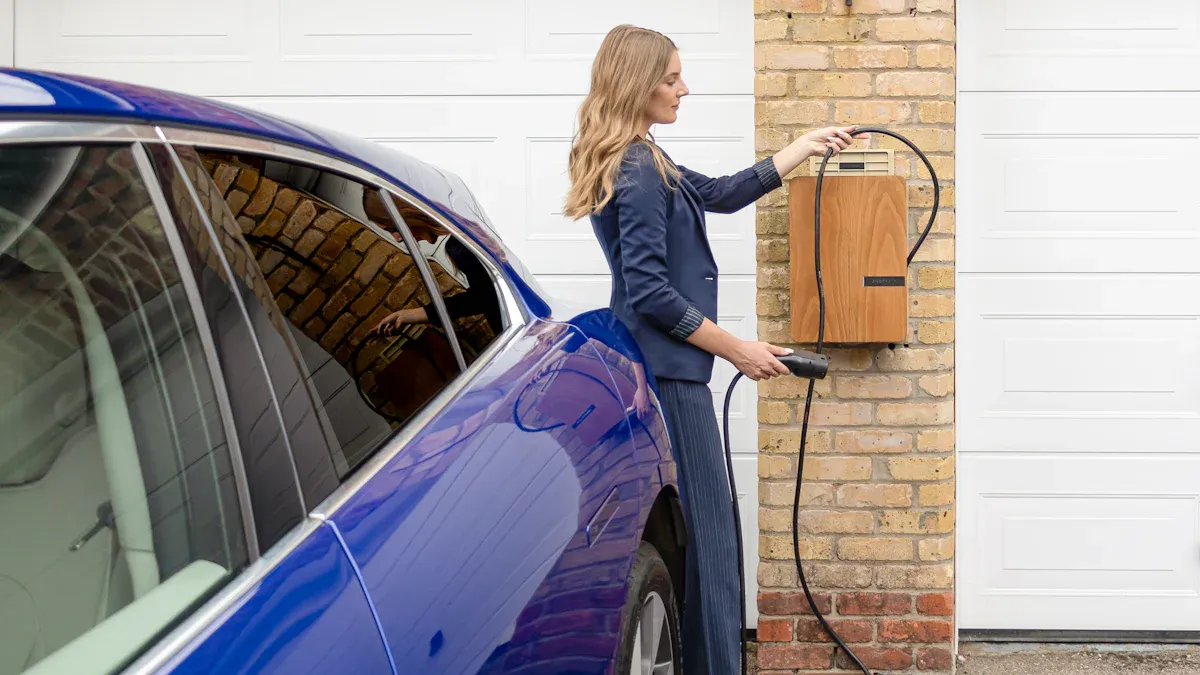
Homeowners must also decide between indoor and outdoor electric car charger models. Outdoor chargers require weatherproofing and durable enclosures, which can increase the cost. Indoor models, installed in garages or sheltered areas, often have lower installation expenses. The choice depends on the location of the parking space and the need for protection against weather.
Accessories and Add-On Costs
Accessories and add-ons play a significant role in the total cost of installing an electric car charger at home. These items ensure safe, convenient, and efficient charging.
Mounting Hardware Expenses
Mounting hardware secures the charger to a wall or post. The price for mounting kits varies by manufacturer and installation type. Most installations require brackets, fasteners, and sometimes protective covers. These hardware expenses can add a modest amount to the overall cost, especially for outdoor setups.
Cable Management Solutions
Proper cable management keeps charging cables organized and reduces tripping hazards. Solutions include wall-mounted hooks, retractable reels, and cable holders. The typical costs for accessories and add-ons include:
- Installation costs: €389 to €800, depending on excavation work and fuse box adjustments.
- Charging cable costs: €160 to €340, based on cable type and length.
- Connection upgrades: Vary by network operator and electrical requirements.
Note: Investing in quality accessories can extend the lifespan of the electric car charger and improve daily convenience.
Installation Labor and Professional Fees
Electrician Labor Costs for Home Charging
Hourly Rates vs. Flat Installation Fees
Electricians play a crucial role in setting up a home charger. Labor costs for installing a home EV charging station typically range from $40 to $100 per hour. Many electricians offer flat installation fees for straightforward projects, which can help homeowners budget more accurately. Simple installations often cost between $800 and $1,300. The final price depends on the region, with higher rates in the Western and Northeastern United States compared to the Central and Southeastern states.
Tip: Request a detailed quote from the electrician before starting the project. This step helps clarify whether the fee is hourly or flat and what services are included.
Installation Complexity and Time
The complexity of the installation process directly affects professional fees. For a Level 2 EV charger, average labor fees range from $400 to $1,000. Level 3 installations can cost between $1,000 and $3,500. More intricate installations, such as those requiring trenching or extensive electrical work, will further increase these costs. The time required for installation varies. A simple Level 2 charger may take a few hours, while complex setups could extend to several days. Electricians assess the site and determine the best approach based on the home’s electrical system and the location of the charging station.
| Installation Type | Labor Fee Range | Typical Time Required |
|---|---|---|
| Level 2 (Simple) | $400 – $1,000 | 2-4 hours |
| Level 2 (Complex) | $1,000 – $2,500 | 1-2 days |
| Level 3 | $1,000 – $3,500 | 2-3 days |
Additional Contractor and Service Charges
Site Assessment and Consultation Fees
Before installation begins, contractors often conduct a site assessment. This evaluation helps identify any challenges with the home’s electrical system or the location for the charger. Consultation fees typically range from $50 to $200. These costs associated with the initial assessment ensure the installation proceeds smoothly and safely.
Travel and Service Area Costs
Contractors may charge additional fees for travel, especially if the home is outside their standard service area. These costs can range from $25 to $100, depending on distance and accessibility. Homeowners should confirm these charges when scheduling the installation to avoid unexpected expenses.
Note: Selecting a local contractor can help reduce travel fees and streamline the installation process.
Electrical Upgrades and Home Modifications
Panel Upgrade Costs for Home Charging
Upgrading to Higher Amperage Panels
Many homes require an electrical panel upgrade before installing a home charger. Electricians often recommend higher amperage panels to support the increased load from Level 2 EV chargers. The cost for upgrading depends on the amperage needed and the complexity of the installation.
| Amperage Panel | Cost Range | Notes |
|---|---|---|
| Lower Amperage | $200 – $3,000 | May require an upgrade to support Level 2 EV chargers (30-80 amps). |
| Higher Amperage | Varies significantly | Essential for accommodating the load of EV chargers and other appliances in the home. |
Higher amperage panels allow for greater power distribution. Level 2 chargers typically require 30 to 50 amps, with some models needing up to 80 amps. If the existing panel is older or has lower amperage, an upgrade becomes necessary.
Replacing Outdated Electrical Panels
Older homes often have outdated electrical panels that cannot handle the demands of modern charging equipment. The panel itself usually costs between $250 and $450. Labor for replacement ranges from $1,000 to over $3,000, depending on installation complexity. Additional upgrades, such as moving the panel or installing a subpanel, can add $800 to $3,000 and $500 to $1,800 respectively. In rare cases, a complete home rewiring project may exceed $8,000.
Tip: Homeowners should consult a licensed electrician to assess the current panel and determine if an upgrade or replacement is necessary for safe EV charging.
Wiring and Circuit Installation Costs
Running New Dedicated Circuits
Installing a home charger often requires a new dedicated circuit. Electricians charge between $50 and $100 per hour for this work. Wiring costs range from $2 to $4 per linear foot, while conduit materials cost $0.50 to $2 per linear foot. The total for wiring and conduit usually falls between $500 and $1,500. Labor costs average between $500 and $2,000, depending on the complexity and distance from the panel to the charger location.
Trenching for Outdoor Charging Installations
Outdoor installations may require trenching to run wiring underground. This process increases both labor and material costs. Electricians factor in the length of the trench and the type of soil when estimating the final price. Homeowners should expect higher costs for outdoor setups compared to indoor installations.
Note: Proper planning for wiring and trenching ensures a safe and reliable connection for the home charger.
Permit and Inspection Fees
Local Permit Requirements and Costs
Most jurisdictions require permits for installing a home charger. Permit fees typically range from $50 to $300, depending on local regulations and installation complexity. In larger cities, such as those in California, permit costs can reach $300 to $500 or more. Some small towns may not require a permit, or the fee could be as low as $30 to $50.
- Electrical Permit: Required for significant electrical changes or new circuits.
- Inspection Fee: Covers the cost of an official safety check.
Inspection Scheduling and Associated Fees
Inspections ensure the installation meets safety standards and local building codes. Fees for inspections usually fall between $50 and $300. Some jurisdictions combine permit and inspection fees, while others charge separately. Building codes may require modifications to electrical components, which can affect the overall cost.
Permits and inspections are critical for legal compliance and safety. Homeowners should budget for these fees when planning a home EV charging installation.
Optional Features and Smart Charging Technology

Smart Home Charging Capabilities and Costs
Smart home charging capabilities offer significant advantages for homeowners seeking efficiency and convenience. These systems allow users to schedule charging sessions, monitor energy usage, and optimize charging based on electricity tariffs. The initial purchase price and installation fees for these advanced systems depend on the type of charger, installation complexity, and local regulations. Many homeowners choose smart charging to reduce long-term expenses and improve daily routines.
- Smart charging can lower costs by optimizing charging times according to electricity rates.
- Integration with smart home systems enhances convenience and energy management.
- Scheduling and monitoring features help users track charging sessions and manage energy use.
Wi-Fi and App Integration Expenses
Wi-Fi and app integration have become standard in many modern home charging solutions. These features enable remote control, real-time monitoring, and access to advanced settings. The table below outlines how connectivity options impact the price and functionality of charging systems:
| Feature | Wi-Fi Chargers | Mobile Data Chargers |
|---|---|---|
| Connectivity Requirement | Must have Wi-Fi or connectivity | May require data subscription |
| Cost Implication | Typically no extra cost | Possible ongoing fees after initial period |
| Smart Features Access | Allows charge scheduling and tariff integration | May limit access to smart features after free period |
Wi-Fi-enabled chargers usually do not add extra cost beyond the initial purchase. Mobile data chargers may require a subscription after a free trial period, which can increase ongoing expenses.
Energy Monitoring and Management Features
Energy monitoring and management features provide valuable insights into electricity consumption. Homeowners can track usage patterns, identify peak hours, and adjust charging behavior for maximum savings. Smart home technology supports scheduling and monitoring, which can lead to better energy management and cost savings over time. These features help users make informed decisions about their charging habits and electricity use.
Safety and Convenience Upgrades
Safety and convenience upgrades play a crucial role in protecting both the home and the EV charger. These enhancements ensure reliable operation and extend the lifespan of the charging equipment.
Surge Protection for Home Charging
Surge protection devices safeguard the home charger from voltage spikes and electrical surges. The installation of a surge protection device typically adds around £50 to the total cost. This small investment can prevent costly damage to both the charger and the vehicle. Many electricians recommend surge protection as a standard safety measure for any home charging setup.
Weatherproofing and Durability Enhancements
For outdoor installations, weatherproofing becomes essential. Outdoor-rated wiring and sockets, along with IP-rated fittings, protect the charger from rain, dust, and temperature fluctuations. These enhancements ensure the charging system remains safe and functional in all weather conditions. Homeowners should select chargers designed for outdoor use if the installation site is exposed to the elements.
Tip: Investing in safety and durability upgrades can reduce maintenance needs and extend the life of the home charger.
Ongoing Costs After Home Charger Installation
Maintenance and Repair Costs
Routine Inspection and Service Fees
Homeowners must consider the costs associated with maintaining their electric car charging equipment. Routine inspections help identify potential issues before they become major problems. Most experts recommend scheduling inspections throughout the year. Regular maintenance costs for home electric car charging stations typically range from $200 to $400 annually. Neglecting these inspections can lead to higher expenses, especially if the warranty becomes void due to lack of service.
- Professional service visits for electric car charging equipment usually cost between $100 and $300, depending on the extent of the work.
- Significant repairs or upgrades to the electrical system may increase costs beyond standard service fees.
A proactive approach to maintenance ensures the charger operates safely and efficiently.
Replacement Parts and Labor
Replacement parts for home electric car charging stations may include cables, connectors, or surge protection devices. Labor costs for repairs depend on the complexity of the issue. Annual maintenance costs for Level 1 and Level 2 chargers average around $400. Level 3 DC fast charging stations require more frequent and expensive repairs, with costs nearly double those of lower-level chargers. Homeowners should budget for occasional part replacements to keep the system running smoothly.
Tip: Scheduling regular service visits can extend the lifespan of the charger and reduce unexpected repair costs.
Electricity Usage and Monthly Charging Costs
Impact on Home Utility Bills
Electric car charging at home directly affects monthly utility bills. The average cost to charge an EV depends on battery size and local electricity rates. For a 60-kWh battery, a full charge costs approximately $7.80. Light EV users who drive around 500 miles per month spend between $15 and $25 on electric car charging. Heavy users driving about 1,500 miles may see costs ranging from $45 to $75 monthly.
| Usage Type | Monthly Miles | Estimated Monthly Cost |
|---|---|---|
| Light User | 500 | $15 – $25 |
| Heavy User | 1,500 | $45 – $75 |
An average EV consumes about 11.81 kWh daily, resulting in approximately 353.3 kWh each month. At an average electricity rate of 16 cents per kWh, the monthly cost for electric car charging reaches about $56. In Kentucky, where the average rate is $0.13 per kWh, charging a 60-kWh battery still costs around $7.80 for a full charge.
Time-of-Use Rates and Savings Opportunities
Time-of-use (TOU) electricity plans offer lower rates during off-peak hours, making them ideal for electric car charging. Charging during off-peak hours, typically between 11 p.m. and 7 a.m., can lead to significant savings on electricity bills. Utilities often charge higher rates during peak hours, usually in the afternoon and evening. TOU plans encourage users to charge their EVs when demand is low, reducing overall costs.
- Charging at night takes advantage of lower rates.
- TOU plans help homeowners save money on electric car charging.
Note: Reviewing local utility plans can help homeowners maximize savings and reduce the overall cost of home electric car charging.
Incentives, Rebates, and Grants to Reduce Home Charging Costs
Many homeowners can lower the upfront investment for a home EV charger by taking advantage of available incentives, rebates, and grants. These programs come from federal, state, local, and utility sources. They help make home charging more affordable and accessible.
Federal Tax Credits for Home EV Charging
Eligibility and Application Process
The federal government offers tax credits to encourage the adoption of electric vehicles and related infrastructure. Homeowners who install a qualified EV charger at their primary residence may claim a percentage of the installation cost as a tax credit. The most common credits include the 30C EV Charger Tax Credit and the Energy Storage Credit. Both credits cover 30% of the installation cost, up to a maximum of $1,000. Eligibility often requires that the installation occurs at the principal residence and, for some credits, in low-income or non-urban communities before June 30, 2026.
| Tax Credit Name | Percentage | Maximum Value | Eligibility Criteria |
|---|---|---|---|
| 30C EV Charger Tax Credit | 30% | $1,000 | For EV charging equipment at principal residence |
| Energy Storage Credit | 30% | $1,000 | Associated with home charger installation |
| Alternative Fuel Vehicle Credit | 30% | $1,000 | For installation in eligible lower-income or rural areas |
Tip: Homeowners should review IRS guidelines and consult a tax professional to confirm eligibility before starting the application process.
Claiming Your Tax Credit
To claim the federal tax credit, homeowners must complete IRS Form 8911 when filing their annual tax return. They should keep all receipts and documentation related to the purchase and installation of the EV charger. The IRS may require proof of eligibility, so organized records help ensure a smooth process. Homeowners should submit the form along with their regular tax documents.
State, Local, and Utility Incentives
Utility Company Rebates for Home Charging
Many utility companies offer rebates to customers who install a home EV charger. These rebates help offset the initial cost and encourage energy-efficient charging practices. For example, Arkansas residents can receive a $250 rebate for an ENERGY STAR-certified Level 2 charger from Southwestern Electric Power Company. Carroll Electric Cooperative provides a $30 monthly credit for EV charging and a $250 rebate for new Level 2 chargers. Other states, such as California and Colorado, offer similar programs through local utilities.
Municipal and State Grant Programs
State and municipal governments also provide grants and rebates to support EV adoption. California offers up to $2,000 for charging installations through the California Air Resources Board, while Pacific Gas and Electric provides a $500 rebate for Level 2 chargers. Connecticut, Delaware, Florida, Georgia, and Hawaii have their own programs, each with unique requirements and benefits.
| State | Incentive Description |
|---|---|
| Arkansas | $250 rebate for ENERGY STAR-certified Level 2 charger; $30/month credit for charging EVs |
| California | Up to $2,000 for charging installations; $500 rebate from Pacific Gas and Electric |
| Colorado | $500 rebate for new Level 2 EV charging station |
| Connecticut | $500 rebate for qualifying Level 2 EV charging station |
| Delaware | Up to $2,500 rebate for new electric vehicle purchase or lease |
| Florida | Up to $300 rebate for upgrading home electrical systems for EV charging |
| Georgia | $250 incentive for ENERGY STAR-certified Level 2 EV charging station |
| Hawaii | Discounts and $150 incentive for eligible EV connection |
Note: Incentive amounts and eligibility criteria vary by location. Homeowners should check with their local utility and government offices for the latest information.
Manufacturer and Installer Promotions
Limited-Time Offers and Discounts
Manufacturers and installers frequently run promotions to attract new customers. These offers may include discounts on equipment or installation services. Homeowners can find seasonal sales, introductory pricing, or special deals tied to new product launches.
Bundled Installation Savings
Some companies provide bundled packages that combine the charger and installation at a reduced rate. These bundles simplify the process and lower the total cost. Homeowners benefit from a single point of contact and potential savings compared to purchasing equipment and labor separately.
Callout: Taking advantage of incentives, rebates, and promotions can significantly reduce the financial burden of installing a home EV charger.
Step-by-Step Home EV Charger Installation and Cost Variations
Initial Assessment and Cost Estimation
Site Visit and Home Evaluation
A professional installer begins the process with a site visit. During this evaluation, the installer examines the home’s electrical system and the location for the charger. They check the fusebox and determine if upgrades are necessary. The installer also assesses the distance from the switchboard to the intended charging spot. Running a power line beneath a footpath to connect to the switchboard can increase the overall cost. Typical installation costs for this step range from $6,500 to $7,000 when extensive groundwork is required. For a standard garage setup, costs usually fall between £400 and £2,000.
- The installer reviews the home’s electrical capacity.
- They identify any obstacles that may affect installation.
- The evaluation helps prevent unexpected expenses later.
Selecting the Right Charging Equipment
After the assessment, the homeowner selects the appropriate charging equipment. Charger options vary in price and features. Some chargers offer basic functionality, while others include smart technology for energy management. The installer provides recommendations based on the home’s needs and the owner’s preferences. Upgrades to the fusebox may be necessary if the current setup cannot support the chosen charger. Electricians’ labor rates differ by region, which influences the final cost.
- Homeowners choose between basic and smart chargers.
- The installer considers compatibility with the home’s electrical system.
- The selection process ensures safe and efficient charging.
Installation and Setup Process
Electrical Work and Charger Mounting
The installation phase involves electrical work and mounting the charger. Electricians run new wiring from the switchboard to the charging location. If the charger is installed outdoors, they may need to trench beneath the footpath. The mounting process secures the charger to a wall or post. Costs for this step depend on the complexity of the electrical work and the type of charger selected.
- Electricians install dedicated circuits for the charger.
- They mount the charger securely in the chosen location.
- The process ensures reliable power delivery for EV charging.
System Configuration and Testing
Once the charger is installed, the system requires configuration and testing. The installer sets up any smart features, such as Wi-Fi connectivity or energy monitoring. They test the charger to confirm proper operation. This step verifies that the system meets safety standards and functions as intended.
- The installer configures smart charging features.
- They perform tests to ensure the charger operates correctly.
- The homeowner receives instructions for daily use.
Final Inspection and Activation Costs
Permit Approval and Documentation
Local authorities often require permits for home EV charger installations. The installer submits documentation for approval. Permit fees vary by location and can affect the total cost. Approval ensures the installation complies with safety codes and regulations.
- The installer completes permit paperwork.
- Authorities review and approve the installation.
- Documentation provides proof of compliance.
System Testing and Handover
The final step involves a comprehensive system test and handover to the homeowner. The installer demonstrates how to use the charger and reviews maintenance requirements. This process ensures the homeowner understands safe operation and ongoing care.
- The installer conducts a final safety check.
- They provide instructions for charger use and maintenance.
- The homeowner receives all necessary documentation.
Tip: A thorough installation process reduces the risk of future issues and maximizes the value of the home EV charger.
Homeowners face several costs associated with installing an EV charger, including equipment, labor, and upgrades. Careful planning helps reduce the total cost and ensures safe charging. They should compare charger models, request multiple quotes, and check for available incentives. Smart choices lead to a reliable charging setup and long-term savings.
FAQ
What is the difference between Level 1 and Level 2 home EV chargers?
Level 1 chargers use a standard 120-volt outlet and charge slowly. Level 2 chargers require a 240-volt outlet and provide faster charging. Most homeowners choose Level 2 for daily convenience and efficiency.
How long does it take to install a home EV charger?
Most installations finish within one day. Simple setups may take only a few hours. Complex projects, such as those needing electrical upgrades or trenching, can extend the timeline to two or three days.
Do all homes need electrical panel upgrades for EV charger installation?
Not every home requires an upgrade. Newer homes often support Level 2 chargers without changes. Older homes may need panel upgrades to handle the additional electrical load safely.
Are permits always required for installing a home EV charger?
Most local governments require permits for new charger installations. Permits ensure the work meets safety codes. Homeowners should check with their city or county before starting the project.
Can homeowners install an EV charger themselves?
Licensed electricians should handle most installations. Professional installation ensures safety and compliance with local codes. DIY installation may void warranties or create safety risks.
What ongoing maintenance does a home EV charger need?
Routine inspections and occasional cleaning keep the charger in good condition. Electricians recommend annual checks to ensure safe operation. Some smart chargers provide alerts for maintenance needs.
How much does it cost to charge an electric vehicle at home?
Charging cost depends on local electricity rates and driving habits. On average, charging an EV at home remains less expensive than fueling a gasoline vehicle.