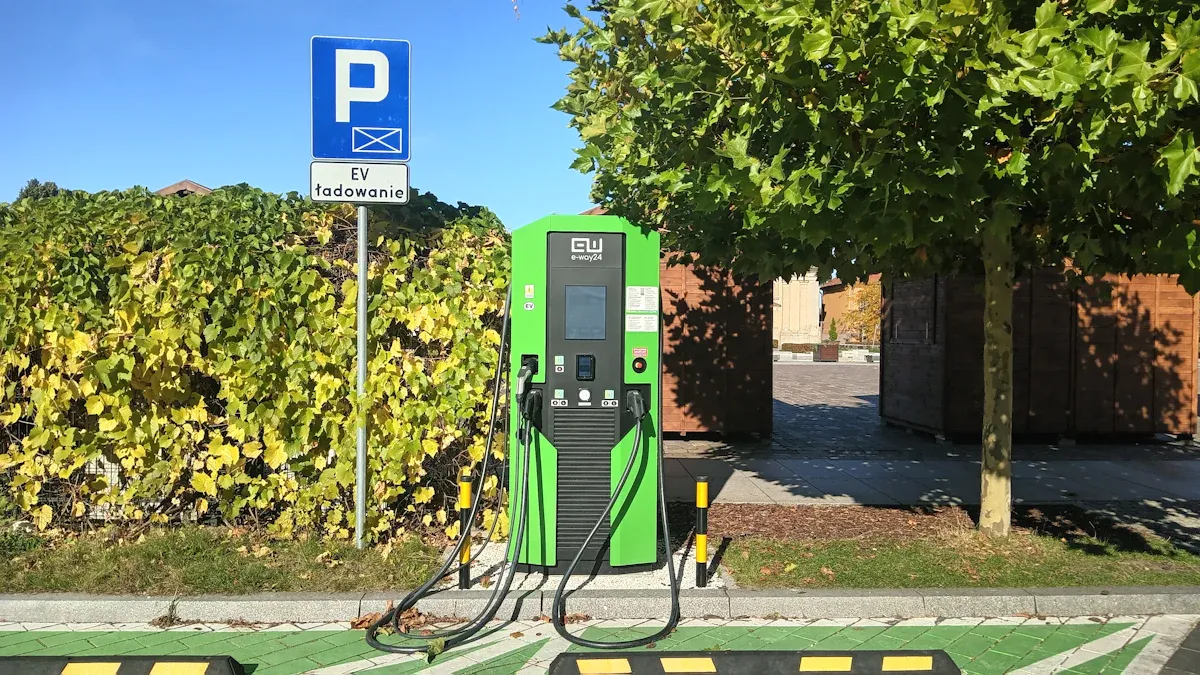
Many drivers assume electric vehicle ownership requires a costly, fast EV Charger. EV charger manufacturers often market powerful units as essential. However, for the average daily commute, a simple 3-pin plug is a surprisingly smart and beneficial choice. This overlooked home charging method reveals the many benefits of using a level 1 ev charger.
Pro Tip: Technologically advanced EV charging solutions, including portable ev chargers from providers like TPSON, make daily charging remarkably simple for any EV owner.
This approach ensures a vehicle is always ready for the next day’s journey. This simple charging can be the perfect fit for many owners of electric vehicles.
Benefit 1: Maximised Cost Savings with Zero Installation Hassle
An EV driver’s primary goal is often to minimize expenses. The most significant of the benefits of using a level 1 ev charger is the substantial cost savings it offers, starting from day one. This approach eliminates the high upfront investment typically associated with faster home charging solutions.
The Upfront Cost Comparison: £0 vs. £800+
No Electrician or Installation Required
A Level 1 charger, often called a “granny charger,” plugs directly into a standard 3-pin domestic socket. This simplicity means there is no need to hire a certified electrician for a complex installation, saving hundreds of pounds in labor costs.
No Hardware Purchase Necessary
Most electric vehicles come with a Level 1 charging cable as standard equipment. This means the initial hardware cost is effectively £0. In contrast, purchasing and installing a dedicated 7kW Level 2 charger typically costs between £800 and £1,200 in the UK. This immediate cost saving makes Level 1 charging an incredibly attractive option.
Avoiding Property Modification Costs
Installing a faster charger can sometimes require more than just mounting a box on the wall. If a home’s consumer unit (fuse box) is outdated or the wiring is not sufficient, upgrades are necessary. These modifications, which can include trenching for cables or installing new circuits, can add hundreds of pounds to the total bill, further widening the cost gap.
How Slow Charging Unlocks Maximum Tariff Savings
Slower charging is not a drawback when it comes to saving money on electricity. In fact, it is a significant advantage for maximizing cost savings on home charging.
Understanding UK Off-Peak Electricity Tariffs
Many UK energy suppliers offer special EV tariffs with significantly cheaper electricity rates during off-peak hours, usually overnight. These tariffs are designed to encourage charging when demand on the national grid is low.
- Octopus Energy (Intelligent Octopus/Go): Offers super-cheap electricity, often around 7.5p/kWh, for a six-hour window.
- British Gas (Electric Driver): Provides cheaper electricity, as low as 9p per kWh, during a set overnight period.
- EDF (GoElectric Overnight): Features a fixed 5-hour off-peak slot for reduced-rate charging.

Why a Longer Charge Window Maximizes Savings
Off-peak windows typically last for 5-6 hours. A Level 1 charger’s slow, steady 2.3kW draw fits perfectly within this timeframe. It can pull power for the entire duration, ensuring every kilowatt-hour added to the EV battery is at the lowest possible price. A faster charger might fill the battery in just 2-3 hours, potentially leaving several hours of the cheap-rate window unused.
A Sample Cost Calculation for an Overnight Charge
Let’s compare the cost of adding 60 miles of range (approx. 15 kWh) to an EV.
- Standard Tariff (~30p/kWh): 15 kWh x £0.30 = £4.50
- Off-Peak Tariff (~8p/kWh): 15 kWh x £0.08 = £1.20
Charging overnight on an off-peak tariff results in daily savings of £3.30, which adds up to over £1,200 per year. The slow, consistent nature of Level 1 charging is key to unlocking these full savings.
The Hidden Costs Associated with Faster Charging
The sticker price of a Level 2 charger is not the only expense. Several hidden costs can emerge, making the “faster is better” approach much more expensive.
Potential for Home Grid Upgrade Fees
A certified electrician must assess a home’s electrical system before installing a 7kW charger. If the main fuse or supply cable is not rated to handle the extra load, an upgrade from the local Distribution Network Operator (DNO) is required. This process can be slow and costly, sometimes running into thousands of pounds.
The Rise of Smart Charger Subscription Models
Some “smart” chargers, which are required for certain government grants and advanced tariff integration, come with ongoing costs. For example, some providers offer all-inclusive plans with monthly subscription fees, such as Pod Point’s £40 per month plan. While these services offer convenience, they represent a recurring expense that a simple Level 1 charger completely avoids, further enhancing its long-term cost savings.
Benefit 2: Promoting Long-Term Battery Health
An electric vehicle’s battery is its most valuable component. Protecting its health is paramount for maintaining range and resale value. One of the most overlooked benefits of using a level 1 ev charger is its gentle effect on the battery, promoting longevity through slower, cooler charging cycles.
Understanding the Impact of Heat on Your EV Battery
The Science of Slower, Cooler Charging
Heat is the primary adversary of a lithium-ion battery. These batteries operate most efficiently between 15°C and 35°C. Slower charging generates significantly less heat. A Level 1 charger’s gentle 2.3kW power draw keeps the battery well within its optimal temperature zone, reducing thermal stress during each charging session.
How Excessive Heat Degrades Battery Cells
When a battery gets too hot, the chemical reactions inside accelerate, leading to faster degradation of its internal components. This process permanently reduces the battery’s ability to hold a charge. Optimal charging occurs when cell temperatures stay between 25°C and 35°C. Consistent, high-heat charging sessions push the battery beyond this ideal range, shortening its lifespan.
Heat Generation: Level 1 vs. Level 2 Chargers
A 7kW Level 2 charger pushes more power into the battery more quickly, inevitably creating more heat. While an EV has a thermal management system to cool the battery, this system must work harder during faster charging. A Level 1 charger’s low power draw produces minimal excess heat, placing almost no strain on the vehicle’s cooling system.
The “Trickle Charge” Advantage for Battery Longevity
What Is Trickle Charging in an EV Context?
In the EV world, “trickle charging” refers to a long, slow charging session, like that provided by a Level 1 charger overnight. It is not the same as the continuous trickle charge of older battery technologies. Modern electric vehicles stop charging once full. This slow replenishment is incredibly beneficial for the battery’s internal systems.
Promoting Better Battery Cell Balancing
An EV battery pack consists of many individual cells. For optimal performance and longevity, all cells must hold a similar state of charge. A long, slow charging session gives the Battery Management System (BMS) more time to perform this crucial balancing act, ensuring all cells are equalized. Faster charging can rush this process, leading to imbalances over time.
The Link to Long-Term Capacity Retention
Consistent cell balancing directly contributes to better long-term capacity retention. A well-balanced battery degrades more slowly and evenly. By making slow overnight charging your default routine, you actively preserve your EV’s maximum range for years to come.
Reducing Your Reliance on Public Rapid DC Chargers
The Stress of Frequent High-Power Charging
Public DC rapid chargers are essential for long journeys but are harsh on a battery if used too frequently. A study on Nissan Leafs showed that exclusive DC rapid charging could increase battery degradation by 16% compared to AC charging. The high currents generate significant heat and electrical stress.
Using Level 1 as Your Primary, Gentle Method
Pro Tip: Make slow AC charging your default. Use your Level 1 charger for daily needs and reserve public rapid chargers for long-distance travel. This simple habit is one of the best ways to protect your investment. Technologically advanced solutions from providers like TPSON also offer portable options that support this gentle charging philosophy anywhere you go.
By arriving home with enough time for a full overnight charge, you eliminate the need to use a stressful rapid charger for your daily commute. This makes your Level 1 charger the primary, gentle method that keeps your vehicle ready and its battery healthy.
Benefit 3: The Ultimate “Plug-and-Play” Convenience

Beyond cost and battery health, one of the most practical benefits of using a level 1 ev charger is its sheer simplicity. It removes complexity from the daily ownership experience, making the transition to electric power seamless and effortless for many UK drivers.
Doing the Math for the Average UK Commute
The Reality of the Average UK Daily Drive
Many drivers overestimate their daily mileage. The average UK car journey is under 10 miles, and daily commutes are often in the 20-30 mile range. A Level 1 charger is perfectly suited for this reality.
Calculating Your Overnight Range Gain
A standard 2.3kW charger adds approximately 8-12 miles of range for every hour of charging.
An EV owner plugging their vehicle in for an 8-10 hour overnight period can reliably add 64-120 miles of range. This simple process ensures the car is more than ready for the next day’s journey.
Why 60-80 Miles is More Than Enough
An overnight charge adding 60-80 miles easily covers the typical daily commute, school runs, and errands. This consistent replenishment means the EV driver starts every day with a sufficient charge, eliminating range anxiety for routine travel.
The Simplicity of a Daily Charging Routine
Arrive Home, Plug In, and Forget It
The Level 1 charging routine is beautifully simple. The driver arrives home, plugs the cable into a standard domestic socket, and walks away. The vehicle handles the rest, stopping the charging process automatically when the battery reaches its target.
No Need for Apps or Special Procedures
Unlike some smart chargers that require app configuration or scheduling, the “granny charger” is a true plug-and-play device. There are no complex settings to manage. This simplicity is ideal for EV owners who prefer a straightforward, no-fuss solution. Technologically advanced portable chargers from providers like TPSON embody this philosophy, offering reliable charging anywhere with a standard socket.
Seamlessly Integrating Charging into Your Life
This simple habit integrates charging into the background of daily life. The vehicle is always being topped up during its longest idle period—overnight. This removes the mental load of planning trips to public charging stations for daily needs.
When Is Level 1 Not Enough?
Scenarios Requiring Faster Charging
Level 1 charging is not a universal solution. It becomes insufficient for drivers with very long daily commutes, such as those regularly exceeding 40-50 miles. In these cases, an overnight session may not fully replenish the energy used.
The Role of Public Chargers for Long Journeys
For long-distance travel that extends far beyond daily commuting, no home charger is the sole answer. Public rapid DC chargers are essential for road trips. The Level 1 charger’s role is to handle the 95% of driving that is local, making it the perfect partner to the public charging network.
Benefit 4: A Kinder, More Stable Choice for the National Grid
An EV owner’s choice of charger impacts more than just their own home; it affects the entire electrical grid. The slow and steady nature of Level 1 charging offers a significant, often overlooked, community benefit by promoting grid stability. This is one of the most compelling societal benefits of using a level 1 ev charger.
One of the Key Benefits of Using a Level 1 EV Charger: Low Power Draw
The fundamental difference between charger types lies in their power demand. This difference has major implications for both home wiring and the wider grid infrastructure.
The Low and Steady Pull of a 2.3kW Charger
A Level 1 charger typically draws between 2-3 kW of power. This is a gentle, consistent load, comparable to running a standard electric kettle. This low demand places minimal stress on a home’s electrical circuit during a charging session.
The High Peak Demand of a 7kW+ Charger
In contrast, a typical home Level 2 charger pulls around 7.4 kW. Some commercial units can even reach 22 kW. This creates a sudden, high peak demand on the electrical system each time the EV begins charging.
How This Affects Your Home’s Fuse Box
The low power draw of a Level 1 charger means it can operate safely on almost any standard domestic circuit without risk of overloading the fuse box. A 7kW charger, however, often requires a dedicated, high-capacity circuit to handle its significant load safely.
The “Neighborhood Effect” of EV Charging
When multiple households adopt electric vehicles, their collective charging habits can strain local power networks. The type of charging they choose plays a critical role.
The Problem of Clustered High-Power Charging
Pioneering UK studies like the ‘My Electric Avenue’ project confirmed that unmanaged, clustered charging from high-power units would be problematic for local grids. If several neighbors plug in their 7kW chargers simultaneously during peak evening hours, it can overload local substations, potentially leading to localized power issues.
How Level 1 Charging Prevents Local Grid Strain
Level 1 charging mitigates this risk entirely. The low, distributed demand from many EVs charging at 2.3kW is far more manageable for the grid than sharp spikes from a few high-power units. This approach helps prevent the need for costly local substation upgrades.
Supporting a More Stable National Grid
By spreading the electrical load over a longer period, Level 1 charging helps balance demand on a national scale. This gentle method of vehicle charging supports a more resilient and stable energy system for everyone.
The Future of Smart Charging and Grid Management
The UK is moving toward a smarter, more interactive grid, but simple solutions remain highly effective.
Level 1 as a “Dumb” but Inherently Grid-Friendly Solution
While advanced “smart” chargers and Vehicle-to-Grid (V2G) technology promise future grid support, they introduce complexity. A Level 1 charger is a “dumb” device, yet its low power draw makes it inherently grid-friendly without any special technology. It provides a stable charging foundation that works today.
Aligning with a Sustainable Energy Future
Slow, overnight charging aligns perfectly with a future powered by renewables. It allows an EV to absorb energy when grid demand is lowest and renewable generation, like wind power, is often highest. While providers like TPSON develop technologically advanced solutions for the future, the simple Level 1 charger offers an immediate, practical way for any EV owner to contribute to a more sustainable energy ecosystem.
Benefit 5: Unmatched Flexibility and Portability

A fixed wall box charger tethers an EV owner to a single location. The Level 1 charger, however, offers unparalleled freedom. Its portability transforms any standard domestic socket into a potential charging point, making it an indispensable tool for modern electric vehicle ownership.
Your EV Charger Goes Wherever You Go
The compact nature of a Level 1 cable means an EV driver can take their charging solution with them. This simple accessory unlocks charging opportunities far beyond a dedicated home driveway.
Charging at a Friend’s or Family’s House
Visiting friends or family overnight no longer requires a search for a public charger. An EV owner can simply plug their vehicle into a standard wall socket at their host’s home. This convenience ensures the car is ready for the return journey without any hassle or extra planning.
Powering Up at UK Holiday Rentals
Many UK holiday accommodations now support electric vehicle charging. While some offer dedicated fast chargers, many simply provide access to an outdoor 13-amp socket. It is important that this charging is done directly with a proper cable, not an extension lead.
- White Cottage, Happisburgh: Features a 13-amp socket for trickle charging.
- Woodpecker Lodge, Scratby: Provides a tethered charger for free charging.
- The Salty Sea Dog, Bacton: Offers EV charging points on site.
- Sand Drift, Eccles: Is equipped with a 7.6kW EV Charger.
This growing trend means a portable charger is often all that is needed for topping up while on holiday.
The “Granny Charger” as a Road Trip Lifesaver
On a long road trip, a Level 1 charger serves as the ultimate safety net. If a planned rapid charger is out of service or occupied, the ability to find any standard socket for slow charging can provide enough range to reach the next viable charging station.
The Ideal Solution for Renters and Flat Dwellers
For many people in the UK, installing a permanent charger is not an option. The Level 1 charger provides a practical and effective solution for these individuals.
No Need for Landlord Permission or Modifications
Renters can rejoice in the simplicity of Level 1 charging. It requires no drilling, no wiring, and no permanent alterations to the property. This avoids the often difficult process of seeking landlord permission for a Level 2 charger installation.
Charging Without a Dedicated Parking Space
Residents in flats or terraced houses may not have a dedicated parking spot next to their property. A Level 1 charger allows for flexible charging arrangements, such as running a cable safely from a ground-floor window to a nearby parking space.
A Practical Option for Listed Buildings
Owners of listed buildings face strict regulations that often prohibit the external modifications needed for a wall box. The Level 1 charger completely bypasses this issue, offering a compliant charging method that preserves the building’s heritage status.
An Essential Backup for Your Main Charger
Even for owners of faster chargers, the Level 1 cable is a crucial piece of backup equipment.
Pro Tip: Routine maintenance is vital for all EV chargers. Industry data shows that 28% of charger failures stem from damaged terminations, often due to improper installation. An annual inspection is recommended to prevent unexpected downtime.
What if Your Level 2 Charger Fails?
A Level 2 wall box is a complex piece of electronics that can fail. A software glitch, a faulty component, or a tripped circuit can leave it unusable. In this scenario, the humble Level 1 cable ensures the driver can continue their daily charging routine without interruption.
Ensuring You Always Have a Reliable Charging Option
The Level 1 charger is the epitome of reliability. Its simple design has very few points of failure. Keeping one in the vehicle guarantees a dependable charging option is always available. Technologically advanced portable chargers from providers like TPSON build on this philosophy, offering robust and reliable charging anywhere.
The narrative that faster is always better needs reconsideration. For the typical UK daily commute, a Level 1 charger is often the smarter choice. This simple home charging method delivers significant savings and protects the vehicle’s battery. It offers unmatched convenience and flexibility for any ev owner. The slow overnight charging process provides substantial long-term savings.
Before investing in expensive hardware, an owner should assess their actual daily mileage. The simple 3-pin plug that came with their car might be the only home charging solution they ever need.
FAQ
Is Level 1 charging safe for a home?
Yes, Level 1 charging is very safe. The charger’s low power draw is similar to other household appliances. An EV owner should use a modern, properly wired socket. Sockets with RCD (Residual Current Device) protection offer the highest level of safety for outdoor charging.
Can an EV charge in the rain using a 3-pin plug?
An EV can charge safely in the rain. The vehicle’s charging port and cable are designed to be weatherproof. However, the owner must plug the charger into a dedicated, outdoor-rated socket with a weatherproof cover to ensure safety and prevent water ingress.
Does slow charging really help the EV battery?
Slow charging significantly benefits battery longevity. The gentle power flow generates less heat, reducing stress on the battery cells. This process helps maintain the battery’s capacity over many years, protecting the owner’s investment in their electric vehicle.
How much does a Level 1 overnight charge cost?
The cost is extremely low. An overnight charge adding 60-80 miles can cost as little as £1.20 on an off-peak electricity tariff. This method avoids the £800+ installation cost of a faster charger, making it the most economical choice for daily charging.
Can an EV owner use an extension cord?
An owner should never use a standard indoor extension cord for charging. These cords are not rated for the sustained load and pose a serious fire risk.
A high-quality, purpose-built portable charger is the only safe option. Technologically advanced providers like TPSON offer robust solutions that ensure safety and reliability away from home.
Is Level 1 charging enough for most UK drivers?
Yes, it is sufficient for many. A Level 1 charger can add 60-80 miles of range in an 8-hour overnight session. This amount easily covers the average UK daily commute of around 20-30 miles, making it a perfect solution for routine travel.