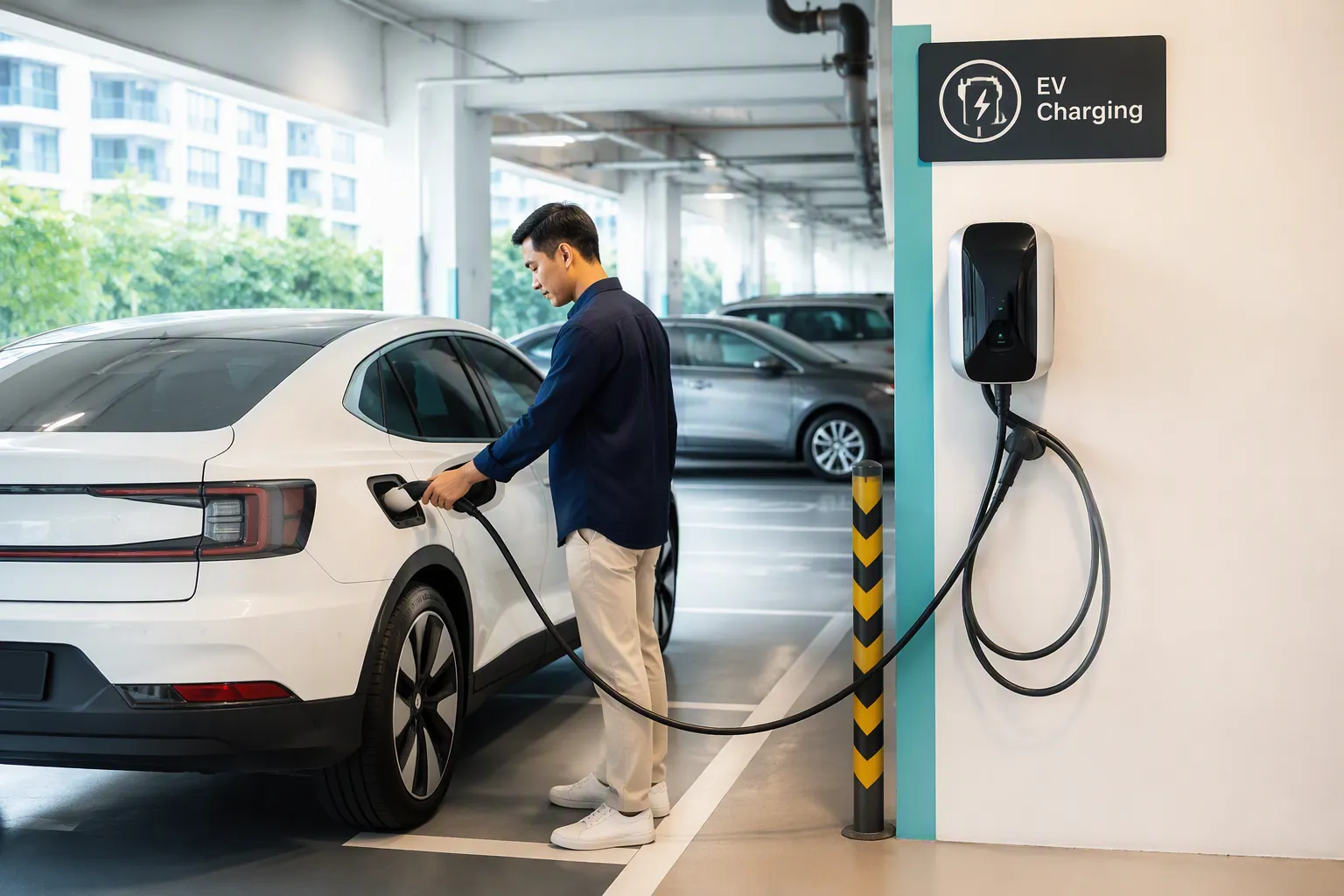

Electric vehicles rely on advanced battery management systems to ensure EV stop charging occurs precisely when the battery reaches full capacity. These systems optimize performance and prevent overcharging. Owners can trust their EV Charger to halt power automatically, without manual input. Battery management systems maximize energy utilization and efficiency, extend battery lifespan, and minimize environmental impact. EV charger manufacturers design EV charging solutions and portable ev chargers with built-in safety features that protect the battery and support sustainable practices.
How Does an EV Stop Charging at Full Charge?
Battery Management Systems and ev stop charging
Electric vehicles rely on advanced technology to manage charging. The battery management system plays a central role in ensuring ev stop charging occurs at the right moment. This system monitors battery health, controls charging rates, and communicates with the charger to prevent overcharging.
Sensors and Monitoring for Full Charge
Sensors embedded within the battery pack track voltage, temperature, and state of charge. These sensors provide real-time data to the battery management system. When the battery approaches full capacity, the system analyzes sensor input to determine the precise moment for ev stop charging. This process protects the battery from stress and extends its lifespan.
Tip: Charging the battery to full every day can stress lithium-ion cells. Setting a lower daily charging limit can help maintain battery health.
Communication with Charger to Stop Charging
The battery management system does not work alone. It communicates directly with the external charger. When the battery reaches full charge, the system sends a signal to the charger to halt power delivery. This communication ensures ev stop charging happens automatically, regardless of the charging speed or equipment used.
| Charging Level | Power Delivery (kW) | Charging Speed Impact |
|---|---|---|
| Level 1 | 1.44 | Slow |
| Level 2 | 7.2 – 19.2 | Moderate |
| DC Fast Charging | 150 | Very Fast |
Different charging levels affect how quickly the battery reaches full charge, but the battery management system always ensures ev stop charging at the correct time.
Automatic Stop Charging Process
The automatic process for ev stop charging involves several components working together. Each part of the system has a specific function to guarantee safety and efficiency.
Charging Cutoff Mechanism at Full Charge
When the battery reaches its maximum safe voltage, the battery management system activates the charging cutoff mechanism. This action immediately stops the flow of electricity into the battery. The system uses data from sensors to make this decision with precision.
| Component | Description |
|---|---|
| AGM battery with battery sensor | Monitors battery condition and ensures reliability. |
| Secondary battery | Supports the vehicle’s electrical system when the main battery is not charging. |
| Alternator with overrunning pulley | Maintains battery charge and supplies power during operation. |
| Engine control unit | Manages charging voltage requests and controls the charging system. |
| Starter | Handles high current consumption during engine start cycles. |
These components work together to support the ev stop charging process and maintain system reliability.
Built-in Safety Features
Manufacturers design electric vehicles with multiple safety features to support ev stop charging. These features include thermal management systems, voltage regulators, and fail-safe protocols. If the system detects abnormal conditions, such as overheating or voltage spikes, it will immediately stop charging to protect the battery and vehicle.
- Energy losses during charging typically range from 15% to 20%.
- Shorter charging cables can reduce resistance and power loss.
- High-power charging stations may generate more heat, increasing energy losses.
The combination of sensors, communication protocols, and safety mechanisms ensures that ev stop charging occurs efficiently and safely every time.
What Happens After Full Charge Is Reached?
Leaving Your EV Plugged In After Full Charge
Idle Charging State and Power Draw
After an electric vehicle reaches full charge, the battery management system transitions the vehicle into an idle charging state. The system closely monitors the battery’s voltage and current. During most of the charging process, the battery accepts current at a steady rate. As the battery nears full charge, the system shifts focus to voltage management. The charging rate slows dramatically to prevent over-voltage and protect the battery cells.
- Up to 80% charge, the battery accepts current at a higher rate.
- As the battery approaches full charge, the system reduces charging current and manages voltage.
- The final stage of charging slows significantly, limiting the current to avoid battery damage.
When the battery reaches full charge and remains plugged in, the vehicle draws minimal power. The battery management system prevents unnecessary energy consumption and avoids overcharging. The vehicle typically consumes only a small amount of energy, estimated at about 2-3% per month, to maintain battery health.
Trickle Charging and Battery Maintenance
Electric vehicles use a trickle charging mode after reaching full charge. The battery management system adds small amounts of energy to counteract minor drops in battery voltage. This process maintains the battery at optimal levels and prevents deep discharge. Trickle charging ensures the battery remains ready for use without risking overcharging.
Note: Trickle charging consumes very little energy and supports battery longevity. The battery management system automatically manages this process, requiring no intervention from the driver.
Charging behaviors differ between residential and public charging stations after full charge is reached. The following table illustrates these differences:
| Charging Station Type | Behavior After Full Charge Reached | Occupancy Impact |
|---|---|---|
| Residential | Drivers can leave, freeing the station | Low |
| Public | Drivers may keep the vehicle until needed, leading to longer occupancy | High |
Impact on Battery Health After Stop Charging
Overcharging Prevention by BMS
The battery management system plays a critical role in preventing overcharging. When the battery reaches full charge, the system activates stop charging protocols. The battery management system reduces the charging current and manages voltage to avoid battery damage. This process protects the battery from stress and ensures safe operation.
- The battery management system prevents overcharging by monitoring voltage and current.
- As the battery nears maximum voltage, the system slows the charging rate to protect the cells.
- The battery chemistry limits the current it can accept during the final stage of charging.
Long-Term Effects of Staying Plugged In
Leaving an electric vehicle plugged in after charging can affect battery health over time. The battery management system prevents overcharging, but maintaining a full charge for extended periods may cause gradual battery wear. Keeping the battery at 100% capacity regularly puts extra strain on the cells and can lead to quicker degradation.
Experts recommend maintaining the battery between 50% and 80% when not in use. This practice optimizes battery health and extends lifespan. Drivers should avoid keeping the battery at full charge for long periods unless preparing for a trip.
Tip: For daily use, set charging limits to avoid full charge and maximize battery longevity.
Is Charging to 100% Safe for My EV?
Manufacturer Recommendations for Full Charge
Daily Charging Limits and Battery Health
Major electric vehicle manufacturers provide specific guidance on daily charging habits to protect battery health. They often recommend avoiding a full charge for everyday use, especially for vehicles with nickel manganese cobalt (NMC) batteries. Tesla, for example, advises owners of NMC-equipped vehicles to set their charge limit below 90% during regular use. This practice helps slow battery degradation and extends the lifespan of the battery pack.
However, lithium iron phosphate (LFP) batteries behave differently. Manufacturers suggest that drivers with LFP batteries can safely charge to 100% more frequently. In fact, they recommend reaching a full charge at least once per week to maintain accurate battery calibration. The table below summarizes these recommendations:
| Battery Type | Charging Recommendation |
|---|---|
| LFP | Regular full charges are acceptable; charge to 100% at least once per week. |
| NMC | Keep charge below 90% for daily use; charge to 100% every month or two for maintenance. |
Charging to 100% for Long Trips
Drivers often need a fully charged battery before long journeys. Manufacturers recognize this requirement and support charging to 100% when maximum range is necessary. They advise using the full charge feature before road trips or when planning to use most of the battery’s capacity. For daily commutes, limiting the charge level remains the best practice for battery longevity.
Tip: Drivers should adjust their charging habits based on their vehicle’s battery type and travel needs.
Risks and Benefits of Full Charge
Battery Degradation and Stop Charging
Charging to 100% can accelerate battery degradation, especially when combined with frequent fast charging. Studies show that vehicles using fast chargers above 100 kW experience an average degradation rate of 3% per year. In contrast, those charging primarily with AC or at lower power levels see about 1.5% annual degradation. Despite this, most batteries retain adequate performance for daily use, and battery management systems ensure the vehicle stops charging once fully charged.
Manufacturers address battery health concerns through robust warranties. Most new EVs include a dedicated battery warranty, often covering eight years or 100,000 miles. If battery capacity drops below a set threshold, such as 70%, during the warranty period, the manufacturer will replace the battery at no cost to the owner.
Maximizing Range When Needed
Charging to full capacity offers clear benefits when drivers need maximum range. Electric vehicles produce zero tailpipe emissions, improving local air quality. They also reduce brake wear emissions, contributing to cleaner urban environments. Studies indicate that EV fires occur less frequently than fires in gasoline or diesel vehicles, supporting the safety of modern battery systems.
Drivers should consider environmental factors when charging to 100%. Charging areas require proper fire safety measures, including ventilation and sprinkler systems, especially in enclosed spaces. Moisture and frost can increase risks at charging terminals, so regular inspection and maintenance remain important.
Different Battery Types and How They Stop Charging
LFP Batteries and Full Charge Behavior
Charging Characteristics of LFP
Lithium Iron Phosphate (LFP) batteries have become popular in modern electric vehicles. These batteries offer stable chemistry and long cycle life. LFP batteries maintain a flat voltage curve during charging. The battery management system (BMS) monitors voltage and temperature throughout the process. When the battery reaches full charge, the BMS signals the charger to stop. LFP batteries tolerate regular charging to 100% without significant degradation. This characteristic makes them suitable for drivers who need maximum range frequently.
| Feature | LFP Battery Behavior |
|---|---|
| Voltage Curve | Flat and stable |
| Full Charge Tolerance | High |
| Cycle Life | Long |
Best Practices for LFP Stop Charging
Manufacturers recommend charging LFP batteries to 100% at least once per week. This practice helps the BMS calibrate the state of charge accurately. Drivers should use advanced chargers, such as those from TPSON, to ensure precise cutoff at full charge. TPSON chargers provide reliable communication with the vehicle’s BMS, supporting safe and efficient charging. For daily use, drivers can charge to any level, but regular full charges help maintain battery health.
Tip: LFP batteries perform best when drivers follow the manufacturer’s calibration advice.
NMC Batteries and Stop Charging Process
Charging Characteristics of NMC
Nickel Manganese Cobalt (NMC) batteries power many electric vehicles. These batteries deliver high energy density and strong performance. NMC batteries experience more stress when charged to 100% regularly. The BMS closely monitors voltage and current. As the battery nears full charge, the BMS reduces charging speed and eventually stops the process. This approach protects the battery from overcharging and extends its lifespan.
Best Practices for NMC Full Charge
Experts suggest limiting daily charging to 80% or 90% for NMC batteries. Drivers should only charge to 100% before long trips. TPSON charging solutions allow users to set custom charge limits, supporting battery longevity. Scheduled charging features help drivers avoid unnecessary time at full charge. Following these practices reduces battery wear and maintains optimal performance.
- Set daily charge limits below 90%.
- Use full charge only when maximum range is needed.
- Schedule charging to finish close to departure time.
Nickel-Cadmium and Solid-State Battery Stop Charging
Charging Characteristics of Nickel-Cadmium and Solid-State
Nickel-Cadmium (NiCd) batteries appear less often in modern EVs. These batteries show a distinct voltage drop when fully charged. The BMS detects this change and stops charging. Solid-state batteries represent emerging technology. These batteries promise higher energy density and improved safety. The BMS in solid-state systems uses advanced algorithms to monitor charge status and prevent overcharging.
Best Practices for These Battery Types
For NiCd batteries, drivers should avoid frequent full charges to reduce memory effect. Solid-state batteries require adherence to manufacturer guidelines. TPSON chargers adapt to various battery chemistries, ensuring safe cutoff for each type. Regular maintenance and software updates keep the BMS functioning correctly.
Note: Always consult the vehicle manual for battery-specific charging recommendations.
Best Practices for EV Charging and Battery Health
Daily Charging Habits for Full Charge Longevity
Setting Charging Limits to Stop Charging Early
Drivers can extend battery life by setting charging limits below 100%. Most electric vehicles allow users to select a maximum charge level, often between 80% and 90%. This practice reduces stress on battery cells and supports long-term battery health. Charging within the 20% to 80% range helps maintain optimal performance and minimizes wear. Many experts recommend avoiding full charges unless necessary for a long journey or battery recalibration.
- Charge between 20% and 80% for daily use.
- Avoid charging to 100% every night.
- Limit charging frequency; do not plug in after every short drive.
TPSON charging solutions offer customizable charge limits, making it easier for drivers to protect their batteries.
Using Scheduled Charging Features
Scheduled charging features help drivers finish charging just before departure. This approach keeps the battery at a lower state of charge for most of the night, which benefits long-term battery health. Many vehicles and chargers, including those from TPSON, allow users to set charging times through mobile apps or vehicle settings.
Tip: Scheduled charging can take advantage of off-peak electricity rates and reduce grid demand.
Preparing for Long Trips and Full Charge
Charging to 100% When Necessary
Drivers sometimes need a full charge for long trips. Charging to 100% before a journey ensures maximum range. Manufacturers design battery management systems to stop charging automatically at full capacity, so drivers do not need to worry about overcharging. However, they should avoid keeping the battery at 100% for extended periods to support long-term battery health.
Planning Charging Stops on the Road
Planning charging stops helps drivers avoid range anxiety and maintain battery efficiency. Many navigation systems and charging apps display available charging stations along the route. TPSON provides reliable charging infrastructure that supports fast and standard charging, making long-distance travel more convenient.
| Trip Length | Recommended Charge Level | Charging Strategy |
|---|---|---|
| Daily Commute | 80% or less | Home charging, set limit |
| Long Road Trip | Up to 100% | Full charge before departure |
| Extended Travel | 80-100% | Plan stops at fast chargers |
Protecting Battery Health After Stop Charging
Avoiding Extreme Temperatures
Extreme temperatures can impact battery performance and long-term battery health. Drivers should park in shaded or covered areas during hot weather. Charging during cooler parts of the day, such as early morning or evening, helps reduce battery stress. In cold climates, preconditioning the vehicle while plugged in can minimize energy loss and maintain cabin comfort.
- Park in garages or shaded spots.
- Precondition the cabin while charging.
- Avoid rapid charging in extreme heat.
Regular Battery Maintenance
Regular battery maintenance ensures reliable performance. Drivers should keep charging ports clean and schedule periodic battery health checks. Software updates from manufacturers or providers like TPSON can improve battery management and charging efficiency.
Note: Following manufacturer guidelines and using advanced charging solutions supports battery longevity and safety.
Common Concerns and Myths About EV Stop Charging
Myth: EVs Can Be Overcharged After Full Charge
Many drivers worry that leaving an electric vehicle plugged in will cause overcharging. This concern often stems from experiences with older battery technologies. However, modern electric vehicles use advanced systems that eliminate this risk.
Why Overcharging Isn’t Possible with Modern EVs
Modern electric vehicles feature robust overcharging prevention systems. These systems use several strategies to protect the battery:
- Overcharging prevention systems monitor the battery’s state of charge and automatically stop charging at full capacity.
- Trickle charging techniques manage the battery as it approaches full charge, supplying only the minimal energy needed to maintain optimal levels.
- Dynamic monitoring systems allocate charge as needed, ensuring the battery remains healthy and never receives excess energy.
These technologies work together to guarantee that the battery never exceeds its safe charge limit. As a result, drivers can leave their vehicles plugged in without concern for overcharging.
Myth: Leaving Plugged In Damages Battery After Stop Charging
Some believe that keeping an EV plugged in after charging can harm the battery. This myth persists despite advances in battery management technology.
How Battery Management Systems Prevent Damage
The battery management system (BMS) in every modern electric vehicle optimizes battery performance by charging and discharging within safe limits. The BMS prevents overcharging, which can degrade battery capacity and shorten lifespan. It controls the recharging process and communicates with the charger to maintain battery health, even when the vehicle remains plugged in.
A BMS monitors key parameters such as current, voltage, and temperature. This constant monitoring helps prevent overcharging and protects against risks like thermal runaway and premature aging. By maintaining the battery’s state of charge within defined limits, the BMS ensures the battery operates safely and efficiently. The system also regulates the amount of current entering the battery and prevents deep discharging, further safeguarding the battery when plugged in after charging.
Myth: All Batteries Handle Full Charge the Same Way
Not all electric vehicle batteries respond to full charging in the same manner. Differences in battery chemistry lead to unique charging behaviors and maintenance needs.
Differences in Battery Chemistry and Stop Charging
Battery chemistry determines how a battery handles full charge and stop charging protocols. For example, lithium iron phosphate (LFP) batteries tolerate regular charging to 100% and require periodic full charges for accurate calibration. Nickel manganese cobalt (NMC) batteries, on the other hand, benefit from daily charging limits below 90% to slow degradation.
Drivers should always consult their vehicle’s manual for battery-specific recommendations. Following these guidelines ensures optimal battery health and performance, regardless of battery type.
Note: Electric vehicles also offer significant environmental benefits. They produce far fewer emissions than gasoline vehicles, and their environmental footprint will continue to shrink as energy grids shift toward renewable sources.
Electric vehicles use advanced battery management systems to stop charging automatically at full capacity. Drivers can leave their vehicles plugged in after a charging session without worrying about overcharging. For daily use, charging between 20% and 80% often supports battery health and extends lifespan. Following best practices, such as avoiding frequent fast charging and managing battery state during downtime, helps maintain performance and can add years to battery life. Battery health also plays a key role in resale value, as a well-maintained battery ensures better range and supports higher prices. Owners should always follow manufacturer guidelines for the best results.
- Avoid frequent fast charging.
- Maintain charge between 20% and 80% for most use.
- Manage battery state during downtime.
Tip: Consistent charging habits protect battery health and maximize long-term value.
FAQ
What happens if someone forgets to unplug their EV after charging?
The battery management system automatically stops charging when the battery reaches full capacity. The vehicle remains safe, and the battery does not overcharge. Owners can leave the car plugged in without worry.
Can charging an EV overnight damage the battery?
Modern electric vehicles use advanced battery management systems. These systems prevent overcharging and protect the battery. Charging overnight does not harm the battery when drivers follow manufacturer recommendations.
Does charging speed affect battery health?
Charging speed can influence battery temperature and long-term health. Fast charging generates more heat, which may accelerate battery wear over time. Most drivers use standard charging for daily needs and reserve fast charging for long trips.
Is it safe to use public charging stations frequently?
Public charging stations meet strict safety standards. Drivers can use them regularly. However, frequent use of high-power fast chargers may increase battery degradation compared to slower home charging.
Should drivers always charge to 100%?
Manufacturers recommend charging to 80% or 90% for daily use, especially with NMC batteries. Charging to 100% is best reserved for long trips or when maximum range is required.
How does weather affect EV charging?
Extreme temperatures can impact charging efficiency and battery performance. Cold weather slows charging and reduces range. Hot weather increases battery stress. Parking in shaded or climate-controlled areas helps maintain battery health.
Can an EV be charged in the rain?
Electric vehicles and charging equipment are designed for outdoor use. Charging in the rain is safe. All connectors and ports have weatherproofing to prevent water intrusion.
How often should the battery be fully charged?
For LFP batteries, a full charge once per week helps maintain calibration. For NMC batteries, full charges should occur only when necessary. Drivers should follow the vehicle manual for specific guidance.