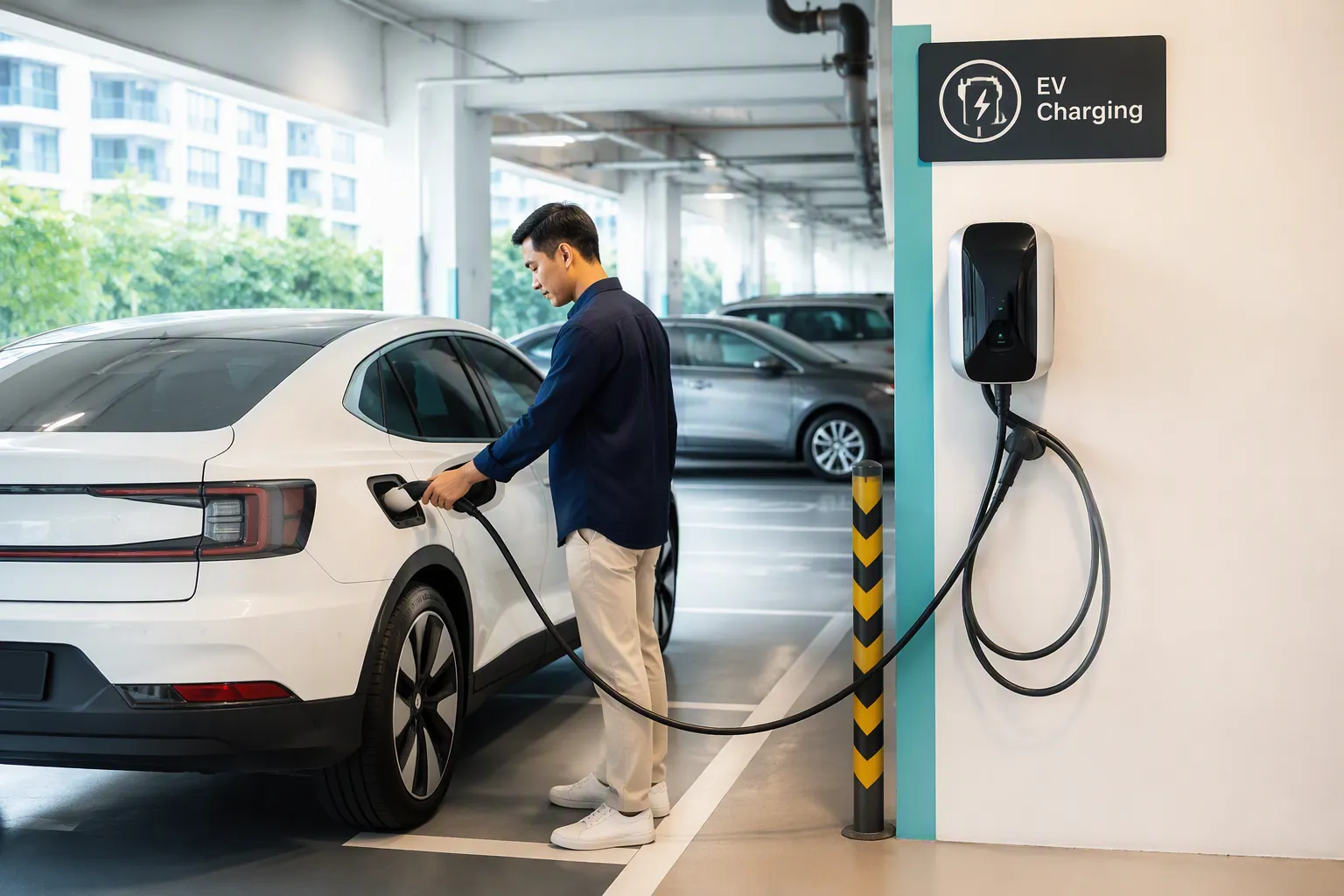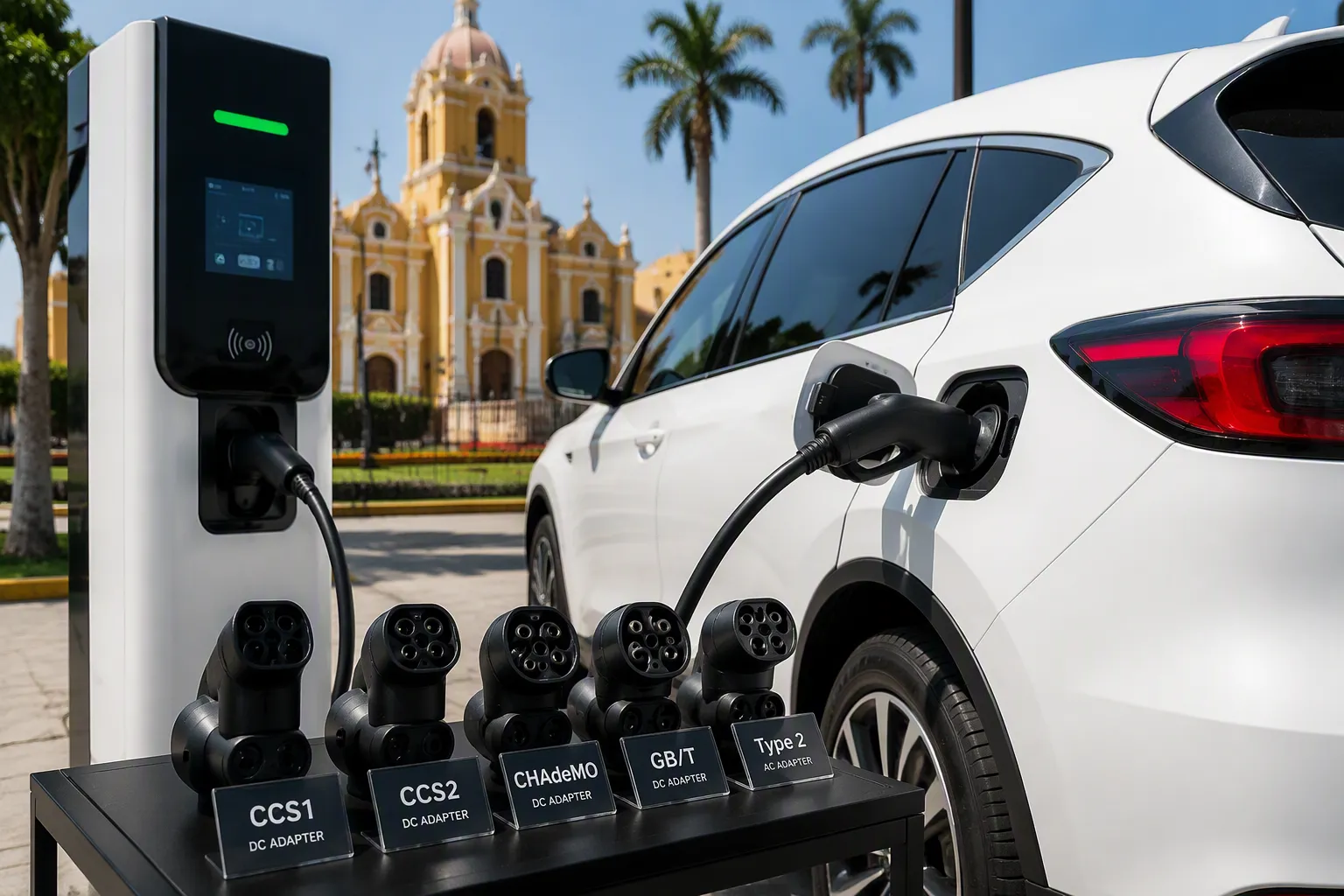
Retractable EV charging cable systems keep garages and parking areas safer and cleaner by pulling slack off the floor and returning the cable to a predictable home position after use. Done well, a retractable setup reduces trip hazards, keeps the connector off the ground, and prevents cords from being pinched by garage doors or run over. Done poorly, it can increase wear by forcing tight bends or placing constant tension on the cable. The most reliable comparisons focus on **bend radius**, **tension control**, **mounting location**, **weather exposure**, and how the system fits the real charging routine.
Practical safety note: EV charging is a long-duration load. Cable systems should never force the charging handle to hang by the cord, twist sharply at the strain relief, or drag across concrete. Any visible damage, loose connectors, or heat at connections during charging warrants stopping use and checking the installation.
- What “retractable EV cable” means (and what it should not do)
- Who benefits most: home garages, shared parking, and fleets
- Review criteria that separate good reels from gimmicks
- Comparisons: retractable reel vs wall wrap vs overhead guidance
- Data charts: cable lengths and charging levels (context for design)
- Installation and setup: where retractable systems go wrong
- FAQ (7)
- Atıfta bulunulan kaynaklar (giden bağlantılarla birlikte)
What “retractable EV cable” means (and what it should not do)
A retractable EV charging cable system is a storage and routing solution that uses a reel, spring, or motor-assisted mechanism to manage slack and return the cable to storage. The goal is simple: keep the cable off the floor, keep the connector clean and protected, and keep the charging area usable for daily life.
It should not:
- Force tight coils that create permanent kinks in **heavy-gauge EV charging cables**.
- Apply constant pull that stresses the strain relief or makes unplugging awkward.
- Store the connector where it can be hit by bumpers, bikes, or tools.
- Encourage a cable route that crosses a walking path or tire line.
Who benefits most: home garages, shared parking, and fleets
Retractable systems shine when the cable is used frequently and the space is shared—either by multiple drivers or multiple vehicles. In that environment, “put it back the same way every time” is not just tidy; it protects the equipment.
Best-fit home scenario
Narrow garage, frequent use
A reel prevents the cable from living on the floor where it gets stepped on or pinched.
Best-fit shared scenario
Condos & workplaces
Predictable cable stowage supports a consistent **driver experience** and reduces complaints.
Best-fit fleet scenario
High-throughput depots
Fast deployment + clean routing improves turnaround and reduces cable damage incidents.
Worst-fit scenario
Extreme bends or long pulls
If the reel placement forces a sharp angle at the handle, a simpler wall wrap is safer.
ChargePoint frames EV charging as a platform combining software, services, stations, and driver experience—built to make charging easy and reliable at scale. In shared environments, cable storage is part of that “easy” experience because it impacts usability and station condition. (ChargePoint)
Review criteria that separate good reels from gimmicks
1) Bend radius and spool diameter
The single most important mechanical detail is the minimum bend the cable is forced to take. Level 2 cables are often thick and stiff, and a small-diameter reel can permanently deform the cable. Buyers evaluating “compact” retractable products should treat compactness as a warning, not a benefit.
2) Tension management and lock positions
A practical reel must allow slack at the vehicle without continuously pulling. The best systems provide multiple lock points and controlled retraction, reducing snap-back behavior that can damage connectors or strike the car.
3) Mounting: wall vs ceiling vs post
Placement determines whether the cable crosses a walkway. Ceiling mounting can be excellent in narrow garages, but only if the cable drops in a safe “plug zone” and can retract without rubbing on sharp edges.
4) Connector holster integration
A reel is not complete without a safe resting place for the handle. A connector holster keeps the plug off the ground and reduces contamination. For example, Emporia states its Classic charger includes a wall mount and a handle holder, and it ships with a durable 25-foot cable. (Emporia Classic product page)
5) Environment and weather
A garage reel is one thing; an outdoor reel is another. Wind-driven rain, UV exposure, and temperature swings quickly reveal weak plastics and unsealed mechanisms. Outdoor users should be conservative: if weather exposure is frequent, a robust wall-wrap and holster can be more durable than a complex reel.
6) Serviceability and parts replacement
Retractable mechanisms have moving parts. A reviewer should ask: can the spring, guide, or housing be serviced, or does the entire assembly become disposable? For commercial sites, disposability is a hidden operating cost.
Comparisons: retractable reel vs wall wrap vs overhead guidance
Cable management is not “one size fits all.” The comparison below is framed around outcomes: safety, speed, and long-term wear.
| Çözüm | Best for | Strengths | Risks / downsides | Verdict |
|---|---|---|---|---|
| Retractable reel | Narrow garages, shared bays, floor must stay clear | Fast deployment, minimal floor slack, consistent stowage | Can force tight bends; tension can stress strain relief; moving parts | Excellent if oversized + well placed |
| Wall wrap + holster | Most homes | Low cost, very durable, easy to inspect | Requires user discipline; can still leave slack if poorly wrapped | Best baseline choice |
| Overhead guidance (track/pulley) | Two-vehicle garages, mixed port locations | Keeps cable off floor without tight coiling | More installation complexity; must avoid sharp edges | Strong for multi-vehicle setups |
| Floor covers | Last-resort walkway crossings | Reduces trip risk in limited cases | Does not prevent abrasion; can become a new obstacle | Avoid when possible |
Data charts: cable lengths and charging levels (context for design)
Chart 1 — Typical home-cable lengths (why reels must be sized accordingly)
Evidence basis: Smart Charge America lists ChargePoint Home Flex with a 23-foot cable; Car and Driver notes a 24-foot cable on Tesla Universal Wall Connector; Emporia lists a 25′ cable included with Emporia Classic.
Chart 2 — Charging levels (why Level 2 cord handling is different)
Car and Driver describes Level 2 as the practical home standard for overnight charging—meaning the cable will be handled frequently. A retractable system should be built for repeated use without forcing tight bends.
Chart 3 — Portable DC: shorter default cables change the retractable logic
Portable DC setups often prioritize quick deployment and stowage for transport. A retractable reel can still help, but the design constraints differ from a fixed wallbox.
Installation and setup: where retractable systems go wrong
Placement errors (the common ones)
- Too high: forces a steep pull angle and can “lift” the connector under load.
- Too far from the plug zone: causes the cable to cut across walkways or drape over the hood.
- Too close to the vehicle: increases impact risk and makes retraction slap the car.
Operational errors
- Letting it snap back: uncontrolled recoil can damage connector housings and strike paint.
- Storing under tension: encourages strain relief fatigue over time.
- Routing over sharp edges: door tracks, metal shelving, and concrete corners cut jackets slowly.
A simple rule: if the retractable system makes the cable harder to use, it will be bypassed—and then it adds complexity without benefit. The best setups feel effortless in daily routines.
FAQ (7)
1) Are retractable EV charging cable reels safe for Level 2 home charging?
They can be safe if they maintain a generous bend radius, do not keep the cable under constant tension, and provide controlled retraction. If a reel forces tight coils or sharp bends, a wall wrap and holster is typically safer for long-term cable health.
2) Will a retractable system reduce wear on the cable?
Usually, yes—when it keeps the cable off the floor and away from tires and pinch points. However, a poor design can increase wear by forcing tight bends near the strain relief.
3) What cable lengths should a retractable system be able to handle?
Many mainstream home chargers sit in the 23–25 ft range based on the cited sources (23 ft for ChargePoint Home Flex in Smart Charge America’s listing, 25 ft for Emporia Classic, and 24 ft for Tesla Universal Wall Connector per Car and Driver). A reel that cannot accommodate those lengths without tight coiling is likely undersized.
4) Do some EVSE brands already include cable management?
Yes. Car and Driver’s roundup describes several home chargers with included cord management or easy handling, and Emporia’s Classic includes mounting hardware plus a handle holder and 25′ cable. If built-in management is sufficient, adding a reel can be unnecessary.
5) Is retractable cable management useful for commercial charging?
It can be, especially where cleanliness and consistent stowage affect driver satisfaction. ChargePoint emphasizes reliability and a consistent driver experience—cable handling contributes to both.
6) How does portable DC change the “best” cable management approach?
TPSON’s portable DC TP-DC Compact Series lists a default 5-meter cable and is designed to be moved to vehicles for roadside assistance, fleet logistics, events, and dealership use. In those scenarios, management focuses on transport stowage and rapid setup rather than a fixed wall routine. (TPSON portable DC)
7) Where can buyers compare many EV chargers and cable lengths quickly?
Smart Charge America’s catalog lists dozens of home and commercial EVSE options and includes filters such as cable length (e.g., 23 ft, 24 ft, 25 ft categories), making it useful for cross-checking real-world specs. (Smart Charge America EV chargers catalog)
Atıfta bulunulan kaynaklar (giden bağlantılarla birlikte)
The following pages were used for factual statements and specification context, and are provided for verification.
- Car and Driver — charging level definitions; cable lengths for tested units; home charging context: https://www.caranddriver.com/shopping-advice/a39917614/best-home-ev-chargers-tested/
- Emporia — Classic Level 2 EV Charger specs (25′ cable; NEMA plug vs hardwire; built-in GFCI notes): https://shop.emporiaenergy.com/products/emporia-ev-charger
- Smart Charge America — EVSE catalog (ChargePoint Home Flex cable length; broad market context and filters): https://smartchargeamerica.com/electric-car-chargers/
- ChargePoint — platform overview and driver experience positioning: https://www.chargepoint.com/
- TPSON — EV charger portfolio overview (AC with Dynamic Load Balancing; DC solutions): https://tpsonpower.com/ev-chargers/
- TPSON - şirket geçmişi (2015'te kuruldu; Mevcut Parmak İzi Algoritması; ekip ve kilometre taşları): https://tpsonpower.com/about/
- TPSON — Portable DC EV charger (TP-DC Compact 20/30/40 kW; default 5 m cable; use cases and protections): https://tpsonpower.com/portable-dc-ev-charger/
- TPSON — AC charger category page (product family navigation): https://tpsonpower.com/ac-ev-chargers/
Required internal anchor placements were included naturally: Elektrikli Araç Şarj Cihazları, EV Şarj Cihazları üreticisi olarak teknolojisini ve kilometre taşlarını tanımlar, AC EV Şarj Cihazları, DC EV Şarj Cihazları.