The future of electric vehicles is accelerating, with global sales trends showing remarkable growth.
- Global sales are projected to exceed 20 million units in 2025.
- The first quarter of 2025 saw over 4 million electric vehicles sold globally.
This expansion drives demand for a better charging infrastructure. Elektrikli araç şarj cihazı üreticileri, including technologically advanced providers like TPSON, are introducing key innovations. The future of EV charging is defined by ultra-fast speeds and intelligent integration. These developments shape the future of electric vehicle charging points, making electric vehicle charging more efficient. A new generation EV Şarj Cihazı makes ev charging seamless.
The Need for Speed: Faster and More Convenient EV Charging
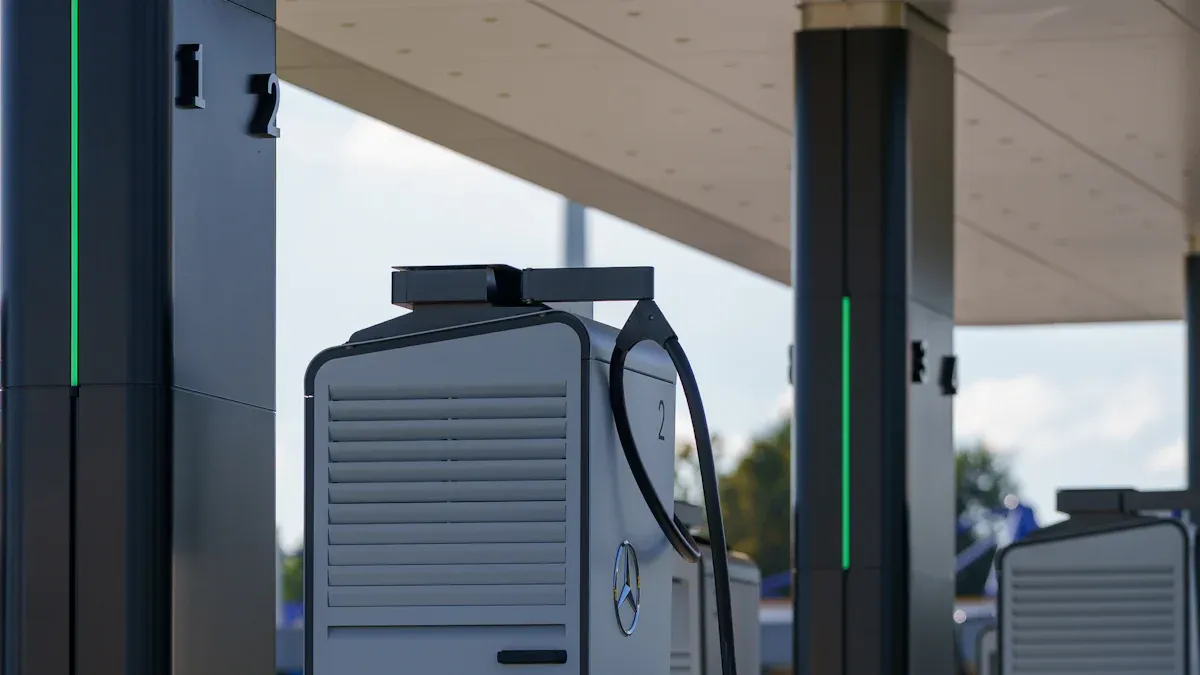
The demand for faster and more accessible ev charging is driving significant industry trends. By 2025, the experience will shift from a lengthy wait to a quick, convenient top-up. Technologically advanced providers like TPSON are developing charging solutions that address the core need for speed and simplicity, making range anxiety a relic of the past. These innovations are key to supporting the growing fleet of electric vehicles on the road.
The 350kW+ Power Milestone: Ultra-Fast Charging
Defining Ultra-Fast Charging
Ultra-fast charging refers to DC chargers capable of delivering 150kW of power or more. The 350kW level represents the current pinnacle of commercially available ultra-fast charging technology. These powerful systems dramatically shorten the time required to add significant range, making the ev charging experience comparable to a traditional refueling stop.
Key Hardware and Vehicle Requirements
Not all EVs can handle this power. Accessing these speeds requires vehicles built on an 800-volt architecture. By 2025, a growing number of models will support these rates, including:
- Porsche Taycan
- Lotus Eletre
- Mercedes-Benz EQE
- Kia and Hyundai models on the E-GMP platform
The Impact on Long-Distance Travel
The availability of ultra-fast ev chargers transforms long-distance electric travel. A short 20-minute stop can add hundreds of miles of range. This capability minimizes downtime and makes cross-country trips more practical than ever.
| Şarj Cihazı Tipi | Güç Çıkışı | Miles Added | Şarj Süresi |
|---|---|---|---|
| Standard DC Fast Charger | 50 kW | ~100 mil | 30-40 dakika |
| Ultra Hızlı Şarj Cihazı | 150-350 kW | Up to 200 miles | 20 dakika |
Projected Availability by 2025
Networks of high-speed chargers are expanding rapidly along major transportation corridors. While not yet ubiquitous, drivers can expect to find these ultra-fast stations at key intervals on highways, making long journeys seamless and efficient.
Cutting the Cord: The Rise of Wireless Charging
How Inductive Charging Works
Wireless ev charging uses the principle of magnetic resonance. A charging pad on the ground generates a magnetic field, which a receiver pad on the underside of the vehicle converts back into electricity to charge the battery. This process eliminates the need for physical cables.
Static vs. Dynamic Charging Explained
There are two primary forms of wireless charging.
- Static Charging: The vehicle is charged while parked over a charging pad, ideal for garages and parking lots.
- Dynamic Charging: This futuristic concept involves charging the vehicle as it drives over electrified roadways.
Profesyonel ipucu: The SAE J2954 standard is helping to unify wireless charging technology, ensuring interoperability between different vehicle and charger brands.
The Ultimate User Convenience
Wireless charging offers unparalleled convenience. Drivers simply park in a designated spot, and the charging process begins automatically. This removes the hassle of handling heavy, dirty, or wet cables, creating a truly effortless experience.
Residential and Commercial Rollout Status
By 2025, wireless systems delivering up to 11 kW with over 90% efficiency will become more common in premium residential and commercial applications. High-power demonstrations have even achieved a 270 kW charge rate, signaling powerful future possibilities.
Power on Demand: Mobile and Robotic Charging
Mobile Charging Services for Emergencies
Imagine your EV running out of power far from a station. Mobile charging services operate like roadside assistance for batteries. Companies like Kentures, Mr Charge, ve ZOLB EV dispatch vehicles equipped with chargers to provide an emergency boost, getting drivers back on the road without a tow truck.
Autonomous Robotic Charging Solutions
In the near future, robots will handle the charging process. Hyundai is developing an Automatic Charging Robot (ACR) that autonomously connects to a parked EV. Similarly, a pilot project between Electrify America and Stable Auto uses robotics to service autonomous vehicle fleets.
Practical Use Cases and Advantages
These on-demand charging solutions offer distinct advantages. Mobile services provide a critical safety net for stranded drivers. Robotic systems are perfect for large fleet depots and public parking garages, where they can charge vehicles sequentially without human intervention.
Niche and Early Adopter Status in 2025
While incredibly promising, both mobile and robotic charging will remain niche trends in 2025. They represent important trends to watch as the technology matures and becomes more cost-effective for widespread deployment.
The Smart Revolution: Shaping the Future of EV Charging
Beyond speed, the future of EV charging is intelligent. By 2025, charging will no longer be a one-way transaction. It will become a dynamic, two-way conversation between the vehicle, the charger, and the power grid. Technologically advanced providers like TPSON are engineering smart ev charging systems that optimize energy use, enhance convenience, and create new value for EV owners.
Your Car as a Power Bank: Vehicle-to-Grid (V2G)
What is Vehicle-to-Grid Technology?
Vehicle-to-Grid (V2G) technology enables bi-directional energy flow. It allows an electric vehicle not only to draw power from the grid but also to discharge electricity back into it. This transforms the car’s battery into a mobile energy storage unit, fundamentally changing the role of battery technology in the energy ecosystem.
How V2G Supports Grid Stability
During periods of high electricity demand, V2G-enabled vehicles can collectively act as a virtual power plant. They feed stored energy back to the grid, helping to balance loads and prevent blackouts. This capability makes the grid more resilient, especially as it incorporates more intermittent renewable energy sources, creating sustainable ev charging solutions.
Monetizing Your EV’s Battery
V2G offers a direct financial incentive to EV owners. By selling power back to the grid during peak hours, drivers can generate revenue or earn significant credits on their energy bills.
A 2022 UK trial by Octopus Energy and National Grid showed participants could save up to £840 annually compared to unmanaged charging. Some estimates project the revenue potential could exceed £1000 per year by 2023.
V2G-Ready Vehicles and Chargers in 2025
Major pilot programs are paving the way for widespread adoption. By 2025, large-scale trials and commercial solutions will be active in several regions.
| Şirket/Ortaklık | Bölge | Program Türü |
|---|---|---|
| Octopus Energy & Nissan | BIRLEŞIK KRALLIK | Large-scale V2G Trials |
| E.ON & BMW Group | Almanya | Commercial V2G Solution |
These initiatives are crucial for standardizing the technology and demonstrating its real-world benefits for electric vehicle charging.
The Brains of the System: Smart Charging
What Makes EV Charging “Smart”?
Smart ev charging involves a connected charger that communicates with the vehicle, the utility, and the owner. These smart ev charging systems use advanced software to manage the charging session based on grid conditions, energy prices, and user preferences, maximizing efficiency.
Optimizing for Off-Peak Rates
The primary benefit of smart ev charging is cost savings. The system automatically schedules charging to occur during off-peak hours when electricity is cheapest. An average EV driver can save over £265 annually, with higher-mileage drivers saving more than £372. This simple optimization dramatically reduces the cost per mile.
Ev Enerji Sistemleri ile Entegrasyon
Modern charging solutions integrate seamlessly with home energy ecosystems. Apps like Mobilize Smart Charge veya Pod Noktası allow users to manage their ev charging alongside home energy use. They can prioritize power from a home solar installation or coordinate with a home battery, giving owners complete control over their energy consumption.
Smart Charging as the 2025 Default
By 2025, smart charging will be the standard for home installations. Its ability to lower costs for consumers and reduce strain on the grid makes it an essential feature, not an optional upgrade. This shift is fundamental to managing the energy demands of a growing EV fleet.
Seamless Handshakes: Plug and Charge (ISO 15118)
The End of Apps and RFID Cards
Plug and Charge technology, based on the ISO 15118 standard, streamlines the public charging experience. It eliminates the need for RFID cards, payment apps, or credit card readers. The driver simply plugs the connector into the vehicle, and the session starts automatically.
How Automated Authentication Works
The system uses digital certificates for authentication.
- A unique, secure contract certificate is stored in the vehicle.
- When connected, the vehicle and charger exchange these encrypted certificates.
- Once validated, the charging and billing processes begin automatically.
The Security Behind the Simplicity
This convenience is backed by robust security. The ISO 15118 protocol uses a Public Key Infrastructure (PKI) to encrypt all communication between the car and the charger. This ensures that only authorized users can initiate a session and that all billing data remains secure and tamper-proof.
Network and Automaker Adoption by 2025
Widespread support is making Plug and Charge a reality. Major automakers including BMW, Ford, and Volkswagen are integrating the technology into their new models. Key European charging networks are also rapidly deploying compatible hardware.
| Şarj Ağı | 2025 Status |
|---|---|
| İYONİTE | Fully operational |
| Fastned | Active implementation |
| Kabuk Şarjı | Progressive deployment |
By 2025, experts project that 70% of motorway rapid chargers in Western Europe will support this seamless technology.
Building a Unified Network: The Future of Electric Vehicle Charging Points
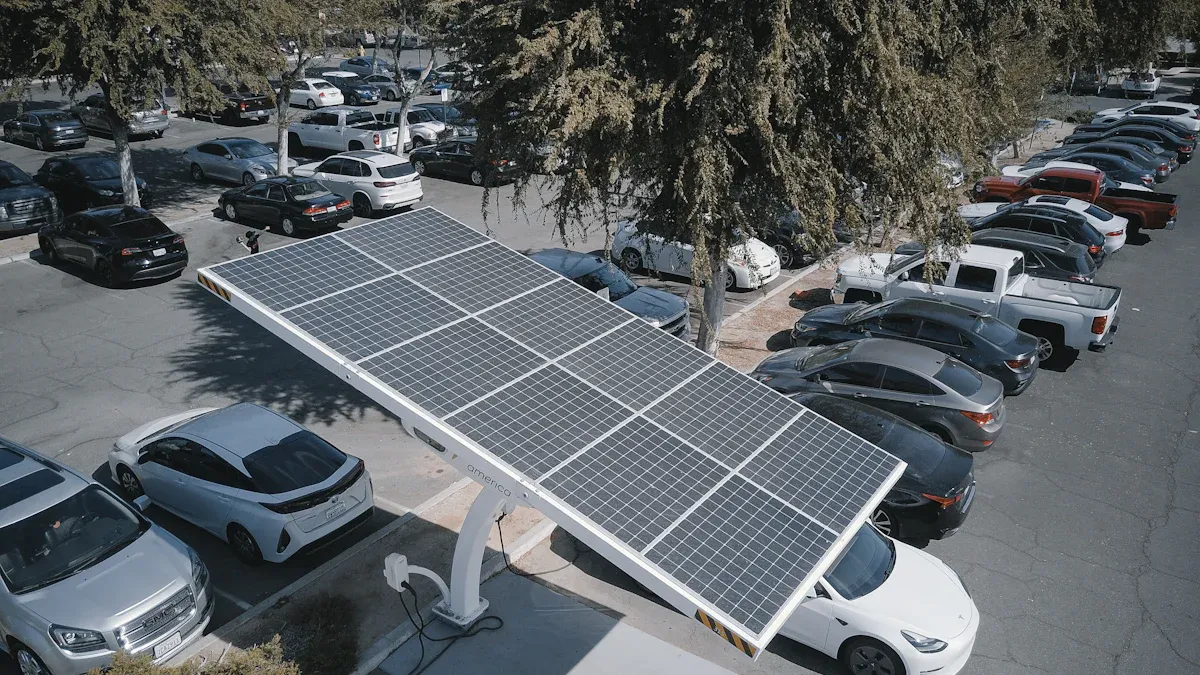
A fast and akıllı şarj cihazı is only useful if drivers can find one and plug into it. The future of electric vehicle charging points depends on creating a dense, reliable, and unified charging network. By 2025, significant progress in standardisation and infrastructure expansion will make public charging more accessible and convenient than ever before.
One Plug for All: The NACS Transition
The Rise of the North American Charging Standard
The North American Charging Standard (NACS) has rapidly gained momentum. Originally developed by Tesla, its compact design and high-power capabilities have led to its adoption by a wide range of automakers. This move toward standardising charging connectors is a critical step in simplifying the charging experience for consumers.
What NACS Means for Non-Tesla Drivers
For drivers of non-Tesla EVs, the NACS transition promises greater access to a vast charging network. It eliminates the confusion of multiple plug types at public charging stations, creating a more streamlined and user-friendly environment for everyone.
The Role of Adapters vs. Native Ports
During the transition period, adapters will play a crucial role. They allow vehicles with other port types, like CCS, to use NACS chargers. However, the long-term goal is for new vehicles to come equipped with native NACS ports, removing the need for any extra hardware.
The State of the NACS Rollout by 2025
The industry is moving quickly toward NACS. Nissan has announced plans to transition its North American lineup to Tesla’s NACS by 2025. Aynı şekilde, the BMW Group confirmed it will adopt the standard for its BMW, MINI, and Rolls-Royce electric vehicles in the U.S. and Canada, starting in the same year.
Erasing Charging Deserts: Infrastructure Expansion
Ulusal Elektrikli Araç Altyapısı (NEVI) Programı
Government initiatives are accelerating the expansion of charging networks. The National Electric Vehicle Infrastructure (NEVI) Program provides significant funding to build out a national charging infrastructure, ensuring reliable EV charging is available along major travel routes.
Prioritizing Underserved Areas
A key focus of this expansion is on equity. Funds are being directed toward rural, disadvantaged, and hard-to-reach communities that have historically been “charging deserts.” This ensures that the benefits of electric mobility are accessible to all drivers, regardless of location.
Strengthening Highway Charging Corridors
The goal is to create a robust network of fast chargers along major highways. This strengthened charging infrastructure will support long-distance travel, making cross-country road trips in an EV a practical and worry-free reality.
Expected Network Density in 2025
The charging infrastructure in 2025 will be significantly denser. Drivers can expect more public charging stations in urban centers, at workplaces, and along travel corridors, greatly reducing range anxiety and wait times.
More Than a Charger: The Evolution of Charging Hubs
The Gas Station of the Future
The concept of the charging hub is evolving into the gas station of the future. These locations are becoming destinations, not just functional stops. The future of electric vehicle charging points includes large-scale hubs with dozens of chargers, including solar-powered charging stations, managed by advanced providers like TPSON.
Amenities to Enhance the Driver Experience
Modern hubs are designed around driver comfort. To enhance the charging experience, new sites are incorporating unique amenities.
Other hubs are adding features to make waiting more comfortable:
- Sheltered Charging Bays: A hub in Aberdeen preserves an existing warehouse structure, so the chargers are sheltered from the elements.
- Comfortable Waiting Areas: The same site will contain toilets, a shop, and a seating area to keep drivers comfortable.
Integrating Retail and Hospitality
The future of electric vehicle charging points sees a deep integration with retail. The InstaVolt hub at Woking’s Lion Retail Park is situated alongside popular retailers and food outlets like Starbucks and Subway. This allows drivers to shop or grab a meal while their vehicle charges.
The Emergence of Flagship Hubs
By 2025, flagship charging hubs will serve as showcases for the best in EV charging technology and customer experience. These premier locations will set a new standard for what drivers can expect from the public charging network.
The Digital Layer: Software and AI in EV Charging
Hardware provides the power, but software and artificial intelligence provide the intelligence. By 2025, the digital layer of EV charging will transform the user experience from a simple transaction into a smart, predictive, and personalized interaction. This digital evolution is key to maximizing convenience and efficiency.
The Power of Advanced Charging Platforms
Beyond Just Finding a Station
Advanced charging platforms are evolving far beyond simple maps. They are becoming comprehensive management tools for EV drivers, integrating navigation, payment, and real-time data into a single, seamless interface.
Real-Time Data on Availability and Uptime
The frustration of arriving at an occupied or broken charger is fading. Platforms like iMaintain ve Reserve & Charge offer real-time asset tracking. Drivers can see live data on charger availability, operational status, and even reservation status, ensuring a reliable charging stop every time.
Intelligent Route Planning and Preconditioning
Modern apps do more than find the nearest station. They create intelligent routes based on a vehicle’s state of charge, charger speed, and real-time availability. Many also communicate with the vehicle to precondition the battery on the way to a fast charger, optimizing the battery technology for the fastest possible charging speed upon arrival.
The App Ecosystem of 2025
By 2025, a sophisticated app ecosystem will be the primary way drivers interact with public charging networks. These platforms will consolidate various functions, making the entire process of finding, using, and paying for a charge effortless.
Yapay Zeka ve Makine Öğreniminin Rolü
Predictive Maintenance for Charger Reliability
Artificial intelligence is a game-changer for network reliability. AI algorithms analyze data on charging cycles and temperature to predict when a component might fail. This allows operators to perform proactive maintenance, dramatically reducing charger downtime and ensuring the networks remain dependable.
AI-Optimized Charging Schedules
AI also optimizes the charging process itself. By analyzing historical usage data, weather forecasts, and grid conditions, AI-powered systems can predict demand with 85-90% accuracy. This enables smart load balancing and shifts charging to off-peak times, lowering costs for consumers.

Personalizing the User Charging Experience
AI is making the ev charging experience uniquely personal.
- Vision AI can detect a vehicle’s make and model to automatically select the right protocol.
- Generative AI can recommend optimal charging stations based on a driver’s past behavior and preferences, such as proximity to a favorite coffee shop.
AI Integration Status by 2025
In 2025, AI will be deeply integrated into charging infrastructure. Its role in predictive maintenance, grid management, and personalization will be critical for delivering a highly efficient and user-centric experience.
Open Protocols and Interoperability
The Importance of OCPP (Open Charge Point Protocol)
The Open Charge Point Protocol (OCPP) acts as a universal language for the industry. It allows any compliant charging station to communicate with any compliant management system. Technologically advanced providers like TPSON leverage this standard to deliver flexible and future-proof charging solutions.
Breaking Down Proprietary Networks
OCPP breaks down the walls of proprietary, closed systems. This prevents vendor lock-in, giving charge point operators the freedom to mix and match hardware and software. The result is more competition, innovation, and better services for drivers.
Enabling Seamless Network Roaming
Protocols like the Open InterCharge Protocol (OICP) and Open Charge Point Interface (OCPI) enable seamless roaming. They allow different charging networks to communicate, so a driver can use one account to access thousands of chargers across various brands.
Progress Toward Universal Compatibility
By 2025, these open standards will have made significant strides toward universal compatibility. This progress in interoperability is fundamental to creating a truly unified and accessible public charging network, ensuring interoperability across different ev models.
Bu elektrikli araç şarjının geleceği is rapidly advancing. By 2025, the experience will be faster, smarter, and more integrated into daily life. Key innovations are removing the final barriers to widespread adoption. The future of electric vehicle charging points is shifting from a functional necessity to an intelligent and convenient part of ownership. The availability of ultra-fast ev chargers makes electric vehicle charging seamless. This progress in ev charging shapes the future of electric vehicles, paving the way for a sustainable transportation future.
SSS
What is the main benefit of ultra-fast charging?
Ultra-fast chargers dramatically reduce charging times. A driver can add hundreds of kilometers of range in under 20 minutes. This capability makes long-distance electric travel much more practical and comparable to refueling a conventional car, minimizing downtime on journeys.
Will wireless charging be common by 2025?
Wireless charging will primarily be a premium feature in 2025. Drivers will find it in high-end residential garages and some commercial parking lots. While not yet widespread, its ultimate convenience signals a major future trend for effortless charging.
How does Vehicle-to-Grid (V2G) benefit the power grid?
V2G technology allows EVs to send power back to the grid. This helps stabilize the network during peak demand. It makes the grid more resilient and supports the integration of renewable energy sources, creating a more sustainable energy ecosystem.
What makes an EV charger “smart”?
A smart charger communicates with the vehicle, the utility, and the owner. Technologically advanced providers like TPSON engineer these systems to optimize charging sessions.
Smart chargers automatically schedule charging for off-peak hours when electricity is cheapest, significantly reducing costs for the EV owner.
What is the purpose of a unified charging standard?
A unified standard, like NACS, simplifies the public charging experience. It means more vehicles can use the same plug. This eliminates the need for multiple adapters and creates a more accessible and user-friendly network for all EV drivers. 🔌
How does Plug and Charge simplify the process?
Plug and Charge automates authentication and payment. Drivers simply plug the connector into their vehicle. The charger and car communicate securely to handle the entire session automatically. This technology removes the need for apps or payment cards at the station.