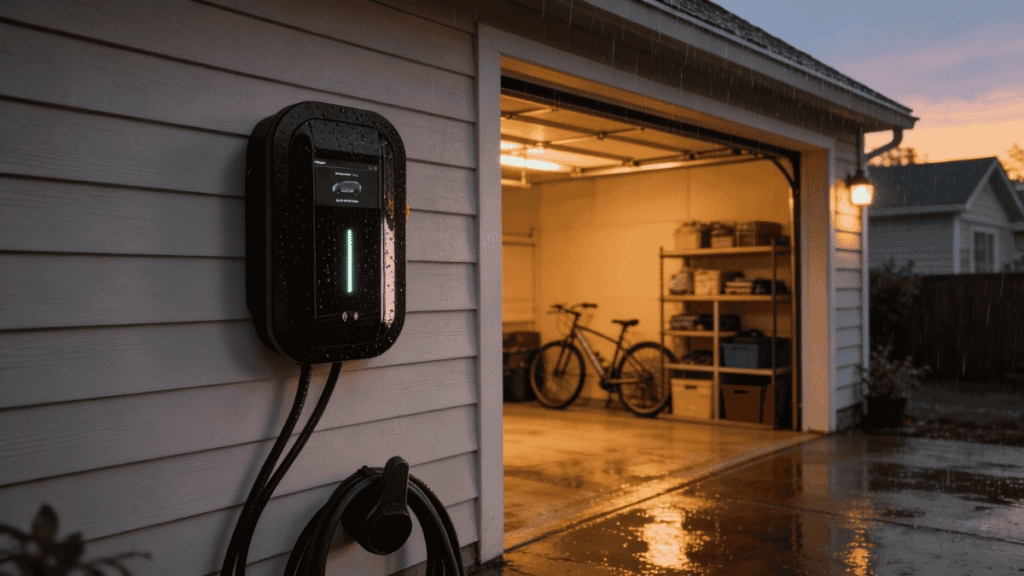
In 2026, the European Union’s regulatory landscape for electric vehicles has shifted from aspirational targets to enforceable mandates, fundamentally altering how original equipment manufacturers (OEMs) design, market, and support their electrified fleets. The transition is anchored by the full activation of the Alternatif Yakıtlar Altyapı Yönetmeliği (AFIR), the introduction of the Euro 7 durability standards, and the 2026 “Battery Booster” initiative, which together enforce strict birlikte çalışabilirlik, mandatory digital battery passports, and minimum power thresholds across the Trans-European Transport Network (TEN-T).
Executive Regulatory Summary
AFIR 2026: Infrastructure as a Legal Obligation
Bu Alternatif Yakıtlar Altyapı Yönetmeliği (AFIR) enters its most critical enforcement phase in 2026. For automakers, this regulation removes the “range anxiety” barrier by mandating charging pools every 60 km along core EU highways. Crucially, as an EV Şarj Cihazları üreticisi olarak teknolojisini ve kilometre taşlarını tanımlar, compliance now requires that all new public stations support ad-hoc payments via common credit cards and provide transparent, per-kWh pricing.
Automakers must now ensure their vehicle software is compatible with ISO 15118 (Plug & Charge) to meet the new EU communication standards. This shift toward birlikte çalışabilirlik means proprietary charging networks are increasingly discouraged in favor of open-access models that allow any EV brand to utilize any high-power terminal without specialized subscriptions.
Mandatory AFIR 2026 Infrastructure Targets
| Gereksinim Türü | 2026 Compliance Standard | Automaker Implication |
|---|---|---|
| Distance Intervals | Every 60 km on TEN-T Corridors | Standardized route planning integration |
| Minimum Power | Pools of 400kW (min 150kW per port) | 800V architecture optimization |
| Payment/Access | Contactless cards & Pricing transparency | Reduction in proprietary app reliance |
Euro 7 and Battery Durability Mandates
Bu Euro 7 regulation, coming into force for new car and van types in late 2026, introduces the world’s first minimum durability standards for EV batteries. Automakers are now legally required to guarantee that traction batteries retain at least 80% of their original capacity after five years or 100,000 kilometers, and 72% after eight years.
This mandate necessitates advanced Battery Management Systems (BMS) that can monitor real-world health and emissions from non-exhaust sources, such as brake and tire particulates. For manufacturers of Elektrikli Araç Şarj Cihazları, this aligns with the push for akıllı şarj protocols that optimize battery longevity by managing thermal stress during rapid energy transfer.
The Digital Battery Passport and Material Circularity
2026 marks the “pre-enforcement” year for the EU Digital Battery Passport. Every vehicle battery over 2kWh sold in the EU must eventually carry a unique QR code linked to a digital record containing:
- Carbon Footprint: Verified cradle-to-gate CO2 emissions data.
- Recycled Content: Compliance with 2026 targets for cobalt, lithium, and nickel recovery.
- Repairability: Documentation allowing independent professionals to replace individual battery modules.
To support these goals, automakers are increasingly adopting AC EV Şarj Cihazları that support Araçtan Şebekeye (V2G) technology, allowing EVs to serve as decentralized storage units that aid in balancing the carbon intensity of the European power grid.
Revision of CO2 Standards: The 90% Target Pivot
In response to intense industry lobbying and market realities, the European Commission has signaled a revision to the 2035 internal combustion engine (ICE) ban. The updated “Automotive Package” proposes a shift from a 100% tailpipe reduction to a 90% reduction, allowing a 10% niche for vehicles powered by certified e-fuels or biofuels.
However, the compliance pressure for 2025–2029 remains high. Automakers must achieve significant fleet-wide CO2 reductions immediately, or face multi-billion euro penalties. This is driving a massive push for corporate fleet decarbonization, where companies are incentivized to install DC EV Şarj Cihazları at workplace depots to meet mandatory zero-emission uptake targets.
Heavy-Duty Charging and Megawatt Standards
For the commercial sector, 2026 is the year of Megawatt Şarj Sistemleri (MCS). Under AFIR, heavy-duty vehicle (HDV) charging pools must be deployed at 120 km intervals along the TEN-T network. Automakers like Volvo and Daimler are now standardizing on MCS interfaces that allow electric trucks to gain 400 km of range during a mandatory 45-minute driver break. This infrastructure deployment is critical to meeting the 2030 target of a 45% reduction in CO2 from new heavy trucks.
Sıkça Sorulan Sorular (SSS)
1. Does AFIR require all chargers to have credit card readers by 2026?
Yes, all new public chargers with power outputs above 50kW must provide a contactless payment terminal. Existing chargers must be retrofitted to comply with these transparency rules to ensure any driver can pay without a specific app.
2. What are the Euro 7 battery warranty requirements?
Euro 7 mandates that EV batteries must maintain at least 80% of their original energy capacity after 5 years or 100,000 km. This is a legally binding durability floor for all light-duty EVs sold in the EU.
3. Will the 2035 ICE ban be fully revoked?
Current 2026 policy discussions suggest a “downgrade” to a 90% reduction target rather than a full 100% ban, providing a small allowance for carbon-neutral liquid fuels, though the primary market signal remains electrification.
4. What is the “Battery Booster” initiative?
The Battery Booster is a €1.8 billion EU fund designed to strengthen the domestic battery value chain, providing interest-free loans to cell producers to reduce dependence on foreign supply chains.
References and Regulatory Citations:
1. EU Automotive Package 2026 – European Commission Mobility and Transport
2. AFIR Infrastructure and Payment Standards – Eleport 2025-2026 Trend Analysis
3. Euro 7 Emissions and Durability Framework – Electric Car Scheme Regulatory Hub
4. Digital Battery Passport Implementation – Circularise EU Battery Compliance Guide
5. Global E-Mobility Policy Q1 2026 – CharIN Global Updates