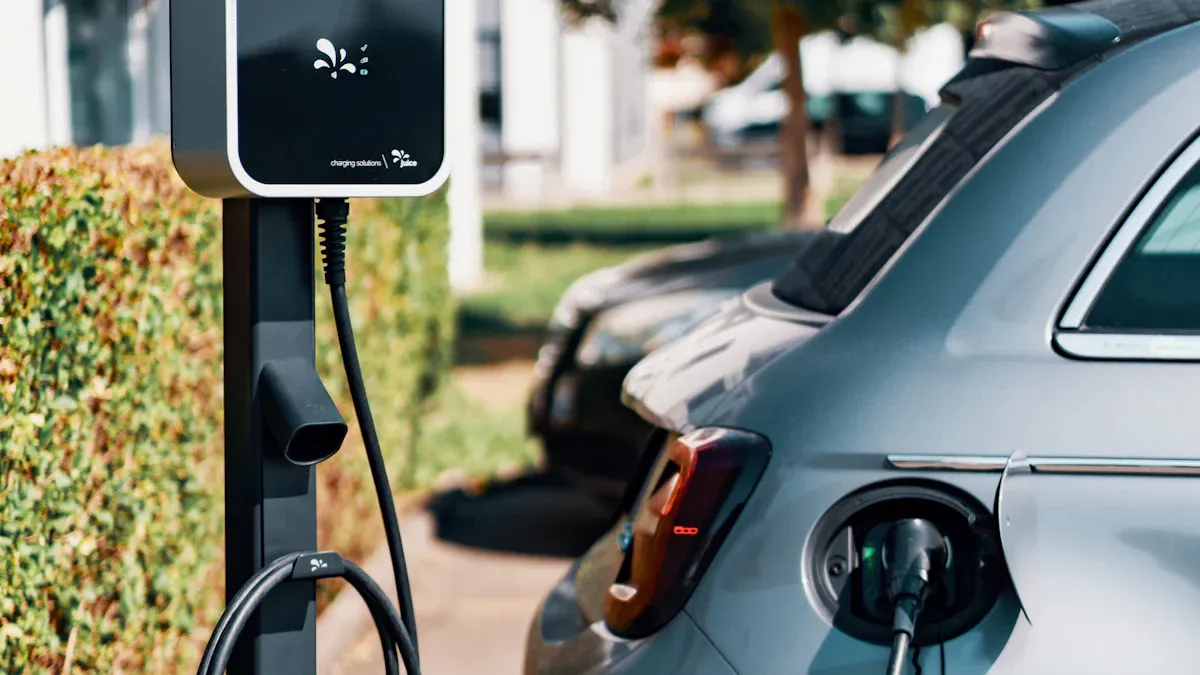
No one should charge their EV to 100% every day unless the extra range is absolutely necessary. Studies show that charging to full capacity can accelerate battery degradation, which shortens battery life and affects performance. Lithium-ion batteries last longer when not frequently charged to maximum. TPSON offers advanced EV charging solutions, including portable ev chargers, that help drivers set optimal limits. Leading EV charger manufacturers recommend using an EV Charger with adjustable settings to protect battery health. To maximize the benefits, always consider when to charge my ev.
Why You Shouldn’t Always Charge My EV to 100
Battery Longevity and Health
How Charging to 100% Impacts Battery Life
Charging an electric vehicle battery to full capacity places additional stress on the battery’s internal chemistry. Lithium-ion batteries, which power most modern EVs, experience faster degradation when kept at a high state of charge for extended periods. Real-world data from thousands of monitored vehicles shows that average annual battery degradation remains below 2%, even with occasional rapid charging. Manufacturers often provide warranties for eight years or around 100,000 miles, which demonstrates their confidence in battery durability. However, users who frequently charge lithium batteries to 100% tend to see faster degradation rates compared to those who maintain lower charge levels, such as 30-50%. Storing a battery at full charge, especially in warm climates, can accelerate this process.
Understanding Battery Degradation Over Time
Battery degradation refers to the gradual loss of capacity and efficiency as the battery ages. A large-scale telematics study found that moderate exposure to high state-of-charge levels, even up to 80% of cumulative time, had no meaningful effect on battery aging. Degradation rates remained nearly identical between groups with low and medium exposure to high charge extremes, at approximately 1.4% to 1.5% per year. This challenges the belief that charging only between 20% and 80% is always necessary to protect battery longevity. Still, frequent full charges, especially in hot conditions, can increase the rate of capacity loss over time.
The Science Behind Battery Stress
High Voltage and Its Effects on Battery Cells
High voltage charging, particularly through DC fast charging, generates increased heat due to higher electrical currents. This heat, combined with a high state of charge, creates stressful conditions for lithium-ion batteries. Modern battery management systems monitor temperature and reduce power input if it exceeds safe limits. These systems help protect the battery, but repeated exposure to high voltage and heat can still contribute to gradual wear.
Heat Generation and Wear from Full Charges
Heat is a major factor in battery wear. When a battery charges to 100%, it often generates more heat, especially if the process uses rapid charging. TPSON and other advanced charging solution providers design their products with thermal management in mind, helping to regulate temperature and protect battery health. In cold climates, manufacturers implement pre-heating systems to maintain efficiency and enable rapid charging, but extreme temperatures—both hot and cold—can still impact battery performance and longevity.
Tip: Parking and charging in shaded or temperature-controlled environments can help minimize heat-related battery stress.
Real-World Consequences of Full Charges
Reduced Driving Range Over the Years
Over time, batteries that frequently reach 100% charge may lose capacity faster, resulting in a noticeable reduction in driving range. Cold weather can also reduce range by 20-30%, as chemical reactions slow down and more energy is used for heating. Efficiency can drop by up to 41% at temperatures below -6°C, especially when heating is used extensively. These factors combine to reduce the power available for driving and charging, making it important to manage charging habits carefully.
The Cost and Hassle of Battery Replacement
Replacing an EV battery can be expensive and inconvenient. Although most manufacturers offer long-term warranties, batteries that degrade faster due to frequent full charges may require replacement sooner than expected. This not only increases costs but also causes downtime and potential hassle for the vehicle owner. Using smart charging solutions, such as those provided by TPSON, allows drivers to set optimal charge limits and extend battery life, reducing the likelihood of early replacement.
- Users who frequently charge to 100% experience:
- Faster battery degradation
- Increased risk of reduced range
- Higher likelihood of costly battery replacement
Choosing when to charge my ev to full capacity should depend on actual driving needs, not habit. By following best practices and using advanced charging technology, drivers can protect their investment and enjoy reliable performance for years.
When Should I Charge My EV to 100
Preparing for Long Road Trips
Maximizing Range for Extended Travel
Drivers often need maximum range when planning extended journeys. Charging an electric vehicle to 100% before a long trip ensures that the battery provides its full capacity. This practice helps reduce anxiety about finding charging stations along the route. Industry experts agree that topping up to full is acceptable for these occasions.
For longer trips, it’s acceptable to charge your EV to 100% because it’s an occasional necessity for peace of mind during the journey.
TPSON offers smart charging solutions that allow users to schedule a full charge in advance. These systems help drivers optimize battery readiness without compromising long-term health.
Timing Your Full Charge Before Departure
Timing plays a crucial role in maximizing battery efficiency. Drivers should aim to finish charging shortly before departure. This approach minimizes the time the battery spends at a high state of charge, which can help preserve battery health. Many EVs feature scheduled charging, allowing users to set the exact time to complete charging. TPSON’s advanced chargers support these features, making trip preparation more convenient.
Emergency and Unusual Situations
Unexpected Travel or Limited Charging Access
Emergencies or sudden travel plans often require a full battery. Charging to 100% provides flexibility when access to charging infrastructure is uncertain. Drivers may encounter areas with limited charging stations or unpredictable travel distances.
In emergency situations where maximum range is required, not charging to 100% can be a disadvantage. Having the full battery capacity available can provide peace of mind and flexibility.
TPSON’s portable EV chargers offer a practical solution for these scenarios, enabling drivers to charge their EV wherever needed.
Power Outages and Backup Needs
Power outages or disruptions in charging availability can create challenges. Keeping the battery fully charged during such events ensures that the vehicle remains ready for use. Some drivers rely on their EV as a backup power source for their home, making a full charge essential during uncertain conditions.
Battery Type and Manufacturer Guidance
LFP vs. NMC Batteries and Full Charging
Battery chemistry influences charging practices. Lithium Iron Phosphate (LFP) and Nickel Manganese Cobalt (NMC) batteries respond differently to full charges. The table below summarizes the differences:
| Battery Chemistry | Charging to 100% | Risks of Overcharging |
|---|---|---|
| LFP | Safe | None |
| NMC | Not recommended | High risk |
Manufacturers often recommend charging LFP batteries to 100% regularly, while NMC batteries benefit from lower charge limits. Drivers should consult their vehicle’s manual for specific guidance.
Temporary Full Charge Features in Some EVs
Some electric vehicles include temporary full charge modes. These features allow drivers to override standard charge limits for special occasions, such as road trips or emergencies. TPSON’s chargers integrate seamlessly with these settings, supporting both routine and occasional full charges.
Drivers should evaluate their needs before deciding to charge my ev to 100%. Occasional full charges for travel or emergencies do not significantly impact battery health, especially when supported by advanced charging technology.
Best Practices to Charge My EV for Daily Use

Setting Ideal Charge Limits
The 80/20 Rule for Battery Health
Battery experts recommend the 80/20 rule as a practical guideline for daily charging. This approach keeps the battery’s state-of-charge between 20% and 80%, which helps preserve battery longevity. Geotab’s analysis shows that vehicles following this rule experience minimal battery degradation, with annual rates as low as 1.4% to 1.5%. Only when vehicles spend more than 80% of their time at high or low charge levels does significant degradation occur, reaching up to 2.0% per year.
- Maintain battery charge between 20% and 80%.
- Avoid charging to 100% except before long trips.
- Do not let the battery remain below 20% for extended periods.
- Charge as needed rather than daily to reduce charge cycles.
- Perform occasional full charges (quarterly) for battery management systems.
- Prefer Level 2 AC charging over frequent DC quick charging to preserve battery life.
Drivers who follow the 80/20 rule can expect their batteries to retain capacity and deliver consistent performance over time.
How to Set Charge Limits in Your EV
Most modern electric vehicles allow users to set custom charge limits through the vehicle’s infotainment system or a connected mobile app. TPSON’s advanced charging solutions integrate seamlessly with these systems, making it easy to set and adjust charge limits. Drivers should consult their vehicle manual for specific instructions, but the process usually involves selecting a preferred maximum charge percentage. Setting a limit at 80% for daily use and increasing it only when necessary helps optimize battery health.
Using Scheduled and Smart Charging
Benefits of Charging During Off-Peak Hours
Scheduled charging offers both economic and technical benefits. By charging during off-peak hours, drivers can take advantage of lower electricity rates and reduce overall energy costs. Smart charging systems, such as those from TPSON, allow users to program charging sessions to start automatically when rates are lowest.
| Benefit | Description |
|---|---|
| Scheduled Charging | EV owners can save on electricity costs by charging during off-peak hours, which helps in managing energy expenses effectively. |
| Dynamic Load Balancing | This feature prevents circuit overloads, which can prolong battery life by ensuring safe charging conditions. |
| Optimizing Sustainable Energy Usage | Smart charging can align with renewable energy production, reducing reliance on grid power and enhancing battery health. |
| Cost Savings on Electricity Bills | Although smart chargers may have a higher initial cost, they lead to long-term savings by optimizing charging behavior and energy use. |
Drivers who use scheduled charging not only save money but also help balance the electrical grid and support sustainable energy use.
Automating Charging for Convenience and Savings
Automated charging features add convenience to daily routines. Many EVs and smart chargers allow users to set charging times and limits in advance. TPSON’s solutions offer intuitive interfaces for scheduling and automation, ensuring the vehicle is ready when needed without unnecessary battery stress. Automation also helps avoid peak demand periods, further reducing costs and supporting grid stability.
Everyday Battery Care Tips
Avoiding Deep Discharges and Overcharging
Daily habits play a significant role in battery health. Drivers should avoid letting the battery drop below 20% or charging to 100% unless absolutely necessary. Keeping the battery within the optimal range reduces stress on the cells and extends overall lifespan. Occasional full charges, performed every few months, help calibrate the battery management system but should not become routine.
Keeping Your Battery Cool and Protected
Temperature management is crucial for battery longevity. Extreme heat or cold can accelerate battery wear and reduce efficiency. Experts recommend storing the vehicle indoors when possible and charging every three months if the vehicle remains idle. Smooth driving habits, such as gentle acceleration and braking, also contribute to battery health.
| Tip | Description |
|---|---|
| Maintain Optimal Charge Levels | Lithium-ion batteries perform best when kept between 20%-80% charge. Avoid charging to 100%. |
| Avoid Extreme Temperatures | Store the vehicle indoors and charge every three months if idle to prevent capacity loss. |
| Practice Smooth Driving Habits | Smooth driving reduces stress on the battery, enhancing its longevity and efficiency. |
| Proper Storage Preparation | For long-term storage, keep the battery at around 50% charge to minimize stress on the cells. |
Tip: TPSON’s smart chargers include thermal management features and scheduling options, helping drivers protect their batteries in all conditions.
By following these best practices, drivers can confidently charge my ev for daily use while maximizing battery health and minimizing long-term costs.
What Manufacturers Say About How to Charge My EV
Official Recommendations from Leading Brands
Tesla’s Charging Guidelines
Tesla recommends setting a daily charging limit below 100% for most users. Drivers should charge their vehicles to 80% for routine use. Tesla’s software allows users to adjust the charge limit easily through the vehicle’s touchscreen or mobile app. Charging to 100% is advised only before long journeys or when maximum range is essential. This practice helps maintain battery health and reduces the risk of accelerated degradation. Tesla’s battery management system monitors charging patterns and provides reminders to optimize battery longevity.
Nissan’s Advice for Leaf Owners
Nissan advises Leaf owners to avoid frequent full charges. The manufacturer suggests keeping the battery between 20% and 80% for daily driving. Charging to 100% should occur only when preparing for extended trips. Nissan’s guidance aligns with industry best practices, emphasizing that regular full charges can shorten battery lifespan. The Leaf’s onboard charging system supports scheduled charging, allowing drivers to finish charging just before departure. TPSON’s advanced charging solutions integrate with Nissan’s systems, offering users flexibility and control.
Chevrolet’s Approach for Bolt Drivers
Chevrolet recommends Bolt drivers use the vehicle’s charge limit feature to preserve battery health. For everyday use, drivers should set the maximum charge to 80%. Charging to 100% is acceptable when planning long journeys or when extra range is required. Chevrolet’s guidance highlights the importance of minimizing time spent at full charge. The Bolt’s charging interface enables users to schedule and automate charging sessions. TPSON’s smart chargers support these features, ensuring optimal battery care.
Manufacturers across the industry provide similar advice. The following table summarizes recommendations from several leading brands:
| Manufacturer | Model(s) | Charging Recommendation Regarding 100% Charge |
|---|---|---|
| Audi | e-tron & e-tron Sportback | For daily use, set charging target to 80% to extend battery life; charge to 100% only before long trips for maximum range. |
| Jaguar | I-Pace | For long-term storage, keep battery charged between 30% and 60%; avoid charging to 100% frequently to prevent battery damage. |
| Kia | e-Niro, Niro PHEV, Soul EV | Recommended to leave battery fully charged; vehicle stops charging automatically when full, so charging to 100% is acceptable. |
Note: Always consult the vehicle’s manual for specific instructions, as recommendations may vary based on battery chemistry and model.
Warranty and Policy Considerations
Does Charging to 100% Affect Your Warranty?
Manufacturers typically offer warranties for EV batteries that last around eight years or 100,000 miles. These warranties cover defects and performance issues. However, best practices in charging can help maintain battery longevity and warranty validity. Regularly charging to 100% may negatively affect battery health, though it does not usually void the warranty unless misuse is proven. Drivers should charge their vehicles only when needed and maintain a charge between 30% and 80% for optimal battery health. Charging to full should occur only for longer journeys.
- Keeping the battery charge between 20% and 80% is recommended to preserve battery health.
- Charging to 100% should be done only when necessary, such as for long journeys.
- EV batteries typically come with a warranty of around eight years or 100,000 miles.
- Warranty covers manufacturing defects and performance issues.
- Best practices in charging can help maintain battery longevity and warranty validity.
TPSON’s smart charging solutions help drivers follow manufacturer guidelines, supporting battery health and warranty compliance.
Importance of Reading Your Owner’s Manual
Each electric vehicle model has unique charging requirements. Drivers should read the owner’s manual to understand specific recommendations for their vehicle. The manual provides guidance on setting charge limits, scheduling charging sessions, and maintaining battery health. Following these instructions ensures optimal performance and protects the battery. TPSON’s chargers offer compatibility with a wide range of EVs, making it easier for drivers to implement manufacturer advice and charge my ev according to best practices.
Tip: Refer to the owner’s manual regularly to stay updated on recommended charging habits and maximize battery life.
Quick FAQs About How to Charge My EV
Will Charging to 100% Damage My Battery?
Charging an electric vehicle to 100% does not cause immediate or severe battery damage, especially if done infrequently. Recent studies indicate that occasional full charges have minimal impact on battery health. However, regular charging to full capacity can accelerate battery degradation over time. The battery’s internal chemistry experiences more stress at higher charge levels, which can lead to a gradual reduction in capacity and efficiency. Most experts recommend maintaining a charge between 20% and 80% for daily use. This practice helps preserve battery longevity and ensures consistent performance. Drivers who use advanced charging solutions, such as those from TPSON, can easily set charge limits to protect their battery investment.
Note: The last 20% of charging is slower and less efficient, often generating more heat and increasing energy costs.
Is It Okay to Charge to 100% Occasionally?
Charging to 100% is acceptable when preparing for long journeys or in situations where maximum range is necessary. Occasional full charges do not significantly harm the battery. Most manufacturers and industry experts agree that keeping the battery between 20% and 80% for routine driving is ideal. Frequent charging outside this range can contribute to faster battery wear. Drivers should reserve full charges for specific needs, such as extended travel or emergencies. TPSON’s smart chargers allow users to schedule and automate occasional full charges, ensuring the vehicle is ready when required without compromising long-term battery health.
Advantages of Charging to 100%:
- Provides maximum driving range for long trips.
- Offers flexibility for longer distances without recharging.
- Delivers peace of mind during emergencies.
Disadvantages of Charging to 100%:
- Can accelerate battery degradation if done regularly.
- Charging from 80% to 100% is slower and less efficient.
- Generates more heat, which may affect battery lifespan.
- Reduces regenerative braking efficiency when fully charged.
What If I Need Full Range Every Day?
Some drivers require the full range of their electric vehicle for daily commutes or work. In these cases, charging to 100% becomes necessary. To minimize battery stress, drivers should adopt efficient driving habits, such as using regenerative braking and maintaining steady speeds. Optimizing battery usage by prioritizing slow charging and keeping the battery within the recommended range when possible can help. Regular maintenance, including checking tire pressure and removing unnecessary roof racks, also supports battery health and vehicle efficiency.
TPSON provides technologically advanced charging solutions that help drivers manage their charging routines, even when daily full charges are unavoidable. By combining smart charging practices with efficient driving, drivers can extend battery life and maintain reliable performance.
Does Charging to 100% Improve Performance?
Charging an electric vehicle to 100% does not boost acceleration, power output, or overall driving performance. The vehicle’s electric motor receives consistent power delivery, regardless of whether the battery sits at 80% or 100%. Most modern EVs use sophisticated battery management systems that regulate energy flow to maintain optimal performance at various charge levels.
Drivers may notice a slight increase in available driving range when the battery reaches full charge. However, this does not translate to faster speeds or improved handling. The main benefit of a 100% charge remains the extended distance the vehicle can travel before needing to recharge.
Note: Some EVs temporarily limit regenerative braking when the battery is fully charged. This occurs because the battery cannot accept additional energy until it drops below 100%. Drivers may experience reduced regenerative braking efficiency during the first few miles after a full charge.
Key Points to Remember:
- Charging to 100% increases range, not power or speed.
- Regenerative braking may decrease temporarily at full charge.
- Battery management systems ensure consistent performance.
TPSON’s advanced charging solutions help drivers set appropriate charge limits, ensuring the battery remains healthy without sacrificing daily performance.
How Do I Set a Charge Limit in My EV?
Setting a charge limit allows drivers to protect battery health and optimize charging routines. Most electric vehicles offer user-friendly interfaces for adjusting charge limits. These settings usually appear on the vehicle’s touchscreen or within a connected mobile app.
Steps to Set a Charge Limit:
- Access the charging menu on the vehicle’s display or app.
- Locate the “Charge Limit” or “Target Charge” option.
- Adjust the slider or input the desired percentage (commonly 80% for daily use).
- Confirm and save the new setting.
Some EVs provide additional features, such as scheduled charging or temporary overrides for long trips. TPSON’s smart chargers integrate with these systems, allowing seamless control over charge limits and schedules.
| Feature | Benefit |
|---|---|
| Adjustable Charge Limit | Extends battery lifespan |
| Scheduled Charging | Reduces energy costs |
| Mobile App Integration | Offers remote control and monitoring |
Tip: Drivers should consult the vehicle’s owner’s manual for model-specific instructions. TPSON’s support team can also assist with integrating advanced charging features.
By setting appropriate charge limits, drivers can maintain battery health, reduce long-term costs, and enjoy reliable performance from their electric vehicles.
Drivers can extend battery life and reduce costs by following smart charging habits. They should avoid charging to 100% daily and reserve full charges for long trips or emergencies. Research shows that keeping the battery between 20% and 80% supports long-term stability and minimizes wear. TPSON provides advanced solutions to help drivers set limits and schedule charging.
- Maintain charge between 20% and 80% for daily use.
- Prefer slow AC charging and avoid deep discharges.
- Schedule charging during off-peak hours.
| Practice | Benefit |
|---|---|
| Avoid daily 100% charges | Reduces battery strain and extends lifespan |
| Use charge limits and scheduled charging | Minimizes maintenance costs and unexpected expenses |
Drivers who follow these guidelines can confidently charge my ev and enjoy reliable performance for years.
FAQ
Can charging my EV to 100% every day harm the battery?
Charging to 100% daily increases battery stress and accelerates degradation. Most manufacturers recommend limiting daily charges to 80%. TPSON chargers help drivers set optimal charge limits for better battery health.
How often should an EV reach a full charge?
Drivers should reserve full charges for long trips or emergencies. Occasional full charges, such as once a month, help calibrate the battery management system. Daily full charges are not necessary for most users.
Does charging speed affect battery lifespan?
Frequent use of rapid charging generates more heat and can shorten battery life. Level 2 AC charging is gentler on the battery. TPSON offers solutions that support both fast and slow charging modes.
What is the best charge level for daily use?
Most experts recommend keeping the battery between 20% and 80% for daily driving. This range reduces stress on battery cells and extends lifespan. TPSON chargers allow easy adjustment of charge limits.
Can I leave my EV plugged in overnight?
Leaving an EV plugged in overnight is safe if the charger and vehicle have proper management systems. TPSON chargers feature smart scheduling and automatic shutoff to prevent overcharging.
Do all EVs support adjustable charge limits?
Most modern EVs allow users to set charge limits through the vehicle interface or a mobile app. TPSON chargers integrate with these systems for seamless control and convenience.
Will charging to 100% improve my EV’s performance?
Charging to 100% increases driving range but does not enhance acceleration or power. Performance remains consistent across most charge levels. Only range benefits from a full charge.
How does temperature affect charging habits?
Extreme heat or cold can impact battery efficiency and lifespan. Charging in moderate temperatures and using thermal management features, like those in TPSON chargers, helps protect the battery.