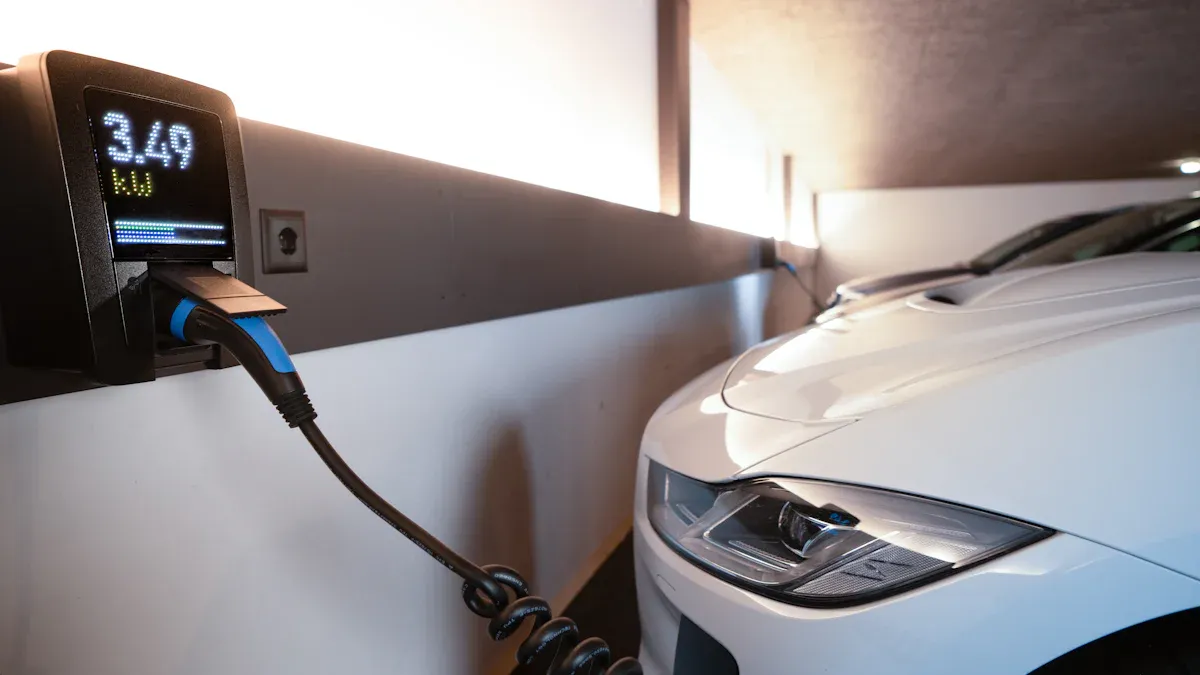
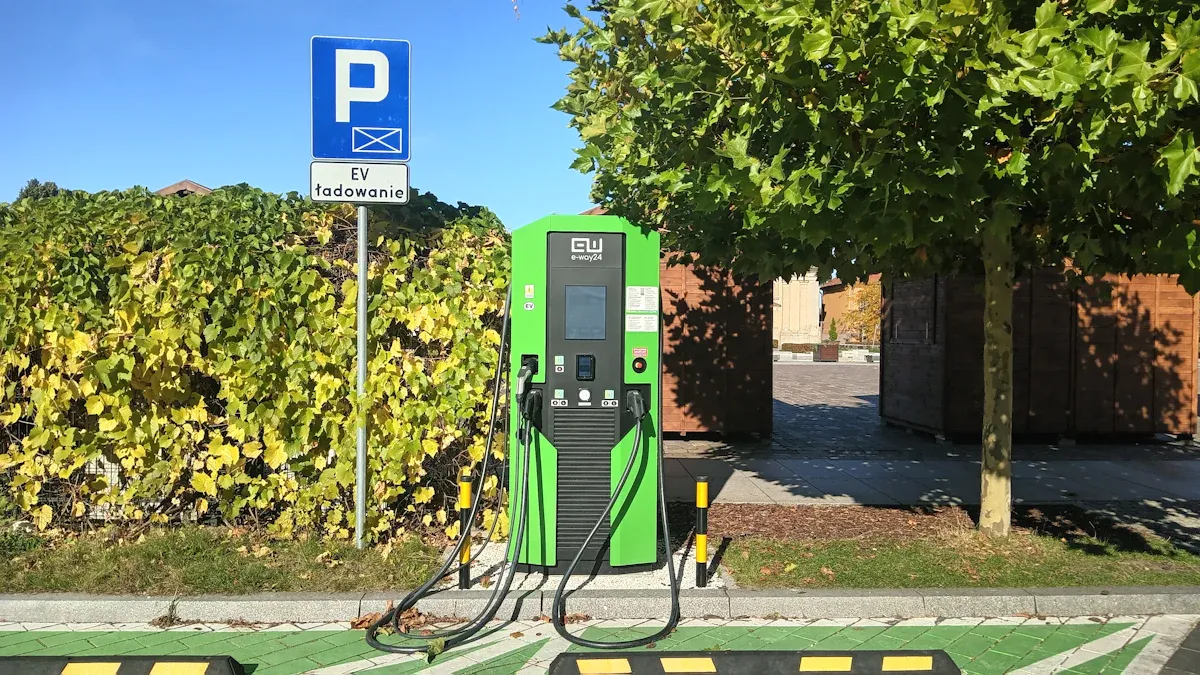
An electric car owner planning a trip might wonder, “Can I leave my EV plugged in for a week?” The answer is a definitive yes. In fact, keeping the vehicle connected to an Зарядное устройство для электромобилей is often recommended. Modern electric vehicles possess a sophisticated Battery Management System (BMS). This system acts as the battery’s brain, automatically preventing overcharging. The real key is not если the vehicle remains plugged in for days, but how it is done correctly. Setting the proper charge limit ensures battery health and peace of mind. TPSON, a leader among Производители зарядных устройств для электромобилей, обеспечивает расширенный Решения для зарядки электромобилей, в том числе портативные зарядные устройства, that work seamlessly with your vehicle’s BMS for safe, long-term connections.
How Your EV’s Battery Management System (BMS) Works
The Battery Management System (BMS) is the unsung hero of your electric car. It is a sophisticated onboard computer dedicated entirely to the health and safety of your vehicle’s most valuable component: the high-voltage battery. This system works tirelessly behind the scenes, making it possible to leave your vehicle plugged in for an extended period without worry.
The Brain of Your Battery
Think of the BMS as the battery’s dedicated guardian. It constantly monitors, protects, and optimizes the battery pack to ensure longevity and reliable performance.
What is a BMS?
A BMS is an electronic system that manages a rechargeable battery pack. Its primary job is to ensure the battery operates safely and efficiently. It achieves this through several key functions:
- Мониторинг: It tracks critical data like voltage, current, and temperature for each individual cell.
- Protection: It safeguards the battery from unsafe conditions, such as extreme temperatures or overcharging.
- State Estimation: It calculates the battery’s State of Charge (SOC) and State of Health (SOH), providing you with accurate range and battery life information.
- Балансировка клеток: It ensures all cells in the battery pack maintain an equal charge, which maximizes usable capacity and extends the battery’s lifespan.
How It Prevents Overcharging
The BMS is the reason your battery does not overcharge. It meticulously monitors the voltage of each cell during a charging session. Once the cells reach the predefined maximum voltage—the target you set in your vehicle’s settings—the BMS immediately communicates with the charger to terminate the flow of electricity. This precise control prevents the battery from exceeding its safe operating limits, protecting it from damage.
Smart Charging for Long-Term Parking
When an electric car is parked for a week, the BMS shifts into a maintenance mode. It intelligently manages the battery to preserve its health while connected to a power source.
Automatically Stopping the Charge
Once your vehicle reaches its target charge limit (e.g., 80%), the BMS instructs the charging system to stop. The vehicle does not continuously draw a high amount of power. Instead, the charging process halts completely. Advanced charging solutions from providers like TPSON are designed to work in perfect harmony with the vehicle’s BMS, responding instantly to these commands for a safe and efficient charging cycle.
Maintaining a Stable State of Charge
After the initial charge stops, the BMS continues its work. It will allow the battery’s charge level to drop slightly before initiating a brief top-up to return it to the set limit. This process is far more efficient than leaving the car unplugged, where background systems would slowly drain the battery. By staying plugged in, the BMS uses grid power for these small adjustments, keeping the battery in its ideal state without cycling it unnecessarily.
The Golden Rule for Charging Your EV: Set a Charge Limit
While an electric car can stay plugged in, simply connecting it is not enough. The single most important action an owner can take is to set a maximum charge limit. This simple step is the cornerstone of long-term battery preservation and represents one of the key best practices of ev charging. It ensures the vehicle’s battery remains in its optimal health zone, even when parked for an extended period.
Why 100% Is Not the Goal for Storage
Consistently charging to 100% is ideal for maximizing range before a long road trip. However, leaving a battery at a full charge for days is counterproductive to its health. The effects of prolonged full charge can accelerate battery degradation over time.
Understanding High-Voltage Battery Stress
A lithium-ion battery at 100% State of Charge (SoC) is like a stretched rubber band. It is under constant electrochemical stress. This high-voltage state places significant strain on the battery’s internal components, particularly the cathode (the positive electrode). Holding this high-energy state for a long time causes a faster reduction in the battery’s ability to hold a charge, a process known as capacity degradation.
The Science of Lithium-Ion Health
Scientific studies on lithium-ion cells reveal why a high SoC is detrimental for storage. This degradation happens in a few key ways:
- Long-term storage at a high SoC increases stress on the positive electrode, leading to a faster reduction in battery capacity.
- Elevated SoC levels promote the breakdown of the electrolyte and an increase in internal pressure. This can result in cell expansion, especially when combined with high ambient temperatures.
The 80% Rule Explained
To avoid unnecessary battery stress, EV experts and manufacturers advocate for a simple guideline: the 80% rule. For daily driving and short-term parking, setting the charge limit to 80% provides ample range for most commutes while significantly reducing battery strain.
Finding the Battery’s Sweet Spot
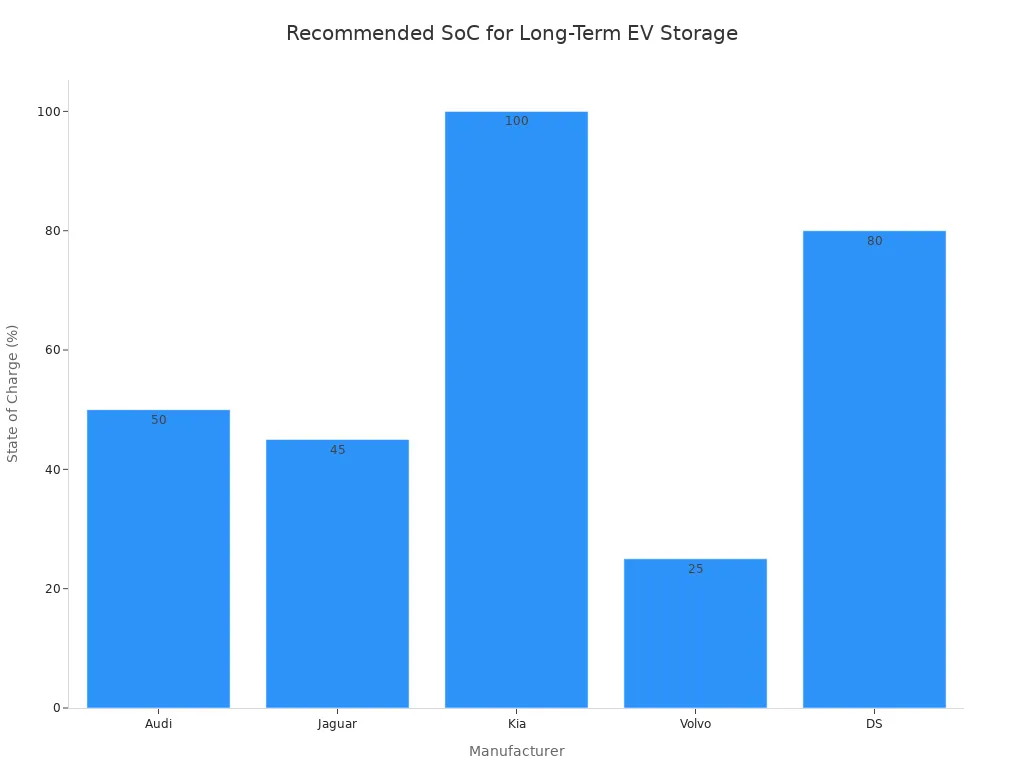
The 80% rule is a great starting point, but the ideal SoC for long-term storage is often even lower. Most research suggests that an SoC of around 50% is the true sweet spot for minimizing degradation. However, manufacturer recommendations can differ significantly among brands, based on their specific battery chemistry and BMS software.
Примечание: Always check the owner’s manual for your specific vehicle. Recommendations can vary widely.
| Производитель | Модель(и) | Recommended SoC for Long-Term Storage |
|---|---|---|
| Audi | A3 e-tron and other plug-in Hybrid models | 40%-60% |
| Jaguar | I-Pace | 30%-60% |
| Kia | e-Niro, Niro PHEV, Soul EV | Fully charged state |
| Volvo | Plug-in hybrid models | Approximately 25% |
| DS | DS 3 CROSSBACK E-TENSE, DS 7 CROSSBACK E-TENSE 4×4 | 80% |
How to Set the Charge Limit in Your Vehicle
Setting the charge limit is a straightforward process for any electric car owner. This critical step in charging your ev ensures the BMS knows exactly when to stop the power flow.
Quick Guide to Setting Your Charge Limit:
- Access the Settings: Navigate to the “Charging” or “Vehicle” settings menu on your car’s central touchscreen display.
- Find the Limit Control: Look for an option labeled “Charge Limit,” “Max Charge,” or “Target Charge.”
- Adjust the Slider: Use the on-screen slider or buttons to set your desired percentage (e.g., 80% for daily use or 50% for a week-long trip).
- Use the App: Most manufacturers also allow owners to adjust this setting remotely through a smartphone app.
Once set, the vehicle will automatically stop charging at that level. Technologically advanced charging solutions, like those from TPSON, are designed to communicate flawlessly with these vehicle settings, ensuring a safe and precise charging session every time.
Why You Should Leave My EV Plugged In to Beat “Vampire Drain”
An electric car consumes a small amount of energy even when parked and turned off. This phenomenon, known as “vampire drain” or “phantom drain,” is the slow, silent depletion of the high-voltage battery. Understanding this process reveals a key reason why you should leave my ev plugged in, especially for an extended period.
What Is Vampire Drain?
Vampire drain is the background power consumption required to keep an EV’s essential systems operational. While minimal, this steady draw can significantly reduce the battery’s state of charge over several days.
The Silent Power Consumers
Several onboard systems contribute to this gradual energy loss. These silent consumers work behind the scenes to maintain the vehicle’s readiness and health.
- Battery Thermal Management: This system may activate to keep the battery pack within its optimal temperature range.
- Status Monitoring: The vehicle’s computers constantly monitor battery health and other critical systems.
- Security Features: Advanced security systems, like Tesla’s Sentry Mode, use cameras and sensors that require continuous power.
- 12V Battery Maintenance: The car’s main battery periodically recharges the smaller 12V battery, which powers standard electronics like door locks and interior lights.
Why It Matters for an Unplugged EV
For an unplugged electric car, vampire drain directly depletes the driving range. The rate of loss depends heavily on ambient temperature and vehicle settings. One YouTuber, SaskTesla, documented a 5% charge loss overnight just from leaving his vehicle unplugged in the winter.
Typical Daily Battery Loss from Vampire Drain The amount of charge lost can vary significantly.
Состояние Daily Battery Loss (%) Optimal Temperatures 0.5-1% Sub-zero Temperatures 2-4%
An owner returning to an unplugged car after a week, especially in cold weather, might find a surprisingly lower state of charge than when they left.
How Staying Plugged In Helps
Connecting the vehicle to a charger is the most effective strategy to combat vampire drain. This simple action allows the car to use grid power for its background tasks instead of its own battery.
Powering Systems Directly from the Grid
When you leave my ev plugged in, the vehicle draws power from the wall outlet to run its auxiliary systems. A technologically advanced charging solution, like those from TPSON, facilitates this process. The grid power runs the thermal management system and the DC-DC converter, which keeps the 12V battery charged. This bypasses the high-voltage battery entirely, preserving its stored energy for driving.
Keeping Your Battery Perfectly Topped Off
Staying plugged in also ensures the main battery remains at its target state of charge. The Battery Management System (BMS) monitors the battery level. If it dips slightly below the set limit (e.g., 80%), the charger will provide a small, gentle top-up using grid power. This keeps the battery perfectly maintained and ready for your return without causing unnecessary wear.
Does the Type of Charger Matter for a Week-Long Stay?

The type of charger an owner uses is an important consideration for a week-long stay. While the vehicle’s Battery Management System (BMS) ultimately controls the charge, the charger itself plays a role in efficiency and battery health. For extended parking, AC chargers (Level 1 and Level 2) are the correct tools for the job.
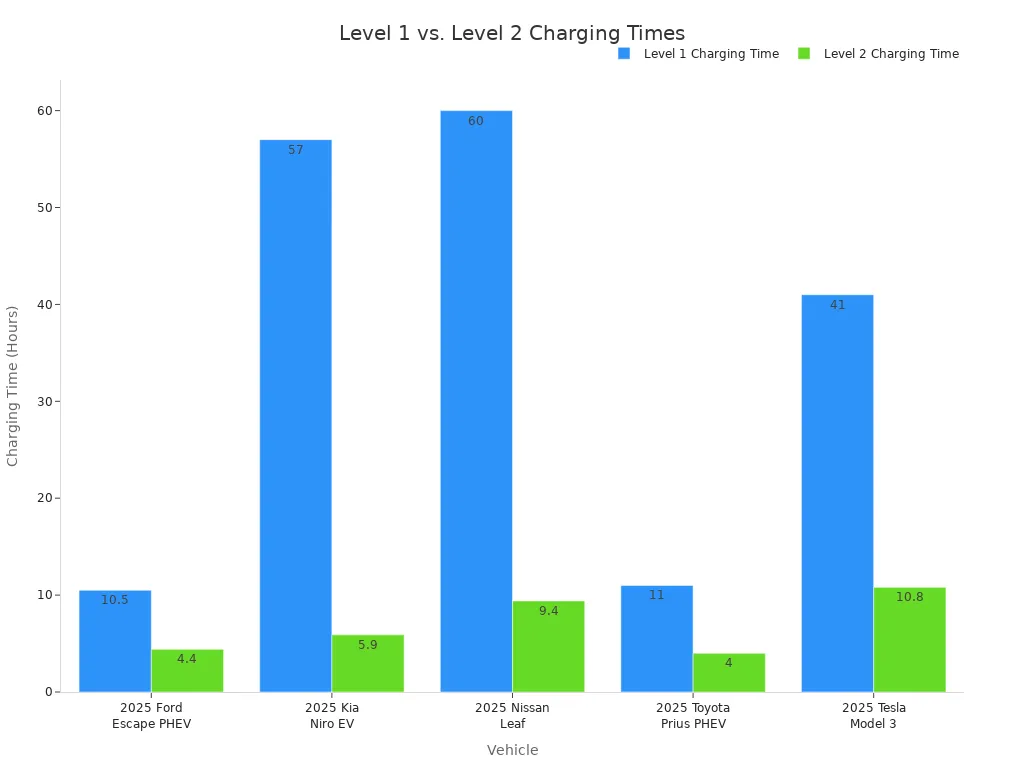
Зарядка уровня 1 против зарядки уровня 2
Both Level 1 and Level 2 chargers are excellent choices for leaving an electric car plugged in for a week. They supply AC power, which the vehicle’s onboard charger converts to DC power to fill the battery. The primary difference between them is their power output and charging speed.
Slow and Steady with Level 1
Level 1 charging uses a standard 120-volt household outlet. It is the slowest method, delivering about 1 to 1.8 kW of power. This slow rate adds only a few miles of range per hour.
- Gentle on the Battery: This slow, gentle flow of energy is very easy on the battery, generating minimal heat.
- Ideal for Long Stays: When time is not a factor, a Level 1 charger is a perfect and simple solution for maintaining a battery’s set charge limit over many days.
The Convenience of Level 2
Level 2 chargers are the most common type for home and workplace installations. They use a 240-volt outlet and deliver significantly more power, typically from 3 kW to 22 kW. This allows them to charge a vehicle much faster than a Level 1 charger. While a Level 2 charger is faster, it is still perfectly safe for long-term connections. The vehicle’s BMS will stop the charge once the target is reached, regardless of the charger’s power. Technologically advanced charging solutions from providers like TPSON ensure this communication between the charger and vehicle is seamless.
Why DC Fast Chargers Are Not for Parking
DC fast chargers are designed for a completely different purpose and should never be used for long-term parking. These powerful stations bypass the vehicle’s onboard charger, delivering high-voltage DC power directly to the battery.
Designed for Quick Road Trip Top-Ups
The sole purpose of a DC fast charger is to add a significant amount of range in the shortest possible time, typically 20 to 60 minutes. They are the EV equivalent of a quick stop at a gas station during a long journey. Most public charging networks do not even permit vehicles to remain parked at a DC fast charger after the session is complete.
The Risk of Battery Strain
Using a DC fast charger for parking introduces unnecessary stress and heat to the battery.
- High Heat Generation: The massive flow of power creates significant heat due to the battery’s internal resistance. This forces the vehicle’s thermal management system to work overtime to cool the pack.
- Accelerated Degradation: Repeated or prolonged exposure to the intense conditions of DC fast charging can cause “lithium plating.” This is a chemical reaction that permanently reduces the battery’s capacity. The high power and resulting heat accelerate the breakdown of battery components, leading to faster long-term degradation.
Совет профессионала: For maintaining battery health, always use a Level 1 or Level 2 AC charger for daily charging and long-term parking. Reserve DC fast charging for road trips.
Environmental Factors for Long-Term Parking
Where an owner parks their electric car for a week matters almost as much as how they charge it. Ambient temperature is a critical factor that directly influences battery health and performance. The vehicle’s sophisticated thermal management system works to protect the battery, but smart parking practices provide the first and best line of defense.
The Impact of Extreme Temperatures
Both hot and cold weather place additional demands on an EV’s battery. The vehicle will actively use energy to maintain its ideal internal temperature, a process that is much more efficient when drawing power from the grid.
Why Extreme Heat Is the Battery’s Enemy
Extreme heat is the number one environmental threat to a lithium-ion battery. Prolonged exposure to high temperatures accelerates the chemical reactions inside the battery cells, leading to faster, permanent degradation of its capacity.
Temperature and Battery Health
- Ideal Storage Range: Lithium-ion batteries are healthiest when stored between 10°C and 20°C (50°F to 68°F).
- Accelerated Aging: Temperatures above 30°C (86°F) can cause the battery to overheat, which reduces its ability to store energy.
- Active Cooling: When parked, an electric car will use its thermal management system—employing methods like liquid cooling loops or even shared refrigerant from the A/C system—to keep the battery pack cool. This process consumes energy, contributing to vampire drain if the vehicle is unplugged.
Cold Weather and Battery Conditioning
Cold weather presents a different set of challenges. While not as permanently damaging as extreme heat, sub-zero temperatures can temporarily reduce battery performance and efficiency. Storing a battery in freezing conditions can lead to a reduction in capacity. To counteract this, the vehicle’s Battery Management System will activate a battery heater to warm the pack to its optimal operating temperature. This “conditioning” process requires a significant amount of energy, making it another key reason to leave the vehicle plugged in during cold snaps.
Best Practices for Parking Your EV
Following a few simple best practices for parking can significantly mitigate the effects of extreme weather, preserving battery health over an extended period of parking.
The Ideal Scenario: A Temperature-Controlled Garage
The best place to park an EV for any length of time is in a temperature-controlled garage. A garage shields the vehicle from direct sunlight, which can dramatically raise the temperature of the battery pack. It also protects the car from the most extreme swings in ambient temperature, keeping the battery closer to its ideal range and reducing the need for the thermal management system to work overtime.
Tips for Parking Outside
If a garage is not an option, owners can still take steps to protect their vehicle.
- Seek Shade: Always prioritize parking in a shaded area. Parking under a tree, in a covered carport, or on the shady side of a building prevents direct sunlight from baking the car.
- Use a Cover: A high-quality, reflective car cover can significantly reduce heat buildup from the sun.
- Manage Charge Level: For outdoor parking in hot climates, keeping the battery’s state of charge between 50% and 80% reduces internal stress.
- Disable Background Features: Turn off power-hungry features like remote monitoring or security modes if they are not needed.
Always Check Your Owner’s Manual for Specifics
While general rules provide a great starting point, the owner’s manual is the ultimate authority for vehicle care. The engineers who designed your electric car have provided specific instructions to maximize its battery life and performance. Following this official guidance is the most reliable way to ensure proper long-term care.
Manufacturer-Specific Recommendations
Every manufacturer fine-tunes its battery and software differently. This results in unique recommendations for long-term parking and storage that may differ from general advice.
Finding the “Long-Term Storage” Section
An owner can find this vital information within the vehicle’s physical or digital owner’s manual. It is typically located in a chapter dedicated to the high-voltage battery or vehicle maintenance. Searching for terms like “long-term parking,” “storage,” or “battery care” will usually lead directly to the correct page.
Pro Tip 💡: If you cannot find the physical manual, most manufacturers offer a digital PDF version on their official website. This makes it easy to search for specific keywords.
Brand Differences: Tesla, Ford, Hyundai
In summary, it is both safe and beneficial to leave my ev plugged in for a week. The single most important step is setting the charge limit to the manufacturer’s recommended level. An electric car’s advanced Battery Management System (BMS) actively monitors the state of charge and temperature, preventing damage.
Важное замечание: Failing to follow manufacturer storage guidelines can lead to battery damage that may not be covered by warranty.
Modern EVs are built with this smart technology, so owners can leave my ev plugged in and enjoy their trip with complete peace of mind.
ЧАСТО ЗАДАВАЕМЫЕ ВОПРОСЫ
Will leaving my EV plugged in raise my electricity bill?
Yes, but the cost is minimal. The vehicle only draws a small amount of power to counter vampire drain and maintain the battery. This consumption is often less than the cost of the range lost if the vehicle were left unplugged, especially in extreme temperatures.
What if I cannot leave my EV plugged in for a week?
If an owner cannot plug in, they should charge the battery to the manufacturer’s recommended storage level (often 50-80%). They should also disable energy-intensive features like cabin overheat protection or security monitoring to minimize vampire drain while they are away.
Is it better to use a Level 1 or Level 2 charger for a week?
Both are excellent choices. A Зарядное устройство уровня 1 is perfectly adequate for maintaining a charge over a long period. A Level 2 charger works just as well, as the vehicle’s BMS controls the power flow. The choice depends on what is available.
Can I use any brand of charger for long-term parking?
Yes, any certified charger is safe. Technologically advanced charging solutions from providers like TPSON are designed to communicate effectively with your car’s BMS. This ensures the charging process stops correctly at the set limit, providing a reliable and safe connection for extended periods.
Does leaving the car plugged in wear out the charger?
No, it does not. A quality charger is built for continuous connection. Once the battery reaches its target, the charger enters a standby mode. It only delivers power intermittently for brief top-ups, which does not cause significant wear on the charging hardware.
Should I disable features like advanced security modes?
Pro Tip 💡 Yes, disabling non-essential, power-hungry features is a smart practice. Even when plugged in, this reduces the number of times the car needs to draw power from the grid, making the maintenance process even more efficient. Check your owner’s manual for specific features.