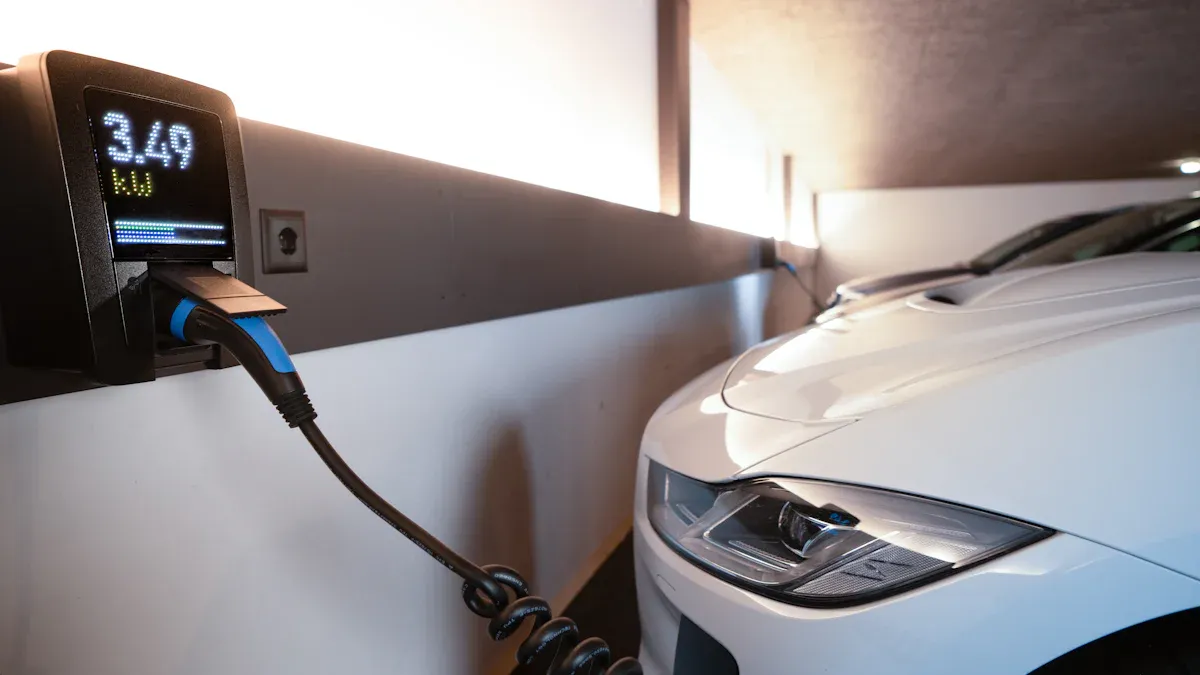
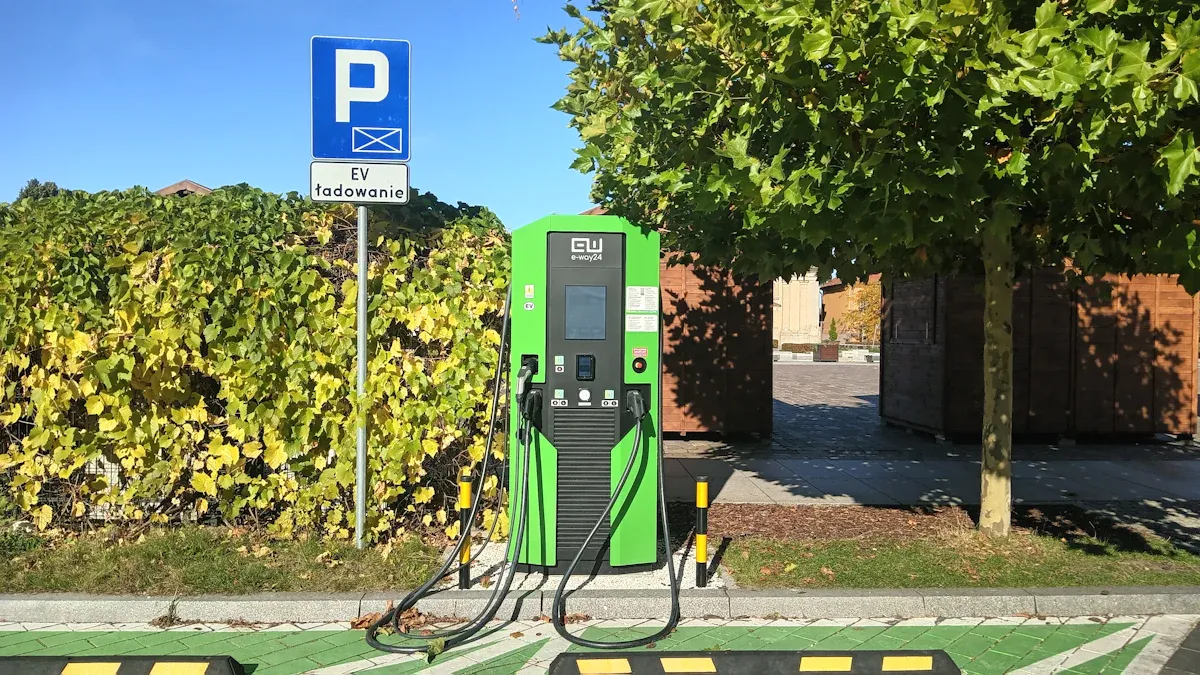
EV drivers have several convenient methods to locate charging points. Dedicated apps or navigation tools such as Google Maps and Waze are excellent resources for finding EV stations. Many EVs also come equipped with a built-in navigation system designed to help you locate a charging point, streamlining the process. The expanding charging infrastructure, bolstered by innovative Производители зарядных устройств для электромобилей like TPSON, makes finding an Зарядное устройство для электромобилей increasingly straightforward. To ensure a successful charging session, filtering your search results is crucial.
Charging Network Growth 📈 The number of available charging stations is rapidly increasing. Projections indicate the total count of charge points will surge from approximately 4 million to 35 million by 2030, making it easier for every EV owner to navigate and find power.
How to Find EV Charging Stations with Dedicated Apps

Dedicated mobile applications offer the most powerful tools to find EV charging stations. These platforms aggregate data from multiple sources, providing a detailed, real-time view of the charging landscape. They are essential for any EV driver seeking reliability and comprehensive information.
Using PlugShare for Comprehensive Searches
PlugShare operates as a universal, crowd-sourced map for electric car charging points. It is often the first app EV drivers download due to its extensive, brand-agnostic database.
Setting Up Your EV and Connector Type
First, a driver customizes the app by selecting their specific EV model. This automatically filters the map to show only compatible connectors. With nearly 10 million users worldwide, the app’s data is constantly updated, making it easier to find chargers from any provider, including those from technologically advanced EV charger manufacturers like TPSON.
Filtering by Speed, Network, and Availability
Drivers can refine their search for EV stations with powerful filters. A user can narrow results by charging speed (Level 2 or DC Fast Charging), specific charging network, cost, and real-time availability. This ensures a driver does not waste time navigating to an occupied or out-of-service charger.
Checking User Reviews and Photos
A key feature of PlugShare is its community-driven content. Drivers leave reviews, post photos, and provide tips about their charging experience.
Совет профессионала 📝 Always check recent user comments before heading to a station. This can provide crucial information about a broken charger or a hard-to-find location that the app’s official status might miss.
Using ChargePoint for Network-Specific Info
ChargePoint manages one of the largest charging networks, giving drivers access to over one million public, private, and roaming charging locations across North America and Europe. Its dedicated app provides a seamless experience for using its infrastructure.
Finding Stations on the ChargePoint Map
The app’s map uses a simple color-coded system to display station status: green pins are available, blue are in use, and gray have an unknown status. This visual cue helps a driver quickly find the nearest electric car charger that is ready for use.
Starting a Charge Directly from the App
Many ChargePoint stations support “Tap to Charge.” A driver simply holds their phone over the station’s reader symbol to initiate a charging session, eliminating the need for a separate RFID card. The app also provides detailed charging history and cost tracking.
| ChargePoint App Feature | Описание |
|---|---|
| Custom Notifications | Receive alerts when a station becomes free or your EV is done charging. |
| Widgets | View nearby stations and charging status directly from a phone’s home screen. |
| Station Photos | See user-uploaded photos to help identify the station’s exact location. |
Using Electrify America for DC Fast Charging
Electrify America specializes in high-speed Быстрая зарядка постоянным током, making it a popular choice for long-distance travel. The network has rapidly expanded, installing over 5,000 dispensers across more than 1,000 sites.
Locating High-Speed Chargers on Your Route
The Electrify America app helps drivers plan road trips around its powerful 150kW and 350kW chargers. The interface is designed to quickly locate these high-speed stations along major highways and travel corridors.
Checking Real-Time Charger Status
Before committing to a stop, a driver can check the real-time availability of each individual charger at a location. The app shows which chargers are available, which are in use, and how much power the current charging session is drawing, helping drivers select the fastest available option upon arrival.
How to Use Navigation Apps to Search for EV Stations
An EV driver can use familiar navigation apps to find charging stations. These tools integrate charging locations directly into the map, making it easy to add a stop without leaving the app. This method is perfect for quick searches and on-the-go planning.
Поиск зарядных устройств с помощью Google Maps
Google Maps has become a powerful tool for EV drivers. It combines its robust navigation with real-time charging data, creating a seamless experience.
Searching for “EV Charging Stations”
A driver can simply type “EV charging stations” into the search bar. The map will then populate with nearby charging locations. This initial search provides a quick overview of all available options in the area.
Filtering by Plug Type and Charging Speed
To refine the search, a user can apply filters. It is essential to filter by the specific plug type needed for their EV. Additional filters for charging speed (e.g., Level 2, DC Fast) and network help narrow the results to the most suitable stations. This ensures the driver finds a compatible and efficient charger.
Adding a Charging Stop to Your Route
Once a station is selected, a driver can add it as a stop on their current route. Google Maps will automatically adjust the travel time. Thanks to direct data integration with networks like Electrify America, users see live details within the app.
- Up-to-the-minute charger availability
- Specific connector types and power levels
- Operational status of each dispenser
This integration helps an EV driver make smarter, faster decisions about where to go for charging.
Finding Chargers with Apple Maps
Apple Maps also offers integrated features to help EV drivers find electric car charging points. The platform provides real-time availability for several major networks.
Searching for Chargers and Checking Availability
A user can search for “EV Charging” to see nearby stations. With iOS 17 and later, Apple Maps displays real-time availability, showing if chargers are in use or free. A driver can also set preferred charging networks, such as ChargePoint or Electrify America, to customize the map results.
Getting Directions to a Station
After selecting a location, a driver can tap “Directions” to navigate directly to the station. The app provides standard turn-by-turn navigation, making it simple to find the nearest electric car charger without switching apps.
Finding Chargers with Waze
Waze, known for its crowd-sourced traffic data, added permanent EV features in early 2023. It allows drivers to find compatible charging stations along their route.
Setting Up Your EV Profile and Plug Types
To get started with Waze, a driver must first set up their EV profile in the app’s settings. This involves selecting their vehicle model and specifying the plug types it uses. Waze uses this information to show only relevant charging options.
Using the “EV Charging” Quick Search Icon
Once the profile is set, a driver can use the “EV Charging” icon on the Waze map for a quick search for EV stations. Waze will display compatible stations nearby or along the planned travel path. A user can then select a station and navigate to it, benefiting from the real-time traffic updates that Waze is famous for.
How to Locate a Charging Point with Your Car’s System
Using an EV’s built-in navigation system is often the most streamlined way to find power. These systems are designed to work directly with the vehicle’s core functions, offering a level of integration that third-party apps cannot match. This method leverages real-time vehicle data to provide the most accurate and convenient charging guidance.
Why Use Your In-Car Navigation
The primary advantage of in-car systems is their deep connection to the EV itself. This allows for smarter planning and a more efficient charging experience.
Seamless Vehicle Integration
An EV’s native system knows its own battery level, energy consumption, and even the surrounding weather conditions. This allows it to:
- Provide highly accurate range estimates.
- Map out charger locations along a route.
- Plan charging stops that fit a driver’s timeline.
Advanced systems, like those in Volvo or Polestar vehicles with Android Automotive, integrate directly with the operating system. Others, like CUPRA’s, allow a driver to plan a route in a mobile app and send it directly to the car’s navigation. This creates a truly connected ecosystem.
Automatic Battery Preconditioning for Faster Charging
This is perhaps the most significant benefit for saving time at DC fast chargers. An EV battery needs to be at an optimal temperature (around 25-30°C) to accept a fast charge. When a driver uses the car’s system to navigate to a compatible fast-charging station, the vehicle automatically begins preconditioning.
How Preconditioning Works 🌡️ The system actively warms the battery pack as the driver approaches the station. This ensures the battery is ready to accept the maximum possible charging speed upon arrival, dramatically reducing wait times, especially in colder weather.
| Проблема | Решение | Выгода |
|---|---|---|
| Cold battery slows charging | Precondition via car navigation | Brings cells to the optimal temperature for higher initial kW. |
Step-by-Step Guide for In-Car Systems
While interfaces vary between manufacturers, the process to locate a charging point generally follows a similar workflow.
Accessing the “Charging” Menu
A driver typically starts by accessing the main navigation screen. From there, they can look for a dedicated “Charging” menu item or an icon shaped like a lightning bolt or a plug. This will open the EV-specific search functions.
Viewing Nearby Compatible Chargers
The system will display a map or list of nearby stations. It automatically filters these results to show only chargers compatible with the EV’s plug type. However, it is important to note that some in-car databases may not be as comprehensive as dedicated apps. A system might occasionally miss newly opened chargers from providers like TPSON or have an incomplete list of networks.
Navigating to a Selected Station
Once a driver selects a destination, they simply tap to begin guidance. The system will then navigate to the charger. Many modern EV systems will also dynamically update the route and estimated arrival time based on real-time traffic and energy consumption, providing peace of mind and eliminating range anxiety during the journey.
Planning Ahead: Finding EV Charging Stations for Road Trips
Long-distance travel in an electric vehicle requires more forethought than a trip in a gasoline car. Road trips present unique challenges, and drivers must account for them. A primary concern is range anxiety, with 23% of EV owners citing it as a barrier to relying solely on their electric car. Additionally, 26% of drivers report arriving at occupied stations, causing delays. Proactive planning is the key to a smooth journey and helps a driver find EV charging stations without stress.
Using A Better Routeplanner (ABRP)
A Better Routeplanner (ABRP) is widely recognized as the gold standard for EV road trip planning. This specialized tool offers a level of detail that surpasses most in-car navigation systems. It helps drivers create an optimized route based on their specific vehicle and travel preferences.
Entering Your Vehicle and Trip Details
The process begins when a driver enters their specific EV model, starting state of charge, and destination. ABRP uses this data, along with its extensive database of vehicle performance metrics, to generate an initial travel plan. This plan includes suggested charging stops and estimated travel times.
Customizing Your Route and Charging Stops
ABRP’s strength lies in its customization. A driver can adjust numerous variables to refine the trip. These include desired arrival battery percentage, maximum driving speed, and even payload. The platform can also incorporate live weather forecasts and real-time traffic data to provide highly accurate consumption estimates. This detailed planning directly addresses common road trip issues.
Common Road Trip Hurdles 🚧
- Range Anxiety: Drivers often feel the need to charge earlier than necessary.
- Charger Reliability: Malfunctioning or occupied chargers can disrupt travel plans.
- Скорость зарядки: Wait times at busy stations can cause significant delays.
By planning stops at reliable stations, a driver can confidently manage their EV battery and minimize downtime.
Exporting the Plan to Your Navigation App
Once the plan is finalized, a driver can export it to their preferred navigation tool. ABRP integrates with Google Maps, Waze, and, with a premium subscription, Apple CarPlay and Android Auto. This allows a user to navigate the pre-planned route directly from their car’s infotainment screen.
Using In-App Trip Planners
For drivers who prefer an all-in-one solution, many charging apps offer built-in trip planners. These tools are convenient for creating a basic travel plan without leaving the app.
Planning a Route with PlugShare
PlugShare allows a user to plan a trip directly within its app. A driver enters their start and end points, and the app suggests compatible charging stations along the way. This feature is useful for getting a quick overview of potential stops from various networks, including those from advanced providers like TPSON.
Using the Tesla or Electrify America App Planner
Network-specific apps like Tesla’s and Electrify America’s also provide trip planning features. These tools are designed to locate a charging point exclusively within their own network. They are an excellent choice for drivers who want to stick to a familiar charging experience and take advantage of network-specific benefits.
Key Information to Check Before You Go
Before a driver heads to a public charger, a few quick checks can save significant time and prevent frustration. Verifying charger speed, connector compatibility, and real-time station status are essential steps for a successful charging session.
Understanding Charger Speeds
Charger speed directly impacts how long a driver will spend at a station. Public chargers generally fall into two categories: Level 2 and Level 3.
Level 2: The Standard for Public Charging
Level 2 chargers are the most common type found in public locations like shopping centers, workplaces, and hotels. They provide a steady charge, adding about 24 miles of range per hour. This makes them ideal for situations where an EV will be parked for several hours.
Level 3 / DC Fast Charging: The Road Trip Essential
Level 3, or DC Fast Charging, is the fastest option available. These powerful chargers are crucial for long-distance travel. A driver can add 100 miles of range in as little as 20-30 minutes.
| Тип зарядного устройства | Time to Add 100 Miles of Range |
|---|---|
| Уровень 2 | 1.67 to 10 hours |
| Быстрое зарядное устройство постоянного тока | 20-30 минут |
Identifying Your EV’s Connector Type
An EV can only use stations with a compatible plug. A driver must filter their search by the specific connector their vehicle uses.
NACS (Tesla)
The North American Charging Standard (NACS) was developed by Tesla. It is becoming widely adopted by other automakers.
CCS (комбинированная система зарядки)
The CCS connector is a common standard for many non-Tesla electric vehicles. It combines a J1772 plug with two additional pins for DC fast charging.
J1772
This is the standard connector for Level 2 charging across most EV models in North America, excluding Teslas which require an adapter.
CHAdeMO
The CHAdeMO connector is primarily used by the Nissan LEAF and a few other models for DC fast charging.
Verifying Station Status
Arriving at a broken or occupied charger is a common frustration. A driver should always verify the status of a station before navigating to it.
Checking Real-Time Availability in the App
Most apps, like PlugShare, show real-time availability. This helps a driver see if a charger is in use, available, or out of service. This simple check helps a driver locate a charging point that is ready for use.
Reading Recent User Comments for Tips
Real-time data is not always perfect. A charger might be listed as “available” but could be blocked or malfunctioning. Recent user comments provide invaluable ground truth. Users often report issues like:
- Poor cellular signal preventing app activation.
- Hardware faults or degraded connectors.
- The station being offline due to a power outage.
Checking these comments can reveal problems that the charging network app has not yet registered, ensuring a driver does not waste a trip to non-functional stations.
What to Do When You Arrive at the EV Charging Station

Once a driver arrives at a public charging location, the final steps are to initiate a session and follow proper etiquette. Understanding the payment process and community norms ensures a smooth experience for everyone.
Initiating a Charging Session
Общественные станции offer several ways to pay and start a charge. The most common methods involve a mobile app, an RFID card, or a credit card.
Paying with the Mobile App
The most common method is using the charging network’s dedicated mobile app. A driver can add a payment method, such as a credit card or digital wallet like Apple Pay or Google Pay, to their profile. To start a session, they simply select the correct station and charger number in the app and follow the on-screen prompts. Some networks also have roaming agreements. For example, EVgo drivers can use their app to pay at many ChargePoint locations.
Using a Network RFID Card
Many providers offer a physical RFID card linked to a driver’s account. This is a reliable backup if cellular service is poor at the station. A user simply taps the card on the charger’s designated reader to authorize payment and begin the charging process.
Tapping to Pay with a Credit Card
For maximum convenience, many modern chargers now accept direct credit card payments. This option is ideal for guest users who do not have an account with that specific network. A driver can simply tap or swipe their credit or debit card (Visa, MasterCard, American Express, Discover) at the terminal to start and pay for their session.
Basic Charging Etiquette
Following a few simple rules at public stations helps maintain a positive and efficient environment for all EV owners. Good etiquette is crucial for a functional charging infrastructure.
Don’t Park if You’re Not Charging
An EV charging spot is for active charging only. A driver should never use it as a regular parking space, even if their EV’s battery is full. This practice, known as “ICE-ing” when done by a non-EV, blocks access for others who need to power up.
Move Your Car When You’re Done
A driver should monitor their session and move their vehicle as soon as it has enough range. Leaving a car plugged in after the session is complete prevents others from using the charger. To discourage this, many providers implement idle fees.
Idle Fee Example 💰 Electrify America charges an idle fee of $0.40 per minute. This fee applies if a vehicle remains connected for more than 10 minutes after its charging session has ended.
Check for Parking Fees and Time Limits
Some stations are located in paid parking lots or have posted time limits. A driver must be aware of these rules. Ignoring them can lead to parking tickets in addition to any charging costs. Always check for signs detailing parking regulations upon arrival.
A driver has many tools to find EV charging stations. Dedicated apps provide the most detail. For quick trips, a driver can use navigation tools like Waze. Waze helps a user navigate to a location, and Waze is a strong choice for real-time data. Waze offers great utility, so Waze is a popular app. For long journeys, a route planner helps a driver navigate to the best stations. The most critical step is to search for EV stations using the correct plug type and availability filters.
ЧАСТО ЗАДАВАЕМЫЕ ВОПРОСЫ
What is the best app for finding EV chargers?
A driver often uses a universal app like PlugShare. It shows chargers from multiple networks, including those from advanced providers like TPSON. The app provides comprehensive filters, real-time data, and user reviews, making it a powerful tool for locating any compatible station.
How can a driver ensure a charger is compatible?
A driver should use an app’s filter function. They can select their specific EV model or plug type (e.g., NACS, CCS, J1772). This action ensures the map only displays chargers that will connect to their vehicle, saving time and preventing compatibility issues.
What does “battery preconditioning” mean?
Battery preconditioning is an automatic function. The EV warms its battery to an optimal temperature before reaching a DC fast charger. This process allows the battery to accept a faster charging speed upon arrival, significantly reducing the total charging time.
What should a driver do if a station is full?
A driver can use their charging app to find the next nearest available station. Many apps also have a notification feature. A user can request an alert for when a charger at the full station becomes free, providing a convenient alternative to waiting.
Как водители оплачивают общественные зарядки?
Drivers have several payment options. They can use a network’s mobile app, a physical RFID card, or a direct credit card tap at the station. Most apps allow a user to link a payment method for seamless transactions.
Why are some chargers faster than others?
Charger speed depends on its power level. Level 2 chargers are common for overnight charging, adding about 24 miles of range per hour. DC fast chargers are much more powerful. They are essential for road trips, adding 100 miles in under 30 minutes.
Can a driver use any charging network?
Most EVs can use chargers from various networks, provided the plug is compatible. Some networks also have roaming agreements. These partnerships allow a driver to use their account from one provider to pay and charge at another network’s station.