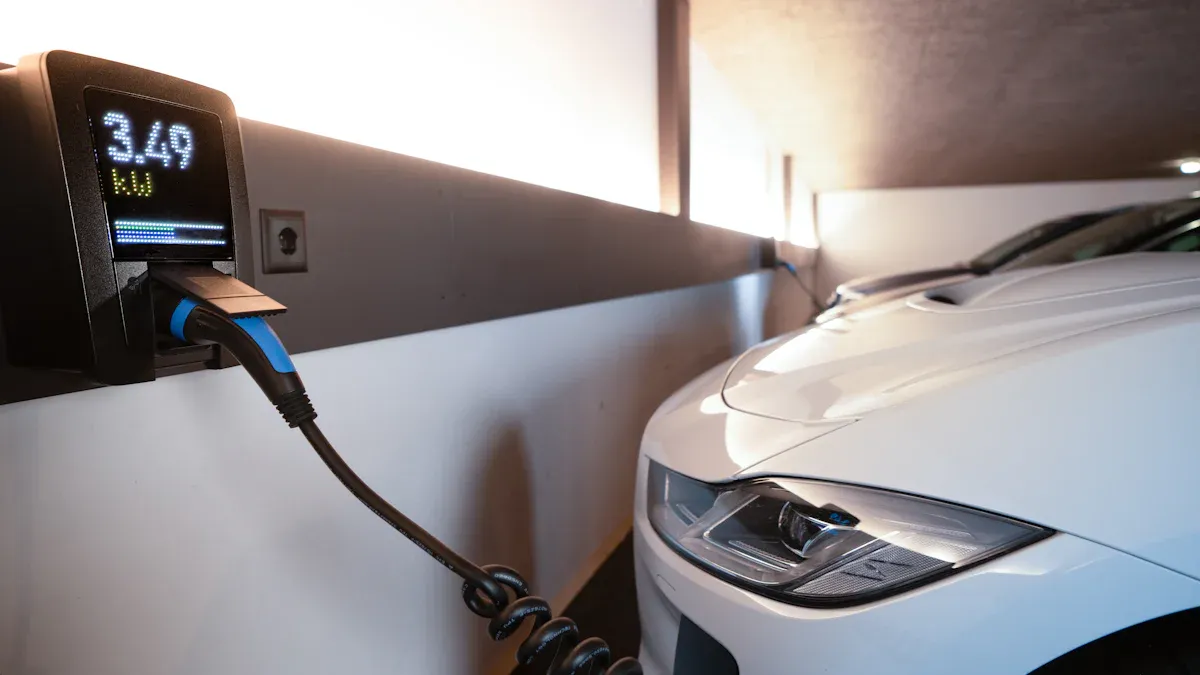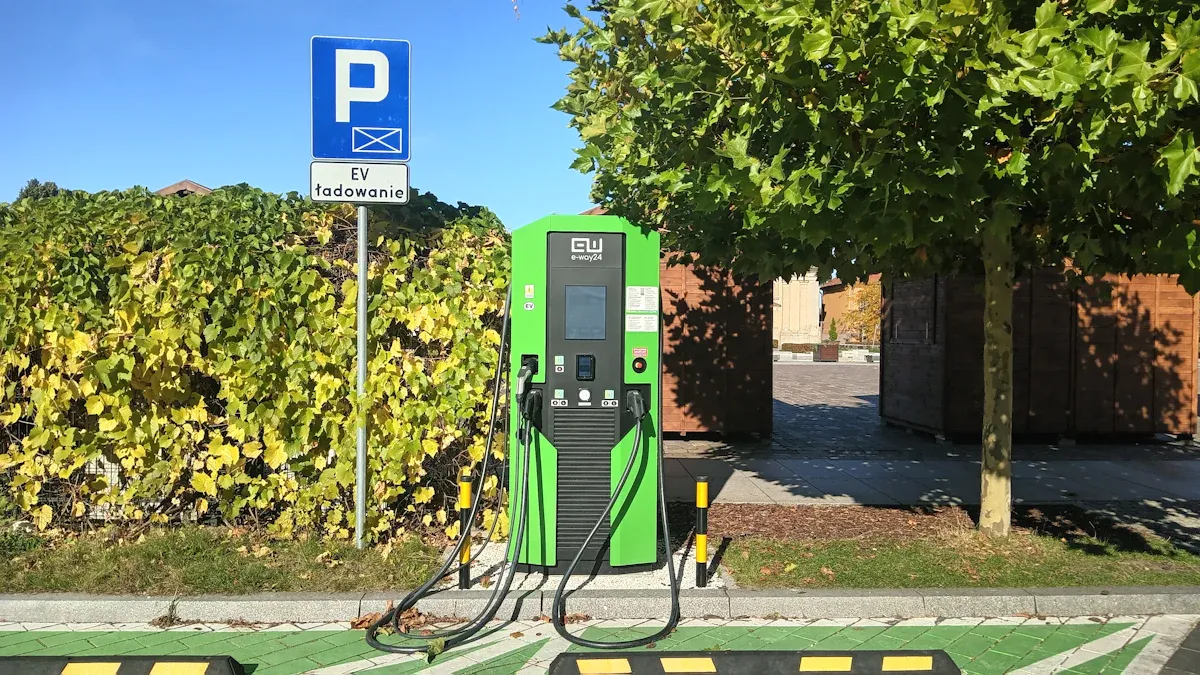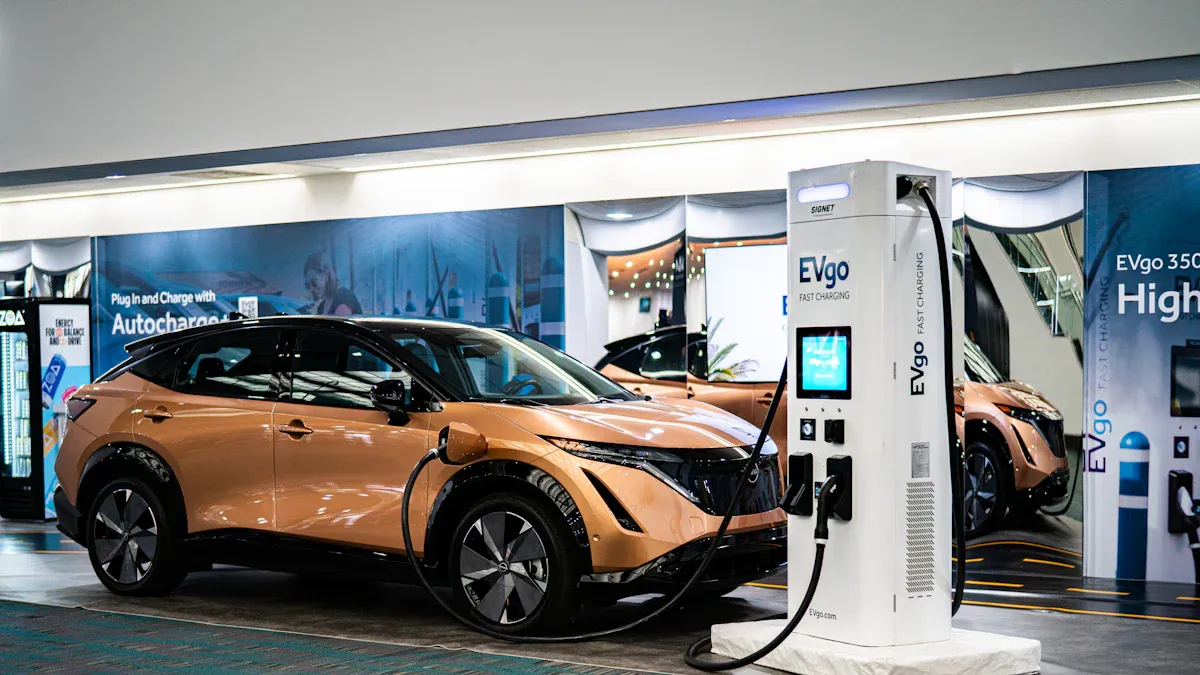
Drivers in France now experience a rapidly evolving fast EV charging landscape. In January 2025, electrified vehicles accounted for 19.4% of the market, with 22,157 battery electric vehicles registered, showing steady growth despite a broader automotive downturn. Major retailers such as Auchan, Leroy Merlin, and Decathlon plan to install 5,000 new electric car charging ports across 350 car parks, expanding access for both travelers and residents. As Производители зарядных устройств для электромобилей introduce advanced solutions, users benefit from improved charging reliability and convenience. The increasing presence of every Зарядное устройство для электромобилей supports the growing demand for electric vehicle infrastructure in France.
Fast EV Charging Landscape in France 2025

Major Fast Charging Networks for Electric Vehicles
France features a robust network of fast EV charging providers, each contributing to the expansion of public chargers and supporting the growing demand for electric vehicles. The following networks play a significant role in the country’s charging infrastructure:
Ionity
Ionity operates a wide array of fast charging stations along major autoroutes. The company focuses on ultra-fast charging solutions, enabling drivers to recharge their vehicles quickly during long journeys.
Сеть зарядных устройств Tesla
Tesla maintains a strong presence near highways and urban centers. The Supercharger network offers reliable charging for Tesla vehicles and, in many locations, supports other compatible electric models.
TotalEnergies
TotalEnergies leads the deployment of charge points on highways. The company invests heavily in expanding its network, ensuring that travelers have access to fast EV charging across France’s motorway system.
Fastned
Fastned specializes in ultra-fast charging stations, strategically placed along busy travel corridors. The network supports both local commuters and long-distance travelers.
Izivia
Izivia provides fast charging options in urban and suburban areas. The company focuses on accessibility and reliability, making electric car charging convenient for residents and visitors.
Электросетевой
The Electroverse network connects multiple charging providers, offering seamless access to thousands of charge points. Drivers benefit from integrated payment solutions and real-time availability updates.
Carrefour/Meridiam
Carrefour, in partnership with Meridiam, expands public chargers in retail locations. Shoppers can charge their electric vehicles while visiting stores, increasing convenience for daily use.
Over 3,600 charging points are available across France’s motorway fast-charging network. Zunder plans to install 30 ultra-fast charging stations, with approximately 131 charge points operational by 2025. Two-thirds of these stations will be active within the year, enhancing long-distance travel options.
Types of Fast EV Chargers Available
France offers a variety of fast EV charging solutions, catering to different vehicle models and user needs.
DC Fast Charging (50kW+)
Shell Recharge and other providers supply DC fast charging stations with a minimum power rating of 50 кВт. These chargers can replenish a battery from 0 to 80% in less than 35 minutes, making them ideal for quick stops.
Ultra-Fast Charging (150kW+ and above)
Ultra-fast charging stations deliver power ratings of 150kW or higher. These chargers support the latest electric vehicle models, reducing wait times and enabling efficient long-distance travel.
Compatibility with electric vehicle models
Most fast charging stations in France use standardized connectors such as CCS and CHAdeMO. This ensures compatibility with a wide range of electric vehicles, including both new and older models.
Tip: Drivers should verify charger compatibility with their vehicle before starting a charging session to maximize efficiency.
Recent Developments in Electric Car Charging
France continues to invest in electric car charging infrastructure, aiming to make charging as simple as refueling a traditional vehicle. The Advenir program drives this expansion, with a target of 400,000 public charging points by 2030. The French government has allocated an additional €200 million to improve charging solutions, supporting both urban and rural areas.
| Тип доказательства | Подробности |
|---|---|
| Association Formation | Charge France formed by 13 EV charging operators |
| Investment Commitment | €4 billion total investment by 2028 |
| Growth Rate | 115% growth in charging infrastructure in 2024 |
| Зарядные станции | Over 2,000 ultra-fast charging stations available |
| Total Charging Points | More than 10,000 ultra-fast charging points |
France ranks third in Europe for the number of charging points, with over 120,000 public chargers currently available. The rapid growth in charging infrastructure ensures improved reliability and uptime for fast EV charging, benefiting both residents and travelers.
How to Find Fast EV Charging Stations in France
Locating fast EV charging stations in France has become more efficient due to advanced digital tools and integrated navigation systems. Drivers can access a variety of resources to plan routes, monitor availability, and ensure compatibility with their electric vehicles.
Recommended Apps and Tools for Electric Vehicle Drivers
Mobile applications and online platforms play a crucial role in helping drivers find fast EV charging stations. These tools offer real-time data, route planning, and user-friendly interfaces.
Chargemap
Chargemap stands out as a leading app for electric vehicle drivers in France. The platform provides clear rates, a community-driven database, and features for EV dashboards. Users can view station availability and filter by connector type.
PlugShare
PlugShare offers extensive coverage, listing over 500,000 charging sites across Europe and North America. The app is recognized for its accuracy and detailed station information. Drivers can search for fast EV charging stations and check live status updates.
ABRP (A Better Routeplanner)
ABRP enables drivers to plan efficient routes across France, factoring in battery range and charging station locations. The app integrates with many vehicle models and supports real-time traffic data.
easyCharging
easyCharging simplifies the search for fast EV charging stations. The app provides a straightforward interface and supports multiple charging networks. Drivers can locate stations based on power output and connector compatibility.
Manufacturer-specific apps
Automakers offer proprietary apps tailored to their vehicles. These apps often include navigation integration, charging station locators, and remote monitoring features. Drivers benefit from seamless connectivity between their electric vehicle and charging infrastructure.
Tip: Drivers should update their apps regularly to access the latest station data and software improvements.
| Название приложения | Описание |
|---|---|
| Chargemap | Leading app with clear rates, community-driven, and features for EV dashboards. |
| PlugShare | Recognized for its accuracy, listing over 500,000 charging sites across Europe and North America. |
| EV Connect | Reliable platform for managing EV charging stations and enhancing driver experience. |
| Перезарядка ракушки | Helps locate nearest public charging stations with filtering options. |
| OVO Charge | Awarded Best Electric Car App of 2023, known for its user-friendly platform. |
Using Navigation Systems for Electric Car Charging
Navigation systems have evolved to support electric vehicle charging needs. Drivers can rely on built-in and third-party solutions for route planning and station discovery.
In-car navigation integration
Modern electric vehicles feature integrated navigation systems that display nearby fast EV charging stations. These systems provide real-time updates, estimated arrival times, and charging bay availability. Drivers can select preferred stations and receive turn-by-turn directions.
Google Maps and Apple Maps
Google Maps and Apple Maps now include charging station data for France. Users can search for fast EV charging locations, view station details, and check availability. These platforms support route optimization based on battery range and charging needs.
Note: Some navigation systems allow users to filter stations by connector type and charging speed.
Online Maps and Directories for Fast EV Charging
Online maps and directories offer comprehensive coverage of charging stations across France. These platforms aggregate data from multiple networks and provide live status updates.
Official network websites
Charging network operators maintain official websites with interactive maps. Drivers can search for fast EV charging stations, view pricing information, and check station status. These sites often include details on connector types and power ratings.
Community-driven platforms
Community-driven platforms leverage user contributions to enhance station data accuracy. Drivers can report station availability, share photos, and provide updates on charging bay conditions. These platforms foster collaboration and improve the reliability of charging information.
| Платформа | Характеристики | Покрытие |
|---|---|---|
| Электросетевой | Largest network for EV charging stations in Europe. | Comprehensive coverage in Europe. |
| Zapmap | Search for charge points, plan routes, pay for charging, live status data. | 95%+ of public charge points mapped in the UK, expanding to France. |
Drivers who use both official network websites and community-driven platforms gain access to the most up-to-date information on fast EV charging stations.
Accessing and Using Fast EV Chargers in France
Step-by-Step Electric Vehicle Charging Process
Drivers in France encounter a streamlined process when using fast EV charging stations. The following steps outline a typical session:
- Arrive at the fast charging station and park the vehicle in the designated bay.
- Plug the charging cable into both the vehicle and the station.
- Authenticate the charging session using an app, RFID card, or direct payment method.
- Start the charging process and monitor progress on the station screen or through a mobile app.
- End the session, stop charging, and safely unplug the cable from the vehicle.
Tip: Monitoring the charging status helps optimize battery health and ensures efficient use of charge points.
Payment Methods for Fast EV Charging
Most fast EV charging stations in France accept a variety of payment options. Drivers can choose the method that best suits their preferences:
- Electra supports payments via app, bank card, Apple Pay, and Google Pay.
- TotalEnergies allows payment by bank card and the Charge+ app.
- Ionity offers QR code scanning, app-based payments, and direct card transactions.
- Fastned enables payment through QR code, Fastned app, or bank card.
- Chargemap provides app-based payments on compatible networks.
Drivers may select pay-as-you-go options for occasional use or membership plans for frequent charging. Memberships often provide discounted rates and access to exclusive offers.
Note: Checking payment compatibility before starting a charging session can prevent delays and ensure a smooth experience.
Language and Support at Electric Car Charging Stations
Fast EV charging stations in France offer multilingual support and customer assistance. The following table summarizes available language options and contact details:
| Language Support | Contact Information | Доступность |
|---|---|---|
| Danish | Fastned Support | 24/7 |
| Dutch | Fastned Support | 24/7 |
| English | Fastned Support | 24/7 |
| English (UK) | Fastned Support | 24/7 |
| French | Fastned Support | 24/7 |
| German | Fastned Support | 24/7 |
| Italian | Fastned Support | 24/7 |
| Spanish | Fastned Support | 24/7 |
| EV Driver Support | +33 (1) 49939011 | 24/7 |
| Station Owner Support | +33 (1) 85650449 | 08:00 – 18:00 CET |
Many charging stations feature English-friendly interfaces and provide on-site assistance or helplines. Drivers can access support at any time, ensuring reliable electric car charging throughout France.
Drivers who require help can contact support services directly or use the station’s interface for guidance.
Network Coverage and Expansion of Fast EV Charging in France
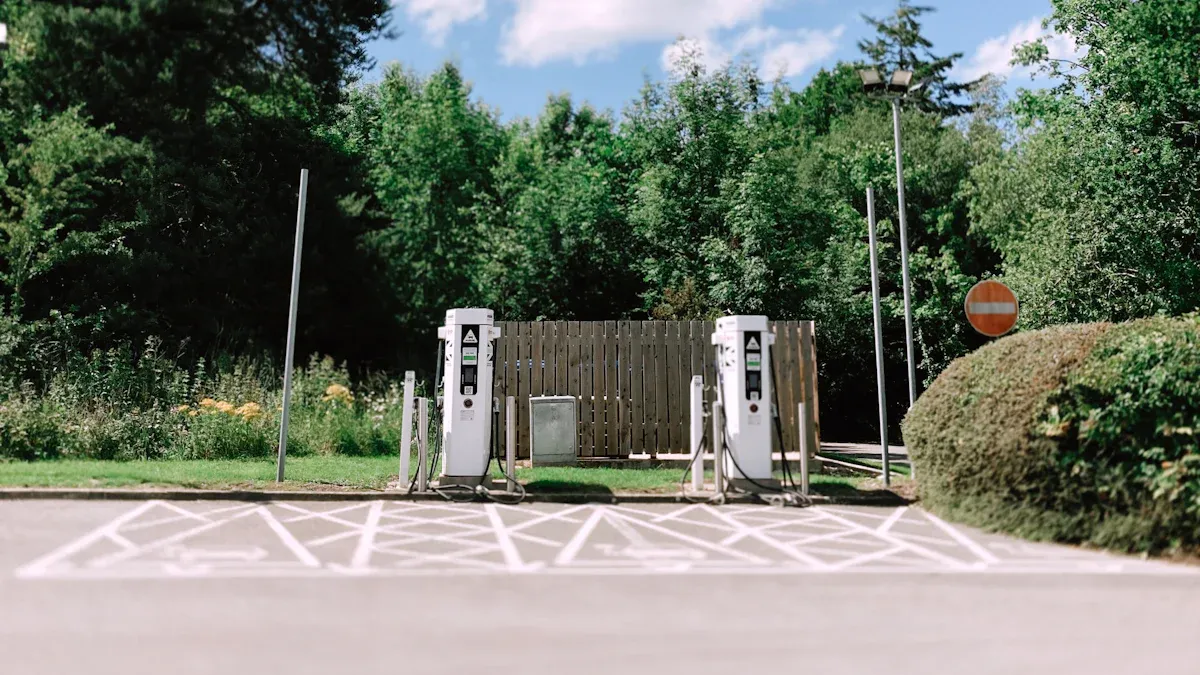
Coverage in Major Cities for Electric Vehicle Charging
France demonstrates strong commitment to building an extensive network of fast EV charging stations in its largest cities. The distribution of charge points supports both residents and visitors who rely on electric vehicles for daily transportation.
Paris
Paris leads the country in fast EV charging infrastructure. The region features 12 fast-charging stations, strategically located to maximize accessibility for urban drivers. These stations serve as critical hubs for the city’s growing electric vehicle population.
Lyon
Lyon continues to expand its charging stations, with five fast-charging locations available throughout the city. The network supports commuters and travelers, ensuring reliable access to high-speed charging.
Marseille
Marseille maintains a robust presence in the national charging network. The city’s infrastructure enables efficient charging for electric vehicles, contributing to the overall mobility strategy in southern France.
Bordeaux
Bordeaux suburbs offer four fast-charging stations. The city’s commitment to sustainable transportation includes ongoing investments in public charge points, supporting both local residents and tourists.
Lille
Lille benefits from the national push for electric mobility. The city’s charging stations provide essential support for drivers in northern France, connecting urban and regional routes.
Toulouse
Toulouse integrates fast EV charging into its urban planning. The city’s infrastructure ensures that electric vehicle owners have convenient access to charge points, reinforcing the region’s commitment to clean transportation.
Note: Other cities such as Strasbourg, Rennes, Angers, and Le Mans also participate in the expansion of fast EV charging, contributing to a nationwide network.
Coverage Along Highways and Tourist Routes for Electric Cars
France’s extensive network of fast EV charging stations covers major highways and popular tourist routes. This infrastructure supports long-distance travel and enhances the country’s appeal for electric vehicle tourism.
Autoroutes and rest stops
Drivers find fast EV charging stations at rest stops along the autoroutes. Ionity operates 74 stations, providing reliable high-speed charging for travelers. Local charging cards like Freshmile, KiWhi, and Belib grant access to a variety of charge points, making it easier to plan journeys across France.
Popular travel corridors
Popular travel corridors feature multiple charging stations, ensuring that electric vehicle drivers can recharge without significant detours. Lidl offers free charging at 50kW speeds, a unique option for those traveling through France. The easyCharging app helps users locate available stations in real time, improving convenience and reducing wait times.
Tip: Drivers should carry multiple charging cards to maximize access to different networks along their route.
Rural and Regional Access to Fast EV Charging
Rural and regional areas in France face unique challenges in accessing fast EV charging. The government and private sector have launched initiatives to address these gaps and promote equitable infrastructure development.
Small towns and villages
Strategic infrastructure deployment targets underserved regions, including small towns and villages. These efforts aim to ensure that all residents, regardless of location, benefit from the transition to electric mobility.
Regional initiatives for electric vehicle charging
Government policies such as the 2023 Climate and Resilience Law focus on increasing EV infrastructure, with a goal of over 100,000 public charging stations by 2025. Urban areas currently enjoy better access, while rural regions require innovative solutions like mobile charging units and solar-powered stations. The quality and reliability of public charging stations vary, which affects user experience. Upgrades to France’s energy grid remain essential, with an estimated €100 billion needed by 2040 to meet growing demand.
Callout: Regional initiatives continue to evolve, aiming to close the gap between urban and rural access to fast EV charging.
Future Expansion Plans for Fast EV Charging Networks
Upcoming station launches
France continues to accelerate the rollout of new fast EV charging stations. The country’s public charging network grew by 27% in just one year, reflecting a strong commitment to supporting electric mobility. As of May 2025, over 169,000 publicly accessible charging points operate nationwide. High-power charging stations, delivering 100 kW or more, now appear along major motorways, at highway exits, and in locations designed for daily use. These new launches focus on both urban centers and key travel corridors, making long-distance journeys more practical for electric vehicle drivers.
Many operators plan to open additional ultra-fast charging hubs in the coming months. These stations will feature multiple charging bays, advanced payment systems, and real-time monitoring for improved reliability. Retailers and service areas also participate in the expansion, installing chargers in parking lots and near shopping centers. This approach ensures that drivers can access charging facilities during routine activities, not just on long trips.
Note: The expansion of high-power charging stations marks a shift toward a more integrated and accessible charging experience for all users.
Government and private sector investments
France positions itself as a leader in EV infrastructure within Europe. The government sets ambitious targets to achieve carbon neutrality by 2050 and aims for over 100,000 public charging points by 2025. National policies encourage the development of an extensive network, especially in urban areas and along highway corridors. Tax rebates and grants support the installation of new charging stations, making it easier for businesses and local authorities to participate.
The table below highlights key aspects of the country’s investment strategy:
| Key Highlights | Подробности |
|---|---|
| Government Commitment | Achieving carbon neutrality by 2050 |
| Charging Points Target | Over 100,000 public charging points by 2025 |
| Focus Areas | Fast-charging networks in urban and highway corridors |
| Стимулы | Tax rebates and grants for charging station installation |
Private companies also play a vital role. Energy providers, retailers, and charging operators invest in new technologies and infrastructure upgrades. These partnerships help deliver reliable service and expand coverage to underserved regions. The collaboration between public and private sectors ensures that the charging network keeps pace with rising consumer demand.
Callout: France’s approach combines strong policy direction with active industry participation, creating a foundation for a future-proof charging ecosystem.
Costs, Pricing, and Wait Times for Fast EV Charging
Typical Fast EV Charging Costs in France
Price per kWh for electric car charging
Drivers in France encounter a range of prices when using fast charging stations. The average cost for public fast charging stands at €0.55 per kWh. On highways, prices typically fall between €0.50 and €0.80 per kWh, depending on the provider and location.
| Тип зарядки | Cost per kWh (€) |
|---|---|
| Highway Fast Chargers (50 kW+) | 0.50 – 0.80 |
Charging costs can fluctuate based on demand, station operator, and payment method. Many users find that using a subscription or app-based payment system often results in lower fees compared to paying directly with a credit card.
Session fees and time-based pricing
Charging stations in France use a multifaceted pricing structure. Operators may charge a fixed session fee, a time-based fee (per minute or hour), or a combination of both alongside the energy price per kWh. This approach means the total cost for electric car charging can vary widely. For example, a driver who charges during peak hours or remains connected longer than necessary may pay more due to time-based charges. Subscription models and app payments often provide more predictable pricing and can help reduce overall expenses.
Payment Transparency for Electric Vehicle Charging
How to check prices before charging
Transparency remains a challenge for many charging networks in France. Prices can fluctuate and billing methods may differ between stations, making it important for drivers to check rates before starting a session. Apps such as Chargemap allow users to filter stations by billing method and maximum price. A charging cost simulator helps drivers anticipate expenses and compare options.
- Users can check specific rates before charging.
- The app allows filtering stations by billing method and maximum price.
- A charging cost simulator is available to anticipate costs.
Avoiding hidden fees at fast EV charging stations
Many drivers experience confusion due to fluctuating costs and various billing methods. The French Competition Authority recommends standardized kilowatt-hour tariffs and real-time price updates to improve clarity. Drivers should always review the displayed price on the app or station interface before initiating a session. Choosing stations with clear pricing and using trusted apps helps minimize the risk of hidden fees.
| Аспект | Подробности |
|---|---|
| Current Transparency Level | Низкий |
| Pricing Complexity | Fluctuating costs and various billing methods (kWh and per-minute) create confusion for users. |
| Average Price | 21.35 euros for 40 kWh, but can vary significantly. |
| Recommendations | Standardized kilowatt-hour tariff and real-time price updates proposed by the French Competition Authority. |
Tip: Always confirm the total cost before charging to avoid unexpected fees.
Managing Wait Times for Fast EV Charging
Real-time availability via apps
Real-time availability data helps drivers minimize wait times at charging stations. Apps provide live updates on station status, allowing users to select locations with open bays. Communication strategies, such as sharing user feedback and reporting faults, reduce time spent at stations by up to 12.8%. Proactive maintenance and targeted optimization further improve service quality.
| Доказательства | Описание |
|---|---|
| Communication Impact | Reduces time spent in charging stations by up to 12.8%. |
| Стратегия взимания платы | Multiplying stops and charging above 80% of SoC improves performance. |
| Performance Comparison | Communication strategy outperforms reservation strategy in reducing wait times. |
Peak hours and off-peak tips for electric vehicle drivers
Charging demand peaks during weekends, holidays, and late afternoons. Drivers who plan sessions during off-peak hours often experience shorter waits and faster charging. Monitoring real-time availability and choosing less busy stations can make electric car charging more efficient.
Note: Using apps to check real-time availability and planning ahead helps drivers avoid long waits and optimize their charging experience.
Saving Money on Fast EV Charging
Membership discounts for electric car charging
Electric vehicle drivers in France can reduce charging expenses by selecting the right membership or subscription plan. Charging networks offer various discounts and fixed-rate options that help frequent users save money. The following table summarizes popular membership plans available in 2025:
| Сеть зарядки | План подписки | Стоимость за кВт/ч | Ежемесячная плата | Примечания |
|---|---|---|---|---|
| Электра+ | All-inclusive | €0.29 | €19.99 | Fixed rate, no hidden fees |
| IONITY Power | Подписка | €0.39 | €11.99 | Cost-effective after 2 sessions |
| IONITY Motion | Подписка | €0.49 | €5.99 | Ideal for occasional users |
| Fastned | Подписка | €0.41 | €11.99 | 30% discount after 2 charges/month |
Drivers who charge their vehicles more than twice per month often benefit most from these plans. For example, Fastned provides a 30% discount after two charging sessions each month. Electra+ offers a fixed rate of €0.29 per kWh with no hidden fees, making it attractive for high-mileage users. IONITY Power and Motion plans cater to both frequent and occasional drivers, with lower per-kWh rates for subscribers.
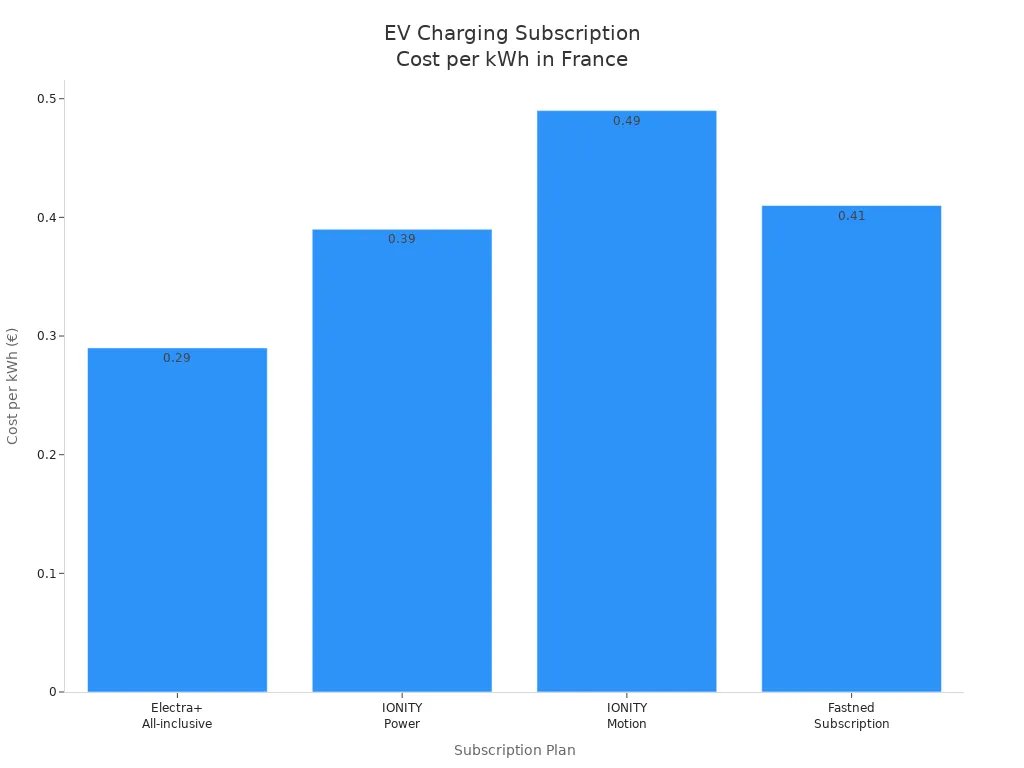
Tip: Subscription plans can significantly lower the average cost per kWh, especially for drivers who rely on fast charging during long trips.
Special offers and loyalty programs
Charging networks and retailers in France also provide special offers and loyalty programs that further reduce costs. Many drivers take advantage of these deals to maximize savings:
- Free Electra+ months: Some users receive complimentary months when signing up for Electra+.
- Shell discounts: Shell periodically offers reduced rates or bonus credits for app users.
- Chargemap cashback: Chargemap provides cashback on selected charging sessions, adding value for regular users.
- Carrefour loyalty card: Carrefour grants one hour of free charging at certain terminals for loyalty card holders.
- Charging cards: Several networks issue cards that unlock exclusive discounts on charging sessions.
Retailers and energy providers also introduce unique incentives. Engie, for instance, offers home charging plans with predetermined rates based on energy consumption and time of day. Drivers who plan their charging sessions outside peak hours often avoid queues and benefit from lower rates.
Drivers can save more by combining loyalty programs with membership discounts and by choosing rapid charging stations in major cities or along main motorways.
A strategic approach—using charging cards, avoiding peak times, and leveraging loyalty rewards—helps electric vehicle owners in France keep charging costs under control while enjoying the convenience of fast EV charging.
Practical Tips for Efficient Fast EV Charging in France
Preparing for Your Electric Vehicle Trip
Pre-planning charging stops
Drivers who plan their electric vehicle trips in France achieve smoother journeys and avoid unnecessary delays. They often start by downloading the Chargemap application, which helps locate nearby charge points using map filters. Planning charging stops based on the vehicle’s battery range and budget ensures efficient travel. Before departure, drivers check the vehicle’s condition, including tire inflation, battery health, brakes, lights, and fluid levels. The Chargemap app also allows users to estimate charging costs and select stations based on rates. Many drivers optimize their waiting time at charging stations by taking breaks or exploring nearby areas.
Tip: Pre-planning with real-time availability tools reduces the risk of arriving at busy or out-of-service stations.
Checking charger compatibility with your electric car
Compatibility between the charger and the electric vehicle is essential for a successful charging session. Most fast charging stations in France support CCS standards, but some vehicles may require adapters. Drivers should verify connector types and power ratings before starting a session. Using built-in DC cables at stations ensures direct and efficient connections.
Maximizing Charging Speed for Electric Vehicles
Battery state of charge tips
Battery management plays a key role in maximizing charging speed. Charging from 20% to 80% state of charge delivers the fastest results and helps maintain battery health. Drivers should avoid letting the battery drop below 20%, as this can lead to long-term degradation. Charging to 100% is only recommended before long trips.
Choosing the right fast charger for your EV
Selecting the appropriate fast charger depends on the vehicle’s capabilities and the station’s power level. Understanding the differences in charging power levels helps drivers choose the most efficient option. Many modern EVs offer preconditioning features that optimize battery temperature before charging, especially in extreme weather. Managing temperature effects can prevent slow charging rates. Drivers should always ensure compatibility with CCS standards for a smoother experience.
Avoiding Common Pitfalls in Fast EV Charging
Dealing with busy charging stations
Busy charging stations can disrupt travel plans. Drivers often check live station availability using apps like bp pulse or Chargemap before arrival. This approach helps avoid queues and reduces waiting times. Monitoring real-time availability allows drivers to select less crowded locations.
Troubleshooting charging issues
Common pitfalls at fast charging stations include not planning routes, ignoring tire pressures, or overstaying at public chargers. Drivers should regularly check and maintain tire pressures to improve efficiency and extend tire life. Adopting a moderate driving style conserves battery energy. Overstaying at public chargers can result in additional fees, so drivers should be aware of maximum stay times. Utilizing preconditioning features in extreme weather optimizes battery performance. Reducing unnecessary weight in the vehicle also improves efficiency. Frequent users may consider subscribing to charging networks to reduce costs.
Note: Addressing these common issues ensures a more reliable and cost-effective charging experience for every electric vehicle driver.
Safety and Etiquette at Electric Car Charging Stations
Proper use of charging bays
Drivers who use electric car charging stations in France must follow established protocols to ensure safety and efficiency. Charging bays serve a specific purpose: they provide access to power for vehicles that need to recharge. Individuals should park only when actively charging their vehicle. Occupying a bay without charging disrupts the flow and creates unnecessary delays for others.
Operators recommend the following best practices for proper bay usage:
- Park within the designated lines to avoid obstructing adjacent bays.
- Use only the charging bay that matches the connector type required by the vehicle.
- Remove the vehicle promptly after charging completes to free up space for others.
- Inspect cables and connectors for damage before use. Report any issues to station staff or through the app.
- Avoid leaving personal items or trash in the charging area.
Совет: Drivers who monitor their charging session through an app can receive notifications when charging finishes. This helps them vacate the bay quickly and maintain station availability.
A table below summarizes key actions for safe bay usage:
| Action | Назначение |
|---|---|
| Park only when charging | Ensures fair access |
| Stay within bay boundaries | Prevents obstruction |
| Remove vehicle after charge | Reduces wait times |
| Inspect equipment | Maintains safety |
| Keep area clean | Promotes positive environment |
Respecting other users
Charging stations operate as shared resources. Drivers must respect others to maintain a cooperative atmosphere. Individuals should avoid confrontations and communicate politely if issues arise. Patience and courtesy contribute to a smoother charging experience for everyone.
Key etiquette guidelines include:
- Wait for your turn if all bays are occupied. Do not block access or attempt to jump the queue.
- Allow others to finish charging before approaching the bay.
- Refrain from unplugging another vehicle unless station policy permits it and the session has ended.
- Assist newcomers who may need help understanding the charging process.
- Use station amenities, such as seating or restrooms, responsibly.
Примечание: Charging networks in France often display etiquette guidelines on-site. Drivers who follow these rules help create a safer and more efficient environment.
Emoji icons can reinforce positive behavior:
- ✅ Park correctly
- ⏳ Wait patiently
- 🗑️ Dispose of trash
- 🤝 Help others
Individuals who practice good etiquette and proper bay usage contribute to the reliability and accessibility of France’s fast EV charging infrastructure. These habits support the country’s transition to sustainable mobility and ensure a positive experience for all electric vehicle drivers.
Compatibility and Technical Considerations for Electric Vehicle Charging
Plug Types and Standards for Fast EV Charging
France’s fast EV charging infrastructure relies on several connector types and standards. Each plays a distinct role in supporting the growing electric vehicle market. The following table summarizes the main connectors and their typical charging speeds:
| Тип разъема | Скорость зарядки |
|---|---|
| Type 1 Connectors (SAE J1772) | Медленная зарядка |
| Type 2 Connectors (IEC 62196) | Standard Charging (3-22 kW) |
| CHAdeMO Connectors | Fast Charging (>22 kW) |
| CCS (комбинированная система зарядки) | Ultra-Fast Charging (>150 kW) |
CCS
The Combined Charging System (CCS) has become the leading standard for ultra-fast charging in France. Most new public stations and highway sites support CCS, which delivers charging speeds above 150 kW. This standard ensures high compatibility across European electric vehicles and supports rapid charging sessions.
CHAdeMO
CHAdeMO connectors remain available at many fast charging stations. Japanese brands, such as Nissan, often use this standard. CHAdeMO supports charging speeds above 22 kW, making it suitable for quick top-ups. However, its presence is gradually declining as CCS adoption increases.
Тип 2
Type 2 connectors, based on the IEC 62196 standard, dominate standard charging in France. These connectors offer speeds between 3 kW and 22 kW. Many public and private locations use Type 2 for daily charging needs. Some fast charging stations also include Type 2 sockets for flexibility.
Tip: Drivers should check connector availability at each station before planning a route, especially when traveling outside major network hubs.
Vehicle-Specific Requirements for Electric Car Charging
Adapters and cables for electric vehicles
Different electric vehicle models may require specific adapters or cables. Some vehicles, especially older models, do not support CCS or CHAdeMO natively. Drivers should carry the correct adapters to ensure seamless charging. Most fast charging stations provide tethered cables, but portable cables may be necessary for certain locations.
Manufacturer recommendations
Manufacturers publish guidelines for optimal charging practices. These recommendations include preferred connector types, maximum charging speeds, and battery care tips. Following manufacturer advice helps maintain battery health and ensures safe operation during every charging session.
Software Updates and Connectivity for Electric Vehicles
Keeping your EV up to date
Modern electric vehicles rely on software to manage charging functions and optimize performance. Regular updates improve compatibility with new charging stations and enhance safety features. Owners should install updates as soon as they become available.
App integration for charging
Many vehicles now offer app integration for charging management. These apps allow users to monitor charging progress, locate stations, and receive notifications. App connectivity streamlines the charging process and provides real-time data on station status and network availability.
Note: Staying current with software and using manufacturer-approved apps ensures a smooth and efficient charging experience.
Drivers in France benefit from a robust fast EV charging network. They should check recommended charging times and use 240-volt chargers for daily needs. DC fast charging adds over 100 miles in less than an hour, ideal for long trips. Charging between 20% and 80% helps preserve battery life. Costs range from €0.15 per kWh at home to €0.80 per kWh at public stations. Using apps to plan routes and monitor station availability ensures a smooth experience. Scheduling charging during off-peak hours saves money and time.
ЧАСТО ЗАДАВАЕМЫЕ ВОПРОСЫ
What is the fastest EV charging speed available in France in 2025?
Ultra-fast chargers in France deliver up to 350 kW. Most public stations offer speeds between 150 kW and 350 kW. Drivers with compatible vehicles can recharge up to 80% in less than 30 minutes.
Which app provides the most accurate real-time charger availability?
Chargemap offers reliable real-time data for fast EV charging stations. The app displays live availability, connector types, and user-reported updates. Drivers use it to plan routes and avoid busy locations.
Are fast EV chargers compatible with all electric vehicle models?
Most fast chargers in France support CCS and CHAdeMO connectors. Newer vehicles use CCS, while some older models require adapters. Drivers should verify compatibility before charging to ensure a smooth experience.
How can drivers pay for fast EV charging in France?
Drivers pay using contactless credit cards, mobile payment apps, RFID cards, or network subscriptions. Many stations accept multiple payment methods. Membership plans often provide discounted rates for frequent users.
Is English support available at French EV charging stations?
Many fast charging stations feature English-friendly interfaces. Operators provide multilingual customer support through apps and helplines. Drivers can access assistance 24/7 at most major networks.
What is the average cost per kWh for fast EV charging?
The average cost per kWh at fast charging stations ranges from €0.50 to €0.80. Prices vary by provider, location, and payment method. Subscription plans can reduce the overall cost for regular users.
Where can drivers find fast EV chargers along highways?
Major networks such as Ionity, TotalEnergies, and Fastned operate stations at rest stops and highway exits. Apps like PlugShare and Chargemap help drivers locate chargers along popular travel corridors.
Что делать водителям, если зарядная станция не работает?
Drivers should report issues using the station’s app or helpline. Most apps display alternative nearby stations. Proactive reporting helps operators maintain reliability and improve service for all users.