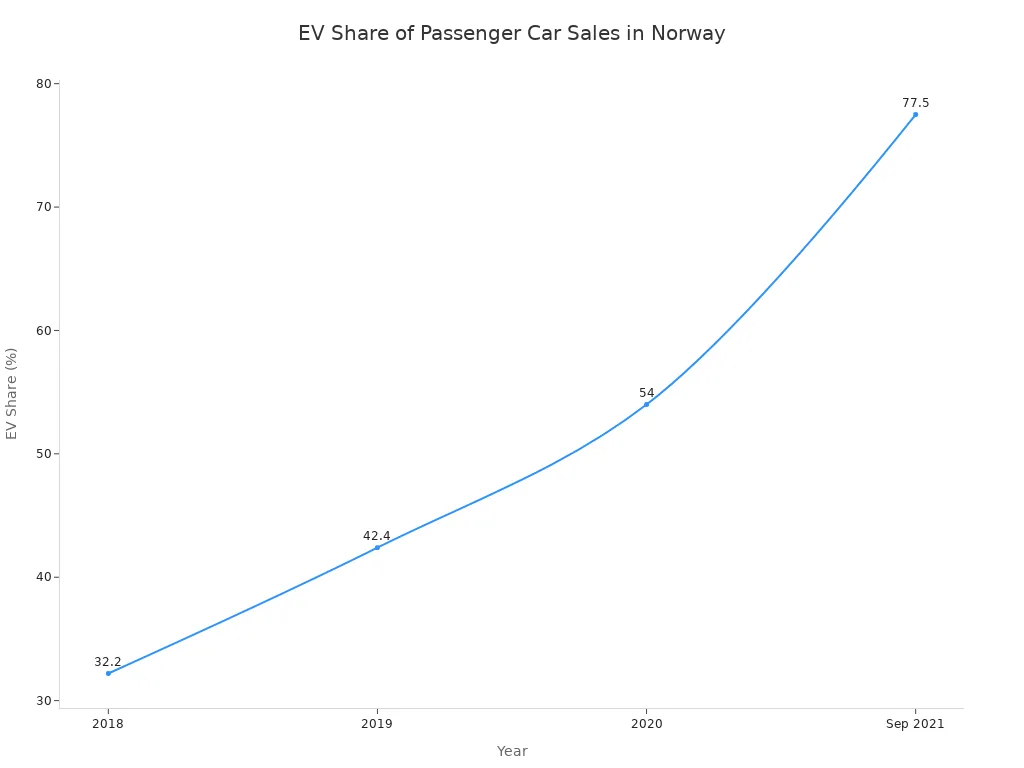
Norway leads the world in electric vehicle adoption, making the topic of EV charging and battery health critically important. With EV sales growing rapidly, many drivers question common myths about their vehicle’s battery.
| Год | EV Share of Passenger Car Sales |
|---|---|
| 2020 | 54% |
| Sep 2021 | 77.5% (BEV market share) |
One of the most persistent myths suggests frequent Level 3 charging causes significant EV battery damage. While different charging methods do accelerate battery degradation at different rates, modern EVs are engineered to handle this stress. An advanced Battery Management System carefully manages the charge to minimize degradation and protect long-term battery health. This makes the actual degradation from fast charging minimal. For most drivers, the convenience outweighs the slight, manageable impact on battery health. Technologically advanced Решения для зарядки электромобилей с сайта Производители зарядных устройств для электромобилей like TPSON, offering everything from a standard Зарядное устройство для электромобилей на портативные зарядные устройства для электромобилей, further ensure a safe and efficient charging experience, mitigating concerns about battery degradation.
The Science of EV Battery Degradation
To understand the impact of fast charging, one must first grasp the science of EV battery degradation. This process is a natural and unavoidable aspect of battery ownership. However, understanding its mechanisms empowers drivers to protect their investment and maximize battery longevity.
What is Battery Degradation?
Battery degradation refers to the gradual loss of a battery’s ability to store and deliver energy. This decline in battery health manifests in two primary ways.
Capacity Loss vs. Power Loss
Capacity loss is the reduction in the total amount of energy a battery can hold when fully charged. For an EV driver, this translates directly to a decrease in maximum range. Power loss, on the other hand, affects the battery’s ability to deliver current. This can result in slower acceleration and reduced peak charging speeds. While both are related to overall battery health, capacity loss is the metric most drivers notice first.
The Inevitable Aging Process
Every lithium-ion battery begins an irreversible aging process from the moment it is manufactured. This battery degradation is caused by slow, complex chemical changes inside its cells. Key reactions contributing to this decline include:
- Loss of Mobile Lithium Ions: Side reactions trap free lithium, reducing the number of ions available to shuttle energy.
- Structural Electrode Damage: The physical movement of ions during charging and discharging slowly damages the electrode’s crystal structure.
- Solid Electrolyte Interphase (SEI) Growth: A layer forms on the anode, consuming lithium and impeding performance over the battery’s lifespan.
These processes ensure that every EV battery will experience some level of degradation over its lifespan.
Key Factors That Reduce Battery Lifespan
While some battery degradation is unavoidable, certain conditions can significantly increase battery degradation rates. The primary culprits are stress factors that accelerate the chemical reactions responsible for aging.
Примечание: Your EV’s battery is like a biological system. It performs best when it is not exposed to extremes.
High Temperatures
Heat is a major enemy of battery health. Temperatures above 35°C speed up the chemical breakdown of the electrolyte, which is critical for ion movement. Exposing an EV to extreme heat, whether during charging or parking, is a primary cause of accelerated battery degradation and can cause the most significant EV battery damage.
Extreme States of Charge
A battery’s state of charge (SoC) also influences its lifespan. Keeping a battery at 100% for long periods places high voltage stress on the cells. Conversely, frequently draining the battery to 0% can also harm its internal chemistry. Both extremes amplify the rate of degradation.
High Charging Currents
The high electrical currents used in Level 3 charging generate more internal heat than slower charging methods. This heat accelerates the unwanted chemical reactions that cause battery degradation. It also increases the risk of “lithium plating,” a phenomenon where lithium ions build up on the anode’s surface instead of inserting into it, permanently reducing capacity and battery performance.
Calendar Aging
Calendar aging is the degradation that occurs simply as time passes, even if the electric vehicle is not being used. This process is heavily influenced by temperature and state of charge. An EV stored for months in a hot climate with a full charge will experience more significant battery degradation than one stored in a cool location with a partial charge.
Why Fast Charging Causes More Stress
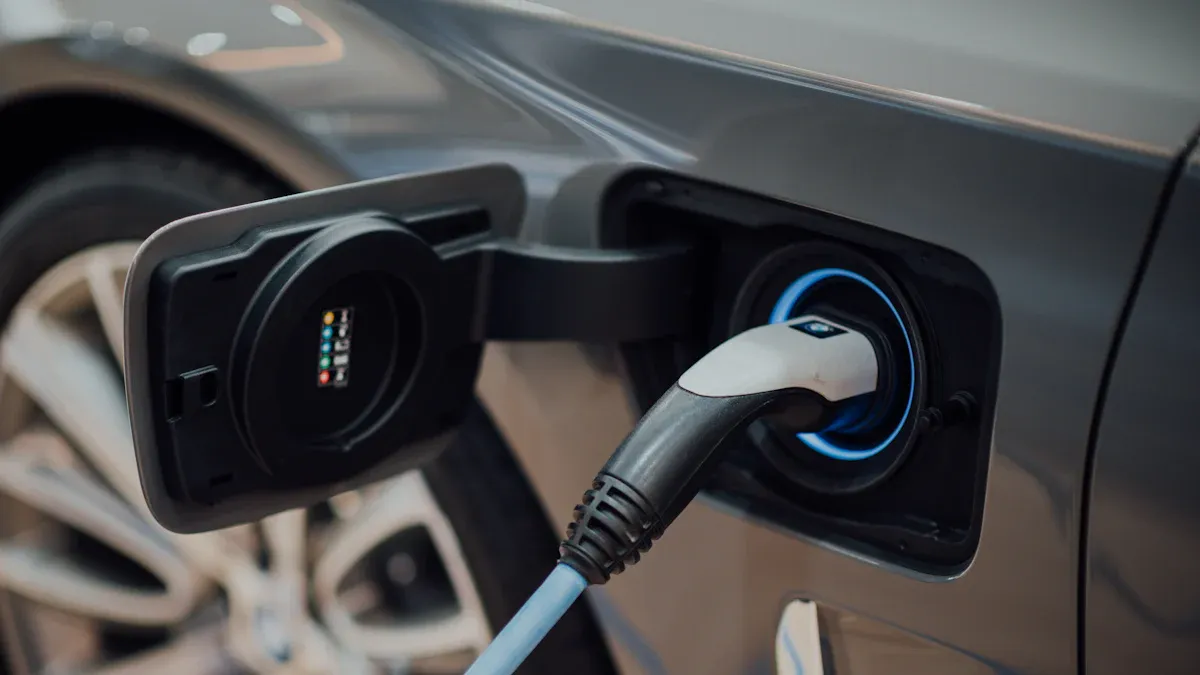
Fast charging offers incredible convenience, but it places more stress on an EV battery than slower methods. This stress primarily comes from two interconnected factors: intense heat and high electrical currents. Understanding these factors is key to appreciating how modern EV technology, like that from manufacturers such as TPSON, works to protect the battery’s long-term health and lifespan.
The Primary Culprit: Excessive Heat
Heat is the most significant contributor to accelerated battery degradation. While all charging generates some heat, the physics of fast charging amplifies this effect considerably.
How Fast Charging Generates Heat
Think of electricity moving into a battery like water flowing through a pipe. A gentle flow (Level 1 or 2 charging) creates minimal friction. A powerful, high-volume flow (Level 3 charging) creates significant internal resistance. This resistance manifests as heat. Pushing a massive amount of energy into the battery cells in a short time inevitably raises the battery pack’s internal temperature, which can accelerate battery degradation.
Heat’s Impact on Battery Internals
Elevated temperatures speed up the undesirable chemical reactions inside a battery. This thermal stress accelerates the growth of the Solid Electrolyte Interphase (SEI) layer and can cause the breakdown of the electrolyte. Over time, this cumulative heat exposure leads to faster capacity loss and a reduced battery lifespan. The more frequently a battery experiences high-heat charging cycles, the more pronounced the long-term degradation becomes.
The Impact of High Electrical Current
The high current of a DC fast charger is what enables rapid charging, but it also introduces specific risks that contribute to battery degradation. High voltage and current from this type of EV charging increase the strain on the battery, leading to faster wear compared to slower AC charging methods.
Understanding C-Rate in Charging
The speed of charging is often described by its “C-rate.” A C-rate of 1C means the battery can fully charge in one hour.
A Level 2 charger might operate at around 0.3C, while a Level 3 fast charger can operate at 2C, 3C, or even higher. A higher C-rate means a faster charge, but it also signifies a more intense flow of current into the battery cells.
This high rate of charge is what can cause physical stress on the battery’s internal components.
The Risk of Lithium Plating
One of the most direct forms of ev battery damage from high-current charging is lithium plating. This phenomenon is a primary driver of degradation. It occurs when the charge rate is too fast for the anode to properly absorb the incoming lithium ions. Instead of inserting into the anode, the ions build up on its surface.
- Lithium ions accumulate on the negative electrode’s surface.
- This buildup forms a layer of metallic lithium that is no longer active.
- The process permanently reduces the battery’s capacity to store energy.
This risk is especially high during fast charging in cold temperatures, a common scenario for Norwegian drivers. A study involving two Nissan Leafs showed that exclusive DC rapid charging increased the rate of degradation by 16% compared to AC charging, highlighting the real-world impact of high currents.
Quantifying the Real-World EV Battery Damage
Theoretical stress is one thing; real-world impact is another. While the science shows that fast charging can cause more stress, extensive data from thousands of electric vehicles helps quantify the actual effect. This data often dispels the most common myths about catastrophic battery degradation from frequent DC fast charging.
Insights from Geotab Fleet Data
Geotab, a global leader in telematics, provides some of the most comprehensive real-world data on EV battery health. Their analysis of over 10,000 commercial and consumer EVs offers a clear picture of how different charging habits affect long-term battery degradation.
Comparing DCFC-Heavy vs. AC-Heavy Users
Researchers analyzed vehicle fleets to compare those that primarily used AC charging (Level 2) with those that relied heavily on DC fast charging. The study found that high-use vehicles frequently using DC chargers did experience a faster rate of battery degradation. This effect was most noticeable in regions with hot climates, reinforcing the link between heat and battery health.
Measuring the Degradation Gap
Despite the difference, the degradation gap was not as dramatic as many myths suggest. The data shows that while a measurable difference exists, modern EV batteries are remarkably resilient. For the average driver, even one who frequently uses DC fast charging, the additional degradation is minimal over the vehicle’s lifespan. The battery in a modern EV is engineered to handle this usage pattern.
Findings from Other Industry Studies
A growing body of research confirms that battery longevity is improving and that degradation is often slower than anticipated. These studies highlight the importance of advanced technology in mitigating wear.
Long-Term EV Battery Surveys
Surveys of thousands of EV owners paint a reassuring picture of battery durability. A comprehensive 2024 study revealed that battery degradation is slow and consistent for most owners.
| Registration Year | Average Remaining Range | Average Annual Range Loss |
|---|---|---|
| 2023-2024 | 97% | 1% |
| 2021-2022 | 97% | 1% |
| 2019-2020 | 96% | 1% |
| 2017-2018 | 93% | 1% |

This data shows an average range loss of just 1% per year. This slow rate of degradation means a modern EV battery will likely outlast the vehicle itself. David Savage of Geotab notes that an annual decline of 1.8% is unlikely to impact a driver’s daily needs, and this number continues to improve with newer EV models.
Manufacturer Durability Testing
Automakers invest heavily in ensuring their batteries can withstand years of use, including frequent DC charging. This confidence is reflected in their warranties.
- Most manufacturers offer battery warranties for seven or eight years.
- Some, like Toyota and Lexus, guarantee the battery will retain 90% of its capacity after 10 years or one million kilometers.
Early EV models, particularly those without liquid cooling systems like some older Nissan Leafs, showed more significant battery degradation rates. However, today’s electric vehicles feature sophisticated battery management and thermal control systems. These advancements, combined with high-quality зарядное оборудование from manufacturers like TPSON, ensure the battery is protected during every charge.
Research on tens of thousands of EVs shows that battery replacement is rare.
| Vehicle Age/Manufacturing Year | Battery Replacement Rate (Excluding Recalls) |
|---|---|
| Vehicles manufactured after 2015 | Less than 1% |
| Vehicles from 2015 and earlier | Only 13% |
This low replacement rate for newer models debunks myths about needing a costly new battery after a few years. While every battery experiences some degradation, the data proves that modern EV batteries are built for the long haul, making concerns about severe ev battery damage from normal usage largely unfounded.
Your EV’s Defense: The Battery Management System (BMS)
An EV’s battery is not left to fend for itself against the stresses of charging and daily use. A sophisticated onboard computer, the Battery Management System (BMS), acts as a dedicated guardian, ensuring the battery operates safely and efficiently. This system is the primary reason modern EVs can handle frequent fast charging with minimal long-term degradation.
The Role of the BMS in Battery Protection
The BMS is a critical component that actively monitors and manages every aspect of the battery pack’s operation. It is the key to ensuring battery health, performance, and longevity.
The Brain of Your Battery Pack
Think of the BMS as the intelligent brain of your EV’s battery. It is an advanced electronic system that uses a network of sensors to gather real-time data from the battery pack. This constant stream of information allows it to make instantaneous decisions to protect the battery from harm, optimize its performance, and extend its lifespan. Without a BMS, an EV battery would be vulnerable to rapid degradation and significant safety risks.
Core Functions of the BMS
The BMS performs several vital functions to maintain the battery’s health and efficiency. Its primary responsibilities are crucial for both daily operation and long-term battery maintenance.
- Мониторинг: It continuously tracks key parameters like напряжение, ток и температура across all individual cells.
- State Estimation: The system calculates the battery’s state of charge (SOC) and state of health (SOH), providing accurate range estimates and insights into long-term degradation.
- Protection: It safeguards the battery against dangerous conditions such as overcharging, over-discharging, and short circuits.
- Thermal Control: The BMS manages the battery’s temperature, activating heating or cooling systems as needed to keep it in its optimal operating range.
How the BMS Mitigates Fast Charging Stress
During a Level 3 fast charge, the BMS works tirelessly to counteract the inherent stresses of high-current charging. It employs several smart strategies to minimize degradation and protect your investment.
Active Thermal Management
Heat is a primary driver of battery degradation. The BMS directly combats this by managing the EV’s thermal system. When sensors detect rising temperatures during a fast charge, the BMS activates liquid cooling systems to circulate coolant through the battery pack. This process dissipates excess heat, preventing the cells from reaching temperatures that would accelerate chemical degradation and ensuring better charging efficiency. This active maintenance is fundamental to preserving battery health.
The “Charging Curve” Taper
A key strategy the BMS uses to protect the battery is managing the “charging curve.” You may notice your EV’s charging speed is fastest at the beginning of a session and slows down significantly as it gets fuller. This is intentional.
The BMS dramatically reduces the charging speed once the battery reaches approximately 80% capacity. This “tapering” effect is designed to prevent overheating and reduce stress on the cells. The final 20% of a charge can often take as long as the first 80%, a trade-off that is crucial for long-term battery longevity.
This controlled process prevents the high-current stress that causes degradation, especially in the higher state of charge range.
Ensuring Cell Balance for Longevity
An EV battery pack consists of thousands of individual cells. For optimal performance and a long battery lifespan, all these cells must charge and discharge uniformly. The BMS is responsible for “cell balancing.” It monitors the voltage of each cell and ensures they all maintain an equal state of charge. If some cells charge faster than others, the BMS can redirect energy to bring the slower cells up to speed. This meticulous battery maintenance prevents individual cells from becoming overstressed, which is critical for overall battery health and preventing premature capacity loss. This function is a cornerstone of the advanced technology found in modern EVs and supported by quality charging solutions from providers like TPSON.
The Norwegian Context: Climate and Charging Habits
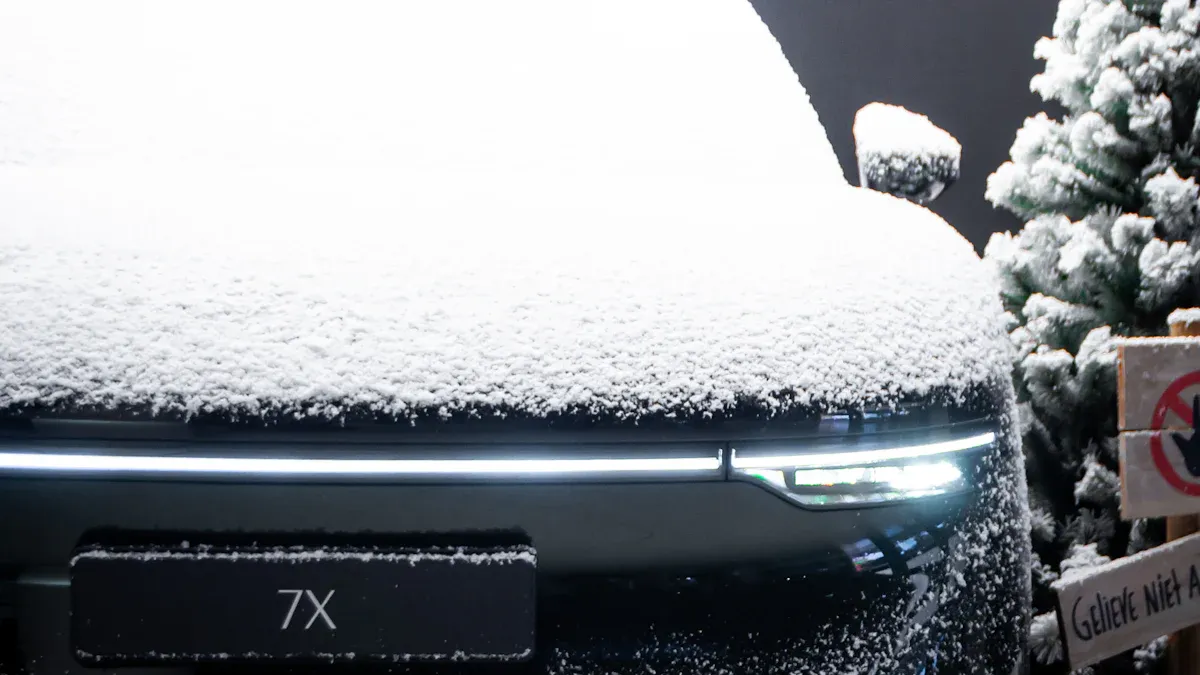
Norway’s world-leading adoption of electric vehicles creates a unique environment where climate and infrastructure heavily influence driver behavior. Understanding these local factors is essential to accurately assess the real-world impact of fast charging on battery health.
Does Norway’s Cold Weather Affect Charging?
The country’s cold climate presents specific challenges for EV owners. Low temperatures directly impact the electrochemical processes inside a battery, affecting both performance and charging speeds.
The Challenge of Charging a Cold Battery
A cold battery is an inefficient battery. The chemical reactions needed to store energy slow down dramatically in low temperatures. When an EV with a cold-soaked battery connects to a charger, its BMS must restrict the charging speed to prevent damage.
Adam Rodgers of Easee notes that a battery accepts charge more slowly in the cold. A journey requiring 1.5 hours of charging in optimal weather might take two hours or more in winter. This is a protective measure; forcing a high current into a cold battery increases the risk of lithium plating, a major cause of permanent degradation.
This reality means that winter charging sessions, especially at fast chargers, will take longer than in the summer.
The Critical Role of Battery Preconditioning
Modern EV manufacturers have engineered a powerful solution to this cold-weather problem: battery preconditioning. When a driver navigates to a fast charger, many modern EV models can automatically begin warming the battery to an ideal temperature.
The goal is to bring the battery into its “Goldilocks zone” of approximately 20–30°C before the charging session begins. A battery within this optimal range can accept a much faster charge safely. This feature not only saves the driver significant time but also protects the long-term health of the battery by avoiding the stress of cold charging.
Summer Heat vs. Winter Cold Stress
Both summer and winter present different types of stress for an EV battery.
- Summer Heat: High ambient temperatures accelerate the natural chemical degradation inside the battery cells, even when the EV is parked. This increases the baseline rate of aging.
- Winter Cold: The primary stress comes during the charging process. While a cold battery degrades more slowly when idle, the act of charging it introduces risks that the BMS must carefully manage.
While both extremes affect battery degradation rates, the active thermal management systems in a modern EV are designed to mitigate these stresses, whether by cooling the battery on a hot day or warming it for a winter charge.
High EV Adoption and Charger Reliance
Norway’s dense population of electric vehicles has shaped a unique charging culture. A robust public charging network is not a luxury but a necessity for a large portion of the driving population.
Why Norwegians Depend on Fast Chargers
Several factors contribute to the heavy reliance on Level 3 chargers across Norway:
- Apartment Living: Many EV owners live in apartments or multi-family homes without access to private, overnight Level 2 charging.
- Путешествие на дальние расстояния: The country’s geography requires long drives between major cities, making fast chargers essential for topping up on the road and alleviating range anxiety.
- High EV Density: In some areas, the sheer number of electric vehicles means public chargers see constant use, with fast chargers offering the quickest turnaround.
This usage pattern means that for many Norwegian drivers, frequent fast charging is a standard part of EV ownership.
Is This Usage Pattern a Problem?
For a modern EV, this reliance on fast charging is not the significant problem many fear. While it is technically true that exclusive DC fast charging causes more degradation than AC charging, the real-world impact is minimal. An EV’s sophisticated BMS and thermal management systems are built precisely for this scenario. They carefully control the charge to protect the battery. The convenience and necessity of fast charging for daily life and travel in Norway far outweigh the slight, manageable increase in battery degradation. Using technologically advanced Решения для зарядки электромобилей, such as those from providers like TPSON, further ensures a safe and efficient charge, contributing to excellent long-term battery health.
Best Practices for Extending Battery Lifespan
While modern EVs are built to be resilient, adopting smart habits can significantly extend your battery lifespan. Simple adjustments to daily routines protect your investment and ensure optimal battery health for years to come. These practices focus on minimizing the key stressors: heat, extreme states of charge, and high currents.
Smart Charging Habits to Adopt
The way an EV is charged has a direct impact on its battery longevity. Choosing the right charging methods for different situations is a cornerstone of good battery maintenance.
Prioritize Level 2 Charging When Possible
For daily driving needs, Level 2 AC charging is the gold standard for preserving battery health. This slower, gentler charging method generates less heat and places minimal stress on the battery cells. Automotive engineers recommend making Level 2 charging the primary method at home or work, which helps maximize the battery’s long-term lifespan.
Use Fast Chargers for Long Trips
Быстрая зарядка постоянным током is an essential tool for long-distance travel, effectively eliminating range anxiety. Its purpose is to provide a quick top-up to get drivers back on the road. Reserving DC fast charging for these journeys, rather than using it for daily charging, helps reduce cumulative stress on the battery over time.
The 80% Rule on DC Fast Chargers
One of the most effective strategies for battery care is adhering to the “80% rule” during DC fast charging sessions.
A battery’s BMS intentionally slows the charging speed dramatically after reaching an 80% charge. This taper protects the battery from overheating. Pushing for that final 20% can take nearly as long as the first 80%, making it inefficient.
Stopping the charge at 80% offers several benefits:
- It significantly reduces strain on the battery.
- It saves the driver considerable time at the charger.
- It frees up the charger for the next EV user.
Driving and Parking Tips for Battery Health
An EV owner’s habits behind the wheel and when parking also play a role in long-term battery health. Smooth operation and smart parking choices contribute to better efficiency and a longer battery lifespan.
Avoid Aggressive Driving
Driving style directly affects battery performance and health. Aggressive driving, with rapid acceleration and hard braking, forces the battery to discharge energy at a high rate. This not only depletes the available range more quickly but also puts additional strain on the battery’s internal components. Maintaining a steady speed and avoiding sudden maneuvers is a simple form of maintenance that pays dividends.
Park in the Shade During Summer
Heat is a primary enemy of any EV battery. Parking an EV in direct sunlight for extended periods exposes the battery to high ambient temperatures, which accelerates chemical degradation. Geotab data shows a faster decline in battery health at sustained temperatures above 27°C. Whenever possible, parking in a garage or a shady spot helps keep the battery cooler, preserving its charge and protecting its long-term health. This simple habit is a key part of effective battery care.
Understanding Your Specific Vehicle’s Needs
Not every EV is the same. The specific technology inside an electric vehicle plays a significant role in its ability to handle fast charging and maintain long-term battery health. Understanding a vehicle’s unique hardware and following manufacturer advice are crucial for optimal battery care.
Not All EV Batteries Are Created Equal
The design of the battery pack and its underlying chemistry directly influence its durability and performance. Two key differentiators are the thermal management system and the type of battery cells used.
Liquid-Cooled vs. Air-Cooled Systems
An EV’s thermal management system is its first line of defense against heat. Most modern electric vehicles use a liquid-cooled system, which is far more effective than older air-cooled designs. A liquid-cooled system actively circulates fluid to pull heat away from the battery during fast charging. This maintains a stable temperature, enabling Повышенная скорость зарядки and protecting the battery from degradation. Air-cooled systems are less efficient and struggle in extreme temperatures, which can limit charging performance and negatively impact battery health over time.
LFP vs. NMC Battery Chemistries
The chemical makeup of a battery also determines its characteristics. The two most common types are Lithium Iron Phosphate (LFP) and Nickel Manganese Cobalt (NMC). LFP batteries are known for their exceptional durability and safety. They tolerate high temperatures better and can handle more charge cycles, making them very resilient.
An LFP battery is more tolerant of being charged to 100% and experiences less stress at a high state of charge. This makes it a robust choice for an EV that may see frequent use.
NMC batteries offer higher energy density, meaning more range for the same weight. However, they are more sensitive to heat and have a shorter cycle life. The table below highlights the key differences.
| Характеристика | LFP (Lithium Iron Phosphate) | NMC (Nickel Manganese Cobalt) |
|---|---|---|
| Lifespan (Charge Cycles) | 3,000–6,000+ | 500–2,000 |
| Heat Tolerance | Strong | Weaker under high load |
| Safety (Fire Risk) | Very Low | Higher, requires advanced BMS |
Knowing which battery chemistry an EV uses helps the owner understand its charging tolerances and overall health profile.
Consulting Your Manufacturer’s Guidance
The engineers who designed your EV provide the best advice for its care. This guidance is tailored to the specific hardware and software in the vehicle.
Reading the Owner’s Manual
The owner’s manual is the most reliable source of information for your specific EV model. It contains detailed recommendations for charging, including ideal state-of-charge limits and advice on using Ускоренные зарядные устройства постоянного тока. Following these guidelines is the simplest form of battery maintenance. It ensures the battery operates within its designed parameters for optimal health and battery performance.
Following In-Car Recommendations
Modern EV models provide real-time feedback to the driver. The vehicle’s infotainment system often displays tips for efficient driving and optimal charging. For example, the navigation system may suggest preconditioning the battery on the way to a fast charger. Heeding these automated recommendations helps protect the battery and improve its performance. Using quality charging equipment from providers like TPSON complements this by ensuring a safe and reliable connection, further supporting the vehicle’s built-in protective systems.
Modern electric vehicles are engineered to handle frequent fast charging. This fact dispels common myths about severe ev battery damage. While a technical difference in battery degradation exists, the real-world impact on battery health is minimal. For many Norwegian drivers, the convenience of a fast charge outweighs the slight, manageable degradation. Data on battery degradation shows this resilience.
| Модель автомобиля | Battery Degradation after 160,000 km |
|---|---|
| Tesla Model 3 | Approximately 5% |
| Tesla Model S | Approximately 7% |
| Nissan Leaf | Approximately 20% |
Примечание: The higher degradation in the older Nissan Leaf often reflects its air-cooled battery system, a design less common in today’s EV models.
Ultimately, following smart practices is the key to a long battery lifespan. This approach protects the EV battery and ensures excellent long-term battery health and battery longevity, debunking myths and promoting confidence in your EV.
ЧАСТО ЗАДАВАЕМЫЕ ВОПРОСЫ
Is it ever safe to charge an EV to 100%?
Yes, but it depends on the battery chemistry. LFP batteries handle 100% charges well. For NMC batteries, manufacturers advise charging to 100% only immediately before a long journey to minimize stress on the cells.
How much range loss is normal for an EV?
Studies show an average annual range loss of just 1-2%. This slow degradation rate means a modern EV battery will likely outlast the vehicle itself, and the change is rarely noticeable in daily driving.
Does battery preconditioning use a lot of energy?
Preconditioning does consume some energy to warm the battery. However, this process enables much faster and safer dc charging speeds. The energy used is less than what would be wasted from charging a cold, inefficient battery.
Почему мой электромобиль зимой заряжается медленнее?
Низкие температуры замедляют внутренние химические реакции аккумулятора. Система управления батареей (BMS) электромобиля намеренно снижает скорость зарядки, чтобы предотвратить повреждения. Это важнейшая мера безопасности, особенно при быстрой зарядке постоянным током на холодной батарее.
Можно ли в Норвегии полагаться только на быстрые зарядные станции постоянного тока?
Да, современный электромобиль рассчитан на частую быструю зарядку. Его продвинутая система BMS и система терморегулирования разработаны для этого. Однако при возможности предпочтение стоит отдавать зарядке уровня 2 — это оптимальная практика для долгосрочного сохранения здоровья аккумулятора.
Какой фактор наиболее важен для здоровья аккумулятора?
Контроль температуры — это самый критический фактор. Избегание высоких температур во время зарядки и стоянки приносит наибольшую пользу для сохранения ёмкости батареи. Качественные зарядные решения от таких поставщиков, как TPSON, также обеспечивают безопасные сеансы зарядки с контролем температуры.