An electric vehicle (EV) owner needs to understand the custo de carregamento de um VE at home. The price for a full charge typically ranges from $3 to $15. This cost depends on the vehicle’s battery size and local electricity rates. A simple calculation determines the final price.
Formula for a Full Charge:
(Vehicle Battery Size in kWh) x (Electricity Rate per kWh) = Total Cost
Home charging offers significant savings compared to gasoline. Drivers often save hundreds of dollars annually on fuel and maintenance. This makes home charging a very economical choice for EV owners. The right Carregador EV, whether from established Fabricantes de carregadores para veículos eléctricos or a more flexible option like carregadores portáteis para veículos eléctricos, is key to efficient Soluções de carregamento de veículos eléctricos. Knowing how much it costs to charge an electric car empowers drivers to manage their expenses effectively.
| Categoria | Gasoline Car (Annual) | Electric Car (Home-Charged, Annual) |
|---|---|---|
| Fuel Costs | $1,400 | $500 |
| Custos de manutenção | $1,200 | $400 |
| Total Savings | $900 (Fuel) | $800 (Maintenance) |
The Key Factors That Determine Your Home Charging Cost
Calculating the exact custo de carregamento de um VE involves more than just plugging it in. Several key variables influence the final price on a driver’s utility bill. Understanding these factors empowers owners to manage their expenses effectively.
Your Local Electricity Rate (per kWh)
The single most significant factor is the price of electricity. This rate varies widely based on location, utility provider, and the time of day.
Understanding Your Utility Bill
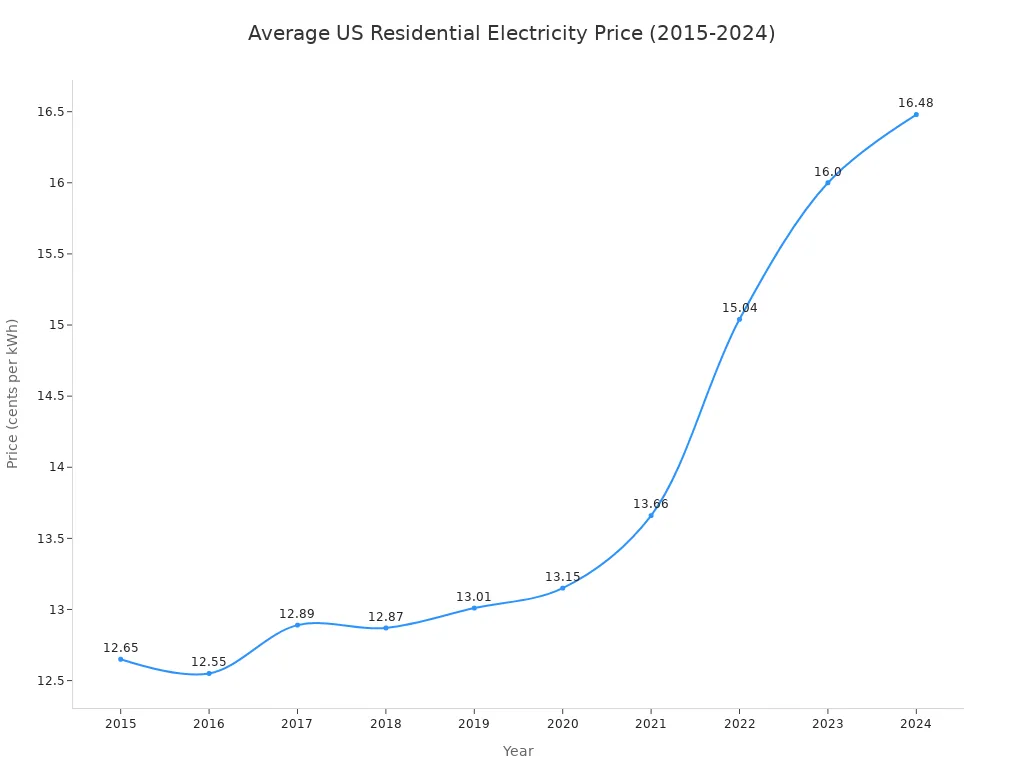
A utility bill shows electricity consumption in kilowatt-hours (kWh). The price per kWh is the core component of your charging cost. Nationwide, residential energy prices have steadily increased over the past decade.
| Ano | Residential Price (¢/kWh) |
|---|---|
| 2015 | 12.65 |
| 2016 | 12.55 |
| 2017 | 12.89 |
| 2018 | 12.87 |
| 2019 | 13.01 |
| 2020 | 13.15 |
| 2021 | 13.66 |
| 2022 | 15.04 |
| 2023 | 16.00 |
| 2024 | 16.48 |
Time-of-Use (TOU) vs. Flat-Rate Plans
Utility companies offer different rate structures. A flat-rate plan charges the same price per kWh regardless of the time. A Time-of-Use (TOU) plan has variable energy tariff prices, with higher costs during peak demand hours (like late afternoons) and lower costs during off-peak hours (like overnight).
Special EV Rate Plans
Many utilities now provide special rate plans for EV owners. These plans often offer the lowest rates during late-night hours, making overnight home charging extremely economical. Owners should contact their provider to see if such a plan is available.
Your Electric Vehicle’s Battery Size (kWh)
The size of a vehicle’s battery determines how much energy it can store. A larger battery holds more energy and costs more to fill from empty.
What is a Kilowatt-Hour (kWh)?
A kilowatt-hour (kWh) is a unit of energy. It represents the amount of energy consumed by a 1,000-watt appliance running for one hour. EV battery capacity is measured in kWh.
How to Find Your EV’s Battery Size
An owner can find their vehicle’s battery size in the owner’s manual, on the manufacturer’s website, or on the vehicle’s specification sheet.
Your Vehicle’s Efficiency (Miles per kWh)
Efficiency measures how far an EV can travel on one kilowatt-hour of energy. Better efficiency lowers the overall cost of electric car charging.
What Efficiency Means for Cost
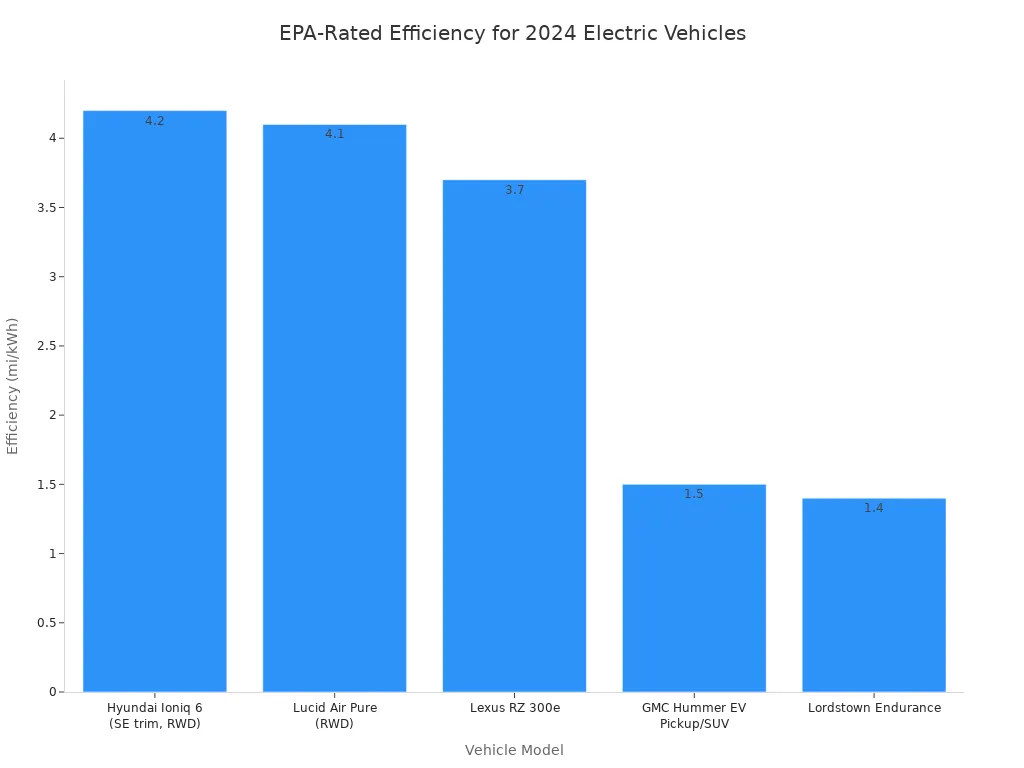
A more efficient car requires less energy to travel the same distance. This directly reduces the cost per mile. For example, the Hyundai Ioniq 6 is far more efficient than a GMC Hummer EV, meaning it costs less to drive.
| Modelo | Efficiency (mi/kWh) |
|---|---|
| Hyundai Ioniq 6 (SE trim, RWD) | 4.2 |
| Lucid Air Pure (RWD) | 4.1 |
| Lexus RZ 300e | 3.7 |
| Lordstown Endurance | 1.4 |
| GMC Hummer EV Pickup/SUV | 1.5 |
Factors Affecting EV Efficiency
Dica profissional: Driving style is a primary factor influencing efficiency. Smooth driving with gentle acceleration and braking conserves battery power. Aggressive driving forces the motor to work harder and drains the battery faster.
Other factors include terrain, weather (cold temperatures reduce efficiency), and tire pressure.
The Type of Home Charger You Use
The hardware a driver uses for charging directly influences speed and energy efficiency. There are two primary levels for home charging, each with distinct characteristics that affect the overall experience and, to a lesser extent, the cost.
Level 1 Charging (120-Volt Outlet)
Level 1 charging uses a standard 120-volt wall outlet, the same kind used for a phone or a lamp. Every electric vehicle comes with a Level 1 cordset, making it the most accessible charging method. However, it is also the slowest.
This method provides a very slow trickle of power. It typically adds only 3 to 7 miles of range for every hour of charging. A full charge for a typical battery electric vehicle (BEV) can take anywhere from 22 to over 40 hours.
Nota: Level 1 charging is often insufficient for daily drivers who need to replenish significant range overnight. It is best suited for plug-in hybrid vehicles (PHEVs) with smaller batteries or as an occasional, emergency charging option for BEV owners.
Furthermore, Level 1 charging can be less energy-efficient than dedicated chargers. The longer charging duration means the vehicle’s onboard systems run for an extended period, leading to slightly higher energy loss.
Level 2 Charging (240-Volt Outlet)
Level 2 charging is the most common and practical method for home use. It requires a dedicated 240-volt circuit, similar to what an electric stove or clothes dryer uses. A dedicated home ev charger must be installed to use this method. The performance improvement over Level 1 is substantial.
A Level 2 system dramatically reduces charging time, making overnight charging a viable reality for any EV owner. This level of electric car charging is not only faster but also more energy-efficient than Level 1, minimizing energy waste during the power transfer. Technologically advanced electric vehicle charging solution providers like TPSON specialize in these more powerful and efficient systems.
The differences between the two levels are significant.
| Caraterística | Carregamento de nível 1 | Carregamento de nível 2 |
|---|---|---|
| Potência de saída | 1-1,8 kW | 3-22 kW |
| Gama adicionada por hora | 3-7 miles | 10-75 miles |
| Full Charge (60 kWh) | >20 hours | 6-8 hours |
Ultimately, while Level 1 is a convenient backup, a Level 2 charger is the standard for homeowners seeking to maximize convenience and efficiency.
How to Calculate the Cost to Charge an EV at Home
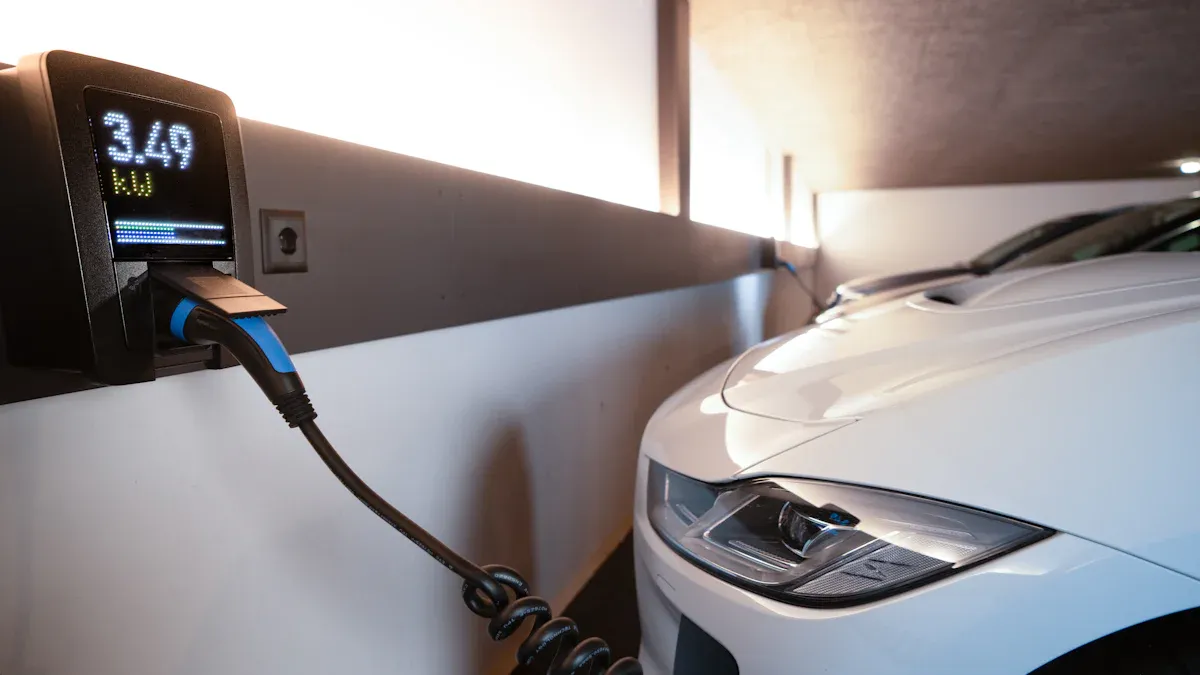
Calculating the precise custo de carregamento de um VE at home is a straightforward process. It empowers an owner to forecast expenses and identify savings opportunities. The calculation requires just a few key pieces of information from a driver’s utility bill and vehicle specifications.
Step 1: Find Your Electricity Rate
The foundation of any charging cost calculation is the price of electricity. This figure is the multiplier for every kilowatt-hour the vehicle consumes.
Locating the Cents-per-kWh on Your Bill
An owner’s electric bill contains all the necessary rate information. The key figure to find is the price per kilowatt-hour (kWh), often listed under “Supply Charges” or “Delivery Charges.”
The rate is typically expressed in cents or fractions of a dollar per kWh (e.g., 17.5¢/kWh or $0.175/kWh). The average U.S. electricity rate is approximately $0.175/kWh, but local prices can be much higher or lower.
Identifying Off-Peak vs. Peak Rates
Many utility providers offer Time-of-Use (TOU) plans that present a major opportunity for savings. These plans charge different rates depending on the time of day.
- Horário de pico: These are periods of high electricity demand, usually in the late afternoon and early evening. Rates are highest during this time.
- Fora do horário de pico: These are periods of low demand, typically overnight. Rates are significantly lower, making this the ideal time to charge an EV.
Rate structures vary widely by region and provider. For example, rates in California can differ substantially from those in other states.
| Fornecedor de serviços públicos | Região | Peak Rate (¢/kWh) | Off-Peak Rate (¢/kWh) |
|---|---|---|---|
| Pacific Power | WA, OR, CA | ~28 | ~10 |
| PG&E (E-TOU-C) | CA | ~26–29 | ~18–20 |
| Southern California Edison | CA | Varia | Varia |
An owner should contact their utility provider to see if a special EV or TOU rate plan is available. Switching plans can dramatically lower the overall custo de carregamento de um veículo elétrico.
Step 2: Determine Your Charging Needs
After identifying the electricity rate, the next step is to understand the vehicle’s energy requirements. This involves its battery size and how much energy it needs for daily driving.
Calculating Cost Per Full Charge
The simplest calculation determines the price of charging an EV battery from empty to full. The formula combines the electricity rate with the battery’s capacity.
Formula for a Full Charge:
(Battery Size in kWh) x (Electricity Rate in $/kWh) = Cost for a Full Charge
For example, a vehicle with a 60 kWh battery charged at a rate of $0.15/kWh would cost $9.00 for a full charge (60 x 0.15 = 9.00).
Calculating Cost Per Mile
A more practical metric for many drivers is the cost per mile. This figure helps compare EV operating costs directly to a gasoline car’s cost per mile. An owner can calculate this by dividing the cost of a full charge by the vehicle’s total range.
Formula for Cost Per Mile:
(Cost for a Full Charge) / (Vehicle's Range in Miles) = Cost Per Mile
Using the previous example, if the $9.00 charge provides 250 miles of range, the cost per mile is $0.036, or 3.6 cents per mile (9.00 / 250 = 0.036).
Step 3: Putting It All Together with Real-World Examples
Applying these formulas to real-world scenarios demonstrates how the cost to charge ev can vary based on the vehicle and driving habits.
Example 1: A Commuter with a Mid-Size EV
Consider a driver with a Tesla Modelo 3 Standard Range who primarily uses it for their daily commute.
- Vehicle Battery: ~57.5 kWh
- Taxa de eletricidade: National Average ($0.175/kWh)
- Daily Commute: 40 miles (The average American driver commutes about 20 miles each way)
First, calculate the cost for a full charge. A Tesla Model 3 is highly efficient and costs approximately $9.20 for a full charge that delivers around 270 miles of range. However, this driver only needs to replenish the energy used for their 40-mile commute. If the car gets 4 miles per kWh, it uses 10 kWh for the commute (40 miles / 4 mi/kWh).
The daily charging cost would be just $1.75 (10 kWh x $0.175/kWh).
Example 2: A Long-Distance Driver with a Large-Battery EV
Now, consider an owner with a Ford F-150 Lightning with the extended-range battery who needs to maximize range for longer trips.
- Vehicle Battery: 131 kWh ⚡
- Taxa de eletricidade: Off-Peak Rate ($0.12/kWh)
This owner wisely charges during off-peak hours to save money. The calculation for a full charge shows a higher total cost due to the massive battery size, but the strategic timing keeps the rate low.
131 kWh (Battery Size) x $0.12/kWh (Off-Peak Rate) = $15.72
Even with a large truck, the cost for a full charge remains under $16 when using an off-peak charging strategy. This example highlights how both battery size and electricity rates are critical components in determining the final cost to charge an electric car.
Estimating Your Monthly and Annual Cost to Charge an Electric Car
An owner can move from daily costs to long-term budgeting with a few simple calculations. Forecasting monthly and annual expenses provides a clear picture of the financial benefits of EV ownership. This process helps drivers understand their total transportation energy spending.
How to Calculate Your Monthly EV Charging Cost
Calculating the monthly custo de carregamento de um veículo elétrico is a practical way to manage a household budget. The calculation builds upon the cost-per-mile formula by factoring in total monthly driving distance.
The Formula for Monthly Expenses
An owner first needs to determine their average monthly mileage. They can find this by checking their vehicle’s odometer over a few months or using trip data from their car’s app. The formula combines mileage, efficiency, and electricity price.
Monthly Cost Formula:
(Total Monthly Miles / Vehicle Efficiency in mi/kWh) x Electricity Rate in $/kWh = Monthly Cost
For example, a driver who travels 1,200 miles in a month with a car that gets 4 miles/kWh uses 300 kWh of energy. At an electricity rate of $0.175/kWh, the monthly cost is $52.50.
Sample Monthly Costs Based on Miles Driven
Monthly costs vary significantly based on driving habits and charging strategies. A driver who takes advantage of off-peak rates will see substantial savings compared to one who charges on a flat-rate plan. The total cost to charge ev is directly tied to the number of miles driven.
The table below illustrates potential monthly expenses for a vehicle with an efficiency of 4 miles/kWh.
| Monthly Miles Driven | Electricity Rate (per kWh) | Estimated Monthly Cost |
|---|---|---|
| 1,000 miles | $0.175 (National Average) | $43.75 |
| 1,000 miles | $0.10 (Off-Peak Rate) | $25.00 |
| 1,500 miles | $0.175 (National Average) | $65.63 |
| 1,500 miles | $0.10 (Off-Peak Rate) | $37.50 |
As shown, a driver traveling 1,000 miles per month can spend as little as $25 by using a low off-peak rate. This highlights the financial power of smart electric car charging.
Projecting Your Annual EV Charging Expenses
Projecting annual costs offers the best perspective on the savings an EV provides. It allows for a direct, apples-to-apples comparison against the fuel costs of a traditional gasoline vehicle.
Extrapolating Monthly Costs to an Annual Figure
An owner can easily estimate their annual charging expenses. They simply multiply their average monthly cost by twelve.
Monthly Charging Cost x 12 = Annual Charging Cost
A driver spending $45 per month on home charging would have an estimated annual expense of $540. This simple projection is a powerful tool for long-term financial planning.
Annual Cost Comparison: EV vs. Gas Car
The true value of home charging becomes clear when compared to the cost of gasoline. An internal combustion engine (ICE) vehicle is significantly more expensive to fuel over the course of a year.
Let’s compare an EV and a gas car that both travel 12,000 miles annually.
- EV Assumptions: Efficiency of 4 mi/kWh, electricity rate of $0.15/kWh.
- Gas Car Assumptions: Fuel economy of 25 MPG, gasoline price of $3.50/gallon.
| Tipo de veículo | Annual Miles | Annual Fuel/Energy Cost |
|---|---|---|
| Veículo elétrico | 12,000 | $450 |
| Veículo a gasolina | 12,000 | $1,680 |
| Poupanças anuais | $1,230 |
The results are striking. The annual cost to charge an electric car in this scenario is over $1,200 less than the cost of fueling its gasoline counterpart. These savings demonstrate one of the most compelling reasons for making the switch to electric transportation.
Are There Other Hidden Costs to Charging at Home?
The cost of electricity is the primary recurring expense for home charging. However, several other factors contribute to the total cost of EV ownership. These include one-time installation fees and variables that affect energy consumption.
The One-Time Cost of Level 2 Charger Installation
While Level 1 charging uses a standard outlet, most owners opt for a faster Level 2 charger. This upgrade involves several upfront costs.
Hardware Costs for a Level 2 Charger
A high-quality Level 2 charging station typically costs between $400 and $800. Prices vary based on brand, power output (amperage), and smart features like Wi-Fi connectivity.
Electrician and Installation Fees
A licensed electrician must perform the installation. Labor costs can range from $300 to over $1,000, depending on the complexity of the job and regional labor rates.
Permits and Potential Panel Upgrades
Most municipalities require a permit for this type of electrical work. Homes with older wiring may also need an electrical panel upgrade to support the charger’s power demands. This additional work can add between $500 and $2,000 to the cost to install an electric car charger at home.
Understanding Charging Inefficiency and Energy Loss
The energy that leaves the wall outlet is not the same amount that ends up in the battery. Some energy is always lost during the charging process.
How Energy is Lost During Charging
Energy loss occurs for a few reasons:
- AC to DC Conversion: The charger converts alternating current (AC) from the grid to direct current (DC) for the battery, a process that generates heat and wastes some energy.
- Onboard Systems: The vehicle’s battery management system and cooling fans consume power during charging.
- Cable Resistance: A small amount of energy is lost as heat within the charging cable itself.
Factoring a 10-15% Loss into Your Calculations
For more accurate cost estimates, an owner should increase their calculated energy consumption by 10-15%. If a car needs 40 kWh, it might actually draw 44-46 kWh from the wall to get the job done.
The Impact of Battery Health and Ambient Temperature
A battery’s physical condition and the surrounding temperature directly influence charging costs. These factors change how much energy the battery can hold and how efficiently it accepts a charge.
How Battery Degradation Affects Capacity
EV batteries lose a small amount of their maximum capacity over time. Studies show an average degradation rate of about 1.8% per year. This means a car with a 300-mile range could lose about 5 miles of range annually. While this loss is gradual, it means the battery holds slightly less energy with each passing year.
Why Cold Weather Increases Charging Costs
Charging an EV in freezing conditions requires more energy. When temperatures drop below 32°F (0°C), the vehicle’s battery management system must use energy to warm the battery to an optimal temperature. This heating process consumes electricity from the charger before it even begins filling the battery, leading to higher energy usage and increased charging costs.
Proven Strategies to Lower Your Home EV Charging Bill

An EV owner can actively reduce their home charging expenses with several proven strategies. By optimizing charging times, leveraging utility programs, and adopting smarter habits, drivers can significantly lower their monthly electricity bills. These methods empower owners to take control of their transportation costs.
Optimize Your Charging Schedule
Timing is everything when it comes to cost-effective charging. An owner can save a substantial amount of money simply by choosing when to plug in their vehicle.
Carregamento durante as horas de vazio
The most effective way to lower charging costs is to use a Time-of-Use (TOU) electricity plan. These plans offer lower energy prices during periods of low grid demand. Off-peak hours are typically late at night, often between 8 PM and 4 PM the next day, and on weekends. An owner should contact their utility provider for the specific schedule. Switching to a TOU plan and charging overnight can reduce annual electric car charging costs by hundreds of dollars.
Using Your Vehicle’s “Scheduled Charging” Feature
Modern EVs and smart chargers make it easy to take advantage of off-peak rates. Owners can use their vehicle’s infotainment system or a smartphone app to set a specific charging schedule.
Dica profissional: An owner can program their car to begin charging automatically at 10 PM and stop by 6 AM. This ensures the vehicle only draws power when electricity is cheapest, maximizing savings without any manual effort.
Take Advantage of Utility Programs
Utility companies and government agencies offer programs designed to make EV ownership more affordable. These incentives can reduce both recurring and upfront costs.
Finding Special EV Rate Plans
Many utility providers offer dedicated rate plans for EV owners. These plans often feature the lowest possible off-peak rates to encourage overnight charging. An owner should check their provider’s website or call customer service to inquire about available EV-specific tariffs.
Applying for Rebates and Incentives
Government programs can help offset the cost of installing a home charger.
- Federal Tax Credit: The Alternative Fuel Refueling Property Tax Credit (30C) offers a credit of 30% of the cost, up to $1,000, for charger hardware and installation. Eligibility often depends on the home’s location in a designated low-income or non-urban area.
- State and Local Rebates: Many states offer their own incentives. For example, California provides rebates up to $1,000, while New York offers up to $5,000 for charging stations. An owner can check the U.S. Department of Energy’s database to find local programs.
Adopt Smarter Charging and Driving Habits
Daily routines have a direct impact on battery health and charging costs. Small adjustments can lead to long-term savings and a longer battery lifespan.
Avoid Charging to 100% Daily
EV manufacturers recommend charging the battery to about 80% for daily use. Routinely charging to 100% puts extra strain on the battery cells, which can acelerar a degradação ao longo do tempo. The battery management system also slows the charging rate significantly as it nears full capacity to prevent overheating, making that last 20% less efficient. An owner should only charge to 100% when needed for a long trip.
Use Preconditioning While Plugged In
The preconditioning feature warms or cools the vehicle’s cabin and battery to an optimal temperature before a drive. When an owner activates this feature while the car is still plugged in, the vehicle draws power from the grid instead of its own battery. This simple action ensures the driver starts their journey with maximum range and a battery that is already operating at peak efficiency.
Consider a Long-Term Investment in Solar
For the ultimate reduction in charging costs, an owner can invest in a home solar panel system. This strategy transforms a home into a personal power plant, generating clean energy that can fuel an electric vehicle for free. It represents a significant long-term financial and environmental commitment.
How Solar Panels Can Offset Charging Costs
Solar panels generate electricity from sunlight. This power can directly charge an EV during the day. An owner essentially drives on sunshine, eliminating the cost of pulling electricity from the grid for their vehicle. The process creates a self-sufficient energy ecosystem for transportation needs.
Most residential solar systems are connected to the utility grid. This connection offers two key benefits:
- Direct Usage: When the sun is shining, the home and EV charger can draw power directly from the solar panels.
- Net Metering: If the panels produce more electricity than the home consumes, the excess power is sent back to the grid. The utility company often provides a credit for this energy, which can offset the cost of electricity used at night or on cloudy days.
By generating their own power, an owner can effectively lock in their “fuel” price for decades, protecting them from rising utility rates. This makes the cost to charge an electric car predictable and often close to zero.
Calculating the ROI of Solar for Your EV
The Return on Investment (ROI) determines how long it takes for a solar panel system to pay for itself through energy savings. Calculating the ROI involves comparing the total upfront cost of the system against the annual savings it generates.
An owner should consider several factors for an accurate ROI calculation:
- Total System Cost: This includes panels, inverters, installation labor, and any necessary permits.
- Incentivos e descontos: The final cost is reduced by federal tax credits, state rebates, and local incentives.
- Poupanças anuais: This is the total value of the electricity the system generates. It includes the avoided cost of charging the EV and the savings on the regular home electricity bill.
A simplified example illustrates the potential ROI.
| Fator | Example Value |
|---|---|
| Gross System Cost | $20,000 |
| Federal Tax Credit (30%) | -$6,000 |
| Net System Cost | $14,000 |
| Annual EV Charging Savings | $600 |
| Annual Home Electricity Savings | $1,200 |
| Total Annual Savings | $1,800 |
In this scenario, the payback period would be approximately 7.8 years ($14,000 / $1,800 per year). After this point, the solar energy generated is pure profit, making it a powerful long-term financial strategy for any EV owner.
An owner’s cost to charge ev at home is a simple calculation. It typically falls between $3 and $15 for a full charge. A driver’s specific expenses depend on their utility rate, vehicle, and driving habits. Smart electric car charging practices give owners significant control over this figure.
Ultimately, home charging remains the most convenient and cost-effective method for EV ownership. It offers substantial savings compared to the recurring expense of gasoline.
FAQ
Is it cheaper to charge at home or at a public station?
Home charging is almost always more affordable. Public DC fast-charging stations offer speed and convenience at a premium price.
An owner charging at home, especially on an off-peak rate plan, will see the lowest possible cost per mile for their electric vehicle.
How much will a Level 2 charger add to my electric bill?
The added cost depends on mileage and electricity rates. An average driver traveling 1,000 miles per month might see an increase of $30 to $60. Smart chargers and vehicle apps can track this expense precisely.
Do I need a special meter for my EV charger?
A special meter is not usually required. However, some utility companies offer an optional second meter for customers on a dedicated EV rate plan. This can help an owner access the lowest possible charging rates.
Does charging an EV at home use a lot of electricity?
An EV charger consumes a significant amount of power, similar to a large appliance like an electric dryer. An owner can manage this consumption effectively by scheduling charging sessions for off-peak hours when grid demand is low.
Can I use a regular extension cord for Level 1 charging?
An owner should avoid using a standard household extension cord. These cords are not rated for the sustained power draw and can create a fire hazard. For temporary use, a heavy-duty, 12-gauge extension cord is the minimum safety requirement.
How can I track my EV charging costs?
Many modern EVs and smart chargers provide tools to monitor energy usage.
- Vehicle Apps: Most manufacturer apps show charging history and energy added.
- Smart Charger Apps: Dedicated apps for chargers offer detailed reports on consumption and cost.