Colombia’s Power Grid possesses a robust 20-gigawatt installed capacity, making it well-equipped for a gradual adoption of electric vehicles. The power demand from a Level 1 Pengisi daya listrik is minimal, similar to a large appliance. The main challenges are not national generation capacity. Instead, the focus shifts to local neighborhood transformers and home wiring safety. Technologically advanced Solusi pengisian daya kendaraan listrik providers like TPSON and other Produsen pengisi daya EV advise homeowners to assess these local systems. Using pengisi daya ev portabel safely depends on this diligence.
What is Level 1 Charging? The Slow, Steady, and Simple Option
For most new electric vehicle owners in Colombia, Pengisian daya level 1 is the first and most common method they will encounter. It represents the simplest way to power an EV, utilizing existing infrastructure without requiring major electrical work. This approach is defined by its slow, consistent energy delivery, making it an ideal solution for overnight charging at home.
The Basics of Level 1 Power
Using a Standard 120V Home Outlet
Level 1 charging works by plugging a portable EV charger directly into a standard 120-volt wall outlet—the same type used for a television or a lamp. Technologically advanced EV charging solution providers like TPSON design these portable chargers to be safe and user-friendly. The primary advantage is convenience; there is no need for a specialized installation. A homeowner can begin charging their vehicle the day they bring it home, provided they have access to a properly grounded outlet.
Understanding the Power Draw: 1.4 kW to 1.9 kW
The power drawn by a Level 1 charger is relatively low, typically ranging from 1.4 kilowatts (kW) to 1.9 kW. This is equivalent to 1,400 to 1,900 watts. Instead of a sudden, massive energy demand, Level 1 charging is a slow, continuous trickle of energy over a long period, usually 8 to 12 hours or more for a significant charge. This slow pace is a key reason why it is gentle on both a home’s electrical system and the broader power grid.
Putting the Load into Perspective
Your EV Charger vs. Common Household Appliances
A power draw of 1.9 kW may sound abstract, but it is comparable to many common household appliances. The main difference is the duration of use. An EV charger maintains this load for many hours, while other devices use high power for short bursts.
Here is how a Level 1 charger compares to other items in a typical Colombian home:
- Microwave Oven: Consumes between 1.0 kW and 1.5 kW.
- Window Air Conditioner: Can use up to 1.5 kW.
- Electric Space Heater: Often draws 1.5 kW on its highest setting.
The table below further illustrates the power consumption of various appliances, showing that a Level 1 charger’s demand is not unusual.
| Jenis Alat | Power (Watts) | Daya (kW) |
|---|---|---|
| Standard Fridge Freezer | 150 | 0.15 |
| American Style Fridge | 250 | 0.25 |
| Microwave Oven | 1500 | 1.5 |
| Level 1 EV Charger | 1400 – 1900 | 1.4 – 1.9 |
Why Overnight Charging is the Grid’s Best Friend
The long duration of Level 1 charging aligns perfectly with the grid’s daily cycle. Electrical demand in cities like Bogotá, Medellín, and Cali peaks during the day and early evening when businesses are open and people are cooking and using lights. Late at night, this demand drops significantly, leaving the national grid with surplus generating capacity.
Grid-Friendly Tip: Charging an EV overnight places the load during these off-peak hours. This strategy helps balance the grid, utilizes available electricity efficiently, and prevents strain on local infrastructure. It is the single most effective habit an EV owner can adopt.
A Look at Colombia’s Power Grid at the National Level
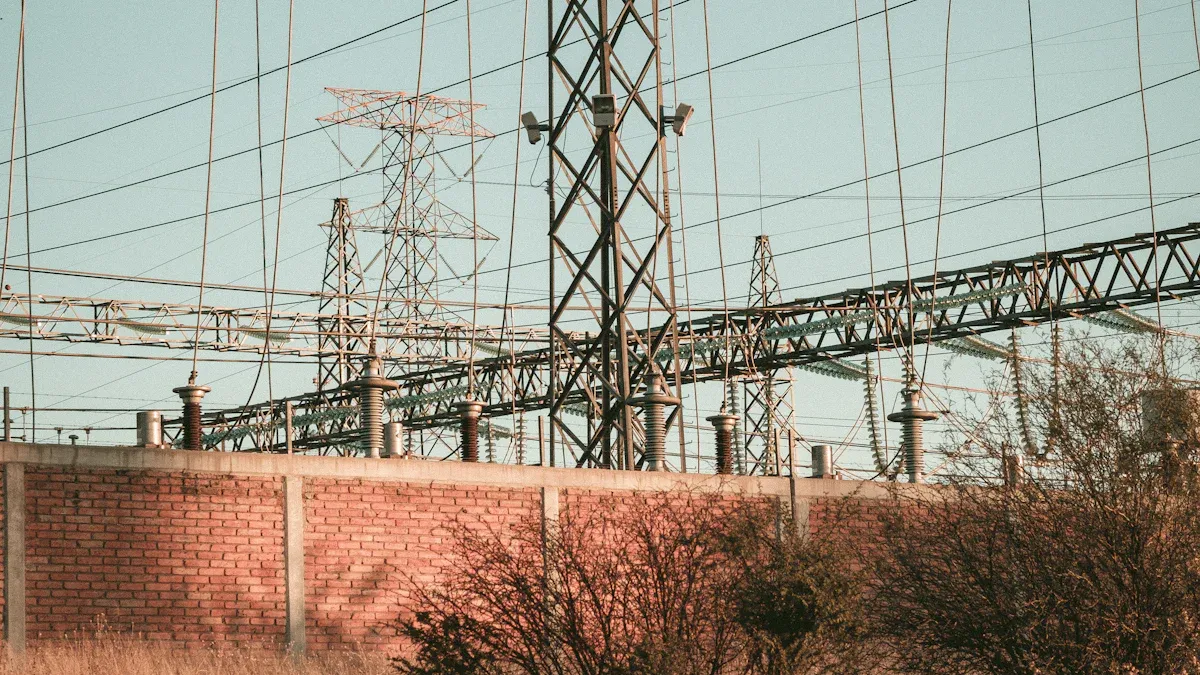
Many homeowners wonder if adding thousands of EVs will overwhelm the nation’s electricity supply. A high-level view of Colombia’s Power Grid reveals a system that is surprisingly well-prepared for the gradual increase in demand from Level 1 charging. The national infrastructure is designed for large-scale power management, which is very different from the local wiring in a home or neighborhood.
How Colombia Generates Its Electricity
The Dominance of Hydropower
Colombia’s electricity generation relies heavily on its abundant water resources. Hydropower consistently provides over 60% of the country’s total electricity each year. This significant dependence on dams and reservoirs makes Colombia a regional leader in power sector decarbonization. The energy source is clean and renewable, offering a stable foundation for the national supply.
Thermal and Renewable Sources as Backup
To ensure reliability, the grid does not depend solely on water. A mix of other sources provides crucial backup and flexibility.
- Thermal Plants: These facilities, which use natural gas or coal, can be activated quickly to meet demand spikes or cover shortfalls during dry seasons when reservoir levels are low.
- Other Renewables: Colombia is also expanding its use of wind and solar power, further diversifying the energy mix and enhancing grid resilience.
The Concept of Off-Peak vs. Peak Hours
Defining Peak Demand in Colombian Cities
Electricity usage follows a predictable daily pattern. In major urban centers like Bogotá, Medellín, and Cali, demand for electricity is highest during two main periods:
- Daytime Business Hours (approx. 9 AM – 5 PM): Factories, offices, and commercial centers operate at full capacity.
- Early Evening (approx. 6 PM – 9 PM): Residents return home, turn on lights, cook dinner, and use entertainment devices.
Why the Grid Has Surplus Capacity at Night
After 10 PM, a significant shift occurs. Most businesses close, and household activity decreases. This drop in consumption means the national grid has a large amount of surplus generating capacity.
Wawasan Utama: This overnight surplus is a perfect match for Level 1 EV charging. The slow, steady draw of an EV charger uses this otherwise idle electricity, helping to balance the grid without adding stress during peak times.
The Difference Between National and Local Grids
It is essential to distinguish between the national transmission system and the local distribution network.
High-Voltage Transmission: The Energy Superhighway
Think of the national grid as an energy superhighway. A network of high-voltage transmission lines efficiently transports massive amounts of electricity over long distances. It moves power from large generation facilities, like the Ituango Dam, to substations near cities. Colombia’s Power Grid is robust at this transmission level.
Local Distribution: The “Last Mile” to Your Home
Local distribution is the “last mile” of the power journey. At a neighborhood substation, transformers step down the high-voltage electricity to a lower voltage suitable for homes. This power then travels through smaller, local lines to individual houses. While the national superhighway has immense capacity, these local streets are where traffic jams, or bottlenecks, are more likely to occur.
The Real Bottleneck: Local Transformers and Home Wiring
The national energy superhighway has plenty of room. The real traffic jams happen on the small residential streets leading to your home. While Colombia’s Power Grid can generate sufficient electricity, the local distribution network and individual home wiring present the most significant challenges for widespread EV adoption. Homeowners must focus their attention on this “last mile” of the electrical journey.
Your Neighborhood’s Power Capacity
Every neighborhood or residential complex is served by local infrastructure designed for historical electricity usage patterns. The introduction of multiple EVs can test the limits of this equipment.
How Local Transformers Work
A local transformer is the grey, cylindrical or box-shaped device you see on utility poles or on a concrete pad in your neighborhood. Its job is simple but crucial. It takes high-voltage electricity from the utility lines and “steps it down” to the 120V standard used in your home. Each transformer is rated to serve a specific number of homes based on their expected average power consumption.
The Risk of EV “Clustering” in a Barrio or Conjunto
EV “clustering” occurs when several neighbors in a small area, all connected to the same local transformer, plug in their vehicles at the same time. A transformer designed for ten homes using lights and refrigerators can become overloaded if five of those homes add a 1.9 kW load simultaneously. This concentrated demand can cause the transformer to overheat, trip its own protective devices, or even fail, leading to a local power outage.
Signs of a Strained Local Grid to Watch For
A stressed local grid often shows warning signs. Homeowners should be aware of these potential indicators of an overloaded neighborhood transformer:
- Flickering or Dimming Lights: Lights that dim, especially in the evening when neighbors might be charging their EVs, can signal voltage drops.
- Frequent Neighborhood Outages: If your immediate block or complex experiences brief power outages that do not affect the wider area, the local transformer may be struggling.
- A Buzzing Sound: Transformers that are under heavy load can sometimes emit a noticeable humming or buzzing sound.
Is Your Home’s Electrical System EV-Ready?
Before plugging in an EV, every homeowner must verify the safety and capacity of their own electrical system. The continuous power draw of charging is very different from the short bursts used by most appliances.
The Critical Need for a Dedicated Circuit
A dedicated circuit is an electrical line that runs directly from your circuit breaker panel to a single outlet, with nothing else connected to it. Using a dedicated circuit for your EV charger is essential. It ensures the charger receives the full power it needs without competing with other appliances. This prevents the circuit breaker from tripping and reduces the risk of overloading the wires inside your walls.
Why Grounded Outlets are Non-Negotiable for Safety
A grounded outlet (one with three prongs) is a mandatory safety feature for EV charging. The ground wire provides a safe path for electricity to travel in case of a fault, protecting you from electric shock and preventing damage to your vehicle’s sensitive electronics. Technologically advanced EV charging solution providers like TPSON engineer their portable chargers with safety systems that require a proper ground connection to function.
Safety Alert! ⚠️ Never use an adapter to plug a three-prong charger into a two-prong outlet. This bypasses critical safety mechanisms and creates a serious risk of electrical shock or fire.
A Homeowner’s Guide to the Circuit Breaker Panel
Your circuit breaker panel, or breaker box, is the control center for your home’s electricity. Homeowners should familiarize themselves with it:
- Locate the Panel: It is usually a metal box found in a utility area, kitchen, or garage.
- Identify Breakers: Each switch corresponds to a different circuit in your home. They should be labeled to indicate which rooms or appliances they control.
- Check for Labels: Look for a breaker already labeled “Garage” or for an unused, available slot where an electrician can install a new dedicated circuit for your EV.
Special Considerations for Older Colombian Homes
Homes built decades ago were not designed for today’s electrical demands, let alone the addition of an electric vehicle. Owners of older properties must exercise extra caution.
Identifying Potentially Outdated or Unsafe Wiring
Older homes may contain wiring that is inadequate or has degraded over time. Look for these warning signs, which indicate the need for a professional inspection:
- Outlets that are loose, discolored, or feel warm to the touch.
- A persistent burning smell near outlets or the breaker panel.
- Two-prong outlets throughout the house, indicating a lack of grounding.
- Circuit breakers that trip frequently with normal appliance use.
The Fire Risk of Using Extension Cords for Charging
Using a standard household extension cord to charge an electric vehicle is extremely dangerous. These cords are not thick enough to handle the high, continuous power flow required for EV charging.
The wire inside a standard extension cord can overheat dramatically over several hours of charging. This can melt the cord’s insulation and ignite nearby materials like carpets, curtains, or garage debris, causing a devastating fire. Always plug your charger directly into a suitable, professionally installed wall outlet.
Actionable Steps for Safe and Grid-Friendly Charging
Adopting an electric vehicle involves more than just driving; it requires a proactive approach to charging. Homeowners can take several key steps. These actions ensure their charging practices are safe for their home, considerate of their neighbors, and beneficial for the stability of Colombia’s power grid.
Step 1: Become a Smart Charger
The simplest and most impactful action is to control kapan you charge. Smart charging habits place minimal stress on the grid and can lead to future savings.
The “Charge After 10 PM” Strategy
Homeowners should adopt the habit of plugging in their EV late at night. Electricity demand drops significantly after 10 PM in most Colombian cities. Charging during these off-peak hours utilizes the grid’s surplus capacity. This simple strategy helps balance the electrical load, preventing strain on local transformers and contributing to overall grid stability.
Preparing for Future Time-of-Use Electricity Rates
Many global energy markets are adopting Time-of-Use (TOU) electricity rates. These plans charge more for power used during peak demand hours and less during off-peak hours. While not yet standard across Colombia, establishing an overnight charging routine now prepares EV owners for this future. This habit will translate directly into cost savings once TOU rates become more common.
Step 2: Schedule a Professional Electrical Inspection
A professional assessment of a home’s electrical system is a critical safety measure. It verifies that the wiring can handle the sustained load of an EV charger.
How to Find a Certified Electrician in Colombia
Homeowners should seek an electrician with a Professional License certified by an organization like the National Council of Electrical Technicians (CONTE). These professionals are trained to work according to national standards, ensuring a safe and reliable inspection and installation.
Understanding the Norma RETIE Electrical Code
Any electrical work in Colombia must comply with the Technical Regulation for Electrical Installations (RETIE). This regulation sets the mandatory safety standards for all electrical installations. A certified electrician ensures that any new circuit, outlet, or wiring for an EV charger meets these strict requirements, guaranteeing safety and compliance.
What to Expect During a Home Electrical Audit
During an audit, an electrician will perform several checks:
- Inspect the Breaker Panel: They assess its total capacity and look for available space for a new circuit.
- Verify Wiring: They check the condition and gauge of the wires leading to the proposed outlet location.
- Confirm Grounding: They ensure the outlet is properly grounded, a non-negotiable safety feature for advanced chargers from providers like TPSON.
Step 3: Communicate With Your Local Utility
Informing the local utility provider about a new EV is a helpful, collaborative step. This communication aids in long-term grid management.
Why Informing EPM, Enel, or Others is Helpful
A simple phone call or online notification to a utility like EPM in Medellín or Enel in Bogotá provides valuable data. It is not about asking for permission to charge. Instead, it alerts the utility to a new, significant load in a specific neighborhood.
Community Benefit: 🤝 This information helps utilities monitor local grid performance and anticipate the need for future upgrades before problems arise.
How Utilities Use EV Data for Future Planning
Utilities aggregate data on EV locations to map potential “clustering” zones. This foresight allows them to proactively plan infrastructure improvements, such as upgrading local transformers or strengthening distribution lines. By informing their provider, homeowners play a direct role in helping build a more robust and EV-ready grid for the entire community.
Looking Ahead: Level 2 Charging and the Future of the Grid
While Level 1 charging is a practical starting point, the conversation about electric vehicles inevitably turns toward faster and more powerful options. Level 2 charging represents the next step for many EV owners. This upgrade has significant implications for a home’s electrical system and the broader energy infrastructure. Understanding this leap is key to planning for an all-electric future.
Understanding the Leap to Level 2 Charging
The 240V Requirement and Faster Speeds
Level 2 charging makes a significant jump in power by using a 240-volt circuit, similar to what an electric stove or clothes dryer uses. This higher voltage allows for much faster charging speeds. A typical home Level 2 charger delivers around 7,4 kW, drastically reducing the time needed to replenish a vehicle’s battery compared to the slow trickle of a Level 1 unit.
Increased Impact on Your Home and Local Grid
This increase in speed comes with a much larger electrical load. The power demand of a Level 2 charger is several times that of a Level 1 charger, placing a greater strain on both the home’s circuit panel and the neighborhood transformer.
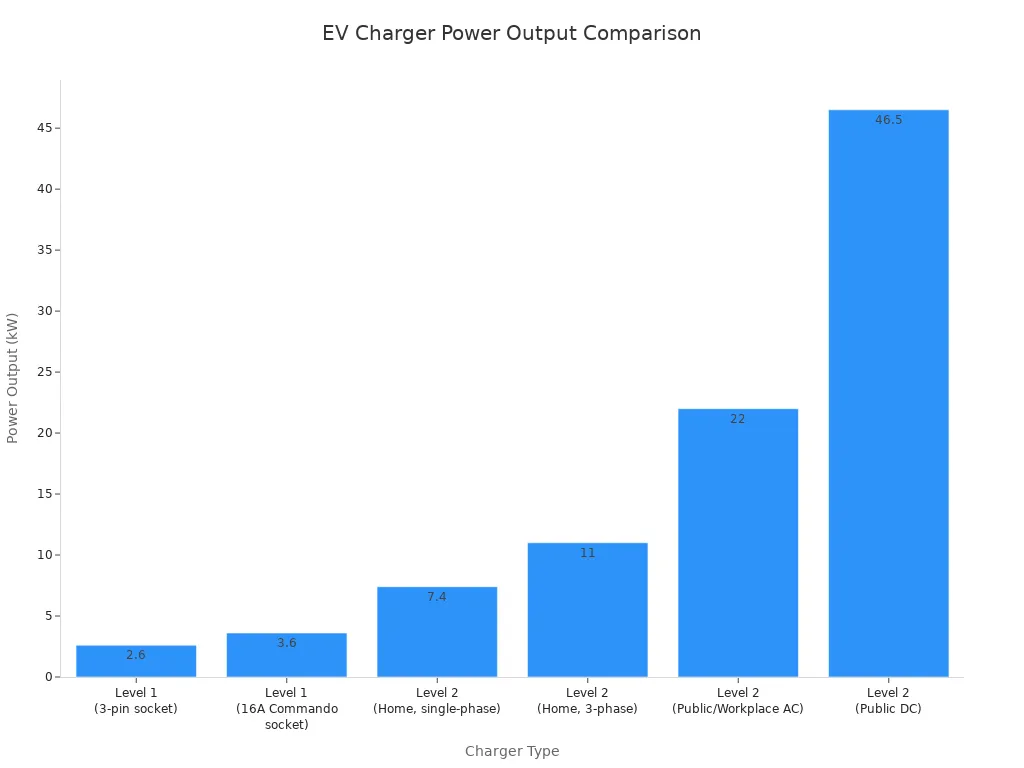
The table below highlights the substantial difference in power output.
| Fitur | Level 1 AC Charger | Level 2 AC Charger (Residential) |
|---|---|---|
| Keluaran Daya | 1.4–1.9 kW | 3.7–11 kW |
| Sumber | Stopkontak standar 120V | Sirkuit 240V khusus |
| Kecepatan | Adds ~8 km of range per hour | Adds ~40-60 km of range per hour |
When Should a Homeowner Consider a Level 2 Upgrade?
Assessing Your Daily Commute and Driving Habits
A Level 2 upgrade is not necessary for every EV owner. The decision depends on individual driving patterns. Homeowners with long daily commutes or those who need to recharge quickly between trips will find a Level 2 charger essential. For drivers with short commutes who can charge overnight, Level 1 often remains sufficient.
The Costs and Installation Process in Colombia
Upgrading to Level 2 is an investment. It requires purchasing a wall-mounted charging station from a provider like TPSON, a technologically advanced electric vehicle charging solution provider. More importantly, it necessitates hiring a certified electrician to install a dedicated 240V circuit that complies with the RETIE code. This process may also involve upgrading the home’s main breaker panel to handle the additional load.
How Colombia is Preparing for an Electric Future
The Role of Smart Grid Technology
Colombia is actively modernizing its electrical infrastructure to manage growing demand. These “smart grid” initiatives are crucial for integrating EVs seamlessly. Key developments include:
- The planned deployment of 11 million smart meters by 2030, covering 75% of users.
- The implementation of Time-of-Use (TOU) tariffs to encourage off-peak charging.
- The use of demand-side flexibility, allowing the grid to manage peak loads more effectively.
Utility-Led Infrastructure Upgrades
Local utility companies are using data from early EV adopters to identify areas with high demand. This information allows them to proactively upgrade neighborhood transformers and strengthen local distribution lines before they become overloaded. These forward-thinking upgrades to Colombia’s Power Grid are essential for ensuring long-term stability as EV adoption accelerates.
Colombia’s Power Grid possesses the capacity to manage a gradual increase in Level 1 EV charging. The system’s robust, hydro-powered foundation is not the primary barrier. Instead, the true responsibility rests with homeowners and local utilities. They must ensure the safety and adequacy of neighborhood transformers and home wiring.
Colombians can confidently adopt EVs by taking these proactive steps:
- Charging their vehicles during off-peak hours.
- Scheduling a professional electrical inspection.
- Communicating their new EV purchase to their utility provider.
PERTANYAAN YANG SERING DIAJUKAN
Is Level 1 charging enough for daily use in Colombia?
Yes, for most drivers. Overnight Pengisian daya level 1 easily replenishes the range for an average daily commute in cities like Bogotá or Medellín. It is a practical solution for homeowners who can charge their vehicle for 8-12 hours each night.
Do I need permission from my utility to use a Level 1 charger?
No, homeowners do not need permission for Level 1 charging since it uses a standard outlet. Informing the utility (like EPM or Enel) is a helpful step. This data assists them with future grid planning for the community.
Can I use an extension cord with my portable EV charger?
Warning: Fire Hazard 🔥 No, this is extremely dangerous. Standard extension cords overheat from the continuous power draw, creating a serious fire risk. Homeowners must plug the charger directly into a suitable, grounded wall outlet.
What is the most important safety check before charging my EV at home?
Homeowners must verify they have a properly grounded, three-prong outlet. Technologically advanced EV charging solution providers like TPSON engineer chargers that require a ground connection for safety. Using an ungrounded outlet poses a significant electrical risk to the user and the vehicle.
How do I know if my neighborhood transformer can handle more EVs?
Homeowners can watch for signs like flickering lights or frequent local outages. The best strategy is to charge after 10 PM. This practice avoids peak demand hours and reduces stress on the local transformer, preventing potential overloads.
What is the RETIE code and why does it matter for EV charging?
The RETIE (Technical Regulation for Electrical Installations) is Colombia’s mandatory electrical safety code. Any new dedicated circuit for an EV charger must comply with RETIE. A certified electrician ensures the installation is safe and meets national legal standards.