
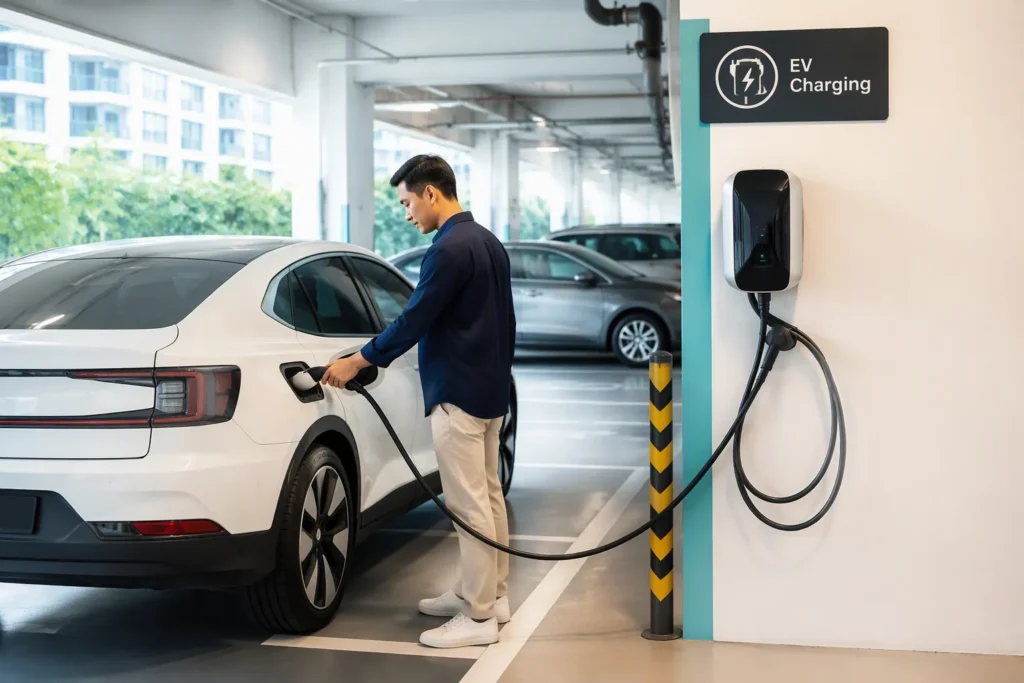

EV adoption in Singapore surges. Tenants now expect home ev charging. Condos lacking ev charging lose competitive advantage. They risk losing tenants to properties with this amenity. Installing an Chargeur EV de bonne réputation Fabricants de chargeurs de VE provides reliable Solutions de recharge pour véhicules électriques. spécifique. Bien que chargeurs ev portables offer flexibility, permanent infrastructure supports tenant attraction and retention. This amenity defines the EV Charging Must-Have Amenity status.
The Rising Demand for EV Charging in Singapore
Singapore’s EV Adoption Trends
Government Push for Electric Vehicles
The Singapore government actively promotes electric vehicles through the Singapore Green Plan 2030. This national strategy aims to phase out internal combustion engine vehicles by 2040. Authorities offer rebates and tax incentives to reduce upfront costs for buyers. The Land Transport Authority also expands public charging infrastructure across the island. These policies create a supportive environment for EV growth.
Growing EV Ownership Among Residents
EV registrations in Singapore climbed sharply in recent years. More residents purchase electric cars as prices become competitive. Battery technology improves, and driving ranges extend further. This trend accelerates demand for convenient charging options at home. Condo dwellers increasingly seek buildings that support their vehicle needs.
Tenant Expectations Shift
Convenience as a Top Priority
Modern tenants value convenience above many other factors. They want to charge their cars overnight without leaving their residence. Public charging stations often require waiting or traveling to distant locations. Home charging eliminates these hassles entirely. Properties without this feature quickly lose appeal.
Environmental Consciousness Among Renters
Many renters today prioritize sustainability in their housing choices. They seek residences that align with their environmental values. EV charging supports a lower carbon lifestyle. This amenity signals a building’s commitment to green practices. Environmentally aware tenants gravitate toward such properties.
EV Charging Must-Have Amenity for Modern Residences
The ev charging must-have amenity status reflects broader market shifts. Tenants now compare buildings based on charging availability. Properties that lack this feature struggle to compete. Developers and managers recognize ev charging as essential infrastructure. This amenity attracts quality tenants and reduces vacancy rates. The ev charging must-have amenity trend will only strengthen over time.
How EV Charging Appeals to Eco-Conscious and Tech-Savvy Tenants
Attracting and Retaining EV-Owner Tenants
Sustainability as a Decision Factor
Sustainability now shapes rental decisions across Singapore. Eco-conscious renters examine a building’s green features before signing a lease. EV charging stands out as a visible commitment to environmental responsibility. A condo with charging infrastructure signals that management cares about reducing carbon emissions. This signal resonates strongly with tenants who drive electric cars. They see the charger as proof that the building supports their lifestyle. Such residents often stay longer because the property aligns with their personal values. Property managers who prioritize sustainability gain a loyal tenant base. This loyalty reduces turnover costs and stabilizes rental income over time.
Marketing Advantage for Condos
Condo marketers use EV charging as a powerful selling point. Online listings that mention charging stations receive more inquiries from prospective renters. Real estate agents highlight this feature during property tours. Social media campaigns showcase the charger as a modern convenience. These efforts attract attention in a crowded digital marketplace. A strong marketing message builds a reputation for innovation. Word spreads among eco-conscious communities. More qualified leads flow into the leasing office. The property gains a distinct identity that separates it from older buildings. This identity helps attract and retain ev-owner tenants who value forward-thinking management.
Convenience and Lifestyle Benefits
Home Charging vs. Public Charging
Home charging offers clear advantages over public alternatives. Public stations often sit far from residential areas. Drivers waste time driving to these locations and waiting for an available plug. Home charging eliminates this daily hassle. Residents simply plug in their cars overnight. They wake up to a fully charged vehicle every morning. This routine fits seamlessly into busy lifestyles. Public charging also carries higher costs during peak hours. Home charging typically costs less per kilowatt-hour. The convenience factor alone convinces many renters to choose a building with dedicated charging options. Charging their vehicles at home becomes a daily habit that tenants refuse to give up.
Time Savings and Accessibility
Time is a precious resource for working professionals. Public charging adds thirty to sixty minutes to a weekly routine. Home charging reduces that time to a few seconds of plugging in. Residents save hours every month. These hours go toward family, work, or leisure activities. Accessibility also improves for people with mobility challenges. They avoid navigating crowded public charging lots. A dedicated charger in the condo garage provides privacy and ease. Tenants looking for apartments rank this accessibility as a top priority. Convenient charging options directly improve their quality of life. This improvement builds strong satisfaction and long-term residency.
Competitive Differentiation
Standing Out in a Crowded Rental Market
Singapore’s rental market offers many choices to prospective tenants. Hundreds of condos compete for the same pool of renters. EV charging creates a clear point of difference. Buildings without this feature fade into the background. Buildings with it stand out immediately. Prospective renters compare properties side by side. The one with charging infrastructure wins more often than not. This advantage grows as EV adoption increases each year. Early adopters capture the best tenants before competitors catch up. Differentiation through ev charging must-have amenity status gives a property a lasting edge in a saturated market.
Attracting High-Value Tenants
High-value tenants bring stable income and long lease commitments. These renters often work in technology, finance, or green industries. They earn above-average salaries and drive electric vehicles. They seek modern amenities that match their professional status. EV charging attracts this demographic effectively. These tenants pay premium rents for convenience and sustainability. They also refer friends and colleagues to the building. This referral network expands the pool of quality applicants. Property owners who attract and retain lucrative tenants see stronger financial performance. The investment in charging infrastructure pays for itself through higher occupancy and better rental rates.
Financial Benefits for Apartments and Condominiums
Augmentation de la valeur de la propriété
Premium Pricing for EV-Ready Units
EV-ready units command higher prices in Singapore’s real estate market. Buyers and renters pay a premium for buildings with charging infrastructure. This premium reflects the convenience and future-proofing that ev charging provides. Apartments and condominiums with this amenity attract more qualified buyers. They also close sales faster than comparable properties without charging stations.
Higher Resale and Rental Rates
Properties with EV charging achieve stronger resale values over time. Rental rates also climb when buildings offer this feature. Landlords report higher monthly rents for units in EV-equipped buildings. This trend helps owners retain property value across market cycles. The investment in charging infrastructure delivers measurable financial returns.
Potential Revenue Streams
Charging Fees as Income
Condo management can generate income through charging fees. Residents pay per kilowatt-hour or a flat monthly rate. This revenue offsets electricity costs and maintenance expenses. Surplus funds support other building improvements. The income stream grows as more tenants adopt electric vehicles.
Partnerships with Charging Operators
Management teams often partner with established charging operators. These companies install and maintain equipment at no upfront cost. They share revenue with the condo according to agreed terms. This model reduces financial risk for apartment and condominium owners. It also ensures professional service and reliable technology.
Cost Savings and Incentives
Government Grants and Subsidies
Singapore offers substantial grants to support EV charger installation. The EV Common Charger Grant (ECCG) provides significant co-funding for condominiums.
| Nom de la subvention | Eligible Properties | Funding Coverage | Cap per Charger | Total Chargers Supported | Availability Period | Application Method |
|---|---|---|---|---|---|---|
| Subvention pour chargeurs communs de véhicules électriques (ECCG) | Non-landed private residences (condominiums) | Up to 50% of upfront installation costs | $3,000 (reduced from $4,000 for first 2,000 chargers) | 3,500 chargers | Until 31 Dec 2026, or until 3,500 chargers supported | Business Grants Portal |
The grant, which was supposed to end on Dec 31 this year, will now be available until the end of 2026, or until 3,500 chargers have been approved for co-funding, whichever comes first.
As of 2024, the EV Common Charger Grant (ECCG) was extended to end-2026, with the co-funding cap reduced to $3,000 per charger for the next 1,500 chargers. Initially launched in 2021, the grant had a cap of $4,000 per charger for the first 2,000 chargers, with a deadline extended to end-2025 under the same conditions before the 2024 extension. The grant co-funds up to 50% of upfront installation costs for condominiums.
Long-Term Operational Efficiency
Modern charging systems reduce long-term operational costs. Smart load management lowers electricity expenses during peak hours. Preventive maintenance extends equipment lifespan. These efficiencies deliver sustained savings for apartments and condominiums. They also minimize unexpected repair bills.
Overcoming Challenges in Installing EV Charging Stations
Installation Costs and Funding
Répartition de l'investissement initial
The demand for ev charging continues to grow across Singapore. The initial investment for stations de recharge ev includes hardware, labor, and electrical upgrades. Hardware costs cover the purchase of ev chargers, mounting brackets, and enclosures. Labor expenses include electrician fees for wiring and connection work. Older buildings often need panel upgrades to handle additional load. A single charging point typically costs between $3,000 and $8,000 to install.
Financing Options and Grants
Government grants reduce the financial burden of installing ev chargers. The EV Common Charger Grant covers up to 50% of upfront costs for eligible condominiums. Private lenders offer green loans with competitive rates. Charging operators sometimes fund installations in exchange for revenue shares. These financing options make ev charging solutions accessible to more properties.
Electrical Capacity and Infrastructure
Assessing Existing Power Supply
An electrical audit determines the building’s current power capacity. Engineers inspect the main switchboard, transformer, and feeder cables. Property managers can install ev chargers after completing the audit. This assessment reveals whether electrical upgrades are necessary before installing ev chargers. A well-designed ev charging system future-proofs the property.
Upgrading and Load Management Solutions
Smart load management systems allow condos to install ev charging stations without major electrical upgrades. These systems distribute power dynamically across multiple chargers. They prevent overloads by reducing charging speeds during peak demand. This approach reduces the need for extensive charging infrastructure. Load balancing technology enables efficient installation without costly infrastructure changes.
Space and Logistics
Optimal Placement of Chargers
Strategic placement of ev charging stations maximizes usability and minimizes conflict. Parking spots near the electrical room reduce cabling costs. Designated ev parking areas prevent combustion engine vehicles from blocking chargers. Cable management systems keep garage floors tidy and safe. Standard charging stations require adequate clearance and signage for safety.
Minimizing Disruption During Installation
Charging infrastructure installation requires careful planning to minimize disruption. Contractors should phase the work to avoid blocking resident parking. Nighttime or weekend schedules reduce interference with daily garage use. Prefabricated components shorten on-site construction time. Buildings that prioritize charging stations attract more eco-conscious tenants. Clear communication about timelines maintains resident satisfaction.
Management and Maintenance
Choosing the Right Charging Provider
Selecting a reliable charging provider determines the long-term success of any EV infrastructure project. Property managers should evaluate providers based on technical expertise, service coverage, and proven track record. TPSON stands out as a technologically advanced electric vehicle charging solution provider with comprehensive support capabilities. Management teams should request detailed proposals from multiple vendors before making a final decision. Key evaluation criteria include hardware quality, software features, and response times for maintenance requests. Providers that offer networked systems give managers real-time monitoring and usage data. This visibility helps track performance and identify issues quickly. A strong partnership with the right provider ensures smooth operations for years.
Ongoing Support and Upkeep
Regular maintenance keeps ev charging stations running efficiently and safely. Property managers should budget for routine inspections, software updates, and occasional repairs. Station owners should estimate average maintenance costs of up to $400 annually per charger. Actual costs vary based on charging level and whether the station is networked or non-networked. Most networks offer a maintenance plan for an additional annual fee. Annual extended warranties for DC fast chargers can cost over $800 per charger per year. Level 1 and Level 2 chargers may have a fixed-length warranty at lower cost, but the owner bears repair costs after the term ends.
| Source | Estimated Annual Maintenance Cost | Notes |
|---|---|---|
| EV Connect (general estimate) | $400–$500 per charger | Varies by charger type and usage |
| U.S. Department of Energy (via EV Connect) | ~$400 per charger | Benchmark figure; depends on charger type and daily vehicle volume |
| EV Connect (commercial operators) | ~$500 per charger | Costs increase with environmental exposure, high utilization, and networked features |
Preventive maintenance extends equipment lifespan and reduces unexpected downtime. Technicians should inspect cables, connectors, and mounting hardware during each service visit. Software updates improve security and add new features. Property managers should maintain clear service records for warranty claims. Residents expect reliable ev charging solutions every day. Quick response times to outages build trust and satisfaction. A well-maintained system protects the property’s investment and keeps tenants happy. Regular upkeep of ev chargers also supports the building’s reputation for quality amenities. Managers who prioritize maintenance avoid costly emergency repairs. They also ensure that installing ev chargers delivers lasting value. Proper care of charging stations strengthens tenant retention efforts. This commitment to service excellence distinguishes top-tier properties in Singapore’s competitive market.
Government Incentives and Future-Proofing Your Condo
Singapore’s EV Charging Initiatives
EV Common Charger Grant
The EV Common Charger Grant provides direct financial support for condo charging projects. This program co-funds up to 50% of upfront installation costs. The cap sits at $3,000 per charger for the next 1,500 units. The grant remains available until the end of 2026 or until authorities approve 3,500 chargers. Property managers can apply through the Business Grants Portal. This incentive lowers the barrier for condos that want to install ev charging stations.
Land Transport Authority Guidelines
The Land Transport Authority sets clear standards for ev charging stations across Singapore. These guidelines cover safety requirements, installation procedures, and technical specifications. Compliance ensures that charging infrastructure meets national standards. Property managers should review these rules before starting any project. Following LTA guidelines prevents costly delays and ensures smooth approval processes.
Future-Proofing Your Condo
Preparing for Widespread EV Adoption
Electric vehicles will dominate Singapore’s roads by 2040. Condos that install ev chargers now prepare for this inevitable shift. Early adoption prevents last-minute scrambles when demand peaks. Buildings with existing infrastructure attract tenants ahead of competitors. This proactive approach supports future-proofing your condominium against changing market demands.
Avoiding Retrofit Costs Later
Retrofitting a building for ev charging costs significantly more than initial installation. Later upgrades require tearing up finished surfaces and reworking electrical systems. Early installation avoids these expenses entirely. Property owners protect their property value by acting before regulations tighten. Smart planning today saves substantial money tomorrow.
Sustainability and Green Building Certification
Enhancing BCA Green Mark Ratings
The Building and Construction Authority awards Green Mark ratings to sustainable buildings. EV charging contributes points toward higher certification levels. These ratings signal environmental responsibility to tenants and buyers. Higher ratings translate into stronger market positioning. Property managers gain a competitive advantage through this recognized sustainability benchmark.
Aligning with National Sustainability Goals
Singapore’s Green Plan 2030 targets cleaner transport and reduced emissions. EV charging supports these national objectives directly. Condos that align with government goals receive positive attention from regulators and tenants. This alignment strengthens the building’s reputation as a responsible community member. Sustainability commitments also attract environmentally conscious renters who value green living.
Success Stories: How Condos Attracted and Retained Tenants with EV Charging

Case Study: Marina Bay Condo in Central Singapore
Implementation Process
Le Marina Bay Condo management council initiated the project in early 2023. A professional assessment determined the building’s electrical capacity. The team discovered sufficient headroom for twelve charging points without major upgrades. They selected an 11kW solution after surveying resident vehicle types. This decision saved approximately $15,000 compared to a 22kW alternative. The installation of ev charging stations proceeded in phases over six weeks. The team coordinated schedules with residents to minimize parking disruptions. Clear communication updates informed every household about progress and timelines.
Results and Tenant Feedback
The charging stations attracted immediate attention from prospective tenants. Occupancy rates increased by 8% within the first four months. Current residents expressed high satisfaction with the new amenity. One resident noted that home charging eliminated his weekly detour to a public station. Property managers reported a 15% reduction in tenant turnover. The building’s reputation as a forward-thinking property spread through online forums. Real estate agents cited charging access as a deciding factor for multiple lease signings. This project demonstrated that proper planning and resident communication deliver strong returns. The demand for ev charging became increasingly clear as word spread through the community.
Case Study: Serangoon Gardens Apartment Complex
Overcoming Initial Resistance
The Serangoon Gardens complex faced notable opposition during the initial proposal phase. Several council members questioned the necessity of charging infrastructure. They worried about costs and potential electrical issues. The management team organized informational sessions to address concerns. These sessions presented data on Singapore’s EV adoption trajectory. The team also shared financial projections showing grant offsets and potential revenue. Three months of discussions eventually led to council approval of a pilot installation with six chargers. This measured approach allowed residents to see benefits before a full rollout.
Measurable Impact on Occupancy
The pilot chargers generated immediate interest among EV-driving prospects. Vacancy rates dropped from 5% to 2% within six months. The property achieved full occupancy for the first time in two years. Property values increased by 4% compared to similar complexes in the area. Residents reported higher satisfaction scores in annual surveys. The success of the pilot program convinced remaining skeptics on the council. The complex expanded to eighteen chargers within the following year. This case demonstrated that phased implementation reduces resistance while delivering measurable occupancy gains.
Lessons Learned
Best Practices from Early Adopters
Early adopters across Singapore identified several critical success factors. Maintaining open lines of communication with residents throughout the installation process proved essential. Keeping them updated on schedules, potential disruptions, expenses, and advantages fostered trust and lowered opposition. Framing ev charging as a future-proofing upgrade that boosts property value further strengthened buy-in. Management teams that invested in resident education experienced smoother approvals and higher satisfaction. The Marina Bay success showed that surveying resident vehicle types prevents unnecessary spending on oversized equipment.
A key takeaway from deploying 1,000+ EV chargers is that infrastructure must be planned for both present needs and future growth. Conducting proper technical assessments and applying smart load management allows older developments to roll out EV charging in phases, avoiding costly and unnecessary electrical upgrades.
Before committing to higher-capacity 22kW chargers, management councils should have their EV charging operator check what vehicles residents actually own. In many cases, an 11kW setup delivers identical real-world charging speeds at a much lower cost.
Common Pitfalls to Avoid
Several condos experienced setbacks that others can learn from. The most frequent mistake involved selecting equipment without assessing resident needs. One property installed 22kW chargers when most residents drove vehicles that maxed out at 7kW. This oversight wasted significant capital that could have funded additional points. Another common error involved poor communication with residents during installation. A complex faced complaints when construction noise disrupted daily routines without advance notice. Some properties underestimated the importance of ongoing maintenance. They discovered that neglected equipment leads to downtime and resident frustration. Avoiding these pitfalls requires careful planning, transparent communication, and proper technical assessment. Properties that follow these guidelines achieve stronger results and higher satisfaction among tenants. Expanding ev charging stations requires a deliberate strategy that accounts for both current demand and future growth.
Taking Action: Making EV Charging a Priority for Your Condo
Immediate Steps for Condo Management
Management councils should follow a structured process to install ev charging infrastructure. This process ensures efficient implementation and minimizes resident disruption.
Conduct a comprehensive electrical audit. Engineers assess current capacity and identify necessary upgrades. The audit reveals the number of chargers the building can support now and in future phases.
Survey residents about EV ownership and interest. This data justifies the investment to council members and owners. A detailed survey prevents overspending on unnecessary high-capacity equipment. It also reveals adoption rates and future intent among residents.
Research available government grants and financing options. The EV Common Charger Grant covers up to 50 percent of upfront costs. Private lenders offer green loans with competitive interest rates. Charging operators may fund installations in exchange for revenue sharing agreements.
Request proposals from multiple charging providers. Evaluate each vendor based on hardware quality, software features, and service response times. Strong partnerships ensure reliable operations. Request references from other condos with completed installations.
Present a clear proposal to the management council. Include cost projections, grant offsets, revenue potential, and installation timelines. Address concerns with data and case studies from similar properties. This proposal should outline both financial and operational benefits clearly.
Develop a communication plan for residents. Provide advance notice of installation schedules and expected disruptions. Regular updates maintain trust and reduce opposition. Clear communication helps residents understand long-term value.
Long-Term Benefits for Apartments and Condominiums
Properties that install ev charging today gain lasting market advantages. Rental demand rises as more EV drivers seek convenient home charging. Landlords charge premium rates for units with this amenity. This pricing power delivers stronger returns for apartment and condominium owners.
Property values appreciate faster with established charging infrastructure. Future buyers accept higher prices for buildings offering this feature. This value growth protects investments across market cycles. Operating revenue flows from charging fees. Management collects income per kilowatt-hour or through flat monthly rates. These funds support building improvements and offset electricity costs.
Regulatory alignment favors early adopters. Singapore’s Green Plan 2030 accelerates EV adoption across the island. Condominium and apartment owners avoid costly retrofit expenses by acting early. Higher BCA Green Mark ratings for sustainability strengthen the building’s reputation. Tenants with dedicated charging access stay longer and refer friends. Lower turnover reduces vacancy costs and stabilizes rental income. This retention strengthens financial performance and community stability. Condominiums investing now lead the market. They attract quality residents and command premium pricing. Apartments must respond to shifting tenant expectations. Those that fail to adapt risk falling behind competitors.
EV charging is no longer a luxury for Singapore condos. It is a necessity for staying competitive in a crowded rental market. Properties that act now attract and retain tenants more effectively. They also future-proof their buildings against rising demand. The ev charging must-have amenity status will only grow stronger as adoption rises. Property managers and owners should start planning ev charging installation today. Early action helps apartments capture premium rates and avoid costly retrofits later. Waiting risks losing quality residents to better-equipped competitors.
FAQ
What is the EV Common Charger Grant?
Singapore’s EV Common Charger Grant co-funds up to 50% of installation costs for condominiums. The program caps funding at $3,000 per charger. It runs until end of 2026 or until 3,500 chargers receive approval.
How much does installing EV charging stations cost?
Installing a single charging point typically costs between $3,000 and $8,000. Costs include hardware, labor, and electrical upgrades. Government grants offset up to 50% of these expenses for eligible condominiums.
Can older condominiums support EV chargers?
Yes, older buildings can install chargers. An electrical audit determines current capacity. Smart load management systems distribute power dynamically. This approach avoids major electrical upgrades. Many older condos successfully add charging infrastructure.
Qui paie l'électricité utilisée pour la recharge ?
Residents pay for electricity through per-kilowatt-hour fees or flat monthly rates. Management sets pricing structures. Some condos partner with charging operators who handle billing and revenue sharing.
Does EV charging increase property value?
Yes, properties with EV charging command premium rental rates and higher resale values. This amenity attracts quality tenants and reduces vacancy. The investment delivers measurable financial returns over time.
How long does installation typically take?
Installation proceeds in phases over several weeks. A six-week timeline is common for completing multiple charging points. Proper planning and contractor coordination minimize disruption to residents during the process.
What maintenance do charging stations require?
Charging stations need routine inspections, software updates, and occasional repairs. Annual maintenance costs range from $400 to $500 per charger. Regular upkeep ensures reliable operation and extends equipment lifespan.
Are there financing options beyond government grants?
Yes, private lenders offer green loans with competitive rates. Charging operators sometimes fund installations in exchange for revenue sharing. These options reduce upfront costs for condominium management councils.



