
Le ROI d'une Borne de Recharge Niveau 3 offre un avantage puissant aux entreprises thaïlandaises. Il combine les revenus directs des frais de recharge à l'augmentation des dépenses des clients pendant le temps de séjour de 20 à 40 minutes. Les incitations gouvernementales, y compris les exonérations fiscales de l'BOI, accélèrent ce retour sur investissement. Les leaders Fabricants de chargeurs de VE et fournisseurs de solutions avancées Solutions de recharge pour véhicules électriques, comme TPSON, proposent des systèmes fixes bien supérieurs aux modèles basiques chargeurs ev portables. Installer une borne moderne Chargeur EV est une démarche stratégique pour acquérir un avantage concurrentiel.
Calcul du ROI Financier Direct
Une composante essentielle du ROI d'une Borne de Recharge Niveau 3 provient de revenus directs et mesurables. Les entreprises peuvent établir une voie claire vers la rentabilité en fixant une tarification stratégique, en projetant l'utilisation des bornes et en calculant précisément le bénéfice net après les coûts opérationnels.
Revenus Directs des Frais de Recharge
Les entreprises contrôlent la structure tarifaire de leurs bornes de recharge. Cette flexibilité leur permet de créer un modèle aligné sur leurs objectifs financiers et les attentes des clients. Les fournisseurs de solutions de recharge pour véhicules électriques technologiquement avancées, comme TPSON, proposent des logiciels qui simplifient la gestion de ces schémas tarifaires.
Modèle de Tarification au kWh
C'est le modèle le plus simple et le plus courant. L'entreprise achète l'électricité au réseau à un tarif de gros et la revend aux conducteurs de VE à un prix majoré par kilowattheure (kWh).
Exemple : Si le coût commercial de l'électricité est de 4 ฿ par kWh, une entreprise pourrait fixer ses frais de recharge à 7,5 ฿ par kWh, générant un bénéfice brut de 3,5 ฿ pour chaque kWh fourni.
Modèle de Tarification Basée sur le Temps
Dans ce modèle, les clients paient pour la durée de connexion de leur véhicule à la borne, indépendamment de l'énergie consommée. Cela peut encourager un roulement plus rapide mais est généralement moins populaire pour la recharge rapide CC, dont l'objectif est une livraison rapide d'énergie.
Frais Hybrides et Forfaitaires par Session
Un modèle hybride offre la plus grande flexibilité. Les entreprises peuvent mettre en place une structure combinant différents frais, tels que :
- Un forfait fixe pour initier une session de recharge.
- Un tarif au kWh pour l'énergie consommée.
- Des frais supplémentaires à la minute (frais d'inactivité) si une voiture pleinement chargée reste stationnée à la borne.
Projection de l'Utilisation et du Taux d'Occupation
Des projections de revenus précises dépendent de l'estimation de la fréquence d'utilisation de la borne par les clients.
Facteurs Influençant l'Utilisation de la Borne
Plusieurs facteurs clés déterminent le taux d'utilisation d'une borne :
- Visibilité de l'Emplacement : Proximité des routes principales et des autoroutes.
- Commodités à Proximité : Disponibilité de commerces, de restaurants ou de services.
- Concurrence : Le nombre d'autres bornes de recharge publiques dans la zone.
- La notoriété de l'existence de la station auprès des conducteurs. Estimation des Sessions de Recharge Quotidiennes.
Une entreprise peut commencer par une estimation prudente. Par exemple, une nouvelle station dans un centre commercial communautaire pourrait initialement projeter 4 à 6 sessions de recharge par jour, chaque session durant 30 minutes et fournissant environ 25 kWh.
Demande de Pointe vs Hors Pointe.
Les schémas d'utilisation fluctuent. Une borne peut connaître une forte demande pendant les heures de déjeuner, en soirée et les week-ends. Comprendre ces tendances est crucial pour la prévision des revenus et la gestion des coûts d'électricité.
Calcul du Bénéfice Net.
Le bénéfice net est la mesure ultime du retour financier direct. C'est le revenu restant après paiement de tous les coûts d'électricité et opérationnels.
Comprendre les Coûts de l'Électricité en Thaïlande.
Le principal coût opérationnel est l'électricité elle-même. Les entreprises achètent cette énergie soit à la Metropolitan Electricity Authority (MEA) dans la région de Bangkok, soit à la Provincial Electricity Authority (PEA) ailleurs.
Prise en Compte des Tarifs en Fonction de l'Heure (TOU).
La plupart des locaux commerciaux en Thaïlande utilisent un tarif en fonction de l'heure (TOU). Cela signifie que les prix de l'électricité varient selon l'heure de la journée. Les entreprises doivent tenir compte de ces tarifs variables.
Type de Tarif.
| Niveau de Coût | Période de temps | Heures de Pointe |
|---|---|---|
| 9h00 – 22h00 (Lun-Ven) | 22h00 – 9h00 (Lun-Ven) & Toute la Journée (Sam-Dim) | Plus élevé |
| Heures Creuses | Soustraction des Coûts pour Obtenir le Bénéfice Net | Plus bas |
Le calcul final est simple : Revenu Total moins Coûts Totaux. En fixant des frais de recharge offrant une marge saine, même par rapport aux tarifs d'électricité de pointe les plus élevés, une entreprise assure sa rentabilité. Ce calcul consolide le ROI financier direct d'une Borne de Recharge Niveau 3.
Le ROI Indirect : Attirer et Fidéliser les Clients.
Investir dans l'Avenir : Le ROI d'une Borne de Recharge Niveau 3 pour les Entreprises en Thaïlande 5

Augmenter la Fréquentation et les Ventes.
Installer une borne de recharge pour VE transforme un lieu d'affaires en un arrêt multifonctionnel pour une clientèle croissante et aisée.
Le Pouvoir du "Temps de Séjour".
Les bornes de recharge Niveau 3 nécessitent généralement 20 à 45 minutes“
pour porter une batterie de VE à 80% de sa capacité. Ce "temps de séjour" est une opportunité précieuse. Contrairement à un arrêt rapide pour essence, les conducteurs de VE sont captifs sur site pendant une période prolongée, cherchant activement comment occuper leur temps. Transformer les Conducteurs de VE en Clients.
Les conducteurs de VE
recherchent activement des destinations où ils peuvent recharger tout en s'adonnant à d'autres activités . Une borne de recharge dans un parc commercial, un restaurant ou un centre commercial communautaire les encourage à faire des achats ou à dîner. Des études montrent que cet effet est substantiel.. Les clients qui utilisent les installations de recharge pour VE sur site souvent.
Customers who use on-site EV charging facilities often consacrer plus de temps et d'argent. Certains rapports indiquent qu'ils pourraient rester 50 % plus longtemps et dépenser plus du double du montant d'un client typique lors de leur visite.
Mesurer l'augmentation des dépenses des clients
Les entreprises peuvent suivre cette hausse en comparant les données de ventes avant et après l'installation du chargeur. Elles peuvent également utiliser des programmes de fidélité ou des promotions proposées via les applications des réseaux de recharge pour mesurer directement les dépenses des clients utilisant les chargeurs.
Acquérir un avantage concurrentiel
Sur un marché en évolution, un chargeur pour véhicules électriques est un actif stratégique qui différencie une entreprise de ses concurrents.
Devenir une destination pour les conducteurs de VE
Un chargeur de niveau 3 accessible au public place littéralement une entreprise sur la carte. Les conducteurs de VE utilisent des applications comme PlugShare pour trouver leur prochaine étape de recharge. Une entreprise équipée d'un chargeur devient une destination planifiée, attirant du trafic depuis les axes principaux et les zones environnantes.
Attirer des démographies à haute valeur
Les propriétaires de VE représentent souvent une démographie souhaitable et à haute valeur, disposant d'un revenu disponible plus élevé. Proposer un équipement premium comme la recharge rapide attire ces clients, susceptibles de dépenser davantage en biens et services.
Préparer l'avenir de votre implantation commerciale
Alors que la Thaïlande s'achemine vers son objectif de 30 % de production automobile en VE d'ici 2030, les propriétés sans infrastructure de recharge seront désavantagées. Installer des chargeurs dès maintenant prépare l'avenir d'un bien commercial, en renforçant considérablement son attractivité et sa valeur marchande pour les années à venir. Le retour sur investissement complet d'une station de recharge de niveau 3 inclut cette augmentation à long terme de la valeur immobilière.
Améliorer l'image de marque
Un chargeur de niveau 3 est une déclaration visible des valeurs et de la vision prospective d'une entreprise.
Démontrer un leadership en matière de durabilité
Installer une infrastructure de recharge pour VE témoigne d'un engagement concret en faveur de la durabilité et de la réduction des émissions de carbone. Cela positionne l'entreprise comme un leader dans la transition vers l'énergie propre.
Générer une relation publique et une couverture médiatique positives
Une nouvelle station de recharge rapide est un événement digne d'intérêt. Elle peut générer une couverture médiatique locale positive et un buzz sur les réseaux sociaux, offrant des opportunités de relations publiques précieuses à un coût minimal.
S'aligner sur les objectifs ESG des entreprises
Pour les entreprises axées sur les critères Environnementaux, Sociaux et de Gouvernance (ESG), les chargeurs pour VE sont parfaitement adaptés.
- Environnemental : Soutient directement la transition vers une technologie bas carbone.
- Social : Favorise des transports plus propres pour la communauté.
- Gouvernance : S'aligne sur les objectifs nationaux de durabilité et les normes de divulgation en évolution en Asie, démontrant un investissement responsable et un reporting transparent.
Débloquer de nouvelles opportunités grâce aux données et au marketing
Une station de recharge de niveau 3 est plus qu'une simple source d'énergie ; c'est un outil puissant de collecte de données. Les fournisseurs de solutions de recharge pour véhicules électriques technologiquement avancées, comme TPSON, équipent leurs systèmes de logiciels qui transforment les données brutes en intelligence stratégique pour les entreprises. Cela permet aux entreprises de comprendre leurs nouveaux clients conducteurs de VE et de créer des initiatives marketing hautement efficaces.
Obtenir des insights clients exploitables
Les logiciels modernes de gestion de recharge fournissent un tableau de bord d'informations précieuses. Les entreprises peuvent aller au-delà du simple suivi des revenus et commencer à comprendre le “ qui, quoi, quand et pourquoi ” derrière chaque session de recharge. Ces données sont cruciales pour optimiser les opérations et les efforts marketing.
Comprendre les schémas de visite
Le logiciel enregistre automatiquement chaque session, révélant les tendances clés des visiteurs. Les entreprises peuvent identifier leurs heures de recharge les plus chargées, la durée moyenne des sessions et la fréquence des clients réguliers. Ces informations aident à prendre des décisions en matière de personnel, à gérer les stocks et à identifier des opportunités pour interagir avec les clients pendant les heures de pointe.
Analyser le comportement de recharge
Les plateformes avancées offrent des analyses détaillées qui dressent un tableau clair de l'activité des clients. Les entreprises accèdent à une multitude d'informations qui soutiennent la planification stratégique et le reporting ESG. Les points de données clés incluent souvent :
- L'état du chargeur en temps réel, le temps de fonctionnement et la consommation d'énergie.
- L'énergie totale fournie (kWh) par session et par utilisateur.
- Les économies de CO₂ calculées pour les rapports de durabilité.
- La facturation détaillée, la génération de revenus et les données de paiement.
- Les profils utilisateurs et les schémas d'utilisation pour une distribution efficace de la charge.
Créer des campagnes marketing ciblées
Les données exploitables permettent aux entreprises de lancer des campagnes marketing qui résonnent directement avec les conducteurs de VE. Cette approche ciblée augmente la fidélité des clients et stimule les ventes pour l'activité principale.
Programmes de fidélité pour les conducteurs de VE
Des études montrent que Plus de 70 % des conducteurs de VE souhaitent un programme de fidélité qui les récompense pour la recharge. Les entreprises peuvent en tirer parti en créant des plans d'adhésion exclusifs. Par exemple, une entreprise pourrait proposer un abonnement mensuel pour des tarifs de recharge réduits ou un système de points où chaque session de recharge rapporte des récompenses, similaire au modèle réussi utilisé par Circle K pour intégrer la recharge de VE dans son application de fidélité ‘ Extra ’.
Promotions croisées avec votre activité principale
Le “ temps d'attente ” pendant la recharge est une opportunité idéale pour des promotions croisées. Une grande majorité de conducteurs de VE – environ 80 % – apprécieraient des réductions dans les magasins ou cafés à proximité pendant qu'ils patientent.
Un restaurant peut offrir un coupon pour une boisson gratuite via l'application de recharge, ou un magasin de détail peut proposer une réduction de 10 % à tout client qui initie une session de recharge. Ces offres simples transforment les clients en recharge en clients payants.
Utiliser les applications des réseaux de recharge
Les chargeurs publics sont répertoriés sur les applications populaires de réseaux que les conducteurs de VE utilisent pour trouver leur prochain arrêt. Les entreprises peuvent exploiter ces plateformes pour envoyer des notifications concernant des offres spéciales, de nouveaux produits ou des événements sur site directement aux conducteurs de la zone, les attirant avec plus qu'une simple prise disponible.
Analyser le retour sur investissement complet d'une station de recharge de niveau 3
Le véritable retour sur un investissement se calcule en mettant en balance ses bénéfices totaux et ses coûts totaux. Une analyse complète du ROI d'une station de recharge de niveau 3 nécessite un examen lucide à la fois de l'investissement initial et des dépenses opérationnelles récurrentes. Bien que ces chiffres représentent le côté coût de l'équation, les comprendre est essentiel pour projeter avec précision la rentabilité et les délais de récupération.
Coûts d'investissement initiaux
The initial capital outlay is the most significant financial hurdle. These costs cover everything from the hardware itself to the necessary site modifications and professional services required to bring the station online.
Level 3 Charger Hardware Costs
The charger unit is the centerpiece of the investment. Level 3 DC fast chargers are sophisticated pieces of equipment, and their cost varies based on power output (from 50 kW to over 350 kW) and features. Higher-power units cost more but deliver faster charging, which is more attractive to drivers. Leading providers like TPSON offer a range of technologically advanced systems to fit different business needs and budgets.
Site Assessment and Preparation
Before installation, a professional site assessment is crucial. This evaluation determines the optimal location for the charger, assesses accessibility, and identifies any potential groundwork needed. Preparation costs may include:
- Trenching for electrical conduits.
- Pouring a concrete pad for the charger base.
- Installing protective bollards.
- Painting parking bay markings and adding signage.
Professional Installation and Commissioning
Installing a high-voltage DC fast charger is not a DIY project. It requires certified electricians with specialized experience. Installation costs cover the physical mounting of the unit, connecting it to the electrical supply, and commissioning the system. Commissioning involves testing the hardware and software to ensure it communicates correctly with the network and functions safely.
Modernisation du système électrique
This is often a significant and overlooked expense. A commercial building’s existing electrical system may not have the capacity to support the high power draw of a DC fast charger. Upgrading the electrical infrastructure is a critical step. Costs can range widely depending on the complexity. Higher power chargers (e.g., 180+ kW) demand more substantial and costly supplementary electrical equipment compared to smaller 50 kW units. Grid reinforcement might even be necessary, adding a considerable amount to the budget to enhance capacity for the new demand.
Ongoing Operational Costs
After the initial installation, businesses must account for recurring costs to keep the station running smoothly, safely, and profitably.
Frais de logiciel et de réseau
Modern chargers operate on sophisticated software platforms. These platforms process payments, monitor station health, and provide the valuable usage data discussed earlier. Providers typically charge an annual or monthly fee for this service. These software licensing fees can range from £50 to £150 per charging point annually. Some providers also offer remote monitoring services for a monthly fee to ensure maximum uptime.
Payment Processing Fees
Just like any credit card transaction, each charging session incurs a small payment processing fee. This fee is a percentage of the total transaction amount and is paid to the payment gateway (e.g., Visa, Mastercard). While small on a per-session basis, these fees add up and must be factored into the net profit calculation.
Routine and Corrective Maintenance
Periodic maintenance is essential for reliable operation. Maintenance costs vary based on charger usage and complexity. Businesses should budget for these expenses to ensure a positive customer experience.
- Basic Maintenance: Annual costs for simple cleaning and inspection can range from $100 to $500 per unit.
- Maintenance Contracts: Comprehensive annual contracts often cost between £150 and £400 per charger. These typically cover software updates, technical support, and preventive site visits.
- Warranties: Extended warranties can help reduce repair costs and provide peace of mind.
Assurance responsabilité civile
A public charging station introduces new risks to a property. Businesses must update their public liability insurance to cover any potential incidents related to the charging equipment or its use by customers. This protects the business from potential claims and is a non-negotiable operational expense.
Maximizing ROI with Thailand-Specific Incentives
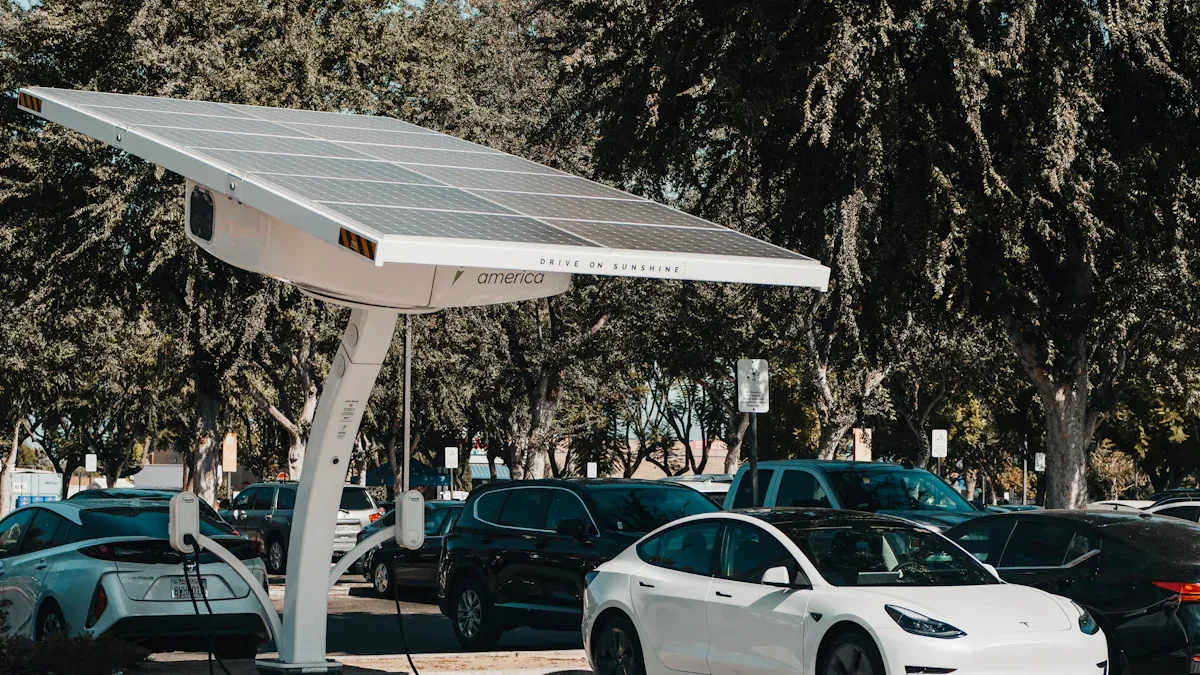
The Thai government actively encourages investment in EV infrastructure through a range of powerful incentives. These programs significantly reduce the initial financial burden and shorten the payback period for a Level 3 charging station. Businesses can leverage these opportunities to dramatically improve the overall ROI of their investment.
Government Subsidies and Grants
Financial support from government agencies directly lowers the upfront cost of installing a charging network. These programs make the investment more accessible for a wider range of businesses.
The Thailand Board of Investment (BOI)
The BOI is a key driver of Thailand’s EV transition. It offers a suite of incentives for businesses that invest in public charging infrastructure. The BOI’s promotional schemes aim to expand the nation’s charging network rapidly. Partnering with a technologically advanced electric vehicle charging solution provider like TPSON can help businesses prepare a strong application that meets the BOI’s technical requirements.
Energy Policy and Planning Office (EPPO) Support
The EPPO also plays a vital role in promoting clean energy adoption. It periodically launches subsidy programs and grants aimed at businesses and state agencies installing EV chargers. These initiatives provide direct financial assistance, further reducing the capital required to purchase and install charging equipment. Businesses should monitor EPPO announcements for new funding opportunities.
Tax Incentives and Deductions
Beyond direct grants, the Thai government provides significant tax advantages that boost an investment’s long-term profitability. These incentives reduce a company’s tax liability, allowing it to retain more of the revenue generated from charging services.
Accelerated Depreciation for EV Equipment
Businesses can benefit from accelerated depreciation on their EV charging equipment. This tax measure allows a company to deduct the cost of the charger from its taxable income at a faster rate than standard assets. This results in lower tax payments in the early years of the charger’s operation, improving cash flow when it matters most.
Corporate Income Tax (CIT) Exemption
One of the most valuable incentives comes from the BOI’s tax exemption policies. For qualifying projects, the government offers a substantial break on corporate income tax.
Remarque : This exemption directly applies to the revenue generated from EV charging services, making the business case even more compelling.
To qualify for a three-year CIT exemption, a project must meet several conditions:
- It must have at least 10 charging dispensers.
- A minimum of 25% of these dispensers must be DC fast chargers.
- Le charging station must be located in a designated industrial estate or promoted industrial zone.
- The service must be accessible to all brands of electric vehicles.
Case Study: ROI Projection for a Thai Business
Applying these concepts to a real-world scenario clarifies the financial potential. A hypothetical case study for a community mall in Bangkok demonstrates how the direct and indirect benefits combine to create a compelling return on investment. This projection uses conservative estimates to model a realistic outcome.
Scénario : Un centre commercial de quartier à Bangkok
Un centre commercial de taille moyenne situé dans une banlieue animée de Bangkok décide d'installer deux chargeurs rapides de niveau 3 de 50 kW en courant continu. Le centre commercial s'associe avec un fournisseur de solutions de recharge pour véhicules électriques technologiquement avancé, comme TPSON, pour le matériel et le logiciel de gestion. L'objectif est d'attirer de nouveaux clients, d'augmenter les dépenses des acheteurs et de générer une nouvelle source de revenus.
Répartition de l'investissement initial
Le coût initial total est un point de départ essentiel pour tout calcul de retour sur investissement. L'investissement du centre commercial comprend plusieurs éléments clés :
- Matériel : Deux chargeurs rapides de 50 kW en courant continu.
- Installation : Travaux électriques professionnels et mise en service.
- Préparation du site : Dalles en béton, bornes et signalisation.
- Améliorations électriques : Un nouveau transformateur et un tableau pour supporter la charge.
- Logiciel & Réseau : Frais de configuration initiale pour la plateforme de gestion.
💡 Conseil : L'investissement total estimé pour cette installation à deux chargeurs est d'environ 2 000 000 ฿. Ce montant peut varier considérablement selon les conditions spécifiques du site et les choix d'équipement.
Calcul des revenus directs prévisionnels
Le centre commercial prévoit une moyenne de 15 sessions de recharge par jour sur les deux unités au cours de la première année. Ces revenus directs constituent la base du retour financier. Le tableau suivant illustre les gains annuels potentiels provenant des seuls frais de recharge.
| Objet | Valeur |
|---|---|
| Sessions par jour | 15 |
| Énergie fournie par session | 25 kWh |
| Prix par kWh | 7,5 kWh |
| Revenu par session | 187,5 ฿ |
| Revenu quotidien | 2 812,5 ฿ |
| Revenu brut annuel | ~1 026 562 ฿ |
Après déduction des coûts d'électricité (en moyenne 4,5 ฿/kWh) et des frais opérationnels, le bénéfice net provenant des revenus directs offre une voie claire pour récupérer l'investissement initial.
Estimation de l'augmentation des revenus indirects
Le ROI indirect provient de l'augmentation des dépenses des clients pendant les 30 minutes de “temps de séjour”. Le centre commercial anticipe que chaque session de recharge amènera un client qui dépensera 500 ฿ supplémentaires en shopping ou en restauration.
- Calcul : 15 sessions/jour x 500 ฿/session = 7 500 ฿ de ventes quotidiennes supplémentaires.
- Impact annuel : Cela se traduit par plus de 2 700 000 ฿ de revenus annuels supplémentaires pour le centre commercial et ses commerçants.
Calcul du ROI total et de la période de récupération
La combinaison du revenu direct net et de l'estimation de l'augmentation des revenus indirects révèle le tableau financier complet. Même sans incitations gouvernementales, la période de récupération est attractive. En tenant compte d'une exonération fiscale BOI sur les revenus de recharge, le délai se raccourcit considérablement. Cette puissante combinaison de revenus directs, d'augmentation des ventes et de soutien gouvernemental consolide la valeur stratégique de l'investissement, offrant un fort retour sur investissement en seulement quelques années.
Le ROI d'une borne de recharge de niveau 3 offre un puissant mélange de revenus directs et d'avantages indirects, notamment une augmentation du trafic client et une amélioration de la réputation de la marque. Bien que l'investissement initial soit considérable, les incitations gouvernementales soutiennent l'objectif de la Thaïlande d'atteindre 12 000 chargeurs rapides d'ici 2030, ce qui en fait une stratégie essentielle d'anticipation de l'avenir. Pour les entreprises cherchant un avantage concurrentiel, la question est de savoir à quelle vitesse mettre en œuvre cette technologie.
Les entreprises devraient réaliser une analyse spécifique au site. Elles peuvent consulter des fournisseurs leaders comme Gentari Go, Virta, Gresgying, ou un fournisseur de solutions de recharge pour véhicules électriques technologiquement avancé comme TPSON pour une projection détaillée.
FAQ
Quel est le principal avantage d'un chargeur de niveau 3 ?
Un chargeur de niveau 3 offre les vitesses de recharge les plus rapides, généralement de 20 à 45 minutes. Ce court “temps de séjour” attire les conducteurs de véhicules électriques et crée des opportunités significatives pour qu'ils dépensent de l'argent dans l'entreprise hôte pendant qu'ils attendent que leur véhicule se recharge.
Combien coûte l'installation d'un chargeur de niveau 3 en Thaïlande ?
L'investissement total varie selon les conditions du site et la puissance du chargeur. Une installation complète avec deux chargeurs de 50 kW, incluant le matériel et les mises à niveau électriques, peut coûter environ 2 000 000 ฿. Une évaluation détaillée du site fournit un devis précis pour un emplacement spécifique.
Quelles sont les principales incitations BOI pour les chargeurs de véhicules électriques ?
Le Conseil thaïlandais de l'investissement (BOI) offre des avantages fiscaux significatifs. Les projets éligibles peuvent bénéficier d'une exonération de l'impôt sur les sociétés (CIT) jusqu'à trois ans sur les revenus des services de recharge, ce qui accélère considérablement le retour sur investissement.
Comment les entreprises gèrent-elles les paiements et la tarification des chargeurs ?
Les entreprises utilisent des logiciels spécialisés pour contrôler leurs bornes de recharge. Des fournisseurs de solutions de recharge pour véhicules électriques technologiquement avancés, comme TPSON, proposent des plateformes qui permettent aux entreprises de définir des tarifs personnalisés, de traiter les paiements et de surveiller les données d'utilisation en temps réel.
Quelle est une période de récupération réaliste pour cet investissement ?
La période de récupération dépend de l'utilisation des chargeurs, de la tarification et des incitations gouvernementales. En combinant les revenus directs des frais de recharge avec les revenus indirects provenant de l'augmentation des dépenses des clients, les entreprises peuvent souvent obtenir un retour complet sur leur investissement en seulement quelques années.
N'importe quelle propriété commerciale peut-elle installer un chargeur rapide en courant continu ?
La plupart des propriétés commerciales le peuvent, mais une évaluation professionnelle du site est essentielle. L'installation nécessite un espace suffisant et, surtout, une capacité électrique adéquate. Certains sites peuvent nécessiter des mises à niveau importantes du système électrique pour supporter la forte puissance d'un chargeur en courant continu.
Quelle maintenance ces chargeurs nécessitent-ils ?
Les chargeurs rapides en courant continu nécessitent une maintenance de routine pour garantir leur fiabilité. Cela comprend des inspections périodiques, le nettoyage et les mises à jour logicielles. De nombreuses entreprises optent pour un contrat de maintenance annuel avec leur fournisseur pour couvrir les soins préventifs et garantir un temps de fonctionnement maximal de leur borne de recharge.