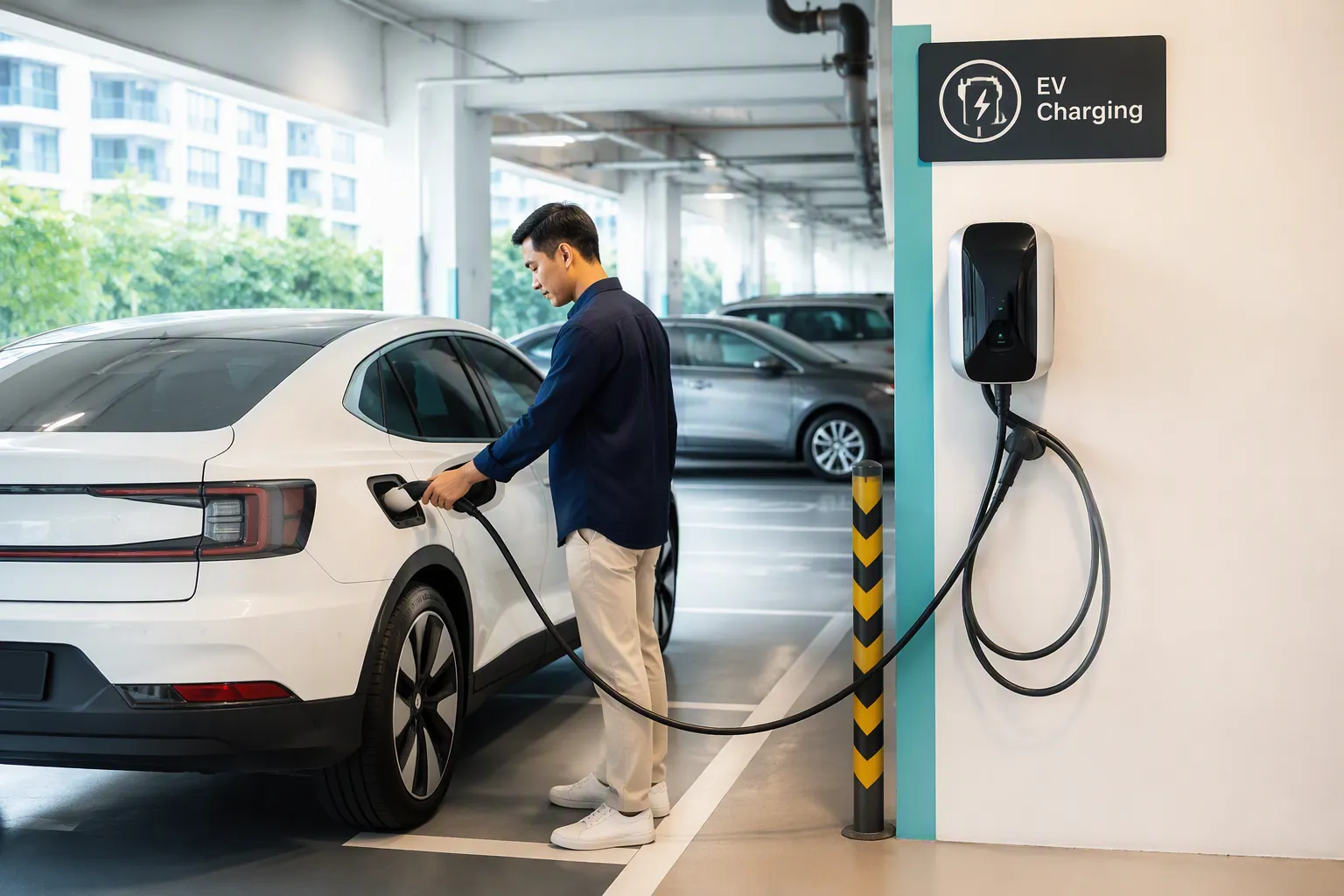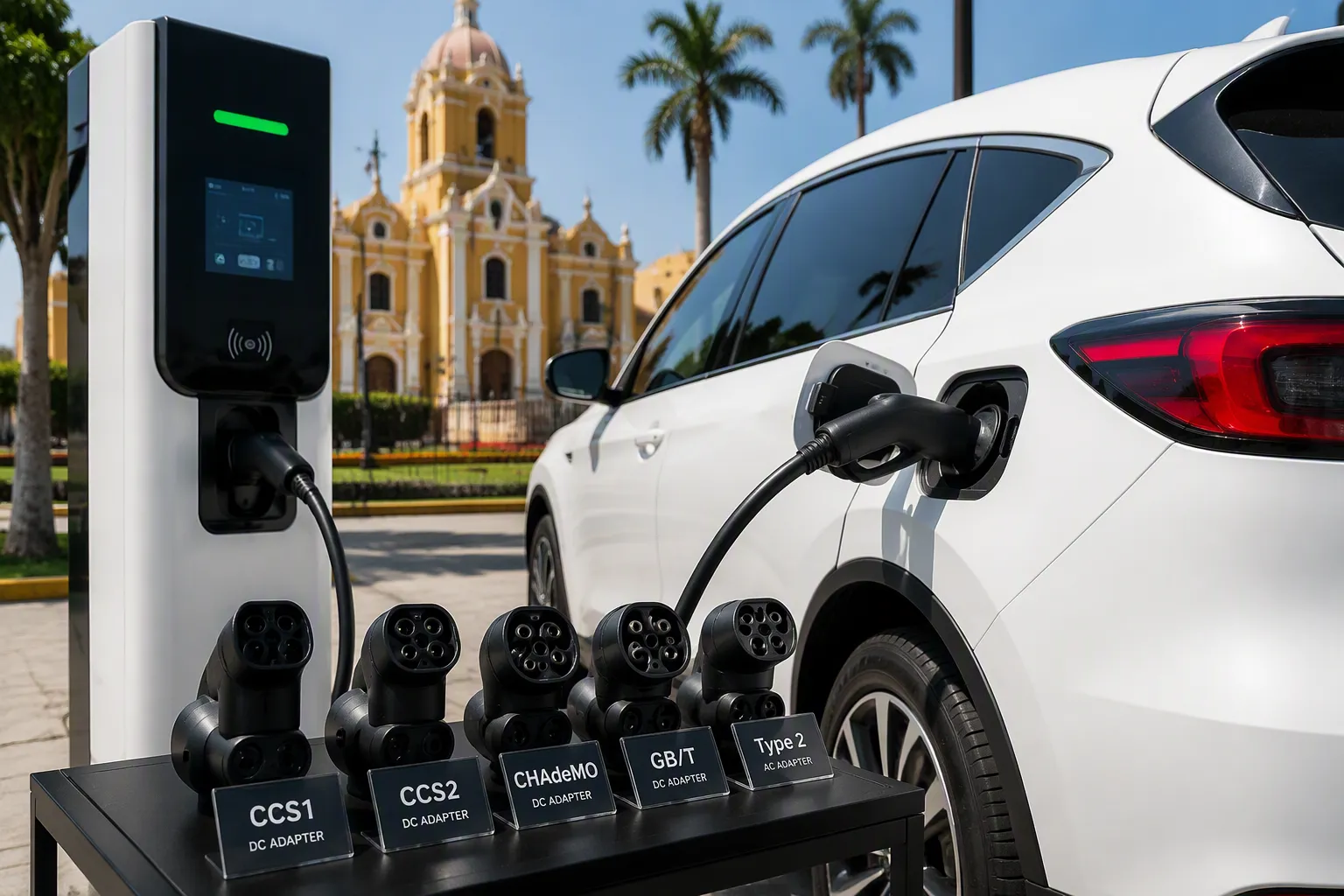

Spanish retailers can attract more customers by meeting modern consumer demands. Installing a commercial Chargeur de VE transforms a business into a planned destination for valuable EV drivers, increasing both customer dwell time and average spending.
Avancé Solutions de recharge pour véhicules électriques de premier plan Fabricants de chargeurs de VE like TPSON provide a significant competitive edge over businesses relying on simpler options like chargeurs portables pour VE.
This strategic investment secures a competitive advantage and future-proofs the retail location against evolving market trends.
Why EV Charging is a Powerful Customer Magnet for Spanish Retailers

Installing an electric vehicle charger is a strategic business decision. It moves beyond providing a simple amenity. It becomes a powerful tool to attract a new and valuable customer base, increase revenue, and build a forward-thinking brand identity. Retailers who adopt this technology position themselves for significant growth in Spain’s evolving market.
Tap into the High-Value EV Driver Market
The electric vehicle revolution brings a unique and affluent demographic to the forefront. Businesses can directly target these consumers by offering an essential service they actively seek.
Attracting Customers with Higher Disposable Income
EV drivers typically represent a high-value customer segment. Early adopters of electric vehicles often have greater disposable income. They are invested in technology and sustainability, and their purchasing habits reflect these values. Offering EV charging signals that a business caters to their modern lifestyle. This alignment attracts customers who are not only loyal but also have a higher capacity for in-store spending.
Becoming a Planned Destination for EV Drivers
EV drivers do not choose their stops randomly; they plan journeys around reliable charging points. A retail location with a charger becomes a deliberate destination. A comprehensive 2023 market research study of 25,000 EV drivers across Europe, including Spain, analyzed their driving habits and charging behaviors. This research confirms that drivers actively seek out locations to charge, making your business a crucial part of their travel plans. They will choose a supermarket, café, or shopping center specifically because it offers a place to recharge their vehicle.
Increase Dwell Time and Boost Average Sales
The time a customer spends charging their vehicle is a direct opportunity for increased sales. This “dwell time” is a key metric that EV charging dramatically improves.
The Link Between Charging Time and In-Store Spending
A typical charging session can last anywhere from 30 minutes to several hours. This captive time encourages drivers to enter the retail establishment. Instead of waiting in their car, they can shop, dine, or use other services.
Remarque : A customer charging for 45 minutes is far more likely to make additional purchases than one who is in and out in 5 minutes. This extended presence naturally leads to higher average transaction values.
Revenue Opportunities for Supermarkets, Restaurants, and Malls
Different retail types can leverage charging time in unique ways. This amenity helps businesses attract more customers and see tangible financial returns.
| Retail Type | Charging Opportunity | Potential Customer Action |
|---|---|---|
| Supermarché | A 30-45 minute charge | Completes a full weekly grocery shop. |
| Restaurant | A 60-90 minute charge | Enjoys a leisurely sit-down meal with multiple courses. |
| Centre commercial | A 2-3 hour charge | Visits multiple stores, watches a movie, or has a meal. |
Gain a Sustainable Competitive Advantage
In a crowded retail landscape, differentiation is essential. EV charging offers a clear and impactful way to stand out from competitors.
Differentiating Your Business as Modern and Eco-Friendly
Installation d'un Chargeur de VE sends a powerful message. It showcases a business as innovative, forward-thinking, and committed to environmental sustainability. This modern brand image resonates strongly with a growing number of consumers who prioritize eco-friendly practices. Partnering with a technologically advanced provider like TPSON for charging solutions further enhances this perception of quality and reliability, setting a business apart from those with no charging or inferior options.
Gaining Free Visibility on EV Charging Maps
Once installed, a charging station can be listed on numerous digital platforms. This provides a significant and continuous marketing advantage.
- EV Charging Apps: Drivers use apps like Electromaps, Chargemap, and PlugShare daily to find their next charge. A listing puts a business directly in their path.
- Navigation Systems: Google Maps and Apple Maps now feature EV charging filters, making a location easily discoverable during route planning.
This digital visibility functions as free advertising, directing a steady stream of new customers to the storefront with no recurring marketing cost.
Choosing the Right EV Charger for Your Retail Business
Selecting the correct EV charging hardware is a critical decision for any retail business. The ideal choice depends entirely on the typical customer’s behavior and visit duration. A business must align its charging infrastructure with its operational model to maximize customer attraction and return on investment.
Fast Chargers (DCFC) for Quick Turnaround
Direct Current Fast Chargers (DCFC) deliver high-power electricity directly to a vehicle’s battery. This technology enables rapid charging, making it perfect for customers on the move.
Ideal for Supermarkets and Fast-Food Locations
Retailers with high customer turnover benefit most from DCFC units. A supermarket customer completing a weekly shop or a diner at a fast-food restaurant typically stays for 30 to 60 minutes. A fast charger provides a significant range boost in that short time, making the location extremely convenient for EV drivers needing a quick top-up.
Serving Customers on Major Transit Routes
Businesses located along major motorways or busy urban corridors can capture a valuable transient market. EV drivers on long journeys plan their stops around fast-charging hubs. Installing a DCFC unit transforms a retail location into a strategic waypoint, attracting travelers who will likely make purchases while they wait.
Destination Chargers (Level 2) for Longer Stays
Level 2 AC chargers, often called destination chargers, provide a slower but steady charge over several hours. They are designed for environments where customers will be parked for an extended period.
Perfect for Shopping Centers, Cinemas, and Hotels
Shopping malls, cinemas, and hotels are ideal venues for Level 2 chargers. Customers at these locations expect to stay for two hours or more. Destination charging allows them to return to a fully or nearly-full vehicle. This valuable amenity enhances the overall customer experience and encourages longer, more profitable visits.
Enhancing the Experience for Sit-Down Restaurant Guests
A sit-down restaurant can significantly improve its service offering with destination charging. Guests can enjoy a leisurely meal without feeling rushed. The convenience of charging their vehicle during a 60-to-90-minute dinner makes the restaurant a more attractive choice over competitors without this facility.
Matching Charger Speed to Customer Behavior
The most effective strategy involves a careful analysis of business operations and customer needs. This ensures the investment meets driver expectations and delivers business value.
Analyse de la durée moyenne de visite de vos clients
Une entreprise doit d'abord comprendre ses propres schémas de fréquentation client. Analyser la durée moyenne d'une visite client est l'étape la plus importante. Ces données indiquent directement si l'entreprise a besoin de chargeurs rapides pour un renouvellement rapide ou de chargeurs de destination pour des séjours plus longs.
Équilibrer le coût d'installation avec les besoins des clients
Les coûts d'installation varient considérablement selon les types de chargeurs. Les entreprises doivent équilibrer cet investissement initial avec la valeur offerte aux clients. Pour de nombreux lieux publics, un mélange de vitesses de charge offre la plus grande flexibilité. Cette approche sert à la fois les visiteurs de courte durée et les clients de longue durée, augmentant la satisfaction des utilisateurs. Des fournisseurs technologiquement avancés comme TPSON proposent un portefeuille complet de solutions de recharge pour aider les entreprises à trouver cet équilibre parfait.
| Type de chargeur | Puissance de sortie | Cas d'utilisation typique | Temps de séjour idéal |
|---|---|---|---|
| Chargeur CA de niveau 2 | 7kW - 22kW | Chargement à destination | 1 – 8 heures |
| Chargeur rapide DC | 24kW – 50kW+ | Recharge rapide / Transit | 20 – 60 minutes |
Tirer parti des subventions espagnoles (Plan MOVES III) pour réduire les coûts
L'investissement initial pour l'infrastructure de recharge EV commerciale peut être une considération importante pour toute entreprise. Heureusement, le gouvernement espagnol offre un soutien financier substantiel grâce au programme Plan MOVES III. Cette initiative rend l'installation de bornes de recharge EV plus accessible et financièrement viable pour les détaillants à travers le pays.
Comprendre l'incitation du Plan MOVES III
Le Plan MOVES III est un programme gouvernemental conçu pour accélérer l'adoption de la mobilité électrique. Il accorde des subventions directes aux entreprises et aux particuliers pour l'achat de véhicules électriques et l'installation de points de recharge. Pour les détaillants, cela représente une opportunité puissante de compenser une grande partie du coût initial.
L'objectif du gouvernement d'étendre l'infrastructure de recharge
Le gouvernement espagnol vise à construire un réseau national robuste de bornes de recharge publiques et privées. Cette expansion est essentielle pour encourager l'adoption des VE et atteindre les objectifs nationaux de durabilité. Le programme d'incitation, valable jusqu'à la fin 2023, soutient directement cet objectif en facilitant la contribution des entreprises à l'infrastructure de recharge. En y participant, une entreprise de détail s'aligne sur un objectif national clé.
Comment les subventions réduisent considérablement votre investissement initial
La subvention du Plan MOVES III peut couvrir un pourcentage substantiel du coût total du projet. Le montant de l'aide dépend de la taille de l'entreprise et de la population de la municipalité où elle est située. Cette structure apporte un soutien supplémentaire aux petites entreprises et à celles situées dans des zones moins peuplées.
Les subventions abaissent considérablement la barrière financière à l'entrée, transformant une dépense en capital majeure en un investissement stratégique gérable.
| Taille de l'entreprise | Subvention pour les chargeurs d'accès public (Municipalités > 5 000 habitants) | Subvention pour les chargeurs d'accès public (Municipalités < 5 000 habitants) |
|---|---|---|
| Grande entreprise | 30% du coût éligible | 40% du coût éligible |
| Entreprise moyenne | 40% du coût éligible | 50% du coût éligible |
| Petite entreprise | 50% du coût éligible | 60% du coût éligible |
| Travailleur indépendant (Auto-entrepreneur) | 50% du coût éligible | 60% du coût éligible |
Déterminer votre éligibilité à la subvention
La plupart des entreprises et des professionnels indépendants en Espagne sont éligibles pour demander la subvention du Plan MOVES III. Comprendre les exigences spécifiques est la première étape pour obtenir ce financement précieux.
Exigences pour les entreprises et les travailleurs indépendants
L'éligibilité est large pour encourager une participation généralisée. Les principaux demandeurs pour les installations de recharge commerciales comprennent :
- Travailleurs indépendants (personnes physiques)
- Petites et moyennes entreprises (PME)
- Grandes entreprises
- Communautés de propriétaires (Communautés de propriétaires)
L'exigence clé est que la borne de recharge doit être installée sur un site en Espagne et destinée à un accès public ou à un usage privé dans un contexte professionnel.
Coûts éligibles couverts par la subvention
La subvention couvre plus que le matériel de recharge lui-même. Elle est conçue pour subventionner l'ensemble du projet du début à la fin. Les coûts éligibles comprennent généralement :
- Le prix d'achat de la/des borne(s) de recharge EV.
- Les travaux préparatoires à l'installation, tels que le génie civil et le câblage électrique.
- Le coût de l'installation professionnelle et de la légalisation du système.
- Le système de communication et le logiciel nécessaires pour faire fonctionner le chargeur.
Un guide simplifié du processus de demande
Naviguer dans le processus de demande nécessite une attention minutieuse aux détails. Le système est géré régionalement, donc la procédure exacte varie selon l'emplacement de l'entreprise.
Trouver le portail officiel de votre Communauté Autonome
Le gouvernement central alloue les fonds MOVES III aux 17 Communautés Autonomes d'Espagne. Chaque communauté gère ensuite son propre processus de demande et de distribution. Une entreprise doit identifier et utiliser le portail en ligne officiel de sa région spécifique (par exemple, Comunidad de Madrid, Cataluña, Andalucía) pour soumettre sa demande.
Rassembler la documentation nécessaire pour la soumission
La préparation est la clé d'une demande réussie. Bien que les exigences spécifiques puissent varier selon la région, les entreprises doivent généralement compiler un ensemble complet de documents.
Conseil de pro : Le processus de demande peut être complexe. Il est fortement recommandé de s'associer à un fournisseur d'installation clé en main. Des entreprises technologiquement avancées comme TPSON assistent souvent dans le processus de demande de subvention, garantissant que toutes les spécifications techniques et la documentation sont correctement préparées et soumises.
Les documents généralement requis comprennent :
- Formulaire de demande provenant du portail régional.
- Documents d'identification de l'entreprise (NIF).
- A detailed project proposal (technical project proposal).
- Quotes for the hardware and installation work.
- Proof of being up-to-date with tax and Social Security obligations.
Strategic Installation to Attract More Customers

A successful EV charging installation goes beyond selecting the right hardware. The physical placement of the chargers and the technical setup are critical factors that determine user experience and return on investment. A strategic approach ensures maximum visibility, safety, and operational efficiency.
Choosing the Optimal Location for Your Chargers
Le location of a charging station directly impacts its usage and effectiveness. A well-placed charger is convenient and inviting, making a positive first impression on EV drivers.
Maximizing Visibility and Accessibility from the Street
Chargers should be easy to find. Placing them in highly visible spots, preferably near the entrance to the parking area, captures the attention of passing EV drivers. This placement turns the amenity into a powerful marketing tool. Key considerations include:
- Clear Signage: Use prominent signs to guide drivers from the street to the charging bays.
- Easy Access: Ensure there is ample space for vehicles to maneuver into and out of the charging spots without obstructing traffic flow.
- Strategic Placement: Position chargers to be seen easily, reinforcing the business’s modern image.
Ensuring Placement in Well-Lit and Secure Areas
Driver safety is paramount. Customers will avoid chargers in dark, isolated corners of a parking lot, especially after hours. A business must install its charging stations in locations that feel secure. Placing them close to the main building entrance under good lighting enhances user confidence. The installation should also comply with accessibility standards like PAS 1899, ensuring enough space for users with mobility aids and that screens and cables are easy to reach.
Partnering with a Certified Installer in Spain
Installation d'un commercial EV charger is a complex electrical project that requires professional expertise. Partnering with a certified specialist is essential for a safe, legal, and successful installation.
The Importance of Professional and Legal Installation
A certified installer guarantees that the entire system complies with Spain’s stringent electrical regulations, including the Low-Voltage Electrical Regulations (REBT). Professional installation prevents electrical hazards, ensures the charger operates correctly, and is a prerequisite for legalizing the system and qualifying for grants like Plan MOVES III.
What to Look for in a Turnkey Installation Partner
A turnkey installation partner manages the entire project from start to finish. This simplifies the process for the retail business owner.
Remarque : An ideal partner conducts a site survey, recommends the best hardware, handles all civil and electrical work, manages the legalization paperwork, and can even assist with grant applications. Des fournisseurs à la pointe de la technologie like TPSON often connect businesses with certified partners who offer these comprehensive services.
Assessing Power Supply and Grid Connection
EV chargers add a significant electrical load to a property. A thorough assessment of the existing power supply is a critical first step before any installation work begins.
Evaluating Your Current Electrical Capacity
A business must determine if its current electrical infrastructure can support the new chargers. A Level 2 charger typically requires between 7kW and 22kW, tandis qu'une single DC fast charger can demand 50kW to 350kW or more. An electrical engineer or certified installer must analyze the building’s main electrical panel to confirm there is sufficient spare capacity.
Coordinating with Your Local Utility Provider
If the existing electrical service is insufficient, an upgrade will be necessary. This process requires close coordination with the local Spanish utility provider (e.g., Endesa, Iberdrola). The installation partner will typically manage this communication to request a power increase, ensuring the grid connection can safely handle the additional demand from the new charging stations.
Calculating the ROI of Your EV Charging Station
An EV charging station is a strategic asset with a measurable return on investment (ROI). Businesses can calculate this return by analyzing direct revenue, increased in-store sales, and significant long-term benefits. A clear understanding of these factors helps justify the initial investment and maximize profitability.
Establishing a Smart Pricing Strategy
A flexible pricing strategy is essential for balancing customer attraction with revenue generation. The right model depends on the business’s specific goals, whether that is maximizing direct profit or driving foot traffic.
Pricing Models: Per kWh vs. Per Minute
Businesses in Spain have several established models for charging customers. Each option offers distinct advantages for the retailer and the EV driver.
- Per Kilowatt-hour (kWh): This is the most transparent and common method. Customers pay for the exact amount of energy they consume, with typical rates ranging from €0.40 to €0.79 per kWh. Major networks like Tesla’s Superchargers use this model, even offering memberships for lower per-kWh rates to frequent users.
- Per Minute: This model charges for the time the vehicle is connected. It can be effective for encouraging vehicle turnover in busy locations but may be unpopular with drivers if charging speeds are slow.
- Session Fee or Subscription: A flat fee per charging session or a monthly subscription can also be offered. This provides predictable costs for users and a steady revenue stream for the business.
Offering Free Charging as a Loss Leader
Some retailers choose to offer charging for free as a powerful marketing tool. This strategy, known as a “loss leader,” attracts high-value EV drivers to the location. The cost of the electricity is offset by the significant increase in in-store spending from customers who shop or dine while their vehicle charges.
Unlocking New Revenue Streams
EV chargers create new income opportunities beyond a business’s primary offerings. These streams come from both direct energy sales and indirect increases in customer spending.
Direct Profit from Electricity Sales
Setting a price per kWh that is higher than the business’s commercial electricity rate generates a direct profit on every charging session. Advanced charging solutions from providers like TPSON include management software that makes it easy to set prices, monitor usage, and track revenue, turning the car park into a profit center.
Increased In-Store Sales from Higher Footfall
The most significant financial benefit often comes from increased customer spending. EV drivers have a guaranteed dwell time of 30 minutes to several hours. This captive audience is highly likely to enter the store, leading to higher average transaction values and overall sales volume.
Factoring in Long-Term Benefits
The full ROI of an EV charger includes valuable, long-term advantages that strengthen the business’s market position. These intangible benefits contribute to sustained growth and success.
Enhanced Brand Image and Customer Loyalty
Offering EV charging positions a business as modern, sustainable, and customer-focused. This positive brand image builds strong loyalty among EV drivers, who will repeatedly choose a location that meets their needs. It creates a competitive advantage that is difficult for others to replicate.
Préparer l'avenir de votre implantation commerciale
Electric mobility is the future of transportation in Spain. Installing charging infrastructure today is a forward-thinking move that prepares a business for tomorrow’s customer. It ensures the location remains a relevant and essential destination as the number of EVs on the road continues to grow exponentially.
Setting Up User-Friendly Payment and Access Systems
A seamless payment and access system is crucial for a positive customer experience. The method a driver uses to start and pay for a charge is just as important as the charging speed itself. Offering multiple, intuitive options ensures that every EV driver can use the service with ease, encouraging repeat visits.
Mobile App and QR Code Solutions
Digital solutions offer flexibility and convenience, catering to the tech-savvy EV driver. These methods leverage the smartphones that customers already carry.
Offering Flexibility Through Major Charging Networks
Modern charging stations can integrate with established EV charging network applications. This allows drivers to use their existing accounts to find, activate, and pay for charging sessions. A business gains immediate visibility within these popular apps, attracting a broad user base without needing to develop a proprietary system.
The Benefits of a Pay-as-You-Go System
A simple QR code on the charger provides a direct, web-based payment portal. This pay-as-you-go option is perfect for tourists or infrequent visitors. Customers simply scan the code, enter their payment details, and start charging. It eliminates the need to download an app or register for a service, removing a significant barrier to use.
RFID Cards and Contactless Options
While apps are popular, providing physical payment methods ensures universal accessibility. These options are reliable and familiar to a wide range of customers.
Catering to All Customer Preferences
Radio-Frequency Identification (RFID) cards offer a dependable alternative to mobile apps. They are particularly useful in underground parking or areas with poor mobile signal.
- They provide quick and convenient authorization for a charging session.
- They remain reliable even when network coverage is poor.
- Individually identified cards allow a business to log power consumption for specific users, which is ideal for generating sustainability reports or managing employee charging.
Implementing Familiar Credit Card Payment Terminals
The most universally accepted payment method is a standard credit card terminal. Equipping chargers with contactless payment readers allows customers to pay with a simple tap of their credit card, debit card, or smartphone wallet. This familiar process inspires confidence and serves all customers, regardless of their technical preference.
Integrating with Your Business Operations
An EV charger becomes a powerful business tool when its operation is integrated with the retailer’s primary goals. Advanced software makes this integration simple and effective.
Offering Charging Validation for In-Store Purchases
A business can directly link EV charging to sales by offering validation. For example, a customer who spends a certain amount in-store can receive a code for a free or discounted charging session. This strategy provides a clear incentive for EV drivers to shop or dine at the location.
Using Charging Data to Understand Customer Behavior
Technologically advanced providers like TPSON offer management software that captures valuable data. This software records essential transaction details like the date, time, and duration of each charging session. By analyzing this information, a business can infer customer visit frequency and duration, gaining powerful insights to optimize staffing, promotions, and operations.
Marketing Your New Charging Station to Drive Footfall
Installing an EV charger is the first step; effective marketing is what turns that investment into a powerful customer magnet. A proactive promotional strategy ensures that EV drivers not only know about the new amenity but also choose the retail location over competitors. This targeted marketing is essential to maximize visibility and drive new traffic to the business.
Get Listed on Essential EV Charging Apps
EV drivers plan their routes and stops using specialized mobile applications. A business must ensure its new charging station is listed on these key platforms to become a planned destination.
Registering on Electromaps, Chargemap, and PlugShare
Listing a charger on the most popular apps in Spain is non-negotiable. These platforms put a business directly on the map for thousands of potential customers actively searching for a place to charge.
- Electromaps: This is a vital application for the Spanish market. It provides drivers with real-time data on charger location, availability, and pricing, making it a go-to resource.
- Carte de charge: With a massive footprint across Europe, Chargemap helps drivers find charging points and filter them by speed, connector type, and network.
Registering on these platforms, along with the globally recognized PlugShare, guarantees visibility to both local drivers and tourists.
Optimizing Your Listing on Google Maps and Apple Maps
Mainstream navigation apps are now critical tools for EV drivers. Businesses should claim and optimize their listings on Google Maps and Apple Maps. This includes adding the EV charger as an amenity, specifying the number of chargers, connector types, and power output. An accurate and detailed listing makes the location easily discoverable during everyday route planning.
Promote Your New Amenity On-Site and Online
Active promotion builds excitement and informs the existing customer base about the new service. A combination of physical and digital announcements creates a comprehensive marketing push.
Designing Clear Signage for Your Parking Area
Effective on-site marketing begins with clear and visible signage. Large, well-placed signs should guide drivers from the street directly to the charging bays. This signage not only helps EV drivers find the chargers easily but also acts as a powerful advertisement to all passing traffic, showcasing the business as modern and convenient.
Annonce sur les réseaux sociaux, votre site web et votre profil Google Business
Une entreprise devrait créer une annonce dédiée pour ses canaux numériques. Elle peut publier des photos des nouveaux chargeurs sur des plateformes de médias sociaux comme Instagram et Facebook. Annoncer un partenariat avec un fournisseur technologiquement avancé comme TPSON peut encore renforcer l'image innovante de l'entreprise. Le site web de l'entreprise et le profil Google Business doivent également être mis à jour avec une bannière ou une publication bien visible concernant la nouvelle installation de recharge.
Créer des offres spéciales pour les conducteurs de véhicules électriques
Les promotions spéciales offrent une incitation directe pour que les conducteurs de VE se rechargent sur place et dépensent de l'argent en magasin. Ces offres comblent l'écart entre la fourniture d'un service et la génération de revenus.
“ Rechargez et Économisez ” : Des réductions pour stimuler les ventes en magasin
Une stratégie simple mais efficace consiste à lier la recharge aux achats en magasin. Cette tactique encourage les conducteurs à entrer dans le commerce plutôt que d'attendre dans leur voiture.
Offrir une réduction sur un café, une pâtisserie gratuite ou 10 % de réduction sur un achat total pour tout client rechargeant activement son véhicule. Ce modèle “ Rechargez et Économisez ” convertit directement le temps d'attente en ventes.
Programmes de fidélité pour les clients réguliers de recharge de VE
Un programme de fidélité encourage les achats répétés des conducteurs de VE locaux. Un simple carte de fidélité ou système numérique offrant une Chargement gratuit session gratuite après un certain nombre de visites payantes peut constituer une base de clientèle fidèle. Cette stratégie aide à attirer plus de clients sur le long terme, transformant un visiteur ponctuel en un client régulier.
Installer un chargeur pour VE est une stratégie éprouvée pour les détaillants espagnols. Cela aide à attirer plus de clients, augmenter les ventes en magasin et positionner une entreprise comme leader du marché. Les incitations gouvernementales comme le Plan MOVES III rendent l'investissement initial plus accessible que jamais.
Faites le premier pas pour préparer l'avenir de votre entreprise. Contactez un installateur certifié pour un devis personnalisé. Profitez dès aujourd'hui du marché croissant de la mobilité électrique.
FAQ
Combien coûte l'installation d'un chargeur pour VE commercial ?
Les coûts d'installation varient selon le type de chargeur et la complexité du site. Un chargeur de niveau 2 est moins cher qu'un chargeur rapide à courant continu. Les subventions gouvernementales comme le Plan MOVES III peuvent réduire considérablement l'investissement final pour une entreprise. Un installateur certifié fournit un devis détaillé après une évaluation du site.
Toute entreprise en Espagne peut-elle demander la subvention du Plan MOVES III ?
La plupart des entités légales peuvent demander la subvention. Cela inclut les grandes entreprises, les petites et moyennes entreprises (PME) et les travailleurs indépendants (autónomos). Le montant de la subvention dépend souvent de la taille de l'entreprise et de sa localisation, avec des taux plus élevés pour les entreprises situées dans de petites municipalités.
Combien de temps dure le processus d'installation ?
Le calendrier dépend de la complexité du projet. Une installation simple peut prendre quelques jours. Les projets nécessitant des mises à niveau électriques ou des travaux de génie civil importants peuvent prendre plusieurs semaines. Un partenaire d'installation professionnel fournit un calendrier clair après l'étude de site initiale et la phase de planification.
Quelle maintenance les chargeurs pour VE nécessitent-ils ?
Les chargeurs pour VE modernes nécessitent très peu de maintenance. Les fournisseurs technologiquement avancés comme TPSON conçoivent leurs unités pour la durabilité. Les contrôles réguliers impliquent des mises à jour logicielles et des inspections physiques pour détecter d'éventuels dommages. Un contrat de maintenance avec l'installateur peut garantir des performances optimales et un temps de fonctionnement maximal pour la borne de recharge.
Comment une entreprise fixe-t-elle le prix de la recharge ?
Les entreprises ont un contrôle total sur la tarification. Elles peuvent facturer au kilowattheure (kWh), à la minute, ou offrir la recharge gratuitement pour attirer les clients. Un logiciel de gestion permet d'ajuster facilement les prix, permettant à une entreprise d'équilibrer la génération de revenus avec sa stratégie d'attraction de clientèle.
Ai-je besoin d'un permis spécial pour installer une borne de recharge publique ?
Oui, Oui, l'installation d'une borne de recharge publique pour VE nécessite une légalisation. Un installateur certifié gère ce processus. Cela implique de soumettre un projet technique (technical project proposalProyecto Técnico.