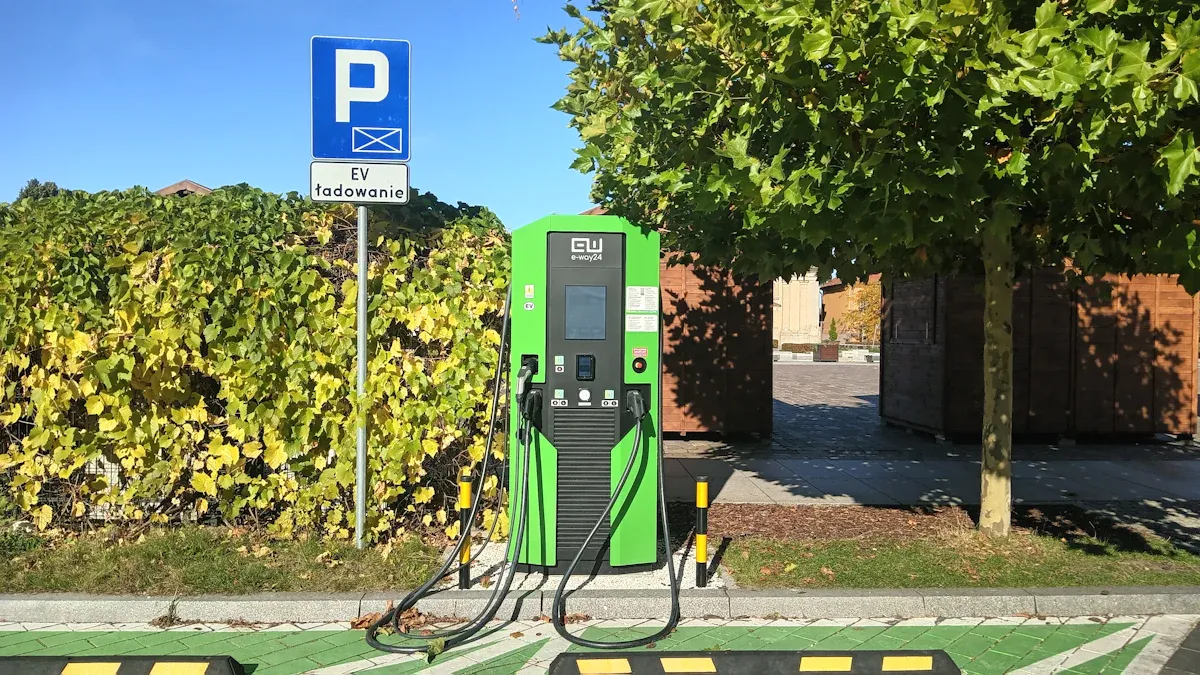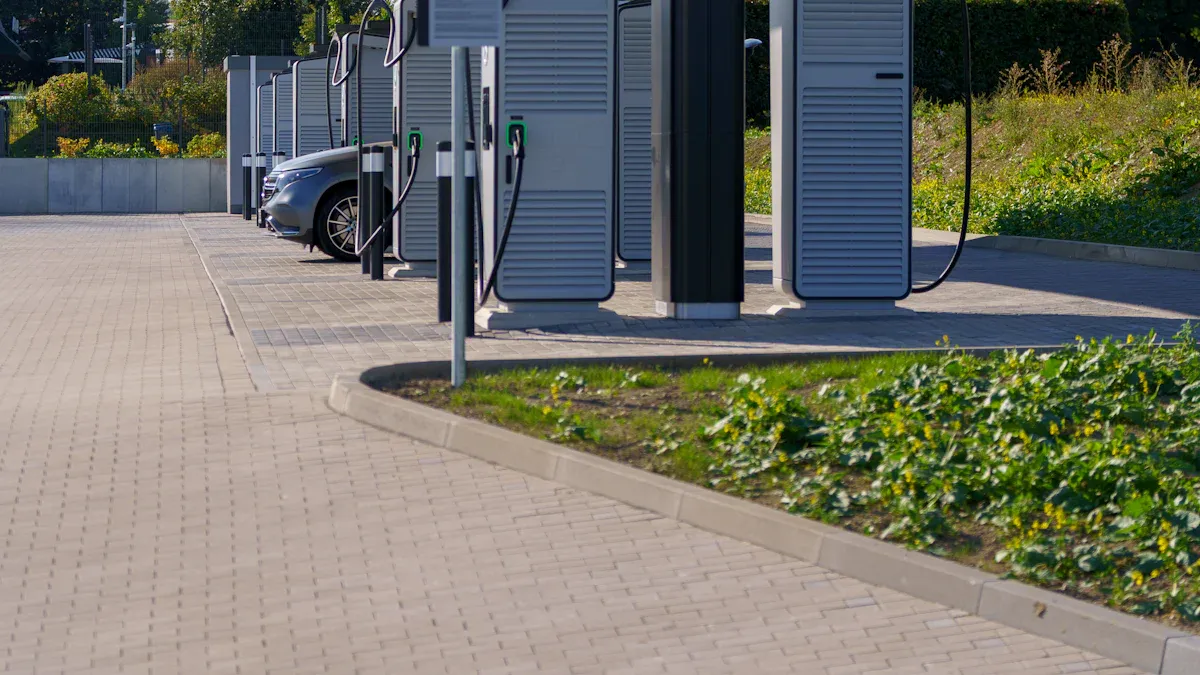
Thailand has seen a rising interest in electric vehicles, driving demand for diverse EV charger types. The most popular options include AC chargers (Type 1 and Type 2), DC fast chargers (CCS Combo and CHAdeMO), and ultra-fast chargers at strategic location points. Leading EV charger manufacturers offer reliable solutions for both public and home use.
Most widely used EV Charger types in Thailand are Type 2 AC chargers and CCS Combo DC fast chargers due to their compatibility with many vehicle brands.
Overview of EV Charger Types in Thailand
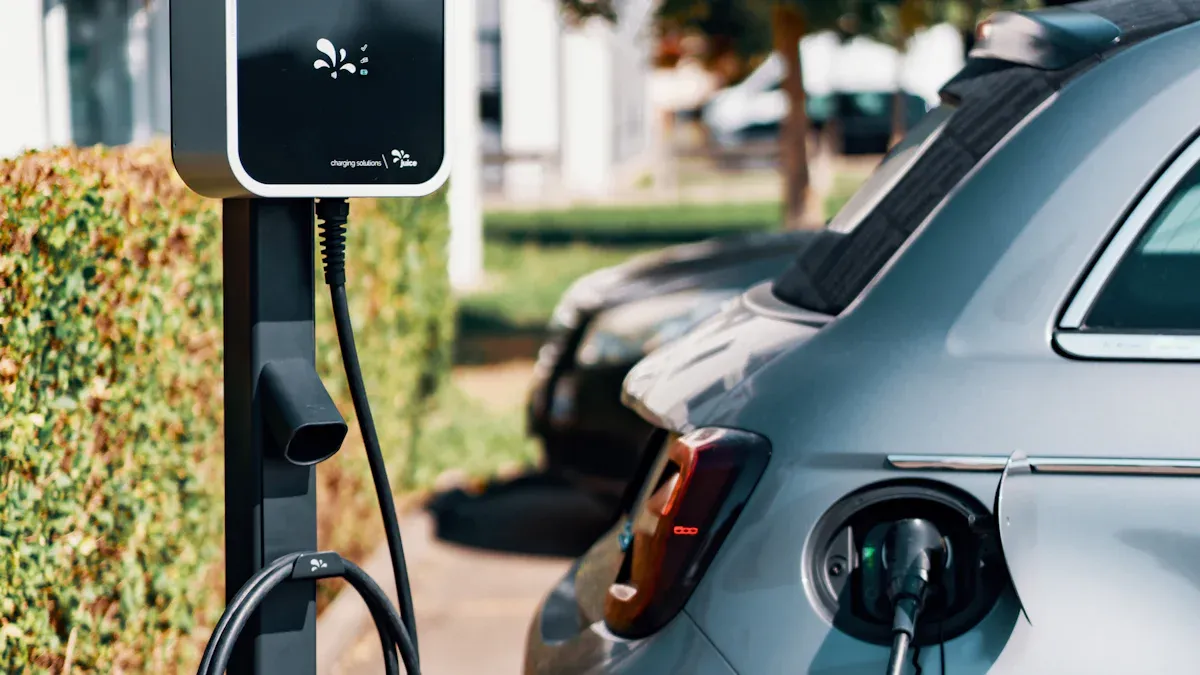
Thailand’s rapid adoption of electric vehicles has driven the expansion of diverse EV charger types. The country’s charging infrastructure now supports a wide range of charging needs, from daily commuting to long-distance travel. This section explores the most common EV charging station technologies, their technical features, and their roles in Thailand’s evolving electric vehicle charging landscape.
AC Chargers for Electric Vehicle Charging
AC chargers form the backbone of Thailand’s residential and public EV charging infrastructure. These chargers provide a stable and efficient charging experience, making them ideal for both home and commercial use.
Type 1 (SAE J1772)
Type 1 AC chargers use the SAE J1772 connector, which is popular among Japanese and American EV models. These chargers typically deliver single-phase power, supporting moderate charging speeds suitable for overnight charging at home or in office parking lots.
- Advanced EV charging station systems in Thailand support green upgrades for local transportation infrastructure.
- Many residential parking lots feature AC chargers, offering convenient and efficient charging solutions for residents.
- The stable charging experience provided by Type 1 chargers promotes electric mobility and enhances daily accessibility to green energy.
Type 2 (IEC 62196)
Type 2 AC chargers, based on the IEC 62196 standard, have become the most widely used EV charger type in Thailand. European and many new Asian EVs use this connector, which supports both single-phase and three-phase power.
- Type 2 chargers offer faster charging compared to Type 1, making them suitable for public EV charging stations and commercial locations.
- By 2025, Thailand’s charging infrastructure is expected to see significant growth in AC charger installations, reflecting strong market trends.
- These chargers play a key role in supporting the country’s transition to sustainable transportation.
DC Fast Chargers in EV Charging Station Networks
DC fast chargers enable rapid charging for EVs, making them essential for public charging infrastructure and highway networks. These chargers bypass the vehicle’s onboard charger, delivering DC power directly to the battery for much faster charging times.
CCS Combo
The CCS Combo standard dominates Thailand’s DC fast charging infrastructure. It combines AC and DC charging capabilities in a single connector, supporting a wide range of EV models.
- CCS Combo chargers are present at most public EV charging stations, especially along major highways and urban centers.
- These chargers deliver high power output, reducing charging times and supporting long-distance travel for EV owners.
CHAdeMO
CHAdeMO chargers, developed in Japan, remain relevant in Thailand’s EV charging station network, especially for Japanese EV brands.
- CHAdeMO supports DC fast charging with a dedicated connector, offering compatibility for several popular EV models.
- Although CCS Combo is more prevalent, CHAdeMO chargers continue to serve a significant portion of the EV market.
| Power Output | Charging Speed (0-80%) | Estimated Full Charge Time (60kWh Battery) |
|---|---|---|
| 40kW DC Fast Charger | ~240 km per hour | ~60-70 minutes |
| 60kW DC Fast Charger | ~360 km per hour | ~40-50 minutes |
| 120kW DC Fast Charger | ~720 km per hour | ~20-25 minutes |
| 180kW DC Fast Charger | ~1080 km per hour | ~15-20 minutes |
| 240kW DC Fast Charger | ~1440 km per hour | ~10-15 minutes |
| 480kW Ultra-Fast Charger | ~2880 km per hour | ~5-10 minutes |

Ultra-Fast Chargers and Charging Infrastructure
Ultra-fast chargers represent the latest advancement in Thailand’s EV charging infrastructure. These high-power DC chargers dramatically reduce charging times, making them ideal for busy urban centers and highway corridors.
High-Power DC Chargers
High-power DC chargers deliver power ratings from 150 kW up to 480 kW, enabling ultra-fast charging for compatible EVs.
- Ultra-fast charging stations in Thailand are being installed along highways and major transportation corridors, with power ratings of 150–350 kW.
- The development of ultra-fast charging infrastructure significantly reduces charging times, enhancing the convenience of EV ownership.
- XPENG and Charge+ have partnered to install at least 20 new DC fast charging sites in Thailand, with four already operational in urban centers like Bangkok.
- These sites feature power ratings up to 480 kW DC, supporting the latest generation of EVs.
| Feature | Ultra-Fast Chargers | Standard DC Fast Chargers |
|---|---|---|
| Charging Time | Up to 80% in 10 minutes | Varies, generally longer |
| Power Output | Higher than standard DC fast chargers | Constant power, typically lower |
| Voltage Range | 200 volts to 1000 volts | 200 volts to 1000 volts |
- DC fast chargers operate within a voltage range of 200 to 1000 volts.
- The battery management system regulates the charging process for safety and efficiency.
- Ultra-fast chargers are designed to minimize charging time compared to standard DC fast chargers.
Note: The expansion of ultra-fast charging infrastructure in Thailand supports the country’s goal of making electric vehicle charging more accessible and efficient for all users.
Wallbox and Portable EV Charger Types
Thailand’s EV charging landscape features a growing selection of wallbox and portable chargers. These solutions offer flexibility for residential users and businesses. Wallbox chargers provide fixed, high-power charging at homes and workplaces. Portable chargers deliver convenience for drivers who need charging on the go or in locations without permanent infrastructure.
Wallbox Chargers (e.g., Teison Wallbox Pro-smart OCPP, Schneider Electric, Teltonika)
Wallbox chargers have become a preferred choice for many EV owners in Thailand. These devices mount on walls in garages, parking lots, or commercial buildings. Wallbox chargers deliver higher power output than standard portable chargers, supporting faster charging times and improved safety features.
Manufacturers such as Teison, Schneider Electric, and Teltonika supply advanced wallbox models. These chargers often include smart connectivity, remote monitoring, and compatibility with OCPP (Open Charge Point Protocol) for integration with charging networks.
Wallbox chargers support both single-phase and three-phase power, making them suitable for a wide range of EV models in Thailand.
The following table highlights popular wallbox charger models available in the Thai market:
| Model | Type | Price (USD) |
|---|---|---|
| 11KW Type2 Wallbox 3-phase 380V 16A | Wallbox | $269.00 – $469.00 |
| 22KW Type2 Wallbox 3-phase 380V 16A | Wallbox | $299.00 – $469.00 |
| Daolar Mobile Wallbox 11KW 3-Phase 16A | Wallbox | $199.00 – $279.00 |
Wallbox chargers offer several advantages:
- Faster charging speeds compared to portable chargers.
- Enhanced safety features, including overcurrent and surge protection.
- Integration with smart home systems and mobile apps.
- Support for multiple connector standards, such as Type 2.
These features make wallbox chargers an attractive option for homeowners and businesses seeking reliable and efficient EV charging.
Portable Chargers
Portable EV chargers provide flexibility for drivers who require charging in various locations. These chargers connect directly to standard electrical outlets, allowing users to charge their vehicles at home, at work, or during travel. Portable chargers suit emergency situations or areas where permanent charging stations are unavailable.
Manufacturers offer a range of portable charger models with different power ratings and connector types. Many portable chargers feature long cables, robust construction, and compatibility with popular EV standards.
The table below presents common portable charger models found in Thailand:
| Model | Type | Price (USD) |
|---|---|---|
| GB/T 11KW 16A 3 Phase | Portable EV Charger with 5m Cable | $208.00 |
| Feyree Portable EV Charger Type1 J1772 | 32A 7KW 1-Phase | $209.00 |
| feyree EV Charger Wallbox Tesla NACS | 32A 7KW 1Phase | $210.00 |
| 3.5KW Type2 Portable EV Charger 1-phase | Portable Charger | $149.00 – $199.00 |
Portable chargers offer several benefits:
- Easy transport and storage.
- Compatibility with multiple EV models and connector types.
- Affordable pricing for entry-level EV owners.
- Simple plug-and-play operation.
Drivers in Thailand often carry portable chargers for added peace of mind during long journeys or when visiting areas with limited charging infrastructure.
Wallbox and portable chargers together provide comprehensive solutions for Thailand’s diverse EV charging needs. Wallbox chargers deliver speed and smart features for fixed installations. Portable chargers offer flexibility and convenience for mobile charging scenarios. Both types contribute to the growth of Thailand’s electric mobility ecosystem.
Key Features and Benefits of EV Charger Types

Charging Speed and Power Output
AC Charger Speeds
AC chargers form the foundation of electric vehicle charging in Thailand. These charging solutions typically deliver power between 3.7 kW and 22 kW. Most residential and commercial locations use AC chargers for daily charging needs. Drivers often rely on these chargers for overnight charging, which suits the demand for routine commutes. AC charging solutions support sustainable transportation by offering reliable and accessible infrastructure.
DC Fast Charger Speeds
DC fast charging solutions address the growing demand for rapid charging in Thailand. These chargers deliver power from 50 kW up to 180 kW. Many public charging stations and highway corridors feature DC fast chargers. Drivers can recharge their EV batteries to 80% in less than an hour. Fast charging infrastructure supports long-distance travel and reduces downtime for electric vehicles.
Ultra-Fast Charger Speeds
Ultra-fast charging solutions represent the latest advancement in Thailand’s charging infrastructure. These chargers provide power outputs from 150 kW to 480 kW. Ultra-fast chargers can replenish an EV battery to 80% in as little as 10 minutes. This rapid charging capability meets the demand for quick turnaround times at busy locations. Ultra-fast charging infrastructure supports the expansion of sustainable electric vehicle charging across the country.
Compatibility with EV Models in Thailand
Popular EVs Supported
Thailand’s charging infrastructure supports a wide range of electric vehicles. Popular models include those from Japanese, European, and Chinese manufacturers. Charging solutions must accommodate different connector standards to meet the diverse demand from EV owners.
Connector Types and Standards
The table below summarizes the main connector standards used in Thailand and their descriptions:
| Connector Standard | Description |
|---|---|
| CCS | Combined Charging System, recommended as the standard for all EVs |
| CHAdeMO | A fast charging standard primarily used by Japanese manufacturers |
| GB/T | A standard used in China for electric vehicle charging |
Charging solutions in Thailand often support multiple connector types. This approach ensures compatibility with most electric vehicles on the market. The adoption of these standards strengthens the country’s charging infrastructure and supports sustainable mobility.
Installation and Maintenance of Charging Infrastructure
Home vs. Public Chargers
Installing EV charging infrastructure at home or in public spaces requires careful planning. Home installations often involve upgrades to electrical systems. Public charging stations must meet higher demand and safety standards. The following steps outline typical installation requirements in Thailand:
- Change the electric meter to at least 30 amps.
- Increase the size of the wires in the house to 25 square millimeters.
- Install a 100 amps circuit breaker (MCB).
- Install a minimum 40 amps circuit breaker in the Main Distribution Board (MDB).
- Install a Residual Current Device (RCD) for safety.
- Ensure a qualified electrician performs the installation.
These steps help ensure safe and reliable charging solutions for both home and public infrastructure.
Service and Support
Regular maintenance keeps charging infrastructure operating efficiently. Service providers recommend the following practices:
- Wipe down charger surfaces regularly.
- Ensure ventilation openings remain unobstructed.
- Check for physical damage and loose connections.
- Inspect cables and verify safety features.
- Replace damaged cables or connectors.
- Verify the power supply’s voltage, current, and power ratings.
- Establish a regular maintenance schedule, including cleaning, inspections, and software updates.
Proper service and support extend the lifespan of charging solutions and maintain the reliability of Thailand’s electric vehicle charging infrastructure.
Top EV Charger Manufacturers and Providers in Thailand
Thailand’s electric vehicle market relies on robust charging infrastructure. The top EV charger manufacturers and providers play a crucial role in expanding access and reliability for drivers. The following section examines three leading providers: EA Anywhere, PTT EV Station Pluz, and ChargeNow (BMW).
EA Anywhere
Network Coverage
EA Anywhere operates one of the largest EV charging networks in Thailand. The company manages hundreds of public charging stations, with a strong presence in urban centers and along major highways. Their network supports both AC and DC fast chargers, ensuring compatibility with a wide range of electric vehicles. EA Anywhere contributes to the total installed charger count in Thailand, which has reached 30,000 units, including 800 public chargers.
Pricing Structure
EA Anywhere offers a transparent pricing model. Users pay per kilowatt-hour (kWh) consumed, with rates varying by charger type and location. The provider enables payment through mobile applications and RFID cards, making transactions convenient for drivers. EA Anywhere’s pricing structure encourages frequent use and supports both short and long-distance travel.
Unique Selling Points
EA Anywhere stands out for its extensive coverage and integration of smart charging solutions. The company invests in high-power DC chargers and ultra-fast charging technology. Their stations feature real-time monitoring and remote management, enhancing reliability and safety. EA Anywhere’s commitment to innovation positions them among the best EV charger manufacturers in the region.
PTT EV Station Pluz
Network Coverage
PTT EV Station Pluz operates a rapidly growing network of charging stations across Thailand. The provider focuses on strategic locations, such as shopping malls, office complexes, and fuel stations. Their infrastructure includes both AC and DC fast chargers, supporting the needs of diverse EV models. PTT EV Station Pluz contributes significantly to the accessibility of charging points nationwide.
Pricing Structure
PTT EV Station Pluz uses a pay-per-use pricing system. Drivers pay based on energy consumed, with rates displayed clearly at each station. The provider supports multiple payment options, including mobile apps and QR code scanning. This approach simplifies the charging process and ensures transparency for users.
Unique Selling Points
PTT EV Station Pluz leverages its parent company’s expertise in energy distribution. The provider emphasizes reliability and convenience, with stations located in high-traffic areas. Their network integrates with smart mobility platforms, offering seamless access for EV owners. PTT EV Station Pluz ranks among the top EV charger manufacturers due to its strategic expansion and customer-focused services.
ChargeNow (BMW)
Network Coverage
ChargeNow, operated by BMW, delivers premium charging solutions for electric vehicle owners in Thailand. The provider partners with local networks to offer access to both AC and DC fast chargers. ChargeNow stations appear in luxury retail centers, hotels, and select public locations. The network supports BMW’s commitment to sustainable mobility.
Pricing Structure
ChargeNow uses a tiered pricing model. BMW owners receive preferential rates, while other users pay standard fees. The provider enables payment through dedicated mobile applications, ensuring secure and efficient transactions. ChargeNow’s pricing reflects its focus on premium service and brand loyalty.
Unique Selling Points
ChargeNow distinguishes itself through exclusive partnerships and high-quality charging equipment. The provider offers advanced features, such as reservation systems and real-time availability updates. ChargeNow’s integration with BMW’s mobility ecosystem enhances the user experience. Their commitment to quality and innovation places them among the best EV charger manufacturers in Thailand.
Note: Leading providers such as Elexa, EVLOMO, and Evolt also contribute to Thailand’s charging infrastructure. These companies offer certified equipment for residential, commercial, and industrial customers, supporting both AC and DC fast charging solutions.
| Manufacturer | Description | Certifications |
|---|---|---|
| Elexa | Specializes in EV charging equipment for residential, commercial, and industrial customers, offering AC and DC fast chargers and smart solutions. | CE, UL, ISO |
| EVLOMO | Develops and manufactures EV charging infrastructure and software, providing AC and DC fast chargers, including ultra-fast chargers. | CE, UL, ISO |
| Evolt | Provides charging infrastructure for various EV types, including high-power chargers and smart solutions. | CE, UL, ISO, FCC |
Thailand’s top EV charger manufacturers and providers continue to expand their networks, making electric vehicle charging more accessible and reliable for all drivers.
EVolt
Network Coverage
EVolt operates a comprehensive charging network across Thailand. The company has established charging stations in major cities, business districts, and along key highways. EVolt’s infrastructure supports both AC and DC fast charging, which enables electric vehicle owners to access reliable charging options during daily commutes and long-distance travel. The network continues to expand, with new installations appearing in shopping centers, office complexes, and residential areas. EVolt’s coverage strategy focuses on accessibility and convenience for users throughout the country.
Pricing Structure
EVolt applies a transparent pricing model for its charging services. Users pay based on the amount of energy consumed, measured in kilowatt-hours. The company displays rates clearly at each station, which helps drivers understand the cost before charging. Payment methods include mobile applications and RFID cards, which streamline the transaction process. EVolt’s pricing structure supports both occasional users and frequent travelers, making it suitable for a wide range of electric vehicle owners.
Unique Selling Points
EVolt stands out among the top ev charger manufacturers in Thailand. The company invests in advanced charging technology, including high-power DC chargers and smart connectivity features. EVolt’s stations offer real-time monitoring and remote management, which enhance safety and reliability. The provider integrates with mobile platforms, allowing users to locate stations and check availability with ease. EVolt’s commitment to innovation and network expansion positions it as one of the best ev charger manufacturers in the region.
Elex by EGAT
Network Coverage
Elex by EGAT operates a robust charging network that spans urban and suburban areas in Thailand. The company focuses on strategic locations, such as government buildings, commercial centers, and transportation hubs. Elex by EGAT supports both AC and DC fast charging, which ensures compatibility with a variety of electric vehicle models. The network continues to grow, with new stations appearing in high-traffic zones and residential communities.
Pricing Structure
Elex by EGAT uses a straightforward pricing system. Drivers pay per kilowatt-hour of electricity consumed. The company provides clear information about rates at each charging station. Payment options include mobile apps and contactless cards, which simplify the process for users. Elex by EGAT’s pricing model encourages regular use and supports the adoption of electric vehicles across Thailand.
Unique Selling Points
Elex by EGAT distinguishes itself through its integration with national energy infrastructure. The provider leverages expertise in electricity generation and distribution to deliver reliable charging solutions. Elex by EGAT invests in smart charging technology, which includes remote monitoring and automated maintenance alerts. The company’s focus on safety and efficiency makes it a preferred choice for both residential and commercial customers.
MEA EV
Network Coverage
MEA EV manages a growing network of charging stations in Bangkok and surrounding provinces. The company places stations in strategic locations, such as shopping malls, office buildings, and public parking areas. MEA EV’s infrastructure supports AC and DC fast charging, which meets the needs of various electric vehicle models. The network expansion plan aims to increase coverage in both urban and suburban regions.
Pricing Structure
MEA EV offers a competitive pricing structure. Users pay according to the energy consumed during each charging session. The company displays rates at every station, which provides transparency for drivers. Payment methods include mobile applications and QR code scanning, which facilitate quick and secure transactions. MEA EV’s pricing approach supports both short-term and long-term electric vehicle use.
Unique Selling Points
MEA EV leverages its experience in metropolitan energy management to deliver reliable charging services. The provider invests in modern charging equipment and smart technology, which improve user experience and operational efficiency. MEA EV’s stations feature safety systems and real-time monitoring. The company’s commitment to expanding infrastructure and adopting innovative solutions strengthens its position among the leading providers in Thailand.
ARUN+
Network Coverage
ARUN+ operates a steadily expanding EV charging network throughout Thailand. The company places charging stations in urban centers, commercial districts, and along major travel routes. ARUN+ focuses on accessibility for both private and commercial electric vehicles. The network includes AC chargers for daily use and DC fast chargers for rapid charging needs. ARUN+ collaborates with local businesses and government agencies to increase the number of charging points. The provider aims to support Thailand’s transition to sustainable transportation by ensuring reliable coverage in high-traffic areas.
Pricing Structure
ARUN+ uses a transparent pricing model. Drivers pay based on the amount of electricity consumed during each charging session. The company displays rates at every station, which helps users understand costs before charging. Payment options include mobile applications and contactless cards. ARUN+ offers special promotions for frequent users and fleet operators. The provider adjusts pricing according to charger type and location, which allows flexibility for different customer segments.
| Charger Type | Typical Rate (THB/kWh) | Payment Methods |
|---|---|---|
| AC Charger | 6–7 | Mobile App, RFID Card |
| DC Fast | 8–10 | Mobile App, RFID Card |
Tip: Users can check real-time pricing and station availability through the ARUN+ mobile app.
Unique Selling Points
ARUN+ stands out for its commitment to smart charging solutions. The company integrates advanced software for remote monitoring and energy management. ARUN+ stations feature user-friendly interfaces and support multiple connector standards, including Type 2 and CCS Combo. The provider invests in safety systems, such as automatic shutdown and surge protection. ARUN+ partners with leading energy companies to ensure stable power supply at all locations. The company’s focus on innovation and reliability positions it as a key player in Thailand’s EV charging market.
EVAT
Network Coverage
EVAT, the Electric Vehicle Association of Thailand, supports a nationwide network of EV charging stations. The association works with government agencies, private companies, and industry partners to expand coverage. EVAT’s network includes both AC and DC fast chargers, which serve a variety of electric vehicle models. The association prioritizes strategic locations, such as shopping malls, universities, and public parking areas. EVAT aims to promote electric mobility by increasing the availability of charging infrastructure across Thailand.
Pricing Structure
EVAT encourages member providers to maintain competitive and transparent pricing. Most stations under the EVAT network use a pay-per-use model. Drivers pay per kilowatt-hour consumed, with rates varying by charger type and location. Payment methods include mobile apps, QR codes, and RFID cards. EVAT supports pricing policies that make electric vehicle charging affordable for all users.
Note: EVAT publishes guidelines for fair pricing and service standards to ensure consistency across its network.
Unique Selling Points
EVAT distinguishes itself through industry leadership and advocacy. The association provides technical standards, training, and certification for charging station operators. EVAT promotes interoperability by supporting multiple connector types and payment systems. The association organizes educational campaigns to raise awareness about electric mobility. EVAT’s collaborative approach helps unify Thailand’s EV charging ecosystem and ensures high service quality.
Sharge
Network Coverage
Sharge operates a modern EV charging network in Thailand. The company installs stations in urban areas, residential complexes, and commercial buildings. Sharge focuses on high-density locations to maximize accessibility for electric vehicle owners. The network includes AC chargers for routine charging and DC fast chargers for quick energy replenishment. Sharge continues to expand coverage by partnering with property developers and retail chains.
Pricing Structure
Sharge uses a straightforward pricing system. Drivers pay per kilowatt-hour of electricity used. The company displays rates clearly at each station. Payment options include mobile applications, QR codes, and contactless cards. Sharge offers loyalty programs for frequent users and discounts during off-peak hours.
| Feature | Details |
|---|---|
| Pricing Model | Pay-per-use |
| Payment Options | Mobile App, QR Code, Card |
| Promotions | Loyalty rewards, Off-peak discounts |
Unique Selling Points
Sharge stands out for its focus on user experience and technology integration. The company provides real-time station status updates through its mobile app. Sharge stations feature intuitive interfaces and support multiple connector standards. The provider invests in smart energy management and remote diagnostics. Sharge’s emphasis on convenience and innovation makes it a preferred choice for urban EV owners in Thailand.
Sharge’s mobile platform allows users to locate stations, monitor charging progress, and receive notifications for completed sessions.
Elexa
Network Coverage
Elexa has established a strong presence in Thailand’s EV charging market. The company operates charging stations in major cities, commercial districts, and residential areas. Elexa’s network supports both AC and DC fast charging, which allows drivers to access reliable charging options for various electric vehicle models. The provider continues to expand its coverage by partnering with property developers and local businesses. Elexa’s strategy focuses on accessibility and convenience for urban and suburban users.
- Elexa stations appear in shopping malls, office complexes, and public parking lots.
- The company invests in smart charging infrastructure to support future growth.
- Elexa’s network integrates with mobile platforms for easy station location and status updates.
Pricing Structure
Elexa applies a transparent pricing model. Drivers pay per kilowatt-hour of electricity consumed. The company displays rates clearly at each station, which helps users understand costs before charging. Payment options include mobile applications, RFID cards, and contactless payments.
| Charger Type | Typical Rate (THB/kWh) | Payment Methods |
|---|---|---|
| AC Charger | 6–7 | Mobile App, RFID Card |
| DC Fast | 8–10 | Mobile App, RFID Card |
Tip: Elexa’s mobile app provides real-time pricing and station availability, making it easier for drivers to plan charging sessions.
Unique Selling Points
Elexa stands out for its commitment to safety and smart technology. The company equips stations with advanced monitoring systems and automated maintenance alerts. Elexa supports multiple connector standards, including Type 2 and CCS Combo, which ensures compatibility with most EVs in Thailand. The provider invests in energy management software to optimize charging efficiency and reduce operational costs.
- Elexa offers certified equipment with CE, UL, and ISO standards.
- The company provides remote diagnostics and support for station operators.
- Elexa’s focus on innovation positions it as a leader in Thailand’s EV charging sector.
EVLOMO
Network Coverage
EVLOMO operates a comprehensive charging network across Thailand. The company places stations in urban centers, transportation hubs, and commercial zones. EVLOMO supports both AC and DC fast charging, which meets the needs of private and commercial electric vehicles. The provider collaborates with government agencies and energy companies to expand coverage in high-traffic areas.
- EVLOMO’s network includes ultra-fast chargers for rapid energy replenishment.
- The company integrates charging stations with smart mobility platforms.
- EVLOMO continues to invest in infrastructure to support Thailand’s growing EV market.
Pricing Structure
EVLOMO uses a pay-per-use pricing model. Drivers pay based on the amount of energy consumed during each charging session. The company displays rates at every station, which ensures transparency for users. Payment methods include mobile apps, QR codes, and contactless cards.
| Charger Type | Typical Rate (THB/kWh) | Payment Methods |
|---|---|---|
| AC Charger | 6–7 | Mobile App, QR Code |
| DC Fast | 8–10 | Mobile App, QR Code |
| Ultra-Fast | 12–15 | Mobile App, QR Code |
Note: EVLOMO offers special promotions for fleet operators and frequent users.
Unique Selling Points
EVLOMO distinguishes itself through advanced technology and certified equipment. The company provides chargers with CE, UL, and ISO certifications. EVLOMO invests in remote monitoring and energy management systems to enhance reliability and efficiency. The provider supports multiple connector types, including CCS, CHAdeMO, and GB/T, which ensures broad compatibility.
- EVLOMO offers smart charging solutions for residential, commercial, and industrial customers.
- The company provides real-time station status updates through its mobile platform.
- EVLOMO’s commitment to innovation and safety strengthens its position in Thailand’s EV charging market.
Delta Electronics Thailand
Network Coverage
Delta Electronics Thailand maintains an extensive network of EV charging stations. The company installs chargers in urban centers, business districts, and along major highways. Delta Electronics supports both AC and DC fast charging, which enables drivers to access reliable charging options for daily commutes and long-distance travel.
- Delta Electronics partners with government agencies and private companies to expand coverage.
- The network includes high-power DC chargers for rapid charging needs.
- Delta Electronics integrates stations with smart energy management platforms.
Pricing Structure
Delta Electronics Thailand uses a transparent pricing system. Drivers pay per kilowatt-hour of electricity consumed. The company displays rates at each station, which helps users understand costs before charging. Payment options include mobile applications, RFID cards, and contactless payments.
| Charger Type | Typical Rate (THB/kWh) | Payment Methods |
|---|---|---|
| AC Charger | 6–7 | Mobile App, RFID Card |
| DC Fast | 8–10 | Mobile App, RFID Card |
Delta Electronics offers flexible payment options to accommodate different user preferences.
Unique Selling Points
Delta Electronics Thailand stands out for its expertise in power electronics and smart charging technology. The company provides chargers with CE, UL, and ISO certifications. Delta Electronics invests in advanced safety systems, including surge protection and automated diagnostics. The provider supports multiple connector standards, which ensures compatibility with most EVs in Thailand.
- Delta Electronics offers remote monitoring and maintenance for station operators.
- The company provides integration with smart home and commercial energy systems.
- Delta Electronics’ focus on reliability and innovation positions it as a leading provider in Thailand’s EV charging industry.
ABB Thailand
Network Coverage
ABB Thailand operates a robust network of EV charging stations. The company places chargers in urban centers, commercial districts, and along major highways. ABB supports both AC and DC fast charging, which enables drivers to access reliable charging options for daily commutes and long-distance travel. The network includes high-power DC chargers that meet the needs of modern electric vehicles. ABB collaborates with government agencies and private enterprises to expand coverage. The company invests in smart infrastructure to ensure efficient energy distribution.
- ABB chargers appear in shopping malls, office complexes, and public parking lots.
- The network integrates with mobile platforms for easy station location and status updates.
- ABB continues to expand its footprint in Thailand’s EV market.
Pricing Structure
ABB Thailand uses a transparent pricing model. Drivers pay per kilowatt-hour of electricity consumed. The company displays rates clearly at each station. Payment options include mobile applications, RFID cards, and contactless payments. ABB offers flexible payment solutions to accommodate different user preferences.
| Charger Type | Typical Rate (THB/kWh) | Payment Methods |
|---|---|---|
| AC Charger | 6–7 | Mobile App, RFID Card |
| DC Fast | 8–10 | Mobile App, RFID Card |
ABB’s pricing structure supports both occasional users and frequent travelers.
Unique Selling Points
ABB Thailand stands out for its expertise in power electronics and smart charging technology. The company provides chargers with CE, UL, and ISO certifications. ABB invests in advanced safety systems, including surge protection and automated diagnostics. The provider supports multiple connector standards, which ensures compatibility with most EVs in Thailand.
- ABB offers remote monitoring and maintenance for station operators.
- The company provides integration with smart home and commercial energy systems.
- ABB’s focus on reliability and innovation positions it as a leading provider in Thailand’s EV charging industry.
PEA ENCOM International
Network Coverage
PEA ENCOM International manages a growing network of EV charging stations across Thailand. The company places stations in strategic locations, such as shopping malls, office buildings, and public parking areas. PEA ENCOM supports both AC and DC fast charging, which meets the needs of various electric vehicle models. The network expansion plan aims to increase coverage in both urban and suburban regions.
- PEA ENCOM collaborates with local businesses and government agencies.
- The company invests in modern charging equipment and smart technology.
- The network features safety systems and real-time monitoring.
Pricing Structure
PEA ENCOM International applies a competitive pricing structure. Users pay according to the energy consumed during each charging session. The company displays rates at every station. Payment methods include mobile applications and QR code scanning, which facilitate quick and secure transactions.
| Charger Type | Typical Rate (THB/kWh) | Payment Methods |
|---|---|---|
| AC Charger | 6–7 | Mobile App, QR Code |
| DC Fast | 8–10 | Mobile App, QR Code |
PEA ENCOM’s pricing approach supports both short-term and long-term electric vehicle use.
Unique Selling Points
PEA ENCOM leverages its experience in energy management to deliver reliable charging services. The provider invests in modern charging equipment and smart technology, which improve user experience and operational efficiency. PEA ENCOM’s stations feature safety systems and real-time monitoring. The company’s commitment to expanding infrastructure and adopting innovative solutions strengthens its position among the leading providers in Thailand.
Sonepar Thailand (Schneider Electric, Teltonika)
Network Coverage
Sonepar Thailand distributes EV charging solutions from Schneider Electric and Teltonika. The company supplies chargers for residential, commercial, and industrial applications. Sonepar’s network includes wallbox chargers and high-power DC fast chargers. The company partners with property developers and businesses to expand coverage. Sonepar focuses on accessibility and convenience for urban and suburban users.
- Sonepar chargers appear in homes, offices, and public parking lots.
- The company invests in smart charging infrastructure to support future growth.
- Sonepar’s network integrates with mobile platforms for easy station management.
Pricing Structure
Sonepar Thailand offers a transparent pricing model. Drivers pay per kilowatt-hour of electricity consumed. The company displays rates clearly at each station. Payment options include mobile applications, RFID cards, and contactless payments.
| Charger Type | Typical Rate (THB/kWh) | Payment Methods |
|---|---|---|
| Wallbox | 6–7 | Mobile App, RFID Card |
| DC Fast | 8–10 | Mobile App, RFID Card |
Sonepar’s pricing structure accommodates different user needs and preferences.
Unique Selling Points
Sonepar Thailand stands out for its distribution of certified charging equipment from Schneider Electric and Teltonika. The company provides chargers with CE, UL, and ISO certifications. Sonepar invests in advanced safety systems and smart connectivity features. The provider supports multiple connector standards, which ensures compatibility with most EVs in Thailand.
- Sonepar offers remote diagnostics and support for station operators.
- The company provides integration with smart home and commercial energy systems.
- Sonepar’s commitment to quality and innovation positions it as a trusted distributor in Thailand’s EV charging sector.
Teison (Wallbox Pro-smart OCPP)
Network Coverage
Teison has established a solid presence in Thailand’s EV charging market. The company supplies Wallbox Pro-smart OCPP chargers to residential, commercial, and industrial clients. Teison’s network includes installations in major cities, business districts, and suburban communities. Property developers and fleet operators often select Teison chargers for new projects. The brand’s reach extends to office complexes, shopping centers, and private homes.
Teison partners with local distributors to ensure product availability across the country. The company supports both single-phase and three-phase power systems, which increases compatibility with Thailand’s diverse electrical infrastructure. Many charging stations equipped with Teison Wallbox units appear in high-traffic areas, providing reliable service for daily commuters and long-distance travelers.
Tip: Users can locate Teison charging stations using mobile apps that integrate with OCPP protocols.
Pricing Structure
Teison offers a transparent pricing model for its Wallbox Pro-smart OCPP chargers. Customers pay per kilowatt-hour of electricity consumed during each charging session. The company displays rates clearly at every station, which helps users understand costs before charging. Payment options include mobile applications, RFID cards, and contactless payments.
The following table summarizes typical pricing for Teison Wallbox chargers in Thailand:
| Charger Type | Typical Rate (THB/kWh) | Payment Methods |
|---|---|---|
| Wallbox (AC) | 6–7 | Mobile App, RFID Card |
| Wallbox (DC) | 8–10 | Mobile App, RFID Card |
Teison’s pricing structure accommodates both residential and commercial users. The company provides flexible payment solutions to meet different customer needs. Special promotions may apply for fleet operators or bulk installations.
Unique Selling Points
Teison distinguishes itself through advanced technology and robust safety features. The Wallbox Pro-smart OCPP charger supports remote monitoring, real-time diagnostics, and integration with smart energy management systems. The device complies with international standards, including CE and ISO certifications.
Key features of Teison Wallbox Pro-smart OCPP include:
- Smart Connectivity: The charger supports OCPP (Open Charge Point Protocol), which enables seamless integration with charging networks and mobile platforms.
- Flexible Power Options: Users can select single-phase or three-phase models, which suit different installation environments.
- Enhanced Safety: Built-in protections guard against overcurrent, short circuits, and surges.
- User-Friendly Interface: The charger features intuitive controls and LED indicators for easy operation.
- Remote Management: Operators can monitor charging sessions and perform diagnostics from any location.
Note: Teison invests in research and development to improve product reliability and efficiency. The company’s commitment to innovation positions it as a trusted provider in Thailand’s EV charging sector.
Teison’s Wallbox Pro-smart OCPP chargers offer a blend of smart technology, safety, and flexibility. The brand’s focus on quality and network integration supports Thailand’s transition to sustainable electric mobility.
Comparing EV Charging Station Networks and Pricing
Coverage and Accessibility of Charging Infrastructure
Urban vs. Rural Availability
Thailand’s expanding ev charging infrastructure shows a clear divide between urban and rural regions. Urban areas feature a concentrated development of charging stations, with most ev charging station networks clustered in city centers and commercial districts. These locations offer easier access for EV owners, but distribution sometimes depends on real estate availability rather than actual demand. Rural areas face significant challenges. Limited electricity access and low projected EV penetration make investments less attractive for charging station providers. Many rural communities experience ‘charging deserts,’ which increase range anxiety and reduce market growth for electric vehicles.
- Urban centers have dense charging station coverage.
- Rural regions often lack reliable charging infrastructure.
- Some urban neighborhoods remain underserved due to real estate constraints.
App and Payment Options
EV owners in Thailand benefit from a variety of digital payment methods and mobile apps that streamline access to charging stations. Providers have launched cash-free initiatives, allowing users to pay with smart cards or mobile payment applications. RFID debit and credit cards also support transactions at many stations. The Gentari Go app enables users to locate and access chargers, rent EVs, and track charging sessions and carbon savings. These initiatives improve convenience and encourage broader adoption of EVs.
| Payment Method | Description |
|---|---|
| Cash-free digital payments | Pilot schemes at all charging stations using smart cards or mobile apps |
| RFID debit/credit cards | RFID technology for payments at charging stations |
- Gentari Go app helps users access the charging network and monitor usage.
Pricing Models for Electric Vehicle Charging
Pay-Per-Use
Most charging station providers in Thailand use a pay-per-use model. Users pay for the electricity consumed during each charging session. Rates vary by provider, station type, and time of use. The table below compares on-peak and off-peak rates among major providers:
| Provider | On-Peak Rate (THB/unit) | Off-Peak Rate (THB/unit) |
|---|---|---|
| MEA EV | 7.5 | 7.5 |
| PEA Volta | 5.30 – 8.80 | 4.5 – 5.5 |
| EleX By EGAT | 7.5 | 7.5 |
| Evolt | 8 – 10 | 8 – 10 |
| EA Anywhere | 7.29 | 7.29 |
| EV Station PluZ | 7.5 | 5.5 |
| On-ion | 9.5 | 9.5 |
Subscription Plans
Some charging station networks offer subscription plans for frequent users. These plans provide discounted rates or unlimited charging sessions for a monthly fee. Subscription models appeal to fleet operators and high-mileage drivers who require regular access to the charging network.
Free Charging Locations
A few initiatives promote free charging at select stations, often as part of pilot programs or partnerships with commercial properties. Free charging locations help attract new EV owners and support market expansion, but availability remains limited.
User Experience at EV Charging Stations
Reliability and Support
Reliability varies across Thailand’s charging station market. Private stations deliver higher reliability and better consumer satisfaction. Government-operated stations experience higher failure rates, which can disrupt charging sessions and reduce user confidence. Charging station providers invest in support services and maintenance to improve reliability and ensure consistent access.
| Charging Station Type | Reliability | User Experience Factors |
|---|---|---|
| Government Stations | Lower | Higher failure rates |
| Private Stations | Higher | Better consumer satisfaction |
Customer Reviews
Customer reviews highlight differences in user experience between charging station types. Private charging networks receive positive feedback for reliability and support. Users appreciate easy access, responsive service, and well-maintained stations. Government stations receive mixed reviews due to inconsistent performance and limited support. These insights guide future initiatives to improve charging infrastructure and expand the charging network across Thailand.
How to Choose the Right EV Charger Type
Assessing Your Driving Habits
Daily Commute Needs
Drivers in Thailand often base their choice of ev charger on daily travel patterns. Those who use electric vehicles for short commutes or errands benefit from slow charging options. A 3.5 kW charger suits overnight home charging and light commuting. Home charging stations with 7 kW power levels provide a full battery by morning for daily drivers. These solutions offer convenience and reliability for routine use.
| Charger Type | Power Level | Best For |
|---|---|---|
| Slow Charging | 3.5 kW | Overnight home charging and light commuting |
| Home Charging Station | 7 kW | Daily drivers needing a full battery overnight |
Long-Distance Travel
Long-distance travel requires faster charging solutions. Public AC charging stations with 11 kW power levels serve workplaces and commercial parking areas. High-power AC chargers at 22 kW reduce charging time for businesses and fleet operators. DC fast charging at 50 kW supports quick top-ups during highway stops. Ultra-fast DC charging above 150 kW meets the needs of high-end ev models on major travel routes.

Home vs. Public Charging Infrastructure
Installation Considerations
Home charging requires an initial investment for equipment and installation. Costs range from $500 to $2,000. Owners must ensure proper electrical upgrades and safety devices. Public charging stations do not require installation but may involve wait times and limited availability.
| Charging Type | Initial Investment | Ongoing Costs | Convenience |
|---|---|---|---|
| Home Charging | $500 – $2,000 | Low (off-peak rates) | High (anytime use) |
| Public Charging | None | Higher per kWh cost | Moderate to low |
Cost and Convenience
Home charging proves more economical for daily commuters. Industry research shows home charging costs around $0.13 per kWh, while public charging can reach $0.30 per kWh. Home charging offers anytime access and lower ongoing costs. Public charging provides accessibility for long-distance travel and does not require installation. However, public charging often results in higher long-term costs and possible inconvenience due to wait times.
- Advantages of Public Charging:
- Accessibility for Long-Distance Travel
- No Installation Required
- Disadvantages of Public Charging:
- Higher Long-Term Costs
- Inconvenience and Wait Times
Tip: Home charging delivers the best value for drivers who use electric vehicles for daily commutes.
Vehicle Compatibility and EV Charger Types
Connector and Power Requirements
Selecting the right ev charger depends on vehicle compatibility. Owners must check connector types such as Type 1, Type 2, CCS Combo, or CHAdeMO. Power requirements vary by model. Most electric vehicles in Thailand support Type 2 and CCS Combo connectors. High-power chargers suit vehicles with larger battery capacities. Matching the charger’s output to the ev’s specifications ensures safe and efficient charging.
| Charger Type | Connector Standard | Suitable EV Models |
|---|---|---|
| AC Charger | Type 1, Type 2 | Most daily-use EVs |
| DC Fast Charger | CCS Combo, CHAdeMO | Long-range EVs |
Owners should consult manufacturer guidelines before installing or using a new charging solution.
Budget and Future-Proofing Your Electric Vehicle Charging
Upgrading Options
Electric vehicle owners in Thailand face important decisions when planning for long-term charging needs. Many choose to start with basic home charging setups, but as technology evolves, upgrading becomes essential. The market now offers advanced solutions that deliver faster charging and improved efficiency. Huawei’s FusionCharge Liquid-cooled Ultra-fast Charging Solution will soon transform the EV charging landscape. This system provides ultra-fast charging at select petrol stations and shopping malls, increasing convenience for drivers who need quick top-ups during busy days.
Upgrading options vary based on location and vehicle requirements. Homeowners often install wallbox chargers with smart features, while businesses invest in high-power DC fast chargers. The cost of installation remains a major concern for many. Home charging installation costs account for 40% of the challenges faced by EV owners. Long charging times affect 50% of users, and 20% encounter problems during the installation process. These factors influence decisions about upgrading and future-proofing charging infrastructure.
- Ultra-fast charging stations offer rapid energy replenishment for new EV models.
- Smart wallbox chargers support remote monitoring and energy management.
- High-power DC chargers suit commercial fleets and public charging networks.
| Investment Range (Baht) | Description |
|---|---|
| 200,000 – 2,000,000 | Depending on the size of the charging station and types of chargers. |
Selecting scalable solutions helps owners adapt to future changes in vehicle technology. Many opt for modular systems that allow easy upgrades as battery capacities increase. Businesses benefit from investing in chargers that support multiple connector standards, ensuring compatibility with new models entering the market.
For future-proof and sustained growth, Thailand should implement regulations to require new buildings to install EV chargers and ensure the appropriate electrical infrastructure is in place to ensure EV growth continues as expected.
Warranty and Support
Warranty and support play a critical role in the long-term value of EV charging investments. Leading manufacturers in Thailand provide warranties ranging from one to five years, covering defects and performance issues. Reliable support services ensure that charging stations remain operational and safe. Owners should review warranty terms before purchasing, focusing on coverage for parts, labor, and technical assistance.
Manufacturers often include remote diagnostics and maintenance alerts with smart chargers. These features help identify problems early and reduce downtime. Support teams offer guidance on installation, troubleshooting, and upgrades. Businesses benefit from service contracts that guarantee prompt repairs and regular inspections.
- Comprehensive warranties protect against unexpected costs.
- Responsive support teams maintain charging station reliability.
- Remote monitoring features enhance safety and performance.
Choosing products with strong warranty and support options ensures peace of mind for EV owners. Investing in future-proof charging solutions and reliable service helps Thailand build a sustainable electric mobility ecosystem.
Thailand’s EV market continues to grow as more drivers choose electric vehicles. The most popular ev charger types include Type 2 AC chargers and CCS Combo DC fast chargers. Leading companies such as EA Anywhere, PTT EV Station Pluz, and EVolt expand their networks to improve access and convenience. Providers focus on building infrastructure and user-friendly services, responding to rising demand and government incentives.
When selecting ev charger types, buyers should consider charge time, home and public access, and overall convenience.
| Recommendation | Description |
|---|---|
| Strengthen NEV production capacity | Meet growing domestic and international demand. |
| Optimize regional pricing strategies | Enhance market reach with flexible pricing models. |
| Highlight performance differentiators | Attract buyers by showcasing advanced features. |
Thailand’s government supports this shift with policies and incentives, aiming for 30% EV production by 2030. Drivers who plan ahead and choose the right charging solution will benefit from reliable, efficient electric mobility.
FAQ
What is the most common EV charger type in Thailand?
Type 2 AC chargers appear most frequently in Thailand. Many public and residential charging stations use this standard. It supports a wide range of electric vehicle models from European and Asian manufacturers.
How fast can DC fast chargers charge an EV?
DC fast chargers deliver rapid charging. Most models reach 80% battery capacity in 30 to 60 minutes. Ultra-fast chargers can reduce this time to under 15 minutes for compatible vehicles.
Are EV chargers in Thailand compatible with all electric vehicles?
Most chargers support Type 2 and CCS Combo connectors. Japanese models often use CHAdeMO. Drivers should check their vehicle’s connector type before using a station.
Tip: Always verify connector compatibility before starting a charging session.
What payment methods do EV charging stations accept?
Charging stations accept mobile apps, RFID cards, and QR codes. Some networks support credit card payments. Users can check available payment options in the provider’s app or at the station.
Can homeowners install EV chargers at home?
Homeowners can install wallbox chargers. They must upgrade electrical systems and hire certified electricians. Home charging offers convenience and lower costs for daily use.
How much does it cost to charge an EV in Thailand?
Charging costs range from 6 to 15 THB per kWh. Rates depend on charger type, provider, and location. Ultra-fast charging usually costs more than standard AC charging.
| Charger Type | Typical Rate (THB/kWh) | |–|–| | AC Charger | 6–7 | | DC Fast | 8–10 | | Ultra-Fast | 12–15 |
Where can drivers find EV charging stations?
Drivers locate stations using provider apps, navigation systems, or online maps. Major networks offer real-time updates on station availability and pricing.
Do EV chargers require regular maintenance?
EV chargers need routine inspections and cleaning. Providers recommend checking cables, connectors, and safety systems. Regular maintenance ensures reliable operation and safety for all users.