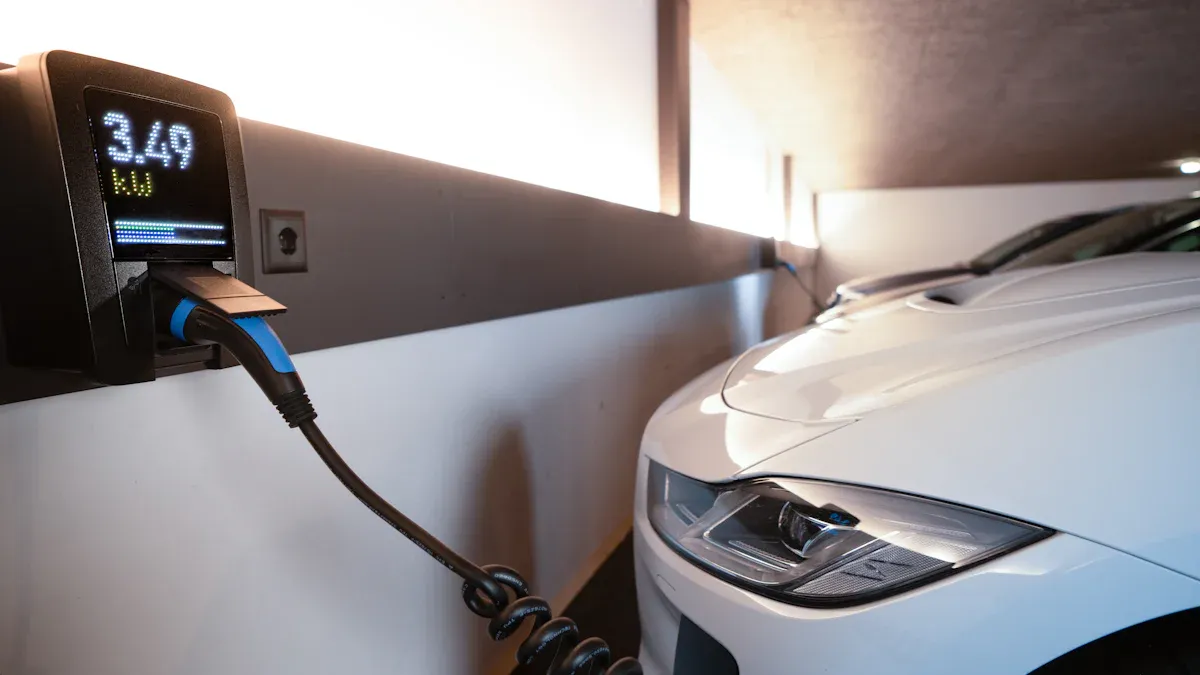
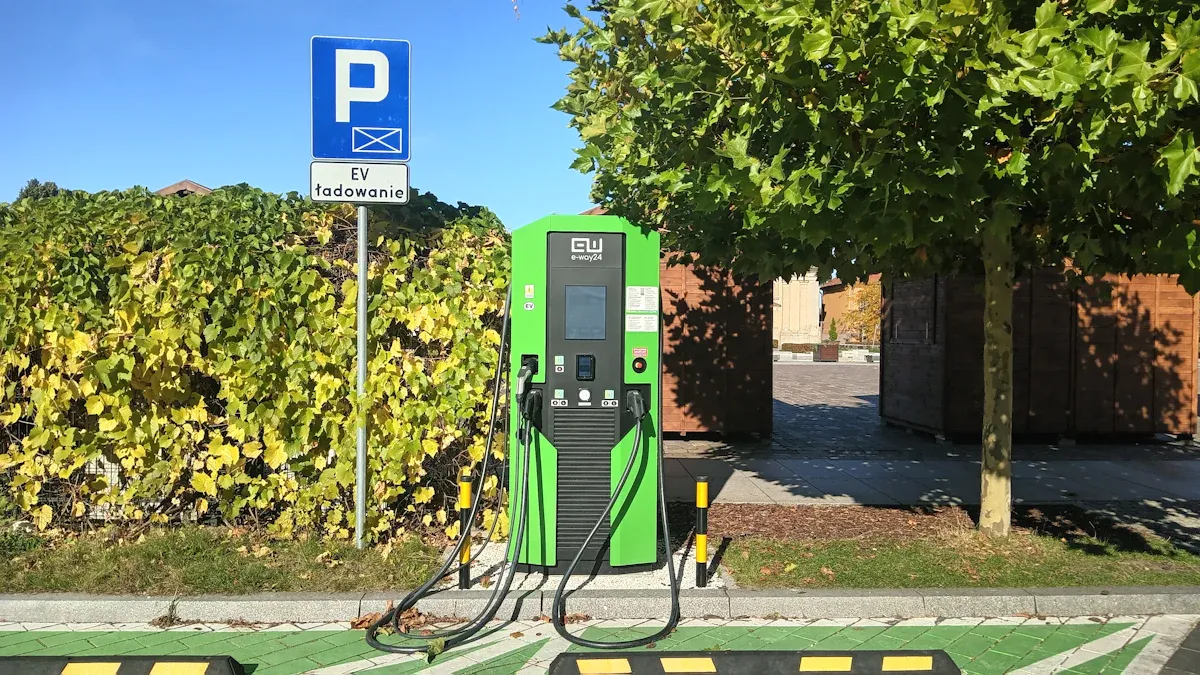
Government subsidies continue to accelerate the construction of EV charging infrastructure across the EU. The Fit for 55 package and the European Union Green Deal motivate investments from both public and private sectors, including EV charger manufacturers. Germany’s recent push for residential EV Charger installations increases urban access to AC charging solutions. EV charger subsidies and EV charging incentives provide direct financial support, encouraging rapid adoption of EVs and strengthening the future of sustainable mobility.
The Power of EV Charger Subsidies in the EU

Direct Financial Incentives for EV Charging Infrastructure
Grants for Public Charging Stations
Grants play a pivotal role in expanding public charging stations across the EU. National and local governments allocate substantial resources to support the installation of new charging points. These grants reduce upfront costs for businesses and municipalities, making it easier to deploy public charging infrastructure in both urban and rural areas. Studies show that direct financial incentives, such as grants, accelerate the deployment of charging infrastructure and increase electric vehicle adoption. For example, research in Norway found that subsidizing charging stations proved more efficient than offering purchase subsidies for EVs. The table below summarizes key findings from recent studies on the effectiveness of direct financial incentives:
| Study | Findings | Year/Location |
|---|---|---|
| Clinton and Steinberg | Direct financial incentives increase EV adoption, but net welfare effect is negative. | 2011-2015, Texas and Massachusetts |
| Springel | Subsidizing charging stations is more efficient than subsidizing EVs directly. | 2010-2015, 19 Norwegian counties |
| Meunier and Ponssard | Indirect network effects are significant when charging station stock is low, suggesting optimal policy targeting. | 2020, General insights |
These grants not only boost the number of public charging stations but also improve accessibility for drivers, supporting the growth of electric mobility throughout the EU.
Tax Credits and Rebates for Private Installations
Tax credits and rebates serve as powerful tools for encouraging private investment in charging infrastructure. Homeowners and businesses benefit from these financial incentives, which lower the cost of installing private chargers. Many EU countries offer tax credits or rebates that cover a significant portion of installation expenses. These incentives help bridge the gap between public and private charging, ensuring that more drivers have access to reliable charging options at home and at work. By reducing financial barriers, tax credits and rebates support the widespread adoption of electric vehicles and the expansion of charging infrastructure.
EU-Level EV Charging Incentives and Funding
Connecting Europe Facility (CEF)
The Connecting Europe Facility (CEF) stands as a cornerstone of EU-level support for charging infrastructure. CEF provides grants to projects that enhance cross-border connectivity and promote sustainable transport. The program targets large-scale deployment of public charging stations, especially along major transport corridors. For instance, Finnish companies received over EUR 5.3 million in CEF grants for two major EV infrastructure projects, including EUR 3.32 million awarded to Plugit Finland. These grants help ensure that charging infrastructure keeps pace with the rapid growth of electric vehicles across the continent.
Alternative Fuels Infrastructure Facility (AFIF)
The Alternative Fuels Infrastructure Facility (AFIF) complements CEF by focusing on clean fuel infrastructure, with a strong emphasis on public charging stations for electric vehicles. AFIF supports a wide range of eligible projects, including megawatt recharging stations for heavy-duty vehicles, electricity and hydrogen supply at airports, and bunkering facilities in ports. The table below outlines the scope of AFIF and related EU programs:
| Program Name | Description | Eligible Projects |
|---|---|---|
| CEF Transport (AFIF) | Supports deployment of clean fuel infrastructure, focusing on public EV charging infrastructure across EU transport corridors. | Public EV charging stations, Megawatt recharging stations for Heavy Duty Vehicles, Support for electricity and hydrogen supply at airports, Support for electricity supply and bunkering facilities in ports. |
In the fifth round of AFIF, the EU allocated EUR 422 million to support charging infrastructure projects across Europe. These grants demonstrate the EU’s commitment to building a robust and accessible charging network.
- The EU allocated EUR 422 million across Europe for the fifth round of the Alternative Fuels Infrastructure Facility (AFIF).
- Plugit Finland received EUR 3.32 million from the Connecting Europe Facility (CEF) for building EV charging infrastructure.
- Finnish companies were awarded a total of around EUR 5.3 million for two projects related to EV infrastructure.
National EV Charger Subsidies and Programs
Germany’s KfW Subsidy Scheme
Germany leads the way with its KfW subsidy scheme, which provides grants for both residential and commercial charging infrastructure. Homeowners can receive a €900 grant for installing a home charging station, while businesses may qualify for up to €45,000 to cover installation costs. These grants have driven a surge in private and public charging points, making Germany a model for effective government incentives.
France’s Advenir Program
France’s Advenir program offers a mix of grants and tax credits to support the deployment of charging infrastructure. Commercial projects can receive up to 60% of investment costs (up to €1,800) until March 2022, and 50% (up to €2,700) from April 2022. Residential users benefit from a tax credit of up to €960 for home charging stations and grants covering up to 50% (up to €1,160) for condominiums. These incentives have significantly increased the number of public charging stations and private installations.
Netherlands’ Green Deal
The Netherlands implements a Green Deal approach, offering commercial entities deductions of up to 36% on installation costs and tax returns of up to 75%. This strategy encourages businesses to invest in charging infrastructure, supporting the country’s ambitious electric mobility goals.
Spain’s Moves III Subsidy
Spain’s Moves III subsidy program provides grants for both public and private charging infrastructure. The program targets municipalities, businesses, and individuals, offering financial support for the installation of new charging points. Moves III has accelerated the deployment of public charging stations, especially in underserved regions.
Finland’s Public Charger Subsidies
Finland supports the rollout of public charging infrastructure through targeted grants. Finnish companies have secured millions in EU and national funding, enabling the expansion of charging networks in both urban and remote areas. These grants ensure that drivers across Finland have access to reliable charging options.
Austria’s Public Charging Support
Austria’s government offers grants to support the installation of public charging stations. The latest funding cycle aims to add 8,000 new charging points, with a focus on rapid and accessible deployment. These grants help Austria meet its national and EU-level targets for electric vehicle charging infrastructure.
Lithuania’s Multi-Family and Public Charging Grants
Lithuania addresses the unique challenges of multi-family residences by providing grants for shared charging solutions. The government also offers grants for public charging stations, ensuring that apartment dwellers and communities benefit from the transition to electric mobility.
Belgium’s Tax Deduction for Private EV Chargers
Belgium incentivizes private investment in charging infrastructure through tax deductions. Homeowners and businesses can deduct a portion of their installation costs, making it more affordable to install private chargers. This approach supports the growth of both public and private charging networks.
Ireland’s EV Purchase and Charging Incentives
Ireland combines purchase subsidies for electric vehicles with grants and tax credits for charging infrastructure. The government offers grants for home charger installation and supports public charging projects, ensuring that drivers have access to a comprehensive charging network.

Note: The chart above illustrates the differences in funding levels for EV charger subsidies among Germany, France, and the Netherlands. Each country tailors its grants and tax incentives to maximize the impact on charging infrastructure deployment.
The combination of EU-level funding, national grants, and targeted tax incentives has created a dynamic environment for the expansion of electric vehicle charging infrastructure. These programs demonstrate the effectiveness of coordinated government incentives in driving the adoption of electric mobility and building a resilient charging network across Europe.
Private Sector Partnerships in EV Charging
Utility Company Investments in Charging Networks
Utility companies play a pivotal role in the expansion of EV charging infrastructure across Europe. These companies possess the technical expertise and financial resources necessary to build and maintain large-scale charging networks. Their investments help bridge the gap between government funding and the growing demand for reliable charging solutions.
Many energy providers have launched dedicated programs to install charging stations in both urban and rural areas. They often leverage their existing grid infrastructure to support the deployment of fast and ultra-fast chargers. This approach accelerates the rollout of charging points and ensures network stability. Utility companies also use real-time data to optimize charging station locations, which improves accessibility for drivers.
The business model for utility-led charging networks relies on actual cost and usage data. This method allows companies to identify profitable areas and plan sustainable investments. Over a ten-year period, applying a moderate electricity mark-up can yield a positive financial return. However, the success of these investments depends on the rate of EV adoption and drivers’ willingness to pay for charging services. Fiscal incentives from governments can further encourage private investment, especially in regions where demand remains uncertain.
| Evidence Description | Details |
|---|---|
| Business Model | Uses actual cost and usage data to propose a credible business model for EV rapid charging. |
| Profit Area | Identifies a profit area for successful operation. |
| Financial Return | Applying a 3.3 electricity mark-up over a 10-year investment period gives a financial return. |
| Constraints | EV uptake and drivers’ willingness to pay remain key constraints. |
| Fiscal Incentives | Fiscal incentives would encourage private investment where demand is uncertain. |
Tip: Utility companies that collaborate with local governments and leverage fiscal incentives can maximize the impact of their investments, especially in underserved areas.
Collaboration with Charging Network Operators
Collaboration between utility companies and charging network operators has become a driving force behind the rapid expansion of EV charging infrastructure. These partnerships combine the strengths of both sectors: utilities provide grid access and technical support, while network operators bring expertise in user experience and payment systems.
Automakers have also entered the market by establishing private charging networks. These networks enhance brand loyalty and offer exclusive benefits to customers. By working together, automakers, utilities, and network operators create a seamless charging experience for drivers.
Public-private partnerships (PPPs) have emerged as a key strategy for managing and financing large infrastructure projects. These collaborations address infrastructure gaps in both urban and rural areas. PPPs enable coordinated planning, shared investment, and risk mitigation, which accelerates the deployment of charging stations.
- Energy providers invest in charging networks to support public and commercial charging systems.
- Automakers develop private charging networks to improve accessibility and customer satisfaction.
- Public-private partnerships facilitate large-scale projects and ensure equitable access to charging infrastructure.
The involvement of private sector entities, including energy providers and automakers, remains crucial for the growth of EV charging infrastructure in Europe. Their investments and collaborations accelerate the adoption of electric vehicles and help build a resilient, future-ready charging network.
Measuring the Impact of EV Charging Incentives
Growth in EU EV Charging Infrastructure
Number of Charging Stations Installed
The expansion of charging infrastructure in the EU has accelerated in recent years. In 2023, Europe added 245,000 public charge points, marking a 27% increase from the previous year. This growth rate, while robust, indicates a maturing market compared to earlier years. From 2020 to 2023, the number of charging points increased by 360%. The EU now surpasses the United States in total installations, highlighting the effectiveness of ev charging incentives and ev charger subsidies.
| Year | Growth Rate (%) | Number of Charging Points Added | Comparison with U.S. |
|---|---|---|---|
| 2023 | 27% | 245,000 | More than total U.S. installations |
- In 2023, Europe added 245,000 public charge points, a 27% increase.
- The U.S. added 37,000 charge points, a 19% increase.
- Growth in Europe is slower compared to previous years, reflecting a more mature market.
- From 2020 to 2023, the number of charging points increased by 360%.
- Regional disparities exist, with Greece and Lithuania showing significant growth, including a 96% increase in DC chargers.
Geographic Coverage and Accessibility
Despite the impressive growth in charging infrastructure, the EU faces challenges in ensuring equal access across all regions. Significant inequalities remain in both the accessibility and availability of charging points. Some countries, such as Greece and Lithuania, have experienced rapid expansion, while others lag behind. The effectiveness of ev charging incentives depends on how well these programs address local needs.
| Key Finding | Implication |
|---|---|
| Incentive programs must be tailored to diverse populations | Addressing disparities in charging station accessibility is crucial for equitable EV adoption across the EU |
Note: Policymakers must design subsidies and incentives that consider regional differences to close the accessibility gap.
Effects on EV Adoption Rates in Europe
Uptake Among Private Consumers
Financial support remains a powerful motivator for private consumers considering electric vehicles. A recent survey found that 62% of drivers expressed interest in financial subsidies or grants, while 56% valued reduced costs for charging away from home. Free or discounted home chargers attracted 52% of respondents. These findings demonstrate the direct impact of ev charging incentives on battery electric vehicle adoption and ev sales.

The Plug-In Car Grant in the UK led to over 83,000 eligible cars registered between 2011 and 2016, showcasing the effectiveness of financial incentives in increasing consumer uptake. Norway’s early introduction of BEV incentives in the 1990s resulted in higher adoption rates compared to other European countries.
The combination of salary sacrifice schemes and government incentives has revolutionized electric vehicle affordability in Britain, allowing employees to save significantly on new electric cars.
Fleet Electrification Trends
Businesses across the EU have responded to ev charging incentives by investing in charging infrastructure for their fleets. Subsidies have made it more affordable for companies to install chargers and electrify their vehicles. Commercial properties now view charging solutions as essential, driven by increased ev ownership and regulatory requirements.
- Financial incentives, such as federal tax credits, motivate companies to electrify their fleets.
- Early implementation of fleet electrification strategies yields three times the consumer benefits compared to delayed adoption.
- Electrifying a fleet requires a comprehensive approach, including infrastructure planning and process adjustments.
- Companies sometimes face challenges with landlords regarding charger installation.
- Public charging costs can be higher than office or home solutions.
The analysis of transportation electrification highlights the importance of timely action. Early adoption maximizes benefits for both businesses and society.
Energy Consumption and Grid Integration
Renewable Energy Synergies with EV Charging
The integration of renewable energy sources with ev charging infrastructure supports the EU’s decarbonization goals. Projects like CleanMobilEnergy use intelligent energy management systems to optimize energy consumption and reduce costs. These systems ensure that electric vehicles are charged with 100% renewable energy whenever possible.
| Aspect | Description |
|---|---|
| Energy System Integration | Facilitates the optimization of the energy system across multiple carriers and sectors, focusing on decarbonization and efficiency. |
| Electrification of Demand | Highlights the role of electric vehicles in connecting transport and power sectors, enhancing integration. |
| Smart Charging | Emphasizes the need for smart grids and recharging infrastructure to support the growing EV market. |
Digitalization plays a crucial role in decarbonizing the energy system. Real-time data exchange between the electricity network and EVs helps identify capacity issues and investment needs. As electricity generation becomes cleaner, the electrification of transport and other sectors becomes essential for reducing carbon emissions.
- The CleanMobilEnergy project aims to reduce GHG emissions by integrating renewable energy sources with EV charging infrastructure.
- Intelligent energy management systems optimize energy consumption and reduce costs.
- The system ensures that EVs are charged with renewable energy whenever possible.
Smart Charging and Load Management
The rapid growth of charging infrastructure in the EU has changed energy consumption patterns. Charging patterns of EV drivers significantly influence overall energy consumption and network utilization. Commercial vehicles, in particular, exhibit distinct driving patterns that lead to varying energy requirements throughout the day.
- The EU aims for 70% of new commercial vehicles to be zero-emission by 2030, which will require a tenfold increase in charging points.
- Commercial and service-oriented vehicles have different usage patterns compared to private cars, leading to varied energy needs.
- Distinct peaks in driving patterns correspond to operational needs, affecting energy consumption patterns.
- EV drivers with habitual charging patterns contribute significantly to energy consumption, which can lead to increased charging inconvenience and affect overall infrastructure efficiency.
Smart charging and load management strategies help balance demand on the grid. These solutions ensure that the growing number of electric vehicles does not overwhelm existing infrastructure and that renewable energy can be used efficiently.
Future Projections for EV Charging in the EU
Expected Expansion by 2030
The next decade will bring a dramatic transformation to the landscape of electric mobility in the EU. Policymakers and industry leaders have set ambitious goals for the deployment of charging infrastructure to support the rapid growth of electric vehicles. By 2030, projections indicate that the EU will need to install approximately 6.8 million public charging stations. This expansion requires a weekly deployment rate of over 23,000 new public chargers to keep pace with rising demand.
| Category | Projected Number by 2030 | Weekly Deployment Rate |
|---|---|---|
| Public Chargers | 6.8 million | Over 23,000 |
| LCV Chargers | 0.7 million | |
| Truck and Bus Chargers | 0.1 million | |
| Average Deployment Rate | 14,000 |
The scale of this expansion reflects the anticipated surge in electric vehicle adoption. By 2030, the EU expects to see:
- 42.8 million electric passenger vehicles on the road, including both battery electric vehicles (BEVs) and plug-in hybrid electric vehicles (PHEVs)
- 4.4 million electric light commercial vehicles (LCVs)
- 0.3 million electric trucks and buses

This rapid deployment will require coordinated efforts from governments, private companies, and local communities. Subsidies and incentives will remain essential to ensure that charging infrastructure keeps pace with the growing fleet of electric vehicles. The expansion will also need to address the needs of different vehicle types, including passenger cars, commercial vans, and heavy-duty trucks.
Note: The projected growth in charging stations will help reduce range anxiety and support the widespread adoption of electric vehicles across urban and rural areas.
Policy Targets and Milestones
The EU has established clear policy targets and milestones to guide the development of charging infrastructure. These targets set minimum requirements for the distance between charging stations and the power output available at each site. The policy framework aims to ensure that drivers can access reliable and high-speed charging options throughout the region.
| Target Type | Distance Between Stations | Power Output (kW) | Deadline |
|---|---|---|---|
| Electric Cars | Every 60 km | 400 (2026) | 2026 |
| Electric Cars | Every 60 km | 600 (2028) | 2028 |
| Trucks and Buses | Every 120 km | 1,400 – 2,800 | 2028 |
| Hydrogen Stations | Every 200 km | N/A | 2031 |

These milestones reflect the EU’s commitment to building a comprehensive and accessible charging network. By 2026, drivers of electric cars should find a charging station every 60 kilometers, each offering at least 400 kW of power. By 2028, the minimum power output will increase to 600 kW. For trucks and buses, charging stations will be available every 120 kilometers, with power outputs ranging from 1,400 to 2,800 kW. Hydrogen refueling stations will also be available every 200 kilometers by 2031.
The policy framework supports the integration of new technologies and encourages investment in high-capacity charging solutions. These measures will help the EU achieve its climate goals and maintain its leadership in sustainable transport.
Policymakers continue to monitor progress and adjust targets to ensure that infrastructure development aligns with the needs of electric vehicle users.
How EV Charger Subsidies Benefit Different User Groups
Homeowners and Single-Family Residences
Incentives for Home Charger Installation
Homeowners across Europe benefit directly from subsidies that make installing an EV charger at home more affordable. These financial incentives lower the initial cost, encouraging more individuals to invest in home charging infrastructure. As a result, installation rates have increased, with many homeowners now able to support their own EV charging needs. Federal and state programs further reduce the financial burden, making the transition to electric vehicles more accessible. Some programs, such as the On-Bill Repayment Program, allow homeowners to install charging equipment with no upfront payment. Instead, they repay the cost over time through their electricity bill, which makes the process financially manageable.
Cost Savings and Accessibility
Installing a home charging station provides significant cost savings over time. Homeowners can charge their EV overnight at lower electricity rates, reducing overall transportation expenses. The presence of a home charging station also increases property value, as homes equipped with charging capabilities attract more buyers in a market where electric vehicles are becoming common. These benefits make EV ownership more appealing and practical for single-family residences.
Note: Homeowners who take advantage of these incentives not only save money but also contribute to the growth of sustainable transportation in their communities.
Apartment and Multi-Unit Dwellers
Shared Charging Solutions and Subsidies
Residents of apartments and multi-unit buildings often face unique challenges when adopting EVs. Subsidies targeted at these groups support the development of shared charging solutions, such as communal charging stations in parking areas. These solutions ensure that multiple residents can access reliable charging without the need for individual installations. Government grants and local programs help property managers and homeowners’ associations cover the costs of installing shared charging infrastructure.
Overcoming Installation Barriers
Multi-unit dwellers frequently encounter barriers like limited parking, complex property ownership, and high installation costs. Targeted subsidies address these issues by reducing financial obstacles and simplifying the approval process. As a result, more apartment residents can access EV charging, which supports broader adoption of electric vehicles in urban environments.
Workplaces and Commercial Properties
Support for Employee Charging Infrastructure
Workplaces play a crucial role in expanding access to EV charging. Many companies have responded to incentives by installing charging stations for employees. This investment leads to measurable outcomes:
- Companies report higher employee satisfaction and improved retention rates.
- A 2022 Deloitte survey shows that Gen Z and Millennials value environmental responsibility, giving companies with EV charging a competitive edge.
- Providing charging aligns with sustainability goals and supports green building certifications.
Business Tax Benefits for EV Charging
Commercial property owners can benefit from tax incentives when they install EV charging infrastructure. These financial benefits reduce the cost of installation and operation, making it easier for businesses to offer charging solutions to employees and customers. By supporting EV adoption, businesses enhance their reputation and contribute to a cleaner environment.
Corporate Fleets and Logistics
Fleet Electrification Subsidies
Corporate fleets and logistics operators in Europe have become key players in the transition to electric mobility. Government subsidies play a crucial role in this shift. These financial incentives reduce the upfront costs of electric vehicles, making them more attractive for companies managing large fleets. Many logistics firms now see electrification as a strategic investment.
- Subsidies lower the initial purchase price of electric trucks and vans.
- Companies benefit from reduced operating costs due to lower fuel and maintenance expenses.
- Electric fleets help organizations meet sustainability targets by cutting greenhouse gas emissions.
- Energy efficiency improves as fleets transition from diesel to electric powertrains.
Several EU countries have introduced targeted subsidy schemes for fleet operators. The Benelux region stands out for its proactive approach. In the Netherlands, the Subsidy Scheme for Zero Emission Trucks (AanZET) launches in 2024. This program supports the purchase of zero-emission trucks, helping logistics companies modernize their fleets. Belgium offers investment grants for truck equipment that reduces emissions. In Flanders, both electric buses and trucks receive substantial support. Small and medium-sized enterprises (SMEs) can access up to 32% subsidy for electric trucks, while large companies qualify for up to 24%.
Companies that electrify their fleets not only save money but also strengthen their environmental credentials. These advantages position them as leaders in sustainable logistics.
Heavy-Duty Vehicle Charging Support
The electrification of heavy-duty vehicles presents unique challenges. Trucks and buses require high-capacity charging infrastructure and reliable access to power. EU governments recognize these needs and have developed specialized support programs.
- Investment grants help logistics operators install high-power charging stations at depots and along major transport corridors.
- Public-private partnerships accelerate the deployment of charging hubs for heavy-duty vehicles.
- National and EU-level funding ensures that charging infrastructure keeps pace with the growing number of electric trucks and buses.
A table below summarizes key support mechanisms for heavy-duty vehicle charging in select EU countries:
| Country | Support Type | Maximum Subsidy Rate | Focus Area |
|---|---|---|---|
| Netherlands | AanZET Subsidy | Up to 32% (SMEs) | Zero-emission trucks |
| Belgium | Investment Grants | Up to 32% (SMEs) | Electric trucks and buses |
| Germany | KfW Grants | Varies | Depot and public charging |
Logistics companies that invest in charging infrastructure gain a competitive edge. They ensure operational reliability and future-proof their fleets against tightening emissions regulations. As more heavy-duty vehicles switch to electric power, the demand for robust charging networks will continue to rise.
The combination of fleet electrification subsidies and targeted charging support drives the transformation of Europe’s logistics sector. This approach accelerates the shift to cleaner, more efficient transport across the continent.
Case Studies: Real-World Impact of EU EV Charging Incentives
Germany’s Urban Charging Expansion
City-Level Deployment Success
German cities have demonstrated strong progress in deploying EV charging infrastructure. Berlin, Munich, and Hamburg have increased the number of public charging stations in urban neighborhoods. Local governments work with private companies to identify high-traffic areas and install chargers where demand is highest. The KfW subsidy scheme supports both residential and commercial installations, which accelerates urban coverage. City planners prioritize accessibility, ensuring that residents and commuters can find charging points near homes, offices, and shopping centers.
Lessons Learned from KfW and Local Programs
The KfW subsidy scheme provides clear guidelines for applicants. Cities benefit from streamlined processes and transparent funding allocation. Local programs encourage collaboration between municipalities and energy providers. These partnerships help cities overcome technical challenges and optimize charger placement. German cities report that early stakeholder engagement leads to faster deployment and higher utilization rates. The combination of national subsidies and local initiatives creates a scalable model for other regions.
France’s Rural Charging Network
Bridging the Accessibility Gap with Advenir
France’s Advenir program addresses the unique needs of rural communities. The program covers up to 75% of costs for purchasing and installing charging stations, with a maximum limit of €300 per eligible installation. Qualified companies must perform the work, ensuring safety and reliability. Advenir supports individuals, public entities, companies, communities, and public institutions. The table below summarizes the benefits for each group:
| Entity Type | Benefit Description |
|---|---|
| Individuals | Subsidies for installing charging points on private property or public parking structures. |
| Public Entities | Financial support for public charging infrastructure development. |
| Companies | Assistance in setting up charging stations for employees and customers. |
| Communities | Funding for collective housing charging solutions. |
| Public Institutions | Support for enhancing public charging accessibility. |
Community Engagement in Rural Areas
Rural communities in France engage local stakeholders to identify optimal locations for charging stations. Municipalities collaborate with residents and businesses to ensure that infrastructure meets local needs. Advenir funding enables small towns to install chargers in public parking lots and near community centers. These efforts reduce range anxiety and encourage EV adoption outside major cities. Community-driven projects foster trust and increase the visibility of electric mobility in rural regions.
Netherlands’ Integrated Approach to EV Charging
Public-Private Collaboration for Network Growth
The Netherlands leads Europe in public-private collaboration for EV charging. The Metropolitan Region Amsterdam (MRA) awarded the largest EV charging contract in Europe, resulting in up to 20,000 new charging points. The network serves 3.2 million inhabitants and supplies electricity sourced entirely from renewable power produced in the Netherlands. Total, the energy company, partners with local authorities to source part of the energy from the MRA region itself. The table below highlights key aspects of this approach:
| Aspect | Details |
|---|---|
| Contract Awarded | Largest EV charging contract in Europe for the MRA region. |
| Number of Charging Points | Up to 20,000 new EV charging points. |
| Population Coverage | Network serves 3.2 million inhabitants. |
| Renewable Energy Commitment | Electricity supplied is 100% renewable and locally produced. |
| Local Energy Sourcing | Total sources part of the energy from the MRA region. |
| Smart Charging Technologies | Technologies developed for stable grid management and efficient charging. |
| Public-Private Collaboration | Partnership between Total and the Metropolitan Region Amsterdam. |
User Experience Improvements
Dutch charging networks focus on user experience. Smart charging technologies balance grid demand and optimize charging times. Drivers benefit from reliable access and transparent pricing. The integration of renewable energy supports sustainability goals and reduces carbon emissions. Public-private partnerships ensure that infrastructure expansion keeps pace with rising EV adoption. The Netherlands sets a benchmark for efficient, user-friendly charging solutions in Europe.
Finland’s Fast Charger Rollout
Impact of 30-35% Subsidies on Public Charging
Finland has accelerated the deployment of fast chargers by offering substantial subsidies. The government covers 30-35% of the installation costs for public charging stations. This financial support encourages companies to invest in high-speed charging infrastructure. Energy providers and charging network operators respond quickly to these incentives. They install fast chargers in strategic locations, including shopping centers, transit hubs, and major highways.
The subsidy program reduces the financial risk for investors. Companies can plan new projects with greater confidence. The Finnish Transport and Communications Agency monitors the progress of installations. They report a steady increase in the number of fast chargers available to drivers. The presence of reliable fast charging options supports the growth of electric vehicle ownership. Drivers experience shorter charging times and improved convenience.
Tip: Fast charger subsidies help bridge the gap between urban centers and remote regions, making electric mobility accessible to more people.
Expansion in Urban and Remote Areas
Finland’s approach to charging infrastructure emphasizes both urban and remote coverage. Cities like Helsinki and Tampere see rapid growth in public charging stations. Operators target high-traffic areas to maximize utilization. Rural communities also benefit from the subsidy program. Charging stations appear along major routes and in small towns, reducing range anxiety for drivers traveling long distances.
A table below highlights the distribution of fast chargers in Finland:
| Area Type | Key Locations | Charger Density | Accessibility Focus |
|---|---|---|---|
| Urban | City centers, malls | High | Commuters, residents |
| Remote | Highways, rural towns | Moderate | Long-distance travelers |
The balanced expansion ensures that electric vehicles remain practical for both city dwellers and rural populations. Finland’s model demonstrates how targeted subsidies can create a robust and inclusive charging network.
Austria’s Rapid Public Charging Growth
8,000 New Charging Points Supported by Subsidies
Austria has made significant strides in expanding its public charging infrastructure. The government’s latest funding cycle supports the installation of 8,000 new charging points. Municipalities and private companies receive grants to cover a portion of the costs. The program prioritizes rapid chargers to meet the needs of modern electric vehicles.
Operators coordinate with local authorities to identify optimal sites. They focus on areas with high demand, such as business districts and transportation hubs. The funding encourages innovation in charger technology and network management. Austria’s commitment to public charging growth aligns with EU climate targets.
Note: The addition of thousands of new charging points strengthens Austria’s position as a leader in sustainable transport.
Lessons from the 2024-2025 Funding Cycle
The 2024-2025 funding cycle offers valuable insights for future infrastructure projects. Stakeholders emphasize the importance of clear guidelines and transparent application processes. Early engagement with local communities leads to higher utilization rates. Operators report that flexible funding models allow for adaptation to changing market conditions.
Austrian policymakers continue to refine subsidy programs based on feedback from previous cycles. They monitor installation progress and adjust targets to ensure that infrastructure keeps pace with demand. The lessons learned support ongoing improvements in public charging deployment.
Lithuania’s Multi-Family Charging Solutions
Subsidies for Shared Charging in Apartment Buildings
Lithuania addresses the unique challenges faced by residents of multi-family buildings. The government offers up to €3,000 for shared charging systems in apartment complexes. Property managers and homeowners’ associations use these funds to install communal chargers in parking areas. The program simplifies the approval process and reduces installation costs.
Residents gain access to reliable charging without the need for individual units. Shared solutions promote equitable access and encourage more people to consider electric vehicles. The subsidy program supports the transition to sustainable mobility in urban environments.
Public Charging Grants and Community Uptake
Lithuania also provides public charging infrastructure subsidies of up to €10,000. Local governments and businesses use these grants to install chargers in public spaces. The increased availability of charging stations leads to higher community uptake of electric vehicles.
- Residents of multi-family buildings benefit from shared charging systems.
- Public grants make charging accessible in parks, shopping centers, and transit hubs.
- The program fosters community engagement and supports national climate goals.
Lithuania’s targeted subsidies and grants demonstrate how financial support can drive adoption and build a resilient charging network for diverse user groups.
Overcoming Challenges in Public EV Charging

Payment Systems and Interoperability in the EU
Simplifying User Experience Across Networks
European drivers often encounter a fragmented charging landscape. They must navigate multiple apps and payment systems, which creates confusion and slows adoption. Industry leaders such as CharIN and EMVCo have launched initiatives to align EMV-based open payments with ISO 15118 Plug & Charge systems. This collaboration aims to deliver a seamless and secure payment experience, making transactions at charging stations as effortless as those in retail stores. Companies develop open APIs and flexible software stacks to manage the complexities of the charging ecosystem. These solutions help unify payment processes and improve trust among users.
- Drivers face complexity due to inconsistent user experiences.
- Charge Point Operators struggle with profitability and regulatory challenges.
- Seamless integration of payment solutions remains a priority for the industry.
Note: A unified payment system increases convenience and encourages more drivers to use public charging stations.
Cross-Border Charging Solutions
Travelers moving between EU countries need reliable access to charging infrastructure. Cross-border charging solutions address this need by promoting interoperability among networks. Industry groups work to standardize payment methods and technical protocols, allowing drivers to use one card or app across different regions. The development of open APIs supports this goal, enabling real-time communication between charging stations and payment platforms. These efforts reduce barriers for long-distance travel and support the EU’s vision for a connected electric mobility network.
Addressing Urban and Rural Charging Gaps
Targeted Subsidies for Underserved Areas
Urban centers often receive the majority of new charging stations, while rural regions lag behind. Policymakers recognize this gap and design targeted subsidies to encourage investment in underserved areas. These financial incentives help local governments and businesses install chargers where demand is low but growing. By focusing on regions with limited access, subsidies promote equitable adoption of electric vehicles and support broader climate goals.
Innovative Deployment Models for Remote Regions
Remote communities require creative solutions for charging infrastructure. Companies experiment with mobile charging units, solar-powered stations, and modular installations. These models reduce installation costs and adapt to local needs. Partnerships between public agencies and private firms accelerate deployment, ensuring that even isolated areas benefit from the transition to electric mobility.
Tip: Innovative deployment models make charging accessible for all, regardless of location.
Heavy-Duty Vehicle Electrification and Subsidies
Infrastructure Needs for Trucks and Buses
Heavy-duty vehicles such as trucks and buses need high-capacity charging stations. These vehicles consume more energy and require faster charging times. The EU sets ambitious targets for the installation of powerful chargers along major transport corridors. Operators must plan for grid upgrades and robust infrastructure to support commercial fleets.
Specialized Subsidy Programs for Commercial Vehicles
Governments introduce specialized subsidy programs to address the unique needs of commercial vehicles. These programs fund the installation of high-power charging stations at depots and logistics hubs. They also support research into advanced charger technology. By investing in infrastructure for trucks and buses, the EU helps logistics companies meet sustainability targets and comply with emissions regulations.
Specialized subsidies for commercial vehicles drive innovation and ensure that Europe’s transport sector remains competitive.
The Road Ahead for EU EV Charging Incentives
Ensuring Long-Term Funding and Policy Stability
Policy Continuity and Market Confidence
Stable policies remain essential for the success of ev charging incentives across the EU. Policymakers who maintain clear and consistent frameworks give investors and manufacturers the confidence to plan for the future. When governments commit to long-term ev charger subsidies, companies can invest in charging infrastructure without fear of sudden regulatory changes. This stability supports the transition to electric mobility and encourages innovation in charging solutions. Market confidence grows when stakeholders see reliable support for ev charging incentives.
Adapting to Technological Change in EV Charging
Technology in the ev sector evolves rapidly. Charging networks must adapt to new vehicle models, faster charging speeds, and smarter grid integration. The EU faces the challenge of updating regulations and incentives to match these advancements. Flexible policies allow for the adoption of new charging standards and digital payment systems. By staying responsive to change, the EU ensures that ev charging incentives remain effective throughout the transition to electric vehicles.
Building a Comprehensive EU Charging Network
Integration with Mobility Services and Public Transport
A comprehensive charging network connects with other mobility services. The EU encourages integration between charging stations, public transport, and shared mobility platforms. This approach helps travelers switch easily between electric cars, buses, and trains. Cities that link charging infrastructure with public charging locations create seamless journeys for commuters. These connections support the transition to sustainable urban mobility.
Preparing for Mass EV Adoption Across Europe
The transition to mass ev adoption requires careful planning. The EU must expand charging infrastructure to meet the needs of millions of new electric vehicles. Policymakers set ambitious targets for public charging points and ensure that incentives reach underserved regions. By focusing on accessibility and reliability, the EU prepares for a future where evs become the standard mode of transport.
The Race to Lead in Sustainable Transport
Europe’s Global Position in EV Charging
Europe stands at the forefront of the global transition to electric mobility. The EU’s commitment to ev charging incentives and ev charger subsidies sets a benchmark for other regions. European countries lead in the number of public charging stations and the scale of infrastructure investment. This leadership strengthens Europe’s influence in shaping international standards for ev charging.
Opportunities for Innovation and Leadership
The transition to electric transport opens new opportunities for innovation. Companies develop advanced charging technologies, smart grid solutions, and user-friendly payment systems. The EU supports research and pilot projects that push the boundaries of what charging infrastructure can achieve. By fostering collaboration between public and private sectors, Europe positions itself as a leader in the global shift toward sustainable mobility.
Note: The EU’s continued focus on ev charging incentives and infrastructure will shape the future of electric transport for decades to come.
EV charger subsidies and incentives have transformed electric mobility across the EU. Policymakers continue to provide stable support, which drives infrastructure growth. Stakeholders invest in new technologies and foster collaboration. These efforts position Europe as a leader in sustainable transportation. Ongoing innovation and strong partnerships will shape the future of electrified travel.
FAQ
What types of EV charger subsidies exist in the EU?
Governments offer grants, tax credits, rebates, and investment incentives. These programs target public, private, and commercial charging installations. Some countries provide direct financial support, while others use tax deductions or accelerated depreciation for businesses.
Who qualifies for EV charging incentives in Europe?
Eligibility depends on the country and program. Homeowners, apartment residents, businesses, municipalities, and fleet operators often qualify. Each program sets specific requirements, such as property ownership or project type.
How do subsidies impact the cost of installing a home charger?
Subsidies can reduce installation costs by 30% to 75%. Homeowners receive grants or tax credits, making EV charging more affordable. Some programs allow cost repayment through electricity bills, easing the financial burden.
Are there incentives for installing chargers in apartment buildings?
Yes. Many EU countries offer grants for shared charging solutions in multi-unit dwellings. Property managers and homeowners’ associations can apply for funding to install communal chargers, improving access for residents.
Do businesses benefit from EV charging incentives?
Businesses receive tax deductions, grants, and accelerated depreciation for installing charging stations. These incentives lower upfront costs and support sustainability goals. Companies also attract environmentally conscious employees and customers.
What is the role of the EU in funding charging infrastructure?
The EU funds large-scale projects through programs like the Connecting Europe Facility (CEF) and Alternative Fuels Infrastructure Facility (AFIF). These initiatives support cross-border networks and high-capacity charging corridors.
How do subsidies support heavy-duty vehicle charging?
Specialized grants and investment programs help logistics companies and fleet operators install high-power chargers for trucks and buses. These incentives address the unique needs of commercial transport and promote fleet electrification.
Can drivers use public chargers across EU countries?
Most public charging networks support cross-border use. Industry groups work to standardize payment systems and technical protocols. Drivers can often access chargers in different countries with a single card or app.
Tip: Always check local eligibility and application requirements before applying for subsidies or incentives.