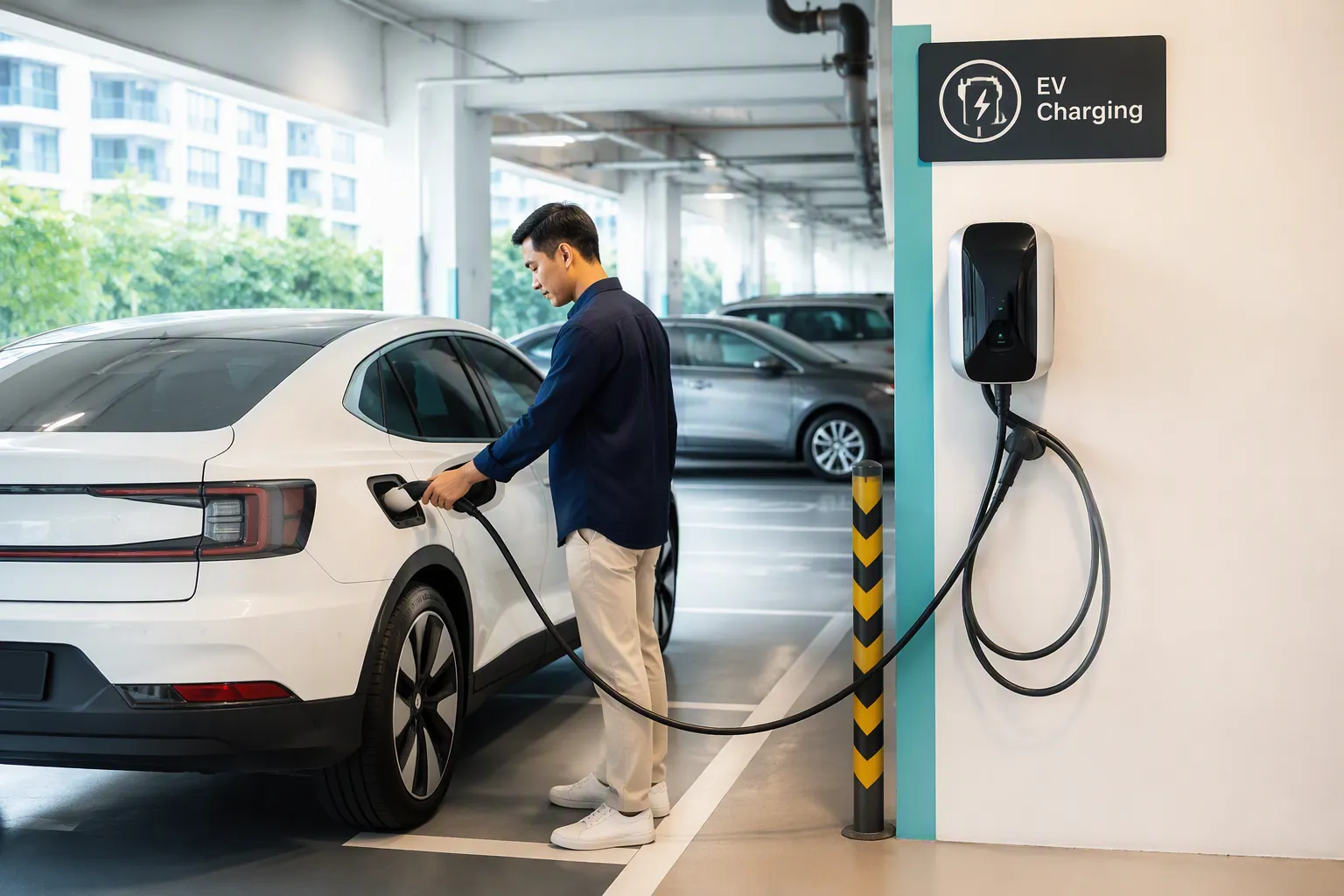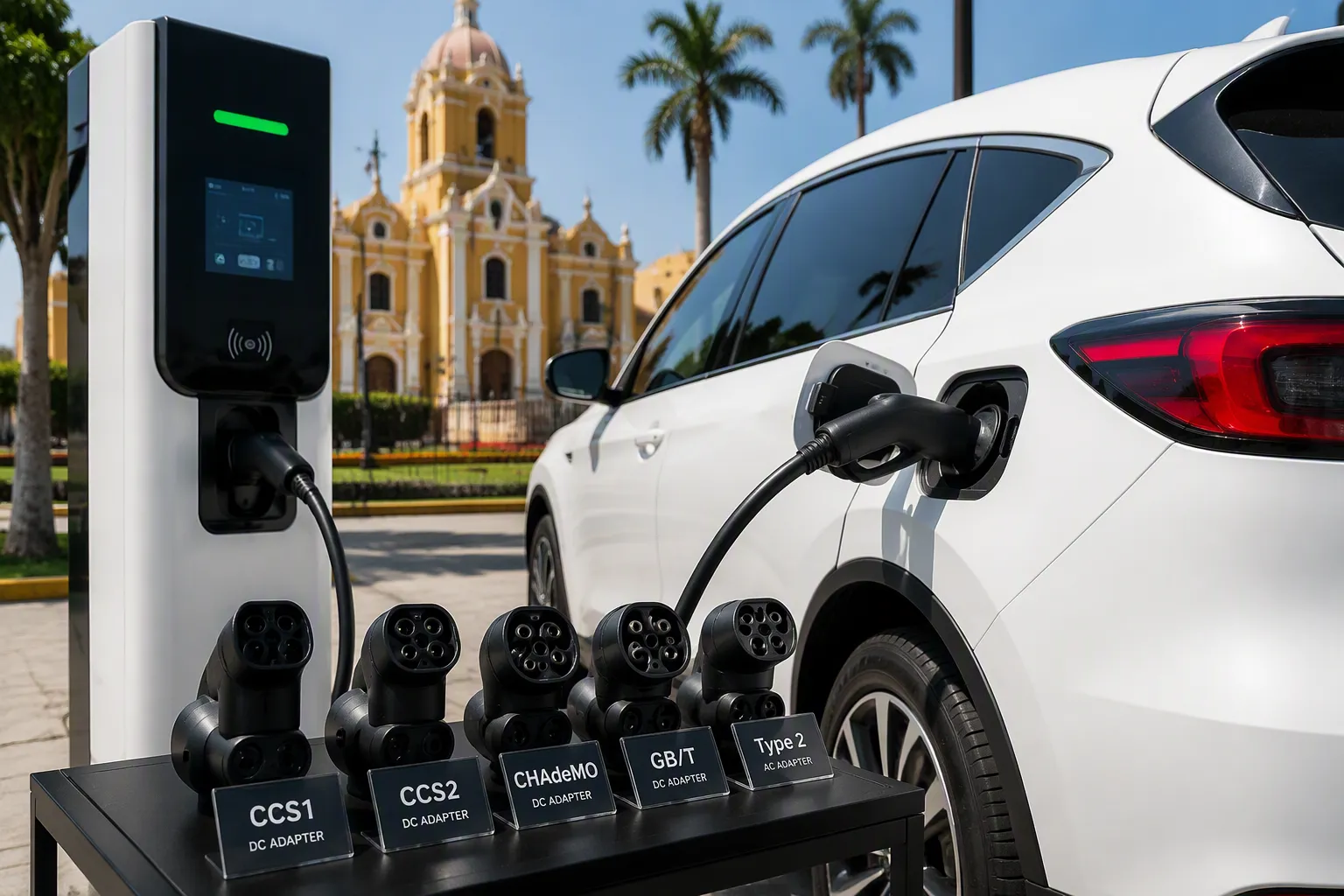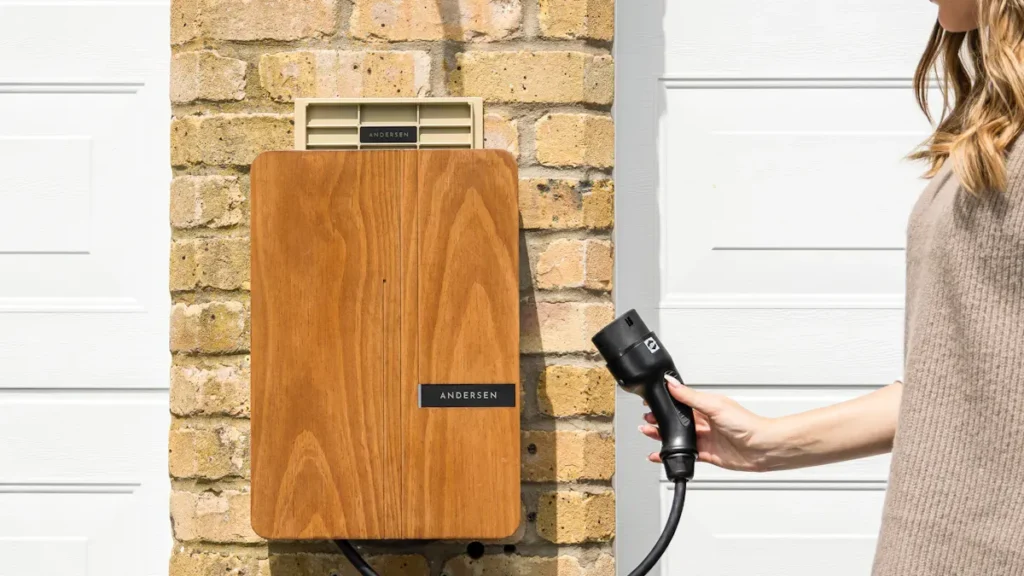
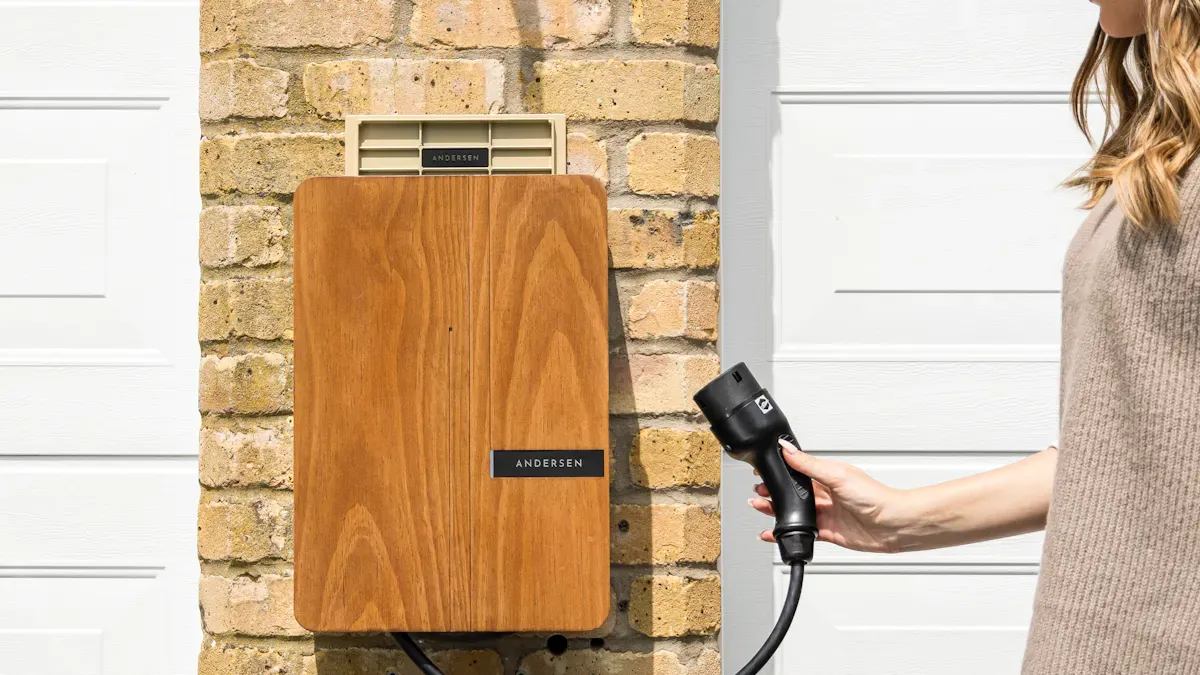
Drivers in the UK will need the right EV charging adapters to ensure efficient EV charging in 2025. Most Hersteller von EV-Ladegeräten now prioritize Type 2 and CCS2 connectors, which support the majority of electric vehicle models. Type 2 remains the standard for home and public charging, while CCS2 enables rapid charging for long trips. For optimal EV-Ladelösungen, users should select adapters compatible with their EV, including tragbare EV-Ladegeräte for flexibility. These choices guarantee access to reliable charging wherever an EV-Ladegerät stands available.
Quick Reference: EV Charging Adapter Types & Uses
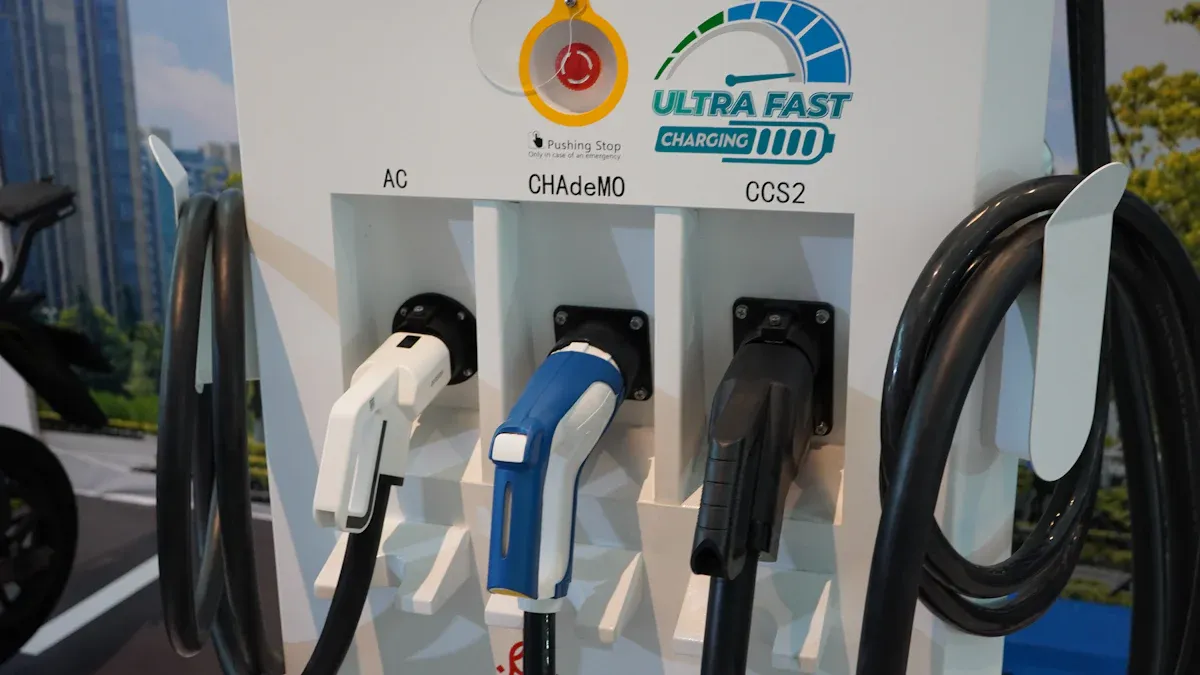
Summary Table of EV Charging Adapters
| Adaptertyp | Typischer Anwendungsfall | Maximale Leistungsabgabe | Common Vehicles | Anmerkungen |
|---|---|---|---|---|
| Typ 2 | Home/Public AC Charging | Bis zu 22 kW | Most UK/European EVs | UK standard for AC charging |
| CCS2 | Rapid DC Charging | Bis zu 350 kW | Modern EVs | Enables ultra-fast charging |
| CHAdeMO | Legacy Rapid DC Charging | Up to 100 kW | Older Nissan/Asian EVs | Declining support in new infrastructure |
| Typ 1 | Older Home/Public Charging | Bis zu 7,4 kW | Early EVs (pre-2018) | Requires adapter for most new stations |
| Tesla (UK/Europe) | Tesla Supercharging | Up to 250 kW | Tesla Models | Now often compatible with Type 2/CCS2 |
| Commando/Blue Industrial | Portable/Workplace | Bis zu 22 kW | All with proper cable | Used for temporary or portable setups |
Typ 2
Typ-2-Anschlüsse serve as the mainstay for AC charging in the UK. They fit most modern electric vehicle models and support both single-phase and three-phase power. Drivers find them at home chargers and public charging points.
CCS2
CCS2 adapters enable rapid DC charging. Most new EVs in the UK use this plug for fast charging at motorway service stations and rapid public chargers. CCS2 supports high power delivery, reducing charging time significantly.
CHAdeMO
CHAdeMO adapters cater to some older Japanese and Asian EVs. While the charging infrastructure still offers CHAdeMO at select locations, its presence is shrinking as CCS2 becomes the dominant standard.
Typ 1
Type 1 connectors appear on older EVs, especially those sold before 2018. Owners often need an adapter to connect to modern charging cable setups or public charging stations.
Tesla (UK/Europe)
Tesla vehicles in the UK use a proprietary plug for Supercharging. However, most new Tesla models now support Type 2 and CCS2, increasing compatibility with the broader charging infrastructure.
Commando/Blue Industrial
Commando or blue industrial plugs provide robust, weatherproof connections for portable or workplace charging. These adapters suit temporary installations and events where a standard EV charger plug is unavailable.
Adapter Use Cases for EV Charging
Aufladen zu Hause
Home charging remains the most convenient option for daily EV use. Most drivers rely on a fixed Type 2 charging cable or a portable adapter for overnight charging.
Öffentliche Abgaben
Public charging stations offer a mix of Type 2, CCS2, and CHAdeMO connectors. Drivers should carry the correct adapter to ensure access to any available charger during travel or errands.
Aufladen am Arbeitsplatz
Workplaces often install Type 2 or Commando outlets for employee and visitor charging. A compatible charging cable or adapter ensures seamless integration with workplace charging infrastructure.
Langstreckenreisen
Long-distance travel requires access to rapid charging. CCS2 adapters provide the fastest charging speeds at motorway service stations. Drivers may also carry backup adapters for CHAdeMO or Type 2 to maximize flexibility.
Tip: Always check your EV’s compatibility with each adapter type before purchasing or traveling.
Type 2 EV Charging Adapters: The UK Standard
Compatibility with EVs and Charging Stations
Which cars use Type 2
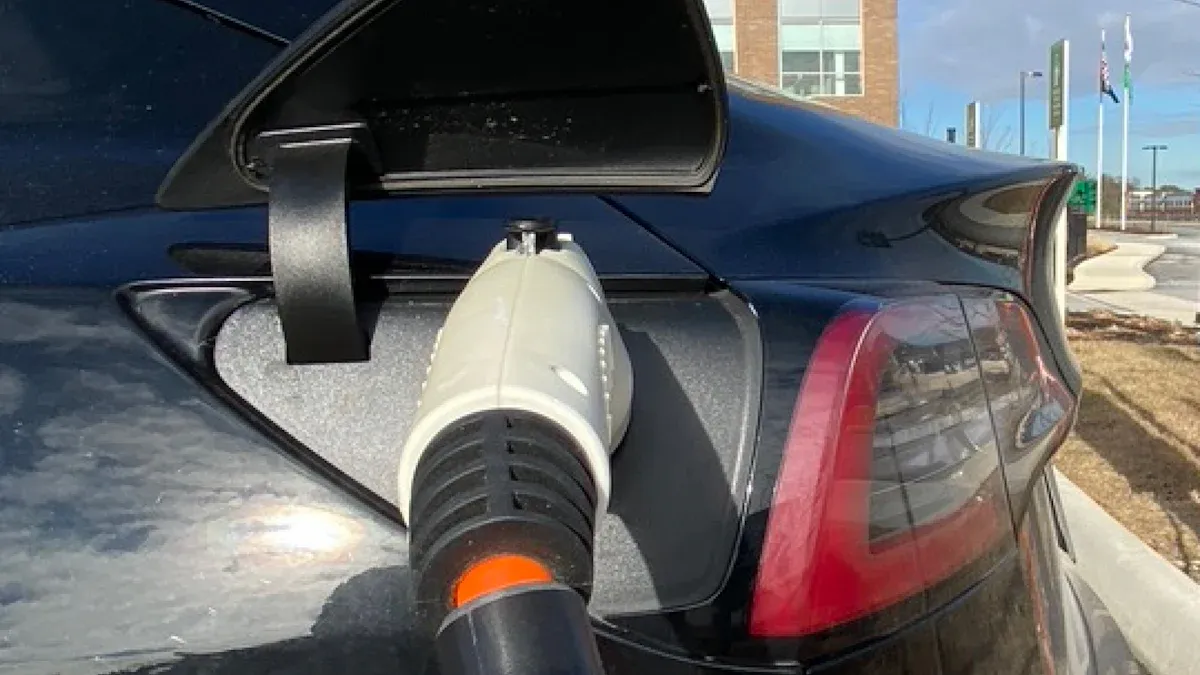
Type 2 connectors dominate the UK market for electric vehicle charging. Most European and UK-manufactured electric vehicles feature a type 2 connector as standard. Manufacturers such as BMW, Volkswagen, Mercedes-Benz, Audi, and Jaguar equip their EVs with this plug. Tesla vehicles in the UK also support type 2, increasing compatibility across brands. Drivers benefit from the widespread adoption of type 2, which simplifies the process of selecting ev charging adapters for their vehicle.
Charging stations with Type 2
Charging infrastructure in the UK prioritizes type 2 connectors. Public chargers, home installations, and workplace charging points frequently offer type 2 sockets. The type 2 to type 2 cable enables seamless connection between the charger and the vehicle. Charging stations at shopping centers, hotels, car parks, and on-street locations provide type 2 access, ensuring drivers can charge their EV wherever they travel.
Charging Speeds and Cable Options
AC charging rates
Type 2 adapters support a range of Ladegeschwindigkeiten. The table below outlines typical maximum speeds available with type 2 charging cable adapters in the UK:
| Art der Aufladung | Maximum Speed |
|---|---|
| AC | up to 43kW |
| DC | up to 400kW |
| Domestic Wall Box | 7.2kW (30A) |
Drivers can select a cable that matches their vehicle’s charging capabilities. Most home chargers deliver 7.2kW, suitable for overnight charging. Public AC points often provide higher speeds, allowing faster top-ups during the day.
Single-phase vs three-phase
Type 2 connectors accommodate both single-phase and three-phase power supplies. Single-phase charging delivers up to 7.2kW, ideal for domestic use. Three-phase charging increases the rate to 22kW or more, available at commercial and public locations. The choice of cable depends on the charger and the vehicle’s onboard charging system. A type 2 extension cable offers flexibility for connecting to different power sources.
Where Type 2 Charging Cable Adapters Are Used
Home chargers
Home charging remains the most popular use case for type 2 adapters. Homeowners install a dedicated charger with a type 2 connector, ensuring reliable overnight charging. The plug fits securely, and the cable provides safe power delivery.
Public AC points
Public AC charging points across the UK rely on type 2 connectors. Drivers encounter these adapters at shopping centers, hotels, car parks, and on-street charging points. The adapter ensures compatibility with the charging infrastructure, allowing drivers to charge their EV efficiently. A robust cable and plug design withstands frequent use and varying weather conditions.
Note: Always check the compatibility of your vehicle and charging cable before connecting to a public charger. Using the correct ev charger plug and adapter prevents damage and ensures optimal charging performance.
CCS2 EV Charging Adapters: Fast DC Charging
Compatibility with Modern EVs
Which cars use CCS2
CCS2 has become the universal standard for fast DC charging in the UK. All new electric vehicles sold in 2025 feature CCS2 capability. Major European manufacturers, including BMW, Mercedes-Benz, Audi, Volkswagen, and Volvo, equip their vehicles with this connector. American and Korean brands such as Ford, Hyundai, and Kia also use CCS2. This widespread adoption ensures that drivers experience seamless compatibility when selecting an ev charging adapter for their vehicle. The ccs2 connector supports both AC and DC charging, making it a versatile choice for modern drivers.
Charging stations with CCS2
Charging infrastructure across the UK prioritizes CCS2. Most new public chargers, especially those installed at motorway service stations and urban centers, offer CCS2 as the primary ev charger plug. Drivers find CCS2 connectors at over 8,000 rapid charging points, with stations spaced at regular intervals along major routes. This network guarantees that drivers can access fast charging during long journeys or daily commutes.
DC Charging Speeds and Ultra-Rapid Options
DC fast charging rates
CCS2 supports high-speed DC charging, which significantly reduces charging time compared to traditional AC options. Most CCS2 charging cable adapters deliver power outputs ranging from 50 kW to 150 kW. These rates allow drivers to add substantial range in a short period, making CCS2 ideal for those who need quick top-ups during busy schedules.
Ultra-rapid charging
Ultra-rapid charging stations equipped with CCS2 can deliver up to 350 kW. This technology enables compatible electric vehicles to charge from 10% to 80% in under 30 minutes. The combination of advanced charging cable design and robust adapter construction ensures safe and efficient power delivery. Ultra-rapid charging supports the growing demand for faster, more convenient ev charging solutions.
Where CCS2 Charging Cable Adapters Are Used
Motorway service stations
Motorway service stations serve as key locations for CCS2 charging. Drivers rely on these stations for fast charging during long-distance travel. The consistent presence of CCS2 connectors at 50-mile intervals along major motorways provides peace of mind and reduces range anxiety.
Rapid public chargers
Urban centers such as London, Manchester, and Birmingham feature a dense network of rapid public chargers with CCS2 capability. These chargers support both residents and visitors who require quick and reliable charging. The robust design of the CCS2 plug and cable ensures durability and safety, even with frequent use.
Tip: Drivers should always verify the compatibility of their vehicle and charging cable before connecting to a CCS2 charger. Using the correct adapter maximizes charging performance and protects the vehicle’s battery system.
Legacy and Other EV Charging Adapters
CHAdeMO Charging Cable Adapters
Which cars use CHAdeMO
CHAdeMO connectors appear mainly on older Japanese and Asian electric vehicles. Nissan Leaf, Mitsubishi Outlander PHEV, and some early Kia and Toyota models rely on this plug for rapid DC charging. Owners of these vehicles often seek CHAdeMO adapters to maintain access to fast charging networks.
Where CHAdeMO is available
Charging stations with CHAdeMO connectors remain in operation across the UK, but their numbers continue to decrease. Most new Ladeinfrastruktur now prioritizes CCS and Type 2 connectors. CHAdeMO is increasingly seen as a legacy connector in the UK, with a notable decline in its prevalence as the market shifts towards CCS and Type 2 connectors. This trend is evident as most new electric vehicle models from European manufacturers do not require CHAdeMO, indicating a significant change in market dynamics. Drivers using CHAdeMO-equipped vehicles should check station availability before planning long journeys.
Note: Some rapid chargers offer both CHAdeMO and CCS plugs, allowing flexibility for drivers with older EVs. Chademo and ccs adapters provide options for those needing compatibility with multiple charging standards.
Type 1 EV Charging Adapters
Older EVs and compatibility
Type 1 connectors serve as the original standard for many early electric vehicles. Models such as the first-generation Nissan Leaf, Chevrolet Volt, and Mitsubishi i-MiEV use Type 1 plugs. These vehicles often face compatibility challenges with modern charging stations, which now favor Type 2 connectors.
Adapter solutions for Type 1
Owners of Type 1 vehicles can use adapter solutions to bridge the gap between old and new charging standards. The most common adapters include type 1 to type 2 and type 2 to type 1 cables. These adapters allow drivers to connect their Type 1 EVs to newer Type 2 charging points. A reliable charging cable ensures safe and efficient power transfer. Drivers should verify compatibility before purchasing any ev charging adapters.
Tip: Always inspect the ev charger plug and cable for wear and tear. Proper maintenance extends the life of the adapter and improves charging performance.
Tesla and Commando EV Extension Cable Adapters
Tesla connector compatibility in the UK
Tesla vehicles in the UK use a proprietary connector for Supercharging. Most new Tesla models now support Type 2 and CCS2, increasing compatibility with public charging infrastructure. Owners can use adapters to connect to non-Tesla chargers, expanding their charging options. Tesla-specific adapters remain important for older models that lack CCS2 support.
Commando/Blue Industrial connectors for portable charging
Commando or blue industrial connectors offer robust solutions for portable and workplace charging. These connectors withstand harsh environments and provide reliable power delivery. Drivers use commando adapters for temporary installations, events, or remote locations where standard chargers are unavailable. A durable cable and plug design ensures safety and performance during portable ev charging.
Alert: Portable charging setups require careful attention to safety. Always use certified adapters and cables to prevent electrical hazards.
Choosing the Right EV Charging Adapter for Your Situation
Home EV Charging Adapters
Fixed vs portable adapters
Die Auswahl der right home EV charging adapter depends on household needs and vehicle types. Fixed adapters, often called tethered chargers, feature a permanently attached cable. These suit single-vehicle homes where the connector type remains consistent. Portable adapters, also known as untethered or socketed chargers, offer flexibility for households with multiple electric vehicles or guests. Untethered chargers allow users to swap cables, accommodating both Type 1 and Type 2 plugs. TPSON provides advanced solutions that support both fixed and portable setups, ensuring broad compatibility.
| Faktor | Beschreibung |
|---|---|
| Aufladegeschwindigkeit | Most UK homes support 7.4kW chargers, delivering about 25–30 miles of range per hour. Faster 22kW chargers require a three-phase supply, which is rare in residential settings. |
| Tethered vs. Untethered | Tethered chargers have a fixed cable, ideal for single-vehicle households. Untethered (socketed) chargers offer flexibility for multiple EVs with different connector types (e.g., Type 1 or Type 2). |
| Intelligente Funktionen | Smart chargers connect to apps for remote scheduling, tariff integration, and usage monitoring, maximizing savings with off-peak rates. |
| Solar Compatibility | Chargers with solar integration can use surplus solar energy, reducing costs and carbon footprints for homes with solar panels. |
| Kosten und Installation | Prices range from £400 to £1,500, with installation adding £200–£600. Grants are limited, but renters and flat owners may qualify for up to £350 via the Electric Vehicle Homecharge Scheme (EVHS) until March 31, 2025. |
| Zukunftssicher | Opt for chargers with universal connectors (Type 2 or adapters for NACS) and robust warranties to accommodate future EVs. |
Tip: Households with plans to upgrade vehicles should consider untethered chargers for maximum flexibility.
Installation considerations
Installation plays a crucial role in the performance and safety of a home charging setup. Most UK homes support single-phase power, limiting charging speed to 7.4kW. Three-phase installations, which enable 22kW charging, remain uncommon in residential areas. Homeowners must assess their electrical supply before selecting a charger. Professional installation ensures compliance with safety standards and optimal cable placement. TPSON recommends certified installers for all home charging solutions. Smart chargers with app integration allow users to schedule charging during off-peak hours, reducing costs. Solar compatibility offers additional savings for homes equipped with solar panels.
Note: Installation costs vary based on charger type, cable length, and electrical upgrades. Grants may reduce expenses for eligible renters and flat owners.
Public EV Charging Adapters
Adapter flexibility
Public charging stations across the UK feature a variety of connector types. Drivers must carry the appropriate adapter to ensure compatibility with different charging points. The most common connectors include Type 2, CCS, and CHAdeMO. Type 2 serves as the standard for AC charging, while CCS combines AC and DC charging for versatility. CHAdeMO remains available at select locations for older vehicles. TPSON designs adapters that support multiple connector types, enhancing flexibility for drivers.
| Stecker Typ | Beschreibung | Aufladegeschwindigkeit |
|---|---|---|
| Typ 2 | Standard AC connector for new EVs, used in homes and public charging | 3,7 kW bis 22 kW |
| CCS | Combines AC and DC charging for versatility | Bis zu 350 kW |
| CHAdeMO | Older standard, gradually being phased out | Variiert |
Alert: Carrying a backup adapter ensures access to charging stations with less common plugs.
Navigating different networks
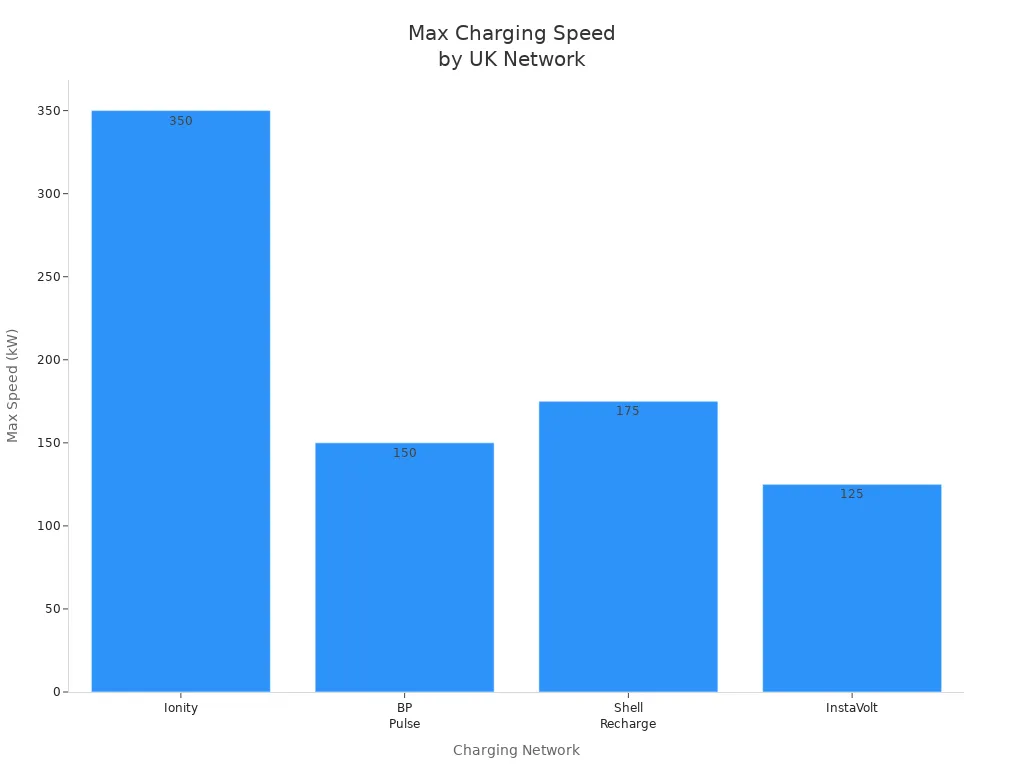
Public charging networks in the UK vary in supported connectors and maximum speeds. Drivers must understand network compatibility to avoid charging delays. Ionity offers CCS connectors with speeds up to 350 kW, ideal for rapid charging. BP Pulse supports Type 2, CCS, and CHAdeMO, providing broad coverage. Shell Recharge and InstaVolt focus on CCS and Type 2, with InstaVolt also offering CHAdeMO. The chart below compares maximum charging speeds across major networks.
| Netzwerk | Supported Connectors | Maximum Speed |
|---|---|---|
| Ionität | CCS | 350 kW |
| Blutdruck Puls | Type 2, CCS, CHAdeMO | 150 kW |
| Muschel aufladen | Type 2, CCS | 175 kW |
| InstaVolt | CCS, CHAdeMO | 125 kW |
Tip: Drivers should check network compatibility and charging cable requirements before traveling.
Workplace EV Charging Adapters
Common setups
Workplace charging setups in the UK accommodate a range of electric car models and connector types. Most modern vehicles, such as the BMW i3 and Renault Zoe, use Type 2 connectors for AC charging. Newer models, including the Volkswagen e-Golf and Hyundai Ioniq, support CCS for rapid charging. Older vehicles like the Nissan Leaf and Mitsubishi Outlander PHEV rely on Type 1 and CHAdeMO connectors. TPSON offers workplace solutions that integrate multiple connector types, ensuring compatibility for employees and visitors.
| Elektroauto-Modell | Steckertypen |
|---|---|
| BMW i3 | Type 2 and CCS (for rapid) |
| Hyundai Ioniq | Type 2 and CCS (rapid) |
| Mitsubishi Outlander PHEV | Type 1 and CHAdeMO |
| Nissan Leaf | Type 1 and CHAdeMO (rapid) |
| Renault Zoe | Typ 2 |
| Tesla Model S | Type 2 and Tesla Supercharger |
| Volkswagen e-Golf | Type 2 and CCS (rapid) |
- Type 2 Connectors: Most modern EVs in the UK use Type 2 sockets for AC charging, including models like the Renault Zoe and BMW i3.
- CCS Connectors: These are increasingly standard on newer EVs, combining AC and DC charging capabilities, used by vehicles like the Jaguar I-PACE and Audi e-tron.
- CHAdeMO Connectors: While becoming less common, some vehicles like the Nissan Leaf still utilize this standard for DC fast charging.
Note: Workplace charging stations should provide both Type 2 and CCS connectors to support a wide range of vehicles.
Employee vs visitor charging
Workplaces often differentiate between employee and visitor charging. Employees typically access dedicated charging points with fixed cables, ensuring consistent performance. Visitors may use untethered chargers or portable adapters, allowing compatibility with various plug types. TPSON recommends workplaces install universal charging stations with multiple connector options. Clear signage and instructions help visitors select the correct charging cable or adapter. EV extension cable adapters provide additional reach for vehicles parked further from charging points.
Tip: Workplaces should monitor usage and maintain charging equipment regularly to ensure reliability for all users.
Long-Distance Travel and EV Extension Cable Adapters
Planning for rapid charging
Long-distance journeys in the UK demand careful planning to ensure efficient charging. Drivers should map out routes that include rapid charging stations, especially along major motorways and in rural areas where infrastructure may be sparse. Most modern electric vehicles support CCS2 connectors, which deliver the fastest charging speeds at motorway service stations. These locations often feature ultra-rapid chargers, allowing drivers to recharge quickly and continue their trips with minimal delay.
Before setting out, drivers should check the compatibility of their vehicle with available charging points. Many public networks display real-time charger status through apps or online maps. This information helps drivers avoid unnecessary detours or wait times. Carrying a reliable charging cable and verifying the condition of connectors before departure reduces the risk of interruptions during travel.
For those venturing into Europe, understanding the differences in plug types becomes essential. Some European countries use the CEE 7/7 plug (Euro Schuko), which requires an adapter to connect to UK three-pin sockets. The table below summarizes the best adapter options for long-distance EV travel in the UK and Europe:
| Adaptertyp | Beschreibung | Quelle |
|---|---|---|
| CEE 7/7 Plug | Converts euro schuko socket to UK three-pin plug, suitable for granny cable. | ToughLeads |
| SKROSS Adapter | Converts various plugs to European 2-pin, but not for sustained load on granny charger. | Mister EV |
| Custom Adapter | Can be made using CEE 7/7 plug and IP66 3-pin socket for personal use. | Screwfix |
Tip: Always verify the maximum supported current of any adapter before use. Using an adapter not rated for high loads can cause overheating or fire.
Backup adapter options
Unexpected situations can arise during long-distance travel, such as encountering a broken charger or an incompatible socket. Carrying backup adapter options ensures that drivers can access alternative charging points and avoid being stranded. The most effective strategy involves packing a set of adapters that cover the most common scenarios.
- Never use a regular travel adapter for EV charging. These devices are not designed for sustained high current and may pose safety risks.
- The SKROSS adapter should only be used in emergencies and with reduced amps to avoid fire hazards.
- A CEE 7/7 plug adapter works well for connecting to European sockets, especially when using a granny cable.
- Custom adapters, built with weatherproof sockets, provide a robust solution for outdoor or temporary charging needs.
Drivers should also consider carrying ev extension cable adapters. These cables extend the reach of standard charging cables, making it easier to connect to distant or awkwardly placed sockets. Extension adapters prove especially useful at campsites, rural properties, or event venues where charging points may not be conveniently located.
Alert: Only use extension cables and adapters that meet safety certifications and are rated for EV charging. Avoid counterfeit or uncertified products to protect both the vehicle and the user.
Ensuring Compatibility, Safety & Performance of EV Charging Adapters
Certification & Standards for EV Charging
UK/EU regulations
Regulatory compliance forms the foundation of safe and reliable EV charging in the UK. Authorities require all adapters and cables to meet strict standards. The UK and EU have introduced several regulations to ensure that charging equipment supports current and future vehicle technologies. Die nachstehende Tabelle gibt einen Überblick über the most important standards and requirements:
| Standard/Regulation | Anforderung | Effective Date |
|---|---|---|
| ISO 15118-1 to -5 | Support required for public chargers | From January 1, 2027 |
| EN ISO 15118-20:2022 | Support required for all new and renovated chargers | From January 1, 2027 |
| V2G functionality | Mandatory for new commercial installations above 22kW | From March 2025 |
| Smart Charge Points Regulations | All new home chargers must be smart | Since June 30, 2022 |
| Building Regulations Part S | New residential buildings must provide EV charging provisions | Since June 15, 2022 |
Manufacturers and installers must follow these rules to guarantee compatibility and safety for all users.
CE and other marks
Products sold in the UK and EU must display the CE mark. This symbol shows that the adapter meets essential health, safety, and environmental protection standards. Some adapters may also carry additional certifications, such as UKCA or TUV, which further demonstrate compliance with local and international requirements. Drivers should always check for these marks before purchasing any charging equipment.
Safety Tips for EV Charging Adapters
Proper use and maintenance
Safe operation of EV charging adapters protects both the vehicle and the user. The following tips help maintain safety and performance:
- Ensure the electricity supply is safe before plugging in the charger.
- Use adapters specifically designed for the vehicle’s make and model.
- Inspect adapters for secure connections and visible damage before each use.
- Avoid stacking multiple adapters to reduce electrical resistance.
- Store adapters in dry conditions and clean connector pins regularly to prevent corrosion.
Routine checks and proper storage extend the lifespan of charging adapters and reduce the risk of accidents.
Avoiding counterfeit adapters
Counterfeit adapters pose significant safety hazards. They often lack proper certification and may use substandard materials. Drivers should purchase adapters only from reputable suppliers and verify the presence of certification marks. If an adapter appears poorly made or lacks documentation, it should not be used.
Alert: Counterfeit adapters can cause overheating, fire, or damage to the vehicle’s electrical system.
Performance Factors for Charging Cable Adapters
Cable quality
High-quality cables ensure efficient power delivery and minimize energy loss. Buyers should select cables with robust insulation and durable connectors. The table below outlines key performance factors to consider:
| Performance Factor | Beschreibung |
|---|---|
| Länge des Kabels | Choose a cable that is long enough to comfortably reach the vehicle. Popular sizes range from 3 meters to 10 meters. A longer cable provides flexibility but can be heavier and more difficult to store. |
| Nennleistung | Cables are rated by amperage, impacting charging speed. A 16 amp cable supports up to 3.7 kilowatts, a 32 amp single-phase cable supports up to 7.4 kilowatts, and a 32 amp three-phase cable can support up to 22 kilowatts. Match the cable’s power rating with the vehicle and charge point. |
| Stecker Typ | Most EVs in the UK use Type 2 connectors, while some older models use Type 1. Type 2 is standard in the UK and Europe, making it a safe choice for future-proofing. |
Wetterschutz
Weatherproofing protects adapters from rain, dust, and temperature extremes. Outdoor charging points require adapters with high ingress protection (IP) ratings. Sealed connectors and sturdy casings prevent water and debris from entering, ensuring reliable charging in all conditions.
Tip: Always store adapters in a protective case when not in use to maintain performance and safety.
Cost & Value Considerations for EV Charging Adapters
Price Ranges for EV Charging Adapters
Typ 2
Type 2 adapters remain the most popular choice for drivers in the UK. Prices for these adapters typically range from £120 to £250, depending on features such as cable length and weatherproofing. Most drivers find that investing in a high-quality Type 2 plug ensures reliable performance for daily charging.
CCS2
CCS2 adapters support rapid charging and often cost more than standard options. Entry-level CCS2 adapters start at around £200, while advanced models with higher power ratings can reach £400 or more. For those needing a CCS2 to CHAdeMO adapter, the price climbs significantly—these specialized adapters cost around £800 plus import duty and VAT.
CHAdeMO
CHAdeMO adapters serve owners of older Japanese and Asian electric vehicles. Prices for CHAdeMO adapters usually fall between £300 and £600. The cost reflects the declining support for this standard, as manufacturers shift toward CCS2.
Tesla and Commando
Tesla-specific adapters, designed for compatibility with Superchargers and destination chargers, range from £150 to £350. Commando adapters, used for portable or workplace charging, cost between £100 and £250. These adapters provide flexibility for temporary installations or events.
Balancing Cost vs Quality in EV Charging
Cheap vs premium adapters
Drivers face a choice between budget and premium adapters. Budget adapters offer basic functionality at a lower price, while premium models provide advanced features and enhanced durability. The table below compares two popular options:
| Adapter Name | Preis | Typ |
|---|---|---|
| Ohme Home Pro | £899 | Prämie |
| EO Mini Pro 3 | £599 | Budget |
Premium adapters often include smart features, longer warranties, and robust construction. Budget options may suit occasional use but might lack advanced safety features.
Garantie und Support
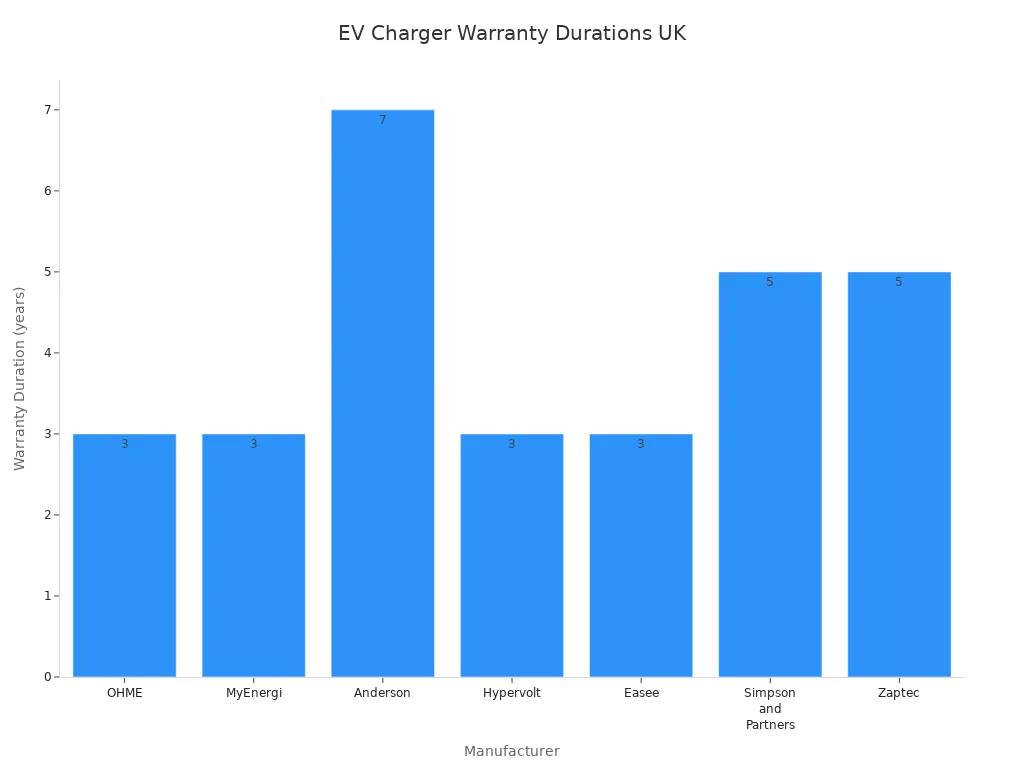
Warranty and support play a crucial role in the long-term value of an EV charging adapter. Leading manufacturers offer warranties ranging from three to seven years. Some brands, such as MyEnergi and Hypervolt, allow drivers to purchase extended coverage for up to five years. Anderson provides a seven-year warranty, with an option for a ten-year enclosure warranty from Simpson and Partners. The table below summarizes warranty durations:
| Hersteller | Dauer der Garantie | Anmerkungen |
|---|---|---|
| OHME | 3 Jahre | 2 years for charging cables |
| MyEnergi | 3 Jahre | Option to purchase extended warranty cover for up to 5 years |
| Anderson | 7 years | Warranty activation must be completed within 7 days of installation |
| Hypervolt | 3 Jahre | Option to purchase extended warranty cover for up to 5 years |
| Easee | 3 Jahre | |
| Simpson and Partners | 5 years | 10 years enclosure warranty |
| Zaptec | 5 years |
Tip: Longer warranties and responsive support reduce charging costs over time by minimizing repair and replacement expenses.
Future-Proofing Your EV Charging Adapter Investment
Upgrading as technology evolves
The EV market continues to evolve rapidly. Drivers should consider adapters that support both current and emerging standards. Choosing a universal charger or modular cable system allows for easy upgrades as new vehicle models and charging protocols appear.
Resale and compatibility
Adapters with broad compatibility retain value in the secondhand market. A well-maintained adapter with a recognized certification and a transferable warranty appeals to future buyers. Investing in a high-quality plug ensures continued usability as charging infrastructure expands.
Note: Future-proofing an adapter investment protects against obsolescence and supports long-term savings.
Selecting the right EV charging adapter in the UK for 2025 depends on location and vehicle type. Most drivers benefit from AC Type 2 connectors at home, while CCS2 becomes essential for rapid charging at public stations and highways. Charging setups in multifamily garages, workplaces, and public destinations should prioritize both Type 2 and CCS2 for broad compatibility.
Key recommendations for adapter selection:
- Single-family homes: Use AC Type 2 (7.4–11 kW).
- Multifamily garages: Combine AC Type 2 and DC CCS2 (11–22 kW AC, 50–150 kW DC).
- Workplaces and depots: Standardize on AC Type 2 and DC CCS2 (11–22 kW AC, 100–300 kW DC).
- Public and highway locations: Focus on DC CCS2 (100–250 kW+).
Actionable steps for compatibility and safety:
- Inspect sockets for damage and use only branded, compliant outlets.
- Test electrical supply with a plug-in tester before charging.
- Schedule regular electrical inspections—every 10 years for owners, every 5 years for rentals.
- Install sockets marked for EV charging and avoid overloading outlets.
Future-proofing your charging setup:
- Choose chargers with robust warranties and essential safety features.
- Ensure professional installation and plan for possible electrical upgrades.
- Consider smart charging features and tariff compatibility for long-term savings.
The UK’s transition to CCS as the primary standard means drivers should prioritize CCS-compatible adapters. As CHAdeMO support declines, investing in CCS2 ensures access to the latest infrastructure and government-backed networks.
FAQ
What is the most common EV charging adapter in the UK?
Type 2 remains the most common adapter for home and public charging. Most new electric vehicles and charging stations in the UK use this standard. Drivers benefit from its wide compatibility and ease of use.
Can drivers use a CCS2 adapter for all EVs?
No. Only vehicles with a CCS2 inlet can use CCS2 adapters. Most modern EVs support CCS2, but older models may require different connectors. Always check the vehicle’s charging port before selecting an adapter.
Are CHAdeMO adapters still necessary in 2025?
CHAdeMO adapters serve owners of older Japanese and Asian EVs. Their necessity decreases each year as CCS2 becomes the standard. Drivers with CHAdeMO-equipped vehicles should verify charger availability before long trips.
How can drivers ensure an adapter is safe and compliant?
Drivers should look for CE, UKCA, or TUV marks on the adapter. These certifications indicate compliance with UK and EU safety standards. Purchasing from reputable suppliers reduces the risk of counterfeit products.
What is the typical lifespan of an EV charging adapter?
A high-quality adapter lasts three to seven years with proper care. Regular inspection and maintenance extend its service life. Warranty coverage from leading brands provides additional peace of mind.
Do all public charging stations require drivers to bring their own cable?
Not always. Some public chargers have tethered cables, while others require drivers to use their own. Checking the charging station details in advance helps drivers prepare the correct cable or adapter.
Can one adapter work for multiple EVs in a household?
Yes, if all vehicles use the same connector type, such as Type 2. For mixed fleets, an untethered charger with interchangeable cables or adapters offers flexibility. This setup supports households with different EV models.
Is it safe to use extension cables with EV charging adapters?
Only use extension cables rated for EV charging and certified for high current. Standard household extension cords are unsafe for EV charging. Always follow manufacturer guidelines to prevent overheating or electrical hazards.