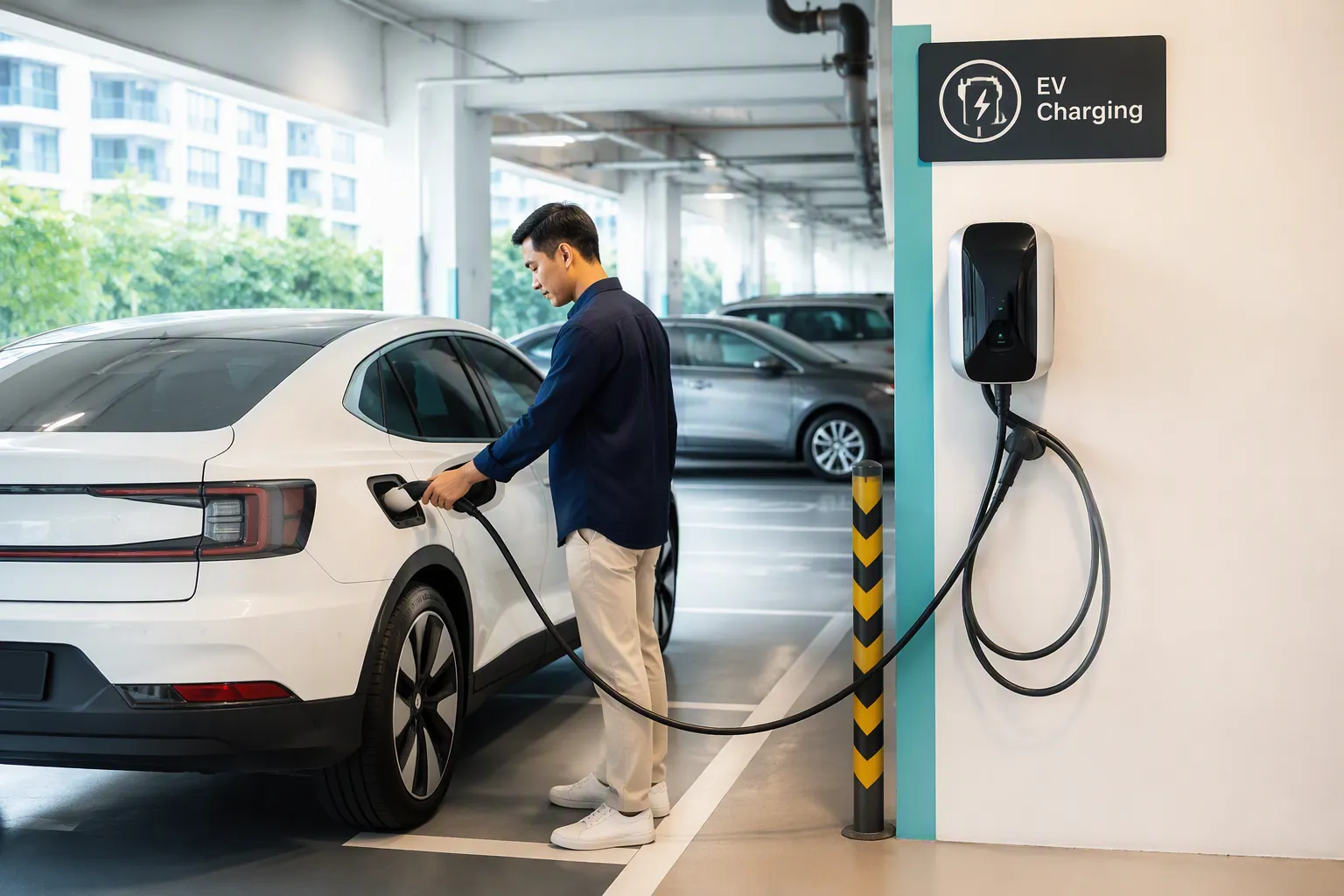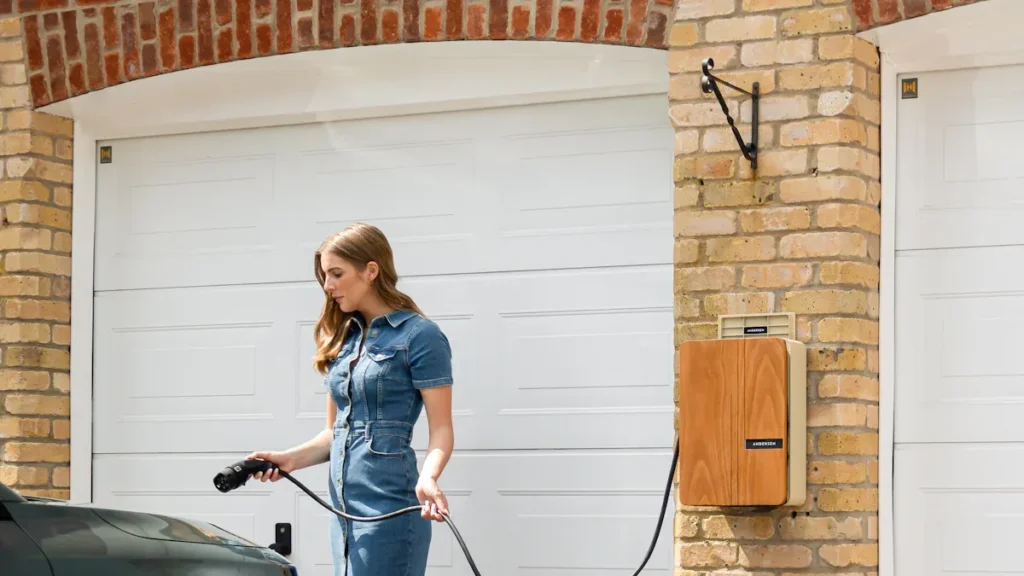
Brasilianische Haushalte setzen zunehmend auf Elektrofahrzeuge, wobei die Verkäufe von Elektroautos Anfang 2025 einen Anstieg von 40% verzeichneten. Für diese neuen Besitzer stellt ein intelligentes Ladegerät EV-Ladegerät eine kluge Investition dar. Die höheren Anschaffungskosten rechtfertigen sich durch erhebliche langfristige Einsparungen und überlegenen Komfort. Während einige Hersteller von EV-Ladegeräten Modelle nur grundlegende tragbare EV-Ladegeräte, Funktionen bieten, liefern fortschrittliche EV-Ladelösungen Lösungen von Anbietern wie TPSON einen größeren langfristigen Nutzen. Die richtige Wahl des E-Auto-Ladegeräts hängt vom Zugang zum “Tarifa Branca”-Tarif und der spezifischen elektrischen Installation des Hauses ab.
Die Technologie verstehen: Was macht ein intelligentes E-Auto-Ladegerät “intelligent”?
Um den Wert eines intelligenten E-Auto-Ladegeräts zu erkennen, muss man zunächst die Komponenten einer Standard-Heimladestation verstehen und was die “intelligente” Version auszeichnet. Der Unterschied liegt in der Konnektivität, die ein neues Maß an Kontrolle, Effizienz und Energiemanagement ermöglicht.
Kernkomponenten einer Heimladestation
Jedes E-Auto-Heimladegerät, unabhängig von seiner Intelligenz, basiert auf einer Grundlage aus wesentlicher Hardware , die für eine sichere und zuverlässige Stromversorgung ausgelegt ist.
Die Ladeeinheit (Wallbox)
Die Wallbox ist die Haupteinheit, die an der Wand montiert wird. Sie beherbergt die kritischen elektrischen Komponenten, die den Stromfluss vom Hausstromkreis zum Fahrzeug steuern. Dieses Gehäuse schützt die interne Elektronik vor Umwelteinflüssen.
Kabel und Stecker (Typ-2-Standard)
Ein robustes Kabel verbindet die Wallbox mit dem Fahrzeug. In Brasilien ist der “Typ-2”-Stecker der etablierte Standard für Wechselstromladung. Dies gewährleistet die Kompatibilität mit den meisten im Land erhältlichen Elektrofahrzeugmodellen.
Interne Sicherheitsmechanismen
Sicherheit hat oberste Priorität. Alle zertifizierten Ladegeräte enthalten interne Mechanismen wie Leistungsschalter und Fehlerstromschutzschalter (RCDs). Diese Komponenten schützen vor Überströmen, Kurzschlüssen und elektrischen Fehlern und gewährleisten die Sicherheit sowohl des Benutzers als auch der häuslichen Elektroinstallation.
Der “intelligente” Unterschied: Konnektivität und Steuerung
Die Bezeichnung “intelligent” ergibt sich aus der Kommunikationsfähigkeit. eines Ladegeräts. Fortschrittliche E-Auto-Ladelösungen von Anbietern wie TPSON integrieren diese Technologie, um die Energieeffizienz zu maximieren.
.
WLAN- und Bluetooth-Konnektivität Intelligente Ladegeräte verbinden sich über Ihr heimisches. WLAN-Netzwerk mit dem Internet. Diese Verbindung ermöglicht es dem Gerät, Daten mit der Cloud auszutauschen. Viele verfügen auch über Bluetooth für die Erstinstallation.
und direkte Steuerung, wenn Sie in der Nähe des Ladegeräts sind, selbst wenn Ihr WLAN vorübergehend ausfällt.
Die Rolle der Smartphone-App.
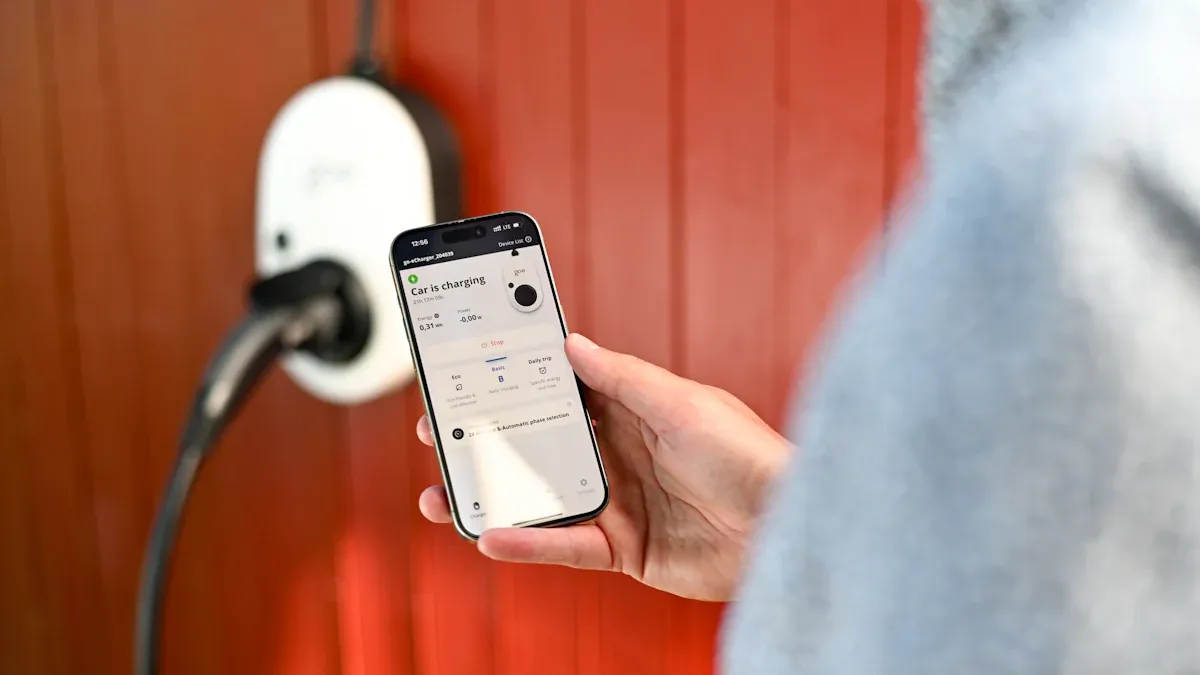
Die Smartphone-App ist das Kommandozentrum. Sie verwandelt das Telefon des Benutzers in eine Fernbedienung für das Ladegerät. Über die App können Hausbesitzer das Laden starten oder stoppen, den Fortschritt überwachen und auf detaillierte Daten zu ihrem Energieverbrauch zugreifen.
Cloud-basierte Managementplattformen.
Jeder Befehl aus der App wird an eine sichere Cloud-Plattform gesendet. Diese Plattform verarbeitet die Anfrage und kommuniziert sie zurück an das Ladegerät. Sie speichert auch historische Ladedaten, sodass Benutzer ihren Energieverbrauch und ihre Kosten im Zeitverlauf verfolgen können, was für die Optimierung der Ladeeffizienz entscheidend ist.
Erklärung der wichtigsten intelligenten Funktionen Konnektivität ermöglicht eine Reihe von Funktionen, die Komfort und Kosteneinsparungen bieten. Diese Funktionen sind es, die das.
Das Wichtigste zum Mitnehmen: intelligente Ladeerlebnis.
wirklich ausmachen. Intelligente Funktionen verwandeln Ihr Ladegerät von einer einfachen Steckdose in ein intelligentes Energiemanagement-Tool.
Fernstart, -stopp und -überwachung.
Benutzer können eine Ladesitzung von überall mit einer Internetverbindung starten oder beenden. Sie können auch den aktuellen Ladestand des Fahrzeugs und die voraussichtliche Fertigstellungszeit direkt von ihrem Telefon aus überprüfen.
Geplante Ladesitzungen.
Dies ist ein Eckpfeiler des intelligenten Ladens. Hausbesitzer können das Laden so planen, dass es automatisch während der Schwachlastzeiten beginnt, wenn die Stromtarife am niedrigsten sind. Diese einfache Maßnahme senkt die Energiekosten für das Fahrzeug erheblich.
Energieverbrauchsverfolgung.
Intelligente Ladegeräte liefern detaillierte Berichte zum Energieverbrauch. Benutzer können genau sehen, wie viele Kilowattstunden (kWh) pro Sitzung verbraucht wurden, ihren monatlichen Energieverbrauch verfolgen und ihre tatsächlichen Ladekosten berechnen, was eine höhere Effizienz fördert.
Die finanzielle Argumentation: Wie ein intelligentes E-Auto-Ladegerät in Brasilien Geld spart EV-Ladegerät Die Hauptmotivation für die Wahl eines intelligenten“
Ladegeräts ist finanzieller Natur. Die Technologie ermöglicht es Hausbesitzern, ihren Stromverbrauch aktiv zu steuern. Dieses Management führt direkt zu erheblichen langfristigen Einsparungen und einer exzellenten Rendite der Anfangsinvestition. Der Schlüssel zur Nutzung dieser Vorteile in Brasilien liegt im Verständnis und der Nutzung der “Tarifa Branca”.”
Maximale Einsparungen mit “Tarifa Branca”.
Die „Tarifa Branca“ oder Weiße Tarifoption ist ein zeitabhängiger Stromtarif, der vielen brasilianischen Verbrauchern zur Verfügung steht. Er berechnet je nach Tageszeit unterschiedliche Preise für Strom. Ein intelligentes Ladegerät ist das perfekte Werkzeug, um dieses System voll auszunutzen und so die Effizienz zu maximieren und die Kosten zu minimieren.
Was ist der Weiße Tarif (Tarifa Branca)?.
Der Weiße Tarif unterteilt den Tag in drei verschiedene Zeiträume. Jeder Zeitraum hat einen unterschiedlichen Preis pro Kilowattstunde (kWh). Das Ziel ist es, Verbraucher dazu zu ermutigen, ihren hohen Energieverbrauch von Zeiten mit hoher Nachfrage im nationalen Netz zu verlagern. Die Kernidee:.
Nutzen Sie mehr Strom, wenn er günstig ist (Schwachlastzeit), und weniger, wenn er teuer ist (Spitzenlastzeit). Diese einfache Verlagerung wirkt sich dramatisch auf Ihre monatliche Stromrechnung aus.
Identifizierung von Schwachlast-, Mittel- und Spitzenlastzeiten.
Die Stromversorger legen die genauen Zeiten für diese Zeiträume fest, aber sie folgen an Wochentagen im Allgemeinen einem konsistenten Muster. Wochenenden und nationale Feiertage gelten typischerweise den ganzen Tag als Schwachlastzeit.
| Hier ist ein typischer Wochenplan für den Weißen Tarif: | Tarifzeitraum | Kostenstufe | Typischer Zeitrahmen (Wochentage) |
|---|---|---|---|
| Beste Zeit zum Laden? | 18:00 – 21:00 | Spitzenlast (Peak) | Vermeiden Sie es, |
| 🔴 Höchster Preis | 17:00 – 18:00 & 21:00 – 22:00 | 🟡 Medium | Acceptable |
| Off-Peak (Off-Peak) | 22:00 – 17:00 | 🟢 Lowest | ✅ Ideal |
Note: Homeowners should confirm the exact hours with their local electricity provider.
Automating Charging for the Cheapest Times
This is where a smart EV charger demonstrates its value. Instead of manually plugging in the car late at night, homeowners use the smartphone app to set a schedule. They can instruct the charger to begin a session automatically at 22:00, when the off-peak, low-cost energy period starts. The charger then delivers the required energy overnight. This automation guarantees the lowest possible charging cost without any daily effort, ensuring maximum savings and energy efficiency.
Berechnung der Investitionsrendite (ROI)
The higher price of a smart charger is an investment in future savings. Calculating the potential returns helps justify this upfront cost. The process involves estimating driving habits and comparing the cost of unmanaged charging to smart, scheduled charging.
Estimating Your Monthly Kilometers
First, a homeowner needs to determine their average monthly driving distance. A typical urban commuter in Brazil might drive around 1,200 kilometers per month. This figure is the foundation for calculating monthly energy needs.
Comparing Charging Costs: Smart vs. Unmanaged
Next, one can compare the cost of charging. An unmanaged charger might be used during peak hours out of convenience. A smart charger, like those from advanced providers such as TPSON, will be scheduled for off-peak hours. The difference in cost is substantial.
Let’s assume an EV has an efficiency of 6 km/kWh. For a 1,200 km month, the vehicle needs 200 kWh of energy.
| Methode der Aufladung | Hier ist ein typischer Wochenplan für den Weißen Tarif: | Example Rate (R$/kWh) | Monthly Energy Cost |
|---|---|---|---|
| Unmanaged Charging | Beste Zeit zum Laden? | R$ 1,20 | R$ 240,00 |
| Intelligentes Aufladen | Off-Peak (Off-Peak) | R$ 0,60 | R$ 120,00 |
This simple comparison shows immediate monthly savings of R$ 120,00. Over a year, this amounts to R$ 1.440,00 in total cost savings, leading to significantly lower electricity bills.
The Break-Even Point: When Your Charger Pays for Itself
The break-even point is when the accumulated savings equal the initial investment in the charger. If the price difference between a standard and a smart charger is R$ 2.000, the calculation is straightforward:
Initial Extra Cost / Monthly Savings = Months to Break Even
R$ 2.000 / R$ 120 = ~17 months
In this scenario, the smart charger pays for its extra cost in less than a year and a half. After this point, all future savings are pure financial returns, making it a highly logical long-term investment for improving home energy efficiency.
The Practical Advantages: Convenience and Safety for Your Home
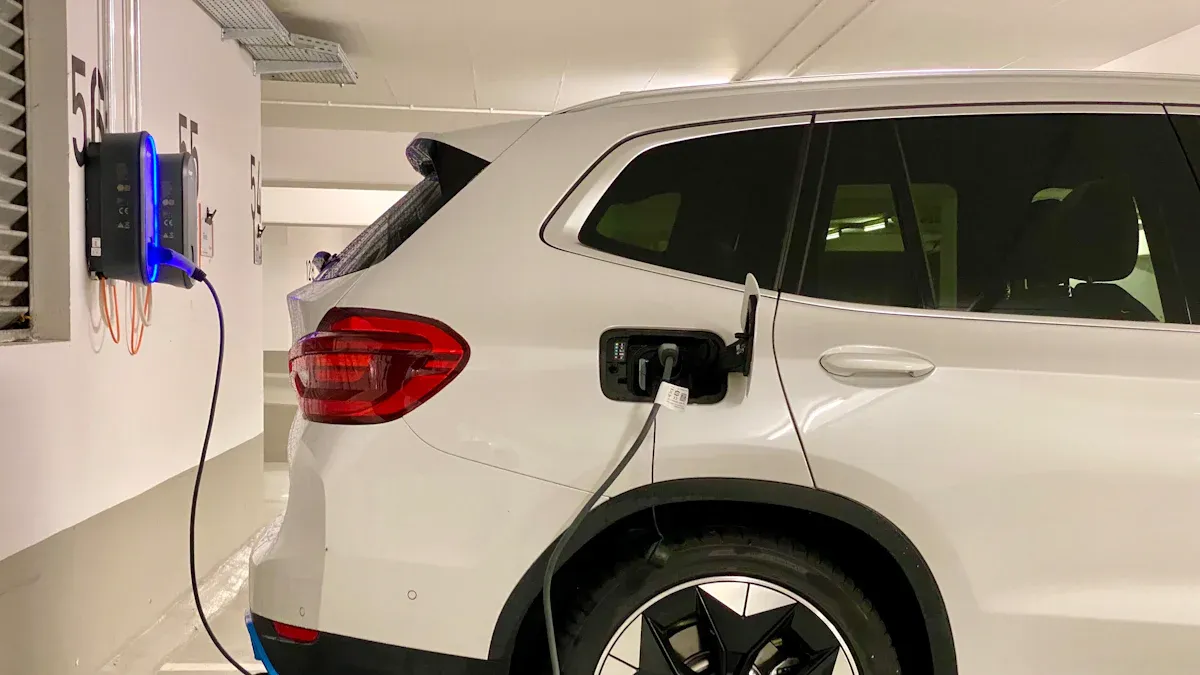
Beyond financial savings, a intelligentes EV-Ladegerät offers significant practical benefits that enhance daily life and protect a home’s electrical infrastructure. These advantages center on superior convenience and advanced safety features, transforming the EV ownership experience from a task into a seamless, automated process.
Unmatched Convenience and Flexibility
Smart technology removes the manual effort and guesswork from vehicle charging. Homeowners gain complete control over their energy usage through intuitive digital tools.
Managing Your Charge from Anywhere
The core of this convenience is the smartphone app. It acts as a remote control, allowing homeowners to start, stop, or pause a charging session from any location with an internet connection. This means a user can plug in their vehicle upon arriving home and initiate the charge later from their couch, ensuring the session aligns perfectly with their schedule and low-cost energy periods.
Real-Time Notifications and Status Updates
A smart charger keeps the homeowner informed. The system sends real-time notifications directly to a user’s phone, confirming when a charging session begins, when it is complete, or if an error occurs. This constant feedback provides Seelenfrieden, as owners always know their vehicle’s charging status without needing to check it physically.
Sharing Access with Family Members
For households with multiple drivers, a smart charger simplifies management. The primary account holder can grant charging access to other family members through the app. This feature allows everyone to charge their vehicles when needed, while the owner can still monitor overall energy consumption and costs from a central account.
Enhancing Home Electrical Safety with Load Balancing
Perhaps the most critical practical advantage is the integration of advanced safety technology. Dynamic Load Balancing (DLB) is a feature that actively protects a home’s electrical system from overloads.
Was ist dynamischer Lastausgleich?
Dynamic Load Balancing is an intelligent system that monitors a home’s total electricity consumption in real time. It constantly measures the amount of energy being used by all appliances, lights, and other devices.
The Safety Principle: DLB ensures the total electricity demand of the house plus the EV charger never exceeds the main circuit breaker’s maximum capacity.
How It Prevents Circuit Overloads
The system works automatically to maintain a safe electrical load.
- A sensor measures the total electricity flowing into the home.
- The charger calculates the available capacity by subtracting current household usage from the main fuse’s limit.
- It then adjusts the charging power delivered to the EV to fit within that safe, available margin.
If someone turns on a high-power appliance like an electric shower, the DLB system instantly reduces the charging speed. Once the appliance is off, it restores the charger to full power. This dynamic adjustment prevents tripped breakers and potential damage to the home’s wiring.
Why It’s Crucial for Homes with Limited Capacity
Many homes in Brazil were not designed to handle the high, sustained energy draw of an EV charger alongside other major appliances. Without DLB, charging an EV could frequently cause power outages. This feature is crucial because it allows homeowners to install a powerful charger without needing an expensive and complex upgrade to their home’s main electrical panel, saving both money and hassle while ensuring a safe distribution of energy.
Future-Proofing Your Investment
Choosing a smart EV charger is not just about immediate benefits; it is a strategic investment in future technology. These devices are designed to evolve, integrating with emerging energy trends and ensuring long-term relevance. This forward-thinking capability protects a homeowner’s investment against technological obsolescence and positions them to capitalize on the future of home energy management, especially concerning renewable energy and grid advancements.
Integration mit erneuerbaren Energien
The synergy between smart chargers and renewable energy, particularly solar power, is a key advantage. This combination unlocks true energy independence and promotes sustainability. A smart charger acts as the brain, directing the flow of green energy for maximum efficiency.
Pairing with Home Solar Panel Systems
Homeowners with solar panels can pair them with a smart charger to create a self-sufficient ecosystem. A smart charger communicates with the solar inverter and any connected energy storage system. This integration is crucial for optimizing the use of renewable energy. The system intelligently manages the flow of solar energy, ensuring this renewable resource meets the home’s energy demands first before directing any surplus to the vehicle. This creates a powerful setup for sustainability and energy independence.
A complete solar charging setup includes solar panels, an inverter, the smart EV charger, and often a battery for energy storage. This combination provides the ultimate control over your home’s renewable energy.
Prioritizing Solar Energy for “Free” Charging
A smart charger can prioritize charging using only excess solar energy. This process turns sunlight into free vehicle fuel, a significant step towards sustainability and lower costs. The system follows a smart hierarchy:
- First, solar energy powers the home’s immediate needs during the day.
- Next, surplus solar energy is directed to charge the electric vehicle.
- Finally, any remaining green energy is stored in a home battery for later use or sent to the grid.
This automated prioritization ensures every kilowatt of renewable energy is used effectively. It maximizes the use of green energy and enhances a household’s energy independence from the public grid.
Preparing for the Future of the Grid
Smart chargers are also ready for the next generation of electrical grid technologies. Their connectivity makes them adaptable, a crucial feature as energy systems become more interactive and reliant on renewable energy sources.
Vehicle-to-Grid (V2G) Readiness
Vehicle-to-Grid (V2G) is an emerging technology that allows an EV’s battery to send energy back to the grid during peak demand. While not yet widespread in Brazil, having a smart charger provides the foundational hardware that may support future V2G capabilities. This positions homeowners to potentially participate in future energy programs, further enhancing their energy independence and contributing to grid stability.
Over-the-Air Software Updates for New Features
Smart chargers from advanced providers like TPSON receive over-the-air (OTA) software updates. This function is similar to updating a smartphone. The manufacturer can remotely add new features, improve charging algorithms, and enhance compatibility with new renewable energy technologies or utility programs. These updates ensure the charger remains current and functional for years, protecting the initial investment and continuously improving the user experience with the latest eco-friendly solutions.
The Drawbacks: Potential Cons of a Smart EV Charger
While smart EV chargers offer compelling advantages, homeowners must also consider their potential drawbacks. The higher initial investment and a dependency on technology are two significant factors that require careful evaluation. Understanding these cons ensures a balanced perspective before making a final purchasing decision.
The Higher Upfront Investment
The most immediate barrier for many potential buyers is the price. A smart charger represents a larger financial commitment compared to its simpler counterparts, encompassing both the unit’s price and the cost of professional installation.
Price Comparison: Smart vs. Standard Chargers
A smart EV charger typically carries a higher price tag than a standard, or “dumb,” charger. This price difference is due to the advanced hardware and software required for connectivity, data processing, and remote control. The initial investment for a smart unit can be significantly more, a factor that homeowners must weigh against the promise of long-term energy savings. This upfront cost is a primary consideration in the overall budget for EV ownership.
Professional Installation Costs in Brazil
Regardless of the charger type, professional installation is essential for safety and compliance. The installation cost in Brazil can vary based on the complexity of the job, the home’s existing electrical infrastructure, and regional labor rates. A proper installation ensures the charger operates safely and efficiently. This installation expense adds to the total initial investment, making the financial planning for a home charging setup a critical step. Homeowners should budget for both the charger and the installation to get a complete picture of the total cost.
The Reliance on Technology
The “smart” capabilities of these chargers are entirely dependent on technology. This reliance introduces potential points of failure and a learning curve that may not be suitable for every user.
Requirement for a Stable Wi-Fi Connection
A smart charger needs a consistent and stable Wi-Fi connection to function correctly. This ‘always-on’ connectivity is crucial for accessing its advanced features. The charger communicates with cloud servers to receive commands, send data, and download updates. An unstable or weak Wi-Fi signal can disrupt these processes, limiting the device’s smart functionality and affecting its ability to manage energy consumption effectively.
What Happens if the Internet Fails?
Internet connectivity issues can lead to downtime for the charger’s software. If the internet connection fails, the charger loses its “smart” capabilities.
Without a connection, advanced features like automated scheduling, remote monitoring, cost optimization, and dynamic adjustments based on household energy demand become unavailable. The charger typically reverts to a “dumb” mode, allowing basic charging to continue but without the intelligent energy management that justifies its higher cost.
While many chargers from providers like TPSON include Bluetooth for direct local control, the core benefits tied to cloud management and remote access are lost during an outage.
App Complexity for Non-Tech-Savvy Users
The user experience with smart charger apps can be a significant hurdle for some individuals. The overall ease of use has been described as poor in some cases, characterized by the hassle of managing apps and payment methods. For users who are not comfortable with technology, navigating these interfaces can be frustrating. Some common challenges include:
- App Limitations: Certain apps, even when paired with high-quality hardware, may lack in-depth features or intuitive data access, restricting a user’s ability to manage their charging sessions easily.
- Complex Features: While features like scheduling and energy tracking are powerful, their setup can be confusing for those seeking a simple plug-and-charge experience.
This complexity can make the process feel cumbersome, potentially detracting from the convenience that smart technology is meant to provide.
How Does a Smart Charger Compare to Other Options in Brazil?
Choosing the right charger involves comparing the available options against a homeowner’s specific needs. The decision often comes down to a trade-off between initial cost, long-term savings, and daily convenience. A smart charger from a provider like TPSON offers advanced features, but it is important to see how it stacks up against more basic alternatives.
Smart Charger vs. Standard (Dumb) Charger
The most common comparison for a permanent home installation is between a smart and a standard wallbox. The primary differences are intelligence and price.
Cost vs. Control
A standard charger has a lower upfront cost, making it an attractive option for budget-conscious buyers. However, this initial saving comes at the expense of control. A smart charger gives homeowners the power to manage their energy consumption precisely. They can schedule charging for off-peak hours to leverage “Tarifa Branca,” monitor energy usage, and ultimately reduce their electricity bills. This control translates into significant long-term financial benefits that a standard charger cannot offer.
Simplicity vs. Functionality
Standard chargers offer straightforward simplicity: a user plugs in the vehicle, and it charges. This appeals to those who want a no-fuss solution. In contrast, a smart charger provides a wealth of functionality through its app. Features like remote start/stop, energy tracking, and load balancing deliver a superior and safer user experience. The choice is between basic power delivery and an intelligent energy management system.
Smart Charger vs. Portable (Emergency) Charger
Every EV owner will encounter a tragbares Ladegerät, as it often comes with the vehicle. However, its intended use is very different from a dedicated wallbox.
Ladegeschwindigkeit und tägliche Nutzbarkeit
Der bedeutendste Unterschied liegt in der Ladegeschwindigkeit. Ein mobiles Ladegerät, das an eine normale Haushaltssteckdose angeschlossen wird, lädt sehr langsam. Ein Level-2-Smartcharger bietet eine deutlich schnellere und zuverlässigere Ladung und eignet sich daher für den täglichen Gebrauch. Der Unterschied in der Leistungsabgabe beeinflusst direkt, wie schnell ein Fahrzeug fahrbereit ist.
| Ladegerät Typ | Leistung (kW) | Typische Vollladezeit (40-kWh-Batterie) |
|---|---|---|
| Mobiles Ladegerät (Level 1) | ~1,4 kW | 8–24 Stunden |
| Level-2-Smartcharger | 7 kW | 0-100 % Ladezeit |
Diese drastische Geschwindigkeitssteigerung bedeutet, dass ein Smartcharger die Fahrzeugbatterie über Nacht vollständig aufladen kann. Ein mobiles Ladegerät könnte Schwierigkeiten haben, genug Energie für den nächsten Pendeltag nachzuladen, und ist daher als primäre Lösung unpraktisch.
Wann ein mobiles Ladegerät unverzichtbar ist
Trotz der langsamen Geschwindigkeit ist das mobile Ladegerät ein unverzichtbares Werkzeug. Sein Wert liegt in seiner Portabilität.
Ein mobiles Ladegerät ist die ideale Notfalllösung oder zum Laden bei Freunden oder Familie, die keine fest installierte Wallbox haben. Es bietet ein Sicherheitsnetz und stellt sicher, dass Fahrer fast an jeder normalen Steckdose Reichweite nachladen können. Es ist ein Werkzeug für den Notfall, nicht für täglichen Komfort oder effizientes Energiemanagement.
Für die meisten brasilianischen Elektrofahrzeugbesitzer ist ein Smart-EV-Charger die bessere Investition. Er bietet langfristig einen erheblichen Mehrwert, indem er durch die Planung mit “Tarifa Branca” Stromkosten maximiert. Diese Technologie erhöht auch die Sicherheit zu Hause, indem sie den gesamten Strom- und Energieverbrauch verwaltet.
Wählen Sie einen Smartcharger für maximale Einsparungen und Energiekontrolle, wenn:
- Sie zeitvariable Stromtarife nutzen können.
- Sie Solarpanels haben oder planen, diese zu installieren.
- Ihr Zuhause andere leistungsstarke Elektrogeräte hat.
Durch die Bewertung dieser Punkte können Hausbesitzer sicher den richtigen Charger auswählen, um die Vorteile eines Elektrofahrzeugs in Brasilien optimal zu nutzen.
FAQ
Was, wenn mein Zuhause eine instabile Wi-Fi-Verbindung hat?
Eine stabile Verbindung ermöglicht alle Smart-Funktionen. Viele Charger schalten jedoch auf Basisladung um, wenn das Internet ausfällt. Fortschrittliche Lösungen von Anbietern wie TPSON umfassen oft Bluetooth für die direkte lokale Steuerung, sodass die Funktionalität auch ohne Wi-Fi gewährleistet ist.
Muss ich meinen Hausanschluss erneuern?
Nicht unbedingt. Ein Smartcharger mit Dynamic Load Balancing (DLB) verwaltet die Leistung aktiv. Er passt die Ladegeschwindigkeit an, um Überlastungen zu vermeiden, und macht oft kostspielige Elektroinstallationen in Häusern mit begrenzter Kapazität überflüssig.
Ist eine professionelle Installation für einen Heimlader verpflichtend?
Ja, ein zertifizierter Elektriker muss den Charger installieren. Dies stellt sicher, dass die Installation sicher ist, den brasilianischen Elektrovorschriften entspricht und sowohl Ihr Zuhause als auch Ihr Fahrzeug schützt. Selbstinstallation kann Garantien ungültig machen und ernsthafte Sicherheitsrisiken verursachen.
Ist ein Smartcharger auch ohne Zugang zu “Tarifa Branca” nützlich?
Absolut. Während “Tarifa Branca” die Einsparungen maximiert, bietet ein Smartcharger dennoch erheblichen Mehrwert. Hausbesitzer profitieren von Fernüberwachung, detaillierten Energieberichten und erweiterten Sicherheitsfunktionen wie Lastmanagement, was Komfort und Kontrolle erhöht.
Welcher Ladestecker ist in Brasilien Standard?
Der Typ-2-Stecker ist der etablierte Standard für AC-Heimladung in Brasilien. Dies gewährleistet die Kompatibilität mit der überwiegenden Mehrheit der auf dem Markt erhältlichen Elektrofahrzeuge. Hochwertige Ladegeräte verwenden stets diesen Steckertyp.
Wie funktioniert ein Smartcharger mit Solarpanels?
Ein Smartcharger integriert sich intelligent in eine häusliche Solaranlage. Er kann so programmiert werden, dass er nur überschüssige Solarenergie zum Laden des Fahrzeugs nutzt. Diese Funktion bietet “kostenlosen”, nachhaltigen Treibstoff und maximiert die Energieautarkie eines Haushalts.
Kann ich mein Auto noch laden, wenn die App nicht funktioniert?
Ja. Der Charger funktioniert in der Regel weiterhin als grundlegende Stromquelle. Viele Geräte ermöglichen es Benutzern auch, eine Ladesitzung über eine physische Taste am Gerät selbst zu starten oder zu stoppen, sodass das Fahrzeug geladen wird.