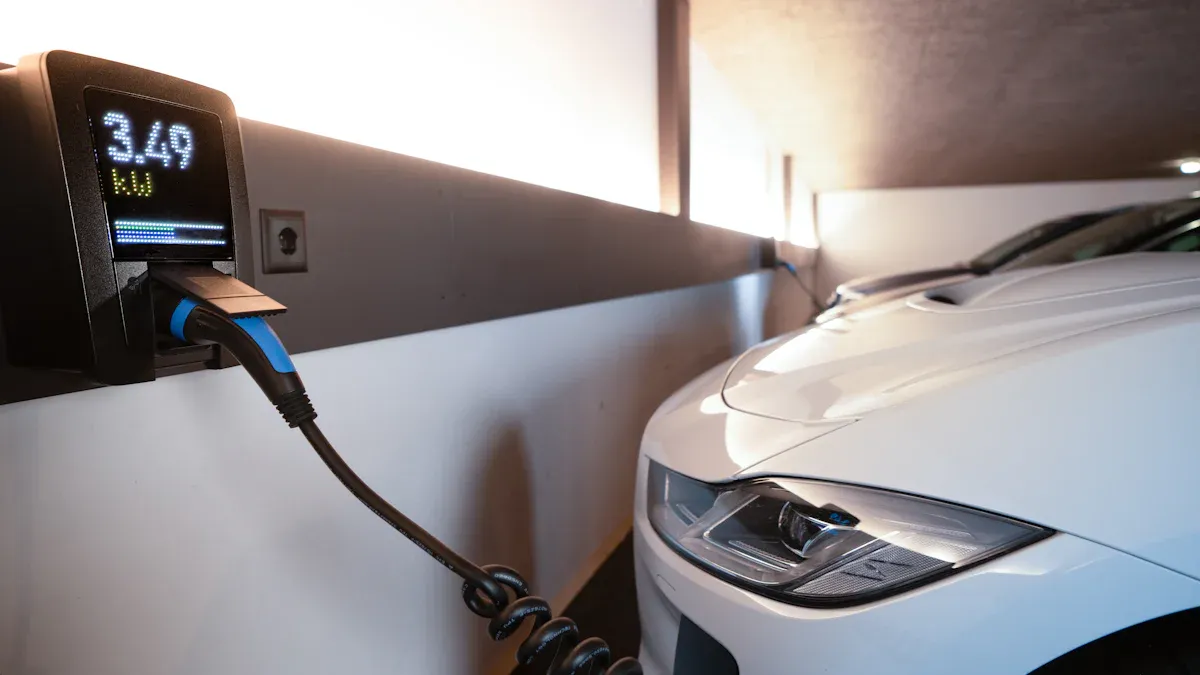
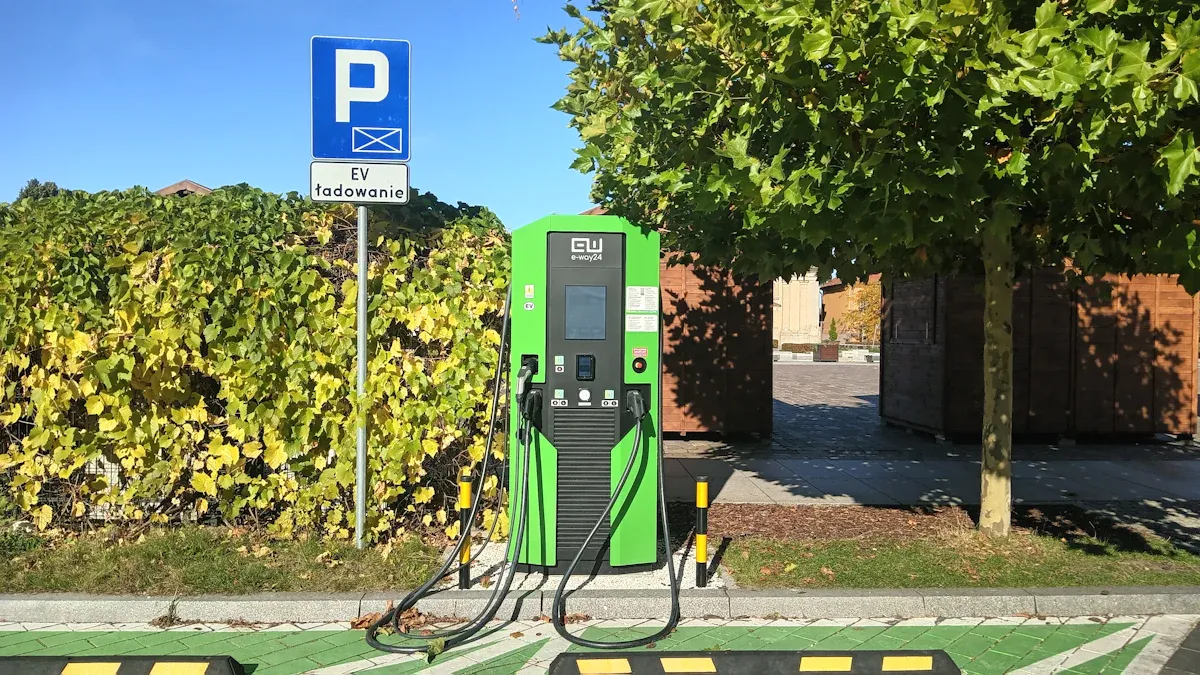
An apartment building in London has successfully completed the installation of EV charging stations, marking a significant step forward in urban EV infrastructure. This London apartment building faced common challenges but implemented innovative حلول شحن السيارات الكهربائية. They overcame limited power with a smart system and eliminated high upfront costs. A scalable installation prepares them for future EV demand. Residents now enjoy fair, app-based pay-as-you-go charging. This project showcases how to deploy an شاحن السيارة الكهربائية system effectively, even with complex constraints. It sets a new standard for EV charging in residential properties across London.
ملاحظة: This case study highlights a real-world solution. It avoids complex options like شواحن السيارات الكهربائية المحمولة, focusing instead on a permanent, scalable installation provided by leading الشركات المصنعة لشاحن السيارة الكهربائية.
The Initial Challenge: Growing EV Demand vs. Limited Power

The management team for this London apartment building recognized a clear trend: the increasing demand for EV charging from its residents. To remain competitive and modern, providing on-site charging was no longer a luxury but a necessity. However, the path from decision to deployment was filled with significant technical, financial, and logistical obstacles common to many multi-unit residential buildings in London.
Assessing the Building’s Electrical Capacity
Identifying an Insufficient Power Supply
The first major hurdle appeared during the initial site survey. A professional assessment confirmed that the building’s main electrical intake had insufficient capacity. The existing power supply could handle the building’s daily needs, but it could not support the simultaneous operation of 20 new EV chargers. Adding this much load would far exceed the available power from the local substation, a common issue in dense urban areas.
The Risk of Overloading Existing Infrastructure
Simply connecting new chargers to the existing circuits was not an option. This approach would have created a high risk of overloading the building’s electrical infrastructure. The result would be tripped circuits, power outages for residents, and potential damage to sensitive electrical equipment. The project required a solution that could manage power demand intelligently, as simply adding connections would violate safety standards and destabilize the building’s power grid.
Facing Significant Financial Hurdles
The High Upfront Cost of Hardware
The cost of the charging hardware alone presented a considerable financial barrier. Procuring 20 commercial-grade 7.2kW chargers, like those offered by technologically advanced providers such as TPSON, requires a substantial capital investment that many residential management budgets cannot accommodate.
The Prohibitive Expense of Grid Upgrades
The most daunting expense was the potential cost of a grid upgrade. Initial estimates suggested that upgrading the building’s connection to the electric grid—a process involving new transformers and extensive civil works—would cost tens of thousands of pounds. This prohibitive expense made the entire EV project seem financially unfeasible for the building’s management and its residents.
Navigating Complex Installation Logistics
Planning for a Multi-Level Car Park
The physical installation posed its own set of challenges. The building featured a multi-level underground residential car park, which complicated the entire process.
Key logistical problems included:
- Poor 3G/4G signal, making it difficult for smart chargers to communicate for billing and load management.
- The need to run armored power and data cables over long distances to reach designated parking bays.
- The physical complexity of drilling and mounting hardware on concrete walls and ceilings.
Minimizing Disruption to Residents
Finally, the management team had to plan the installation to cause minimal disruption. The project required careful scheduling to ensure residents could continue to access their parking spaces. The work needed to be completed efficiently to limit noise and construction activity, preserving a peaceful living environment for everyone in the building, including those who did not yet own an electric vehicle.
Researching Solutions for Apartment EV Charging
Faced with these challenges, the building’s management team began a thorough research phase. They needed to find a viable solution that balanced resident needs, technical limitations, and financial realities. This process involved evaluating partners, financial models, and available government support.
Evaluating Charge Point Operators (CPOs)
Comparing Hardware and Software Options
The team first examined different Charge Point Operators. They compared the hardware and software packages available on the market. This included assessing the reliability and technological capabilities of chargers from providers like TPSON. Just as important was the back-office software, which needed to manage dynamic load balancing, process payments, and provide a seamless user experience for residents.
Vetting Installation Partners like SED EV
Choosing the right installation partner was critical. The management vetted specialist firms like SED EV, focusing on their experience with complex residential projects. A key requirement was that any partner had to be an OZEV-approved installer. This certification was not just a mark of quality; it was a mandatory prerequisite for accessing government grants.
Exploring Financial and Ownership Models
The Pros and Cons of Self-Funding
The team initially considered a self-funded model. This approach would give the building full ownership of the EV charging equipment. However, the high upfront costs for hardware, groundworks, and potential grid upgrades made it a financially risky option.
Investigating Funded and Subscription Models
The investigation quickly turned to alternative financial structures. The funded partnership model emerged as the most attractive solution. This approach eliminated the significant capital outlay for the building.
| الميزة | Self-Funding | Funded Partnership |
|---|---|---|
| التكاليف المقدمة | £50,000 – £100,000+ | £0 |
| Ongoing Expenses | High (Maintenance, Support) | £0 (Fully Managed) |
| Management Burden | عالية | Zero |
| Investment Risk | Significant | Zero |
A funded partner covers the entire cost of the installation and infrastructure. The CPO then recoups its investment over time through a fair, pay-as-you-go subscription or usage fee paid only by the EV drivers using the service. This model transferred all financial risk from the building to the operator.
Understanding Government Incentives
Discovering the EV Infrastructure Grant
A pivotal discovery during the research was the UK Government’s EV Infrastructure Grant for residential car parks. This grant was specifically designed to help apartment buildings and other multi-unit properties prepare their parking areas for electric vehicle charging. It offered funding to cover the costs of the underlying charging infrastructure.
Navigating the Grant Application Process
The team learned the specific eligibility criteria to secure this funding. The grant application required careful planning to ensure compliance.
Key requirements for the grant included:
- The property must have multiple homes with shared parking.
- Work must cover a minimum of 5 parking spaces.
- At least one active chargepoint socket must be installed as part of the project.
- The remaining spaces could be prepared with passive infrastructure (cabling) for future vehicle charging needs.
This grant provided a clear path to financing the necessary infrastructure work, making the entire project financially viable.
The Strategic Solution for this London Apartment Building
By combining smart technology, scalable infrastructure, and a fair financial model, the management team developed a comprehensive solution. This strategy directly addressed the core challenges of limited power, high costs, and future growth, turning a seemingly impossible project into a successful reality for this London apartment building.
Overcoming Power Limits with Smart Technology
The most critical innovation was the decision to manage the building’s limited power supply instead of paying for an expensive grid upgrade. This was achieved through a Dynamic Load Management (DLM) system.
How Dynamic Load Management Works
A DLM system acts as an intelligent traffic controller for electricity. It continuously monitors the total power being used throughout the building in real-time. The system knows the maximum capacity of the main electrical supply and ensures that the total consumption never exceeds this limit.
The core process is simple yet powerful:
- Monitor: An energy meter measures the building’s total power draw at all times.
- Calculate: The system constantly calculates how much spare power is available.
- Distribute: It intelligently allocates this spare power among the active EV chargers.
This approach allows multiple EVs to charge simultaneously without any risk of overloading the building’s infrastructure.
Intelligently Distributing Power to Chargers
The system works by creating a communication network between the chargers. One charger acts as a “coordinator,” receiving data from the main energy meter via a Modbus data cable. This coordinator then communicates with all other chargers in the network.
As the building’s overall energy demand increases (for example, when elevators are in use or residents turn on appliances), the system automatically reduces the power sent to the EV chargers. Conversely, as building demand falls, more power becomes available for charging. When one EV finishes charging, its allocated power is instantly redistributed to other vehicles that are still plugged in. Technologically advanced providers like TPSON offer chargers with these sophisticated capabilities built-in, making the entire ev charging process seamless.
Designing for Scalability and Future Growth
The management team recognized that EV adoption would only increase. They planned for future demand from day one by choosing an infrastructure that could grow with the building’s needs.
Installing a Flat Cable Busbar System
Instead of running separate, armored cables from the electrical room to each individual parking bay, the installers used a flat cable busbar system. This system is essentially a pre-fabricated electrical track that runs along the car park ceiling. It provides a continuous source of power, ready for new connections to be added at any point along its length. This modern installation method is cleaner, faster, and more organized than traditional wiring.
How a Busbar Simplifies Future Installations
The busbar system makes future expansion incredibly simple and cost-effective. When a new resident in the London property needs an EV charger, the process is straightforward:
- An electrician simply clamps a new connection box onto the busbar at the resident’s parking bay.
- The new charger is mounted to the wall and connected to the box.
- The charger is configured to join the existing network.
This “plug-and-play” approach eliminates the need for disruptive and expensive new cabling runs, reducing the cost of adding a new charge point by up to 80%.
Ensuring Fair Usage and Simple Payments
A key priority was to create a system that was fair to all residents, including those who do not own an electric vehicle. The solution needed to be self-sustaining and easy for everyone to use.
Adopting a Pay-As-You-Go Model
The building implemented a pay-as-you-go model. This ensures that only the residents who use the chargers pay for the electricity they consume. The tariff is set at a competitive rate that covers the cost of electricity, software management, and ongoing maintenance. This model removes any financial burden from the building’s general service charge, creating a fair system that won’t penalize non-EV drivers.
Using a Mobile App for Access and Billing
Resident access is managed through a simple mobile app. The process is designed for convenience:
- Setup: Residents download the app, create an account, and link a payment method.
- Activation: To start a session, the driver scans a QR code on the charger.
- الرصد: إن app displays real-time session details, including energy delivered (kWh), charging time, and total cost.
- Payment: Once the session is complete, the app automatically bills the user’s chosen payment method.
This self-service system gives residents full control and transparency over their charging costs, while completely removing the building management from payment administration.
Securing a Cost-Neutral Installation
The project’s greatest success was achieving a completely cost-neutral outcome for the building and its non-EV driving residents. This remarkable financial result was possible through a strategic combination of a funded partnership and successful government grant applications. The management team effectively transferred the entire financial burden to the Charge Point Operator (CPO) and the government.
Partnering with a Charge Point Operator
The cornerstone of the financial strategy was a funded partnership model. This approach eliminated the need for any capital investment from the building’s management or residents.
The Details of the Funded Model
The building entered into an agreement where the CPO covered all upfront costs. The CPO assumed full responsibility for the supply and installation of the entire system, including the technologically advanced TPSON chargers. The agreement stipulated that the CPO must perform all work with professional care and skill.
Key terms of the funded agreement included:
- Full Compliance: The CPO guaranteed the installation would adhere to the latest IET Code of Practice and BS 7671 safety regulations.
- Labor and Materials: The CPO provided all labor, up to 20 meters of specialist EV supply cable per bay, and all necessary mounting hardware.
- Ongoing Management: The CPO took ownership of system maintenance, software updates, and customer support, removing any management burden from the building.
This comprehensive service package ensured a professional, compliant, and hands-off solution for the property.
How the CPO Recoups Its Investment
The CPO’s business model is based on long-term revenue from the charging service. The operator recoups its initial investment over several years through the fees paid by residents who use the chargers. The tariff is carefully calculated to cover:
- The cost of electricity consumed.
- A service fee for software, maintenance, and support.
- A margin that repays the initial capital expenditure.
هذا user-pays model creates a self-sustaining ecosystem where the service is funded directly by those who benefit from it.
Winning the EV Infrastructure Grant
While the CPO funded the chargers, the building still faced costs for the underlying infrastructure. The management team successfully secured government funding to cover this expense.
The Final Grant Amount Secured
The team applied for the UK Government’s منحة البنية التحتية للمركبات الكهربائية. This grant is designed specifically to help residential buildings prepare for widespread EV adoption. The building was awarded a grant that covered 75% of the total infrastructure costs, up to the maximum allowable amount based on the number of parking spaces enabled. The total funding secured was close to the £30,000 cap available per building.
How the Grant Covered Infrastructure Costs
This government funding was crucial for making the project viable. The grant money was allocated specifically to the “passive” elements of the installation of ev charging.
| Infrastructure Item | Grant Coverage |
|---|---|
| Busbar System & Cabling | Fully Covered |
| Distribution Boards | Fully Covered |
| Labor for Infrastructure Work | Fully Covered |
| Per-Space Enablement | Up to £500 per space |
| Per-Socket Installation | ما يصل إلى 350 جنيه إسترليني لكل مقبس |
The grant effectively paid for the entire electrical backbone, including the scalable busbar system. This ensured the charging infrastructure was installed at no cost to the building.
The Final Financial Outcome
The combination of the funded model and the government grant produced an ideal financial result for this London apartment building.
Zero Upfront Cost for the Building
The building’s management did not have to allocate any funds from its capital or service charge budgets for the project. The CPO funded the active hardware, and the government grant funded the passive infrastructure. This zero-outlay approach is a proven model, similar to the successful project at Oxygen Apartments in Greenwich, where a CPO delivered a fully funded solution.
Zero Cost for Non-EV Driving Residents
A core principle of the project was fairness. The pay-as-you-go system ensures that residents who do not own an EV are not financially impacted. The costs for electricity, maintenance, and system management are all bundled into the charging tariff paid exclusively by EV drivers via the mobile app. This model isolates all financial responsibility to the users of the service, protecting the interests of the wider community.
The Results: 20 New EV Charging Sockets
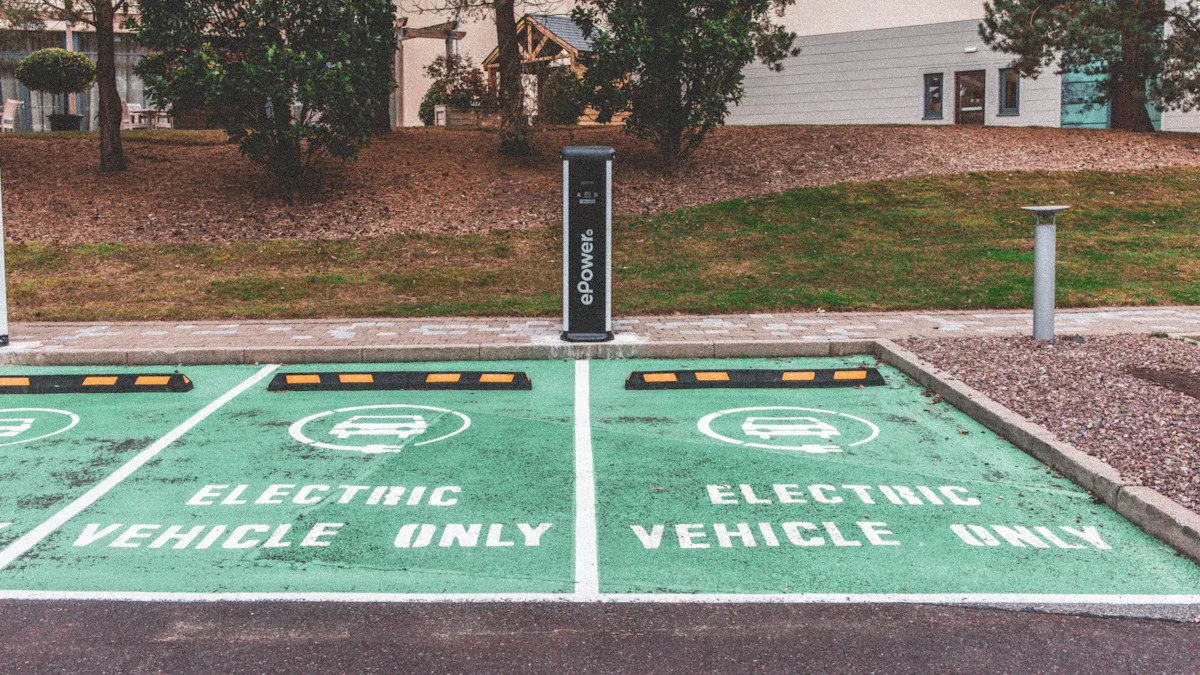
The project’s completion marked a significant milestone for the London apartment building. The strategic planning and modern technology culminated in a fully operational, resident-focused charging network. The results delivered immediate benefits and established a robust framework for future growth.
Immediate Success and Resident Feedback
20 Active 7.2kW/22kW Chargers Operational
The building successfully deployed 20 active EV charging sockets. These chargers, from a technologically advanced provider like TPSON, offer flexibility to meet diverse resident needs. The installation includes a mix of 7.2kW and 22kW chargers, allowing residents to choose the charging speed that best suits their vehicle and schedule.
| الميزة | 7.2kW Charger | شاحن بقدرة 22 كيلوواط |
|---|---|---|
| سرعة الشحن | Slower (e.g., ~11.5 hours for 100kWh battery) | Three times faster (e.g., ~4.5 hours for 100kWh battery) |
| مزود الطاقة | Single-phase (common in UK homes) | Three-phase (common in commercial settings) |
This mix ensures efficient power use across the available single-phase and three-phase supplies within the building.
Positive Reception from EV-Driving Residents
The new system received overwhelmingly positive feedback. Residents praised the modern, fast, and user-friendly nature of the chargers. The intuitive payment system and competitive tariffs made the transition to electric vehicles more accessible and affordable. This sentiment reflects a growing trend in residential properties.
“Providing our residents with access to high-quality EV charging supports environmental goals and offers convenience and cost savings to residents,” said Adam Peer, Associate Director at RMG, commenting on a similar successful project.
Key Financial and Technical Achievements
Estimated Savings from Avoiding Grid Upgrades
A major financial victory was avoiding a costly grid upgrade. Upgrading infrastructure for this number of chargers could have cost the building between £40,000 and £60,000. This process is often expensive, slow, and bureaucratic. The dynamic load management system allowed the building to circumvent this significant expense entirely, saving tens of thousands of pounds.
Total Grant Funding Secured
The project maximized available government support. The building secured nearly £30,000 from the EV Infrastructure Grant. This funding covered the majority of the costs for the passive infrastructure, including the scalable busbar system and associated electrical work, making the entire installation financially sound.
A Future-Ready Electric Car Charging System
Equipped to Expand to 40+ Chargers
The initial installation of 20 charging bays was just the beginning. The busbar system provides the capacity to easily expand the network to over 40 charging ports as EV adoption grows. This foresight ensures the building’s electric car charging infrastructure will remain relevant and sufficient for years to come.
The Simple Process for Adding New Charge Points
Adding a new charger is now a simple, low-cost procedure. An electrician can clamp a new connection onto the existing busbar at a resident’s designated parking space. This “plug-and-play” approach eliminates the need for extensive new cabling, reducing the cost and disruption of future installations by up to 80%.
Long-Term Benefits and Key Takeaways
The successful deployment of this electric car charging network provides more than just convenience. It delivers lasting value to the property and offers a clear roadmap for other multi-unit residential buildings. The project’s long-term benefits enhance the building’s market position and financial health.
Enhancing Property Value and Appeal
How the Amenity Boosted the Building’s Profile
This London apartment building significantly boosted its profile by adding a modern, essential amenity. Properties with robust EV charging infrastructure are increasingly attractive to potential buyers and tenants. Market data highlights this trend:
- Properties with charging solutions attract higher-income tenants who sign longer leases.
- Rightmove data shows these properties can command rent premiums of 10-15%.
- RICS reports that such properties may see annual value appreciation rates 7% higher than comparable buildings without charging facilities.
في حين أن بعض hyper-central areas of London with low car usage have seen different results, the overall trend for a residential development like this is overwhelmingly positive. The installation positions the building as a forward-thinking and desirable place to live.
Demonstrating a Commitment to Sustainability
The project serves as a powerful and visible statement of the building’s commitment to sustainability. By encouraging the use of electric vehicles, the property directly contributes to reducing local air pollution and its community’s carbon footprint. This aligns with broader Environmental, Social, and Governance (ESG) goals.
Providing EV charging infrastructure is a measurable way to address environmental issues. It improves relationships with residents and investors who prioritize sustainable practices and enhances the building’s brand value.
This commitment future-proofs the property against potential regulations and solidifies its reputation as an environmentally responsible leader.
A Blueprint for Other Buildings
This case study provides a replicable blueprint for property managers facing similar challenges. The strategic combination of smart technology, funded partnerships, and government grants is a proven formula.
Lessons from Beaufort Park and Pier House
The success at this property is not an isolated event. It mirrors the positive outcomes seen in other large-scale projects like those at Beaufort Park and Pier House. These examples collectively demonstrate a reliable model for successful MURB EV charging implementation across different building types.
Applying the Model to Your Property
Property managers can apply this model by following a clear, strategic process. A step-by-step approach ensures a smooth and cost-effective installation.
- Get a property and grant readiness assessment. Check all technical limits and legal issues before starting.
- Let your installer handle all documentation. Delegate grant submissions and paperwork to a certified partner to avoid delays.
- Only hire certified and fully insured providers. Select qualified installers with a proven track record.
- Request a complete documentation pack. Obtain all survey forms, compliance certificates, and warranty details post-installation.
- Demand transparent, itemized quotes. Insist on clear cost breakdowns to compare offers accurately.
This case study provides a clear blueprint for residential buildings. With 70% of UK residents planning to buy an EV, proactive planning is essential. Success hinges on a few key actions.
- Begin with a professional power assessment.
- Use smart load management to avoid costly grid upgrades.
- Explore funded models to eliminate upfront costs for the charging infrastructure.
- Secure government grants to fund the passive infrastructure.
- Install a scalable system like a busbar for future EV charging needs.
- Implement a fair pay-as-you-go charging model.
الأسئلة الشائعة
What if a building has limited electrical capacity?
A Dynamic Load Management (DLM) system is the ideal solution. It monitors the building’s total power usage. The system then intelligently distributes the available spare capacity to the EV chargers. This technology avoids expensive grid upgrades while preventing overloads.
How much did this installation cost the building?
The building paid zero upfront costs. A funded partnership with a Charge Point Operator (CPO) covered the hardware expenses. A government grant covered the infrastructure work. This combination resulted in a completely cost-neutral project for the property management and residents.
Who pays for the electricity and maintenance?
Only the residents who use the chargers pay. The system uses a pay-as-you-go model through a mobile app. The tariff includes the cost of electricity, software, and ongoing maintenance. This ensures fairness for all residents, including non-EV drivers.
How does the building handle future demand for more chargers?
The installation used a scalable busbar system. This electrical track allows for easy expansion. Adding a new charger is a simple “plug-and-play” process. It significantly reduces the cost and disruption of future installations as more residents switch to EVs.
What is a funded EV charging model?
A funded model is a partnership where a CPO covers all upfront costs for hardware and installation. The CPO recoups its investment over time through charging fees paid by EV drivers. This model removes the financial risk and management burden from the building.
Why are technologically advanced chargers important?
Technologically advanced chargers, like those from providers such as TPSON, are essential for smart features. They enable critical functions like dynamic load management, remote monitoring, and seamless app-based payments. This ensures the entire charging network operates efficiently and reliably.