
Introduction
The extended EV charging scheme delivers significant financial benefits, offering grants that can cover up to 75% of شاحن السيارة الكهربائية installations. This government scheme directly aids your business by reducing capital outlay for new charging points. It also creates valuable opportunities for new revenue. For renters, this initiative is a breakthrough. It provides landlords with strong financial incentives, removing a major obstacle to home EV charging. A staggering 55% of UK flat residents currently lack access to electric vehicle charging, a gap this program addresses. This scheme presents a clear opportunity for installing an شاحن السيارة الكهربائية, making electric vehicles more accessible for everyone.
Did you know? The government offers several grants to support the transition to electric. These are designed to help different groups, from a small business to large commercial landlords. The right scheme can dramatically lower the cost of installing EV infrastructure. Many الشركات المصنعة لشاحن السيارة الكهربائية are approved under these programs.
<<<END_SECTION_CONTENT>>>
Why the EV Charging Scheme is a Game-Changer for Your Business
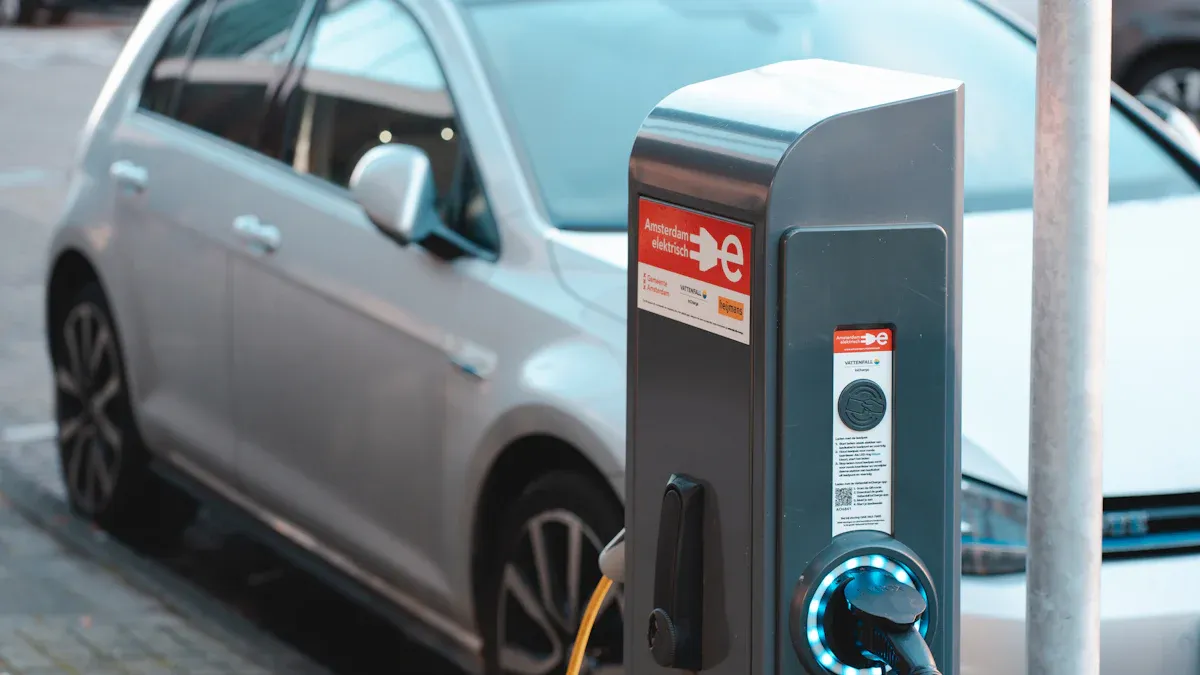
The EV charging scheme offers businesses a strategic advantage. It transforms a significant capital expense into a manageable investment with clear benefits. Companies can lower operational costs, attract top talent, and open new revenue channels. This initiative supports the growing EV adoption trend, positioning a business as a forward-thinking leader.
Drastically Reduce Initial Installation Costs
Installing commercial EV chargepoints represents a notable financial commitment. The EV charging scheme directly addresses this by providing substantial grants. This financial support makes the transition to electric vehicles more accessible for any business.
Understanding the Grant: Up to £350 Per Socket
The Workplace Charging Scheme provides a grant covering up to 75% of purchase and installation costs. This support is capped at £350 per socket. The upfront cost of a commercial installation can be significant.
- A single commercial EV charger socket often costs between £1,500 and £2,000.
- Total installation projects can range from £2,000 to over £25,000, depending on site complexity.
The grant dramatically lowers this initial financial barrier. It makes the installation of business EV chargers a viable project for a wider range of commercial properties.
حساب العائد على الاستثمار
The grant funding directly accelerates the return on investment. For example, a project to install 10 sockets at £800 each would have a total cost of £8,000. The scheme contributes £3,500 (10 x £350), reducing the business’s actual expense to just £4,500. This 43.75% cost reduction is substantial. With such savings, companies often see a full payback period of just 3 to 5 years and achieve an attractive Internal Rate of Return (IRR) of 15% to 20%.
Attract and Retain High-Value Tenants and Employees
Workplace EV chargers are no longer a niche perk; they are an expected amenity. Offering this facility provides a distinct competitive advantage in both the commercial rental market and the hunt for skilled employees.
Gaining a Competitive Edge in the Rental Market
Prospective tenants increasingly view EV charging as a critical amenity. A CBRE survey found that over 60% of large European companies consider EV charging a valuable feature. Some EV drivers will not even consider a property without charging facilities. Providing this infrastructure gives a property a significant edge, attracting and securing high-value, long-term tenants.
Offering a High-Demand Workplace Perk
Workplace charging is a powerful tool for employee satisfaction and retention. A Gallup study revealed that 71% of workers consider a company’s environmental record when job hunting. Furthermore, 61% of millennial and Gen Z employees state they will only work for companies that demonstrate social and environmental responsibility. Installing workplace EV chargers sends a clear message about a company’s commitment to sustainability, helping to attract new talent and retain existing staff who value these principles.
Unlock New and Sustainable Revenue Streams
Beyond cost savings and talent attraction, EV chargers create opportunities for direct revenue generation. A business can monetize its charging infrastructure, turning a capital asset into a profitable service.
Implementing a Pay-Per-Use Charging Model
Smart chargers allow businesses to set custom pricing and generate income from their EV infrastructure. A pay-per-use model is a common approach. Pricing can be structured to accommodate different users and charging speeds, maximizing utilization and revenue.
نصيحة: A tiered pricing strategy can be highly effective. Offer different rates for employees, registered users, and the general public to balance accessibility with profitability.
Here is an example of a potential pricing structure:
| نوع الشاحن | نوع المستخدم | السعر لكل كيلووات/ساعة |
|---|---|---|
| Fast (7-22kW) | Subscribers | £0.52 |
| Fast (7-22kW) | Pay As You Go | £0.65 |
| Rapid (50kW+) | Subscribers | £0.69 |
| Rapid (50kW+) | Pay As You Go | £0.89 |
Projecting Long-Term Profitability from Charging
The market for electric vehicles is expanding rapidly. Around 50% of car customers are now considering an EV for their next purchase. This growing demand ensures a steadily increasing customer base for charging services. By installing chargers now, a business positions itself to capture this expanding market. The initial investment, already lowered by the grant scheme, can generate consistent, long-term profits while promoting the company’s commitment to sustainability.
Enhance Your Brand’s Green Credentials
Installing EV chargers is more than an operational upgrade; it is a powerful statement about a company’s values. This visible commitment to the environment enhances brand perception, builds customer loyalty, and creates a competitive advantage.
Marketing Your Commitment to Sustainability
A business can leverage its investment in EV infrastructure as a cornerstone of its marketing strategy. Promoting this initiative makes corporate social responsibility tangible to the public. Research consistently shows that integrating sustainability into marketing efforts fosters a stronger brand image و long-term consumer loyalty.
Key studies confirm this connection:
- Socially responsible activities help consumers view a brand more positively.
- Comprehensive environmental, social, and economic sustainability initiatives directly improve consumer brand perception.
- Green management practices promote environmental preservation within the business and the wider community.
By showcasing EV charging facilities, a company demonstrates its role in the transition to cleaner transportation. This action helps meet corporate sustainability targets and aligns the brand with progress and innovation.
Appealing to Eco-Conscious Customers and Partners
Today’s consumers and business partners actively seek out brands that share their values. A clear commitment to the environment is a significant differentiator. Installing EV chargers sends an unambiguous signal that a company is serious about reducing its carbon footprint and supporting a greener future.
Consumer behavior data highlights a clear trend: 50% of global consumers state that a company’s commitment to the environment influences their decision to trust a brand. Furthermore, 62% of home workers prefer to purchase from companies that actively support environmental protection.
This shift in consumer preference creates a direct commercial benefit. By catering to the growing eco-conscious market, a company can attract new customers and strengthen relationships with existing ones. This proactive stance on sustainability also makes the business a more attractive partner for other organizations working toward their own net zero goals. An investment in EV infrastructure is an investment in brand reputation and future growth.
Major Advantages for Renters and Flat Dwellers
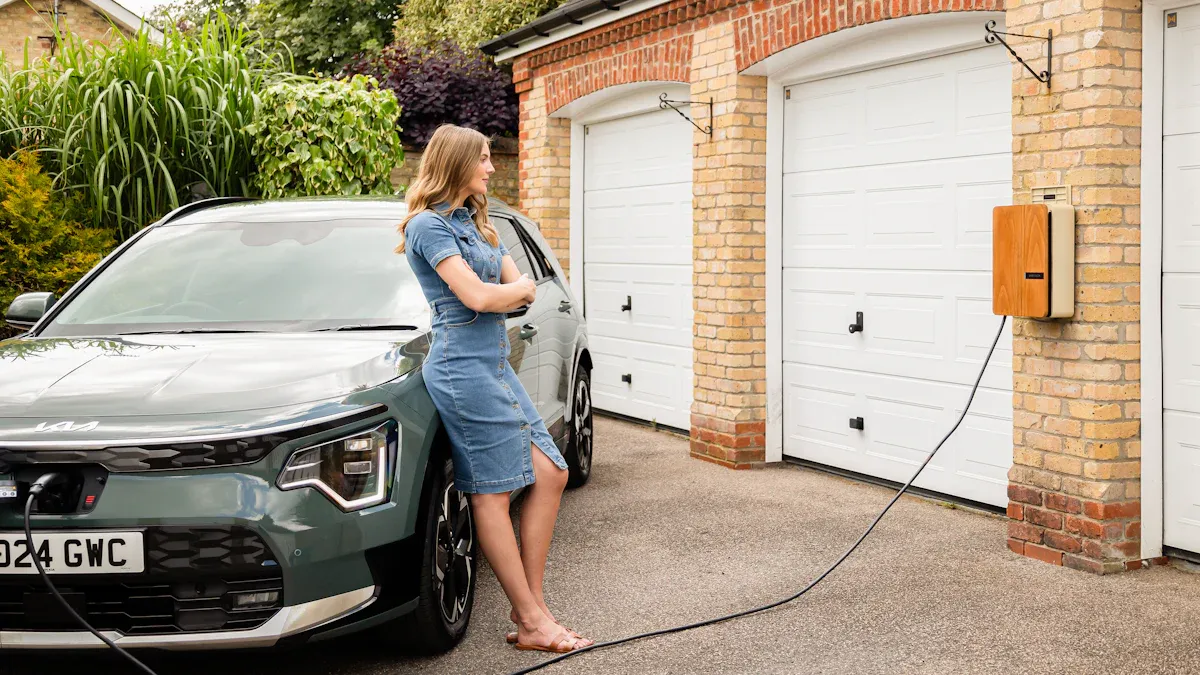
For years, renters and residents of multi-unit buildings faced a significant hurdle to EV adoption: the lack of الشحن المنزلي. The EV charging scheme directly dismantles this barrier. It provides the financial leverage needed to make home charging an accessible reality, unlocking substantial savings and unparalleled convenience for tenants. These benefits make electric vehicles a practical choice for millions more people.
Finally, Access to Affordable Home Charging
The inability to install a personal chargepoint has long been the primary obstacle for renters considering an EV. This government scheme changes the conversation by making the installation financially attractive for property owners, which in turn benefits tenants.
How the Grant Motivates Your Landlord to Act
Landlords are business owners who must weigh the costs and benefits of any property upgrade. The grant scheme fundamentally alters this calculation in favor of installing chargers. It provides powerful financial incentives that remove the primary objection of high upfront costs.
- Landlords can receive a grant for up to 75% of the installation cost, capped at 350 جنيه إسترليني لكل مقبس.
- Residential landlords can claim up to 200 grants per financial year.
- This structure makes a tenant’s request for an EV charger a compelling business opportunity rather than a financial burden for the property owner.
This support makes it easier for tenants to present a winning case to their landlord, transforming a “no” into a discussion about logistics.
The Cost Advantage of Home vs. Public Charging
Access to home charging provides the cheapest, most convenient way to power an electric vehicle. Public charging networks are essential for long journeys, but they come at a premium price. The cost difference is significant and directly impacts a driver’s daily running costs.
ملاحظة: Home charging is consistently two to three times cheaper than using a public rapid charger. This difference adds up to hundreds of pounds in savings each year.
The average cost per kilowatt-hour (kWh) clearly illustrates this advantage:
| موقع الشحن | متوسط التكلفة لكل كيلووات/ساعة |
|---|---|
| المنزل (التعريفة القياسية) | £0.27 |
| عام (شاحن سريع) | £0.80 |
This cost disparity is a core reason why securing home charging access is a game-changer for renters.
Unlock Significant Savings on Fuel Costs
The most immediate and impactful benefit of switching to an EV with home charging is the dramatic reduction in fuel expenses. The cost to power an electric motor is substantially lower than the price of gasoline, leading to significant annual savings.
The Math: EV Home Charging vs. Gasoline Prices
Electric vehicles are inherently more efficient than their internal combustion engine counterparts. They convert more energy into motion, resulting in a much lower cost per mile. The numbers speak for themselves.
- Driving an EV powered by home charging can cost as little as 3 cents per mile.
- A comparable gasoline car averages between 19 and 21 cents per mile.
This efficiency translates into major savings. An average driver covering 10,000 miles per year can save between $1,000 and $1,500 annually on fuel alone by switching to an EV and charging at home.
Maximizing Savings with Off-Peak Electricity Tariffs
The savings potential extends even further with smart energy management. Many utility companies offer special “Time of Use” or EV tariffs with significantly lower electricity rates during off-peak hours, typically overnight. Smart chargers allow users to schedule their charging sessions to take advantage of these cheaper rates automatically. This simple practice can cut charging costs by an additional 50% or more, maximizing the financial benefits of EV ownership.
Gain Unmatched Convenience and Time Savings
Beyond the financial advantages, home charging offers a level of convenience that fundamentally improves the driving experience. It eliminates the time and hassle associated with traditional refueling, integrating seamlessly into a daily routine.
The “Wake Up and Go” Advantage of a Full Battery
The ability to charge a vehicle overnight is a feature that EV owners consistently rate as a top satisfaction driver. Plugging in at night and waking up to a full battery every morning provides complete peace of mind for daily commutes and errands.
This “wake up and go” lifestyle eliminates range anxiety for everyday driving and ensures the car is always ready.
Eliminating Time-Wasting Trips to the Gas Station
Home charging reclaims valuable time. The weekly or bi-weekly ritual of finding a gas station, waiting for a pump, and refueling is completely removed from the equation. With a home charger, the “refueling” process takes less than a minute—the time it takes to plug the car in upon arrival. As battery ranges improve, a growing number of drivers find their needs are met almost exclusively by charging at home. Data shows that over 27% of EV drivers now rely solely on their home charger, highlighting the profound convenience this infrastructure provides.
Overcoming the Primary Barrier to EV Ownership for Renters
The absence of home charging remains the single greatest obstacle preventing many renters from making the switch to electric. This government scheme provides a powerful solution, equipping tenants with the tools to successfully advocate for charging infrastructure at their residence.
How This Scheme Empowers Tenant Requests
For a large portion of the population, the decision to purchase an electric vehicle is blocked by a simple logistical problem. A J.D. Power survey found that 34% of potential buyers identify the lack of at-home charging as a primary reason for not owning an ev. This figure closely mirrors the percentage of Americans living in multi-unit dwellings. The EV charging scheme directly addresses this challenge by transforming a tenant’s request from a costly inconvenience into a sound business proposition for the landlord.
The grant fundamentally changes the financial equation. It empowers a tenant to approach their property manager not with a problem, but with an opportunity. By presenting a clear path to a government-subsidized property upgrade, the tenant’s request becomes a compelling case for investment. This shift in dynamics is crucial for accelerating ev adoption among renters and flat dwellers.
A Simple Guide to Approaching Your Landlord
A structured and professional approach can significantly increase the chances of a positive outcome. Tenants can present a persuasive case by highlighting the clear financial incentives and long-term property value this upgrade offers.
Here is a simple, five-step guide for renters:
Gather the Facts: Before initiating contact, a tenant should collect all relevant information about the EV charging scheme. This includes details on the grant amount (£350 per socket), the 75% cost reduction, and the process for using an OZEV-approved installer.
Frame it as a Business Case: The conversation should focus on the landlord’s perspective. The installation is not just an amenity for one tenant; it is a future-proofing investment for the entire property.
نصيحة محترف: In your communication, emphasize these key points:
- The government grant significantly lowers the initial investment.
- EV charging infrastructure increases property value and rental appeal.
- It attracts a growing demographic of high-value, eco-conscious tenants.
Put It in Writing: A formal email creates a clear record of the request. It allows the landlord time to review the information and demonstrates the tenant’s seriousness. The email should be polite, professional, and concise.
Illustrate the Financial Benefits: Numbers are persuasive. A tenant can use a simple table to show the landlord the direct financial impact of the grant. This makes the benefits of the scheme immediately clear.
| مكون التكلفة | Without Grant | With Grant (75% up to £350) |
|---|---|---|
| تكلفة التركيب | £1,600 | £1,600 |
| Grant Applied | £0 | -£350 |
| Landlord’s Net Cost | £1,600 | £1,250 |
- Offer to Assist: To make the process as easy as possible, a tenant can offer to research and provide a list of local, OZEV-approved installers. This proactive step shows initiative and reduces the workload for the property manager, making a “yes” more likely.
A Practical Guide to Installing Workplace EV Chargers
تركيب أجهزة شحن السيارات الكهربائية في مكان العمل is a strategic move to future-proof your business. This guide provides practical steps for adding this essential infrastructure to a commercial property. It covers property value, hardware selection, and fleet integration.
Future-Proofing Your Commercial Property
EV charging is rapidly becoming a standard expectation. Installing this infrastructure now prepares a property for the future of transportation and enhances its immediate market appeal.
EV Charging as a Standard Modern Amenity
Workplace charging is no longer a luxury perk; it is a modern necessity. As the transition to EVs accelerates, employees and tenants expect convenient charging options. Providing electric vehicle charging stations demonstrates a company’s commitment to sustainability and modern workplace standards. This amenity helps attract and retain top talent in a competitive market.
How Charging Infrastructure Increases Property Value
Adding charging infrastructure directly increases a property’s value. Modern enhancements make a commercial property more attractive to potential buyers and tenants, leading to higher rental yields.
- Properties with EV charging attract a wider pool of prospective tenants.
- Buyers show a clear willingness to pay more for properties equipped with EV charging.
- Amenities like smart technology and EV charging can increase overall property value.
This investment positions a property as a premium, future-ready asset.
Choosing the Right Charging Hardware for Your Needs
Selecting the right hardware is critical for a successful installation. A business must consider the charger’s features and the site’s electrical capabilities.
Smart Chargers vs. Standard Chargers Explained
Smart chargers offer significant advantages over standard models for commercial use. TPSON provides technologically advanced حلول شحن السيارات الكهربائية with these smart capabilities. The differences are key for management and profitability.
| الميزة | Standard Chargers | الشواحن الذكية |
|---|---|---|
| التحكم | Manual plug-and-charge | Remote app or portal control |
| المراقبة | No usage data | Real-time energy and cost data |
| Monetization | Not possible | Enables pay-per-use models |
| إدارة الأحمال | لا يوجد | Balances power across multiple vehicles |
Smart business EV chargers provide the control and data needed to manage a workplace charging program effectively.
Assessing Your Site’s Electrical Capacity
Before installation, a business must assess its property’s electrical capacity. A qualified installer can perform a site survey to determine what the existing infrastructure can support.
- Level 2 charging is common for commercial sites, with power outputs from 3.7kW to 22kW.
- Most commercial properties with three-phase power can accommodate 22kW chargers.
- Dual-socket chargers require more capacity but serve more vehicles simultaneously.
This assessment ensures the chosen workplace EV chargers operate safely and efficiently.
Supporting Your Commercial Fleet’s Transition to Electric
The workplace charging scheme also supports businesses transitioning their commercial fleets to electric vehicles. Depot-based charging provides significant operational and financial benefits.
Leveraging Grants for Depot-Based Charging
Grants can substantially lower the cost of setting up depot charging for electric fleets. This financial support makes the initial investment in charging infrastructure more manageable. It accelerates the fleet’s transition to EVs and helps future proof your business.
Calculating Fleet Fuel and Maintenance Savings
Electric vehicles offer dramatic savings on maintenance and fuel. EVs have far fewer moving parts than internal combustion vehicles, which reduces repair needs and downtime.
The cost-per-mile savings are substantial, especially for high-mileage fleets.
| نوع المركبة | Maintenance Cost per Mile |
|---|---|
| Battery-electric truck | $0.176 |
| Diesel truck | $0.246 |
| Battery-electric bus | $0.26 |
| Diesel bus | $0.46 |
These savings directly improve a company’s bottom line.
Navigating the Application Process for the EV Charging Scheme
The application process for the ev charging scheme is straightforward, but it requires careful attention to detail. Understanding the eligibility rules and following the correct steps ensures a smooth and successful application. This guide helps any business or landlord navigate the process with confidence.
Confirming Eligibility for Your Business or Property
Before starting an application, a property owner must confirm their eligibility. The government has specific criteria for different types of properties to ensure the grants support the intended goals of the scheme.
Criteria for Landlords and Commercial Properties
Landlords of both residential and commercial properties can benefit from government grants. However, the rules differ slightly for each.
- Residential Landlords: A landlord can apply for the EV Chargepoint Grant for properties with dedicated off-street parking. They can claim up to 200 grants per financial year. For larger projects, the EV Infrastructure Grant supports installing the underlying wiring for at least five parking spaces in existing residential buildings.
- Commercial Landlords: A landlord of a commercial property can apply for the Workplace Charging Scheme. The property must have designated off-street parking, and the chargers must be for the private use of staff or fleet vehicles. Commercial landlords can claim up to 100 grants per financial year.
In all cases, the landlord must have a registration number (e.g., company or VAT number), and new-build properties are not eligible for these grants.
Requirements for Small Accommodation Businesses
Small accommodation businesses, such as B&Bs and boutique hotels, have a dedicated path to funding. The Business Chargepoint Installation Grant is designed for them. To qualify, the business must:
- Be a registered company or have a VAT registration.
- Have 249 or fewer employees.
- Own the property or have consent from the landlord.
- Have designated off-street parking for guests.
This scheme helps smaller hospitality businesses attract the growing market of EV drivers.
A Step-by-Step Guide to Applying for the Grant
Once eligibility is confirmed, the application process involves a few key steps. Following this guide simplifies the journey from planning to installation of workplace EV chargers.
Gathering Necessary Documentation
Proper documentation is essential for a successful application. An applicant should prepare the following items in advance:
- Proof of Property Ownership or a signed letter of consent from the landlord.
- Business Registration Details, such as a Companies House number or VAT registration number.
- Site Survey and Plan that details the proposed location of the chargers and the required electrical work.
- A Quote from an approved installer outlining the total project cost.
Having these documents ready will expedite the application and installation process.
Finding an OZEV-Approved Installer
Only installers authorized by the Office for Zero Emission Vehicles (OZEV) can perform the work and claim the grant on behalf of the applicant. The official list of OZEV-approved EV chargepoint installers is available on the government’s website. This resource also provides comprehensive lists of approved EV models and smart chargers, ensuring all components of the installation meet the scheme’s standards. Choosing an authorized installer is a mandatory step for receiving grant funding.
Common Pitfalls and How to Avoid Them
Applicants can encounter a few common issues that may delay or invalidate their grant application. Awareness of these pitfalls helps ensure compliance and a positive outcome.
Understanding the 40-Socket Limit
The Workplace Charging Scheme allows a business to claim grants for up to 40 sockets in total. This limit is not per property but across the entire organization. For example, if a company installs 25 sockets at one office and 15 at another, it has reached its maximum allowance. Planning the rollout of workplace EV chargers across all sites is crucial to maximize the benefits of the scheme.
Ensuring Compliance with Scheme Rules
Adhering to all scheme rules is non-negotiable. Failure to comply can lead to the rejection of the grant application, leaving the applicant responsible for the full installation cost.
مهم: If an OZEV grant application is rejected for any reason, the applicant must cover the full cost of the installation and the charging point. This applies even if the charger has already been installed.
Common reasons for rejection include regulatory non-compliance. For instance, an application may be denied if the proposed cabling runs across public footpaths or through shared drainage channels, as this violates British Standard electrical regulations. A qualified OZEV installer will help design a compliant installation plan, avoiding these costly mistakes and ensuring the project meets all safety and legal requirements for your EV.
Real-World Applications and Opportunities
The EV charging scheme creates tangible opportunities across various sectors. From small hotels to large corporate campuses, تركيب بنية تحتية للشحن provides a competitive edge and opens new avenues for growth. These real-world applications demonstrate the scheme’s versatility and value.
Small Accommodation Providers: Hotels and B&Bs
Hospitality businesses can leverage EV charging to attract a premium clientele. This amenity enhances the guest experience and creates a new revenue source.
Attracting High-Value EV-Driving Tourists
EV drivers actively search for accommodations with charging facilities. Offering this service makes a property a preferred destination for this growing demographic. It signals a commitment to modern convenience and sustainability, differentiating a business from its competitors.
Integrating Charging Fees into Booking Packages
Hotels can seamlessly monetize their charging points. They can offer charging as a premium add-on or bundle it into exclusive “EV-friendly” booking packages. This approach simplifies billing for guests and creates a predictable income stream from the charging infrastructure.
Multi-Unit Residential Buildings: Apartment Complexes
For apartment buildings, shared charging solutions are key to attracting and retaining tenants with electric vehicles. Proper implementation is crucial for success.
Implementing Shared Charging Solutions for Residents
شركات مثل Energy Park have successfully deployed shared EV charging systems in residential properties. They use a subscription-based model to provide residents with reliable access to charging. This approach overcomes the challenge of limited infrastructure in multi-unit buildings.
“The feedback is brilliant,” notes Energy Park’s Founder and COO, Gavin Malone. “Users compliment us saying how simple it is – you just plug in, identify the charge point, press the button, and it’s done.”
الإدارة العادلة للفوترة والتحكم في الوصول
يُعد نظام الإدارة القوي ضرورياً لتحقيق العدالة والكفاءة. تسمح شواحن السيارات الكهربائية الذكية في مكان العمل لمديري العقارات بتتبع الاستخدام وإدارة الوصول وأتمتة الفوترة لكل مقيم. وهذا يضمن توزيع التكاليف بعدالة ويمنع النزاعات حول توفر الشاحن.
المجمعات المكتبية والحُرُم الجامعية للشركات
تُعد شواحن السيارات الكهربائية في مكان العمل أداة قوية لتعزيز رضا الموظفين وتحقيق أهداف الاستدامة المؤسسية. تضمن السياسة الواضحة سير النظام بسلاسة للجميع.
تنفيذ سياسة استخدام عادلة للموظفين
تُعد سياسة الاستخدام العادل للشحن في مكان العمل ضرورية لإدارة الطلب. تشمل المكونات الرئيسية للسياسة الناجحة غالباً:
- التسعير: تحديد رسوم أعلى قليلاً من أسعار الشحن المنزلية لصالح الموظفين الذين لا يستطيعون الشحن في المنزل مع الحد من الإفراط في الاستخدام.
- التسجيل: اشتراط تسجيل الموظفين لسياراتهم الكهربائية لتتبع الاستخدام وإدارة النظام بفعالية.
- مشاركة المحطة: تطبيق حدود زمنية أو أنظمة حجز لضمان حصول جميع سائقي السيارات الكهربائية على فرصة شحن مركباتهم.
استكشاف خيارات التضحية بالراتب لشحن السيارات الكهربائية
يمكن للشركات تقديم مخططات التضحية بالراتب لشراء السيارات الكهربائية. وهذا يسمح للموظفين بتأجير سيارة كهربائية جديدة بتكلفة مخفضة من خلال خصم الرواتب قبل الضريبة. يُعد دمج هذه الميزة مع الوصول إلى شواحن السيارات الكهربائية في مكان العمل ميزة موظف شاملة وجذابة للغاية.
يقدم مخطط شحن السيارات الكهربائية فوائد مالية واضحة، حيث يخفض تكاليف تركيب السيارات الكهربائية. يُعد هذا المخطط فرصة محورية لاستعداد عملك للمستقبل وإظهار الالتزام بالاستدامة. كما يجعل امتلاك السيارات الكهربائية أكثر عملية للجميع. يقدم التحول نحو المستقبل الكهربائي العديد من المزايا.
الخطوات التالية:
- ملاك العقارات: تحقق من أهليتك وتواصل مع مُركب معتمد للبدء.
- المستأجرون: ابدأ محادثة مع مالك العقار لتوضح له كيف يدعم هذا الاستثمار الاستدامة ويجعل السيارة الكهربائية خياراً عملياً.
الأسئلة الشائعة
ما هو مخطط شحن السيارات الكهربائية؟
مخطط شحن السيارات الكهربائية هو مبادرة حكومية. يوفر منحاً لتخفيض تكلفة تركيب نقاط شحن السيارات الكهربائية. يساعد البرنامج الشركات وأصحاب العقارات والمنظمات الأخرى في تركيب بنية تحتية للشحن للموظفين والمستأجرين والعملاء.
من المؤهل للحصول على المنح؟
تمتد الأهلية لمجموعات متنوعة. يمكن لأصحاب العقارات السكنية أو التجارية، وشركات الإقامة الصغيرة، والشركات التي تقوم بتركيب شواحن في مكان العمل التقديم. تنطبق معايير محددة على كل مجموعة، مثل توفر مواقف خارج الشوارع ورقم تسجيل تجاري.
كم يمول المنح؟
يغطي المنح ما يصل إلى 75٪ من تكلفة التركيب. يبلغ الحد الأقصى لهذا الدعم 350 جنيه إسترليني لكل مقبس. يقلل هذا الدعم المالي بشكل كبير من الاستثمار الأولي المطلوب لتركيب نقاط شحن جديدة.
هل يمكن للمستأجر التقدم بطلب للحصول على المنح مباشرة؟
لا، لا يمكن للمستأجرين التقدم بطلب للحصول على المنح مباشرة. يجب على مالك العقار أو المؤجر تقديم الطلب. ومع ذلك، يمكن للمستأجرين عرض المزايا المالية للمخطط لتشجيع مالك العقار على تركيب شاحن.
ما هو المُركب المعتمد من OZEV؟
المُركب المعتمد من OZEV هو محترف معتمد من مكتب مركبات الانبعاثات الصفرية. يمكن لهؤلاء المُرَكبين المعتمدين فقط تنفيذ التركيب والمطالبة بالمنح نيابة عن مقدم الطلب، مما يضمن أن جميع الأعمال تلتزم بالمعايير التنظيمية.
ما هي الفوائد الرئيسية لتركيب الشواحن؟
تشمل الفوائد الرئيسية تقليل تكاليف التركيب، وزيادة قيمة العقار، وفرص إيرادات جديدة. كما يعزز المصداقية البيئية للعلامة التجارية ويجذب المستأجرين والموظفين والعملاء الواعين بيئياً الذين يقودون سيارة كهربائية.
كم تستغرق عملية التقديم؟
يختلف الجدول الزمني. يعتمد ذلك على توفر المُركب وتعقيد التركيب. يمكن أن يؤدي جمع جميع المستندات اللازمة مسبقاً إلى تسريع العملية. يمكن للمُركب المعتمد تقديم تقدير زمني أكثر دقة بعد مسح الموقع.