New EV owners in France often face challenges selecting their first portable EV charger. Leading EV charger manufacturers produce many portable ev chargers, making the choice difficult for consumers. Buyers must avoid common mistakes to ensure a safe and efficient charging experience for their vehicle.
Note: The most frequent errors involve three critical areas:
- Ignoring French plug types and power standards.
- Misunderstanding power compatibility for the EV.
- Overlooking essential safety marks on the portable charger.
This guide provides clarity on advanced EV charging solutions, ensuring a confident EV Charger purchase.
Mistake #1: Ignoring French Plug Types and Power Standards
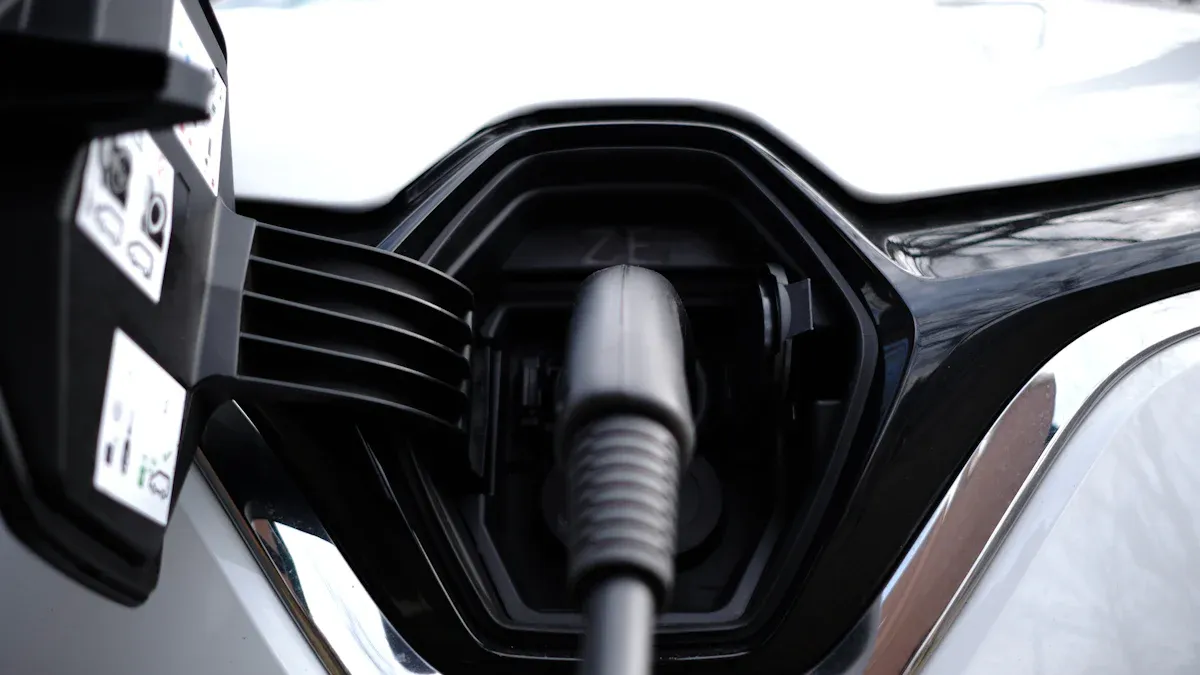
A buyer’s first major hurdle is navigating the unique electrical landscape of France. Advanced EV charging solution providers like TPSON design products for specific regional standards. Ignoring these details can lead to safety hazards and equipment damage. A proper connection begins with understanding the plug itself.
The Critical Difference: Type E vs. Schuko Plugs
Many European chargers use a “Schuko” plug, but this is not the standard in France and poses a risk. A safe installation requires a charger with a native Type E plug.
Understanding the French Type E Socket
French domestic sockets (NF C61-314) are Type E. They feature two round pin openings and a prominent male earth pin that protrudes from the socket. This design ensures a secure and grounded connection every time.
| Feature | French Type E Socket Specification |
|---|---|
| Standard | NF C61-314 |
| Poles | 2 Pole + Earth Pin |
| Rated Voltage | 250V |
| Current Rating | 16A |
Why a Schuko Plug Is a Safety Risk in France
A Schuko (Type F) plug has earth clips on its sides, not a hole for the French earth pin. While it may physically fit into a Type E socket, it will not engage the earth pin. This results in a dangerous, ungrounded connection for your charging equipment.
The Dangers of an Ungrounded Connection
An ungrounded connection leaves no safe path for fault current to travel. This elevates the risk of electric shock and can damage the sensitive electronics in both the charger and the electric vehicle. A secure ground is a non-negotiable safety feature for high-power charging.
How to Visually Identify a True Type E Plug
A compliant Type E plug is easy to spot. It has two round pin holes and a single, central female receptacle (a hole) designed to accept the socket’s male earth pin. A hybrid CEE 7/7 plug is also safe, as it includes both the hole for the Type E pin and side clips for Schuko sockets, making it versatile and secure for use in France.
Why Adapters Are a Dangerous Shortcut
Using an adapter to make an incompatible plug fit is a common but hazardous mistake. These devices are not designed for the sustained high-power demands of EV charging.
Universal Adapters Are Not a Safe Solution
Universal travel adapters are built for low-power devices like phone chargers, not for a multi-kilowatt EV charger. They often create a weak connection point that cannot handle the electrical load.
Overheating Risks and Potential Fire Hazards
The poor connection from an adapter generates resistance, which in turn creates heat. During a long charging session, this heat can build up, melting the adapter, the socket, and creating a serious fire risk.
How Using Adapters Can Void Your Warranty
Manufacturers are clear about the dangers. For example, some brands explicitly state that using extension cables or adapters will void the product warranty because of the high risk of overheating. This policy protects both the user and the integrity of the vehicle.
France’s Electrical Grid: 230V / 50 Hz Explained
The power grid in France delivers electricity at a different voltage and frequency than in other parts of the world, such as North America.
Important Note: The French electrical system operates on a 230-volt supply with a 50-hertz frequency. Any charger used here must be rated for these specifications.
Why North American (120V) Chargers Are Incompatible
A charger designed for the North American 120V grid will be instantly overwhelmed by France’s 230V supply. This mismatch is extremely dangerous.
The Role of Voltage and Frequency in Charging
Voltage determines the electrical pressure, while frequency relates to the current’s cycle. A charger’s internal components are precisely engineered for a specific voltage and frequency. A mismatch can cause catastrophic failure.
Risks of Damage to Your Charger and EV Battery
Plugging a 120V device into a 230V outlet will fry its internal circuits, often producing smoke and rendering it useless. This power surge can potentially travel through the charging cable and damage your EV’s onboard systems. A proper installation and connection are vital.
How to Verify a Charger’s Voltage Rating
Always check the charger’s specification label or manual. It must clearly state an input voltage range that includes 230V. A typical rating for a compatible charger might be Input: 200-240V ~ 50/60Hz.
Mistake #2: Errors in Electric Car Charging Speeds and Power
A buyer must align a portable charger’s power output with three critical limits: the home’s electrical contract, the circuit’s amperage, and the EV’s own capabilities. A mismatch in any of these areas leads to inefficient charging or electrical problems. Technologically advanced providers like TPSON design solutions that account for these variables.
Your Home’s Electrical Limit: The “Puissance Souscrite”
The total power available to a French home is a fixed amount. Exceeding this limit will disrupt the entire household’s power supply.
What Is “Puissance Souscrite”?
“Puissance souscrite” is the maximum amount of electrical power, measured in kilovolt-amperes (kVA), that a home can draw from the grid at any one time. It is part of the electricity contract with the utility provider.
How to Find Your Home’s Subscribed Power
A homeowner can find their “puissance souscrite” listed directly on their electricity bill, usually in the contract details section. It is also displayed on modern Linky smart meters.
Common French Power Subscriptions (6 kVA, 9 kVA)
Most French homes have a subscription of 6 kVA or 9 kVA. A 6 kVA contract supports about 6,000 watts of simultaneous power usage. A 9 kVA contract allows for 9,000 watts. An EV charging session can easily consume a large portion of this budget.
The Risk of Tripping Your Main Breaker
If the total power draw from all appliances plus the EV charger exceeds the subscribed power, the main circuit breaker (disjoncteur) will trip. This cuts power to the entire house, interrupting the charging session and everything else.
Checking Your Dedicated Circuit’s Amperage
The specific wall socket used for charging has its own power limit, determined by the circuit breaker that protects it.
Standard Domestic Circuits (16A) Explained
Standard French sockets are protected by a 16-amp (16A) circuit breaker. These circuits are not ideal for the sustained load of EV charging, typically delivering only 2.3 kW and resulting in very slow charging times.
The “Prise Renforcée” (Reinforced Socket) Option
A “prise renforcée” is a heavy-duty socket designed for safer, faster EV charging. This type of installation provides a more robust connection and allows a portable charger to draw up to 3.2 kW or 3.7 kW continuously.
| Socket Type | Cost Range (approx.) | Key Benefits |
|---|---|---|
| Green’up / Reinforced | €180 (complete pack) | Faster charging (up to 3.7kW), enhanced safety, robust for outdoor use. |
| P17 (CEE17) | Similar to Green’up | Prevents overheating, 3.7kW charging power, industrial-grade connection. |
A proper installation with a dedicated circuit breaker is essential for safety and performance.
Calculating Maximum Power Draw (Amps x Volts = Watts)
The maximum power a circuit can deliver is calculated with a simple formula.
Amperage (A) × Voltage (V) = Power (W)
For a standard 16A circuit in France: 16A × 230V = 3,680W, or 3.7 kW.
Why a 3.7 kW Charger Requires a 16A Circuit
A portable charger rated for 3.7 kW will draw the full 16A from the circuit. Using it on a lower-rated circuit is unsafe. Therefore, a dedicated 16A circuit is the minimum requirement for charging an EV at this speed with a portable device.
Your EV’s Onboard Charger (OBC) Limit
The final piece of the puzzle is the vehicle itself. The EV has a built-in component that dictates the maximum AC charging speed it can accept.
What Is an Onboard Charger?
An Onboard Charger (OBC) is a component inside the EV that converts alternating current (AC) from a wall socket or charging point into direct current (DC) to store in the battery. Its power rating, in kW, sets the ceiling for AC charging speed.
How to Find Your EV’s Max AC Charging Rate
An owner can find the vehicle’s maximum AC charging rate in the owner’s manual or on the manufacturer’s official specification sheet. Common ratings are 7.4 kW and 11 kW.
The Myth of “Faster” Portable Chargers
A portable charger cannot force a vehicle to charge faster than its OBC allows. The charging speed will always default to the lower of two values: the charger’s output or the EV’s maximum intake.
Why an 11 kW Portable Charger Is Wasted on a 7.4 kW OBC
If a buyer purchases an 11 kW portable charger for an EV with a 7.4 kW OBC, the car will only ever draw 7.4 kW. The extra capacity of the charger provides no benefit for that specific EV, making it an unnecessary expense. Matching the charger to the car’s limit is the most efficient approach.
Mistake #3: Overlooking Essential Safety Certifications for Your EV
An EV buyer’s journey doesn’t end with choosing the right plug and power level. A critical, often overlooked, step is verifying the charger’s safety certifications. These marks are not just suggestions; they are legal requirements that protect the user, the home, and the EV itself. Technologically advanced providers like TPSON prioritize these standards to deliver secure and reliable charging solutions.
The Non-Negotiable CE Mark
In France and the wider European Economic Area (EEA), the CE mark is a mandatory declaration of compliance. It is the manufacturer’s statement that the product meets fundamental EU safety requirements.
What CE Marking Guarantees for Safety
The “Conformité Européenne” (CE) mark confirms that a product adheres to stringent EU directives. For an EV charger, this typically involves compliance with:
- Low Voltage Directive (LVD): Ensures the charger is safe to use within its specified voltage range.
- Electromagnetic Compatibility (EMC) Directive: Guarantees the charger will not interfere with other electronic devices, nor be affected by them.
- BS EN 61851-1:2019: A key standard covering the general requirements for EV conductive charging systems.
Risks of Using Non-Certified Chargers
Using a non-certified charger introduces significant risks. These devices have not been tested against established safety standards, making them prone to electrical faults, overheating, and short circuits. This can lead to irreparable damage to the EV battery and create a serious fire hazard.
How to Spot a Counterfeit CE Mark
A buyer should inspect the CE mark closely. A genuine mark has specific proportions, and the letters are based on two overlapping circles. Counterfeit marks often have incorrect spacing or lettering. If a deal seems too good to be true, the certification may be fake.
Legal and Insurance Implications of Non-Compliance
Selling non-compliant products in the EU can lead to severe penalties for the manufacturer, including fines and product recalls. For the consumer, using a non-certified device can have dire consequences. In the event of a fire or damage, an insurance company may refuse to cover losses if a non-compliant charger was the cause.
Weatherproofing: Understanding IP Ratings
Since a portable EV charger may be used outdoors, it must be able to withstand the elements. The Ingress Protection (IP) rating indicates its level of resistance to solids and liquids.
What Is an Ingress Protection (IP) Rating?
An IP rating is a two-digit code that classifies the degree of protection an electrical enclosure provides against intrusion from foreign bodies (like dust) and moisture (like rain).
Decoding IP Numbers (e.g., IP55 vs. IP67)
The IP rating system is straightforward to understand.
| Digit | First Digit (Solids) | Second Digit (Liquids) |
|---|---|---|
| 4 | Protected against objects >1mm | Protected against water splashes |
| 5 | Dust protected (limited ingress) | Protected against low-pressure water jets |
| 6 | Completely dust-tight | Protected against powerful water jets |
| 7 | N/A | Protected against temporary immersion in water |
An IP55 rating means the charger is dust-protected and can resist water jets, while an IP67 rating means it is fully dust-tight and can be submerged in water temporarily.
Minimum IP Rating for Outdoor Use in France
For outdoor use in a climate like France, where rain is common, a portable EV charger should have a minimum rating of IP54. This ensures protection against water splashes from any direction. For greater peace of mind, an IP65 or IP66 rating is ideal, offering robust protection against rain and dust.
Explaining Dust and Water Resistance Levels
The first digit (0-6) rates dust protection, with 6 being completely dust-tight. The second digit (0-9) rates water protection. A rating of 4 (splashes) is good, 5 (jets) is better, and 6 (powerful jets) or 7 (immersion) offers excellent protection for a portable device.
Essential Built-in Safety Protections
Beyond external certifications, a quality charger has internal safety mechanisms that actively monitor the charging session.
Overcurrent and Overvoltage Protection
These systems protect both the charger and the vehicle from dangerous power fluctuations. Overcurrent protection prevents the charger from drawing too much amperage, while overvoltage protection guards against sudden spikes from the grid.
Ground Fault Detection (RCD Type A/B)
A Residual Current Device (RCD) is a life-saving feature. It constantly monitors the electrical current. If it detects a ground fault—where electricity leaks from the circuit—it instantly shuts off the power, preventing electric shock. This is a crucial safety layer for any high-power device.
Overheating Sensors in the Plug and Control Box
Sustained charging generates heat. Reputable chargers include temperature sensors in both the wall plug and the main control unit. If temperatures exceed a safe threshold, the charger will automatically reduce its power output or shut down completely to prevent a fire.
The Importance of a High-Quality Cable
The cable itself is a key safety component. A high-quality, durable cable resists wear, kinking, and environmental damage. A thicker, well-insulated cable can better manage heat and ensure a stable, safe connection for every charge.
The NF Mark: A French Seal of Quality
While the CE mark confirms a product meets basic EU safety laws, some manufacturers go a step further to prove their commitment to excellence. Technologically advanced providers like TPSON often pursue additional certifications to demonstrate superior quality. In France, the most respected voluntary quality seal is the NF mark.
What Is the NF Mark?
The NF mark, short for “Norme Française” (French Standard), is a voluntary certification that signifies a product’s quality, safety, and performance. It is awarded by AFNOR Certification, an impartial and independent body. To earn this mark, a product must undergo a rigorous evaluation process.
- Tests are conducted by an independent French laboratory.
- The product must pass all CE tests plus additional, more stringent French standards.
- Independent testers perform random checks at the manufacturing source to ensure consistent quality.
This process guarantees that an NF-certified product meets a very high standard of reliability.
Is the NF Mark Mandatory for Chargers?
No, the NF mark is not mandatory for EV chargers sold in France. The CE mark is the only legal requirement for market access. However, the presence of the NF mark on a charger indicates that the manufacturer has voluntarily submitted its product to a higher level of scrutiny. It serves as a clear differentiator for buyers seeking premium quality and durability.
How It Differs from the CE Mark
The CE mark and the NF mark serve different purposes. The CE mark is a manufacturer’s self-declaration of compliance with EU law, whereas the NF mark is a third-party certification of quality. The differences are significant.
| Feature | CE Mark | NF Mark |
|---|---|---|
| Basis | Manufacturer’s self-declaration | Tangible proof from independent testing |
| Testing | Independent lab testing not always required | Mandatory testing by bodies like LCIE |
| Audits | No requirement for ongoing audits | Continuous audits of the manufacturing plant |
| Scope | Focuses on basic safety compliance | Covers safety, performance, and durability |
Why It Provides Extra Peace of Mind
Choosing a charger with the NF mark gives a buyer an extra layer of confidence. This certification is based on a comprehensive quality control system that goes far beyond a one-time check.
NF Certification Guarantees:
- Endurance: The product passes aging and resistance tests to prove long-term quality.
- Oversight: The process includes manufacturing plant inspections and even mystery shoppers.
- Performance: The product is tested for energy efficiency and functional performance, not just safety.
This continuous verification ensures that every NF-certified charger maintains its high quality from the factory to the customer. It is a powerful signal that the product is built to last, providing reliable and safe charging for years to come.
Mistake #4: How to Avoid Common Mistakes in Practicality and Portability
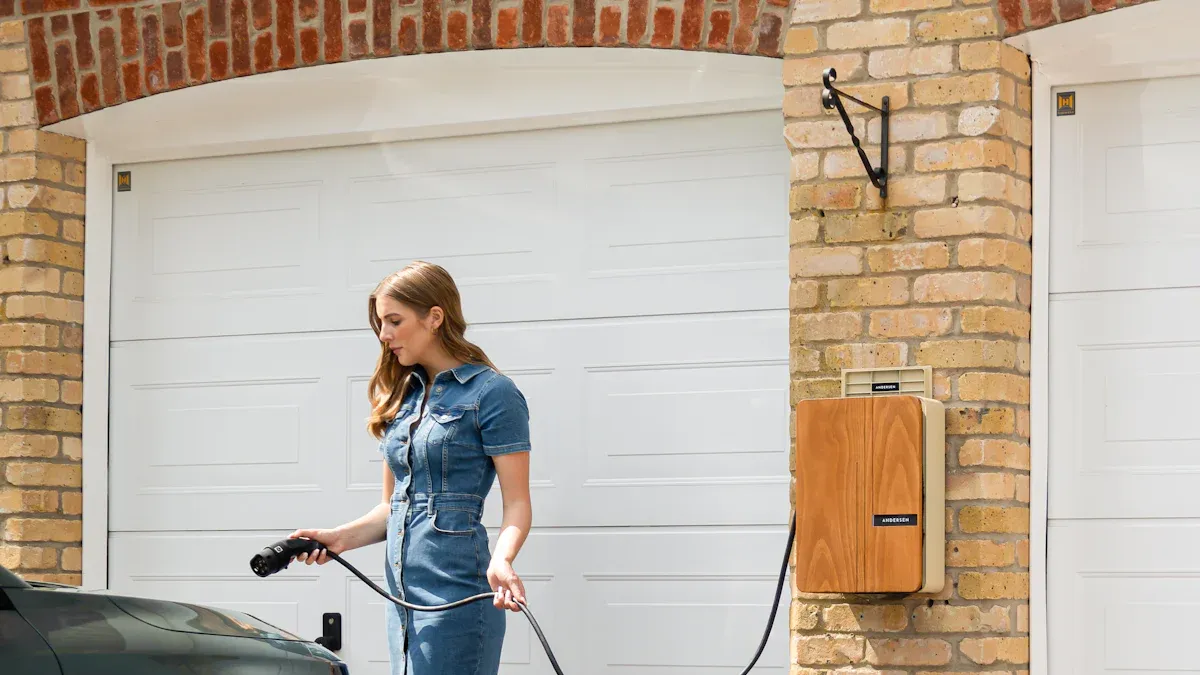
A buyer can select the perfect plug and power level but still end up with a frustrating experience. Practicality is just as important as electrical compatibility. Buyers must consider daily use factors to avoid common mistakes that impact convenience and usability. A proper charging solution should fit seamlessly into an owner’s lifestyle. To avoid common mistakes, a buyer should evaluate cable length, physical size, and user features before making a purchase.
Choosing the Wrong Cable Length
The length of the charging cable is a critical detail that directly affects daily convenience.
Why Too Short Is a Constant Problem
A cable that is too short creates constant frustration. It can force an owner to park in a very specific, often awkward, position. If another car blocks the ideal spot, a short cable may not reach the EV’s charging port at all, rendering the charger useless.
The Downsides of an Excessively Long Cable
Conversely, an overly long cable presents its own challenges. It is heavier, more difficult to coil and store, and can become a tripping hazard in a garage or driveway. Excess cable length often just adds unnecessary bulk.
Measuring Your Parking and Charging Setup
Before buying, a user should measure the distance from their primary power socket to the EV’s charge port in their usual parking space. It is wise to add a meter or two for flexibility. This simple step helps avoid common mistakes related to reach.
Standard Cable Lengths (5m, 7.5m)
Most portable EV chargers come with cables of varying lengths. A buyer should choose one that best fits their needs.
- 5-7 Meters: This is the standard range and offers a good balance of reach and manageability for most home charging scenarios.
- 7-10 Meters: A longer cable is useful for drivers who frequently encounter difficult parking situations or need to reach distant public sockets.
Ignoring the Charger’s Physical Size and Weight
A portable charger is only useful if it is actually portable. Its dimensions and weight are key factors.
Portability vs. Durability
There is often a trade-off between a lightweight design and a rugged, durable build. While fixed DC charging stations can weigh over 360kg, a portable unit must be light enough for easy handling. Technologically advanced providers like TPSON design products that balance durability with a manageable weight for daily use.
Storage in Your EV’s Trunk or Frunk
The charger must fit comfortably in the vehicle’s trunk or frunk without taking up all the storage space. A compact design ensures the portable charger can always travel with the vehicle for emergency charging needs.
Ease of Handling for Daily Use
A heavy or awkwardly shaped charger is cumbersome to use every day. A user should look for a model with an ergonomic design that is easy to plug in, unplug, and store after each charging session.
Overlooking User-Friendly Features
Modern EV chargers offer smart features that greatly enhance the charging experience. To avoid common mistakes, a buyer should look for these value-added functions.
The Value of an LCD Screen for Diagnostics
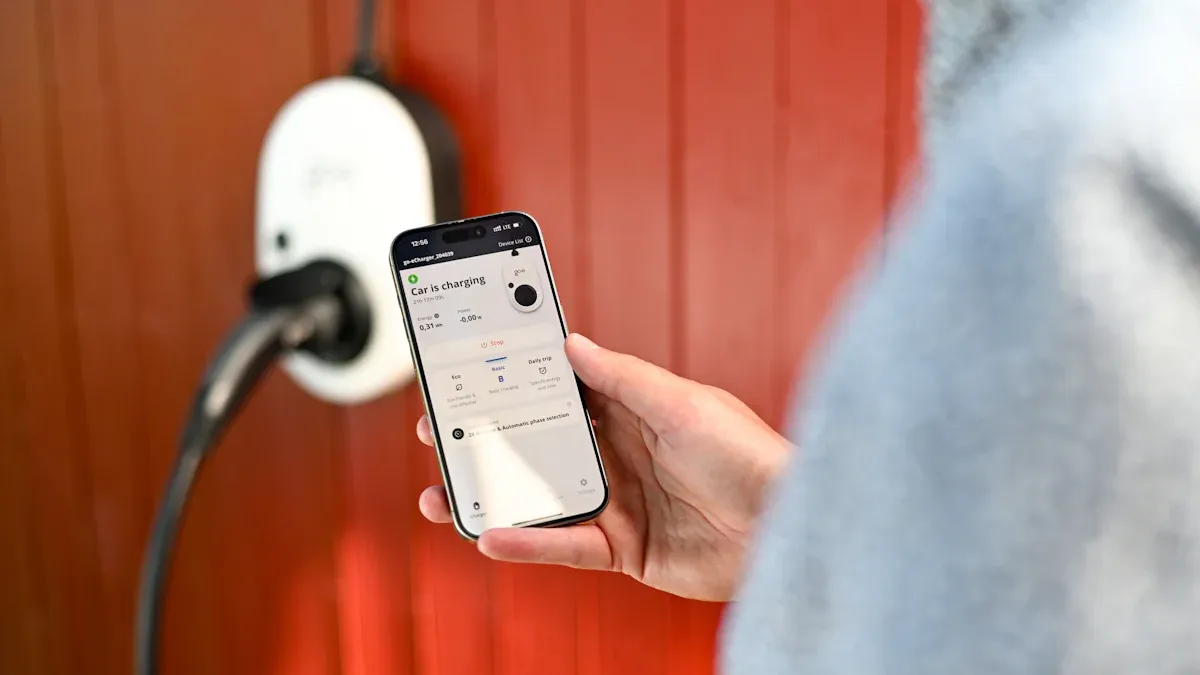
An integrated LCD screen provides vital real-time information. It can display voltage, current, energy delivered (kWh), and charging time. This helps a user monitor the charging process and diagnose any potential issues with the power source.
Adjustable Amperage Settings
Adjustable amperage is a crucial feature for flexibility and safety. It allows a user to lower the current draw to match the capacity of a specific circuit. This flexibility is essential for preventing tripped breakers, especially when using older or shared electrical circuits, and is a key part of a safe installation. A proper installation ensures safety.
Delayed Start and Timed Charging an Electric Car
A delayed start function allows an owner to plug in their EV but begin the charging session later. This is perfect for taking advantage of cheaper off-peak electricity tariffs overnight, reducing the overall cost of charging without requiring a complex installation.
Included Carrying Case and Accessories
A high-quality carrying case protects the charger from damage and keeps the cable neatly organized in the car. This small accessory makes a big difference in maintaining the equipment and keeping the vehicle tidy.
A smart purchase requires focus on electrical compatibility, power matching, and safety for EV charging. Verifying the plug and power levels ensures safe charging and protects the EV, the home, and the vehicle investment in France. A buyer should use this final checklist before any charging equipment purchase.
- Is the plug a genuine Type E for French sockets?
- Does the charger’s power match the home circuit and the EV’s onboard charging limit?
- Does it have a clear CE mark and an IP rating of at least IP54 for potential outdoor use?
- Is the cable length and physical size practical for daily needs?
FAQ
Can I use a charger with a Schuko plug in France?
No. A Schuko plug does not connect to the French Type E socket’s earth pin. This creates an ungrounded, unsafe connection. A buyer must choose a charger with a native Type E plug or a CEE 7/7 hybrid plug for a secure installation.
What should I do if charging my EV trips the main breaker?
This indicates the home’s total power consumption has exceeded its “puissance souscrite.” An owner should reduce power usage from other appliances or use a charger with adjustable amperage to lower the current draw. This avoids overloading the main circuit.
Should my portable charger’s kW rating match my car’s?
Matching the charger to the car’s Onboard Charger (OBC) limit is most efficient. A charger with a higher kW rating will not harm the car; the vehicle will simply draw power at its maximum rate (e.g., 7.4 kW), not the charger’s higher capacity.
What is the best cable length for a portable charger?
A 5 to 7-meter cable offers the best balance of reach and manageability for most users. Before purchasing, an owner should measure their typical parking distance from the socket to the charge port to ensure adequate length without excessive, cumbersome slack.
Is the NF mark required for EV chargers in France?
The NF mark is not mandatory; the CE mark is the legal requirement. However, the NF mark signifies superior quality and safety verified by an independent third party. Technologically advanced providers like TPSON often pursue this certification to demonstrate product excellence.
Are travel adapters ever safe to use for EV charging?
No. Travel adapters are not designed for the high, sustained power load of EV charging. Using one creates a serious risk of overheating, melting, and fire. It will also likely void the charger’s warranty and may impact insurance coverage.