Drivers in the UK rely on electric vehicle chargers to keep their cars ready for daily use. The best home EV chargers combine scheduled charging, grid management, and energy monitoring for efficient performance. Choosing a charger with safety certifications and a warranty period of at least three years ensures reliability. Leading EV charger manufacturers design units that meet these standards. Selecting the right EV Charger depends on each household’s needs and the features that offer long-term value.
| Factor | Description |
|---|---|
| Safety Certifications | Choose chargers certified by established bodies like the IEC. |
| Warranty Period | Look for a warranty of at least 3 years to ensure reliability. |
- Scheduled charging
- Grid management
- Energy monitoring
Top Electric Vehicle Chargers in the UK
Best Overall Home EV Charger: Easee One
Key Features
Easee One stands out as a leading choice among electric vehicle chargers in the UK. This model offers robust safety features, smart connectivity, and compatibility with most electric vehicles. The charger supports scheduled charging and energy monitoring, which helps users optimize their charging routines.
Price and Value
Easee One delivers strong value for its price point. The charger combines affordability with high reliability, earning recognition as the UK’s Best Home Charger at the Auto Trader New Car Awards 2024. Over 200,000 UK car owners contributed feedback, highlighting its cost-effectiveness and dependable performance.
Best Use Case
Easee One suits households seeking a reliable, future-proof solution for daily charging. It fits both new EV owners and those upgrading from older chargers. The charger’s compliance with European standards ensures safety and peace of mind.
Charging Speed
Easee One provides a competitive charging speed, supporting up to 7.4 kW on single-phase installations. This rate allows most EVs to charge overnight, making it ideal for residential use. The charger’s efficiency helps users manage energy costs and maximize convenience.
Smart Features
Easee One integrates advanced smart features, including remote control via a mobile app, scheduled charging, and real-time energy monitoring. Users can adjust settings, track usage, and receive notifications, enhancing the overall charging experience.
Dimensions and Design
Easee One features a compact, minimalist design that fits well in various home environments. The charger’s sleek appearance and small footprint make it suitable for garages, driveways, and wall-mounted installations.
Independent Test Results for Easee One:
Aspect Details Compliance Tested and compliant with European standards. Testing Authority Independent experts and accredited laboratories conducted the testing. Safety Confirmation Extensive laboratory tests confirmed product safety and compliance.
- In the Auto Express Driver Power 2024 survey, Easee ranked as the top home charger, surpassing Hypervolt and Zappi in reliability and customer satisfaction.
- The What Car? survey found that three-quarters of respondents were very satisfied with the installation process, and owners reported dependable units.
Best Budget-Friendly Home EV Charger: Rolec WallPod: EV HomeSmart
Key Features
Rolec WallPod: EV HomeSmart offers essential features for budget-conscious consumers. The charger includes smart controls, remote operation, and scheduling capabilities. Users can monitor charging sessions and adjust settings through a dedicated smartphone app.
Price and Value
Rolec WallPod: EV HomeSmart provides excellent value for those seeking an affordable entry into home EV charging. The charger’s competitive pricing makes it accessible to a wide range of households without sacrificing core functionality.
Best Use Case
Rolec WallPod: EV HomeSmart fits users who prioritize cost savings and basic smart features. It works well for individuals who want to charge their vehicles at home without investing in premium options.
Charging Speed
The charger supports up to 7.2 kW charging speed, which meets the needs of most electric vehicles. This rate allows users to fully charge their cars overnight, ensuring readiness for daily commutes.
Smart Features
Rolec WallPod: EV HomeSmart includes a user-friendly app that enables remote operation and scheduling. Users can take advantage of off-peak electricity rates and monitor charging information in real time.
- The charger’s smart features enhance user experience, allowing control via a smartphone app.
- Users can schedule charging sessions and monitor energy usage, optimizing cost and convenience.
Dimensions and Design
Rolec WallPod: EV HomeSmart features a straightforward, durable design. The unit’s compact size allows for easy installation in garages or on exterior walls. Its weather-resistant construction ensures reliable operation in various conditions.
Best Premium Smart Home EV Charger: Andersen Quartz
Key Features
Andersen Quartz delivers advanced technology and premium build quality. The charger supports integration with renewable energy sources, energy monitoring, and customizable settings. Its design emphasizes both aesthetics and functionality.
Price and Value
Andersen Quartz positions itself as a premium option in the market. The charger’s higher price reflects its advanced features, energy efficiency, and superior materials. Households seeking top-tier performance and design will find value in this investment.
Best Use Case
Andersen Quartz suits users who demand the highest standards in energy efficiency and smart home integration. The charger works well for those with solar panels or renewable energy systems, helping reduce energy bills.
Charging Speed
Andersen Quartz supports fast charging speeds up to 7.4 kW, enabling quick and efficient charging for a wide range of electric vehicles. This capability ensures that users can maximize their vehicle’s uptime.
Smart Features
The charger offers comprehensive smart features, including app-based controls, energy usage tracking, and integration with home automation systems. Users can customize charging schedules and monitor performance with ease.
- The Andersen Quartz Vision EV charger is recognized for its energy efficiency.
- It supports renewable energy sources, which helps in reducing energy bills.
- This feature positions it advantageously against other premium chargers.
Dimensions and Design
Andersen Quartz features a sleek, customizable exterior available in multiple finishes. The charger’s compact form factor and concealed cable storage contribute to a tidy installation. Its premium materials ensure durability and long-term appeal.
Note: Leading manufacturers in the UK EV charger market, including Electrly and other top 10 companies, continue to shape the future of EV charging infrastructure. Fastned and MFG EV Power both received 4.0-star ratings for overall satisfaction from UK consumer review organizations, highlighting the high standards set by the industry’s top models.
Best for Solar Integration: zappi 2.1 and zappi GLO
Key Features
zappi 2.1 and zappi GLO offer advanced solar integration for homeowners who want to maximize renewable energy usage. Both models support charging directly from solar panels or wind turbines. The units feature three charging modes: Eco, Eco+, and Fast. Eco modes prioritize green energy, while Fast mode uses grid power for quicker charging. The built-in energy monitoring system tracks consumption and generation, providing users with detailed insights.
Price and Value
zappi chargers position themselves as mid-range options in the UK market. The price reflects their unique ability to harness solar energy, which can lead to significant savings over time. Homeowners who invest in solar panels benefit most from these chargers, as they reduce reliance on grid electricity.
Best Use Case
zappi 2.1 and zappi GLO suit households with existing solar installations or plans to add renewable energy systems. These chargers help users lower their carbon footprint and energy bills. They also appeal to environmentally conscious drivers who want to optimize their electric vehicle charging routines.
Charging Speed
Both zappi models deliver up to 7 kW charging speed on single-phase connections and up to 22 kW on three-phase setups. This flexibility ensures compatibility with a wide range of electric vehicles. Users can select the charging mode that best fits their schedule and energy availability.
Smart Features
The chargers include app-based controls, allowing users to schedule charging sessions and monitor energy usage remotely. The app provides real-time data on solar generation and consumption. Integration with smart home systems enhances convenience and efficiency.
Tip: Homeowners can maximize savings by scheduling charging during peak solar production hours.
Dimensions and Design
zappi chargers feature a robust, weatherproof design suitable for outdoor installation. The units have a compact footprint and a clear display, making them easy to use and monitor. The design prioritizes durability and user-friendliness.
Best Tethered Home EV Charger: Pod Point Solo 3S
Key Features
Pod Point Solo 3S stands out as a reliable tethered charger for UK homes. The unit comes with a permanently attached cable, simplifying the charging process. It supports automatic software updates and remote diagnostics, ensuring optimal performance.
Price and Value
Pod Point Solo 3S offers competitive pricing for a tethered charger. The cost includes installation and access to the Pod Point app, which provides users with charging history and energy usage data. The charger’s reliability and ease of use make it a strong value proposition.
Best Use Case
This charger fits households seeking a straightforward, plug-and-play solution. The tethered cable eliminates the need to handle separate charging cables, making it ideal for daily use. It suits users who prioritize convenience and minimal setup.
Charging Speed
Pod Point Solo 3S delivers up to 7 kW charging speed, enabling most electric vehicles to charge overnight. The consistent output ensures that drivers can rely on their vehicles being ready each morning.
Smart Features
The charger integrates with the Pod Point app, allowing users to monitor charging sessions and receive notifications. Automatic updates keep the unit secure and up to date. Remote diagnostics help resolve issues quickly.
- Users benefit from a simple interface and clear charging status indicators.
- The app provides insights into energy consumption and charging patterns.
Dimensions and Design
Pod Point Solo 3S features a compact, weather-resistant enclosure. The design allows for flexible installation on exterior walls or in garages. The attached cable stores neatly, reducing clutter and improving safety.
Best Untethered Home EV Charger: Hypervolt Home 3 Pro
Key Features
Hypervolt Home 3 Pro offers a versatile untethered solution for UK drivers. The charger supports dynamic load balancing and solar integration, making it suitable for homes with renewable energy systems. The unit’s modular design allows users to choose their preferred cable length.
Price and Value
Hypervolt Home 3 Pro sits in the mid-to-premium price range. The cost reflects its advanced features and robust build quality. Homeowners seeking flexibility and smart controls find strong value in this charger.
Best Use Case
This charger suits users who want maximum flexibility. The untethered design allows charging of multiple vehicle types without being limited by cable length or connector type. It appeals to households with more than one electric vehicle or those planning future upgrades.
Charging Speed
Hypervolt Home 3 Pro delivers up to 7 kW charging speed on single-phase connections. The charger supports efficient overnight charging for most electric vehicles. Users can adjust charging schedules to optimize energy costs.
Smart Features
The Hypervolt app provides an intuitive interface for scheduling charges and monitoring usage. Users can connect the charger to smart home systems like Alexa. The app tracks costs for each charging session and allows configuration of LED brightness and moods. The user interface enhances control and monitoring, making the charging experience seamless.
- Users can schedule charging times from their phones.
- The app tracks costs and energy usage.
- Integration with smart home systems adds convenience.
- LED customization improves visibility and aesthetics.
Dimensions and Design
Hypervolt Home 3 Pro features a sleek, modern design with customizable LED lighting. The compact enclosure fits easily in garages or on exterior walls. The untethered setup reduces cable clutter and supports a clean installation.
Best for Compact Spaces: Wallbox Pulsar Max
Key Features
Wallbox Pulsar Max provides a compact solution for UK homes with limited parking space. The charger supports smart scheduling, remote control, and energy monitoring through the Wallbox app. The device offers robust safety features and integrates with most electric vehicle chargers available in the UK market.
Price and Value
Wallbox Pulsar Max sits in the mid-range price bracket. The charger delivers strong value for homeowners who need a reliable and space-saving home wallbox charger. Its durable construction and advanced features justify the investment for users seeking long-term performance.
Best Use Case
This charger fits households with restricted parking or small garages. The compact design allows installation in tight spaces, making it ideal for urban homes and apartments. Users who prioritize minimal footprint and easy cable management benefit most from this model.
Charging Speed
Wallbox Pulsar Max supports up to 7.4 kW charging speed on single-phase connections. The device enables efficient overnight charging for a wide range of electric vehicles. The following table highlights the space-saving benefits for UK homes:
| Feature | Description |
|---|---|
| Size | About the size of a home fire alarm |
| Tethered Charging Cable | Only tethered version available due to compactness |
| Cable Design | Thinner than many other chargers, easy to store |
The charger’s performance compares favorably with other compact models. Charging times for popular vehicles are shown below:
| Vehicle Model | Charging Time (0-100%) |
|---|---|
| Kia E-niro | 5 hours and 49 minutes |
| Audi E-tron | 8 hours and 38 minutes |
| MG ZS EV | 6 hours and 44 minutes |
| Polestar 2 | 7 hours and 5 minutes |
| Toyota RAV 4 | 2 hours and 26 minutes |
| Volkswagen ID4 | 7 hours and 0 minutes |
| Mercedes EQA | 6 hours and 2 minutes |
| Hyundai Ioniq 5 | 6 hours and 36 minutes |
| Skoda Enyaq IV80 | 7 hours and 27 minutes |
| Volvo XC60 Recharge | 3 hours and 11 minutes |
| Renault Zoe (52 kWh) | 2 hours and 21 minutes |
| Tesla Model 3 (50 kWh) | 4 hours and 32 minutes |

Smart Features
Wallbox Pulsar Max includes app-based controls, scheduled charging, and real-time energy monitoring. The charger supports integration with smart home systems, allowing users to automate charging routines and optimize energy usage.
Dimensions and Design
The device features a minimalist, weatherproof enclosure. The charger’s size matches a typical home fire alarm, making it easy to install in compact areas. The tethered cable uses a thinner design, which simplifies storage and reduces clutter.
Best for Fast Charging: Tesla Wall Connector
Key Features
Tesla Wall Connector delivers high-speed charging for Tesla vehicles. The charger supports Wi-Fi connectivity, remote diagnostics, and scheduled charging. The device offers robust safety features and integrates with Tesla’s mobile app for enhanced control.
Price and Value
Tesla Wall Connector occupies the premium segment of the market. The charger’s advanced technology and high charging output justify its price for Tesla owners seeking maximum convenience and performance.
Best Use Case
Tesla Wall Connector suits households with one or more Tesla vehicles. The charger provides fast charging and seamless integration with Tesla’s ecosystem. Users who prioritize rapid charging and advanced smart features benefit most from this model.
Charging Speed
Tesla Wall Connector delivers a maximum charging output of 48 amps in UK installations. The device supplies 11.5 kW to the vehicle, providing approximately 44 miles of range per hour. This charging speed ranks among the fastest for residential electric vehicle chargers.
- The maximum charging output of the Tesla Wall Connector in UK installations is 48 amps.
- It delivers 11.5 kW to the vehicle.
- This charging output provides approximately 44 miles of range per hour.
Smart Features
The charger supports Wi-Fi connectivity, remote monitoring, and scheduled charging through the Tesla app. Users can track charging sessions, receive notifications, and update firmware automatically.
Dimensions and Design
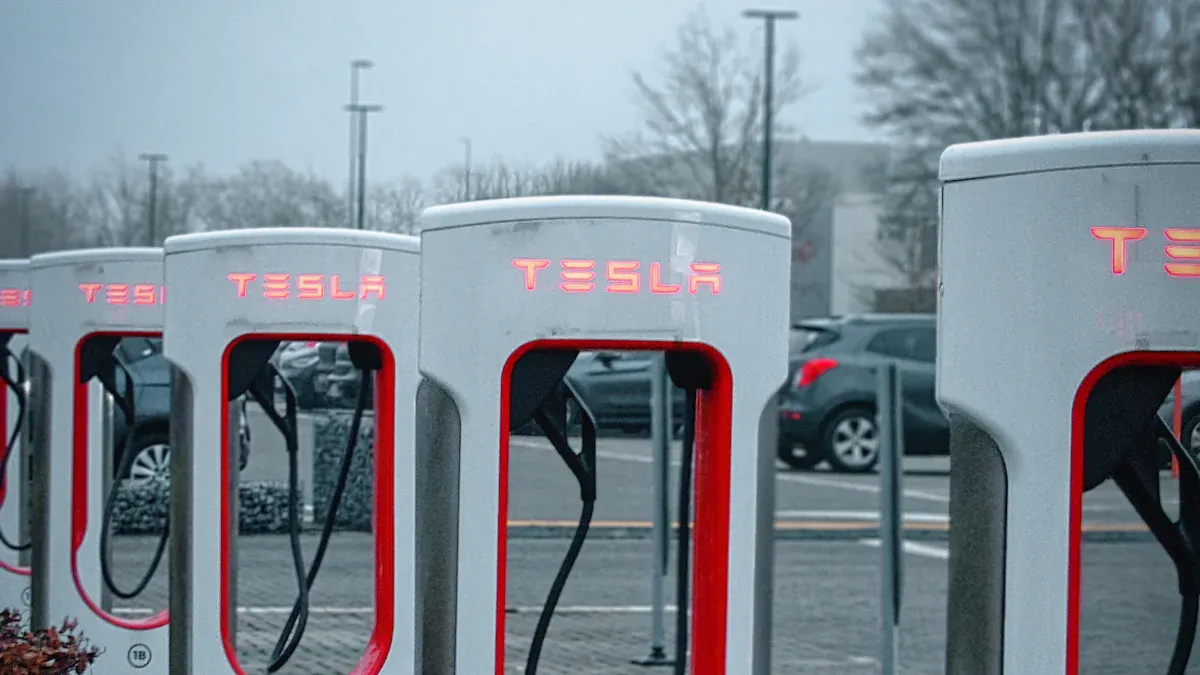
Tesla Wall Connector features a sleek, minimalist design suitable for modern homes. The device uses a proprietary connector, which limits compatibility with non-Tesla vehicles. Users must use adapters to charge other brands, which may deter some buyers.
The Tesla Wall Charger has a proprietary connector, thus it can only be used to charge Tesla electric vehicles. The J1772 connector is widely used for Level 2 charging on the market’s electric vehicles. This means that a Wall Charger requires an adaptor in order to be used with an electric car that is not a Tesla.
The need for adapters may limit appeal. Safety, charging speed, and warranty implications are crucial for users. Advancements in technology could enhance compatibility, increasing popularity.
Other Notable Electric Vehicle Chargers
EO Mini Pro 3
EO Mini Pro 3 offers a compact and discreet charging solution. The charger supports smart scheduling, energy monitoring, and remote control via a dedicated app. Its small footprint makes it suitable for homes with limited space.
Zaptec Go 2
Zaptec Go 2 provides advanced smart features and robust safety systems. The charger supports dynamic load balancing and integrates with solar panels. Its modular design allows flexible installation in various environments.
Indra Smart
Indra Smart delivers reliable performance and comprehensive smart controls. The charger supports scheduled charging, energy monitoring, and integration with renewable energy systems. Its durable construction ensures long-term reliability.
Pulse Energy Charger
Pulse Energy Charger offers efficient charging and user-friendly controls. The device supports app-based scheduling, real-time energy tracking, and remote diagnostics. Its compact design fits well in residential settings.
How to Choose the Best Home EV Charger
Price and Installation Costs
Selecting a home EV charger involves careful consideration of both upfront and ongoing expenses. The cost of installation often represents a significant portion of the total investment. Most homeowners in the UK pay an average of £1,110 for installation. Government grants can reduce this amount to approximately £760, making electric vehicle chargers more accessible for many families.
- The average installation cost for a dedicated EV charger is about £1,110.
- With available government grants, the cost of installation can drop to around £760.
Homeowners should factor in additional expenses such as electrical upgrades or wall mounting. Some installers offer bundled packages that include both the electric car charger and installation services. Comparing quotes from certified professionals helps ensure fair pricing and reliable service. Understanding the cost of installation allows buyers to budget effectively and avoid unexpected charges.
Tethered vs. Untethered Home EV Chargers
Buyers must decide between tethered and untethered electric car home chargers. Tethered chargers come with a fixed cable attached to the unit. This design offers convenience, as users simply plug the cable into their vehicle. Tethered models suit drivers who own a single electric car and prefer a straightforward charging process.
Untethered chargers, on the other hand, require users to supply their own cable. This option provides flexibility for households with multiple vehicles or those who anticipate switching car models. Untethered units also offer a cleaner appearance when not in use. The choice between tethered and untethered depends on individual preferences, vehicle compatibility, and future needs.
Tip: Households planning to upgrade vehicles or share charging with guests may benefit from untethered chargers.
Charging Speed and Power Output
Charging speed plays a crucial role in daily home charging routines. Faster chargers reduce downtime and increase convenience for busy families. The power output of electric vehicle chargers determines how quickly a battery reaches full capacity. The following table highlights the main differences among top UK home EV chargers:
| Charger Type | Power Output | Charging Time |
|---|---|---|
| Slow | Up to 3.6 kW | 6-12 hours |
| Fast | 7 kW to 22 kW | 3-6 hours |
| Rapid/Ultra Rapid | 50 kW to 350 kW | 20 minutes for 80% charge |
Most residential users select fast chargers with outputs between 7 kW and 22 kW. These models balance charging speed with energy efficiency, making them ideal for overnight home charging. Rapid chargers deliver impressive charging speed but usually require commercial-grade electrical systems. Evaluating charging speed and power output ensures the chosen electric car charger meets daily driving requirements.
Compatibility with Your Electric Vehicle
Selecting a home EV charger requires careful attention to compatibility with the vehicle. Electric cars in the UK use different charging standards and connector types. The Type 2 connector serves as the most common option for everyday AC charging. CCS and CHAdeMO plugs appear frequently at motorway fast charging stations. Drivers must understand which connector their vehicle supports before purchasing a charger.
Compatibility affects where drivers can charge and which adapters they may need. Some vehicles only accept certain plug types, limiting the choice of charger. Owners who plan to switch vehicles in the future should consider chargers with universal connectors. This approach ensures flexibility and reduces the need for additional accessories.
- Compatibility with different electric vehicle models is crucial due to the variety of charging standards and connector types in the UK.
- The Type 2 connector is commonly used for everyday AC charging, while CCS and CHAdeMO plugs are preferred for fast charging on motorways.
- Knowing the charging standards directly impacts where EV drivers can charge and which adapters they may need.
A charger that matches the vehicle’s requirements will deliver optimal charging speed and efficiency. Checking the manufacturer’s specifications helps avoid installation issues and ensures reliable home charging.
Smart Features and App Integration
Modern home EV chargers offer a range of smart features that enhance convenience and control. UK EV owners often request Wi-Fi or Bluetooth connectivity, which allows remote monitoring and management through a smartphone app. Scheduling features enable users to set charging times, taking advantage of off-peak electricity rates and reducing costs.
Energy monitoring stands out as a valuable tool for managing electricity usage. Many chargers provide real-time data on consumption, helping users track costs and optimize charging routines. Remote management through apps lets drivers adjust schedules and view charging history, supporting better cost management.
- Wi-Fi or Bluetooth Connectivity: Allows remote monitoring and control via a smartphone app.
- Scheduling: Enables users to charge during off-peak electricity rates.
- Energy Monitoring: Helps manage electricity usage and reduce costs.
- Remote Management: Manage charging schedules through apps.
- Charging History: View past charging data for better cost management.
- Charging Schedule Management: Set charging times to utilize off-peak prices.
- Energy Consumption Insights: Monitor energy use and associated costs.
- Charging History Access: Keep track of spending on charging.
Smart features and app integration provide greater flexibility and transparency. These capabilities help users maximize charging speed and efficiency while maintaining control over home charging expenses.
Solar and Renewable Energy Integration
Solar and renewable energy integration has become a key consideration for many UK households. Chargers that support solar panel connections allow drivers to use clean energy for home charging. This approach reduces reliance on grid electricity and lowers energy bills.
Some home EV chargers offer dedicated modes for solar charging. These modes prioritize energy from solar panels or wind turbines, switching to grid power only when necessary. Users can monitor energy generation and consumption through integrated apps, gaining insights into their environmental impact.
A charger with renewable energy integration supports sustainable living and future-proofing. Homeowners who invest in solar panels benefit from reduced charging costs and increased energy independence. Choosing a charger with these features aligns with long-term goals for efficiency and sustainability.
Tip: Homeowners can maximize savings by scheduling charging during peak solar production hours.
Design, Size, and Build Quality
Manufacturers in the UK electric vehicle charger market focus on design, size, and build quality to meet the needs of modern households. Each charger model presents a unique approach to aesthetics and durability. Some units feature sleek, minimalist designs that blend with contemporary architecture. Others prioritize compactness, allowing installation in tight spaces such as small garages or narrow driveways.
Build quality remains a critical factor for long-term reliability. Leading brands use robust materials like reinforced plastics and weatherproof enclosures. These choices protect chargers from moisture, dust, and temperature fluctuations. Engineers test each unit to ensure resistance to impact and corrosion. The result is a product that maintains performance over years of daily use.
Size varies across models. Compact chargers, such as the EO Mini Pro 3, fit discreetly on walls without drawing attention. Larger units, like the Andersen Quartz, offer advanced features but require more installation space. Homeowners should measure available areas before selecting a charger.
Tip: A charger with a small footprint suits homes with limited parking. Larger models may offer more features but need additional space.
The following table compares design and size considerations for popular UK chargers:
| Charger Model | Design Style | Size (Approx.) | Build Quality Features |
|---|---|---|---|
| Easee One | Minimalist | Compact | Weatherproof, impact-resistant |
| Andersen Quartz | Premium, Custom | Large | Reinforced casing, cable storage |
| Wallbox Pulsar Max | Modern, Compact | Very Small | Durable, easy to clean |
| Hypervolt Home 3 Pro | Sleek, Modular | Medium | LED lighting, robust shell |
Quality construction ensures safety and reduces maintenance needs. Homeowners benefit from chargers that withstand daily wear and environmental stress. Selecting a model with proven build quality supports long-term satisfaction.
Warranty and Customer Support
Warranty and customer support play essential roles in the ownership experience of electric vehicle chargers. Most reputable manufacturers offer warranties ranging from three to five years. This coverage protects buyers against defects in materials or workmanship. A longer warranty period signals confidence in product quality and reliability.
Customer support services assist users with installation, troubleshooting, and maintenance. Leading brands maintain dedicated helplines, online chat options, and detailed user manuals. Support teams answer technical questions and guide users through setup procedures. Some companies provide remote diagnostics, allowing technicians to identify and resolve issues without a site visit.
Buyers should review warranty terms before purchasing. Coverage may include replacement parts, labor costs, or full unit replacement. Exclusions often apply to damage from improper installation or unauthorized modifications. Reading the warranty policy helps users understand their rights and responsibilities.
Note: Reliable customer support can reduce downtime and improve satisfaction. Quick responses and clear guidance help users resolve problems efficiently.
A strong warranty and responsive support team contribute to peace of mind. Homeowners who choose chargers with comprehensive coverage and accessible assistance enjoy a smoother ownership experience.
Comparing the Top Electric Vehicle Chargers
Feature Comparison Table
The following table highlights the key features of the leading home EV chargers available in the UK. This comparison helps buyers identify which charger aligns with their requirements.
| Charger Model | Charging Speed | Tethered/Untethered | Smart Features | Solar Integration | App Control | Design Style |
|---|---|---|---|---|---|---|
| Easee One | Up to 7.4 kW | Untethered | Yes | No | Yes | Minimalist |
| Rolec WallPod | Up to 7.2 kW | Tethered | Basic | No | Yes | Functional |
| Andersen Quartz | Up to 7.4 kW | Tethered/Untethered | Advanced | Yes | Yes | Premium |
| zappi 2.1/GLO | Up to 22 kW | Tethered/Untethered | Advanced | Yes | Yes | Robust |
| Pod Point Solo 3S | Up to 7 kW | Tethered | Yes | No | Yes | Compact |
| Hypervolt Home 3 Pro | Up to 7 kW | Untethered | Advanced | Yes | Yes | Sleek |
| Wallbox Pulsar Max | Up to 7.4 kW | Tethered | Yes | No | Yes | Compact |
| Tesla Wall Connector | Up to 11.5 kW | Tethered | Advanced | No | Yes | Minimalist |
Note: Charging speed and smart features vary by installation type and model selection.
Price Comparison
Price remains a critical factor for many buyers. The following list presents the typical price range for each charger, excluding installation costs. Prices may fluctuate based on retailer promotions and optional features.
- Easee One: £650 – £800
- Rolec WallPod: EV HomeSmart: £500 – £650
- Andersen Quartz: £1,200 – £1,500
- zappi 2.1 / zappi GLO: £800 – £1,000
- Pod Point Solo 3S: £700 – £900
- Hypervolt Home 3 Pro: £750 – £950
- Wallbox Pulsar Max: £700 – £850
- Tesla Wall Connector: £475 – £550
Tip: Buyers should consider both upfront costs and long-term savings from smart features or solar integration.
Pros and Cons of Each Home EV Charger
Each charger offers distinct advantages and limitations. The following list summarizes the main pros and cons for each model.
Easee One
- 👍 Compact design, strong smart features, wide compatibility
- 👎 No solar integration
Rolec WallPod: EV HomeSmart
- 👍 Affordable, easy to use, basic smart controls
- 👎 Limited advanced features, lower build quality
Andersen Quartz
- 👍 Premium aesthetics, advanced smart features, solar-ready
- 👎 High price, larger size
zappi 2.1 / zappi GLO
- 👍 Excellent solar integration, flexible charging modes, robust build
- 👎 Higher cost, more complex setup
Pod Point Solo 3S
- 👍 Reliable, simple interface, tethered convenience
- 👎 No solar integration, fewer customization options
Hypervolt Home 3 Pro
- 👍 Modular design, smart home integration, solar support
- 👎 Mid-to-premium price, untethered only
Wallbox Pulsar Max
- 👍 Space-saving, modern look, strong app controls
- 👎 Only available as tethered, no solar support
Tesla Wall Connector
- 👍 Fast charging for Tesla vehicles, seamless app integration
- 👎 Proprietary connector, limited compatibility with other brands
Buyers should match charger features to their household needs, vehicle type, and future plans.
Best Home EV Chargers for Different Needs
Selecting the right home EV charger depends on each household’s priorities. The UK market offers a diverse range of chargers, each excelling in specific scenarios. The following guide matches leading models to common user needs, helping buyers make informed decisions.
1. For Budget-Conscious Buyers
Rolec WallPod: EV HomeSmart stands out as the top choice for those seeking affordability without sacrificing essential features. This model provides reliable charging and basic smart controls at a competitive price point.
2. For Fast Charging Enthusiasts
Tesla Wall Connector delivers the highest charging speeds for Tesla owners. It supplies up to 11.5 kW, significantly reducing charging time. Non-Tesla drivers may consider the zappi 2.1 or Wallbox Pulsar Max for fast, efficient charging compatible with a broader range of vehicles.
3. For Smart Home Integration
Andersen Quartz and Hypervolt Home 3 Pro both offer advanced smart features. These chargers integrate seamlessly with home automation systems and provide detailed energy monitoring. Users can control charging sessions remotely and customize schedules for maximum efficiency.
4. For Solar and Renewable Energy Users
zappi 2.1 and zappi GLO lead the market in solar integration. These chargers allow homeowners to prioritize renewable energy, reducing reliance on the grid. The built-in modes optimize charging based on solar generation, making them ideal for eco-conscious drivers.
5. For Compact Spaces
Wallbox Pulsar Max provides a compact solution for homes with limited installation space. Its small footprint and streamlined design fit easily in tight garages or driveways.
6. For Multi-Vehicle Households
Hypervolt Home 3 Pro and Easee One both support untethered charging. This flexibility enables users to charge different vehicle types without changing cables. These models suit families with multiple EVs or frequent guests.
7. For Premium Design and Customization
Andersen Quartz offers a premium aesthetic with customizable finishes. Its concealed cable storage and robust build appeal to buyers who value both form and function.
Tip: Buyers should list their top priorities—such as speed, price, or sustainability—before choosing a charger. Matching features to lifestyle ensures long-term satisfaction.
The table below summarizes the best charger for each scenario:
| Need | Recommended Charger(s) |
|---|---|
| Budget-Friendly | Rolec WallPod: EV HomeSmart |
| Fast Charging | Tesla Wall Connector, zappi 2.1, Wallbox Pulsar Max |
| Smart Home Integration | Andersen Quartz, Hypervolt Home 3 Pro |
| Solar Integration | zappi 2.1, zappi GLO |
| Compact Spaces | Wallbox Pulsar Max |
| Multi-Vehicle Flexibility | Hypervolt Home 3 Pro, Easee One |
| Premium Design | Andersen Quartz |
Careful consideration of these factors helps buyers select a charger that fits their unique needs and future plans.
Tips for Home EV Charger Installation and Maintenance

Choosing a Certified Installer
Selecting a certified installer ensures safety and compliance with UK regulations. Certified professionals possess the necessary training and experience to handle electrical systems. They follow industry standards and use approved materials. Homeowners benefit from reduced risk of faulty installation and improved long-term reliability. Many manufacturers recommend installers who have completed specialized courses. These experts understand the technical requirements of each charger model.
A certified installer also manages regulatory paperwork. They secure permits and verify that the installation meets local safety codes. This process protects the homeowner from legal complications. Professional installation often includes a warranty on labor, providing additional peace of mind.
Tip: Always request proof of certification before hiring an installer. Qualified professionals display credentials from recognized bodies such as NICEIC or NAPIT.
Preparing Your Home for Installation
Proper preparation streamlines the installation process and minimizes delays. Homeowners should assess their property’s electrical capacity. Many UK homes require upgrades to support the high power demands of EV chargers. An electrician can evaluate the existing system and recommend necessary improvements.
Location selection plays a critical role. Limited garage space or the absence of a garage complicates site choice. Installers often suggest mounting chargers on exterior walls or near driveways. Flats and terraced houses without off-street parking present unique challenges. In these cases, creative solutions such as shared charging points or curbside installations may be necessary.
Historic properties and listed buildings require special permissions. Local authorities may impose restrictions to preserve architectural integrity. Detached garages often increase costs due to longer cable runs and potential groundworks.
The table below summarizes common installation challenges for UK homeowners:
| Challenge Type | Description |
|---|---|
| Electrical Capacity | Many homes lack the electrical capacity to support high power demands of EV chargers, necessitating upgrades. |
| Location Constraints | Limited garage space or lack of a garage complicates the installation site selection. |
| Regulatory Requirements | Local regulations may require permits and compliance with safety standards for installation. |
| Listed Buildings | Special permissions may be needed for installations in historic areas, affecting planning. |
| Detached Garages | Higher costs due to extended cable runs and potential groundworks for detached garages. |
| Off-Street Parking | Flats and terraced houses without off-street parking face significant installation challenges. |
Note: Early consultation with an installer helps identify and address these challenges before work begins.
Ongoing Maintenance and Support
Routine maintenance extends the lifespan of a home EV charger. Homeowners should inspect the unit regularly for signs of wear or damage. Cleaning the charger and cable prevents debris buildup and ensures safe operation. Most manufacturers recommend checking connections and tightening fittings every few months.
Software updates play a vital role in maintaining smart features. Many chargers receive automatic updates that improve performance and security. Users should monitor notifications from the manufacturer and install updates promptly.
Customer support remains essential for troubleshooting and repairs. Leading brands offer helplines and online resources. Homeowners can contact support teams for guidance on technical issues or warranty claims.
- Inspect the charger for physical damage.
- Clean the unit and cable to prevent dirt accumulation.
- Check for software updates and install them as needed.
- Contact customer support for technical assistance.
Tip: Schedule annual inspections with a qualified electrician to ensure optimal performance and safety.
The leading electric vehicle chargers in the UK deliver a mix of smart features, reliable performance, and flexible installation options. Buyers should assess their priorities, such as charging speed, budget, and compatibility. Selecting a charger with future-proof technology supports long-term value.
Smart investment in home charging ensures convenience and efficiency for years to come.
FAQ
What is the difference between tethered and untethered EV chargers?
A tethered charger includes a fixed cable attached to the unit. An untethered charger requires users to provide their own cable. Tethered chargers offer convenience, while untethered chargers provide flexibility for charging different vehicle types.
Can homeowners install an EV charger themselves?
Certified electricians must install EV chargers in the UK. Self-installation does not meet safety standards and may void warranties. Professional installation ensures compliance with regulations and guarantees safe operation.
How long does it take to charge an electric vehicle at home?
Charging time depends on the charger’s power output and the vehicle’s battery size. Most home chargers deliver 7 kW, allowing a full charge in six to eight hours for typical electric cars.
Are government grants available for home EV charger installation?
The UK government offers grants to reduce installation costs for eligible homeowners. These grants lower upfront expenses and make EV charging more accessible. Eligibility requirements may vary based on property type and ownership.
Do all EV chargers work with every electric vehicle?
Most UK chargers use the Type 2 connector, compatible with many electric vehicles. Some models, such as Tesla, require adapters for non-standard connectors. Checking vehicle specifications ensures proper compatibility before purchase.
What maintenance does a home EV charger require?
Routine maintenance includes inspecting cables, cleaning the unit, and checking for software updates. Annual inspections by a qualified electrician help maintain safety and performance. Manufacturers provide guidelines for ongoing care.
Can EV chargers integrate with solar panels?
Many modern chargers, such as zappi, support solar integration. These chargers allow users to charge vehicles using renewable energy, reducing reliance on grid electricity and lowering energy costs.