
The transition to an electric fleet is accelerating, with significant EV sales growth seen across major markets.
| Регион | Год | Growth/Sales (Light-Duty EVs) | Specifics |
|---|---|---|---|
| США | 2022 | 55% growth in EV sales | BEV sales rose 70% to 800,000 units; PHEV sales climbed 15% |
| США | 2023 | Predicted 1.5 million EV sales | Account for 12% of total automobile sales |
| Европа | 2022 | 15% increase in EV sales | 2.7 million units sold; accounted for 25% of worldwide EV sales |
| Европа | 2023 | Predicted almost 25% rise in EV sales | One in four cars sold expected to be electric |
This rapid adoption creates an urgent need for optimized charging. Success in как-оптимизировать-инфраструктуру-зарядки-электромобилей-для-легких-средних-и-тяжелых-автопарков hinges on a clear process. Fleet managers must evaluate options from various Производители зарядных устройств для электромобилей, choosing the best Зарядное устройство для электромобилей или даже портативные зарядные устройства. Технологически продвинутый Решения для зарядки электромобилей providers like TPSON help build a resilient charging infrastructure for all vehicles.
Step 1: Assess Your Fleet’s Unique Duty-Cycle Needs

A successful transition to electric power begins with a deep understanding of vehicle operations. Fleet managers must analyze duty cycles to quantify energy needs and identify charging opportunities. Modern methods use telematics data to measure factors like Kinetic Intensity (KI), which helps determine if a route’s energy profile suits specific EV technologies. This data-driven approach is the foundation for building an efficient charging ecosystem with a solutions provider like TPSON.
Analyzing Light-Duty Vehicle Operations
Typical Routes and Dwell Times
Light-duty commercial vehicles, such as service vans and passenger cars, often follow predictable daily routes. They typically return to a central depot at the end of a shift. This creates a long and consistent dwell time, usually 8-12 hours overnight, which is ideal for cost-effective AC charging.
Daily Energy Consumption
These vehicles generally have lower daily energy requirements compared to larger trucks. A thorough analysis of telematics data reveals the average and maximum daily mileage. This information helps managers accurately size vehicle batteries and plan charging schedules without over-provisioning expensive infrastructure.
Return-to-Base vs. Field Operations
Most light-duty EVs operate on a return-to-base model, simplifying charging logistics. However, some field-based roles may require employees to take vehicles home. This scenario necessitates a separate strategy for residential charging, including policy and reimbursement considerations.
Evaluating Medium-Duty Vehicle Requirements
The operational needs of medium-duty trucks vary significantly based on their application. The key differences between last-mile delivery and regional haul illustrate this diversity.
| Характеристика | Last-Mile Delivery | Medium-Duty Regional Haul |
|---|---|---|
| Route Predictability | Highly predictable, fixed routes | Moderately predictable, with some variability |
| Инфраструктура зарядки | Primarily depot charging overnight | Combination of depot and en-route fast charging |
| Размер батареи | Smaller packs optimized for cost | Larger packs optimized for range |
| Потребление энергии | Lower overall due to shorter distances | Higher overall due to longer distances |
Predictable vs. Variable Routes
Last-mile delivery trucks benefit from highly predictable routes, making energy management straightforward. Regional haul trucks face more variability, requiring a flexible charging strategy that may include public stations.
Mid-day Charging Opportunities
The frequent stops in last-mile delivery create potential for opportunity charging during a driver’s lunch break. Regional haulers have fewer stops, making high-power DC fast charging during scheduled breaks essential to complete longer routes.
Impact of Payload on Energy Use
Payload weight has a direct and significant impact on the energy consumption of all medium- and heavy-duty EVs. Heavier loads demand more power, reducing vehicle range and increasing the need for robust charging solutions.
Understanding Heavy-Duty Vehicle Demands
High Energy Consumption and Long Hauls
Heavy-duty electric trucks have immense power requirements. For example, some Class 8 models consume around 2 kWh per mile. This high consumption, combined with long-haul routes, makes high-power charging a necessity for this fleet segment.
Scheduled vs. Unscheduled Stops
Scheduled stops at depots or distribution centers are the primary charging opportunities for these large vehicles. Unscheduled stops are operationally disruptive, so infrastructure must be reliable enough to ensure trucks can complete their routes without unplanned downtime.
Depot Dwell Time Constraints
Depot dwell times for heavy-duty trucks can be tight. A vehicle may only have a few hours to receive a full or near-full charge before its next dispatch. This constraint makes Megawatt Charging Systems (MCS) and high-power DCFC essential technologies for keeping the fleet operational.
Step 2: Select the Right EV Charging Hardware
After assessing duty cycles, the next step in как-оптимизировать-инфраструктуру-зарядки-электромобилей-для-легких-средних-и-тяжелых-автопарков is selecting the correct hardware. The choice between Level 2 AC and DC Fast Charging (DCFC) depends entirely on vehicle type, dwell time, and energy needs. A provider like TPSON offers a range of technologically advanced Решения для зарядки электромобилей to meet these diverse requirements.
Level 2 AC Charging Explained
Level 2 chargers use alternating current (AC) and are the most common type for commercial and residential settings. They offer a balance of speed and cost-effectiveness for vehicles with long dwell times.
Идеальные сценарии использования для автопарков
Зарядка уровня 2 идеально подходит для операций с возвратом на базу, где транспортные средства паркуются на ночь или на длительные периоды.
- Ночная зарядка на депо: Полностью восполняет заряд аккумуляторов за 8-12-часовую смену.
- Зарядка на рабочем месте: Обеспечивает значительную зарядку для электромобилей сотрудников в течение рабочего дня.
- Многоквартирные жилые дома: Обслуживает жильцов, которые паркуются на длительное время.
Соображения по стоимости и установке
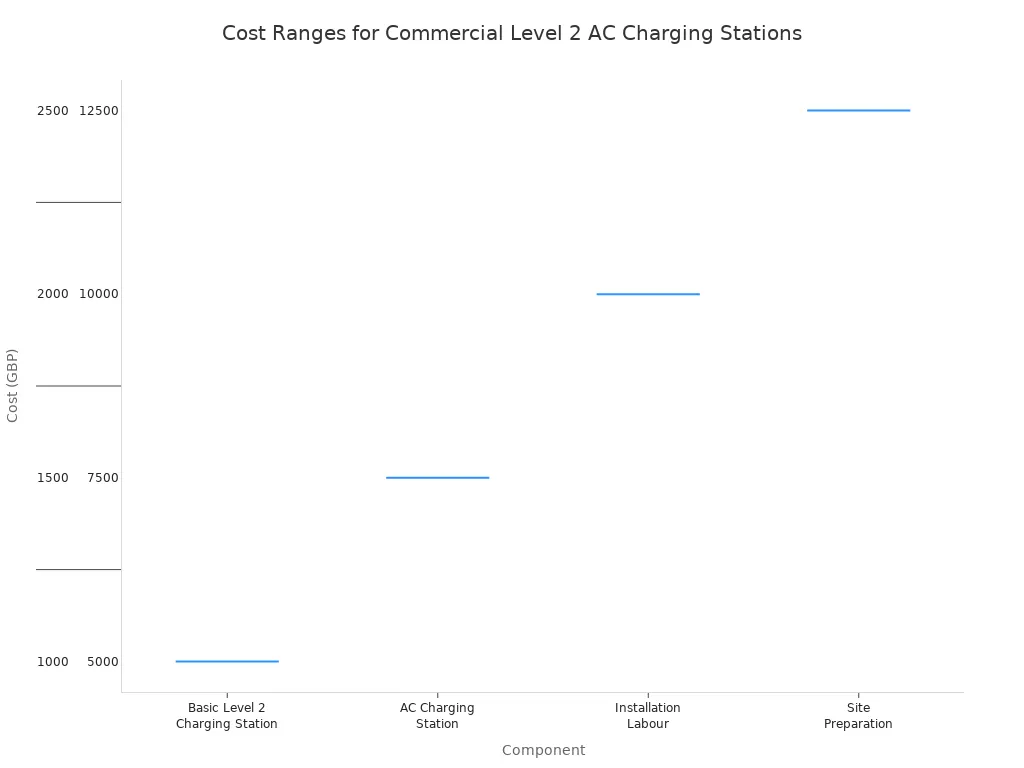
Оборудование уровня 2 более доступно, чем СЗТБ. Стоимость оборудования для зарядной станции переменного тока 22 кВт обычно составляет от 3 800 до 6 300 долларов США. Однако затраты на установку могут значительно варьироваться в зависимости от конкретных условий объекта.
Примечание: Ключевые затраты на установку включают рабочую силу, подготовку площадки и расстояние от источника электроснабжения. Тщательная оценка объекта имеет решающее значение для точного бюджетирования.
Применение для легковых транспортных средств
Зарядные устройства уровня 2 являются стандартным выбором для легких электромобилей. Стандартный блок мощностью 7,4 кВт может добавлять около 25 миль запаса хода в час, легко заряжая фургон за ночь. Более мощные блоки на 22 кВт, подходящие для коммерческой недвижимости, могут добавлять до 75 миль в час.
Объяснение быстрой зарядки постоянным током (СЗТБ)
Зарядные устройства СЗТБ преобразуют переменный ток в постоянный до его поступления в транспортное средство, что обеспечивает гораздо более высокие скорости зарядки. Эта технология необходима для операций, чувствительных ко времени.
Когда использовать высокомощную зарядку
Высокомощная зарядка необходима, когда время простоя транспортного средства должно быть сведено к минимуму. Она идеально подходит для пополнения заряда в пути во время перерывов водителя или для быстрого возврата на базу. Эта возможность поддерживает движение автопарка и максимизирует использование активов.
Уровни мощности и скорость зарядки
Уровни мощности СЗТБ варьируются от 50 кВт до более 350 кВт. Более высокая мощность значительно сокращает время зарядки для совместимых электромобилей.
| Уровень мощности | Типичное время зарядки (до 80%) | Лучшее для |
|---|---|---|
| 50 кВт | 30-60 минут | Быстрое пополнение для аккумуляторов малой емкости |
| 150 кВт | 15-20 минут | Большинство современных коммерческих транспортных средств |
| 350 кВт+ | < 20 минут | Грузовые автомобили высокой интенсивности использования |
Критически важно для средних и тяжелых транспортных средств
СЗТБ незаменима для средних и тяжелых транспортных средств. Большие аккумуляторы в электрических грузовиках требуют высокомощного ввода для зарядки в приемлемые сроки. Для региональных грузовиков и других применений с высоким пробегом СЗТБ не является роскошью, а основным операционным требованием.
Соответствие оборудования классу транспортного средства
Легкие транспортные средства: В основном уровень 2
Длительное время простоя и аккумуляторы малой емкости легких транспортных средств делают экономически эффективную зарядку переменным током уровня 2 оптимальным решением.
Средние транспортные средства: Комбинация уровня 2 и СЗТБ
Средние грузовики выигрывают от гибридной стратегии: уровень 2 для ночной зарядки на депо и СЗТБ для зарядки возможностей в середине маршрута.
Тяжелые транспортные средства: В основном СЗТБ
Огромные потребности в энергии и жесткие графики тяжелых грузовиков требуют высокомощной СЗТБ или мегаваттных зарядных систем (MCS) для обеспечения операционной жизнеспособности.
Шаг 3: Определение оптимальных мест зарядки
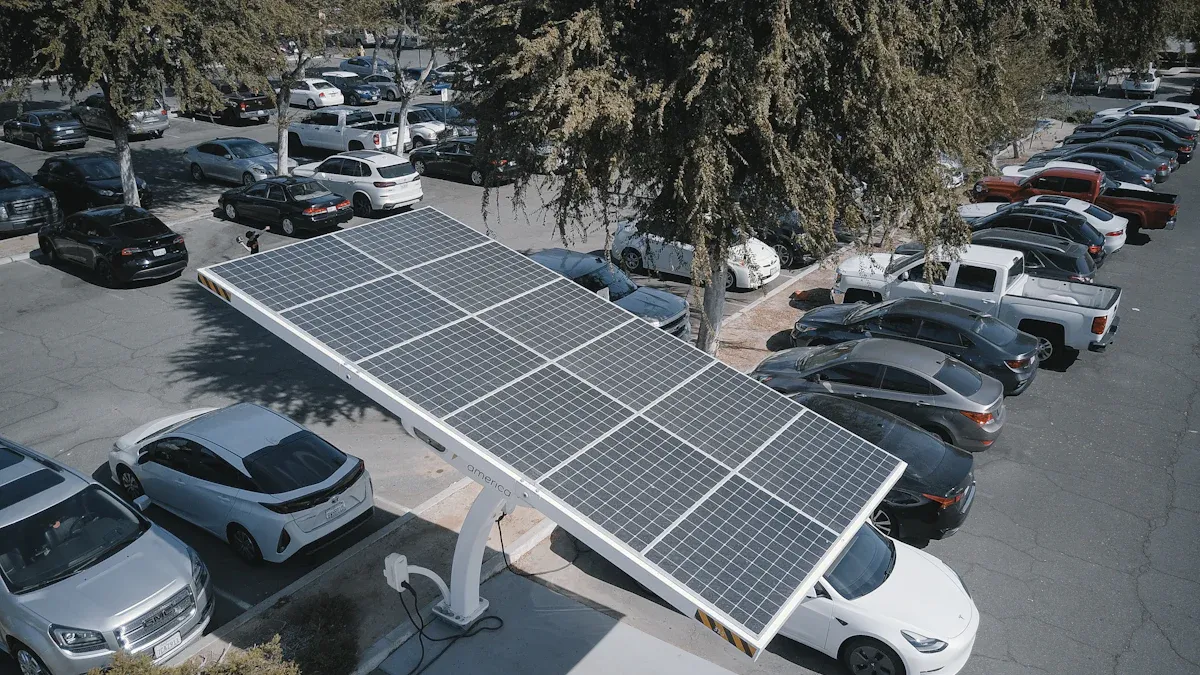
Выбор правильных мест для зарядной инфраструктуры так же важен, как и выбор правильного оборудования. Операционная модель автопарка определяет, должна ли зарядка быть централизованной на депо, распределенной по общественным сетям или управляемой на дому у сотрудников. Стратегический план размещения минимизирует время простоя и оптимизирует затраты на электроэнергию.
Стратегия зарядки на депо
Депо являются командным центром для большинства коммерческих автопарков. Централизация зарядной инфраструктуры здесь обеспечивает максимальный контроль над управлением энергией и готовностью транспортных средств.
Ночная зарядка для автопарков с возвратом на базу
Модель с возвратом на базу является наиболее простой для электрификации. Транспортные средства паркуются на депо на длительные, предсказуемые периоды ночью. Это увеличенное время простоя позволяет использовать экономически эффективную зарядку переменным током уровня 2. Это гарантирует, что каждое транспортное средство начинает смену с полным аккумулятором без необходимости в дорогом высокомощном оборудовании.
Оценка объекта и энергетическая мощность
Тщательная оценка объекта является обязательным первым шагом. Менеджеры автопарков должны работать со специалистами, чтобы оценить электрическую мощность депо. Этот процесс включает:
- Понимание потребностей в зарядке электромобилей: Расчет количества и типа необходимых зарядных устройств на основе текущего и будущего роста парка электромобилей.
- Оценка мощности на объекте: Оценка существующей электрической установки, включая трансформаторы и кабели, для определения необходимости модернизации для обработки новой нагрузки.
- Учет будущего расширения: Планирование масштабируемости гарантирует, что инфраструктура сможет поддерживать больше транспортных средств по мере роста автопарка.
Планировка и управление кабелями
Эффективная планировка депо предотвращает узкие места и обеспечивает безопасность. Хорошо спроектированная планировка зарядной станции учитывает поток транспортных средств, парковку и доступ для обслуживания.
Совет профессионала: Установите зарядные устройства на стеллажах, чтобы сэкономить ценное пространство на полу. Расположите их так, чтобы кабели постоянного тока могли подключаться к аккумуляторам, не превышая рекомендуемую производителем длину. Эта практика имеет решающее значение для поддержания безопасности и эффективности, особенно для крупных грузовиков.
Стратегия общественной и зарядки в пути
Автопаркам с непредсказуемыми маршрутами или дальнобойными обязанностями необходимо полагаться на общественная зарядная инфраструктура для дополнения зарядки на депо.
Использование общественных зарядных сетей
Общественные сети обеспечивает необходимое покрытие для транспортных средств, которые не могут ежедневно возвращаться на базу. Менеджеры автопарков должны определить надежных партнеров по сетям вдоль ключевых маршрутов. Технологически продвинутые поставщики, такие как TPSON, предлагают решения, которые легко интегрируются с этими общественными системами.
Планирование зарядки возможностей
Opportunity charging involves using short breaks, like a driver’s lunch hour, to add significant range with a DC fast charger. This strategy is vital for high-utilization medium- and heavy-duty vehicles. It keeps assets on the road and generating revenue.
Interoperability and Payment Solutions
Managing payments across different networks can be complex. Modern solutions simplify this process. Look for systems that offer:
- Consolidated Billing: A single report for all charging sessions.
- Tokenized Payments: Secure, one-tap payment methods for drivers.
- Операционная совместимость: Seamless operation across various charging networks through a single payment gateway.
Home Charging for Take-Home Fleets
For businesses where employees take vehicles home, a residential charging strategy is necessary. This approach offers convenience but requires clear policies.
Policy and Reimbursement Models
Companies must establish clear policies for home charging. This includes creating fair and accurate reimbursement models to cover employees’ electricity costs. These models often use data from the charger to track energy consumption for business use.
Hardware Provision and Installation
The company typically provides and installs a dedicated Level 2 charger at the employee’s home. This ensures reliability, safety, and the ability to collect accurate energy data for reimbursement and reporting.
Security and Data Management
Secure data management is essential for a home charging program. The system must protect employee privacy while giving the fleet manager visibility into charging status and energy use. This ensures vehicles are ready for duty and costs are managed effectively.
Step 4: Implement Smart Energy Management
With the right hardware and locations established, fleet managers must turn to intelligent energy management. This step is crucial for controlling costs, maximizing uptime, and ensuring the long-term financial viability of an electric fleet. Advanced solutions from providers like TPSON enable sophisticated control over power consumption.
Mastering Load Management
What is Load Management?
Load management is the process of intelligently distributing available electrical power across multiple EV chargers. It prevents the site’s total power capacity from being exceeded when many vehicles charge simultaneously. This is a foundational strategy for any multi-vehicle charging depot.
Static vs. Dynamic Load Balancing
Fleet operators can choose between two primary load management strategies.
- Статическое управление нагрузкой (СУН): This method sets a fixed, unchangeable power limit for a group of chargers. The available power is shared evenly among active chargers.
- Динамическое управление нагрузкой (DLM): This more advanced approach constantly monitors a building’s total energy usage. It flexibly adjusts the power sent to the EV chargers in real-time, maximizing charging speed without overloading the grid connection.
Avoiding Costly Demand Charges
Utilities often bill commercial customers based on their peak power usage in a short interval. A single spike from simultaneous charging can set a high “demand charge” for the entire billing cycle. Dynamic load management prevents these spikes by staggering and controlling charging sessions. This practice can save a fleet thousands of pounds annually by keeping peak usage below costly thresholds.
Scheduling and Prioritizing Charging
Aligning Charging with Utility Rates
Energy costs often fluctuate throughout the day. Smart charging software allows fleet managers to schedule charging sessions during off-peak hours when electricity is cheapest, typically overnight. This simple shift dramatically reduces operational expenses.
Vehicle-Level Charging Prioritization
Not all vehicles have the same urgency. Intelligent software integrates with fleet rosters to prioritize charging based on a vehicle’s next departure time. The system ensures that the trucks or vans needed for the earliest routes receive power first, guaranteeing they are ready for duty.
Ensuring Vehicles are Ready for Duty
Effective prioritization and scheduling work together to maximize fleet readiness. The system distributes the available energy across all connected EVs. It guarantees that priority vehicles are fully charged while preventing the site’s power capacity from being exceeded.
Exploring Vehicle-to-Grid (V2G) Technology
How V2G Creates Revenue Streams
Vehicle-to-Grid (V2G) technology allows parked electric vehicles to not only draw power from the grid but also send it back. This turns an idle fleet into a distributed energy asset. Fleet operators can sell stored energy back to the utility during peak demand, creating a new revenue stream and lowering the total cost of ownership.
Grid Services and Resilience
V2G-enabled fleets can provide valuable services to the electrical grid. These include:
- Frequency Regulation: Helping to stabilize the grid’s frequency.
- Peak Load Levelling: Discharging power to help meet high demand.
- Backup Power: Acting as a backup power source during outages.
Current Feasibility for Fleets
V2G is moving from theory to practice. Pilot programs in Britain and Denmark have successfully demonstrated the financial and grid-stabilizing benefits. These projects show that V2G is a viable technology for fleets looking to monetize assets and support a more resilient, renewable-powered grid.
Step 5: Utilize Charging Management Software (CSMS)
A Charging Station Management System (CSMS) is the brain of your EV charging ecosystem. This software platform provides the centralized intelligence needed to control hardware, manage users, and optimize costs. Technologically advanced providers like TPSON offer CSMS solutions that unify the entire infrastructure, turning individual chargers into a coordinated network.
Centralizing Infrastructure Control
A robust CSMS gives fleet operators a single pane of glass to oversee all charging activities across multiple locations. This centralized command is essential for maintaining operational efficiency and uptime.
Real-Time Monitoring and Alerts
Operators can view the live status of every charge point through an intuitive dashboard. The system tracks which stations are in use, available, or out of service. It automatically sends alerts for faults or interruptions. This proactive monitoring allows managers to address issues immediately, often before a driver is even aware of a problem.
Remote Diagnostics and Troubleshooting
A CSMS significantly reduces maintenance costs and downtime. It allows technicians to diagnose and resolve many issues remotely.
Key remote functions include:
- Rebooting a non-responsive charger.
- Updating firmware to enhance security and features.
- Analyzing error logs to identify the root cause of a problem. This capability minimizes the need for expensive on-site service calls and keeps the charging infrastructure reliable.
User Access and Authorization
A CSMS manages who can use the chargers and when. It provides secure user authentication through methods like RFID cards or mobile apps. This control prevents unauthorized use and ensures that only designated drivers can access the charging network. Advanced systems use encrypted data transmission and two-way authentication between the station and the cloud, preventing unauthorized device access and protecting sensitive information.
Optimizing Operations and Costs
Beyond control, a CSMS is a powerful tool for financial and operational optimization. It provides the data and automation needed to lower the total cost of ownership for an electric fleet.
Energy Cost Reporting and Analysis
The software captures detailed data on every charging session. Fleet managers can generate in-depth reports to analyze energy consumption, track costs per vehicle, and identify trends. This detailed reporting is crucial for accurate budgeting, expense reimbursement for take-home vehicles, and validating the ROI of the EV program.
Automated Charging Schedules
A CSMS is the engine that powers smart charging. It allows operators to create and automate schedules that align with off-peak utility rates. The system can automatically start charging vehicles late at night when energy is cheapest and pause sessions during high-cost peak periods, delivering significant operational savings.
Integrating with Fleet Management Systems
Modern CSMS platforms are designed for interoperability. They can integrate seamlessly with external fleet management solutions through APIs. This connection creates a unified system where vehicle telematics data (like state-of-charge) and charging data are shared. This holistic view helps managers make smarter decisions about vehicle dispatching and routing.
Step 6: Future-Proofing Your EV Charging Infrastructure
Building a charging infrastructure is a significant investment. Fleet managers must design a system that not only meets today’s needs but also adapts to tomorrow’s challenges. A forward-thinking strategy ensures long-term value and operational resilience.
Ensuring Scalability and Interoperability
A future-proof system is both scalable and open. This foundation prevents costly replacements and allows the infrastructure to grow with the fleet.
Открытый протокол зарядных пунктов (OCPP)
Adopting hardware compliant with the Open Charge Point Protocol (OCPP) is a critical first step. This open-source standard allows charging stations and management software from different vendors to communicate seamlessly.
Key Benefits of OCPP:
- Гибкость: Operators can mix and match hardware and software, avoiding vendor lock-in.
- Удаленное управление: It enables remote diagnostics, troubleshooting, and firmware updates, reducing maintenance costs.
- Защита на будущее: The protocol supports over-the-air updates for new features, ensuring the system remains current.
Hardware Agnosticism
OCPP compliance leads directly to hardware agnosticism. This gives fleet managers the freedom to select the best EV chargers for each specific application without being tied to a single manufacturer’s ecosystem. Technologically advanced providers like TPSON design their solutions with this flexibility in mind, promoting an open and competitive market.
Planning for Fleet Growth
A scalable design anticipates future expansion. Managers should plan beyond their immediate requirements.
- Evaluate Long-Term Needs: Consider how many vehicles the fleet will have in five or ten years.
- Prepare the Site: Install sufficient electrical capacity and extra conduit during the initial build-out. This makes adding more chargers later simpler and more cost-effective.
- Adopt a Modular Platform: Choose a management system that can easily integrate new chargers as the fleet expands.
A Guide on How-to-Optimize-EV-Charging-Infrastructure-for-Light-Medium-and-Heavy-Duty-Fleet-Vehicles
True optimization is a continuous process. The final step in как-оптимизировать-инфраструктуру-зарядки-электромобилей-для-легких-средних-и-тяжелых-автопарков is to create a cycle of analysis and adaptation.
Continuous Duty-Cycle Analysis
Fleet operations are not static. Routes change, vehicle assignments shift, and payloads vary. Regularly re-analyzing telematics and charging data helps identify new patterns. This ongoing assessment ensures the charging strategy remains aligned with real-world operational demands.
Не отставать от технологических тенденций
The EV industry is innovating rapidly. Fleet managers should monitor advancements in battery technology, charger power levels, and energy solutions like on-site solar generation. Staying informed allows for the timely integration of new technologies that can further reduce costs and improve efficiency.
Adapting to Evolving Utility Programs
Utility companies constantly update their rate structures and demand response programs. A smart charging system must be flexible enough to adapt to these changes. Regularly reviewing and adjusting automated charging schedules ensures the fleet continues to benefit from the lowest possible energy costs.
A successful strategy for how-to-optimize-ev-charging-infrastructure-for-light-medium-and-heavy-duty-fleet-vehicles demands a holistic approach. Fleet managers must tailor the charging infrastructure to the specific needs of their vehicles, from cars to heavy-duty trucks. This customization minimizes ownership costs and maximizes uptime.
A thorough duty-cycle assessment builds an efficient charging foundation. This ensures the fleet is ready today and prepared for future growth.
ЧАСТО ЗАДАВАЕМЫЕ ВОПРОСЫ
What is the first step to optimize EV charging?
The initial step is a thorough duty-cycle analysis. Fleet managers must assess vehicle routes, dwell times, and daily energy needs. This data forms the foundation for all subsequent hardware and software decisions, ensuring an efficient infrastructure.
Should a fleet use Level 2 or DC fast chargers?
The choice depends on vehicle class and dwell time. Light-duty vehicles with long overnight stops suit Level 2 chargers. Medium and heavy-duty trucks often need Ускоренные зарядные устройства постоянного тока for quick turnarounds and opportunity charging during shifts.
How can fleets reduce high electricity costs?
Fleets reduce costs by implementing smart energy management. This involves using charging management software to schedule charging during off-peak hours. Dynamic load balancing also helps avoid expensive demand charges from the utility provider.
Что такое OCPP и почему это важно?
Open Charge Point Protocol (OCPP) — это открытый стандарт для связи между зарядными устройствами и программным обеспечением управления. Он предотвращает зависимость от одного поставщика. Это дает паркам гибкость в выборе оптимального оборудования и программного обеспечения в соответствии с их потребностями.
Как CSMS помогает управлять зарядной сетью?
Система управления зарядными станциями (CSMS) централизует контроль. Она позволяет операторам отслеживать статус зарядных устройств, удаленно устранять неполадки и управлять доступом пользователей. Технологически продвинутые поставщики, такие как TPSON, предлагают решения CSMS для полного операционного контроля.
Является ли технология V2G практичным вариантом для парков сегодня?
Технология Vehicle-to-Grid (V2G) становится все более практичной. Пилотные программы продемонстрировали ее жизнеспособность для получения дохода и поддержки энергосистемы. Паркам следует оценить ее потенциал по мере развития технологии и ее более широкого распространения.