Brazilian EV owners typically find a Level 1 Charger at home more practical than relying on public stations. Home charging offers predictable costs, easy access, and dependable performance. Most households meet basic electrical requirements, making installation straightforward for Производители зарядных устройств для электромобилей. Users enjoy flexibility with портативные зарядные устройства, and daily charging needs align well with Решения для зарядки электромобилей available. Public stations face challenges with limited coverage and inconsistent reliability.
- Cost efficiency and convenience favor home charging.
- User experience improves with reliable, private access.
Level 1 Charger at Home in Brazil
Practicality for Brazilian Households
Требования к электроснабжению дома
Most Brazilian homes support the basic electrical needs for a Зарядное устройство уровня 1. Standard outlets deliver the necessary voltage for safe and consistent charging. Homeowners rarely need to upgrade their electrical panels. TPSON, a technologically advanced electric vehicle charging solution provider, recommends checking for proper grounding and stable connections before installation.
Space and Safety Factors
A Level 1 Charger fits easily into most garages or driveways. The compact design allows users to store the charger without clutter. Safety remains a top priority. Users should keep the charging area dry and free from flammable materials. Proper cable management reduces tripping hazards and protects the equipment from damage.
Level 1 Charger Installation and Costs
Upfront Expenses
The initial investment for a Level 1 Charger remains low compared to higher-level charging solutions. Most units come with the vehicle, so buyers avoid extra hardware costs. Installation usually involves plugging the charger into an existing outlet. TPSON offers guidance for safe setup, ensuring compliance with local regulations.
Ongoing Electricity Costs
Electricity rates in Brazil vary by region. Charging at home allows users to monitor and control their energy consumption. Home charging often costs less than public charging stations. Users can take advantage of off-peak rates to further reduce expenses.
Tip: Monitoring electricity usage helps drivers optimize charging schedules and save money.
Charging Speed and Daily Use
Типичное время зарядки
A Level 1 Charger provides a power output between 1.4kW and 1.9kW. This translates to a charging speed of 3 to 5 miles of range per hour. Charging a battery from 0% to 100% can take over 24 hours. The following table summarizes key features:
| Характеристика | Подробности |
|---|---|
| Выходная мощность | 1.4kW to 1.9kW |
| Скорость зарядки | 3 to 5 miles of range per hour |
| Время зарядки | Over 24 hours from 0% to 100% |
| Лучшее для | PHEVs or short daily commutes |
Meeting Daily Driving Needs
Most Brazilian EV owners drive short distances each day. A Level 1 Charger meets the needs of plug-in hybrid electric vehicles (PHEVs) and those with short commutes. Overnight charging restores enough range for daily use. For longer trips, drivers may need to plan ahead or use faster charging options.
Reliability and Convenience of Home Charging
Charging Flexibility
Home charging provides unmatched flexibility for electric vehicle owners in Brazil. Drivers can plug in their vehicles at any time, whether during the day or overnight. This flexibility eliminates the need to search for available public stations or wait in line. Many users appreciate the ability to start each day with a full battery, which reduces range anxiety and increases confidence in daily travel.
A Level 1 Charger supports a wide range of charging schedules. Some drivers prefer to charge their vehicles overnight, while others top up during off-peak hours to take advantage of lower electricity rates. This adaptability fits the diverse routines of Brazilian households. For families with multiple vehicles, home charging allows each car to receive attention without disrupting daily activities.
Note: Charging at home also means drivers can avoid unexpected detours to public stations, which saves time and reduces stress.
Обслуживание и устранение неисправностей
Home charging equipment requires minimal maintenance. Most Level 1 Charger units feature robust construction and simple operation. Owners can perform basic checks, such as inspecting cables for wear or ensuring the outlet remains in good condition. These routine inspections help maintain safety and prolong the lifespan of the charger.
If issues arise, troubleshooting at home proves straightforward. Many manufacturers, including TPSON, provide clear user manuals and customer support. Common problems, such as loose connections or tripped breakers, can often be resolved without professional assistance. In rare cases, certified electricians can address more complex electrical concerns.
The following table highlights key aspects of home charging maintenance:
| Task | Частота | Who Handles It |
|---|---|---|
| Visual cable inspection | Ежемесячно | Owner |
| Outlet check | Every 6 months | Owner/Electrician |
| Обновления прошивки | По мере необходимости | Owner/Manufacturer |
| Professional servicing | Rarely required | Certified Electrician |
Home charging also enhances reliability. Drivers control their charging environment, which reduces the risk of vandalism or theft. The convenience of home access means fewer interruptions and a smoother ownership experience.
Public Charging Stations in Brazil
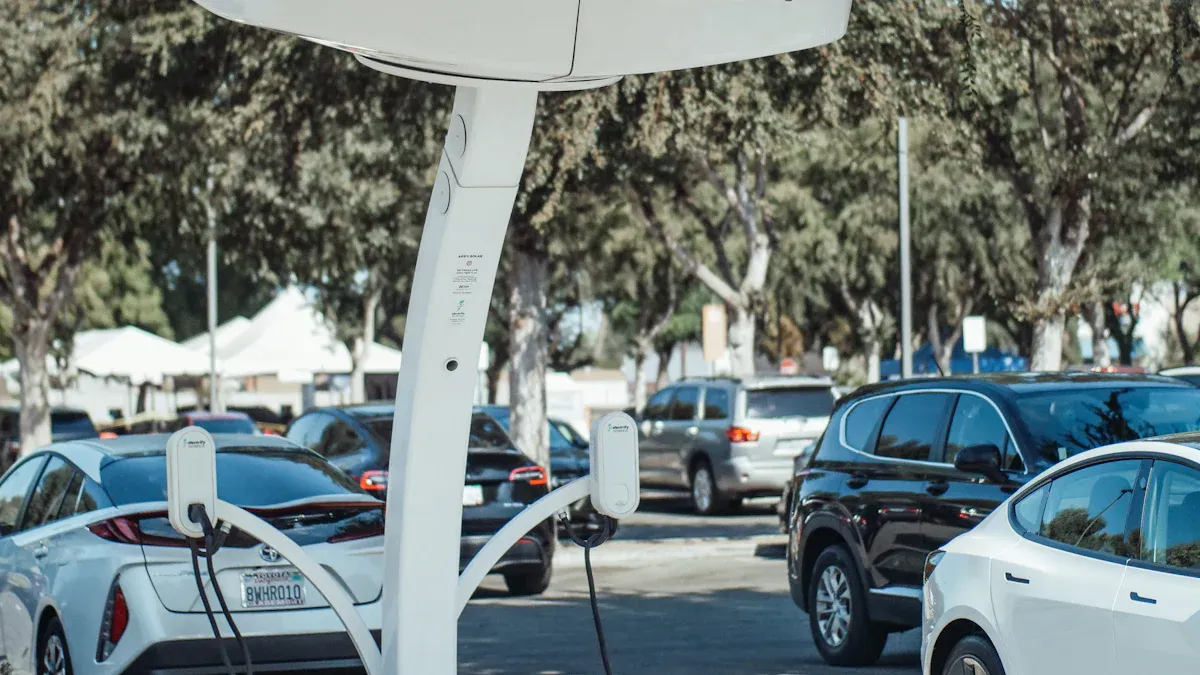
Availability and Accessibility
Charging Stations in Major Cities
Brazilian cities like São Paulo, Rio de Janeiro, and Brasília offer the highest concentration of public EV charging stations. Drivers in urban areas benefit from a growing network of chargers located in shopping malls, parking garages, and office complexes. Many stations appear on popular navigation apps, making it easier for users to locate available chargers. The government and private companies continue to invest in expanding infrastructure, but coverage remains uneven. Some neighborhoods feature multiple stations, while others lack options.
Note: Urban EV owners often rely on public stations when they do not have access to home charging.
Coverage in Suburban and Rural Areas
Suburban and rural regions face significant challenges with public charging accessibility. Most stations cluster in city centers, leaving outlying areas underserved. Drivers in smaller towns or remote locations may travel long distances to reach a charger. The limited coverage creates obstacles for EV adoption outside major cities. Expansion projects aim to address these gaps, but progress remains slow.
Key Points:
- Suburban coverage is sparse.
- Rural areas often lack any public charging options.
- Infrastructure growth focuses on urban demand.
Charging Speed and Types of Public Chargers
Fast Chargers vs. Standard Chargers
Public stations in Brazil offer two main types of chargers: fast chargers and standard chargers. Fast chargers deliver higher power, typically between 22kW and 150kW, enabling quick top-ups. Standard chargers operate at lower power levels, usually 7kW to 22kW, resulting in longer charging times.
| Тип зарядного устройства | Выходная мощность | Стандартное время зарядки | Лучший пример использования |
|---|---|---|---|
| Быстрое зарядное устройство | 22-150kW | 30-60 минут | Long trips, quick stops |
| Стандартное зарядное устройство | 7-22 кВт | 2-6 hours | Shopping, work parking |
Drivers select chargers based on their needs. Fast chargers suit those on tight schedules, while standard chargers fit routine errands.
Waiting Times and Queues
Public charging stations often experience queues, especially during peak hours. Drivers may wait for available spots, which increases travel time. Some stations use reservation systems, but most operate on a first-come, first-served basis. High demand in urban areas leads to longer waits, while stations in less populated regions see fewer users.
Tip: Checking station status on apps helps drivers avoid unnecessary delays.
Cost and Payment for Public Charging
Pricing Models
Public charging costs vary by provider and location. Some stations charge per kilowatt-hour (kWh), while others use flat fees or hourly rates. Pricing transparency differs, with some operators displaying rates clearly and others requiring app registration for details.
Common Pricing Models:
- Per kWh: Users pay for energy consumed.
- Flat Fee: One price for a full session.
- Hourly Rate: Charges based on time connected.
Payment Methods and Apps
Brazilian drivers pay for public charging using several methods. Most stations accept credit cards, debit cards, or mobile payments. Many providers require users to download dedicated apps for access and payment. These apps allow users to locate stations, check availability, and monitor charging progress.
Alert: Compatibility issues may arise if a station supports only certain payment platforms.
Apps streamline the process, but drivers must manage multiple accounts when using different networks. Payment flexibility improves user experience, but the lack of standardization creates confusion for new EV owners.
Reliability and User Experience at Public Stations
Station Uptime and Maintenance
Public charging stations in Brazil often face challenges with uptime. Operators must perform regular maintenance to keep chargers functional. However, many stations experience technical faults or downtime due to delayed repairs. Users sometimes arrive at a location only to find the charger offline or out of service. This situation creates frustration and disrupts travel plans.
A recent survey of EV drivers in São Paulo revealed that over 30% encountered non-operational chargers at least once a month. The following table summarizes common causes of downtime:
| Cause of Downtime | Частота | Влияние на пользователей |
|---|---|---|
| Software glitches | Высокий | Charging unavailable |
| Аппаратные сбои | Средний | Long repair times |
| Vandalism | Низкий | Вопросы безопасности |
Tip: Drivers should check station status on apps before heading out to avoid wasted trips.
Safety and Security Concerns
Safety remains a top priority for EV users. Public stations in Brazil sometimes lack adequate lighting or security measures, especially in remote areas. Users may feel unsafe charging at night or in isolated locations. Reports of cable theft and vandalism have increased in some regions.
Operators have started to address these issues by installing surveillance cameras and improving station visibility. However, not all locations offer the same level of protection. Drivers should remain alert and choose well-lit, busy stations whenever possible.
Common Challenges with Public Charging
Finding Available Stations
Locating an available public charger can prove difficult, especially during peak hours. Many drivers rely on мобильные приложения to find stations, but real-time data is not always accurate. Some apps show a charger as available when it is actually in use or out of service.
Основные задачи включают:
- High demand in city centers
- Limited stations in suburban and rural areas
- Inaccurate app information
Note: Planning routes in advance helps reduce the risk of running low on battery.
Проблемы совместимости
Brazil’s public charging network includes a mix of charger types and connector standards. Not all stations support every EV model. Some drivers arrive at a station only to discover their vehicle is incompatible with the connector or charging protocol.
Manufacturers and operators continue to work toward standardization, but compatibility remains a concern. Drivers should verify station specifications before each trip. Carrying an adapter can help, but not all adapters work with every charger.
A quick checklist for avoiding compatibility problems:
- Confirm connector type in advance
- Bring necessary adapters
- Update vehicle software for new protocols
These challenges highlight the importance of preparation and awareness for Brazilian EV owners who rely on public charging infrastructure.
Level 1 Charger vs. Public Charging Stations: Side-by-Side Comparison
Сравнение стоимости
Electric vehicle owners in Brazil often consider cost as a primary factor when choosing between home and public charging. Home charging with a Level 1 Charger usually involves minimal upfront expenses. Most electric vehicles include this charger at purchase, so drivers avoid additional hardware costs. Installation requires only a standard outlet, which reduces the need for specialized labor or upgrades.
Ongoing electricity costs at home remain predictable. Users can monitor their consumption and take advantage of off-peak rates. Public charging stations, on the other hand, present variable pricing models. Some charge per kilowatt-hour, while others use flat fees or hourly rates. Access fees and higher energy prices at public stations can increase the total cost of ownership. Drivers may also face hidden costs, such as parking fees or app subscriptions.
A simple comparison highlights the difference:
- Home charging: Lower, more predictable costs; no extra fees for most users.
- Public charging: Variable costs; possible access and parking fees.
Tip: Monitoring home electricity usage helps drivers optimize their charging schedule and save money over time.
Удобство и гибкость
Convenience plays a crucial role in the daily experience of electric vehicle ownership. A Level 1 Charger at home offers high convenience. Owners can plug in their vehicles at any time, using a standard 120-volt outlet. This setup eliminates the need to search for available public stations or wait in line during busy periods.
Public charging stations provide variable convenience. Some locations require special installation or access fees. Availability depends on location, time of day, and demand. Urban drivers may find stations nearby, but suburban and rural users often travel longer distances.
The following table summarizes the differences in convenience and installation requirements:
| Тип зарядки | Convenience Level | Требования к установке |
|---|---|---|
| Level 1 Home Charging | Высокий | Can be plugged into a standard 120-volt outlet |
| Общественные зарядные станции | Variable | May require special installation and access fees |
Home charging also allows for flexible scheduling. Drivers can charge overnight or during off-peak hours. Public stations may limit charging time or require users to move their vehicles quickly. Managing multiple payment apps and navigating compatibility issues can further reduce convenience at public stations.
Note: Home charging reduces range anxiety and supports a smoother daily routine.
Charging Time Differences
Charging speed remains a significant difference between home and public options. A Level 1 Charger delivers a slow but steady charge, adding 3 to 5 miles of range per hour. This pace suits drivers with short daily commutes or plug-in hybrid vehicles. Overnight charging usually restores enough range for most users.
Public charging stations offer faster charging speeds. Fast chargers can add significant range in 30 to 60 minutes. Standard public chargers require 2 to 6 hours for a full charge. However, these benefits depend on station availability and potential wait times.
A quick overview:
- Level 1 Charger: Best for overnight charging and daily use.
- Public stations: Suitable for quick top-ups and long-distance travel.
Drivers must consider their typical driving patterns. Those who travel long distances or lack home charging access may benefit from public stations. Most urban and suburban users find home charging sufficient for daily needs.
Callout: Planning ahead ensures that charging time aligns with travel requirements.
Reliability and Peace of Mind
Reliability stands as a critical factor for electric vehicle owners in Brazil. Home charging provides a stable and predictable environment. Drivers control the charging process and rarely face unexpected interruptions. The risk of arriving at a non-functional charger does not exist at home. Most users report high satisfaction with the dependability of their home setup.
Public charging stations present a different reality. Many drivers encounter operational issues, such as offline chargers or long queues. Maintenance delays can leave stations unusable for days. Inconsistent uptime creates uncertainty, especially for those who rely on public infrastructure for daily charging. Safety concerns also arise at some public locations, particularly at night or in less populated areas.
A comparison of reliability factors:
| Фактор | Домашняя зарядка | Общественные зарядные станции |
|---|---|---|
| Uptime | Consistently high | Variable |
| Control over process | Full | Ограниченный |
| Безопасность | High (private space) | Зависит от местоположения |
| Risk of vandalism | Низкий | Moderate to high |
Note: Drivers who value peace of mind often prefer charging at home. They avoid the stress of searching for available stations and reduce exposure to safety risks.
Overall User Experience
User experience shapes the perception of electric vehicle ownership. Home charging offers a seamless routine. Drivers plug in their vehicles at the end of the day and wake up to a fully charged battery. The process requires minimal effort and integrates smoothly into daily life. No need exists to manage multiple apps or payment systems. The charging environment remains familiar and secure.
Public charging introduces more complexity. Users must locate compatible stations, sometimes across different networks. Payment methods vary, and some stations require specific apps or RFID cards. Waiting for an available charger can disrupt schedules. Technical issues, such as incompatible connectors or software glitches, add frustration.
A summary of user experience elements:
Home Charging:
- Simple plug-and-play operation
- Consistent charging schedule
- Secure and private environment
- Minimal maintenance required
Общественная зарядка:
- Requires planning and route adjustments
- Potential for long waits and technical issues
- Varying levels of safety and comfort
- Multiple payment and access systems
Tip: New EV owners should assess their daily routines and local infrastructure before choosing a primary charging method. Those with access to home charging enjoy a smoother and more reliable experience.
Realistic Scenarios for Brazilian EV Owners
City Dwellers with Home Parking
City residents who own a private garage or driveway experience the greatest convenience with a Зарядное устройство уровня 1. They can plug in their electric vehicle each night and start the day with a full battery. This routine fits well with the typical urban commute in Brazil, which often involves short distances and frequent stops. Home charging eliminates the need to search for public stations or wait in line during busy hours.
Many city dwellers value the security of charging at home. Their vehicles remain protected from vandalism and theft. They also avoid exposure to poorly lit or isolated public charging locations. The predictable cost of home electricity helps them manage their monthly budget.
Tip: Urban homeowners can maximize savings by charging during off-peak hours when electricity rates are lower.
Жильцы квартир без выделенной парковки
Apartment living presents unique challenges for electric vehicle owners. Many buildings lack private parking spots or individual outlets. However, several solutions have emerged in Brazil to address these obstacles:
- Residents can use shared chargers installed in the apartment complex’s common areas.
- The Monta app tracks each user’s charging sessions automatically.
- Payments for electricity flow directly through the Monta app, similar to the process at public charging stations.
These shared systems allow apartment residents to access reliable charging without the need for personal infrastructure. The Monta app simplifies billing and usage tracking, reducing disputes among neighbors. However, residents may still face competition for limited charging spots, especially in larger buildings. Planning ahead and coordinating with other EV owners improves access and reduces wait times.
Note: Apartment dwellers should check with building management about charger availability and app compatibility before purchasing an EV.
Suburban Commuters
Suburban commuters often drive longer distances than city residents. Many own single-family homes with garages or driveways, making home charging practical. A Level 1 Charger provides enough range for daily commutes and errands. Overnight charging ensures the vehicle is ready each morning.
Some suburban areas lack robust public charging infrastructure. Drivers who rely solely on public stations may struggle to find available chargers, especially during peak travel times. Home charging offers peace of mind and reduces the risk of running low on battery during a busy week.
Suburban EV owners benefit from the flexibility to set their own charging schedules. They can monitor electricity usage and adjust habits to save money. For those who occasionally travel longer distances, combining home charging with occasional use of public fast chargers creates a balanced solution.
Callout: Suburban families should consider their daily mileage and local charging options when choosing an EV charging strategy.
Long-Distance Travelers
Long-distance travelers in Brazil face unique challenges when driving electric vehicles. They often cover hundreds of kilometers between cities or regions. A Level 1 Charger at home cannot meet their needs for rapid charging during extended trips. Charging at 1.4kW to 1.9kW adds only a few miles of range per hour. This speed works for overnight charging but not for quick turnarounds on the road.
Public charging stations become essential for these drivers. Fast chargers, available at select highway rest stops and service areas, provide much higher power outputs. Many fast chargers deliver 22kW to 150kW, allowing drivers to add significant range in under an hour. However, the network of fast chargers in Brazil remains limited. Travelers must plan routes carefully and check for available stations before departure.
Совет: Long-distance drivers should use EV route planning apps to locate fast chargers and monitor station status in real time.
A comparison of charging options for long-distance travel:
| Вариант зарядки | Скорость зарядки | Suitability for Long Trips | Availability on Highways |
|---|---|---|---|
| Level 1 Home Charger | Very Slow (3-5 mi/hr) | Poor | Not available |
| Public Fast Charger | Fast (30-60 min/session) | Хорошо | Limited, growing |
Travelers often encounter queues at busy stations, especially during holidays. Some regions lack any public charging infrastructure, which increases the risk of running out of battery. Carrying a portable charger offers peace of mind but does not replace the need for fast charging on the road.
Тревога: Always verify connector compatibility and bring necessary adapters when traveling across different states.
Occasional Drivers
Occasional drivers use their electric vehicles less frequently. They may drive only on weekends or for special trips. For these users, a Level 1 Charger at home provides a practical and cost-effective solution. Charging overnight restores enough range for infrequent use. The slow charging speed does not pose a problem because the vehicle spends most days parked.
These drivers benefit from the simplicity of home charging. They avoid the hassle of searching for public stations or managing multiple payment apps. Maintenance needs remain minimal, and the risk of encountering technical issues drops significantly.
Key advantages for occasional drivers:
- Lower electricity costs due to infrequent charging
- Minimal wear on charging equipment
- Reduced exposure to public charging challenges
Примечание: Occasional drivers should still check their vehicle’s battery health and charging system regularly, even if they use the car rarely.
Public charging stations may serve as a backup for occasional drivers. For example, they can use a public charger when visiting another city or during extended outings. However, most find that home charging meets their needs without extra effort.
Most Brazilian EV owners find home charging the most realistic and convenient solution. Public stations may suit long-distance travelers or those without private parking. Each driver should evaluate daily routines, local infrastructure, and vehicle needs before choosing a charging strategy.
Note: Careful planning ensures a smooth electric vehicle experience in Brazil.
ЧАСТО ЗАДАВАЕМЫЕ ВОПРОСЫ
Что такое зарядное устройство первого уровня?
A Level 1 Charger uses a standard household outlet to charge electric vehicles. It provides a slow but steady charge, making it suitable for overnight charging at home.
How long does it take to fully charge an EV with a Level 1 Charger?
Charging an electric vehicle from empty to full with a Level 1 Charger usually takes over 24 hours. Most drivers use it for overnight charging to restore daily driving range.
Are public charging stations widely available in Brazil?
Major cities like São Paulo and Rio de Janeiro offer more public charging stations. Suburban and rural areas have limited coverage. Drivers should check station locations before planning trips.
Is home charging cheaper than public charging in Brazil?
Home charging typically costs less than public charging. Users can monitor their electricity usage and take advantage of off-peak rates. Public stations may add access or parking fees.
Can apartment residents install Level 1 Chargers?
Apartment residents often face challenges installing personal chargers. Some buildings offer shared charging solutions. Residents should consult building management about available options and installation policies.
What should drivers do if a public charger is out of service?
Drivers should check charging station status using mobile apps before arrival. If a charger is offline, they can locate alternative stations nearby or adjust travel plans accordingly.
Are all EVs compatible with every public charging station?
Not all electric vehicles use the same connector types. Drivers should verify compatibility before visiting a station. Carrying adapters can help, but not all adapters work with every charger.