Europe’s EV charging landscape is being reshaped by two forces moving at the same time: policy-driven infrastructure funding и rapid network expansion. The result is a market where operators are racing to add reliable Уровень 2 AC и Быстрая зарядка постоянным током capacity, while site hosts are demanding tighter uptime, clearer pricing, and smarter energy management. The most practical trend is not “more chargers” in isolation, but better-managed charging—with load balancing, diagnostics, and interoperability becoming decisive factors for long-term ROI.
- Market snapshot: what is changing and why it matters
- Policy changes: what operators and site hosts should watch
- Network expansions: where growth is visible in the real world
- Hardware vs. platform: the operational shift behind the headlines
- Deployment playbook: how to design for uptime, cost, and scale
- Industry perspective: TPSON approach to smart charging and energy safety
- ЧАСТО ЗАДАВАЕМЫЕ ВОПРОСЫ
- References & outbound links (evidence)
Market snapshot: what is changing and why it matters
Europe’s charging buildout is no longer judged only by how many plugs exist. Decision-makers increasingly measure availability (uptime), опыта водителей, и grid friendliness. This is partly because EV adoption is broadening beyond early adopters, and partly because charging is shifting from a “pilot” mindset to day-to-day infrastructure.
Public network scale (proxy for global/Western market maturity)
Hundreds of thousands
ChargePoint states drivers can charge at “hundreds of thousands” of locations on its network and roaming partners.
Travel-stop fast charging momentum
2017 → 2026
Love’s reports it has been in EV charging since 2017 and plans frequent additions through 2026 (US example of travel-stop scaling).
Экономика домашней зарядки
~1/3 стоимости
Car and Driver reports home charging is roughly one-third the cost of DC fast charging.
Real-world charging losses
~5–8%
Car and Driver measured typical charging losses averaging roughly 5 to 8% across varied setups.
Data chart: charging level overview (power range and typical use)
| Charging level | Electrical type | Typical power range (kW) | Best-fit use case | Operational note |
|---|---|---|---|---|
| Уровень 1 | 120 В переменного тока | ~1 кВт | Emergency/very low daily mileage | Can take days for a full charge (Car and Driver) |
| Уровень 2 | 240 В ПЕРЕМЕННОГО ТОКА | ~6–19 кВт | Home, workplace, destination charging | Overnight charging is realistic for many EVs (Car and Driver) |
| Level 3 / DC fast charging | 400–800V DC | ~50–350 кВт | Corridor travel, high-turnover sites | 10–90% in as little as ~30 minutes is commonly cited (Car and Driver) |
Sources summarized from Car and Driver’s charging level definitions. Values vary by vehicle and site configuration.
Policy changes: what operators and site hosts should watch
Policy changes are increasingly shaping deployment decisions—especially around incentives, installation requirements, и safety compliance. Even when an article focuses on Europe, global policy signals matter because they influence OEM roadmaps, connector strategies, and manufacturing scale.
Three policy themes that consistently influence station economics
1) Incentives that pull forward installation
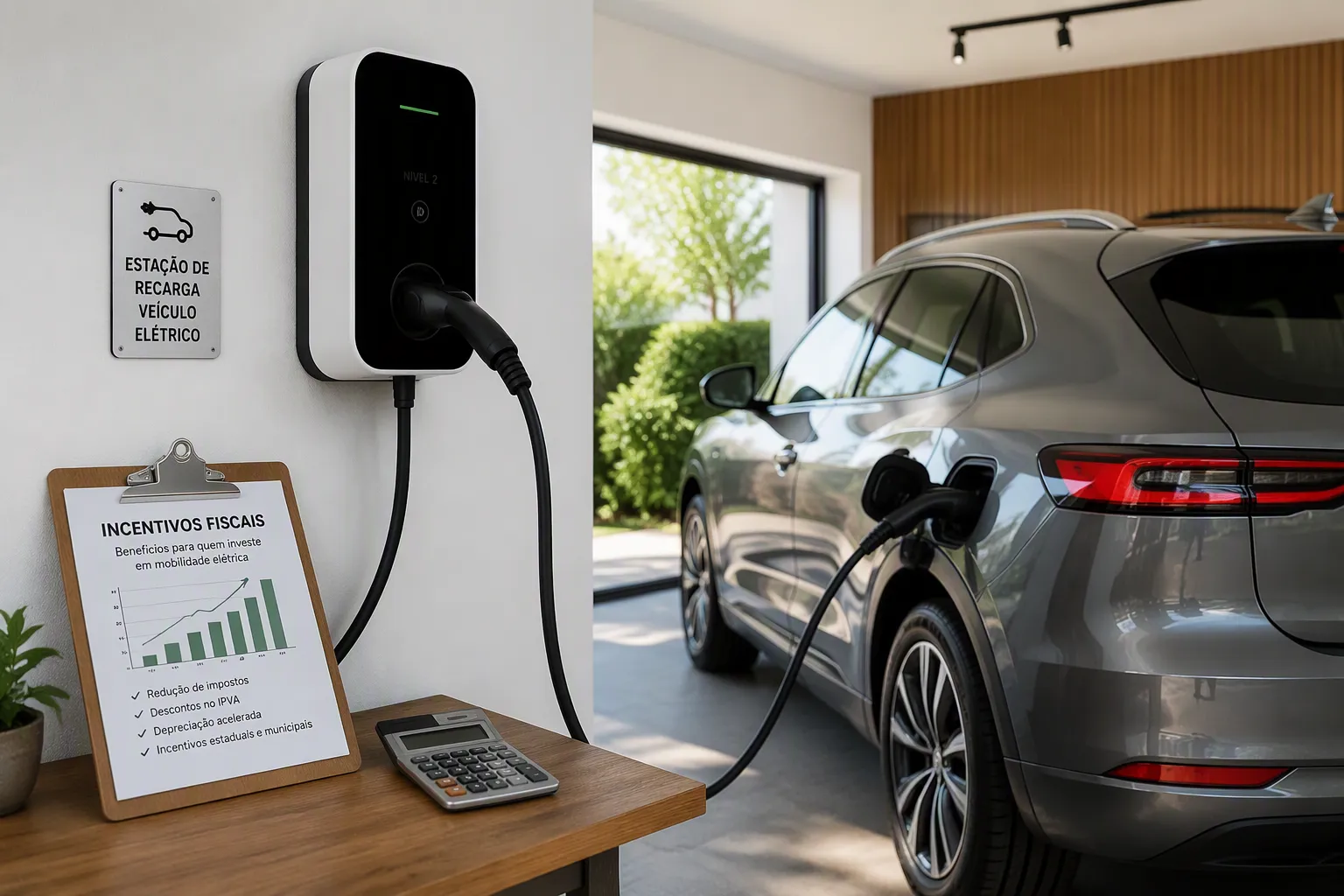
Incentives compress payback periods and accelerate buildout. In the US context, Car and Driver cites a 30% federal credit (capped at $1,000) for qualifying costs, scheduled to expire on June 30, 2026. While this is not a Europe policy, it is an example of the type of incentive that can rapidly change installer capacity, hardware demand, and consumer behavior.
Operator takeaway: incentives tend to reward readiness—permitting, design, and procurement pipelines matter as much as the charger hardware.
2) Electrical code enforcement affecting installation choices
Installation rules can change the preferred architecture (plug-in vs. hardwired). Emporia notes that GFCI breakers can cause nuisance tripping when paired with EVSE that already includes built-in GFCI protection, and suggests hardwiring where GFCI-on-outlet circuits are required. This is a practical example of how code interpretation can change uptime.
Operator takeaway: reliability is partly regulatory—specifications must match local electrical requirements to avoid repeated service calls.
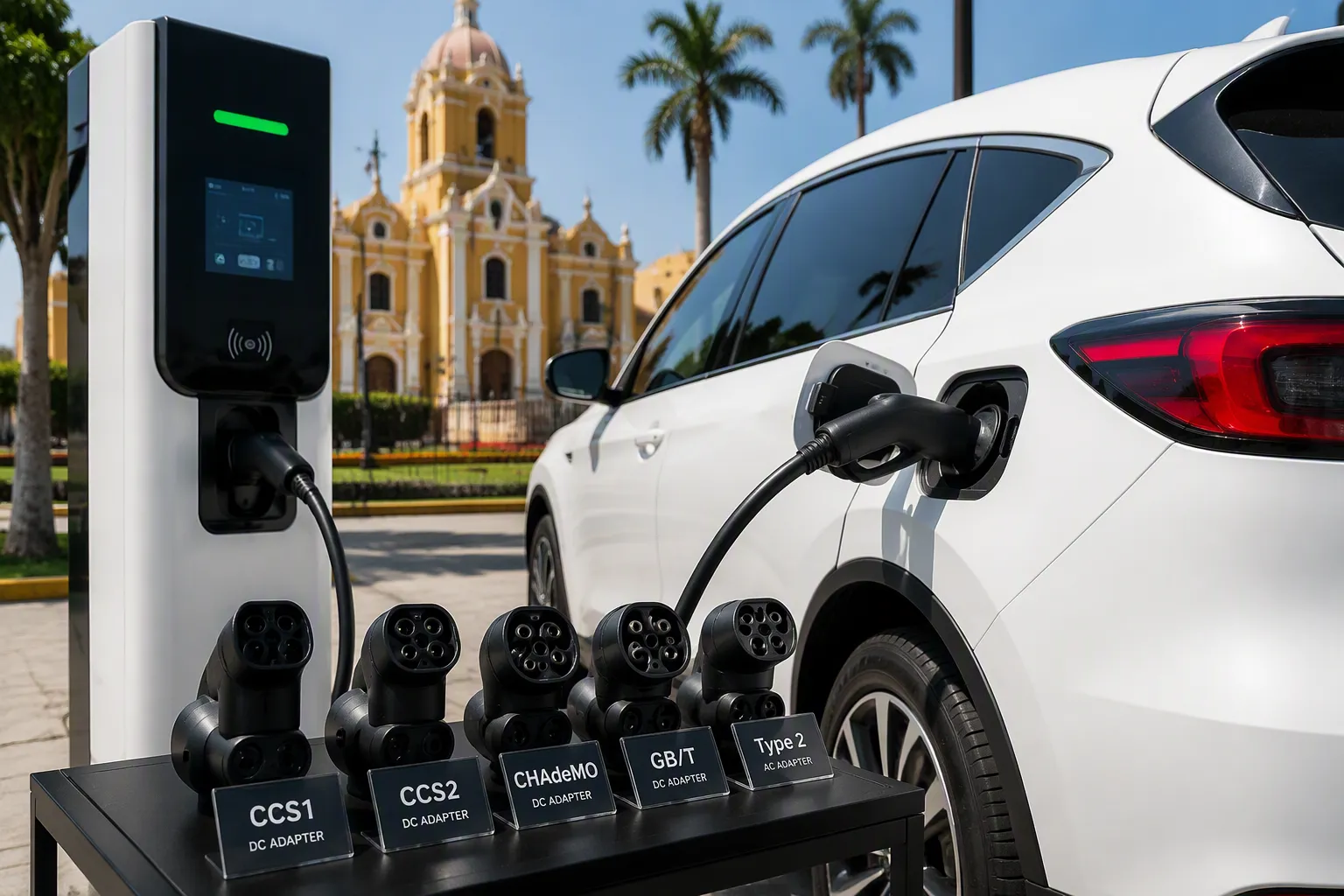
3) Interoperability and “platform” expectations
Policy discussions increasingly intersect with interoperability. ChargePoint positions EV charging as a platform problem—combining stations, software, services, and integration into driver apps (including in-vehicle experiences such as Apple CarPlay and Android Auto). This aligns with a direction many regulators support: reduce friction for drivers and ensure networks can be monitored and managed.
Operator takeaway: procurement criteria are expanding to include software capabilities, reporting, diagnostics, and roaming readiness.
Data chart: installation-related reliability risks (qualitative scoring)
The chart below highlights common reliability risks that operators can mitigate during design and procurement. Scores are a practical heuristic for prioritization (1 = low, 5 = high).
Evidence basis: Emporia’s discussion of GFCI nuisance tripping; ChargePoint’s emphasis on software/network management; common field failure patterns reported by installers and operators.
Network expansions: where growth is visible in the real world
Network expansion is not a single story. In practice, growth takes different shapes depending on whether the goal is corridor coverage, destination dwell time, or fleet depot operations. The strongest networks build a mixed portfolio of AC EV charging и Быстрая зарядка постоянным током, with software that supports monitoring and driver access.
Travel stops: the “amenities + fast charging” model
One of the most visible expansion patterns is the travel-stop model. Love’s states it has been in EV charging since 2017 and has 100+ chargers across 36 locations in 14 states, with new fast charging locations being added frequently through 2026. Love’s also emphasizes driver amenities—food options, clean restrooms, dog parks, always-open staffing, and Wi?Fi— reflecting an operational truth: charging time is customer time.
Even though Love’s is a US network, the strategy is relevant globally: placing DC fast chargers near highways with efficient entry/exit and amenities reduces range anxiety and improves driver satisfaction. See: Love’s EV Charging.
Network platforms: scaling by software, not only hardware
ChargePoint frames growth as an ecosystem: stations + software + services, with the ability to operate ChargePoint stations, partner stations, or “any OCPP compliant hardware.” This matters in Европа because many site hosts want vendor flexibility and the ability to integrate charging into existing property or fleet systems. See: ChargePoint.
Hardware vs. platform: the operational shift behind the headlines
The highest-performing charging programs treat EVSE selection as part of a broader operating model. Hardware choices (power, connectors, IP/NEMA ratings) must align with platform capabilities (monitoring, access control, pricing, roaming, alerts). This is why SERP-leading resources tend to compare not only “best charger” lists but also installation requirements and lifecycle considerations.
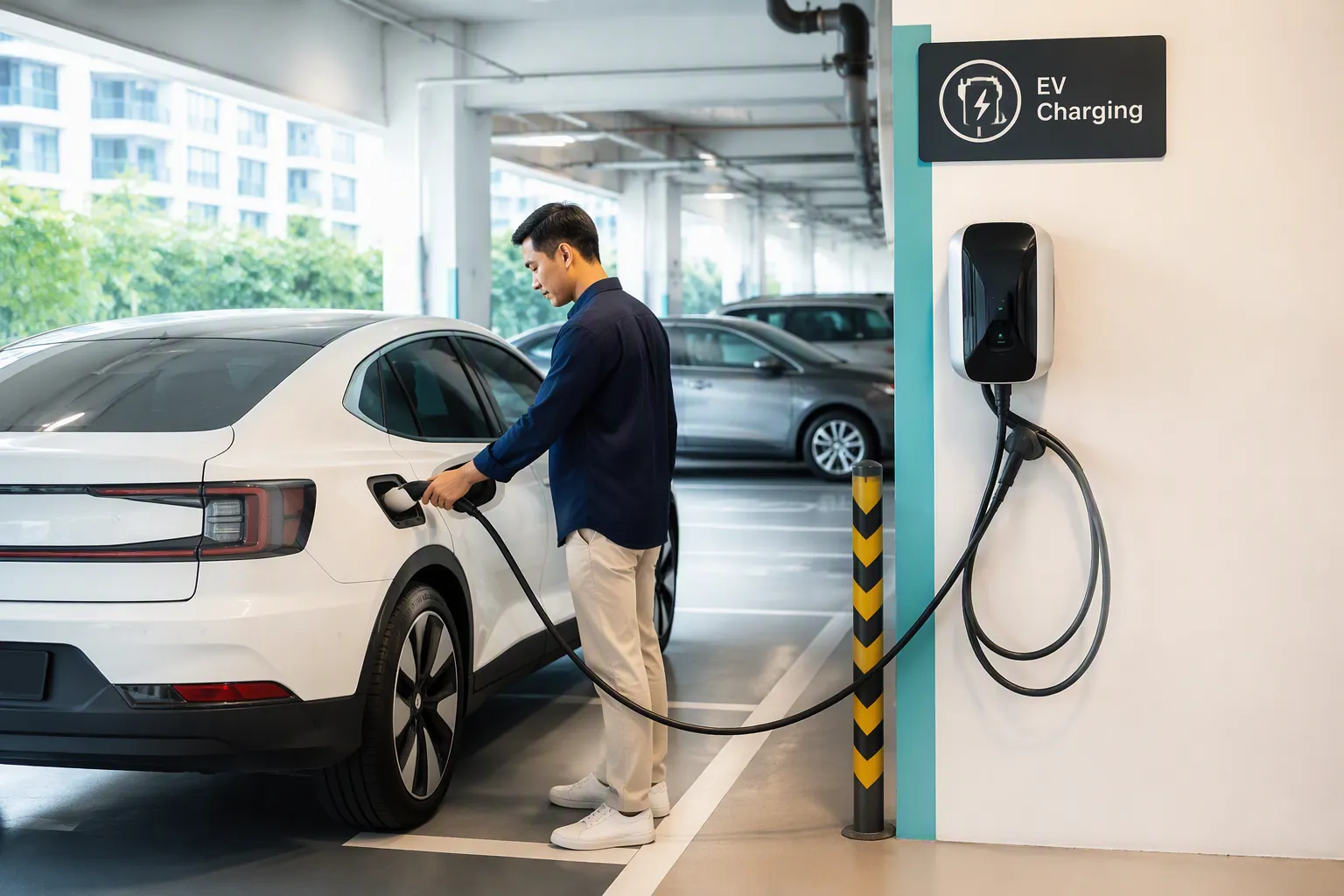
Home and destination: Level 2 is still the workhorse
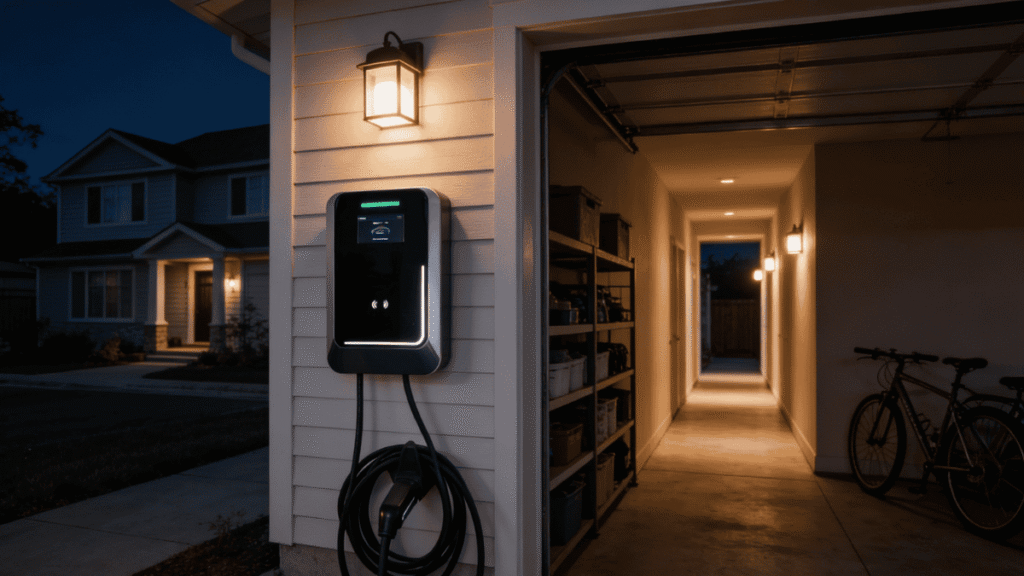
For predictable dwell time, Level 2 remains the most cost-effective backbone. Car and Driver explains Level 2 commonly spans ~6–19 kW and can charge an EV overnight, while also noting home charging tends to be cheaper than DC fast charging (roughly one-third the cost).
Emporia’s Classic Level 2 charger product listing illustrates how consumer-grade equipment is becoming more capable: up to 48A hardwired, NACS/Tesla and J1772 options, app scheduling, UL certification, and built-in GFCI protection (with important installation considerations). Reference: Зарядное устройство для электромобилей Emporia Classic уровня 2.
Mobile and emergency: compact DC fast chargers as “gap fillers”
As networks expand, there is growing interest in mobile or rapidly deployable DC solutions for fleet logistics, events, и roadside support. TPSON’s TP-DC Compact Series is positioned for this use case with 20/30/40 kW modules, DC50–1000V output range, optional Ethernet/4G connectivity, and scenarios including emergency roadside assistance and temporary locations. See: Зарядные устройства постоянного тока для электромобилей.
Data chart: example power tiers and operational fit (from cited product pages)
| Категория | Пример | Power / scale (as stated) | Best-fit scenario | Evidence link |
|---|---|---|---|---|
| Level 2 home EVSE | Emporia Classic (hardwired / plug-in) | Up to 11.5 kW (48A @ 240V) hardwired; 9.6 kW (40A) plug-in | Residential, workplace, destination | Emporia |
| Public network platform | ChargePoint network + software | “Hundreds of thousands” of locations + roaming partners | Multi-site programs; driver app integration | ChargePoint |
| Portable DC fast | TPSON TP-DC Compact Series | 20/30/40 kW modules; DC50–1000V; 0–66.7A / 0–100A / 0–133.3A | Emergency, flexible depots, events, dealerships | TPSON |
| Travel stop charging | Love’s EV charging locations | 100+ chargers; 36 locations; 14 states; adding DC fast through 2026 | Highway corridors + amenities | Love’s |
This chart compiles statements directly from the cited sources; it is not a complete market inventory.
Deployment playbook: how to design for uptime, cost, and scale
1) Start with power and dwell time (not “fastest possible”)
DC fast charging is critical for corridors, but it is capital intensive. For many sites—retail, workplaces, hospitality— the better economic match is often well-managed Level 2. A practical planning approach is to map expected parking duration, then size the power accordingly.
2) Engineer for electrical capacity with load management
Electrical capacity is a limiting factor across markets. Car and Driver notes that spare capacity determines whether upgrades cost “a few hundred dollars” or “a couple of thousand.” It also highlights load management as a way to avoid panel upgrades by dynamically adjusting charging output. In a European context, this aligns with the broader shift toward интеллектуальная зарядка and managed demand.
3) Treat safety monitoring as an operations tool
Beyond basic protection, modern deployments increasingly require ongoing monitoring, diagnostics, and early warnings. That is the difference between “installed chargers” and “available chargers.”
4) Design the driver experience end-to-end
ChargePoint emphasizes “find, start and pay” through a single app and in-vehicle integrations, while Love’s highlights amenities and 24/7 staffing. These are two sides of the same outcome: reduce friction and keep the driver moving. For many European sites, this becomes an important differentiator where multiple networks compete for the same locations.
For readers evaluating equipment options across use cases, TPSON’s product overview can be used as a starting point to compare AC vs DC approaches: Зарядные устройства для электромобилей.
Industry perspective: TPSON approach to smart charging and energy safety
From a manufacturer standpoint, European market requirements increasingly converge on four priorities: совместимость, энергоэффективность, diagnostic visibility, и Состояние. TPSON positions its solutions around a patented Современный алгоритм снятия отпечатков пальцев, using edge computing to detect device-level electrical signatures, enabling smart energy management and enhanced safety across power nodes.
Company credentials relevant to EEAT
- TPSON reports it was founded in 2015 and develops AI-driven smart electrical systems and vehicle chargers, based in Hangzhou. Company background: производителя зарядных станций для электромобилей.
- The leadership and scientific team listed includes senior technical backgrounds (e.g., patents, industry experience, IEEE membership), which supports credibility when discussing grid interaction, microgrids, and device safety.
- TPSON states scale indicators such as serving 5,000+ businesses and 1M+ households, with 200+ invention patents and a 150-person R&D team. See: TPSON.
Место продукции TPSON в истории расширения зарядной инфраструктуры в Европе
Развертывание AC: управляемый рост уровня 2
Для жилых домов, рабочих мест и пунктов назначения, которым требуется масштабируемая зарядка переменным током, TPSON предлагает решения типа настенной коробки в рамках своей Зарядные устройства переменного тока для электромобилей категории. динамическая балансировка нагрузки и четкой операционной телеметрией.
Развертывание DC: гибкая быстрая зарядка для операционных нужд
Для таких сценариев, как аварийная поддержка, временные локации и автопарки, нуждающиеся в гибком энергоснабжении, портативное решение TPSON постоянного тока (модульное, 20–40 кВт) Зарядные устройства постоянного тока для электромобилей.
ЧАСТО ЗАДАВАЕМЫЕ ВОПРОСЫ
1) Какие изменения в политике наиболее важны для расширения сети зарядки для электромобилей в Европе?
Наиболее значимые изменения обычно связаны с incentives (окупаемостью капитальных затрат), соблюдением электротехнических норм (метод установки и требования безопасности), ожиданиями в области интероперабельности (данные/отчетность, роуминг и интеграция платформ). Даже за пределами Европы такие примеры, как налоговые льготы в США и развивающаяся практика применения УЗО, показывают, как правила могут менять экономику развертывания и время безотказной работы.
2) Сети расширяются быстрее за счет AC (Уровень 2) или DC быстрой зарядки?
Обе расширяются, но по разным причинам. Уровень 2 хорошо масштабируется в пунктах назначения и на рабочих местах, где транспортные средства находятся часами. Быстрая зарядка постоянным током расширяется вдоль транспортных коридоров и в местах с высокой проходимостью, таких как торговые точки, где водителям требуется быстрое пополнение заряда. Многие операторы используют смешанную стратегию, соответствующую поведению на месте и электрическим ограничениям.
3) Почему “платформа + программное обеспечение” становятся такими же важными, как и аппаратное обеспечение зарядного устройства?
Потому что повседневный результат — это доступность и удобство использования. Платформы позволяют осуществлять удаленный мониторинг, проактивное обслуживание, контроль доступа, установку цен и более плавный поток действий водителя (найти/начать/оплатить).
4) Как владельцу площадки выбрать между подключаемыми и стационарными установками Уровня 2?
Решение должно основываться на текущих требованиях, потребностях в мобильности и местных нормах. Emporia отмечает, что подключаемые конфигурации могут быть проще в установке, но могут иметь ограничения по постоянному току,.
5) Что на практике означает “умная зарядка” в операционном плане?
На практике это означает использование учета, правил и средств управления для согласования зарядки с мощностью площадки, ценами на электроэнергию и операционными приоритетами — часто через балансировкой нагрузки, планирование Современный алгоритм снятия отпечатков пальцев TPSON, направлены на добавление интеллекта безопасности на уровне устройства.
6) Какое место занимают портативные зарядные устройства постоянного тока в стратегиях расширения сети?
Портативные зарядные устройства постоянного тока, как правило, не являются основой общедоступной зарядки вдоль коридоров. Они лучше всего подходят в качестве операционных инструментов для автопарков, помощи на дороге, мероприятий и временных развертываний — ситуаций, где скорость развертывания и гибкость важнее максимальной мощности.
References & outbound links (evidence)
В статье использовались следующие источники для фактических утверждений, определений и описаний продуктов/сетей. Ссылки открываются в новой вкладке.
- Car and Driver — определения уровней зарядки, экономика домашней зарядки, диапазоны стоимости установки и измеренные потери при зарядке: https://www.caranddriver.com/shopping-advice/a39917614/best-home-ev-chargers-tested/
- ChargePoint — позиционирование платформы, интероперабельность программного/аппаратного обеспечения и заявления о масштабе сети: https://www.chargepoint.com/
- Love’s — охват сети зарядки для электромобилей на автозаправочных станциях и график расширения до 2026 года; удобства, улучшающие опыт водителя: https://www.loves.com/ev-charging
- Emporia — варианты мощности зарядного устройства Уровня 2 Classic, рекомендации по УЗО/ложным срабатываниям и примечания по установке: https://shop.emporiaenergy.com/products/emporia-ev-charger
- TPSON — история компании и алгоритм Current Fingerprint; вехи и техническое лидерство: https://tpsonpower.com/about/
- TPSON — обзор портфолио зарядных устройств для электромобилей и позиционирование (AC + DC + аксессуары): https://tpsonpower.com/ev-chargers/
- TPSON — страница категории настенных коробок AC: https://tpsonpower.com/ac-ev-chargers/
- TPSON — характеристики портативных зарядных устройств постоянного тока и применимые сценарии: https://tpsonpower.com/portable-dc-ev-charger/
Необходимые внутренние ссылки, используемые в тексте в качестве якорных терминов: Зарядные устройства для электромобилей, производителя зарядных станций для электромобилей, Зарядные устройства переменного тока для электромобилей, Зарядные устройства постоянного тока для электромобилей.