
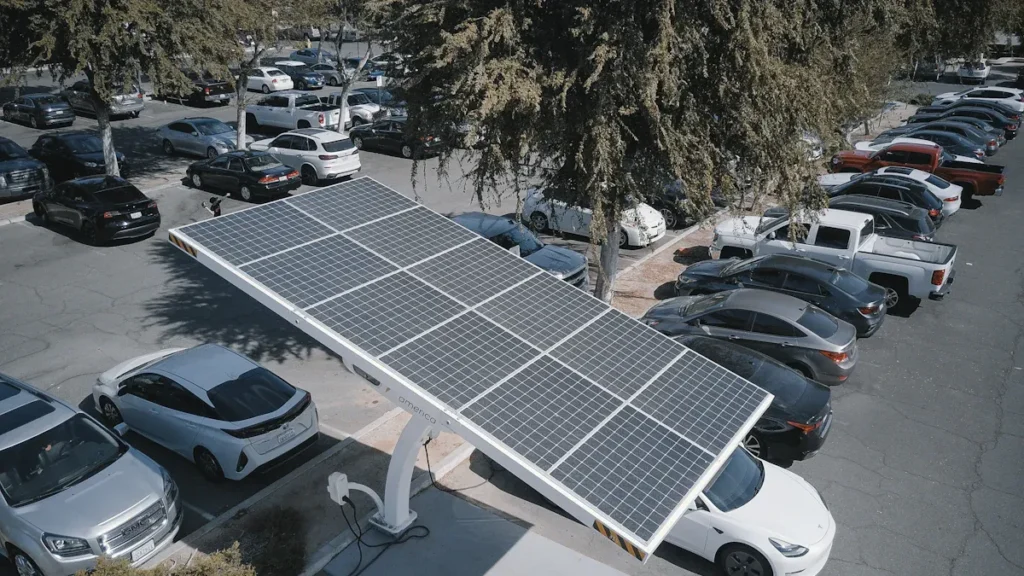

An electric car self-charging system that eliminates the need for an external Зарядное устройство для электромобилей remains a concept confined to science fiction. The idea violates fundamental laws of physics. A true self-charging electric car would function as a perpetual motion machine. This concept is impossible. Technologies marketed as “self-charging” only recover small amounts of energy. They slightly extend an electric car’s range but cannot fully recharge the battery.
Примечание: Range anxiety is decreasing among electric vehicle owners. A 2023 survey by EV.Energy showed over 77% of UK drivers rarely or never worried about range. This confidence is supported by reliable Решения для зарядки электромобилей from providers like TPSON. Their advanced technology, including портативные зарядные устройства для электромобилей, helps ensure drivers have power when needed. As a leading Производители зарядных устройств для электромобилей, TPSON focuses on practical and efficient charging.
The Myth of the Self-Charging Electric Car
The term “self-charging” creates significant confusion in the automotive market. It suggests a vehicle can generate its own power indefinitely, a concept that defies physics. Understanding the origin and limitations of this marketing phrase is crucial for setting realistic expectations for any electric-powered vehicle.
Deconstructing the “Self-Charging” Marketing Term
Where the Term Comes From: Self-Charging Hybrids
The phrase “self-charging” did not originate with fully electric cars. Instead, car manufacturers coined it to describe a specific type of hybrid vehicle. A self-charging hybrid combines a traditional gasoline engine with a small electric motor and battery. This setup allows the car to capture some energy during braking and use the gasoline engine to recharge the battery, differentiating it from a plug-in hybrid that requires an external power source. The term was a clever marketing tool to highlight this convenience.
Why Hybrids Aren’t Truly “Self-Charging”
A self-charging hybrid does not create energy from nothing. The primary energy source is always the gasoline in its tank. The internal combustion engine burns fuel to move the car and to generate electricity for the battery. The UK’s Advertising Standards Authority (ASA) investigated this claim and concluded that consumers would likely understand that a self-charging hybrid uses its internal mechanics, powered by fuel, to charge the battery. Therefore, while the term is not considered misleading, it is important to know that all the energy originates from the fuel. The marketing for the best self-charging hybrids often emphasizes convenience over this technical reality. These self-charging hybrids simply convert chemical energy from fuel into electrical energy.
Applying the Logic to Fully Electric Vehicles
If a self-charging hybrid with a gasoline engine cannot create its own power, a fully electric vehicle (EV) certainly cannot. An EV lacks an onboard generator like a gasoline engine. Its only source of power is the electricity stored in its battery pack. This power must come from an external source, such as a домашняя зарядная станция or a public charger. Technologically advanced charging solutions from providers like TPSON offer the practical and reliable power that EVs require. The logic is simple: no external energy input means no charge.
The Difference Between Energy Recovery and Creation
Many people confuse energy recovery with energy creation. Modern EVs are exceptionally good at the former, but the latter remains impossible.
Setting Realistic Expectations for Your EV
EVs use systems like regenerative braking to recapture a small percentage of energy that would otherwise be lost as heat during deceleration. This process improves the vehicle’s overall efficiency and can slightly extend its range. However, it is a recovery system, not a creation system. It helps you go a little farther on the energy you already have. It will never add more energy to the battery than was used to get the car moving in the first place.
Understanding Net Energy Loss in a Closed System
Every energy transfer results in some loss, usually as heat. This is a fundamental principle of physics. An EV is a closed system, and it is not 100% efficient.
Efficiency Fact: Even a highly efficient electric vehicle powertrain experiences a net energy loss of approximately 20%. This energy dissipates as heat from the battery, motor, and electronics, and is also lost to friction.
This unavoidable 20% loss makes a true self-charging system impossible. You can never recover all the energy you expend, meaning the battery’s charge will always decrease over a complete cycle of acceleration and deceleration.
Regenerative Braking: The Closest Thing to Electric Car Self-Charging

Regenerative braking is the most significant onboard energy recovery system in modern electric vehicles. It is a clever engineering solution that improves efficiency. This technology is the primary reason some people mistakenly believe in the concept of an electric car self-charging system. While it does not create new energy, it intelligently recycles energy that would otherwise go to waste. This system is far more advanced in a fully electric car than in a typical hybrid vehicle.
How Regenerative Braking Works
The process of regenerative braking is an elegant example of dual-purpose engineering. It transforms the act of slowing down into an opportunity to recharge. A traditional hybrid also uses this principle, but a fully electric vehicle maximizes its potential.
Capturing Kinetic Energy During Deceleration
A moving vehicle possesses kinetic energy. In a conventional car, including a standard hybrid, pressing the brake pedal causes brake pads to clamp onto discs. This action creates friction, which converts the car’s kinetic energy into waste heat. Regenerative braking offers a smarter alternative. The system captures a portion of this kinetic energy during deceleration.
The Electric Motor’s Dual Role as a Generator
The electric motor is the hero of this process. During acceleration, it draws power from the battery to turn the wheels. When the driver lifts their foot off the accelerator or applies the brakes, the motor’s role reverses. It switches functions to operate as a generator. The wheels’ momentum spins the motor, generating electricity that flows back into the battery pack. This dual-role capability is a fundamental advantage over a simple hybrid system.
How It Feels from the Driver’s Seat
Driving an electric vehicle with strong regenerative braking offers a unique experience often called “one-pedal driving.”
Tip: One-Pedal Driving
In many EVs, the driver can control both acceleration and most deceleration using only the accelerator pedal. Lifting off the pedal engages the regenerative braking system, slowing the car down significantly without needing to touch the brake pedal. This is different from the mild resistance felt in some hybrid cars. Drivers often adapt quickly and find it makes city driving smoother and more efficient.
How Much Energy Can It Really Recover?
The amount of energy recovered is not a fixed number. It depends heavily on driving conditions, environment, and vehicle settings. The efficiency of this system in a pure electric car often surpasses that of a hybrid.
Factors Affecting Efficiency: Speed and Driving Style
Driving style is the most critical factor. The system performs best in stop-and-go urban traffic where frequent deceleration occurs. Constant-speed highway driving offers very few opportunities for energy recovery. A hybrid vehicle experiences the same limitations. Studies show a significant difference in energy recovery based on driving environment:
- During urban driving, the system can recover as much as 26% of the energy used for propulsion.
- During motorway (highway) driving, that figure drops to only 3%.
This data highlights why EVs are exceptionally efficient for city commutes. A hybrid benefits as well, but the reliance on the gasoline engine changes the overall efficiency equation.
The Impact of Terrain and Temperature
Terrain plays a major role. Driving down a long, steep hill is an ideal scenario for regenerative braking. The system can capture a substantial amount of energy, sometimes adding several miles of range. Conversely, temperature affects performance. A cold battery cannot accept a charge as quickly as a warm one. In winter, the vehicle’s management system may limit regeneration to protect the battery, reducing its effectiveness. A hybrid vehicle faces similar battery limitations in the cold.
Real-World Examples of Range Extension
Under optimal conditions, regenerative braking can extend an EV’s total range by an estimated 10% to 15%. For a car with a 300-mile range, this could mean an extra 30 to 45 miles. This recovered energy reduces the frequency of needing to plug into a charger, such as those from expert EV charger manufacturers like TPSON. It is a valuable efficiency gain, but it does not eliminate the need for external charging. A hybrid car uses the recovered energy to reduce fuel consumption, not to eliminate it.
Is Regenerative Braking “Free” Energy?
The energy recovered through regenerative braking feels free, but it is not. It is simply a portion of the energy the driver already used and paid for to get the car moving. The laws of physics place firm limits on this process.
The Law of Diminishing Returns Explained
Think of the battery as a bucket of water. Accelerating is like pouring water out of the bucket to turn a water wheel. Regenerative braking is like using a small cup to catch some of the splashing water and pour it back into the bucket. You can never catch all the water you poured out. Some of it inevitably spills and is lost forever. This is the law of diminishing returns in action. A hybrid also follows this rule.
Why You Can’t Get More Energy Back Than You Use
Every energy conversion process involves losses. When the electric motor propels the car, some energy is lost as heat. When it acts as a generator, more energy is lost to heat and mechanical friction. Because of these unavoidable losses, the amount of energy you recover will always be less than the energy you spent. A perpetual motion machine is impossible. This fundamental truth confirms that a true self-charging electric car cannot exist, whether it is a pure electric model or a hybrid.
Solar Panels: Can Self-Charging Cars Run on Sunshine?
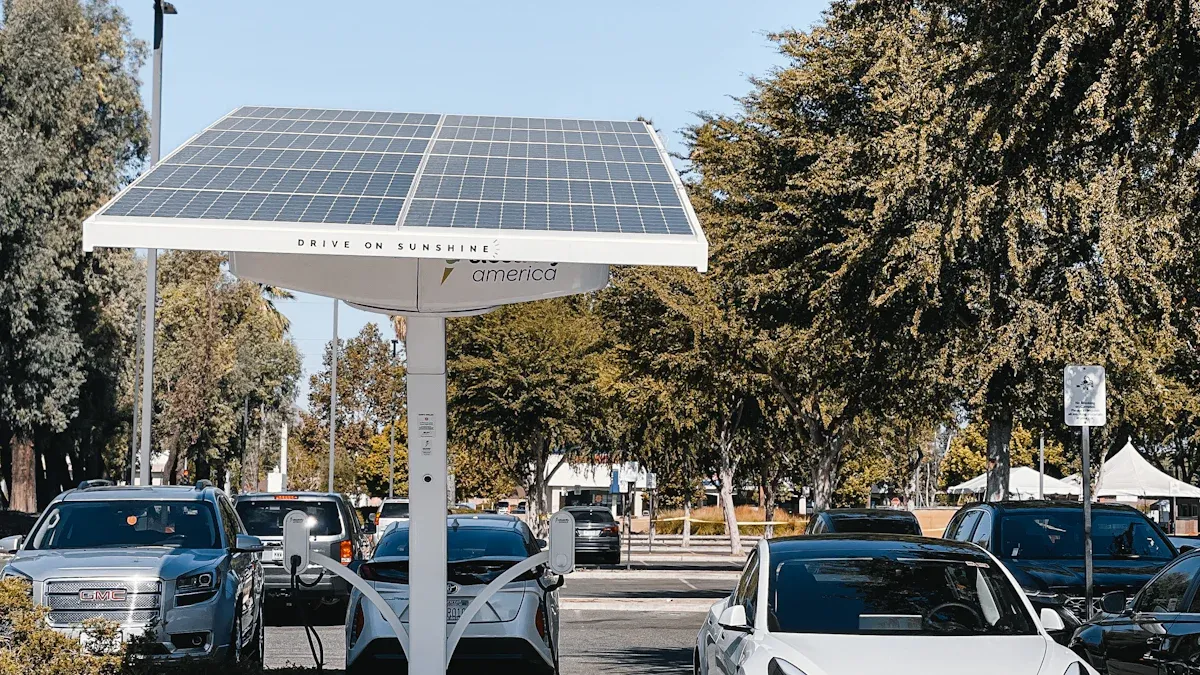
Harnessing the sun’s power seems like a perfect solution for an electric car self-charging system. Integrating solar panels onto a vehicle’s body offers a way to generate electricity without an external plug. While this technology is a fascinating step toward greater efficiency, it currently falls far short of making a car fully independent from the grid. The principles that apply to a solar-equipped electric car also highlight the limitations for any solar-assisted hybrid.
The Basics of Automotive Solar Technology
Automotive solar technology converts sunlight directly into electrical energy to supplement the main battery. This process is clean and silent, but its output is modest.
How Solar Cells on a Car Generate Power
Solar cells, also known as photovoltaic (PV) cells, are the core of this technology. These cells contain semiconductor materials, usually silicon. When sunlight strikes the cells, photons energize electrons within the silicon, causing them to flow. This flow of electrons creates a direct current (DC). An inverter then converts this DC power into alternating current (AC) suitable for charging the car’s high-voltage battery. The process is identical whether on a pure electric vehicle or a hybrid.
Types of Photovoltaic (PV) Panels Used
Automakers primarily use two types of solar panels, each with distinct performance characteristics. Monocrystalline panels are the premium choice, offering higher efficiency and better performance in high heat and low light. Polycrystalline panels are a less efficient but more cost-effective alternative.
Panel Comparison: Monocrystalline panels are superior for automotive use due to their higher efficiency, allowing for more power generation from a limited surface area.
| Характеристика | Monocrystalline Solar Panels | Polycrystalline Solar Panels |
|---|---|---|
| Эффективность | 18% to over 22% | 15% to 17% |
| Heat Resistance | Better (lower temperature coefficient) | Less resistant (power drops more in extreme heat) |
| Low-Light Performance | Better (maintains higher useful power production) | Less effective (efficiency decreases with a steeper curve) |
| Electron Movement | Continuous straight path, like a freeway with no intersections | Involves crossing multiple crystal boundaries, creating hindrance |
The Practical Limits of Solar Charging for a Self-Charging Electric Vehicle
Despite advancements, several fundamental challenges prevent solar panels from fully charging an electric vehicle. These limitations are rooted in physics and geography.
The Surface Area and Efficiency Problem
A typical car has a very limited surface area available for solar panels, mainly the roof and perhaps the hood and trunk. Even with the most efficient panels (around 22%), the small area cannot capture enough solar energy to power the entire vehicle for daily driving. A large battery in an electric car requires a significant amount of energy, far more than a few square meters of panels can provide in a day. This problem affects any vehicle, including a hybrid, that attempts to use solar power.
Calculating the Maximum Daily Range Gain
The amount of range gained from solar panels is minimal. It is a small bonus, not a primary charging method.
- Best-Case Scenario: On a long, clear summer day with the car parked directly under the sun, a solar roof might add a few miles of range.
- Расчет: A typical solar roof might generate around 200 watts in ideal conditions. Over an 8-hour sunny day, this equals 1.6 kilowatt-hours (kWh) of energy. For an efficient electric vehicle that consumes 1 kWh for every 4 miles, this translates to just over 6 miles of added range.
This small gain helps offset some battery drain but does not replace the need for a dedicated charger from a provider like TPSON.
The Impact of Weather, Season, and Location
Solar generation is highly dependent on external factors.
- включают: Cloudy or rainy days can reduce solar output by over 90%.
- Season: Winter months with shorter days and a lower sun angle drastically cut down on potential energy generation.
- Location: A car in sunny southern Europe will generate significantly more solar power than one in the often-overcast UK. Parking in a garage or under a tree completely negates any solar charging potential.
Real-World Examples of Cars with Solar Options
Several manufacturers have experimented with integrating solar panels into their vehicles, offering a glimpse into the technology’s real-world application. These examples showcase both the potential and the current limitations for both electric and hybrid models.
The Lightyear 0/2: Designed for Solar Efficiency
The Lightyear 0 was a vehicle designed from the ground up for maximum solar efficiency. Its long, aerodynamic body was covered in five square meters of highly efficient solar panels. The manufacturer projected that these panels could add up to 43.5 miles (70 km) of range per day in optimal conditions. This impressive figure was achieved through extreme optimization, a strategy not feasible for a typical passenger or hybrid car.
The Sono Sion: Integrating Solar into the Body
The Sono Sion took a different approach by integrating 456 solar half-cells seamlessly across its entire body. This design aimed to maximize surface area on a more conventional vehicle shape. The company estimated it could add an average of 70 miles (and up to 152 miles) of range per week. This approach demonstrates a more practical integration, though the project ultimately faced funding challenges.
The Hyundai Ioniq 5 and its Solar Roof Option
Hyundai offers a solar roof option for its popular Ioniq 5 electric crossover. This system is a supplementary feature designed to slightly boost efficiency. According to Hyundai, the panels can add an estimated 1,240 miles of range per year under sunny conditions. This breaks down to an average of just 3.4 miles per day, a modest but tangible benefit that reduces reliance on the grid. A similar system on a hybrid would offer a marginal reduction in fuel use.
Fisker Ocean’s “SolarSky” Roof
The Fisker Ocean electric SUV offers an optional “SolarSky” roof. Fisker claims this full-length solar roof can produce enough energy for up to 1,500 free miles per year under ideal, sunny conditions. In regions with less consistent sunshine, the company suggests the gain could be closer to 700 miles. Like other examples, this feature provides a small efficiency boost rather than a primary charging source for the electric vehicle. A hybrid with this roof would see a similarly small benefit.
Is a Solar Roof Worth the Extra Cost?
The idea of a car that passively gains range while parked is undeniably appealing. However, automotive solar panels are a premium feature with a significant price tag. A vehicle owner must weigh the high initial cost against the modest energy gains. The decision depends less on the technology’s potential and more on the driver’s specific circumstances, budget, and priorities.
A Cost-Benefit Analysis for the Average Driver
For most drivers, a solar roof does not make financial sense. The upfront cost far outweighs the value of the electricity it generates over the vehicle’s lifetime.
The primary issue is the long payback period. A solar roof option can add thousands to a car’s purchase price. The energy it produces, however, translates to a very small monetary saving each year. Let’s examine a typical scenario.
Calculation Example: A solar roof might add 1,500 miles (about 2,400 km) of range per year in a very sunny climate.
- An efficient EV uses about 1 kWh of energy to travel 4 miles.
- Annual Energy Gain: 1,500 miles / 4 miles/kWh = 375 kWh.
- Annual Savings: At an average electricity cost of €0.25 per kWh, the total annual saving is just €93.75.
This calculation reveals the financial reality.
| Метрика | Значение |
|---|---|
| Первоначальная стоимость | €1,500 – €5,000+ (Varies by manufacturer) |
| Annual Energy Gain | ~375 kWh (Best-case scenario) |
| Annual Monetary Value | < €100 |
| Payback Period | 15 to 50+ years |
The payback period often exceeds the practical lifespan of the car itself. That same investment could instead purchase a high-quality, technologically advanced home charging station from a provider like TPSON, delivering far more practical value and convenience every single day.
Ideal Use Cases for Automotive Solar Panels
While not a sound financial investment for everyone, solar panels offer unique advantages in specific situations. The value shifts from monetary return to practical utility and peace of mind.
Ideal candidates for a solar roof include:
- Drivers in Sunny Climates: The most obvious requirement. A driver in a region with consistent, strong sunshine will see the most benefit. Someone in an area with frequent cloud cover or long winters will get minimal returns.
- Owners Without Garage Parking: The system only works if the car is parked outdoors in direct sunlight. For city dwellers or homeowners who consistently park on the street, a solar roof can be a viable trickle charger.
- Combating “Vampire Drain”: 🧛♂️ Electric vehicles slowly consume power when parked to run onboard computers and monitoring systems. A solar roof can offset this “vampire drain,” especially during long-term parking at an airport or holiday location. The owner returns to a car with a healthy battery state of charge.
- Powering Auxiliary Systems: Some designs use solar power primarily to maintain the 12V battery. This battery runs the car’s lights, infotainment, and locks. By supporting the 12V system, the solar panel reduces the need for the main high-voltage battery to step in, preserving its charge for driving.
- The Tech-Forward Environmentalist: For some owners, the value is not in the money saved but in the technology itself. They appreciate the innovation and the small, personal contribution to using renewable energy.
Ultimately, a solar roof is a niche feature. It is an efficiency-boosting tool for a specific type of EV owner, not a universal solution for charging.
Why a Perpetual Self-Charging Electric Car Is Impossible
The dream of a car that powers itself indefinitely clashes with the unchangeable laws of science. The concept of a perpetual electric car self-charging system is not a technological problem waiting for a solution. It is a physical impossibility. Understanding why requires a brief look at fundamental physics and the real-world forces that every vehicle, including any hybrid, must overcome.
A Simple Guide to the Laws of Thermodynamics
Physics provides a clear rulebook for energy. Two laws in particular make a self-powering vehicle impossible.
The First Law: Energy Cannot Be Created or Destroyed
This law states that energy can only change from one form to another. An electric car converts electrical energy from its battery into kinetic energy (motion). A hybrid vehicle converts chemical energy from fuel into motion and electricity. In neither case is new energy created. The total amount of energy in a closed system remains constant.
The Second Law: The Inevitability of Energy Loss
This law introduces the concept of entropy. It dictates that with every energy transfer, some energy is lost to a less useful form, usually heat. You can never get 100% of the energy back. This unavoidable loss means a system will always run down without external power. A hybrid engine is no exception to this rule.
The Unavoidable Enemies of Efficiency
Every moving vehicle constantly battles forces that drain its energy reserves. These enemies of efficiency apply to a pure electric car just as they do to a hybrid.
Energy Lost to Heat and Friction
Heat is the primary byproduct of inefficiency. A typical lithium-ion battery in an electric car has a round-trip efficiency of about 83%, meaning 17% of the energy is lost as heat during charging and discharging. The motor, power electronics, and even the charging components generate significant heat. This is a fundamental challenge for any battery-powered system, including a hybrid.
The Battle Against Air Resistance (Aerodynamic Drag)
A vehicle must push air out of its way to move forward. This force is called aerodynamic drag. The faster a car goes, the more energy it needs to overcome this resistance. Designers work tirelessly to make cars “slippery.”
The Lucid Air, an all-electric vehicle, achieves a drag coefficient of just 0.19 Cd. The Mercedes EQS is nearly identical at 0.20 Cd. These figures represent the peak of modern aerodynamic design for both electric and hybrid vehicles.
The Constant Drain of Rolling Resistance
Tires flexing against the road surface create rolling resistance. This friction constantly saps energy from the vehicle, whether it is an electric model or a hybrid. It requires continuous power just to maintain speed, even on a flat road. A hybrid must burn fuel to overcome this force.
Perpetual Motion Machines and Why They Don’t Exist
A true self-charging car would be a perpetual motion machine, a concept that has been pursued and disproven for centuries.
A Brief History of Failed Attempts
Inventors have tried to build perpetual motion machines for hundreds of years. These attempts have included:
- Overbalanced wheels
- Self-filling water flasks
- Magnet-powered motors
All have failed because they cannot overcome the energy losses from friction and other forces. A hybrid car designer understands these limitations well.
Applying the Perpetual Motion Concept to EVs
An electric vehicle that could recharge itself using its own motion would violate the laws of thermodynamics. The energy recovered from regenerative braking will always be less than the energy spent to get the car moving due to the losses from heat, air resistance, and friction. A hybrid faces the same reality. Therefore, the only way to fully replenish an electric car’s battery is with an external power source, using reliable equipment from technologically advanced providers like TPSON. The physics are clear for any electric or hybrid vehicle.
The Future of Onboard Energy Generation for EVs
While a fully self-charging car remains impossible, engineers are developing innovative ways to harvest ambient energy and boost vehicle efficiency. These future technologies aim to supplement an EV’s main battery, extending range and reducing reliance on the grid. The focus is on incremental gains, not creating a perpetual power source.
Advancements in Solar Technology
Solar technology continues to evolve, promising greater efficiency from smaller surfaces. These advancements could make automotive solar panels a more practical feature.
Next-Generation High-Efficiency Solar Cells
Researchers are pushing the boundaries of photovoltaic (PV) efficiency. New materials and manufacturing techniques aim to capture more energy from sunlight. The goal is to maximize power generation from the limited surface area of a car.
Transparent Solar Cells for Windows and Surfaces
Imagine a car’s windows and sunroof generating power. Transparent solar cells are an emerging technology that could turn glass surfaces into active energy harvesters. While their efficiency is currently lower than traditional panels, they could significantly increase a vehicle’s total solar-collecting area without altering its appearance.
The Potential of Perovskite Solar Cells
Perovskite solar cells represent a major breakthrough. These cells use a unique crystal structure that is cheaper to produce and highly efficient. Solar technology company LONGi has already achieved a record-breaking efficiency of 34.6% in a lab setting using tandem cells that combine perovskite and silicon. This level of performance could make automotive solar a much more meaningful contributor to an EV’s daily range.
Other Experimental Energy Harvesting Concepts
Beyond solar, scientists are exploring other creative ways to capture wasted energy from a vehicle’s environment and operation.
Piezoelectric Systems: Power from Road Vibrations
Piezoelectric materials generate an electric charge when subjected to mechanical stress. Researchers are testing the idea of embedding these materials in roads. The pressure from passing cars could generate electricity for the grid or potentially for the vehicles themselves.
- Tests in Israel suggested a one-kilometer stretch of road could produce up to 100 kW under heavy traffic.
- A team at Lancaster University in the UK aims to recover an even greater 1-2 MW per kilometer.
Thermoelectric Generators: Capturing Waste Heat
Electric motors, batteries, and power electronics all produce waste heat. Thermoelectric generators (TEGs) can convert this temperature difference directly into usable electricity. Integrating TEGs could capture some of this lost energy and feed it back into the system, slightly improving overall efficiency.
Regenerative Suspension: Energy from Bumps
A vehicle’s suspension system dissipates energy as it absorbs bumps and vibrations from the road. Regenerative suspension systems replace conventional shock absorbers with linear electric motors. These motors capture the energy from suspension movement, turning road imperfections into a small source of electric power.
The Realistic Path Forward: Efficiency First
The most effective way to increase an EV’s range is not by adding complex harvesting systems but by reducing its energy consumption. Efficiency remains the top priority for automotive engineers.
The Critical Role of Lightweight Materials
Reducing a vehicle’s weight is paramount. A lighter car requires less energy to accelerate and maintain speed. Replacing heavy steel with advanced materials like aluminum and carbon fiber composites can dramatically cut mass. Some research suggests that using structural battery composites could increase an EV’s driving range by as much as seventy percent.
Advancements in Aerodynamic Design
Engineers continue to refine vehicle shapes to minimize air resistance. Active aerodynamic elements, such as adjustable spoilers and grille shutters, can optimize airflow at different speeds. Every small reduction in drag translates directly to more miles from each kilowatt-hour.
Improving Drivetrain and Battery Efficiency
Battery chemistry is constantly improving. Advancements like silicon-carbon composite anodes and ternary lithium-ion cathodes (NMC) allow batteries to store more energy in the same weight. These gains in energy density directly extend driving range. Even with these onboard efficiency improvements, the need for reliable external power remains. Технологически передовые решения для зарядки от таких провайдеров, как TPSON provide the fast and convenient power that makes EV ownership practical.
The concept of a true electric car self-charging system remains impossible due to the laws of physics. Onboard technologies like regenerative braking and solar panels are supplementary systems. They improve overall efficiency and extend range by small amounts but do not create new energy. For the foreseeable future, the only method to fully charge an EV is by connecting it to an external power source. Technologically advanced charging solutions from providers like TPSON deliver the reliable power that electric vehicles require.
ЧАСТО ЗАДАВАЕМЫЕ ВОПРОСЫ
What is a “self-charging” electric car?
The term “self-charging” is a marketing phrase originating from hybrid vehicles. It describes systems like regenerative braking that recover small amounts of energy. A fully electric car cannot truly self-charge. It always requires an external power source for a full battery recharge.
Can regenerative braking fully charge an EV?
No, regenerative braking cannot fully charge an electric vehicle. The system only recovers a fraction of the energy used to move the car. It improves overall efficiency and extends range slightly but cannot overcome the fundamental laws of energy loss.
How much range can a solar roof add?
A solar roof adds a very small amount of range. In ideal sunny conditions, it might add a few miles per day. This feature helps offset battery drain but is a supplementary system, not a primary charging method for the vehicle.
Why can’t an EV be a perpetual motion machine?
An EV cannot be a perpetual motion machine due to the laws of thermodynamics. Every energy conversion process loses some energy to heat and friction. A car can never recover more energy than it uses, making a self-powering cycle impossible.
What is the best way to charge an EV?
The only way to fully charge an EV is with an external power source. Technologically advanced charging solutions from providers like TPSON offer reliable and efficient power. Using a dedicated home or public charger ensures the vehicle is always ready for use.
Do self-charging hybrids really self-charge?
No, a “self-charging” hybrid uses its gasoline engine as the primary energy source to generate electricity for its small battery. The term simply means the driver does not need to plug it in. All the energy originates from the fuel in its tank.
Is one-pedal driving more efficient? 🚗
Yes, one-pedal driving can improve efficiency. This driving style maximizes the use of the regenerative braking system. It allows the driver to capture more kinetic energy during deceleration, which extends the vehicle’s total range, especially in city traffic.




