EV charging cables are designed as part of a tested safety system, but real life brings real constraints: a garage layout that doesn’t line up, a driveway charge under a closed door, or a commercial site where cables must stay off the ground and out of walkways. This guide explains what you need to know about EV charger “extension cords” (and why most are a bad idea), plus the right way to do cable management for both home and commercial charging.
Safety first: In many cases, using a generic extension cord with EV charging equipment is unsafe and may violate local electrical codes or manufacturer instructions. The safest solution is almost always to relocate the EVSE, install a properly rated circuit/outlet, or use purpose-built cable management—rather than extending power with a consumer-grade cord.
- EVSE basics: what the “charger cable” really is
- Do EV charger extension cords exist? What’s actually safe
- Key risks: heat, voltage drop, nuisance tripping, and wear
- Cable management essentials (home + commercial)
- Common layouts: garage, driveway, workplace, fleet yard
- What to look for in cables and enclosures (NEMA/IP, length, strain relief)
- How to solve distance problems without risky extensions
- FAQ (3 questions)
- Sources & references
Many people call the wall unit a “charger,” but technically the vehicle has the onboard charger; the wall unit is commonly referred to as EVSE (electric vehicle supply equipment). Car and Driver explains that the vehicle’s onboard charger converts AC electricity from your home into DC energy for the battery, and the EVSE is the equipment that connects your home’s electricity to the car. (Source: Car and Driver)
Why does this matter for extension cords? Because the EVSE + cable + connector + protective systems are designed and certified as a set. Extending that system with something not designed for continuous high current can create heat and reliability problems.
Continuous load
EV charging runs for hours
Long duration makes heat buildup and weak connections more dangerous.
Current matters
Up to 48A (typical home high-end)
Emporia Classic supports up to 48A (hardwired) and 40A (NEMA plug model).
Safety systems
GFCI & protection features
Built-in protection can conflict with certain installations (see GFCI notes below).
When people say “EV charger extension cord,” they might mean one of three different things:
| What people mean | What it actually is | Safer alternative |
|---|---|---|
| A generic extension cord | Standard household extension (often NOT designed for continuous 32–48A loads) | Install a proper circuit/outlet or move/hardwire the EVSE |
| A longer EV charging cable | Purpose-built EVSE cable assembly provided by the EVSE manufacturer | Choose an EVSE with an appropriate cable length (e.g., 25 ft) |
| An adapter/connector solution | Connector-type change (e.g., NACS vs J1772), not a length increase | Select the correct connector type or use a proper adapter per OEM guidance |
Practical guidance: If you need more reach, the best solution is usually a properly located EVSE with an adequately long charging cable. Emporia’s Classic EV Charger listing, for example, includes a durable 25′ charging cable and is offered in hardwire or NEMA 14-50 configurations. (Source: Emporia Classic product page)
The highest-risk spot in any “extended” setup is usually not the middle of the cord—it’s the plug blades and receptacles. Loose or worn contacts increase resistance, which increases heat. Long-duration EV charging makes that worse.
Emporia explicitly warns about “the nuisance of NEMA 14-50 and GFCI breakers”: their EV chargers have built-in GFCI protection, which can cause nuisance tripping if the circuit is also protected by a GFCI breaker at the panel. They note that NEC now requires a GFCI breaker on circuits using certain outlets, and recommend hardwired installation if GFCI breaker requirements apply. (Source: Emporia Classic product page)
Dragging a cable across concrete, closing it in a garage door gap, or leaving connectors on the ground increases wear and contamination risk. Cable management exists to reduce these failure modes.
Cable management is about three things: strain relief (no pulling on connectors), keeping connectors clean, and preventing trip hazards.
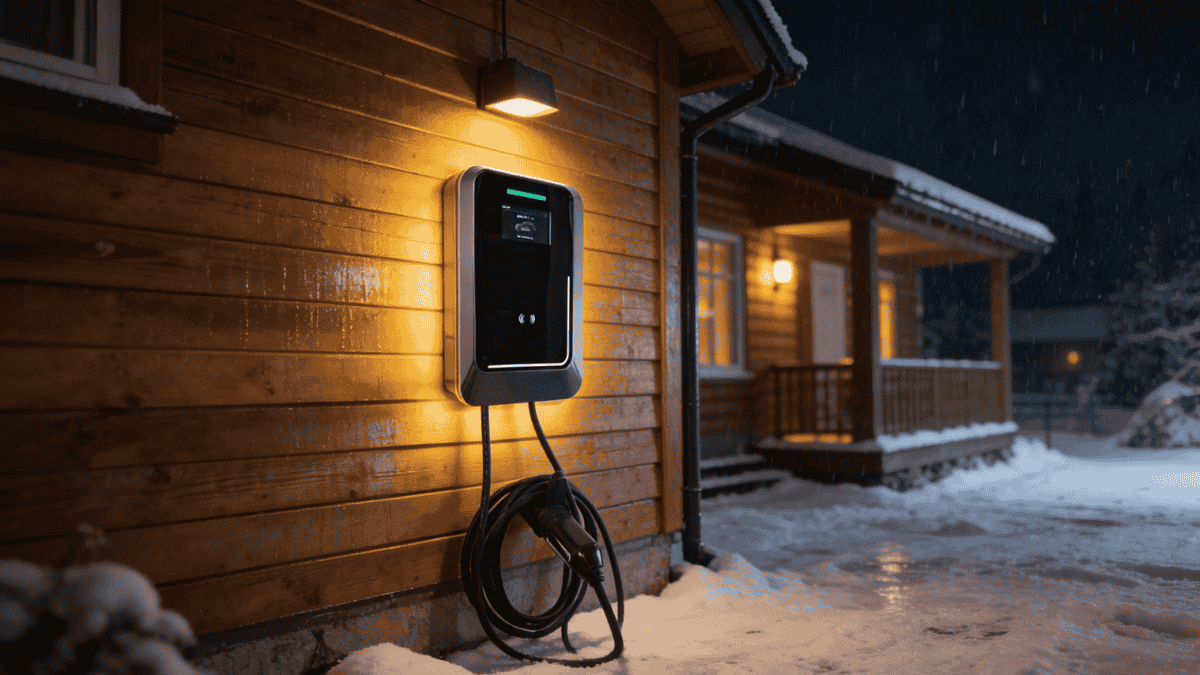
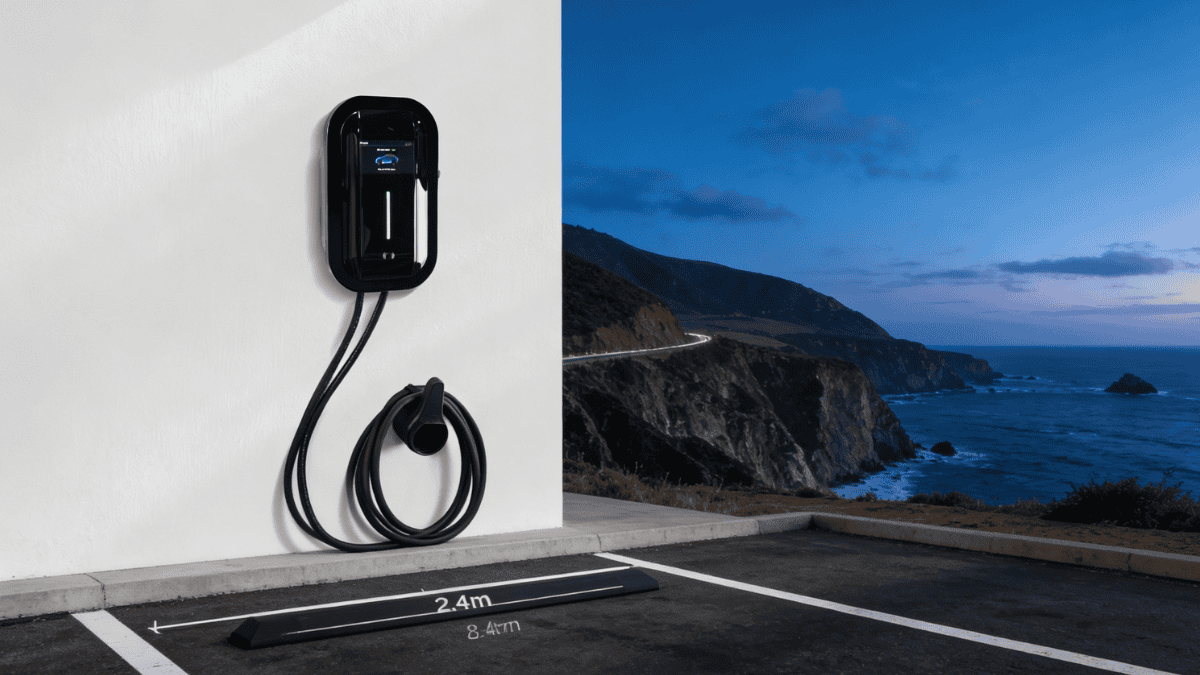
- Mount the EVSE near the parking position so the cable reaches without stretching.
- Keep the connector off the ground using a holster/handle holder.
- Use a cable wrap/notch on the EVSE or an adjacent hook system to avoid knots and kinks.
- Prefer hardwire when needed for higher current and to reduce plug-related issues.
Emporia states its Classic package includes a wall mount for the charger and a handle holder, and the unit includes a 25′ charging cable. (Source: Emporia Classic “What’s Included”)
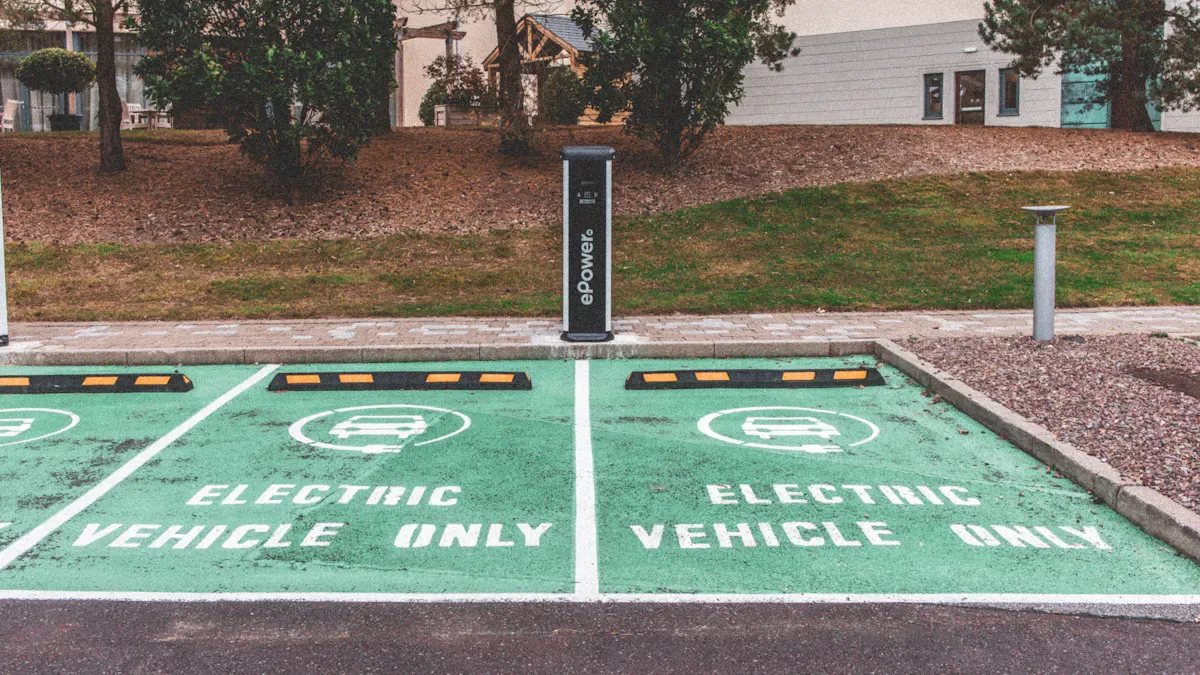
- Design for ADA/pedestrian flow: keep cables out of walkways and curb ramps.
- Use bollards/signage to protect equipment and guide parking alignment.
- Choose hardware with clear status indicators and durable enclosures for outdoor use.
- Plan for maintenance access (space for service techs, spare parts strategy, remote diagnostics).
Smart Charge America’s catalog highlights commercial chargers with features that support managed deployments, such as RFID access control, OCPP support, web-portal monitoring, and durable enclosures (examples include Ford Pro? AC Charging Station descriptions and ChargePoint commercial units). (Source: Smart Charge America catalog)
- Mount EVSE on the side wall closest to the charge port.
- Use the EVSE’s integrated wrap or a dedicated cable hook.
- Keep the connector holstered and dry.
- Use an EVSE with an outdoor rating appropriate for your location.
- Avoid pinching cables in doors; route where they won’t be crushed.
- Store the connector in a holster when not in use.
- Label stalls clearly and enforce time limits to prevent “charger squatting.”
- Use access control (RFID/app) where needed.
- Prioritize uptime—shared chargers fail “loudly” and erode trust.
- AC-first for long dwell; targeted DC for turnaround lanes.
- Route cables above ground where possible to avoid damage from vehicles and equipment.
- Use remote monitoring to catch faults early.
A “safe cable setup” is a product of multiple specs working together:
| Spec / feature | Por que é importante | Examples from provided sources |
|---|---|---|
| Comprimento do cabo | Enough reach reduces temptation to use unsafe extensions | Emporia Classic includes a 25′ cable; TPSON portable DC defaults to 5 meters |
| Classificação para exterior | Controls exposure to rain/dust and impacts long-term reliability | Car and Driver notes outdoor ratings such as NEMA 3R and NEMA 4 in its tested units list |
| Mount + holster | Keeps connector off ground; reduces strain and contamination | Emporia includes wall mount + handle holder |
| Protection features | Reduces electrical hazards; can influence installation choices | Emporia: built-in GFCI protection; warns about nuisance tripping with GFCI breakers on outlets |
The cleanest solution is moving the EVSE location or adding a properly installed circuit. Car and Driver’s testing discussion describes installing a dedicated 240-volt outlet as a typical step for home charging setups—highlighting that the “wiring to the right place” is part of doing it correctly. (Source: Car and Driver)
Emporia’s Classic package includes cable and mounting components designed for daily use (25′ cable, wall mount, handle holder). This is exactly the kind of configuration that reduces “I need an extension” moments. (Source: Emporia Classic product page)
In commercial operations (service centers, depots, events), a “reach” problem can sometimes be solved by moving the charger instead of extending the cable. TPSON’s TP?DC Compact Series is explicitly described as an all-in-one design with wheel mobility, offering 20kW/30kW/40kW power options, with applicable scenes including dynamic fleet/logistics management and event/temporary support. (Source: TPSON Portable DC EV Charger)
ChargePoint emphasizes managing and monitoring charging operations with a unified platform, operating ChargePoint stations or OCPP compliant hardware, and improving uptime with proactive management tools. For multi-user sites, the “platform” often matters as much as the hook/holster—because it keeps the system usable at scale. (Source: ChargePoint)
Bottom line: If you feel you “need” an EV extension cord, treat it as a design signal. The best fix is usually one of: (1) relocate the EVSE / add a proper circuit, (2) use a longer manufacturer cable setup with proper holsters, or (3) change deployment style (e.g., mobile DC for operations).
- Explore TPSON’s portfolio overview: Carregadores de veículos eléctricos
- Learn about the company background: Fabricante de Carregadores para VE
- Browse TPSON wallbox products: Carregadores AC para veículos eléctricos
- See TPSON’s compact mobile fast charging option: Carregadores DC EV
It’s generally not recommended. EV charging is a high, continuous load, and many generic extension cords and plug connections are not designed for that. The safer approach is to install the EVSE where needed or choose a setup with sufficient cable length and proper mounting/holstering.
Emporia notes that EV chargers can have built-in GFCI protection, and when the circuit is also protected by a GFCI breaker at the panel, it can lead to nuisance tripping. They recommend consulting an electrician, and note hardwired installation may be preferred in scenarios where GFCI breaker installation is required for the outlet circuit. (Source: Emporia Classic product page)
Use three items: a stable wall mount for the EVSE, a connector holster/handle holder, and a dedicated cable wrap/hook so the cable isn’t left on the ground. Emporia’s Classic “What’s Included” list reflects this kind of daily-use kit (mount + handle holder + 25′ cable). (Source: Emporia Classic product page)
- Car and Driver — EVSE basics, charging levels, installation considerations: https://www.caranddriver.com/shopping-advice/a39917614/best-home-ev-chargers-tested/
- Emporia Classic Level 2 EV Charger — cable length, what’s included, hardwire vs NEMA plug, GFCI notes: Carregador de VE Nível 2 Clássico Emporia
- ChargePoint — platform approach to manage/monitor operations and driver experience: https://www.chargepoint.com/
- Smart Charge America — market examples for commercial hardware features and management: https://smartchargeamerica.com/electric-car-chargers/
-
TPSON Portable DC EV Charger — cable length (default 5 meters) and mobility positioning:
Carregador portátil de veículo elétrico em corrente contínua (DC)
-
TPSON AC EV Chargers (TW-10/TW-20/TW-30/TW-40 Dual Gun):
Carregadores AC para veículos eléctricos
-
TPSON EV Chargers overview (Dynamic Load Balancing positioning and portfolio navigation):
Carregadores de veículos eléctricos
-
TPSON About (company background):
sobre
Internal links used in-body (as required): Carregadores de veículos eléctricos · Fabricante de Carregadores para VE · Carregadores AC para veículos eléctricos · Carregadores DC EV