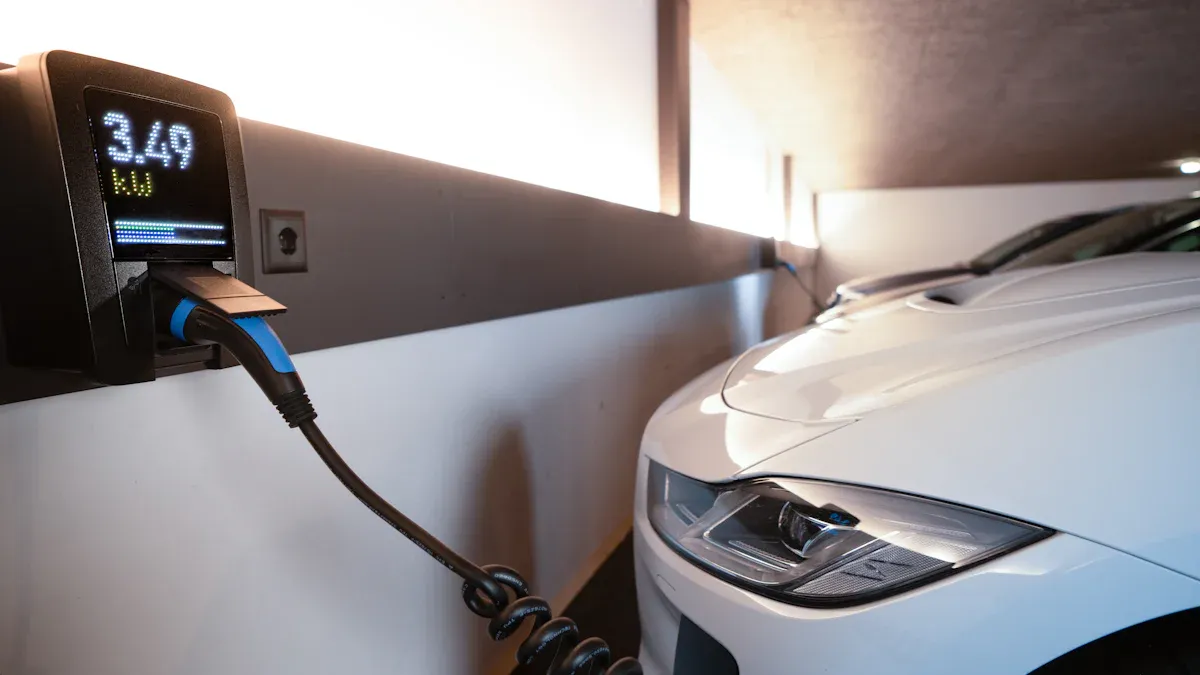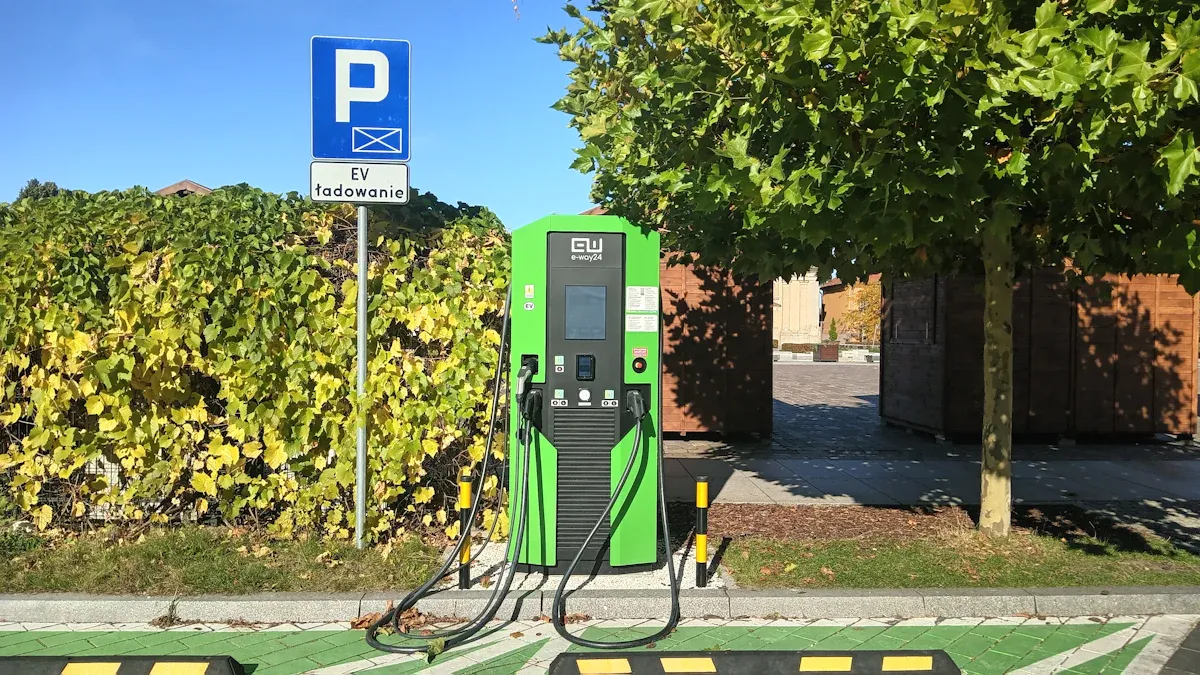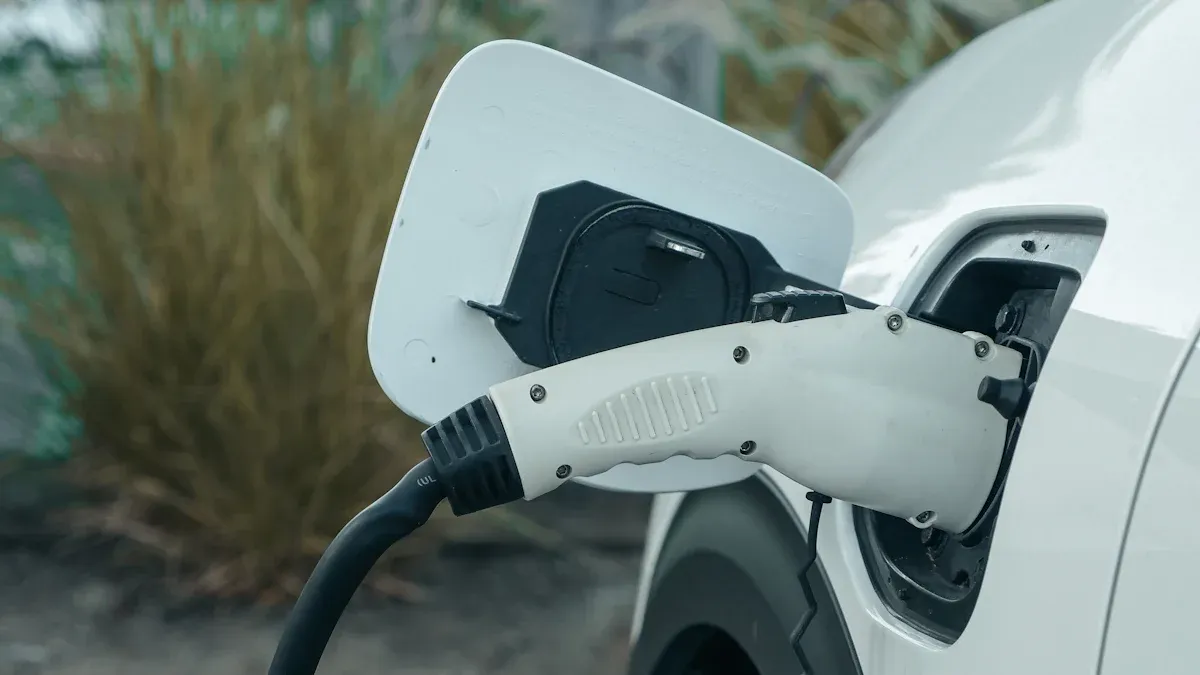
You now benefit from the latest Carregador de veículos eléctricos regulation in England, which eliminates the need for planning permission for most EV installations. This shift removes a major barrier that previously delayed and increased the cost of installing EV chargers at homes and workplaces. With this change, you can expect Fabricantes de carregadores para veículos eléctricos to respond quickly, making it easier to access reliable charging points across England. The UK government’s decision accelerates EV adoption and boosts the rollout of new EV charging infrastructure.
Understanding the EV Charger Regulation Change
Key Changes in the Law
Removal of planning permission for ev chargers
You now benefit from a significant update in the ev charger regulation. The latest ev charger regulation change removes the need for planning permission for most ev charger installations. This new rule change applies to both homes and businesses across England. You can instalar um carregador ev at your property without waiting for approval from local authorities. The Department for Transport and the Office for Zero Emission Vehicles enacted this regulation on May 29th, 2025. You experience fewer delays and lower costs when you decide to install an ev charger at home or work.
Tip: Removing the need for planning permission means you can plan your ev charger installation with greater confidence and less paperwork.
The ev charger regulation change covers domestic and commercial properties.
You save time and money by avoiding lengthy approval processes.
The regulation supports faster adoption of ev technology in England.
New standards for smart charging
The ev charger regulation change introduces new standards for smart charging. You must use chargers that meet updated requirements for connectivity, off-peak charging, delayed charging, and privacy. The table below highlights the differences between the new standards and previous requirements:
Caraterística | New Standards (2022) | Previous Requirements |
|---|---|---|
Conectividade | Integrated data connection for monitoring and communication during charging sessions. | Not mandated |
Carregamento fora de horas de ponta | Default setting to avoid charging during peak hours (8am-11am, 4pm-10pm). | No specific off-peak settings |
Delayed charging | Ability to delay charging by up to 30 minutes to manage grid demand. | No delay requirements |
Privacy | Data encryption and user control over data sharing and retention. | Limited privacy protections |
You gain more control over your charging schedule and data privacy. The ev charger regulation ensures that your charger supports smart features, which help balance demand on the power grid and protect your personal information.
Important Dates and Deadlines
When the ev charger regulation change takes effect
You need to know when the ev charger regulation change becomes active. The UK government set two key dates for new requirements:
Effective Date | Regulamento Descrição |
|---|---|
November 24, 2024 | All new public charge points with a power rating of 8kW and above must offer contactless payment options. |
May 29, 2025 | Introduction of changes to the Permitted Development Rights for EV charge points. |
You should check if your planned installation falls after these dates. The public charge point regulations require contactless payment options for new chargers with higher power ratings. The ev charger regulation change for permitted development rights starts on May 29th, 2025.
Transition periods for compliance
You must follow the transition periods set by the ev charger regulation. If you plan to install an ev charger before May 29th, 2025, you may still need planning permission. After this date, you can proceed without approval for most installations. Businesses and homeowners should review the updated requirements for smart charging and payment options. You should consult local authorities or trusted installers to confirm compliance with the latest ev charger regulation change.
Note: You can avoid delays by scheduling your installation after the regulation takes effect. This ensures you benefit from removing the need for planning permission and meet all new standards.
What the EV Charger Regulation Means for Homeowners
Installing EV Chargers at Home
Easier installation process
You now have a much simpler path to installing an EV charger at your home in England. The latest regulation removes the need for planning permission for most installations, which means you can move forward without waiting for local authority approval. This change speeds up the process and reduces paperwork. However, you still need to make sure your home’s electrical system can handle the extra load. The UK government requires you to get approval from your local Distribution Network Operator (DNO) to confirm your main supply is sufficient.
Tip: Always check with your DNO before starting installation to avoid delays or safety issues.
To install an EV charger at home, you should follow these steps:
Ensure you have a modern consumer unit with space for an additional circuit breaker.
Install Residual Current Devices (RCD) for safety.
Include surge protection to safeguard against voltage spikes.
Verify that your main supply can handle the additional load, which may require approval from your electricity network operator.
Use outdoor-rated wiring and sockets if you plan to install the charger outside.
Follow BS 7671 Wiring Regulations and hire a qualified electrician or an OZEV-approved installer.
Updated requirements for new chargers
New home EV chargers must meet updated technical and smart standards. These requirements help you charge your EV safely and efficiently. When you install a new charger, make sure it includes:
A modern consumer unit with space for an extra circuit breaker
RCD protection to prevent electric shocks
Surge protection to guard against voltage spikes
Sufficient main supply, with possible approval from your electricity network operator
Outdoor-rated wiring and sockets for external installations
Compliance with BS 7671 Wiring Regulations and installation by a qualified electrician
Ability to schedule charging during off-peak times
Monitoring and reporting of energy use through an app
Balancing charging when multiple devices are in use
Integration with solar panels and home batteries
These features ensure your EV charger is future-ready and supports the latest smart charging functions.
Upgrading Existing EV Chargers
Compatibility with new ev charger regulation
If you already have an EV charger at home, you may need to upgrade it to comply with the new regulation. The latest rules require smart functionality, energy monitoring, and enhanced safety features. You should check if your current charger meets these standards. If not, consider upgrading to a model that does.
Steps for homeowners to follow
You can follow these recommended steps to upgrade your existing charger:
Etapa | Descrição |
|---|---|
1 | Ensure compliance with Smart Charge Point Regulations, including smart functionality and cybersecurity standards. |
2 | Verify that the charger meets energy monitoring and safety requirements. |
3 | Use an OZEV-approved installer to guarantee adherence to safety and compliance standards. |
By following these steps, you make sure your home charging setup remains safe, efficient, and compliant with the latest EV regulations in England.
EV Charger Regulation and Renters or Apartment Residents

Access to EV Chargers in Shared Spaces
Landlord responsibilities under the new regulation
You may live in a building with shared parking or communal spaces. The latest EV charger regulation in England creates new expectations for landlords. If you request to install a charger, your landlord must consider your application fairly. Most modern tenancy agreements include clauses that allow reasonable improvements unless specifically prohibited. Landlords cannot unreasonably withhold consent for charger installation if you follow the proper process.
Here is a summary of how landlord responsibilities work under the new regulation:
Aspeto | Detalhes |
|---|---|
Landlord Consent | You need written consent from your landlord to install a charger. |
Alterations Clause | Many agreements allow reasonable improvements unless explicitly prohibited. |
Approval Rights | Consent for reasonable improvements, such as a charger, should not be unreasonably withheld. |
Landlords must also ensure that any charger installed in shared spaces meets the latest safety and smart charging standards. You should expect your landlord to coordinate with qualified installers and comply with the UK’s electrical regulations.
Tenant rights for ev charger installation
You have the right to request a charger for your designated parking space. The new regulation supports your ability to increase the number of ev chargers in residential buildings. In several U.S. states, right-to-charge laws protect tenants from landlords who try to block charger installation. While the UK does not have identical laws, the new regulation encourages similar protections. You are usually responsible for installation costs, but you gain the ability to charge your ev at home.
Tip: Always review your tenancy agreement and communicate with your landlord before starting any charger installation.
You can request written consent for charger installation.
Your landlord cannot unreasonably refuse your request.
You are responsible for installation costs and ongoing maintenance.
Solutions for No Off-Street Parking
On-street ev chargers
If you do not have a private parking space, you can still access reliable charging options. The Sistema de pontos de carregamento residenciais na via pública (ORCS) provides funding for public charging infrastructure. Local councils use this funding to install chargers on streets near apartment buildings. You benefit from convenient access to a charger even if you park on the street.
Tipo de solução | Descrição |
|---|---|
Trojan Home | Connects to your energy supply for low-cost, flexible charging right on your doorstep. |
Trojan Hub | Provides fair, reliable access to EV charging at the kerbside. |
You may see new chargers installed on lamp posts or dedicated charging pillars. These chargers help increase the number of ev chargers available to residents without off-street parking.
Community charging options
You can also explore community charging solutions. ZAPME offers mobile EV charging services, delivering energy directly to parked vehicles using electric vans equipped with self-contained charging units. This flexible approach allows you to charge your ev without needing a fixed charger at your home. Community charging hubs, such as Trojan Hub, provide shared access to chargers for multiple residents. You can join a local charging network or use mobile apps to locate available chargers nearby.
Note: Community charging options help bridge the gap for apartment residents and renters who cannot install a charger in their own parking space.
You have more choices than ever before. The latest regulation and new technologies make it easier for you to own and charge an ev, regardless of your living situation.
EV Charger Regulation Change for Businesses and Commercial Properties
Workplace EV Chargers
New requirements for employee access
You must now meet stricter standards when installing electric vehicle chargepoints at your workplace. The latest regulation in England sets clear expectations for charger security, data protection, and smart charging capabilities. These requirements help protect your business, your employees, and the electricity system.
Requisito | Descrição |
|---|---|
Segurança | Chargers must prevent harm and disruption to the electricity system. |
Proteção de dados | All data sent to and from chargepoints must be encrypted to protect user privacy. |
Smart Charging Capabilities | Chargers should support smart charging to optimize energy use and grid stability. |
You need to ensure that every charger you install for employee use meets these standards. Smart charging features allow you to schedule charging during off-peak hours, which can lower costs and reduce strain on the grid. Data encryption keeps employee information safe.
Compliance steps for business owners
You must follow several steps to comply with the new regulation for workplace EV chargers. These steps help you provide reliable, accessible, and secure charging for your staff.
Compliance Step | Descrição |
|---|---|
Create a system that meets legal requirements and enhances customer support. | |
Ensure Charge Point Reliability | Aim for 99% reliability of chargepoints to meet user expectations. |
Provide Accessible Payment Options | Implement contactless payments and ensure pricing transparency. |
Establish a 24/7 Helpline | Offer a freephone helpline staffed year-round for customer support. |
Submit Monthly Performance Reports | Report helpline performance metrics to regulatory bodies monthly. |
Tip: Regularly review your charger performance and customer service systems to maintain compliance and improve user satisfaction.
Public EV Chargers and Commercial Installations
Upgrades and new installation standards
You must upgrade existing public chargepoints and follow new installation standards for all new chargers. The regulation requires that all new public chargepoints over 8kW and existing rapid chargepoints over 50kW offer contactless payment options. This change makes it easier for drivers to pay without creating an account or downloading an app.
You also need to ensure that every charger meets high reliability standards. The regulation sets a target of 99% operational uptime for public chargepoints. You must provide a 24/7 customer support helpline, so drivers can get help at any time.
Improving accessibility for all drivers
The new regulation improves accessibility for all drivers using public chargepoints. You must focus on three main areas:
24/7 customer support ensures immediate assistance is always available.
Reliability standards guarantee that chargers remain operational and ready for use.
These improvements help build trust in the UK’s public charging network. You make it easier for everyone to use electric vehicle chargepoints, whether they drive for work or leisure. By meeting these standards, you support the shift to EVs and help England reach its sustainability goals.
Benefits of the Latest EV Charger Regulation
Cost Savings for Drivers and Businesses
Lower installation costs due to regulation change
You now face fewer financial obstacles when planning an Instalação de carregadores de veículos eléctricos. The removal of planning permission requirements means you save both time and money. You avoid costly delays and reduce paperwork, which helps you move forward with your electric car plans. When you make the switch to EVs, you can expect significant savings:
EV drivers could save around £5,850 by switching to electric vehicles.
If you buy a new electric car, your savings can increase to £7,785.
Charging at home can save you an average of £3,125.
Even public charging can yield savings, averaging £431.
For businesses, the streamlined process for EV charger installation reduces upfront costs and accelerates the adoption of EVs in the workplace.
Available government incentives
You can take advantage of several government grants that support EV charger installation. These incentives help you cover the cost of buying and installing chargers at home or work. The table below outlines the main options:
Tipo de subvenção | Descrição | Montante disponível |
|---|---|---|
Subvenção para pontos de carregamento de veículos eléctricos | Money off the cost of buying and installing a chargepoint socket | 75% off (até £350 por tomada) |
Subvenção para infra-estruturas de VE | Money off installation work for multiple chargepoints | 75% off (up to £30,000) |
Regime de taxas no local de trabalho | Support for businesses installing chargers for staff or fleets | Up to £350 per socket (up to 40 sockets) |
You can apply for these grants if you meet the eligibility criteria, such as using an OZEV-approved installer and having off-street parking. These incentives help remove barriers to EV adoption and support drivers across the UK.
Convenience and Faster Access to EV Chargers
Streamlined approval and installation
You benefit from a much faster and simpler EV charger installation process. Local authorities now assess key factors like on-street parking availability, technical standards, and costs more efficiently. You no longer need to wait for lengthy planning approvals, which means you can power up the EV revolution at your own pace. This streamlined approach helps accelerate EV adoption and ensures that more people can access reliable charging.
Improved reliability and transparency
The new regulation requires charging station operators to share real-time data about charger locations, speeds, and availability. You can now use apps and services to find available charging points and check prices before you arrive. Operators must maintain 99% reliability for public rapid charge points, which gives you confidence that you can charge your electric car when you need to. Price transparency and contactless payment options further improve your experience and encourage more people to adopt electric cars.
Note: Open data sharing and high reliability standards make it easier for you to plan trips and trust the EV charging network.
Supporting the Shift to Electric Vehicles
Environmental benefits
You help improve air quality and public health by choosing an electric car. Smart charging reduces peak energy demand, which means fewer power plants and less reliance on fossil fuels. The regulation enhances grid responsiveness and supports faster decarbonization of electricity generation. As more people adopt EVs, you contribute to a cleaner environment and a healthier future.
Future-proofing charging infrastructure
The latest regulation ensures that EV infrastructure in England can meet future demand. You benefit from targeted funding that addresses gaps in rural and underserved areas. The regulation creates a stable national framework, which attracts investment and speeds up the deployment of new charging stations. Public awareness campaigns help build your confidence in making the switch to EVs and support drivers as the adoption of EVs grows.
Challenges and Considerations with EV Charger Regulation
Power Grid Readiness
Addressing increased demand from more ev chargers
You play a vital role in the transition to electric vehicles, but this shift increases demand on the power grid. As more ev chargers connect to homes and businesses, the grid must adapt to higher loads. Vehicle-to-grid (V2G) technology helps balance this demand. When your ev is not in use, it can supply stored energy back to the grid, supporting stability during peak periods. This approach transforms your vehicle into a valuable energy resource, not just a mode of transport.
Medida | Descrição |
|---|---|
Contadores inteligentes | Smart meters give grid operators better data to manage supply and demand. |
Preços dinâmicos | Dynamic pricing encourages you to charge during off-peak hours. |
Vehicle-to-Grid | V2G lets your ev return energy to the grid, reducing peak strain. |
These measures help reduce the need for costly upgrades and can save billions in grid investments by 2030.
Planned upgrades to grid infrastructure
You may notice that some neighborhoods, especially older ones, struggle with outdated infrastructure. The new ev charger regulations require upgrades to ensure the grid can handle modern loads. Utilities plan to:
Replace aging cables and transformers in older areas.
Integrate advanced control systems for better grid flexibility.
Expand V2G technology, though this requires overcoming challenges with legacy systems.
These upgrades support the growing number of evs and help maintain reliable service across the uk.
Public Charging Access and Gaps
Solutions for rural and underserved areas
You may live in a rural or underserved area where public charging remains limited. Many regions face longer travel times to reach charging stations. National programs target these gaps by funding new installations.
Tipo de prova | Descrição |
|---|---|
Charging Gaps | Nearly 60-80% of census tracts in some countries lack public charging, especially rural areas. |
Travel Time | Rural drivers often travel farther to reach a charger. |
NEVI Program | Billions in funding support fast chargers along highways and local community chargers. |
These efforts aim to reduce disparities and ensure you have access to reliable charging, no matter where you live.
Ongoing development of public ev chargers
You benefit from ongoing investments that expand the uk public chargepoint network. Community-centric initiatives use data to place chargers where you need them most. Local authorities and private companies work together to transform unused land into secure charging sites. New facilities appear in small towns, supporting both local amenities and community growth.
Community charging projects use real-world data to fill network gaps.
Investments regenerate private land for new charging locations.
The Charging Infrastructure Investment Fund (CIIF) backs projects in places where you live, work, and shop.
Major partnerships, such as Connected Kerb’s expansion and local council collaborations, continue to add thousands of new sockets across the country.
Common Concerns for Drivers
Costs of upgrading or compliance
You may worry about the costs of upgrading your current charger or meeting new compliance standards. While the removal of planning permission reduces some expenses, you still face costs for equipment and installation. Government grants and workplace incentives help offset these expenses, but you should plan for potential upgrades as technology advances.
Where to find technical support
You have access to several resources for technical support. Companies like Virta offer direct contact options and answer common questions for ev drivers. RAW Charging provides free consultations, site assessments, and 24/7 support to help you comply with new regulations.
Fonte | Descrição |
|---|---|
Virta | Offers technical support and answers to frequently asked questions for ev drivers. |
RAW Charging | Provides consultations, site assessments, installation management, and 24/7 compliance support. |
Tip: Reach out to these providers if you need help with installation, upgrades, or understanding the latest requirements.
Next Steps for England’s Drivers After the EV Charger Regulation Change
What to Do Now
Assess your current ev charger setup
You should start by evaluating your current ev charger setup. Review the type of charger you use and check if it meets the latest smart charging standards. Look for features such as energy monitoring, scheduled charging, and data protection. If your charger lacks these functions, you may need to upgrade. You can use the following checklist to guide your assessment:
Does your ev charger support smart charging?
Can you monitor energy usage through an app?
Is your charger compatible with off-peak charging?
Does your charger meet the latest safety standards?
Tip: If you answer “no” to any item, consider speaking with a qualified installer about your options.
Plan for upgrades or new installations
You should plan for upgrades or new installations based on your assessment. Identify the best location for your ev charger, considering access and safety. Research OZEV-approved installers in your area. You can also explore government grants to reduce costs. If you live in a shared building or rent, communicate with your landlord early to avoid delays. Use the table below to organize your next steps:
Action Item | Detalhes |
|---|---|
Smart, rapid, or standard | |
Select installation site | Home, workplace, or shared space |
Find approved installer | OZEV-certified professionals |
Apply for grants | EV Chargepoint Grant, Infrastructure Grant |
Schedule installation | Coordinate with installer and DNO |
You should keep all documentation related to your ev charger installation for future reference.
Finding Help and Information
Government and local resources
You have access to several government and local resources that support instalação do carregador ev. The UK government provides detailed guidance on regulations, grants, and approved installers. Local councils offer information about public charging points and community charging schemes. You can visit the Office for Zero Emission Vehicles (OZEV) website for the latest updates. Many councils also publish maps of available ev chargers in your area.
Note: Always check official sources for the most accurate and current information.
Support for homeowners, renters, and businesses
You can find support tailored to your situation. Homeowners receive guidance on safe installation and grant eligibility. Renters and apartment residents can access advice on working with landlords and using on-street ev chargers. Businesses benefit from resources on workplace charging, compliance, and employee access. You can contact OZEV-approved installers for technical support and installation management. Many organizations offer free consultations and site assessments.
Homeowners: Installation guides, grant applications, safety tips
Renters: Tenancy advice, landlord communication templates, public charging info
Businesses: Workplace Charging Scheme details, compliance checklists, helpline contacts
Tip: Reach out to local energy providers or installers if you need help with your ev charger project.
You now have a clearer path to owning and charging an ev in the uk. The new ev charger regulation brings major benefits. Charging stations must show prices in pence per kWh, and you get fixed prices once charging starts. Rapid ev chargers must stay available 99% of the time. You can use contactless payment at all new ev charge points above 8 kW and at rapid ev chargers above 50 kW. Operators must also work with at least one roaming service provider, making it easier for you to find an ev charger anywhere.
Key Takeaway | Detalhes |
|---|---|
Transparência dos preços | Charging stations must display costs in pence per kWh, with fixed prices once charging starts. |
Fiabilidade | Rapid chargers must maintain 99% availability, with data submission deadlines set for 2026. |
Contactless Payment Requirement | All new charge points above 8 kW and rapid chargers above 50 kW must offer contactless payment by November 2024. |
Roaming Requirement | Operators must collaborate with at least one external roaming service provider. |
Stay informed about ev charger updates. Take action now to enjoy a smoother ev experience.
FAQ
What does the new EV charger regulation mean for you?
You can install an ev charger at your home or business without planning permission. The regulation streamlines the process and sets new standards for smart charging. You benefit from faster, more affordable access to ev charging across the uk.
Do you need to upgrade your existing EV charger?
You may need to upgrade if your current ev charger does not meet smart charging or safety standards. Check for features like energy monitoring and scheduled charging. Consult a qualified installer to confirm compliance with the latest ev requirements.
Can renters install EV chargers?
You can request permission from your landlord to install an ev charger. Landlords cannot unreasonably refuse your request. If you lack off-street parking, you can use on-street ev chargers or community charging options.
What grants are available for EV charger installation?
You can apply for government grants to reduce the cost of installing an ev charger. The EV Chargepoint Grant and Workplace Charging Scheme offer financial support. You must use an approved installer and meet eligibility criteria.
How do you find public EV chargers?
You can use apps and online maps to locate public ev chargers. Operators must display real-time availability and pricing. Look for contactless payment options and check for reliability ratings before you charge your ev.
What are the new payment requirements for public EV chargers?
You must have access to contactless payment at all new public ev chargers above 8 kW and rapid chargers above 50 kW. This requirement ensures you can pay easily without creating an account or using an app.
Who can help you with EV charger installation or upgrades?
You can contact OZEV-approved installers for technical support and installation. Many companies offer free consultations and site assessments. Local councils and energy providers also provide information about ev charger options in your area.