Spain’s national plan targets 100,000 public charging points by 2030, highlighting the shift toward electric mobility. Homeowners increasingly choose to install a private Carregador de veículos eléctricos. The total cost to install an EV charging box in 2024 has a typical price range.
The total cost to install a charger generally falls between €800 and €2,000.
This final price depends on several factors. Key variables include the specific charger model, installation complexity, and available subsidies. These costs cover everything from the EV charger itself to labor. Many Fabricantes de carregadores para veículos eléctricos, like TPSON, offer advanced Soluções de carregamento de veículos eléctricos, while some drivers also consider carregadores portáteis para veículos eléctricos for flexibility.
Understanding the Total Cost to Install an Electric Car Charger
The final cost to install an electric car charger breaks down into three primary components. These are the charger unit, the professional labor, and any necessary electrical materials or upgrades. Understanding each part helps homeowners budget effectively for an electric vehicle charger installation.
1. The EV Charging Box Itself: €400 – €1,200
The hardware is the first major expense. The price of the EV charging box depends heavily on its features and power capacity. Home charger prices vary, so choosing the right model is crucial.
Basic vs. Smart Chargers
A basic, or “dumb,” charger simply supplies power to the vehicle. A smart charger offers advanced connectivity and control. Technologically advanced providers like TPSON focus on soluções de carregamento inteligentes. These chargers connect to your home Wi-Fi, providing significant benefits.
Key Smart Charger Features:
- Controlo remoto: Start or stop charging sessions via a smartphone app.
- Charge Scheduling: Set the charger to operate during off-peak hours (off-peak period) for lower electricity rates.
- Monitorização da energia: Track electricity consumption for each charging session.
- Dynamic Power Management: Automatically adjusts charging speed to avoid overloading your home’s electrical circuit.
Smart chargers typically cost €200 to €400 more than basic models, but their features offer long-term savings and convenience.
Power Output (kW) Impact on Price
A charger’s power output, measured in kilowatts (kW), directly influences its cost. Higher power means faster charging but also a higher initial price.
| Potência de saída | Gama de preços típica | Melhor para |
|---|---|---|
| 3,7 kW | €400 – €600 | Plug-in hybrids (PHEVs), overnight charging |
| 7,4 kW | €600 – €900 | Most battery electric vehicles (BEVs) |
| 22 kW | €900 – €1,200+ | Homes with a three-phase electrical supply |
Most homeowners in Spain install a 7.4 kW charger, as it provides a good balance between charging speed and cost.
Top Charger Brands in Spain
Several reputable brands are popular in the Spanish market. Homeowners often choose from manufacturers like Wallbox, Policharger, Orbis, and Circontrol. Each offers a range of models with different features and price points.
2. Professional Installation Labor Costs: €300 – €800+
Hiring a certified electrician to install the charger is mandatory for safety and legal compliance. Labor costs represent a significant portion of the total expense.
Standard Installation Cost Baseline
A “standard” installation assumes a straightforward setup. This usually includes:
- Up to 10-15 meters of cable run from the main electrical panel to the charger location.
- Installation of the electric vehicle charging point on a simple wall surface.
- Drilling through one or two standard interior walls.
- Connection and certification of the new circuit.
For a standard installation, homeowners can expect labor costs to be between €300 and €500.
Factors That Increase Labor Costs
Several factors can complicate the installation process and increase the final cost.
- Distance: Cable runs longer than 15 meters require more materials and time.
- Complex Drilling: Drilling through thick concrete, reinforced walls, or multiple floors adds significant labor.
- Abertura de valas: Burying cables underground for detached garages or outdoor charging points is labor-intensive.
- Aesthetic Concealment: Hiding wiring inside walls or conduits for a cleaner look takes more effort than surface mounting.
These complexities can easily add €200 to €500 or more to the installation cost.
Special Considerations for Community Garages
Installing a home EV charger in a shared community garage presents unique challenges. The installation often requires a longer cable run from an individual’s apartment meter down to their parking space. This process involves routing cables through shared shafts, ceilings, and corridors, which increases labor and material costs. Getting community approval is also a necessary step before an electrician can install the equipment.
3. Electrical Materials & Potential Upgrades: €100 – €500+
Beyond the charger and labor, the electric vehicle charger costs include materials and potential system upgrades. These costs ensure the installation is safe and can handle the new electrical load.
Standard Wiring and Circuit Protection
Every installation requires specific materials. This includes the correct gauge of electrical cable, PVC conduit to protect it, and a new circuit breaker in the main electrical panel. For a standard setup, these materials typically cost between €100 and €200. Installing a wallbox requires these components for a safe and compliant setup.
Upgrading Your “Contracted Power”
“Contracted power” is the maximum amount of electricity you can draw from the grid at one time. Charging an EV, especially with a 7.4 kW charger, can exceed the limit of many standard home contracts (e.g., 3.45 kW or 4.6 kW). Upgrading your contracted power adds a small amount to your monthly electricity bill but is often necessary for charging at home without tripping the main breaker. An electrician can advise if this upgrade is needed.
When Main Electrical Panel Upgrades Are Needed
In older homes, the main electrical panel may not have enough capacity or physical space for a new dedicated circuit. In these cases, an electrician must install a new, larger panel. This is one of the most significant potential costs associated with installing an EV charger, potentially adding €300 to €800 or more to the project. Installing a wallbox in an older property often reveals the need for this type of upgrade.
4. Legalization and Certification (Electrical Certificate): €80 – €150
The final step in the installation process is the official legalization of the new circuit. This formal procedure is a crucial part of the total cost to install an electric car charger, ensuring safety and regulatory compliance. An authorized installer handles this certification as part of their service.
What is the “Electrical Certificate”?
The “Electrical Certificate” is the common name for the official Certificate of Electrical Installation (CIE – Certificate of Electrical Installation). This document is a legal declaration issued by a certified electrician. It confirms that a new electrical installation, or a significant modification to an existing one, meets all the requirements of Spain’s Low Voltage Electrotechnical Regulation (REBT).
The Electrical Certificate officially registers your new EV charging circuit with your autonomous community’s Department of Industry (Industry). It details the technical specifications of the installation, including the new circuit’s power capacity and the protective measures installed.
The electrician completes the necessary paperwork and submits it to the relevant regional authority. This action officially adds the new charger circuit to your property’s electrical records.
Why This Certificate is Mandatory for Safety
Obtaining the Electrical Certificate is not an optional step; it is a legal requirement for several critical reasons. The certificate serves as the ultimate proof of a safe and professional installation.
- Safety Assurance ✅: The primary purpose is to guarantee safety. Charging an electric vehicle places a high, continuous demand on an electrical circuit. The certificate verifies that a qualified professional has installed the wiring, protections, and charger correctly to prevent overheating, short circuits, or fire hazards.
- Insurance Compliance 🛡️: In the event of an electrical fire or other incident related to the charging point, your home insurance provider will require the Boletín Eléctrico. Without this official certificate, an insurer could deny your claim, arguing the installation was non-compliant and unsafe.
- Subsidy Requirement 💰: Applying for the Plan MOVES III subsidy is impossible without a valid Boletín. The government requires this official documentation to prove that the funds were used for a legally compliant and professionally executed installation.
- Future Property Sales 🏡: The certificate becomes part of your home’s official documentation. It provides transparency and assurance to future buyers that the electrical system includes a professionally installed EV charging point.
Real-World Scenarios: EV Charging Box Installation Costs
Theoretical costs provide a baseline. Real-world examples show how these costs apply in practice. The final price to install a charger depends heavily on the property type and location. Below are three common scenarios illustrating the potential range of electric vehicle charger costs.
Simple Installation Example: Single-Family Home
Descrição do cenário
A homeowner lives in a single-family house with an attached garage. The main electrical panel is located on the interior wall of the garage, just five meters from the desired charger location. The installation is straightforward, requiring minimal drilling and a short cable run. The homeowner chooses a quality 7.4 kW smart charger.
Estimated Total Cost: €800 – €1,100
This scenario represents the most affordable type of installation. The low complexity keeps labor and material costs to a minimum. The total cost is highly predictable.
Sample Cost Breakdown
The final cost in this simple case is easy to calculate. The primary expense is the charger unit itself.
| Item | Custo estimado | Notas |
|---|---|---|
| Smart EV Charger (7.4 kW) | €650 | A model from a provider like TPSON offers smart features. |
| Professional Labor | €300 | Covers 2-3 hours for a simple install. |
| Electrical Materials | €100 | Includes 5m of cable, conduit, and circuit breakers. |
| Boletín Elétrico | €100 | For legal certification of the new circuit. |
| Total Estimated Cost | €1,150 | Before any government subsidies are applied. |
Complex Installation Example: Community Garage
Descrição do cenário
An individual owns an apartment in a multi-story building with a shared underground garage. Their parking space is located 40 meters away from the building’s central meter room. To install a charger, the electrician must run a dedicated cable from the owner’s meter, through shared vertical shafts, and along the garage ceiling to the parking spot.
Estimated Total Cost: €1,200 – €2,000+
This type of installation is common in Spanish cities and involves significantly higher costs. The complexity of the cable route and the need for more materials drive up the price.
Key Challenges in Community Garages: The costs to install an EV charging box in a shared garage are higher due to several factors.
- Extensive Civil Works: The project often requires significant trenching or complex conduit work to route cables across long distances.
- Administrative Hurdles: Navigating the building’s community rules and obtaining necessary permissions can add time and administrative cost.
- Limited Building Power: Older buildings may lack sufficient electrical capacity, forcing expensive upgrades to the main supply that the community must approve.
- Lack of Pre-installation: Most existing buildings were not constructed with EV charging in mind, meaning all infrastructure must be created from scratch.
Sample Cost Breakdown
The breakdown for a complex installation reflects the additional labor and materials required. The final cost can vary widely based on the specific building’s layout.
| Item | Custo estimado | Notas |
|---|---|---|
| Smart EV Charger (7.4 kW) | €650 | The charger unit cost remains the same. |
| Professional Labor | €600 | Covers 6-8 hours for complex routing and mounting. |
| Electrical Materials | €450 | For 40m of armored cable, extensive conduit, and fixings. |
| Boletín Elétrico | €120 | The cost may be slightly higher for a more complex circuit. |
| Total Estimated Cost | €1,820 | This highlights the significant increase in installation expenses. |
Rural Installation Example: Small Municipality
Descrição do cenário
A family wants to install a charger at their home in a small village with a population under 5,000. The installation itself is simple, similar to the single-family home example, with a 15-meter cable run from the house to a carport. The main challenge is finding a local certified installer, who may need to travel from a larger nearby city.
Estimated Total Cost: €900 – €1,400
The initial installation cost might be slightly higher than a similar setup in a major city. This increase often accounts for the installer’s travel time and expenses. However, the net cost after subsidies is often the lowest.
Enhanced Subsidy Considerations
The key advantage for this scenario is financial. The government provides stronger incentives for residents of small municipalities.
💡 Plan MOVES III Bonus: Homeowners in municipalities with fewer than 5,000 inhabitants are eligible for an 80% subsidy on the total installation cost, compared to the standard 70%. This enhanced support makes the transition to electric mobility more accessible in rural areas. After the rebate, the final cost for the homeowner becomes exceptionally low.
Choosing the Right Charger to Install
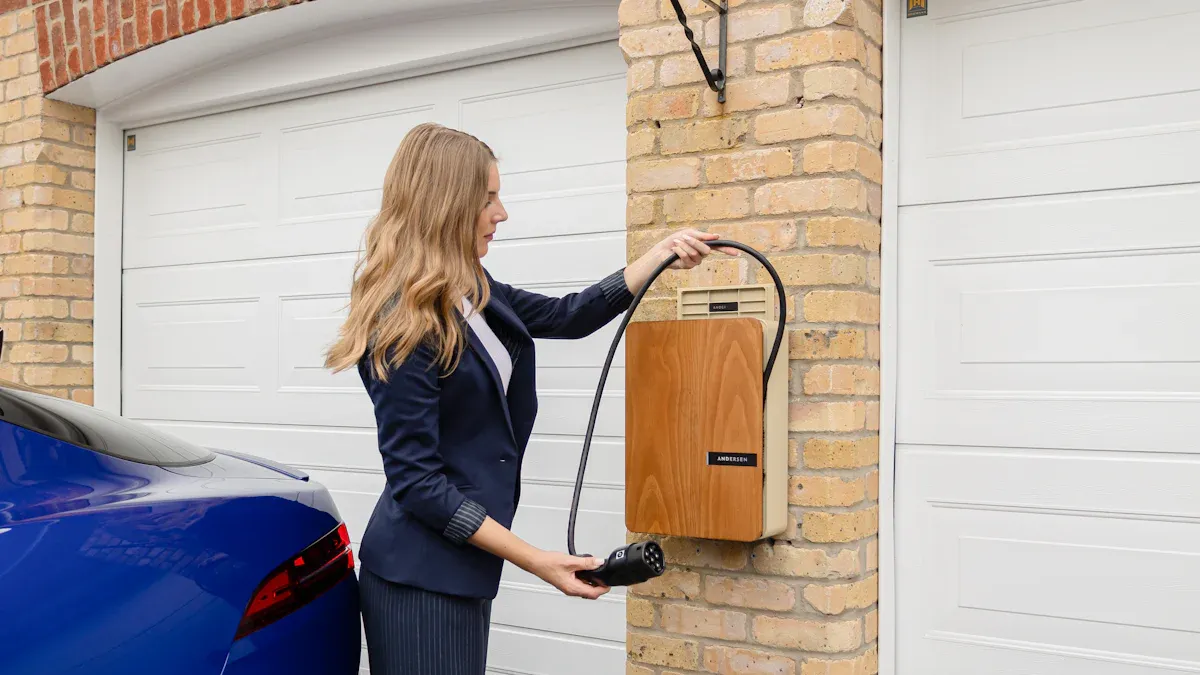
Selecionar o caminho certo EV charging box is crucial for a positive ownership experience. The ideal charger depends on a driver’s vehicle, home electrical system, and desired features. The final price to install the unit is directly influenced by the hardware chosen.
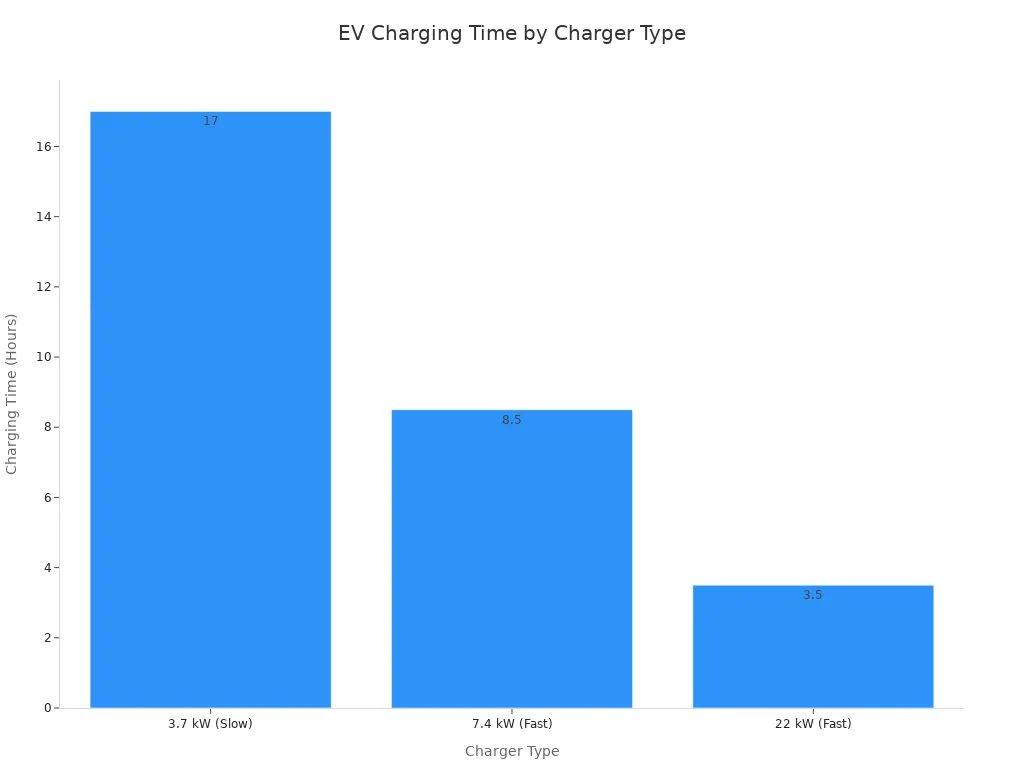
Understanding Power Levels: 3.7 kW, 7.4 kW, and 22 kW
A charger’s power level, measured in kilowatts (kW), determines how quickly it can charge a vehicle. Higher power means faster charging.
3.7 kW Chargers: Ideal for PHEVs
A 3.7 kW charger is the slowest option, best suited for plug-in hybrid electric vehicles (PHEVs) with smaller batteries. It is also a viable choice for battery electric vehicle (BEV) owners who drive short distances daily and can leave their car charging overnight.
7.4 kW Chargers: The Standard for Most EVs
The 7.4 kW charger is the most popular choice for charging at home in Spain. This home EV charger provides a perfect balance of charging speed and cost for most BEVs, fully charging a typical battery in around 8-9 hours. It operates on a standard single-phase electrical supply found in most residences.
22 kW Chargers: For Three-Phase Connections
A 22 kW charger offers the fastest AC charging available but requires a three-phase electrical connection. This type of connection is uncommon in Spanish homes but may be available in newer properties or commercial buildings. This powerful charger is overkill for most residential needs.
“Dumb” vs. “Smart” EV Charging Box Features
Modern chargers offer more than just power. The choice between a basic and a smart charger impacts both convenience and long-term cost.
Key Benefits of Smart Charging
Smart chargers, like those from technology-focused providers such as TPSON, connect to the internet. This connectivity unlocks features for optimizing charging your ev from home. Users gain control over energy use, which can lead to significant savings on electricity bills.
Dynamic Power Control (Power Modulation)
Dynamic power control is a key feature for charging an electric vehicle safely. It prevents electrical overloads in the home. The system works by:
- Monitoring the total electrical demand across all circuits in real-time.
- Calculating the available capacity after accounting for other running appliances.
- Automatically adjusting the EV charger’s power output to stay within safe limits.
This technology ensures that running the dishwasher and the electric vehicle charging point simultaneously will not trip the main breaker.
App Connectivity and Charge Scheduling
Smart chargers come with smartphone apps. These apps allow users to start, stop, and monitor charging sessions remotely. A primary benefit is scheduling, which lets owners set their charger to operate only during off-peak electricity periods, minimizing charging costs.
Carregadores com fio vs. Carregadores sem fio
The final choice is between a charger with a permanently attached cable (tethered) or just a socket (untethered).
A conveniência de um cabo com fio
A tethered charger offers maximum convenience. The cable is always ready, so a driver simply parks and plugs in. There is no need to retrieve a cable from the car’s trunk for every charging session.
The Flexibility of an Untethered Socket
An untethered charger provides a universal socket. This offers greater flexibility, allowing a user to connect different cable types or lengths. It also provides a cleaner look on the wall when not in use.
How to Reduce Your Installation Cost with the MOVES III Plan
The Spanish government offers significant financial incentives to encourage the adoption of electric vehicles. The Plan MOVES III provides substantial grants that dramatically reduce the final cost to install a home charging station. Understanding how to leverage these grants is key to making your EV charger installation more affordable.
What is the Plan MOVES III Subsidy?
The Plan MOVES III is a government program designed to subsidize the purchase of electric vehicles and the installation of charging infrastructure. These electric vehicle charger grants cover a large portion of the total project cost, including the charger hardware, labor, and certification.
Subsidy Percentages Explained (70-80%)
The program offers generous grants for individuals. The standard subsidy covers 70% of the eligible costs before VAT. This percentage increases to 80% for installations in municipalities with a population of fewer than 5,000 inhabitants. These grants make home charging accessible to a wider range of people.
Eligibility Requirements for Applicants
To qualify for the grants, applicants must meet specific criteria. The program is open to a broad audience, ensuring many can benefit.
- Eligible Parties: Natural persons, the self-employed, and homeowner associations can apply.
- Installation Date: The charger installation must be invoiced after April 10th to be eligible.
- Subsidy Cap: The grants are capped at €5,000 per file for individuals.
How the Subsidy Lowers Your Final Cost
The MOVES III grants directly reduce the homeowner’s out-of-pocket expense. The subsidy applies to the pre-tax cost of the charger and its installation, making the final price much lower than the initial quote.
A Practical Cost Reduction Example
A homeowner receives a quote for a complete installation. The total cost is €1,200 before VAT. The 70% subsidy significantly lowers this expense.
| Item | Custo |
|---|---|
| Total Installation Cost (pre-VAT) | €1,200 |
| Plan MOVES III Grant (70%) | – €840 |
| Final Net Cost for Homeowner | €360 |
This example shows how the grants can make a high-quality charger from a provider like TPSON extremely affordable.
The 80% Subsidy for Small Municipalities
The enhanced 80% subsidy provides an even greater cost reduction. For the same €1,200 installation, the grant would be €960. This leaves the homeowner with a final cost of just €240, a powerful incentive for rural residents.
The Application Process and Key Details
Navigating the application for these grants can seem complex. However, most certified installation companies manage the process on behalf of their clients.
How to Apply for the Grant
The easiest way to apply is through your installer. A professional company will gather the necessary documents, fill out the forms, and submit the application to the correct regional authority. This service ensures the paperwork is correct and maximizes the chance of approval for the grants.
Tax Implications (IRPF)
Nota importante: The MOVES III grants are considered a capital gain. Recipients must declare the amount received on their annual income tax return (income tax declaration or IRPF). The final tax impact depends on the individual’s total income.
Typical Rebate Timeline
Patience is essential when waiting for the grants. While the subsidy significantly lowers the net cost, the reimbursement process is slow. Homeowners should expect to wait anywhere from 12 to 24 months after the application is approved to receive the funds.
Finding and Hiring a Certified Installer
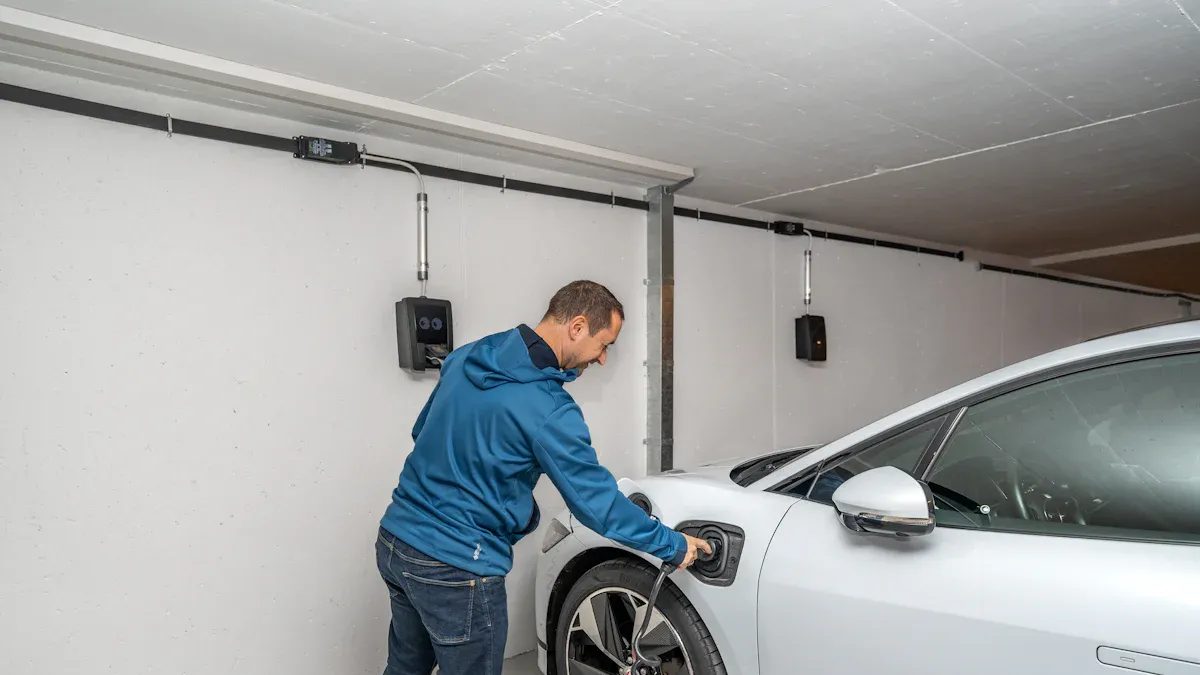
Selecting the right professional is as important as choosing the right charger. A certified installer ensures the entire process is safe, compliant, and efficient, from the initial quote to the final certification.
Why You Must Hire a Certified Electrician
Hiring an unauthorized person for installing an EV charger is a significant risk. Spanish law requires a certified professional for this type of electrical work for critical safety and legal reasons.
Compliance with Spanish Regulations (REBT)
Every electrical installation in Spain must adhere to the Low Voltage Electrotechnical Regulation (REBT). Only an authorized electrician can legally install a charger and issue the mandatory Electrical Certificate. This compliance guarantees the installation meets national safety standards.
Ensuring Safety and Insurance Coverage
An EV charger places a high, sustained load on a home’s electrical system. A professional installation prevents risks like overheating and electrical fires. Furthermore, home insurance providers will demand the official Boletín to process any claim related to the charger. A non-compliant installation could void insurance coverage.
How to Get Accurate Installation Quotes
To budget effectively, homeowners should request detailed quotes from several certified installers. Providing clear information upfront helps professionals deliver a more precise estimate.
Information to Provide for a Quote
Installers can often provide an accurate online quote if they receive the right details. Homeowners should prepare the following information to streamline the process:
- Photos of the main electrical panel (consumer unit).
- A clear photo of the desired location for the new charger.
- A description or video showing the proposed cable route from the panel to the charger location.
- The property address and details about the vehicle to be charged.
Comparing Different Installer Proposals
When comparing quotes, homeowners should look beyond the final price. A good proposal will itemize costs for the charger, labor, and materials. It is wise to compare the brand and model of the proposed charger, such as a technologically advanced charger from a provider like TPSON, and verify that the Boletín is included.
Key Questions to Ask a Potential Installer
Before making a final decision, a homeowner should ask a few key questions. The answers will reveal the installer’s experience and level of service.
Experience with EV Charger Installations
Ask directly: “How many EV charger installations have you completed?”
Installing a wallbox is a specialized task. An installer with extensive experience will understand the nuances of different vehicles, charger models, and the complexities of installing a wallbox in various property types.
Assistance with the MOVES III Application
A key service to look for is help with government subsidies. Homeowners should ask if the company manages the Plan MOVES III application process on their behalf. This service saves considerable time and administrative effort.
Warranty and Post-Installation Support
Finally, a homeowner should clarify the warranty terms. It is important to understand the warranty on both the charger hardware and the installation workmanship itself. Reliable post-installation support provides peace of mind for the future.
The upfront cost to install an EV charging box in Spain is €800 to €2,000. This initial cost for a home charger is significant. The Plan MOVES III subsidy, however, dramatically lowers the final cost. The net cost for a new charger can be as low as €240, reducing the overall charging cost. Homeowners should get multiple quotes to compare installation costs. A certified professional can install the charger and manage the subsidy, making the charging process and the charger cost affordable. A quality charger is a wise investment.
FAQ
Um proprietário pode instalar ele próprio um carregador de veículos eléctricos?
No, Spanish law requires a certified electrician to instalar um carregador de veículos eléctricos. This ensures the installation complies with the REBT safety regulations and is eligible for the mandatory Boletín Elétrico. Professional installation is crucial for safety and insurance purposes.
Quanto tempo demora uma instalação típica?
A standard installation in a single-family home usually takes 3 to 5 hours. More complex projects, such as those in community garages with long cable runs, can take a full day or longer to complete.
How much does it cost to charge your electric car at home?
The cost of charging at home depends on your electricity tariff. Charging during off-peak hours is cheapest. The question of how much does it cost to charge your electric car is best answered by checking your utility bill for specific rates.
Do I need permission for a community garage installation?
A homeowner must notify their community administration before work begins. While the community cannot veto the installation, they must be informed. This ensures the work complies with building regulations and shared space protocols. The overall cost may increase due to this complexity.
Qual é a principal vantagem de um carregador inteligente?
Carregadores inteligentes, like those from TPSON, offer dynamic power management. This feature automatically adjusts charging speed to prevent overloading your home’s electrical system. It also allows for remote scheduling to reduce the energy cost.
Is the Plan MOVES III subsidy taxable?
Yes, the grant received from the Plan MOVES III is considered a capital gain. Recipients must declare the amount on their annual Spanish income tax return (IRPF). The final tax impact depends on the individual’s income bracket.
What happens if my electrical panel is old?
An old electrical panel may lack space or capacity for a new charger circuit. An electrician might need to upgrade the panel to support the additional load. This upgrade is a potential extra cost for the installation.