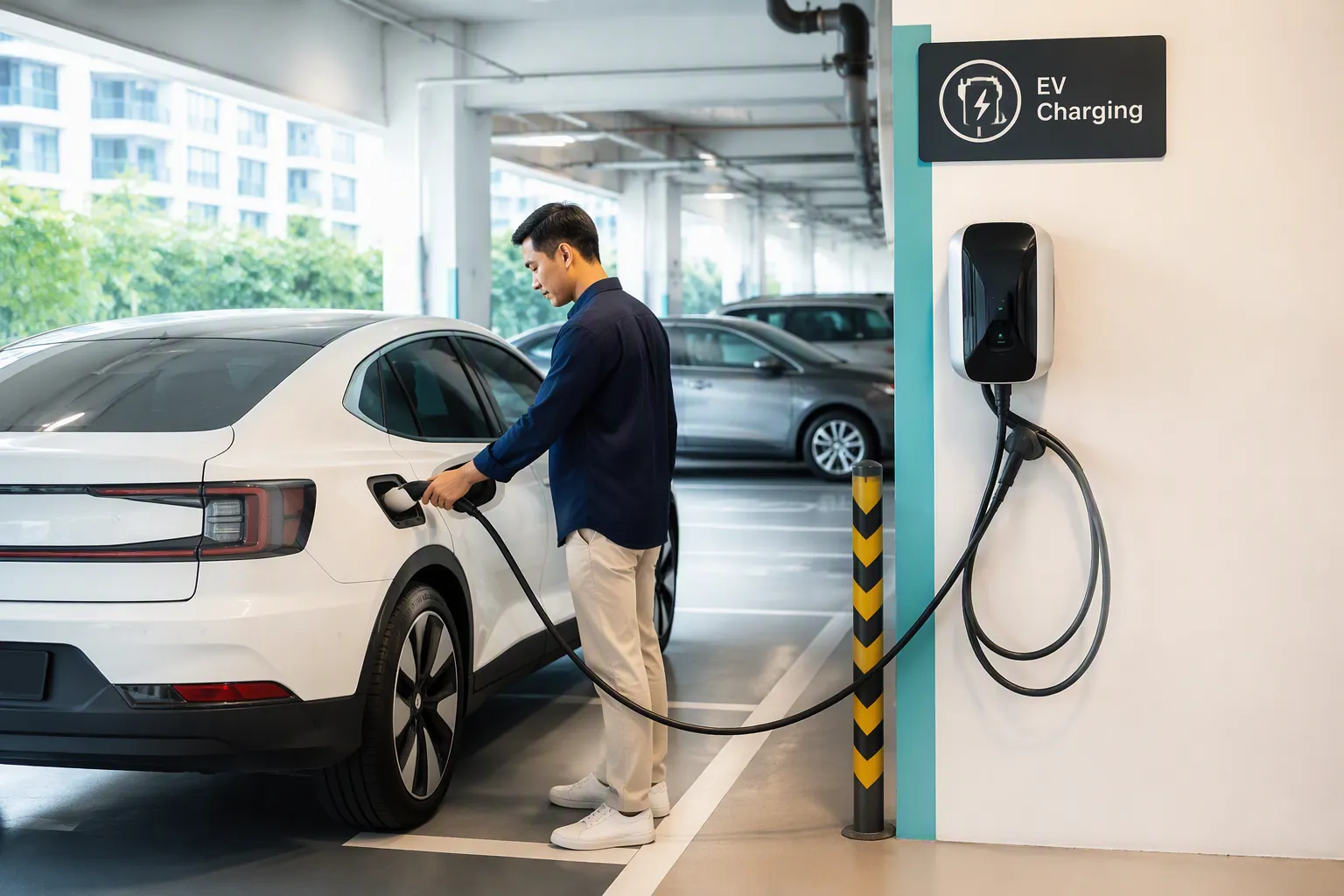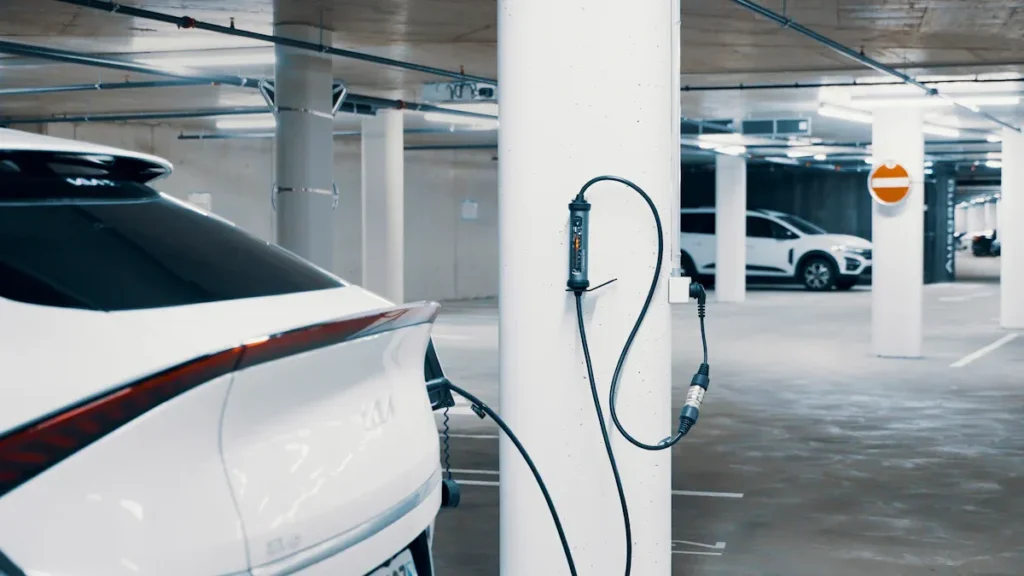

When you consider charging your electric vehicle, you encounter a variety of EV car chargers. Most electric vehicles can use common charging standards, especially for Level 2 electric car chargers. In the United States, you find that less than 1% of public car chargers are Level 1, while nearly 80% are Level 2. Universal means a charger works with all models, but not every Carregador de veículos eléctricos fits every situation. Fabricantes de carregadores para veículos eléctricos continue to improve compatibility, yet you may still need to check your options before selecting a charger.
What Does “Universal” Mean for EV Car Chargers?
Defining Universal Electric Car Chargers
Plug and Charger Compatibility
When you look for universal electric car chargers, you focus on plug and charger compatibility. You want a charger that works with every electric vehicle, regardless of brand or model. The automotive industry uses several criteria to define universality. You can see these criteria in the table below:
Critérios | Descrição |
|---|---|
Compatibilidade | A universal EV charging station must be compatible with all-electric vehicles. |
Normas de tarifação | It should operate using standard hardware and software components, such as the J1772 plug. |
Interoperabilidade | The station must ensure interoperability among different EV models for a seamless experience. |
You often find openly accessible charging stations with various connectors and adapters. Hardware-agnostic software helps you charge consistently across different models. Many manufacturers now adopt the North America Charging Standard (NACS), which improves compatibility for EV chargers.
Charging Speed and Power Levels
Universal electric car chargers must support a range of charging speeds and power levels. You encounter Level 1, Level 2, and DC fast charging stations. Each level offers different charging speeds, which affect how quickly you can recharge your electric vehicle. You need to check if your car supports the power output of the charger. Some chargers work with all models for slow and moderate charging, but fast charging compatibility varies by region and vehicle. If you drive in North America, you see Type 1 (SAE J1772) connectors for most public car chargers. In Europe, Type 2 (Mennekes) connectors dominate. DC fast charging uses CCS connectors in both regions, but Tesla vehicles use a proprietary network. You must verify your vehicle’s compatibility before using a fast charger.
Why Universal Chargers Matter
Conveniência e Acessibilidade
Universal chargers make your charging experience simple and convenient. You do not need to search for a specific connector or worry about compatibility issues. You can charge your electric vehicle at home, at work, or at public charging stations. Private onsite EV charging eliminates range anxiety, especially in rural areas. You avoid long queues at public chargepoints, which makes daily transport practical. Universal electric car chargers also help you in urban areas, where public charging facilities may be limited. You benefit from hardware-agnostic software and adapters that allow you to use different chargers without hassle.
Sugestão: Always check your vehicle’s plug type and charging compatibility before you travel. This step saves you time and prevents charging delays.
Cost and Upgrades
Universal electric car chargers offer financial benefits. Charging an EV costs about half the price of fueling a conventional car. You spend less on maintenance because electric vehicles have fewer moving parts. If you install an EV charger at home, you can increase your property value. Businesses attract environmentally conscious customers by offering EV charging services, which increases foot traffic and sales. Charging at off-peak hours makes EVs more affordable than petrol vehicles. When you invest in universal chargers, you avoid costly upgrades and reduce the need for multiple charging stations. You also help promote wider adoption of electric vehicles by making charging more practical and accessible.
If you face a lack of universal chargers, you encounter compatibility issues that affect convenience. Incompatible connectors can lead to longer charging times or prevent you from charging your vehicle. Careful planning is necessary when investing in charging infrastructure. Addressing compatibility challenges is essential for enhancing the practicality of EV ownership.
Types of EV Chargers and Charging Levels
When you explore the types of EV charger options, you encounter three main categories: Level 1, Level 2, and DC fast charging. Each type offers different speeds, connectors, and use cases. Understanding these differences helps you choose the right solution for your needs.
Level 1 EV Chargers
Standard Home Outlets
You can use Level 1 EV chargers with a standard 120V household outlet. This option requires no special installation. Most electric vehicles include a Level 1 charger as standard equipment. You simply plug it into your wall outlet at home.
Velocidade de carregamento e casos de utilização
Level 1 charging works best for overnight charging or for drivers with short daily commutes. The charging process is slow, but it remains reliable for many users.
Charging time can take up to 40 hours if your battery is empty.
Most vehicles need 11 to 20 hours to reach a full charge, depending on battery size.
Nota: Level 1 chargers add about 5 miles of range per hour. This speed suits plug-in hybrids or drivers who travel short distances.
Level 2 EV Chargers
Home and Public Stations
Level 2 EV chargers use a 240V power source. You find these chargers at home, workplaces, and most public charging stations. In the United States, about 78–80% of public charging stations offer Level 2 charging. This makes Level 2 the most common public charging option.
Installation and Compatibility
You may need a dedicated circuit and professional installation for a Level 2 charger at home. These chargers work with most electric vehicles using the J1772 connector in North America or the Type 2 connector in Europe. Level 2 charging provides a significant speed boost compared to Level 1.
Tipo de carregador | Tipo de corrente | Tensão | Average Miles Per Hour Charged | |
|---|---|---|---|---|
Nível 1 | AC | 120V | 11-20 hours | 5 |
Nível 2 | AC | 240V | 3-8 hours | 12-80 |
DC rápido | DC | 480V | 30-60 minutos | 75-1200 |
DC Fast EV Chargers
Rapid Charging for Long Trips
DC fast charging uses direct current at 480V or higher. You find these chargers at highway rest stops and urban charging hubs. They provide rapid charging connectors that deliver a large amount of power quickly. This makes them ideal for long trips or when you need to recharge in a short time.
básico. popular models support DC fast charging, including the Audi e-tron, BMW i3, Chevrolet Bolt, Hyundai Kona EV, Jaguar I-PACE, Nissan LEAF, and Tesla vehicles.
Some models, such as the Fiat 500e and Smart EQ ForTwo, do not support DC fast charging.
Limitations and Vehicle Support
Not every electric vehicle supports DC fast charging. You must check your vehicle’s compatibility before using these chargers. Fast charging can add 75 to 1,200 miles of range per hour, but actual speed depends on your vehicle and charger. DC fast chargers now hold a global market share of over 74%, showing their growing importance for rapid charging needs.
Sugestão: Always confirm your vehicle’s support for DC fast charging before planning long-distance travel.
Common Plug Types for Electric Car Chargers
Type 1 (J1772) EV Chargers
North American Standard
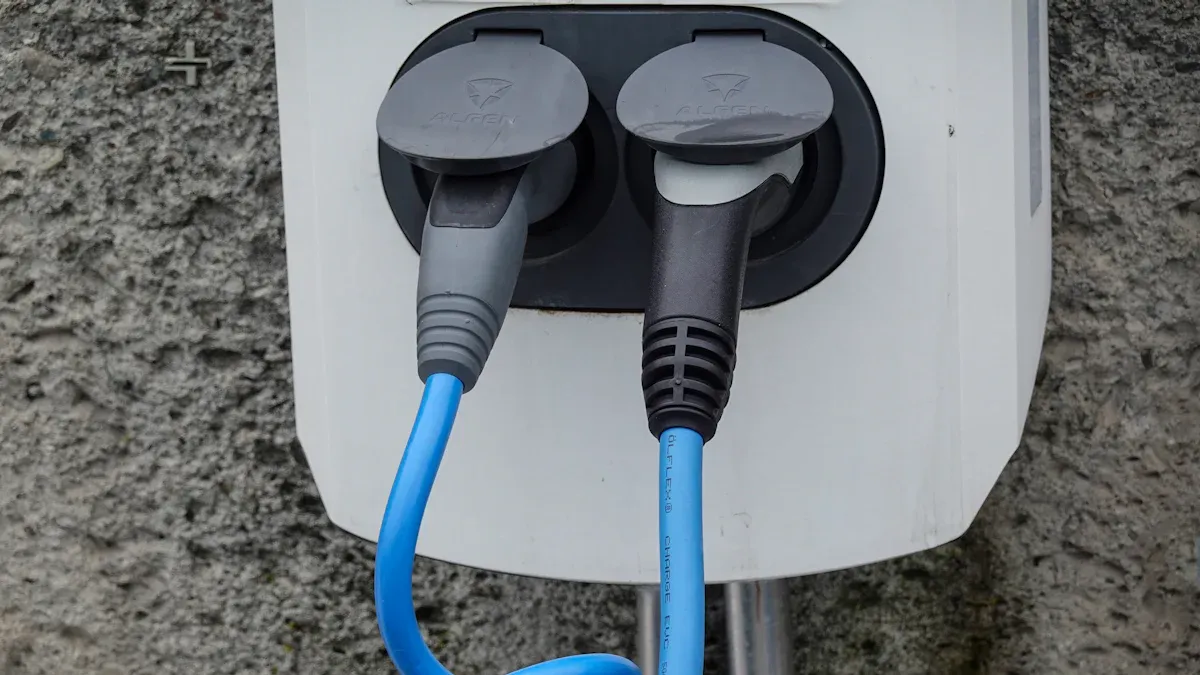
You encounter the Type 1 (J1772) port as the standard for electric car chargers in North America. This port supports Level 1 and Level 2 AC charging. Most public and home chargers use this port, making it easy for you to find compatible charging stations. The J1772 port offers a reliable connection and simple operation. You plug the charger into your vehicle’s port, and charging begins automatically.
Região | Tipo de conetor | Descrição |
|---|---|---|
América do Norte | SAE J1772 (Tipo 1) | Common for Level 1 and Level 2 charging, supports AC charging. |
América do Norte | NACS | Tesla’s proprietary plug, supports AC and DC charging. |
América do Norte | CCS (Type 1) | Combines AC and DC charging, used for fast charging. |
América do Norte | CHAdeMO | Used by Japanese brands, supports DC fast charging. |
Europa | Tipo 2 | Standard for AC charging, widely used across Europe. |
Europa | CCS (Type 2) | Common for DC fast charging in Europe. |
Asia | CHAdeMO | Used mainly in Japan for DC fast charging. |
Compatible Vehicles
You find the J1772 port on many popular electric vehicles in North America. These models include:
Chevrolet Bolt
Nissan Leaf
Hyundai Kona Electric
Volkswagen ID.4
Toyota Prius Prime
Chevrolet Volt
You can use most public and home chargers with these vehicles. The J1772 port ensures broad compatibility, so you rarely face issues when charging.
Tip: Always check your vehicle’s port before purchasing a charger for home installation.
Type 2 (Mennekes) EV Chargers
European Standard
You see the Type 2 (Mennekes) port as the standard for electric car chargers in Europe. The European Union established this port as the official standard in 2013. By 2025, all new electric vehicles in the EU must support the Type 2 port. This move helps you access a unified charging infrastructure across Europe.
Compatible Vehicles
Type 2 ports account for about 90% of AC charging stations in Europe. Major charging networks prefer this port because of its durability and cost-effectiveness. You benefit from a reliable system, with a 98% reliability rate for Type 2 chargers. Most European electric vehicles use this port, so you can charge at nearly any public station.
Type 2 ports offer high compatibility for European brands.
You find this port on vehicles from BMW, Mercedes-Benz, Renault, and Volkswagen.
Note: The Type 2 port supports both single-phase and three-phase charging, which increases charging speed and flexibility.
CCS Universal Chargers
Fast Charging Support
You encounter the Combined Charging System (CCS) port as a universal solution for fast charging. CCS combines AC and DC charging in one port, making it versatile for different charging needs. Major manufacturers such as Hyundai, Volkswagen, Audi, Ford, and General Motors use CCS ports on their electric vehicles. You find CCS ports at most public fast charging stations in Europe and the U.S.
CCS ports allow you to use both regular and fast chargers.
You can charge quickly during long trips or daily commutes.
Diferenças regionais
You notice regional differences in CCS port adoption. In Europe, CCS Type 2 ports are mandated by law for all new fast chargers. Automakers like Nissan and Toyota have adopted CCS ports for their latest models. In the U.S., you see a shift toward Tesla’s NACS port, but CCS remains a primary standard. Networks such as Electrify America and ChargePoint now offer both CCS and NACS cables, so you have more options.
CCS ports have won widespread adoption in Europe.
Ongoing initiatives aim to improve interoperability among different ev charging ports.
Tip: When planning a trip, check which port your vehicle uses and confirm charger compatibility at your destination.
CHAdeMO EV Chargers
Japanese Standard
You encounter CHAdeMO as a key standard for DC fast charging, especially in Japan. The name stands for “CHArge de MOve,” which means “charge for moving.” This standard emerged from a collaboration between Japanese automakers and utility companies. CHAdeMO supports high-power charging, often up to 62.5 kW, and some new versions reach even higher rates. You find CHAdeMO connectors at many public charging stations in Japan, and they remain common in parts of North America and Europe.
A CHAdeMO charger uses a unique plug design. This design differs from the CCS and Type 2 connectors you see in other regions. The CHAdeMO protocol allows for two-way charging, which means you can use your vehicle to supply power back to the grid or your home. This feature, called vehicle-to-grid (V2G), sets CHAdeMO apart from other fast-charging standards.
Note: If you drive in Japan or own a Japanese electric vehicle, you likely use CHAdeMO for fast charging.
Modelos suportados
You see CHAdeMO ports on several popular electric vehicles. Japanese brands lead the way, but some international models also support this standard. Here are some vehicles that use CHAdeMO:
Nissan Leaf
Mitsubishi Outlander PHEV
Kia Soul EV (older models)
Toyota Prius Plug-in Hybrid (in some markets)
You may notice that newer models from global automakers now favor CCS for fast charging. However, CHAdeMO remains important for legacy vehicles and regions with established CHAdeMO infrastructure. If you own a compatible vehicle, you can access a wide network of CHAdeMO chargers, especially in Japan and select U.S. states.
Tesla Electric Car Chargers
Proprietary Plug
Tesla developed its own proprietary plug for both AC and DC charging. This plug, known as the North American Charging Standard (NACS), offers a compact design and supports high charging speeds. You find Tesla Supercharger stations across North America, Europe, and Asia. These stations use the Tesla plug, which differs from the J1772, CCS, and CHAdeMO connectors.
Tesla’s proprietary system gives you access to a dedicated network of fast chargers. This network provides reliable, high-speed charging for Tesla vehicles. You benefit from seamless integration between your car and the charging infrastructure. The Tesla plug also supports both home and public charging, making it versatile for daily use.
Tip: Always check if your destination offers Tesla Superchargers or compatible adapters before a long trip.
Adapter Options
Tesla recognizes the need for flexibility. You can use several adapters to connect your Tesla to other charging networks. These adapters help you charge at non-Tesla stations, expanding your options when traveling.
J1772 Adapter: Connects your Tesla to Level 2 charging stations that use the J1772 standard.
CHAdeMO Adapter: Allows you to charge at CHAdeMO stations, which are popular in Japan and the U.S.
CCS Combo 1 Adapter: Enables charging at CCS1 stations in North America.
CCS Combo 2 Adapter: Connects to CCS2 stations in Europe, especially for older Tesla models.
You gain more freedom with these adapters. They let you use a variety of electric car chargers, so you do not depend solely on the Tesla network. This flexibility proves valuable in areas where Tesla Superchargers are less common or when you need to use public chargers from other providers.
Note: Always carry the right adapter for your region and vehicle model. This step ensures you can access the widest range of chargers during your travels.
EV Charger Compatibility Across Brands and Models
Level 1 and Level 2 EV Charger Compatibility
Most EVs and Public Stations
You find that most electric vehicles can use Level 1 and Level 2 charging points at home and in public. The J1772 connector dominates in North America and Japan, while the Mennekes (Type 2) connector is standard in Europe. These universal electric car chargers allow you to charge your vehicle at thousands of charging stations. Most non-Tesla EVs use the J1772 connector, so you rarely face compatibility issues at public charging points in the United States and Canada.
You benefit from this broad compatibility in daily life. You can plug in at home, at work, or at public car chargers without much hassle. Charging speeds and efficiency differ between Level 1 and Level 2, but you can expect reliable charging for most brands and models.
Exceptions and Adapters
Despite the push for universal standards, you still encounter compatibility issues with some brands and regions. Different manufacturers use various charging connectors, which can create confusion and limit your access to certain charging points. For example:
Tesla vehicles use the Tesla NACS connector in North America, but you can use a J1772 adapter to access most public Level 2 chargers.
The Chevrolet Volt supports both CCS and J1772, but you cannot use Tesla Superchargers or CHAdeMO fast chargers.
In China, the GB/T connector is common, so you need a specific adapter to use European or North American charging stations.
Adapters help bridge these gaps. They enhance accessibility and versatility in the charging infrastructure. You can use adapters to connect CCS to CHAdeMO, Type 2 to GB/T, or even AC to DC charging points. These adapters undergo rigorous testing for safety and signal integrity. They include built-in protections against overcurrent and overvoltage, and their compact design makes them easy to carry.
Caraterística | Descrição |
|---|---|
Compatibilidade | Supports conversions like CCS to CHAdeMO, Type 2 to GB/T, and AC to DC. |
Caraterísticas de segurança | Built-in protections against overcurrent and overvoltage. |
Conceção | Compact, lightweight with durable plugs and cables (PVC or TPE jackets). |
Ensaios | Undergoes rigorous testing for signal integrity and power transmission. |
Adapters address the lack of standardized charging systems. They allow you to use a wider range of charging stations and reduce range anxiety. This increased compatibility encourages more people to adopt electric vehicles and makes universal electric car chargers more practical.
DC Fast Charger Compatibility
CCS vs. CHAdeMO vs. Tesla
When you use dc fast charging, you encounter three main systems: CCS, CHAdeMO, and Tesla Supercharger. Each system has unique features and compatibility requirements.
Charging System | Potência Máxima | Caraterísticas principais |
|---|---|---|
350 kW | High-speed DC charging, popular in Europe and North America, reduces charging time significantly. | |
CHAdeMO | 62.5 kW (up to 400 kW in future) | Widely used in Japan, supports various battery technologies, bi-directional charging capabilities. |
Supercharger da Tesla | 250 kW | Proprietary to Tesla, extensive global network, rapid charging for long-distance travel. |
You see CCS as the most universal system for dc fast charging in Europe and North America. Most new electric vehicles from major automakers support CCS, which allows you to use a wide network of fast charging points. CHAdeMO remains important in Japan and for some legacy models, offering bi-directional charging and compatibility with various battery technologies. Tesla Superchargers provide rapid charging for Tesla vehicles, but you need an adapter to use these charging stations with non-Tesla models.
Regional and Model Differences
Regional differences play a major role in fast charging compatibility. In North America, CCS1 and Tesla NACS dominate, while CHAdeMO is still available for Japanese brands. Europe uses CCS2 and Type 2 connectors for most universal electric car chargers. In China, the GB/T standard is common, so you need a compatible adapter to use foreign charging points.
You must check your vehicle’s charging port and supported standards before planning long trips. Some models, like the Nissan Leaf, use CHAdeMO, while others, like the Volkswagen ID.4, use CCS. Tesla vehicles can access both Tesla Superchargers and, with the right adapter, many CCS charging stations. These differences highlight the importance of understanding your vehicle’s compatibility with various fast charging points.
Home vs. Public EV Chargers
Considerações sobre a instalação
When you install a home charger, you must consider your vehicle’s plug type and the available power supply. Most Level 2 home chargers use the J1772 or Type 2 connector, which covers the majority of electric vehicles. You may need a dedicated circuit and professional installation to ensure safety and optimal charging speed. Universal chargers offer flexibility, allowing you to upgrade your vehicle without replacing your home charging equipment.
If you own a Tesla, you can install a Tesla Wall Connector or use an adapter to connect to a J1772 charger. Some regions require specific permits or inspections for home charger installation, so always check local regulations.
Access to Public Networks
Public charging stations provide a wide range of pontos de carregamento, but you may encounter compatibility issues depending on your vehicle and region. Most public networks support universal standards like J1772, Type 2, or CCS, but some locations only offer proprietary connectors. You can use adapters to access more charging stations, but always verify compatibility before you travel.
You benefit from apps and online tools that help you locate compatible charging points. These resources show real-time availability and connector types, making it easier to plan your route. Universal electric car chargers and adapters expand your options, reduce range anxiety, and make electric vehicle ownership more convenient.
Tip: Always carry the appropriate adapter for your vehicle and region. This simple step ensures you can access the widest range of charging stations and avoid unexpected compatibility issues.
Regional Differences in Universal Electric Car Chargers
North America EV Chargers
J1772 and CCS Dominance
You encounter a fragmented landscape in North America. Most public and home chargers use the J1772 connector for Level 1 and Level 2 AC charging. CCS1 has become the leading standard for DC fast charging, supported by many automakers. Regional regulations do not mandate a single standard, so you see a mix of charging options. This variety gives you flexibility but can create confusion when you travel across states or provinces.
Região | DC Power | AC Power | Notas | |
|---|---|---|---|---|
América do Norte | J1772, CCS1 | Varia | Varia | Fragmented landscape |
Europa | CCS2 | 350 kW | 22 kW | Mandated standard |
Asia | CHAdeMO2, GB/T | 400 kW, 250 kW | 19.2 kW, 22 kW | Transitioning to ChaoJi |
You benefit from broad compatibility with most new electric vehicles. However, you must check your vehicle’s plug type before using a public charger. Some older models or imported vehicles may require adapters.
Rede de Superchargers da Tesla
Tesla operates its own Supercharger network throughout North America. You gain access to high-speed charging if you drive a Tesla. The proprietary NACS plug supports both AC and DC charging. Tesla has started opening its network to non-Tesla vehicles, but you need a compatible adapter. You find Superchargers along major highways and in urban centers, making long-distance travel easier.
Sugestão: Always carry the correct adapter if you plan to use both Tesla and non-Tesla charging stations.
Europe EV Chargers
Type 2 and CCS Prevalence
You see a unified approach in Europe. The European Union mandates CCS2 as the standard for DC fast charging. Type 2 connectors dominate AC charging infrastructure. This regulation ensures you find compatible chargers almost everywhere.
By the end of 2024, the European Union expects over 882 000 pontos de carregamento públicos.
84% of these chargers will be AC, while 16% will be DC.
Type 2 and CCS connectors will account for 90% of the market.
You experience fewer compatibility issues in Europe. Most public stations support both Type 2 and CCS, so you can charge your vehicle without searching for special adapters.
Adaptadores e compatibilidade cruzada
You may still encounter older charging stations with different connectors. Adapters help you bridge these gaps. Most European EVs come with built-in support for Type 2 and CCS, but you should verify compatibility before traveling across borders. Charging networks in Europe focus on interoperability, so you enjoy a seamless experience.
Nota: Always check local charging maps for connector types before planning a trip across countries.
Asia EV Chargers
CHAdeMO and Regional Variations
Asia presents a diverse charging environment. Japan relies on CHAdeMO, developed by local automakers. China uses the GB/T standard, which supports both AC and DC charging. South Korea has started adopting CCS, competing with CHAdeMO in some markets.
CHAdeMO remains dominant in Japan, with widespread adoption.
GB/T serves as China’s national standard, crucial for the country’s EV ecosystem.
CCS gains traction in South Korea and other regions.
You must pay attention to local standards when traveling in Asia. Some regions offer multi-standard charging stations, but you may need an adapter for cross-border trips.
Emerging Standards
Asia continues to innovate. The region is transitioning to the ChaoJi standard, which aims to unify fast charging across countries. ChaoJi supports higher power levels and improved safety features. You will see more ChaoJi-compatible chargers in the coming years, making it easier to charge different EV models.
Sugestão: If you plan to drive an EV in Asia, research the local charging standards and carry the necessary adapters for your vehicle.
Practical Steps for EV Owners Using EV Car Chargers
How to Check Your EV Charger Compatibility
Manufacturer Resources
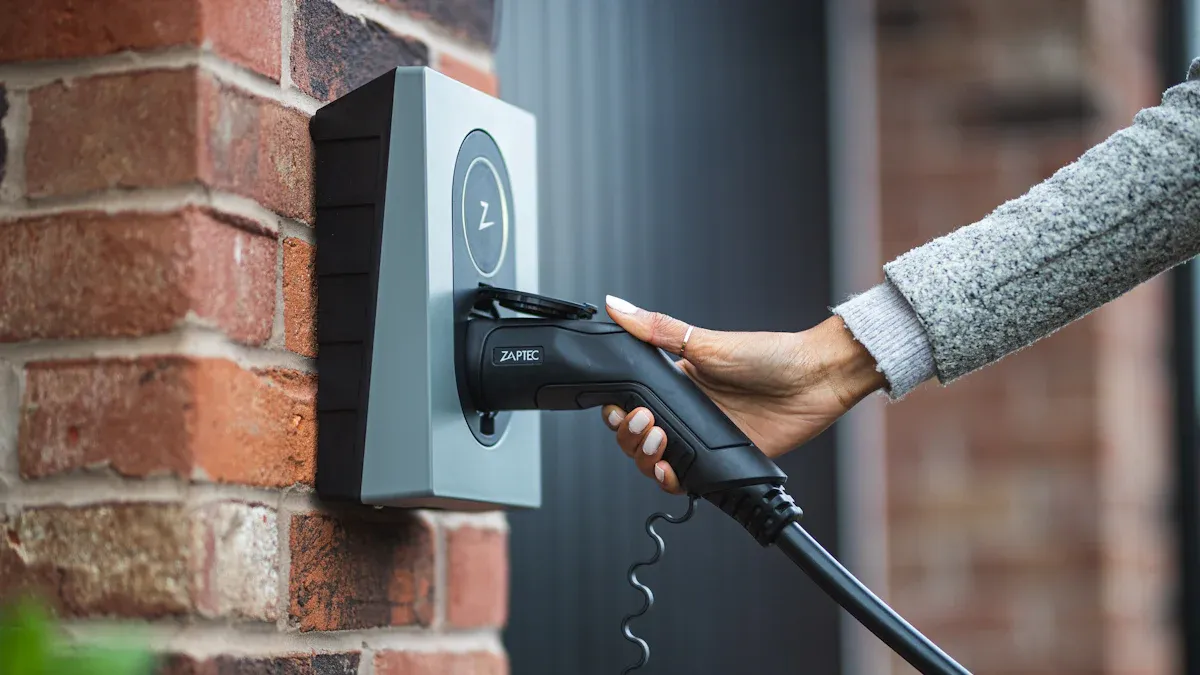
You should start by consulting your vehicle’s manufacturer resources. Most automakers provide detailed guides and compatibility charts for EV chargers. These resources help you confirm which charger types and connector standards match your electric vehicle. You can find this information in your owner’s manual, on the manufacturer’s website, or through customer support. Manufacturers often list recommended home chargers and public chargers for each model. This step ensures you avoid costly mistakes and maximize charging efficiency.
Online Tools and Apps
You can use online tools and mobile apps to verify charger compatibility. Many apps allow you to filter public charging stations by plug type, charging speed, and location. You can check real-time availability and operational status before you arrive. Popular platforms like PlugShare, ChargePoint, and Google Maps help you locate compatible public chargers and public charging points. These tools also display user ratings and station details, making your charging experience smoother.
Tip: Always double-check the connector type and power output listed in the app to match your vehicle’s requirements.
Steps to verify charger compatibility:
Consider the charger type and power output para as suas necessidades.
Check that the connector matches your vehicle’s inlet.
Explore smart charging features for added convenience.
Plan for future-proofing by choosing chargers that support upcoming EV technologies.
Choosing a Home Electric Car Charger
Plug Type and Power Level
You need to select a home charger that matches your vehicle’s plug type and supports the required power level. Most home chargers use either J1772 or Type 2 connectors, depending on your region. You should assess your daily driving habits to determine the ideal charging speed. If you drive long distances, a Level 2 charger offers faster charging compared to Level 1. You also want to consider smart features like Wi-Fi connectivity and scheduling, which can optimize your home EV charging routine.
Installation and Cost
You must evaluate your home’s electrical system before installing a charger. Check if your electrical panel can handle the charger’s amperage rating. Consider the distance from the panel to your parking spot and the cable length required. Decide between a wall-mounted charger for permanent installation or a portable charger for flexibility. Factor in the upfront cost, ongoing electricity expenses, and any available incentives for home EV charging.
Fator | Considerações |
|---|---|
Home compatibility | Electrical system supports charger amperage |
Local de carregamento | Distance, cable length, port location |
Montagem na parede vs portátil | Permanent vs flexible installation |
Advanced features | Wi-Fi, scheduling, smart controls |
Custos relacionados | Upfront, electricity, incentives |
Velocidade de carregamento | Based on daily driving needs |
Installation requirements | Electrical capacity, available space |
Note: Professional installation ensures safety and optimal performance for your home chargers.
Using Public EV Chargers
Encontrando Carregadores Compatíveis
Pode locate compatible public chargers using charging apps and navigation tools. These platforms let you filter stations by plug type, charging speed, and availability. You should check that the public charging station matches your vehicle’s connector and charging capabilities. Apps like PlugShare and ChargePoint provide real-time updates, helping you avoid busy or out-of-service stations. You can also search for ‘EV charging stations’ on Google Maps or Waze to find nearby options quickly.
Using Adapters and Apps
You may need adapters to access certain public chargers, especially when traveling across regions with different standards. Carrying the correct adapter ensures you can use a wider range of public charging points. Charging apps often list which stations require adapters and provide instructions for use. You can rely on these tools to plan your route and avoid compatibility issues.
Tip: Keep your charging apps updated and always bring the necessary adapters for your vehicle model.
Exceptions and Future Trends for Universal Chargers
Older EV Models and Compatibility
Limited Compatibility
You may own an older electric vehicle that does not support the latest universal electric car chargers. Many early models use unique connectors or lack support for fast charging. These vehicles often rely on Level 1 or Level 2 charging stations, which limits your options for rapid charging. You might find that some public charging stations do not offer the right plug or power level for your car. This situation can create challenges when you travel or need quick charging during busy days.
Upgrade Options
You can explore upgrade options to improve compatibility. Some manufacturers offer retrofit kits or adapter solutions that allow older electric vehicles to connect with newer universal charging stations. You may also consider upgrading your onboard charger to support higher power levels or fast charging standards. When you invest in these upgrades, you gain access to a wider network of charging stations and enjoy faster charging speeds. Always check with your vehicle’s manufacturer for approved solutions before making changes.
Note: Upgrading your charging system can extend the life and usability of your electric vehicle.
Proprietary EV Charging Networks
Tesla and Other Brands
You encounter proprietary charging networks from brands like Tesla. Tesla operates its own Supercharger network, which delivers fast charging speeds and broad coverage. Other automakers have developed exclusive networks for their electric vehicles, but these often use unique connectors and protocols. You benefit from reliable service and fast charging, but you may face limitations when trying to use universal electric car chargers outside these networks.
Acesso para Veículos Não-Tesla
Você pode acessar algumas estações de carregamento proprietárias com os adaptadores corretos. A Tesla começou a abrir sua rede Supercharger para veículos elétricos não-Tesla em regiões selecionadas. Você precisa de um adaptador compatível para conectar seu carro a essas estações de carregamento rápido. Outras marcas podem oferecer soluções semelhantes, mas você deve verificar a compatibilidade antes de planejar sua rota. O acesso ampliado a redes proprietárias aumenta a conveniência e apoia a transição para padrões universais de carregamento.
Dica: Levar o adaptador correto garante que você possa usar tanto estações de carregamento proprietárias quanto universais.
Futuro dos Carregadores Universais para Carros Elétricos
Esforços de normalização
Você observa esforços contínuos para padronizar conectores e protocolos para carregadores universais de carros elétricos. Organizações como SAE e IEC desenvolvem padrões de compatibilidade que promovem interoperabilidade entre diferentes veículos elétricos e estações de carregamento. Esses padrões ajudam você a carregar seu carro em qualquer estação pública, independentemente da marca ou modelo. A fragmentação do mercado ainda é um desafio, mas líderes do setor continuam a pressionar por padrões atualizados que acompanhem a tecnologia de carregamento rápido.
Tecnologias Emergentes
Verá que inovações empolgantes em carregadores universais para carros elétricos. Fabricantes agora introduzem conectores resfriados a líquido para carregamento ultrarrápido, conectores modulares para durabilidade e conectores inteligentes que se integram a sistemas de rede inteligente. Sistemas de carregamento automatizado estão surgindo, permitindo que você conecte seu veículo sem intervenção manual. Esses avanços simplificam o processo de carregamento e melhoram a experiência do usuário. À medida que a tecnologia evolui, você pode esperar mais soluções universais que suportam carregamento rápido e melhoram a compatibilidade entre todos os veículos elétricos.
Destaque: Mantenha-se informado sobre novas tecnologias e padrões de carregamento. Esse conhecimento ajuda você a tomar decisões inteligentes ao atualizar seu veículo ou escolher um carregador.
Você pode contar com carregadores de carro elétrico para a maioria das necessidades diárias, mas o carregamento rápido e os tipos de plugues ainda variam entre marcas. Sempre verifique a compatibilidade do seu veículo elétrico antes de comprar um carregador ou usar estações públicas. Adaptadores e aplicativos ajudam a preencher lacunas entre diferentes carregadores. À medida que o setor avança, os carregadores de carro elétrico se tornam mais universais, mas você ainda precisa planejar. Conheça o tipo de plugue do seu veículo elétrico e use os recursos do fabricante para simplificar o carregamento.
Dica: Planejar suas paradas de carregamento garante uma viagem tranquila.
FAQ
Você pode usar qualquer carregador de VE para seu veículo elétrico?
Você não pode usar todos os carregadores para todos os VEs. A maioria dos veículos suporta carregadores Nível 1 e Nível 2. A compatibilidade com carregamento rápido depende do tipo de plugue do seu carro e da região.
Como você sabe qual tipo de plugue seu VE usa?
Consulte o manual do proprietário ou o site do fabricante. Você também pode olhar a porta de carregamento do seu veículo. Aplicativos como PlugShare mostram os tipos de plugue compatíveis para a maioria dos modelos.
Você precisa de um adaptador para usar carregadores públicos de VE?
Você pode precisar de um adaptador se seu veículo usar um conector diferente do fornecido pela estação. Proprietários de Tesla frequentemente usam adaptadores para carregadores não-Tesla. Sempre carregue o adaptador correto para sua região.
É seguro instalar um carregador doméstico de VE sozinho?
A instalação profissional garante segurança e conformidade com os códigos locais. Você deve contratar um eletricista licenciado. A instalação inadequada pode causar riscos elétricos ou danificar seu veículo.
Qual é a diferença entre carregamento Nível 1, Nível 2 e DC rápido?
Nível | Tensão | Velocidade de carregamento | Caso de utilização |
|---|---|---|---|
1 | 120V | Lento | Casa, durante a noite |
2 | 240V | Moderado | Casa, público |
DC rápido | 480V+ | Rápido | Rodovias, viagens |
Modelos antigos de VE podem usar novos carregadores universais?
VEs antigos podem não suportar novos padrões de carregamento rápido. Você pode usar adaptadores ou kits de atualização para alguns modelos. Sempre verifique a compatibilidade antes de conectar a um novo carregador.
Os padrões de carregadores de VE se tornarão totalmente universais em breve?
Líderes do setor trabalham em direção à padronização. Você observa progresso com a adoção de CCS e NACS. A universalidade completa levará tempo, pois fabricantes e regiões fazem a transição para padrões unificados.
Como você pode encontrar estações públicas de carregamento compatíveis durante a viagem?
Use aplicativos como PlugShare ou ChargePoint. Filtre por tipo de plugue, velocidade de carregamento e localização. Essas ferramentas ajudam você a planejar rotas e evitar estações incompatíveis.