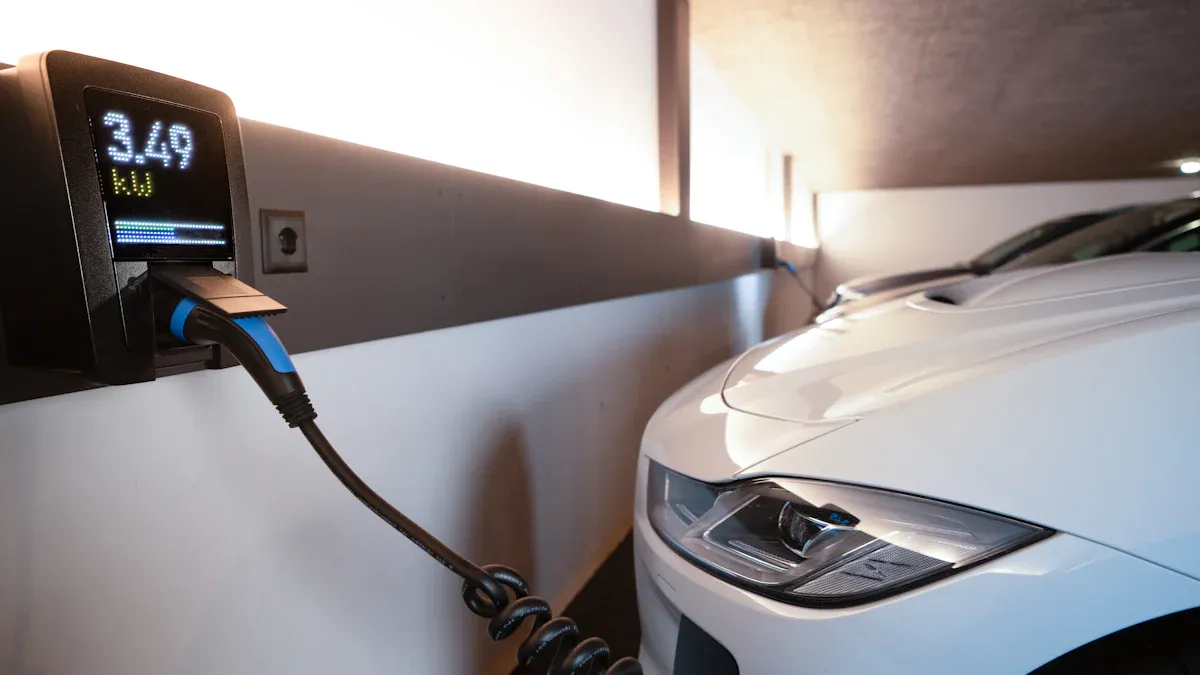
Total biaya pemasangan pengisi daya rumah biasanya berkisar antara $800 hingga $2,000. Harga untuk instalasi EV ini mencerminkan biaya perangkat keras dan tenaga kerja profesional. Biaya akhir Pengisi daya listrik yang dibayar pemilik untuk EV mereka bergantung pada beberapa faktor.
Catatan: Tagihan akhir untuk pengaturan EV rumah Anda dapat bervariasi. Faktor kunci meliputi:
- Pengisi Daya EV spesifik. Produsen pengisi daya EV, seperti teknologi yang canggih Solusi pengisian daya kendaraan listrik Penyedia seperti TPSON menawarkan banyak opsi di luar sekadar pengisi daya rumah sederhana atau pengisi daya ev portabel untuk EV Anda.
- Kapasitas rumah Anda untuk EV dan kompleksitas instalasi.
- Tarif tenaga kerja regional, yang mempengaruhi biaya pemasangan pengisi daya rumah rata-rata dan harga instalasi pengisi daya EV tipikal.
- Pemasangan pengisi daya EV rumah mungkin memerlukan peningkatan panel, yang mempengaruhi total biaya untuk EV.
Memahami Total Biaya Pemasangan Pengisi Daya EV
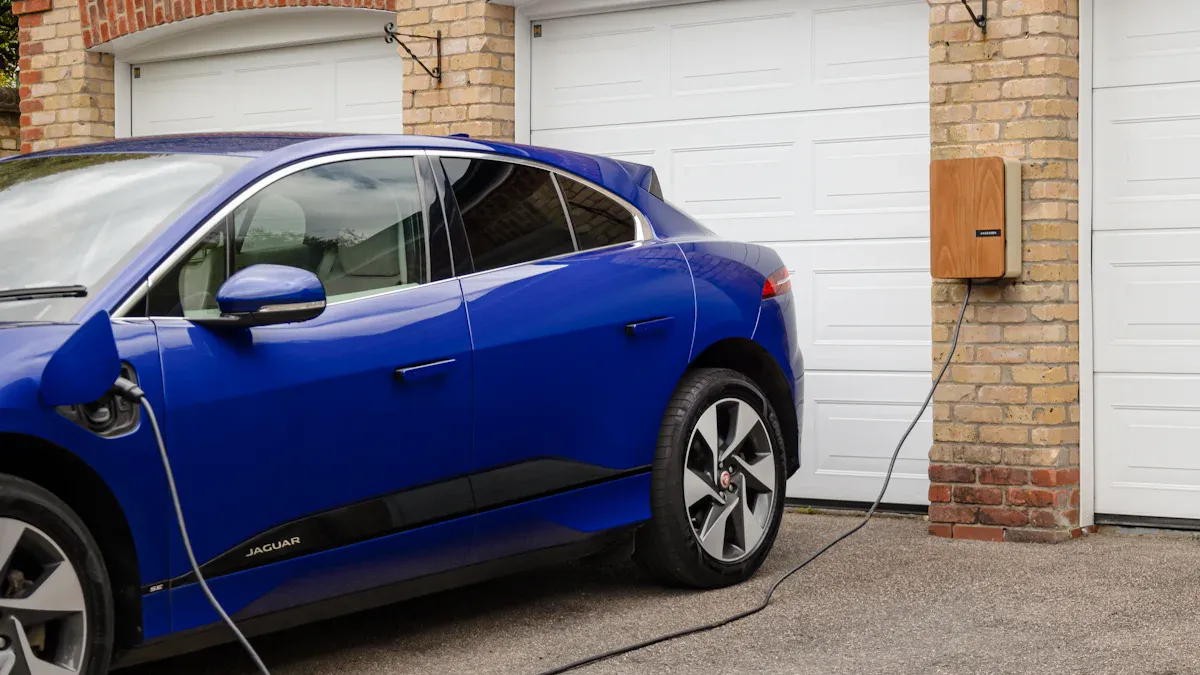
Tagihan akhir untuk pengisi daya EV rumah adalah jumlah dari dua bagian utama: perangkat keras (unit pengisi daya itu sendiri) dan tenaga kerja profesional yang diperlukan untuk instalasi yang aman dan sesuai standar. Memecah komponen-komponen ini membantu pemilik EV memahami kemana uang dialokasikan dan apa yang mempengaruhi total biaya pemasangan pengisi daya EV..
Harga Unit Pengisi Daya (Perangkat Keras)
Harga perangkat keras dapat berkisar dari hampir nol hingga lebih dari seribu dolar, tergantung pada kecepatan dan fitur pengisi daya.
Pengisi Daya Level 1 (Stopkontak 120V)
Pengisi daya Level 1 adalah kabel sederhana yang dicolokkan ke stopkontak dinding standar 120V. Sebagian besar kendaraan listrik menyertakan salah satunya saat pembelian EV. Oleh karena itu, biaya perangkat keras di muka seringkali $0. Namun, pengisiannya sangat lambat, hanya menambah jarak tempuh 3-5 mil per jam, sehingga lebih merupakan solusi cadangan daripada pengisi harian bagi kebanyakan pemilik EV.
Pengisi Daya Level 2 Standar (240V, 32-40 Amp)
Ini adalah jenis pengisi daya rumah yang paling umum. Pengisi daya mobil listrik Level 2 standar non-pintar biasanya memiliki harga antara $300 dan $600. Unit ini beroperasi pada sirkuit 240V, mirip dengan pengering listrik, dan dapat menambah jarak tempuh 25-35 mil per jam. Ini adalah pilihan praktis dan hemat biaya untuk pengisian EV semalaman di rumah.
Pengisi Daya Level 2 Pintar (Dilengkapi Wi-Fi)
Dengan biaya lebih tinggi, biasanya $500 hingga $900, pemilik EV dapat membeli pengisi daya pintar. Unit dengan Wi-Fi ini terhubung ke aplikasi smartphone, memungkinkan pemantauan jarak jauh, penjadwalan pengisian, dan pelacakan penggunaan energi. Penyedia yang maju secara teknologi, seperti TPSON, menawarkan solusi pengisian pintar yang membantu pemilik memanfaatkan tarif listrik yang lebih murah. Kenyamanan tambahan dan potensi penghematan jangka panjang membenarkan biaya awal yang lebih tinggi bagi banyak orang.
Pengisi Daya Level 2 Berdaya Tinggi (48 Amp+)
Pengisi daya Level 2 berdaya tinggi berharga $600 hingga $1,200+ dan dirancang untuk EV dengan baterai besar dan kemampuan pengisian cepat onboard. Unit ini memberikan 48 amp atau lebih, memerlukan sirkuit khusus 60-amp yang kuat. Meskipun menyediakan kecepatan pengisian Level 2 tercepat di rumah, biaya peralatan dan instalasi yang lebih tinggi membuatnya hanya cocok untuk kendaraan dan kebutuhan tertentu.
Biaya Tenaga Kerja Instalasi Profesional
Mempekerjakan tukang listrik berlisensi adalah hal yang mutlak untuk pengisi daya mobil listrik Level 2. Bagian tenaga kerja dari tagihan seringkali merupakan bagian signifikan dari total biaya instalasi.
Apa yang Termasuk dalam ‘Instalasi Standar’
Instalasi “standar” mengasumsikan panel listrik rumah memiliki kapasitas yang cukup dan lokasi pengisi daya mudah diakses. Prosesnya komprehensif dan berfokus pada keselamatan dan kepatuhan.
Daftar Periksa Instalasi Standar Tipikal:
- Penilaian: Tukang listrik memeriksa area parkir dan sistem kelistrikan.
- Pemasangan Sirkuit: Pemutus sirkuit 240V baru yang khusus dipasang di panel utama.
- Pengkabelan: Kabel dengan ukuran yang sesuai dipasang dari panel ke lokasi pengisi daya.
- Pemasangan: Unit pengisi daya dipasang dengan aman ke dinding.
- Koneksi & Pengujian: Tukang listrik menghubungkan pengisi daya, melakukan pengujian kelistrikan komprehensif, dan memverifikasi semua fitur keselamatan.
- Serah Terima: Pemilik menerima demonstrasi tentang cara mengoperasikan pengisi daya dan fitur pintarnya.
Kisaran Biaya Tenaga Kerja Tipikal ($400 – $1,200)
Biaya tenaga kerja untuk instalasi standar umumnya berada di antara $400 dan $1,200. Kisaran ini memperhitungkan waktu kerja tukang listrik selama 3 hingga 6 jam. Angka akhir sangat bergantung pada tarif tenaga kerja regional. Tukang listrik di pusat kota padat seringkali memiliki tarif per jam lebih tinggi daripada di daerah pinggiran kota atau pedesaan.
| Jenis Wilayah | Tarif Per Jam Perwakilan |
|---|---|
| Area Metropolitan Utama | $75 – $150+ per jam |
| Area Pinggiran Kota/Pedesaan | $50 - $100 per jam |
Mengapa Anda Membutuhkan Tukang Listrik Berlisensi
Pengisi daya EV adalah perangkat berdaya tinggi yang memberikan beban berat dan terus-menerus pada sistem kelistrikan rumah. Instalasi yang salah menimbulkan risiko kebakaran dan keselamatan yang signifikan. Mempekerjakan profesional yang berkualifikasi sangat penting karena beberapa alasan:
- Kapasitas Sistem: Seorang tukang listrik harus mengevaluasi panel listrik yang ada untuk memastikannya dapat menangani beban tambahan dari EV.
- Kepatuhan terhadap Kode: Instalasi harus mematuhi Kode Kelistrikan Nasional (NEC) dan kode bangunan setempat, yang seringkali memerlukan izin dan inspeksi akhir.
- Sirkuit Khusus: Pengisi daya EV memerlukan sirkuit khususnya sendiri untuk mencegah kelebihan beban dan memastikan operasi yang aman. Tukang listrik akan menentukan ukuran kabel dan pemutus yang tepat untuk model pengisi daya EV spesifik.
- Safety Protocols: Professionals are trained in EV-specific safety requirements, including proper grounding and the installation of a Ground Fault Circuit Interrupter (GFCI) to prevent electric shock. This expertise is critical for the long-term safety of the home and the EV. The cost ev charger owners pay for professional work is an investment in safety.
Factors That Increase Your Home EV Charger Cost

While a “standard” installation provides a useful baseline, many homes require additional work that can significantly increase the final bill. Homeowners should be aware of these potential cost adders before beginning the process. The complexity of the job, the current state of the home electrical system, and local regulations all play a role in the total cost.
Peningkatan Sistem Kelistrikan
The biggest cost variables often relate to the home’s existing electrical infrastructure. An EV charger is a high-demand appliance, and older systems may not be equipped to handle the load safely.
Installing a New 240V Dedicated Circuit
A Level 2 electric car charger cannot plug into a standard wall outlet. It requires a dedicated 240V circuit, similar to an electric stove or dryer. This is a fundamental requirement for the installation. An electrician installs a new two-pole breaker in the panel and runs a dedicated line to the charger location. The cost for this essential step involves both materials and labor.
Estimated Circuit Component Costs
The following estimates, based on UK data and converted for context, show potential material costs. Actual US pricing will vary.
| Component | Estimated Material Cost (USD) |
| :— | :— |
| Wiring/Cabling | $60 – $250 |
| Breaker & Outlet | $125 – $625 |
Meningkatkan Panel Listrik Utama Anda
Many older homes have electrical panels rated for 100 amps. Adding a 40-amp or 50-amp circuit for an EV can strain or exceed this capacity, especially when other large appliances are running. In these cases, an electrician will recommend upgrading the main service panel to 200 amps. This is a major project that can add a substantial amount to the overall cost but is crucial for the safety of the home. The upgrade involves heavier main cabling and new protective devices, increasing both material and labor expenses.
Adding a Subpanel
What if the main panel has enough total capacity but no physical space for a new breaker? A more targeted solution is to add a subpanel. An electrician can install a small, secondary panel connected to the main one. This subpanel will house the new circuit for the EV charger. This approach is often less expensive than a full main panel upgrade and is a common solution for accommodating the power demands of a new EV.
Kompleksitas Instalasi
The physical layout of the property directly impacts the labor and material cost of the installation. A simple job in an attached garage near the panel is much cheaper than a complex run to a distant parking spot.
Long Wiring Runs from Panel to Charger
The price of copper wiring adds up quickly. If the electrical panel is in the basement and the garage is on the other side of the home, the electrician will need more materials and more time to run the conduit and wiring. Each foot of distance increases the final cost. This is a key reason to plan the location of the home charger carefully.
Trenching for Detached Garages or Driveways
Installing a charger in a detached garage or an outdoor parking space requires running the electrical line underground. This involves digging a trench, laying conduit, running the wire, and then backfilling the trench.
Catatan: Trenching can cost approximately $8 to $20 per foot, and this price can rise if the crew encounters obstacles like concrete, asphalt, or large tree roots. This makes the installation for a detached EV setup more expensive.
Wall Reinforcement or Difficult Mounting
Most chargers are mounted directly to drywall or studs. However, mounting on difficult surfaces like brick, concrete, or plaster can require more time, specialized tools, and extra hardware. In some cases, the wall itself may need reinforcement to securely support the weight of the charger, adding to the labor cost.
Pedestal Mounting for the Charger
If a wall is not available at the desired parking spot, a pedestal-mounted charger is an excellent alternative. Technologically advanced providers like TPSON offer sleek pedestal solutions. However, this option increases the total cost ev charger project. It requires a concrete pad for a foundation and underground wiring, adding significant labor and material expenses compared to a simple wall mount for the EV.
Administrative and Regional Costs
Beyond the hardware and direct labor, several other factors contribute to the final price tag for an EV home charging station.
Electrical Permit and Inspection Fees
A safe and compliant installation requires an electrical permit from the local municipality. The cost for these permits and the subsequent final inspection typically ranges from $60 to $250. Sementara itu zoning permits is not usually needed for a standard EV charger, exceptions exist for properties in historic districts or those requiring significant exterior changes. These administrative fees ensure the work on your EV system meets all safety codes.
Regional Differences in Labor Rates
Labor is a major component of the installation cost, and hourly rates for licensed electricians vary widely across the country. An installation in a major metropolitan area with a high cost of living will almost always be more expensive than the same job in a suburban or rural area. Getting multiple quotes is the best way to understand the going rate for your specific location.
How to Lower the Cost of Your EV Charger Installation
The initial investment for a home EV charger can be significantly reduced through strategic planning and by taking advantage of various financial incentives. Homeowners can lower the overall cost by exploring government credits, utility programs, and smart installation choices.
Insentif Federal, Negara Bagian, dan Lokal
Governments at all levels offer programs to encourage EV adoption by making charging infrastructure more affordable.
Kredit Energi Bersih Perumahan Federal
A major financial benefit is the federal tax credit, which can cover 30% of the total cost of charger hardware and installation, up to a maximum of $1,000. This credit directly reduces a homeowner’s tax liability, making it a powerful tool for lowering the net expense of a new EV charger.
Searching for State-Specific Rebate Programs
Many states provide their own incentives that can be combined with the federal credit. These programs vary widely, so EV owners should research their specific state’s offerings.
- Texas: Offers credits ranging from $500 to $1,000 for residential charger installations.
- Florida: Provides similar credits of $500 to $1,000 for home charger projects.
Finding Local and Municipal Grants
Beyond state programs, some cities and counties offer their own grants or rebates. These hyper-local incentives can further reduce the financial burden on an EV owner. A quick search on a local government or energy authority website often reveals these opportunities.
Utility Company Rebates and Programs
Utility companies are key partners in making home charging more accessible. They increasingly offer rebates to manage energy demand and promote the adoption of the EV.
Rebates on Charger Hardware
Many electric utilities provide direct rebates on the purchase of qualified smart chargers. These rebates can range from $100 to $500 or more, instantly lowering the upfront hardware cost. Companies like TPSON offer advanced smart chargers that often qualify for these programs.
Discounts on Installation Labor
Some energy providers offer discounts on the installation itself. For instance, a utility might provide a $100-$200 discount when a customer switches to a special EV electricity tariff. This directly reduces the labor portion of the final bill, making the professional installation more affordable.
How to Check with Your Local Provider
The best way to find these savings is to visit the local utility provider’s website. Most have a dedicated section for EV programs that lists available rebates, qualified products, and application instructions for your new EV.
Smart Planning for Your Installation
Thoughtful planning before the electrician arrives can prevent unnecessary expenses and ensure the project stays on budget.
Choosing a Location Near Your Electrical Panel
The distance between the electrical panel and the charger location is a major cost driver. Each foot of wiring adds to the material and labor expenses. Selecting a parking spot in the garage or on a driveway wall close to the main panel is the single most effective way to minimize the installation cost.
Selecting the Right Charger for Your Needs
It is crucial to match the charger to the EV and the home electrical system. Installing a charger with a higher power output than the EV can accept is a waste of money. An owner should check the EV owner’s manual for its maximum AC charging rate to avoid overspending on an unnecessarily powerful unit. The home’s electrical infrastructure also limits options, as most residential properties can only support up to a 7kW charger.

Pentingnya Mendapatkan Beberapa Penawaran Harga
Kiat Pro: Always obtain at least three quotes from qualified, licensed electricians. This allows a homeowner to compare pricing, understand the scope of work proposed by each professional, and ensure they are receiving a fair market price for their specific EV project.
Calculating the Ongoing Cost to Charge Your EV at Home
Beyond the initial installation, the ongoing expense of home charging is a key factor for any EV owner. Fortunately, calculating this cost is straightforward. It primarily depends on two variables: the price of electricity and the size of the vehicle’s battery. Understanding this simple math helps an EV owner appreciate the long-term savings of driving an electric vehicle.
The Basic Formula for Charging Cost
The fundamental calculation for a full charge is simple. An EV owner can determine the expense by multiplying the size of their EV battery by their local electricity rate. This gives a clear picture of the cost for each home charging session.
Tarif Listrik Lokal Anda ($/kWh)
Electricity is sold in kilowatt-hours (kWh). The price per kWh varies significantly across the country. An EV owner can find this rate on their monthly utility bill. Higher rates directly lead to a higher charging cost.
| Region/State | Average Residential Electricity Rate ($/kWh) |
|---|---|
| U.S. National Average | $0.168 |
| California | $0.28 – $0.32 |
| Massachusetts | $0.28 – $0.32 |
| Washington | $0.11 – $0.12 |
| Louisiana | $0.11 – $0.12 |
Ukuran Baterai EV Anda (kWh)
The battery capacity of an EV, also measured in kWh, determines its range. A larger battery holds more energy, so it will cost more to charge from empty to full. An owner can find their specific EV battery size in the vehicle’s manual.
A Real-World Cost Example
An EV owner can use a simple formula to estimate their expense: Cost = Battery Capacity (kWh) × Electricity Rate ($/kWh). Untuk EV dengan 65 kWh battery in a region with a $0.17/kWh electricity rate, a full charge would cost approximately $11.05. This makes home charging for an EV significantly cheaper than gasoline.
Catatan: This calculation assumes 100% charging efficiency. In reality, some energy is lost during the charging process. Factoring in a typical Efisiensi 90% means the actual cost for the EV charging session would be slightly higher.
Saving Money with Special Electricity Plans
Many utility companies offer special rate plans that can dramatically lower the cost of home charging for an EV. An EV owner can maximize savings by using these programs.
How Time-of-Use (TOU) Rates Work
Time-of-Use (TOU) plans have different electricity prices depending on the time of day. This structure encourages consumers to shift their energy usage away from periods of high demand.
- Peak hours: Electricity is most expensive during times of high grid demand, often in the morning and late afternoon on weekdays.
- Off-peak hours: Electricity is cheapest during periods of low demand, typically overnight and on weekends. Scheduling an EV charging session during these hours reduces the cost.
Finding Dedicated EV Charging Rates
Some utilities offer specific rate plans designed for EV owners. These plans often provide the lowest possible rates for overnight home charging. An EV owner should check their local provider’s website for available EV programs.
Using a Smart Charger to Automate Savings
A smart charger makes saving money effortless. Technologically advanced providers like TPSON offer smart charging solutions that connect to a home Wi-Fi network. An EV owner can use a smartphone app to schedule their EV charging to begin only during off-peak hours. This automation ensures the EV is always charging at the lowest possible price, maximizing the financial benefits of home charging.
Is a Home EV Charger a Worthwhile Investment?
Deciding to install a home charger involves weighing the upfront cost against long-term benefits. For most EV owners, the financial savings and daily convenience make it a highly valuable addition to their home. The investment pays dividends in both money and time.
Comparing Home Charging vs. Public Charging Costs
The financial case for a home charger becomes clear when comparing its running cost to public alternatives. The difference is substantial and accumulates quickly.
Calculating Your Cost Per Mile at Home
An EV owner can easily calculate their cost per mile. They divide the cost of a full charge by their EV’s total range. With low overnight electricity rates, home charging often results in a cost of just a few cents per mile, making it far cheaper than running a gasoline car.
The Higher Cost of Public DC Fast Chargers
Public charging stations, especially DC fast chargers, carry a significant premium. While home charging aligns with low residential electricity rates, public rapid charging can cost more than double or triple the price per kWh. This higher cost makes frequent reliance on public infrastructure an expensive way to power an EV.
The Long-Term Financial Savings
The savings from using a home charger are impressive over time. An EV owner driving 10,000 miles per year can save over $1,000 annually compared to fueling a traditional gasoline car. This makes the initial installation cost a smart financial decision.

Nilai Kenyamanan dan Waktu
Selain aspek keuangan, pengisi daya rumah menawarkan kenyamanan tak tertandingi yang mengubah pengalaman kepemilikan EV.
Manfaat Bangun Tidur dengan Daya Penuh
Salah satu keunggulan terbesarnya adalah memulai setiap hari dengan EV yang terisi penuh.
Rutinitas sederhana ini memberikan jangkauan yang lebih dari cukup untuk perjalanan sehari-hari dan keperluan lain. Ini sepenuhnya menghilangkan kecemasan akan jangkauan untuk perjalanan harian, karena EV selalu siap digunakan.
Menghilangkan Perjalanan ke Stasiun Pengisian Umum
Pengisi daya rumah khusus menghilangkan kebutuhan untuk mencari dan menunggu di titik pengisian umum. Ini menghemat banyak waktu dan kerepotan. EV hanya perlu diisi daya semalaman saat pemiliknya di rumah, mengintegrasikan proses pengisian dengan mulus ke dalam kehidupan sehari-hari.
Apakah Pengisi Daya EV Rumah Meningkatkan Nilai Properti?
Memasang pengisi daya mobil listrik bukan hanya tentang manfaat pribadi; ini juga merupakan investasi pada properti itu sendiri.
Pengisi Daya EV sebagai Fitur Rumah yang Diinginkan
Seiring adopsi EV meningkat, rumah dengan stasiun pengisian sendiri menjadi lebih menarik bagi calon pembeli. Ahli properti mencatat bahwa fitur ini meningkatkan daya jual properti. Pembeli sering melihat pengisi daya yang sudah terpasang sebagai fasilitas modern yang berharga.
Mempersiapkan Rumah Anda untuk Transisi EV di Masa Depan
Memasang pengisi daya rumah adalah langkah yang visioner. Ini mempersiapkan properti untuk pergeseran berkelanjutan menuju mobilitas listrik. Solusi berteknologi canggih dari penyedia seperti TPSON menandakan bahwa sebuah rumah modern dan siap untuk masa depan, yang dapat membuatnya menonjol di pasar properti yang kompetitif. Investasi ini memastikan rumah tetap relevan dan diinginkan untuk tahun-tahun mendatang.
Biaya awal untuk pemasangan pengisi daya ev rumah adalah pertimbangan utama bagi setiap pemilik EV baru. Biaya akhir yang dibayar pemilik pengisi daya ev dipengaruhi oleh model pengisi daya dan kompleksitas pemasangan. Insentif keuangan dapat secara dramatis menurunkan biaya pemasangan pengisi daya ev secara keseluruhan untuk EV.
Kesimpulan Akhir: Pengisi daya rumah adalah investasi yang berharga. Penghematan jangka panjang membuat biaya awal menjadi sepadan untuk EV. Pengisi daya rumah dari penyedia seperti TPSON memastikan EV selalu siap, menjadikan proyek biaya pengisi daya ev sebagai pilihan cerdas untuk EV, EV, EV, EV, EV, pemasangan.
PERTANYAAN YANG SERING DIAJUKAN
Apakah saya memerlukan pengisi daya khusus untuk EV saya?
Sebagian besar pemilik EV memilih pengisi daya Level 2 untuk pengisian rumah yang efisien. Unit-unit ini memberikan pengisian yang jauh lebih cepat daripada soket dinding standar. Mereka memerlukan pemasangan profesional untuk sirkuit khusus, memastikan kecepatan dan keamanan untuk kendaraan dan rumah.
Dapatkah saya memasang pengisi daya EV sendiri?
Peringatan: Pemilik EV tidak boleh mencoba pemasangan sendiri. Pekerjaan harus dilakukan oleh tukang listrik berlisensi. Ini memastikan pemasangan memenuhi semua kode keselamatan, panel listrik dapat menangani beban, dan semua sambungan aman untuk mencegah bahaya kebakaran.
Berapa lama waktu yang dibutuhkan untuk instalasi?
Pemasangan standar adalah proses yang relatif cepat. Seorang tukang listrik biasanya dapat menyelesaikan pekerjaan dalam 3 hingga 6 jam. Pemasangan kompleks yang memerlukan penanaman kabel atau peningkatan panel akan memakan waktu lebih lama, berpotensi membutuhkan satu atau dua hari kerja penuh.
Apakah pengisi daya EV bekerja dengan semua mobil listrik?
Sebagian besar pengisi daya modern menggunakan konektor universal yang kompatibel dengan semua merek EV utama. Penyedia solusi pengisian kendaraan listrik yang canggih secara teknologi seperti TPSON merancang pengisi daya mereka untuk kompatibilitas luas, memastikan mereka bekerja dengan mulus dengan berbagai kendaraan listrik saat ini dan masa depan.
Apakah pengisi daya yang lebih cepat selalu lebih mahal biaya pemasangannya?
Ya, pengisi daya berdaya lebih tinggi umumnya meningkatkan biaya pemasangan. Unit-unit ini memerlukan kabel yang lebih tebal dan lebih mahal serta pemutus sirkuit beramperase lebih tinggi. Kebutuhan material dan tenaga kerja tambahan berkontribusi pada harga akhir proyek yang lebih tinggi.
Apa biaya tersembunyi terbesar dalam sebuah pemasangan?
Biaya potensial yang paling signifikan adalah peningkatan panel listrik. Jika panel rumah yang lebih tua tidak memiliki kapasitas untuk sirkuit EV baru, panel tersebut harus ditingkatkan. Pekerjaan listrik besar ini dapat menambah jumlah yang substansial pada total biaya proyek.