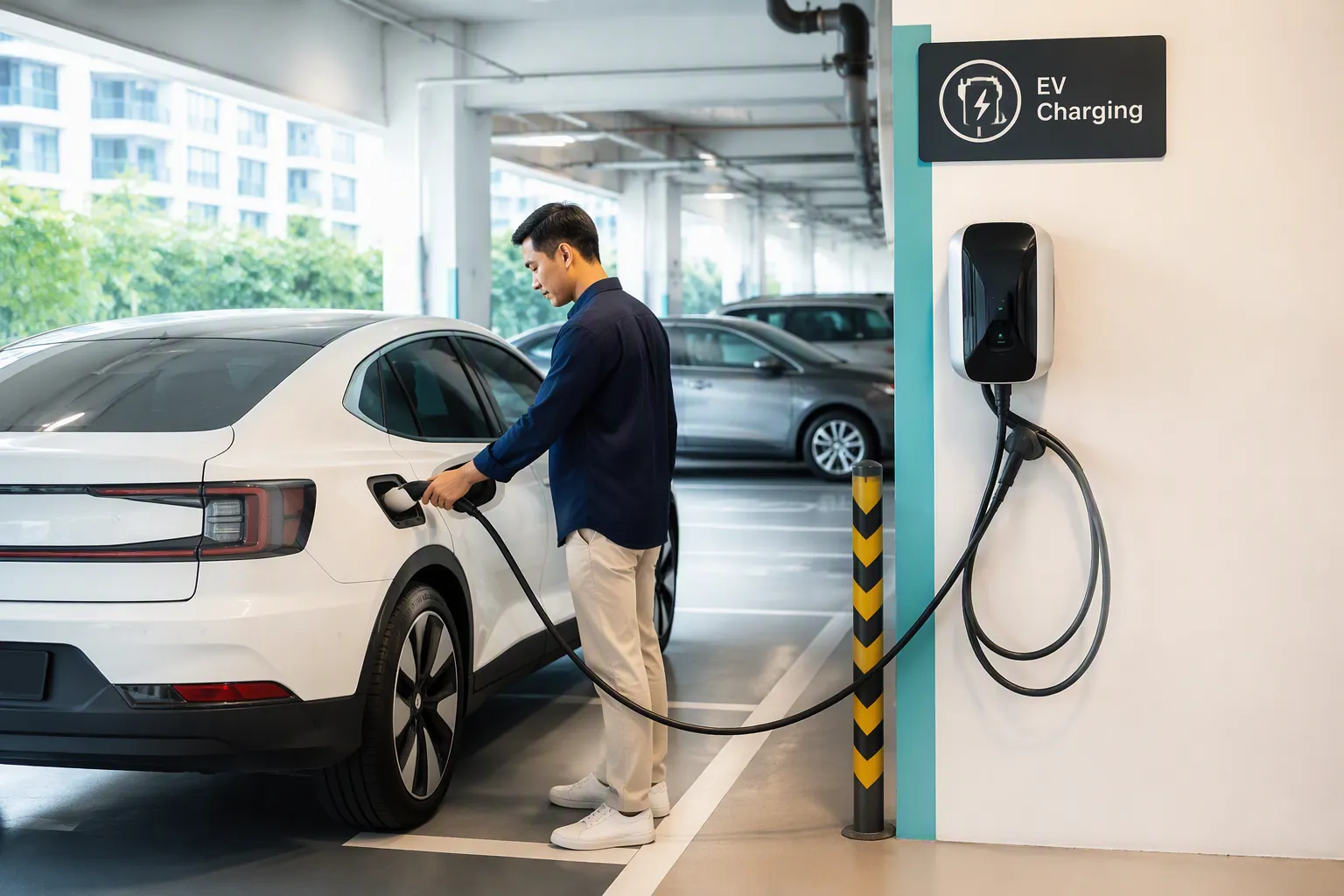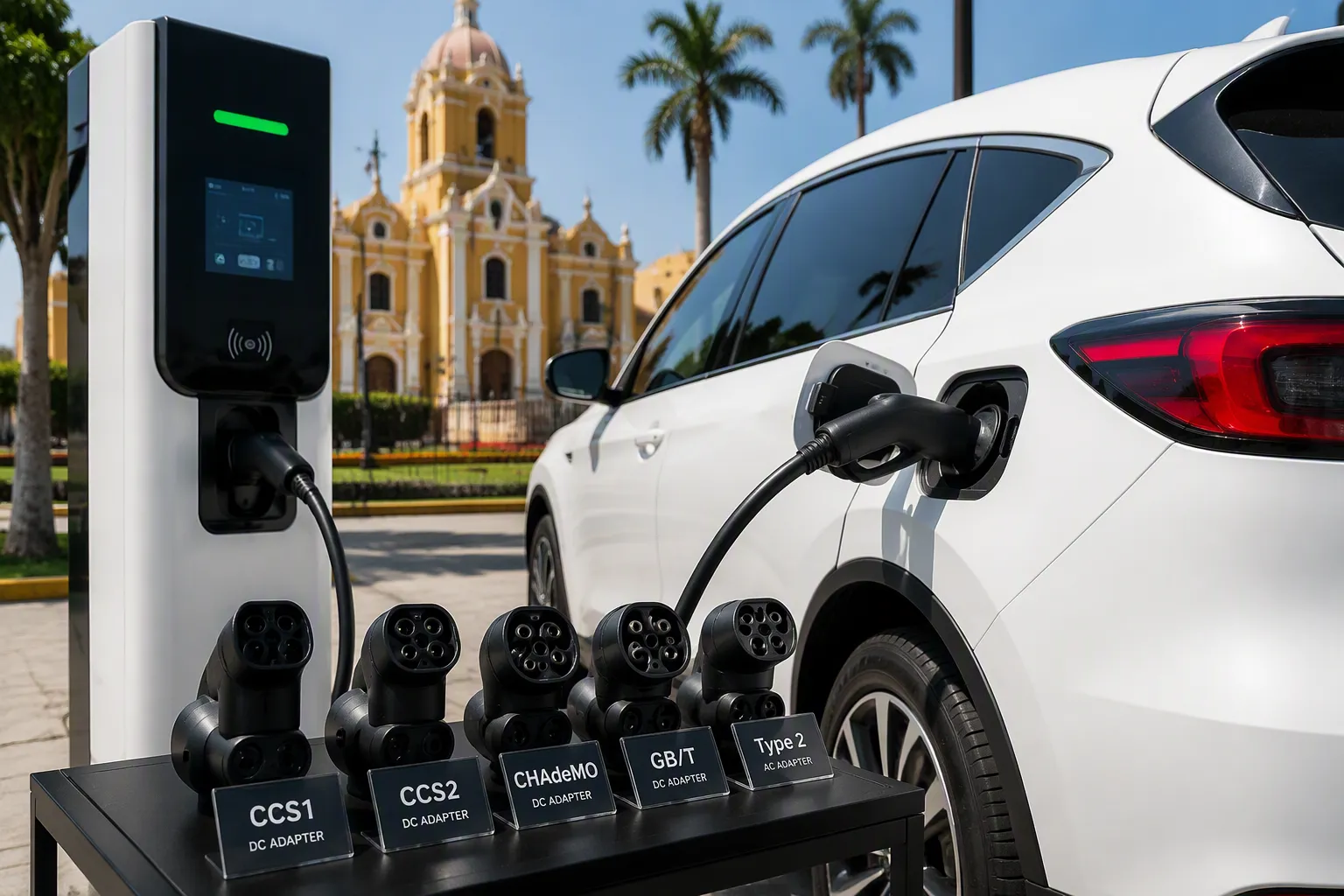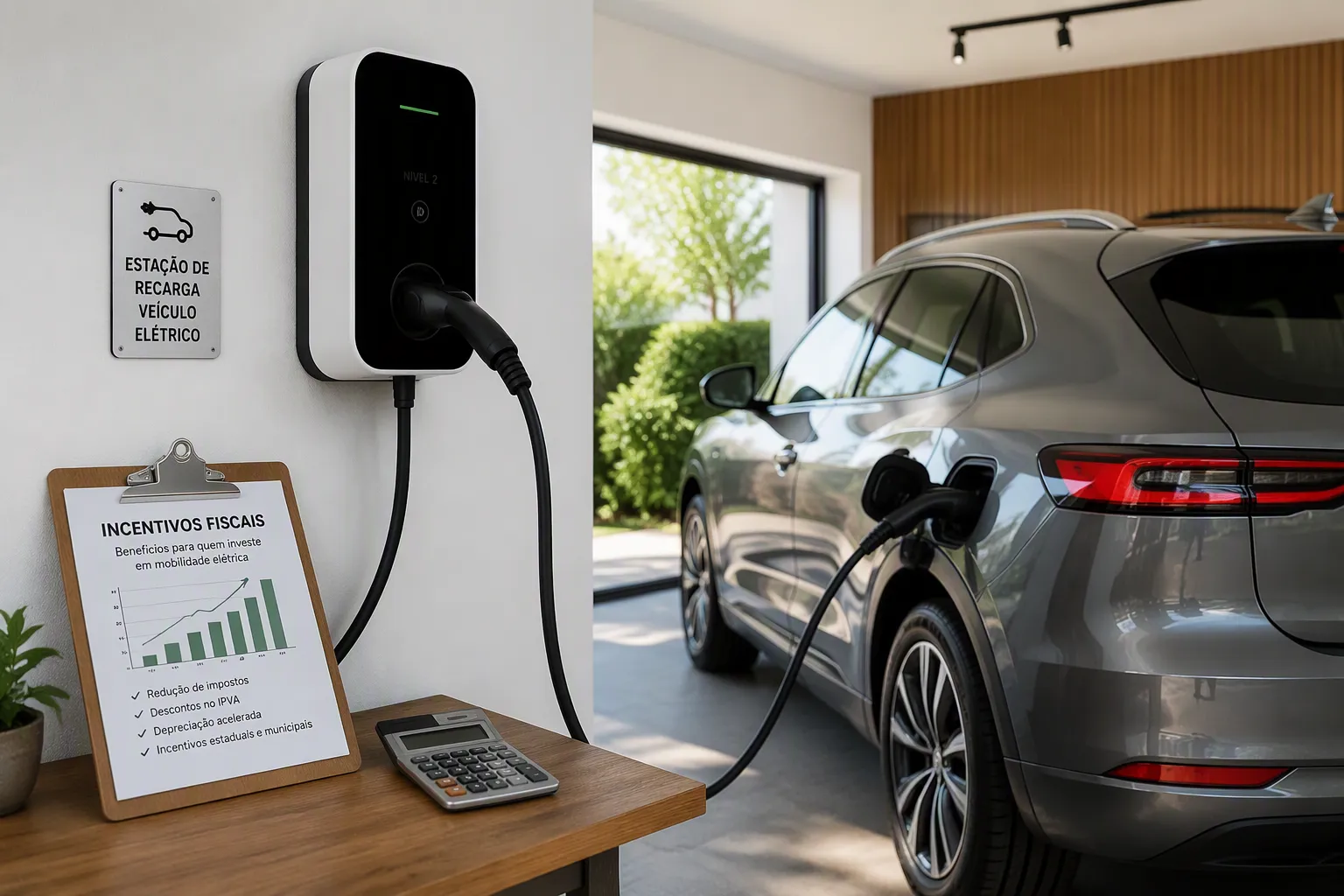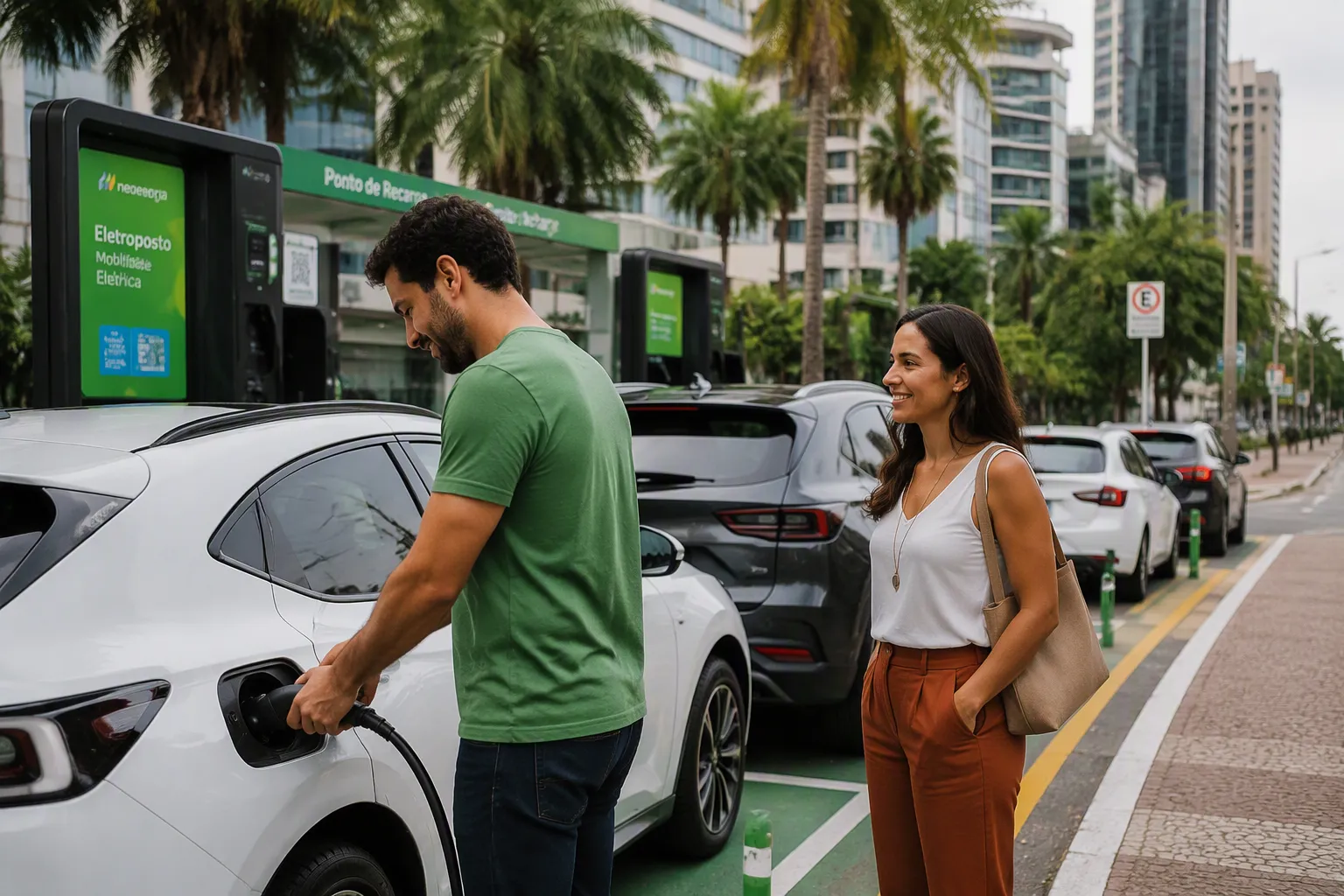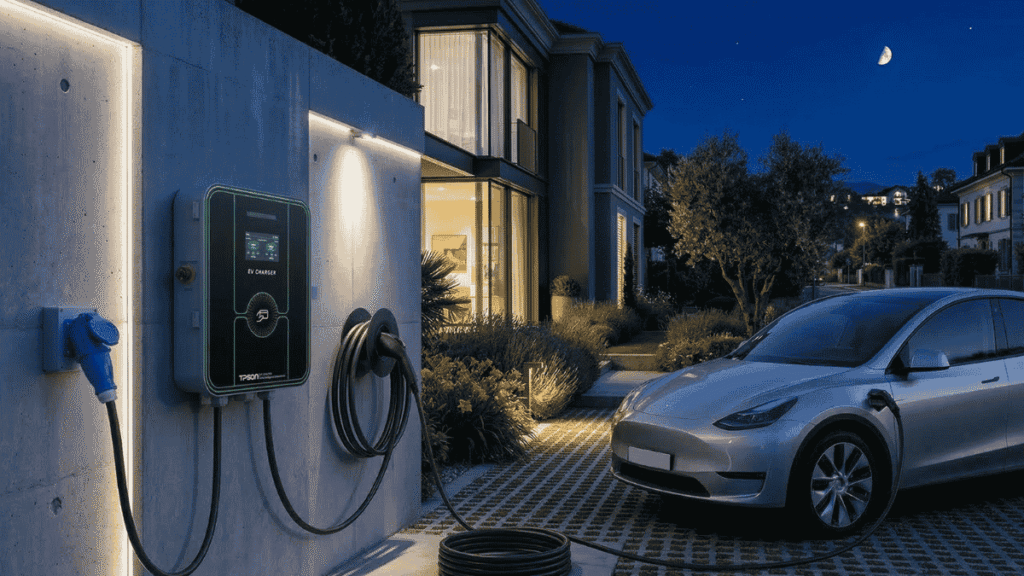
A 22 kW EV charger is often described as a major upgrade from standard home charging, delivering much faster AC replenishment than lower-power Level 2 options. But while 22 kW AC charging is common and practical in some global markets—especially where three-phase power is available—it is not automatically the best fit for every residential property. Whether it makes sense depends on your local electrical system, the vehicle’s onboard AC charging capability, installation cost, and how much charging speed you actually need.
This guide explains what a 22 kW EV charger is, how it compares with lower-power home chargers, what kinds of residential scenarios can realistically support it, and why AC charging intelligence can matter as much as raw output. The discussion is based on the supplied source material from TPSON, ChargePoint, Smart Charge America, Emporia, Love’s, and Car and Driver.
- What Is a 22 kW EV Charger?
- Why 22 kW Chargers Matter in the Global Market
- 22 kW vs. Common Home-Charging Power Levels
- Core Requirements for Using 22 kW at Home
- Why the Vehicle’s Onboard AC Charging Capability Determines Everything
- Is 22 kW Right for a Typical Home?
- What to Consider When Installing a 22 kW AC Charger
- Why Smart Load Management Is Even More Critical at 22 kW
- How TPSON Positions 22 kW AC Charging
- 22 kW AC vs. Home DC Fast Charging
- Who It’s For and Buying Recommendations
- Kesimpulan
A 22 kW EV charger typically refers to a high-power AC charging device, commonly found in markets that use three-phase electrical systems. Compared with the more common home Level 2 charging power levels—such as 7.7 kW, 9.6 kW, or 11.5 kW in many North American contexts—22 kW AC charging can significantly reduce charging time, especially for vehicles that support higher AC input power.
In a three-phase environment, 22 kW AC charging typically corresponds to a higher—yet still manageable—current configuration. TPSON’s AC product system clearly includes 22 kW-class products, showing that globally, 22 kW is not a niche concept, but a real-world solution for many homes, commercial destinations, and semi-public parking locations.
From TPSON’s overall product structure, Pengisi Daya Mobil Listrik cover both residential AC and commercial/emergency DC. That positioning itself suggests that 22 kW AC can be reasonable in certain residential scenarios—but only when the electrical infrastructure and the vehicle capabilities match.
In North America, many home-charging discussions revolve around 32A, 40A, 48A, and 50A because single-phase 240V is common. In Europe and other regions where three-phase power is more widely available, 11 kW and 22 kW AC charging is more common. 22 kW matters for three key reasons:
- It’s faster than standard residential AC charging and can meaningfully shorten replenishment time
- It is usually far less expensive than DC fast charging, making it better suited for long-term residential and destination deployments
- It can provide strong flexibility across homes, villas, shared parking, premium apartments, and light-commercial sites
ChargePoint includes both Level 2 AC and Level 3 DC within a unified platform and emphasizes open software, flexible hardware, and OCPP compatibility. This platform approach signals that high-power AC is not a “lower-end version” of DC fast charging—it’s a distinct layer of EV infrastructure.
Love’s network deployment also shows that the real world uses a mix of Level 2 and Level 3. While highway corridors clearly lean toward DC fast charging, AC charging is still retained to match different dwell times and energy needs. That further reinforces the value of higher-power AC charging in many non-high-turnover scenarios.
Placing 22 kW within the broader AC charging spectrum helps clarify where it fits:
| Jenis Pengisian Daya | Kekuatan Khas | Common Scenarios |
|---|---|---|
| Level 1 AC | ~1 kW | Emergency use or very low-intensity home charging |
| Basic Level 2 AC | 7.2–7.7 kW | Typical overnight home charging |
| Enhanced Level 2 AC | 9.6–11.5 kW | Faster premium home AC charging |
| Three-phase AC | 11 kW | European and other three-phase residential/commercial sites |
| High-power three-phase AC | 22 kW | Premium homes, shared parking, destination sites, light commercial |
| Pengisian cepat DC | 20 kW–350 kW+ | High-turnover sites, highway corridors, fleets, public fast charging |
Car and Driver notes in a North American home-charging context that Level 2 typically falls roughly in the 6 kW to 19 kW range. At 22 kW, you’re slightly above that common North American residential band, further suggesting that 22 kW at home is more of a “high-spec option” for certain markets and specific electrical conditions—not a universal default.
In Smart Charge America’s commercial lineup, the ChargePoint CP6000 can also deliver up to 22 kW of AC output. This again shows that 22 kW AC is a mature, real product class—its residential suitability simply depends heavily on local electrical conditions.
Whether a 22 kW EV charger can realistically be used at home isn’t about availability—it comes down to whether the following conditions are true:
22 kW AC charging typically requires a higher-spec electrical supply and, in many countries, three-phase power. If the home only has standard single-phase residential supply, 22 kW is often impractical—or too expensive to implement.
If the vehicle’s onboard AC charger can only accept around 7 kW or 11 kW, then even with a 22 kW charger installed, the vehicle will not charge at 22 kW.
If the vehicle is parked overnight for long hours, 11 kW—or even 7 kW—may already meet your needs, and the extra speed from 22 kW may not justify the additional investment.
22 kW is better suited for short-stop, frequent top-ups, premium multi-vehicle households, shared residential parking, semi-commercial apartments, or villas—not every “typical commuting household.”
Car and Driver repeatedly emphasizes in its home-charging explanations that the true determinant of AC charging speed is the onboard charger inside the vehicle. No matter how high the EVSE’s output rating is, if the vehicle’s acceptance is lower, charging power will plateau at the vehicle’s limit.
That means the value of 22 kW AC charging at home depends first on whether your vehicle can actually use—fully or close to fully—that level of input. If it can’t, 22 kW remains more of an “equipment capability” than “real-world speed.”
So when considering higher-power Pengisi Daya Mobil Listrik AC, confirming your vehicle’s AC charging capability is always more important than looking at wallbox power first.
For a “typical home,” the answer is usually: not necessarily—and often, it isn’t needed.
Most popular products recommended in Car and Driver’s North American home-charger testing include:
- Emporia Pro / Classic
- ChargePoint Home Flex
- Konektor Dinding Universal Tesla
These products mostly sit in the 40A to 50A range (roughly 9.6 kW to 12.0 kW), or at 48A (about 11.5 kW). The reason is straightforward: for many households, that tier is enough to fully—or nearly fully—recharge overnight, with more manageable installation difficulty and cost.
Meanwhile, Emporia clearly distinguishes between:
- NEMA plug-in: easy to install and movable, but limited to 40A
- Hardwired: can increase to 48A
This mainstream product structure shows that the broad home market is not centered on 22 kW, but on more balanced 40A–48A options. In residential settings, 22 kW is better viewed as an upgrade for homes with the right infrastructure and clearly defined higher-power needs.
Even if your local residential electrical conditions allow it, installing 22 kW at home should involve a careful review of the following:
Penerapan pengisian AC 22 kW untuk perumahan umumnya memerlukan pasokan listrik tiga fase. Jika listrik tiga fase jarang tersedia di rumah-rumah lokal, biaya implementasi dapat meningkat secara signifikan.
Pengisian AC berdaya lebih tinggi mengonsumsi lebih banyak kapasitas listrik yang tersedia. Seorang teknisi listrik berkualifikasi harus melakukan perhitungan beban berdasarkan aturan beban kontinu, peralatan rumah tangga berpermintaan tinggi lainnya, dan rencana ekspansi di masa depan.
Masalah koordinasi GFCI (seperti yang dirujuk dalam materi Emporia) harus dievaluasi terlebih dahulu, terutama pada daya yang lebih tinggi. Pengisi daya perumahan berdaya tinggi lebih cenderung dipasang dengan koneksi tetap daripada diimplementasikan sebagai instalasi plug-in sederhana.
Daya lebih tinggi berarti panas yang lebih tinggi. Pengendalian suhu, diagnostik, dan proteksi gangguan menjadi lebih penting untuk keandalan dan keselamatan.
Jika Anda hanya perlu menambahkan 15–25 kWh per hari, 22 kW dapat menyelesaikan pekerjaan dalam beberapa jam—dan 11 kW masih dapat dengan mudah mencukupinya semalaman. Apakah biaya tambahan tersebut dapat dibenarkan tergantung pada intensitas penggunaan aktual Anda.
Seiring meningkatnya daya pengisian AC, pentingnya manajemen beban dinamis meningkat dengan cepat. Alasannya sederhana: 22 kW mempengaruhi total beban rumah tangga jauh lebih besar daripada pengisi daya rumah tangga biasa. Jika AC, oven, pemanas air, pengering, dan peralatan utama lainnya berjalan bersamaan, pengisian EV berdaya tinggi lebih cenderung menjadi titik tekanan bagi sistem kelistrikan rumah.
Posisi TPSON cukup representatif di sini. Situs webnya menyoroti:
- Penyeimbangan Beban Dinamis
- Perlindungan Keamanan Tingkat Lanjut
- Kontrol Suhu Dinamis
- Diagnostik & Peringatan Waktu Nyata
Halaman TPSON Pengisi Daya Mobil Listrik Ikhtisar juga mencatat bahwa produk AC-nya melindungi sistem kelistrikan rumah melalui Dynamic Load Balancing yang inovatif. Hal ini sangat penting untuk skenario perumahan 22 kW karena AC berdaya tinggi tidak hanya harus “lebih cepat,” tetapi juga “lebih stabil dan aman.”
Pandangan Car and Driver terhadap Emporia Pro mengikuti logika yang sama: memantau total beban rumah dan menyesuaikan output secara real-time dapat membantu menghindari peningkatan kelistrikan yang mahal. Meskipun produk utama Emporia bukan 22 kW, pendekatan dasarnya berlaku langsung untuk pengisian AC perumahan berdaya lebih tinggi.
Sebagai produsen pengisi daya EV ini Yang telah membangun ekosistem energi dan pengisian daya cerdas di sekitar Current Fingerprint Algorithm-nya sejak 2015, jajaran produk AC TPSON jelas dirancang untuk pasar global multi-skenario—tidak hanya untuk kebutuhan perumahan satu negara.
Berdasarkan konten TPSON yang diberikan, strategi keseluruhannya mencakup:
- Lini produk wallbox AC
- Manajemen beban dinamis
- Kompatibilitas konektor standar global
- Ekspansi ke pengisian cepat DC komersial dan darurat
Dalam sistem ini, AC 22 kW paling baik dipandang sebagai salah satu tingkat daya kunci TPSON untuk skenario perumahan dan komersial ringan internasional. Ini cocok untuk pengguna yang memiliki kondisi kelistrikan, menginginkan pengisian lebih cepat sambil tetap berada dalam ekosistem AC, dan tidak ingin langsung beralih ke pengisian cepat DC yang lebih mahal.
Dari sudut pandang arsitektur, keunggulan TPSON bukan hanya mendorong daya lebih tinggi, tetapi membuat AC berdaya tinggi lebih aman, lebih mudah dikelola, dan lebih cocok untuk integrasi sistem jangka panjang.
Beberapa pengguna bertanya: jika AC 22 kW sudah cepat, bagaimana hubungannya dengan pengisian cepat DC? Jawabannya adalah keduanya melayani tingkat kebutuhan yang berbeda.
Car and Driver dengan jelas mencatat bahwa Level 3 / pengisian cepat DC biasanya tidak cocok untuk rumah tangga biasa karena terlalu mahal. Halaman TPSON juga memposisikan produk DC portabel 20 kW, 30 kW, dan 40 kW-nya untuk: Pengisi Daya Mobil Listrik DC Armada dan logistik
- Bantuan jalan
- Acara dan lokasi sementara
- Dealer dan pusat layanan
- Ini menyoroti peran perumahan dari AC 22 kW: ia menawarkan opsi menengah yang lebih cepat—tetapi masih relatif dapat dikelola—antara "pengisian AC rumah standar" dan "pengisian cepat DC yang lebih mahal."
Dengan kata lain, jika kasus penggunaan rumah Anda jelas melebihi apa yang dapat dicakup dengan nyaman oleh ~11 kW, tetapi Anda tidak ingin memasuki kisaran biaya pengisian cepat DC, AC 22 kW dapat menjadi pilihan menengah yang sangat menarik.“
Pengisi daya EV 22 kW paling cocok untuk pengguna yang:.
Memiliki listrik tiga fase tersedia di rumah
- Memiliki kendaraan yang mendukung input pengisian AC lebih tinggi
- Memiliki pengaturan rumah premium, beberapa EV, atau kebutuhan parkir bersama
- Menginginkan waktu pengisian lebih singkat sambil tetap menggunakan pengisian AC
- Membutuhkan solusi yang dapat melayani penggunaan perumahan dan komersial ringan
- Di sisi lain, 22 kW mungkin bukan pilihan terbaik jika:
Pasokan listrik perumahan lokal tidak mendukung tiga fase, atau peningkatannya terlalu mahal
- Batas pengisian AC onboard kendaraan Anda relatif rendah
- Anda memarkirkan kendaraan semalaman dalam waktu lama dan 7–11 kW sudah cukup
- Anda lebih memperhatikan biaya instalasi daripada kecepatan AC maksimum
- Logika pembelian yang disederhanakan
- Jika Anda memiliki listrik perumahan tiga fase, kendaraan Anda mendukung input AC lebih tinggi, dan Anda menginginkan pengisian ulang yang lebih cepat, 22 kW sangat layak dipertimbangkan.
- Jika kebutuhan inti Anda adalah perputaran kendaraan yang lebih tinggi atau pengisian cepat darurat bergerak, Anda harus lebih lanjut mengevaluasi solusi DC.
- Pengisi daya EV 22 kW adalah solusi pengisian AC berdaya tinggi yang sangat menarik—terutama untuk rumah dengan listrik tiga fase, tempat parkir bersama, apartemen premium, villa, dan lingkungan komersial ringan tertentu. Ini jauh lebih cepat daripada pengisian AC rumah standar, namun seringkali lebih mudah diterapkan dan lebih ekonomis daripada pengisian cepat DC.
Tetapi ini bukan jawaban default untuk setiap rumah tangga. Faktor-faktor yang benar-benar menentukan nilainya adalah kondisi pasokan listrik rumah, kemampuan pengisian AC onboard kendaraan, anggaran instalasi, dan kebutuhan waktu pengisian nyata Anda. Bagi banyak rumah tangga, sekitar 11 kW sudah cukup; bagi pengguna dengan tuntutan lebih tinggi yang ingin tetap berada dalam ekosistem AC, 22 kW dapat menjadi peningkatan yang ideal.
Jika Anda mengevaluasi solusi pengisian AC berdaya tinggi untuk penggunaan perumahan dan komersial ringan, Anda dapat memulai dengan ekosistem TPSON, kemudian menggabungkan jalur AC-nya dengan opsi DC yang dapat diperluas untuk memilih infrastruktur pengisian yang benar-benar sesuai dengan properti Anda.
Panduan Pengisi Daya EV 22kW: Solusi Pengisian Cepat untuk Penggunaan Perumahan - TPSON® | Pengisi Daya EV & Solusi Wallbox EV Charger Tpsonpower Pengisi Daya Mobil Listrik ecosystem, then combine its Pengisi Daya Mobil Listrik AC pathway with expandable Pengisi Daya Mobil Listrik DC options to choose charging infrastructure that truly matches your property.