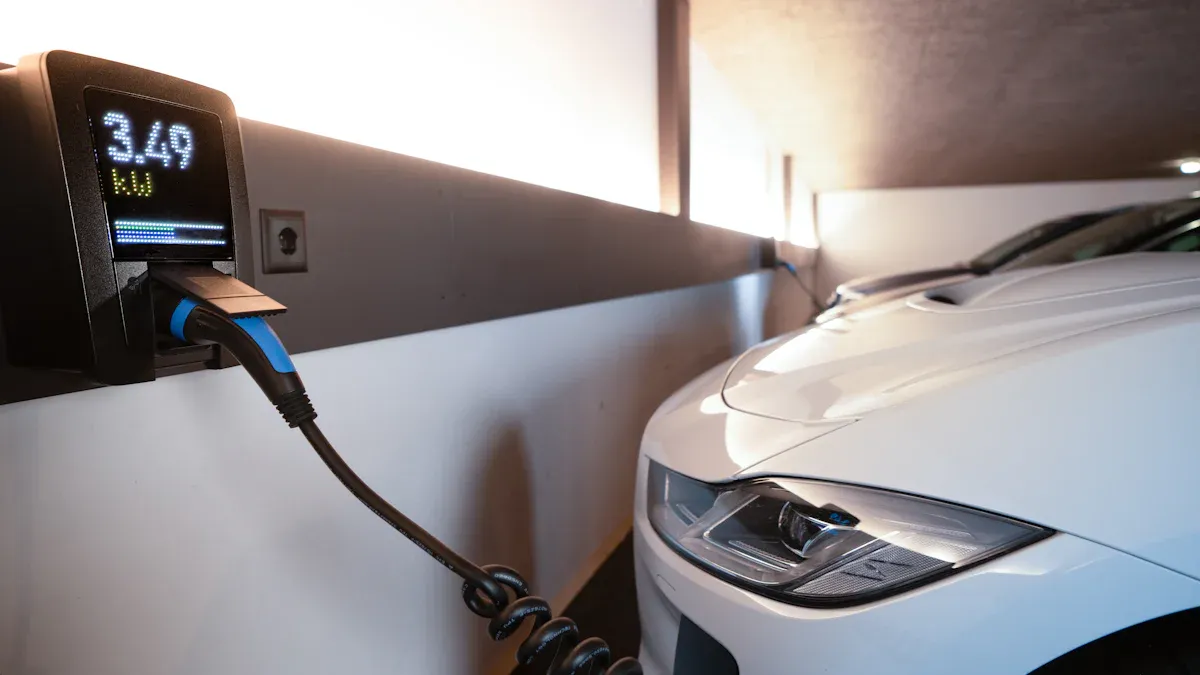
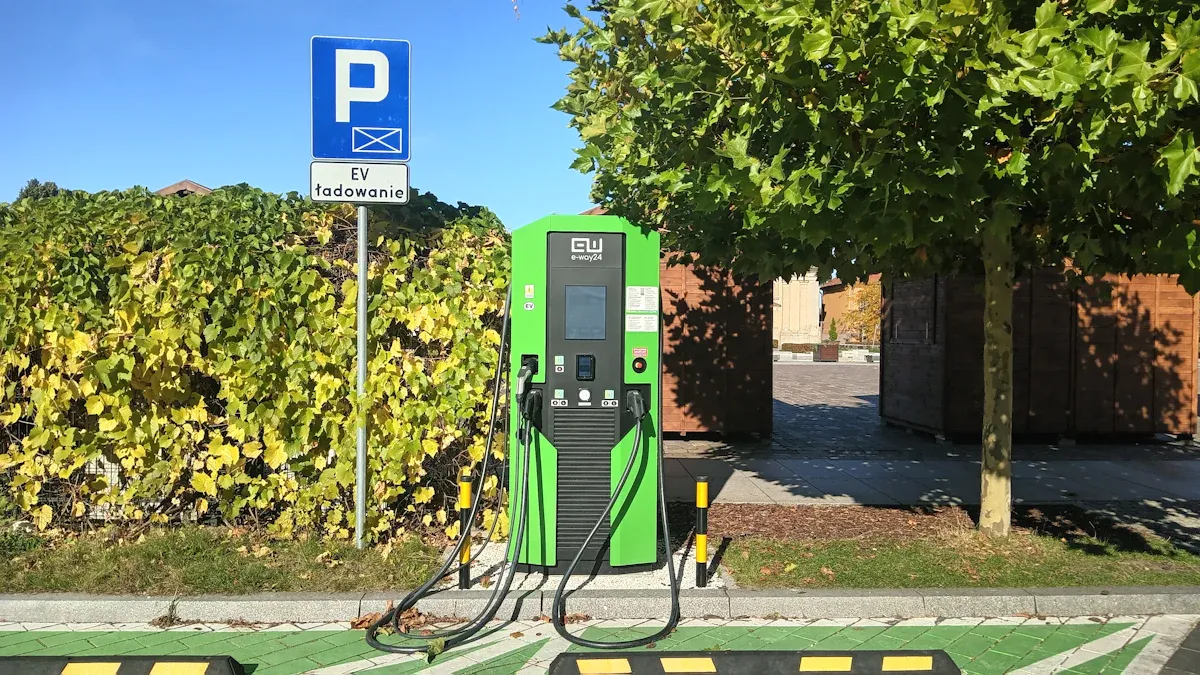
The single most effective way to speed up your level 1 ev charge is a dedicated circuit. This setup optimizes home charging for electric vehicles. A compatible high-amperage electric car charger is essential for this level of performance. This approach to electric vehicle charging turns home charging points into more efficient charging stations.
Note: Top EV charger manufacturers offer these EV charging solutions. The right charger makes a difference for electric vehicle charging at home. This is a better level of charging than standard level 1 chargers. This EV Charger setup optimizes energy transfer for charging. This charging process improves energy for all electric vehicles. This process uses electric power efficiently. Even portable ev chargers benefit from better charging points. More charging points improve electric vehicle charging for all electric vehicles. Better charging stations are key for charging electric vehicles.
Tip 1: Install a Dedicated 20-Amp Circuit for Your Home Charging
The most significant upgrade for electric vehicle charging at home involves the electrical circuit itself. Moving from a standard circuit to a dedicated 20-amp (20A) line provides the foundation for faster and safer charging. This change allows the electric car charger to draw more electric power consistently.
Understanding Argentine Household Wiring
Most homes in Argentina are not initially wired for the demands of electric vehicles. Understanding the existing infrastructure is the first step toward improvement.
Standard 10A vs. Upgraded 20A Circuits
Argentine residences operate on a 220V 50Hz electrical system. Standard household charging points are typically rated for 10 amps (10A). While sufficient for small appliances, a 10A circuit limits an EV charger to drawing approximately 2.2 kW. An upgraded 20A circuit, compliant with the IRAM 2073 standard, doubles the potential power draw to 4.4 kW, creating more effective charging stations at home.
Identifying Your Current Circuit’s Amperage
An owner can identify a circuit’s rating by inspecting the home’s main electrical panel. Each circuit breaker has its amperage (e.g., “C10” for 10A or “C20” for 20A) printed on the switch. The physical outlet may also have its rating stamped on its face. Most general-use charging points in a garage or carport will be 10A.
The Dangers of Overloading a Standard Circuit
Attempting to draw high power for electric vehicle charging from a standard 10A circuit is hazardous. This action can cause the breaker to trip repeatedly. In a worst-case scenario, it can overheat the wiring inside the walls, creating a significant fire risk and potentially damaging the charger.
Why a Dedicated Circuit is Essential for Speed
A dedicated circuit does more than just supply power; it provides stable and maximized energy for better efficiency.
Maximizing Continuous Power Draw
Electrical codes recommend that a continuous load, such as charging electric vehicles, should not exceed 80% of a circuit breaker’s rating.
- A 10A circuit safely delivers only 8A continuously.
- A 20A circuit safely delivers 16A continuously.
This upgrade from 8A to 16A is the key to how you speed up your level 1 ev charge. It effectively doubles the rate of energy transfer to the vehicle’s battery.
Preventing Tripped Breakers and Power Fluctuations
A “dedicated” circuit means no other outlets or appliances share its power. This isolation prevents other devices from competing for energy. The result is a stable charging session free from interruptions caused by a tripped breaker, ensuring the charging process for electric vehicles is smooth.
The Role of Stable Voltage in Charging Speed
When multiple devices run on one circuit, it can cause voltage to drop. A lower voltage reduces the overall power delivered to the charger. A dedicated line minimizes this voltage drop, helping the charger operate at peak efficiency for the entire charging duration.
How to Get a Dedicated Circuit in Argentina
Installing a new circuit is a job for a qualified professional. It ensures safety and compliance with local regulations.
Finding an “licensed electrician”
Homeowners should exclusively hire an “licensed electrician,” or a licensed electrician. These professionals are certified to perform electrical work safely and according to national codes.
Specifying Your Needs: Breaker, Wiring, and Outlet
When contacting an electrician, the homeowner must clearly state the requirements for electric vehicle charging. The request should specify the installation of a new, dedicated 20A circuit from the main panel to the desired charging location. This includes a 20A thermal-magnetic breaker, appropriate gauge wiring, and a 20A-rated outlet.
Understanding IRAM Certification for Outlets
For safety, all components, especially the outlet, must be IRAM certified. This certification ensures the product meets Argentine safety and quality standards for high-power applications like level 1 and level 2 electric vehicle charging.
Estimated Costs and Installation Time
The installation cost and time can vary. Factors include the distance from the electrical panel to the garage and the complexity of the wiring path. A professional can provide an accurate quote, but this investment directly improves the daily usability of all electric vehicles. The final cost is a small price for faster, safer home charging.
Tip 2: Upgrade Your Charging Equipment for Better Efficiency

A dedicated circuit provides the necessary electric power. The right equipment ensures that power reaches your vehicle safely and quickly. Upgrading the charger and any necessary cords is the second critical step to speed up your level 1 ev charge.
Choosing a High-Amperage Mobile Connector (EVSE)
The device that connects your car to the outlet is called an Electric Vehicle Supply Equipment, or EVSE. This smart charger is more than just a cable; it communicates with the vehicle to ensure safe charging.
Why Your Car’s Included Charger Is Often Slow
Most electric vehicles come with a basic mobile charger. Manufacturers design these units for maximum compatibility, not maximum speed. They often limit the amperage to 8A or 10A. This ensures the charger works safely on any standard outlet without tripping a breaker. This safety-first approach, however, limits the charging potential on an upgraded circuit.
Finding EVSEs Capable of 16 Amps
To take full advantage of a 20A circuit, an owner needs an EVSE capable of drawing 16A continuously. Technologically advanced providers like TPSON offer electric vehicle charging solutions that meet this requirement. These upgraded units unlock a higher level of performance from home charging points.
Key Features in a Portable EVSE
When selecting an upgraded charger, look for several key features:
- Adjustable Amperage: Allows the user to set the power draw (e.g., 8A, 10A, 13A, 16A) to match the circuit.
- Safety Certifications: Ensures the device meets safety standards for handling high power.
- Informative Display: A screen showing voltage, amperage, and energy delivered provides valuable feedback on the charging session.
- Durable Construction: Weather resistance and robust materials are essential for long-term use.
Where to Buy Upgraded EVSEs in Argentina
Upgraded EVSEs for electric vehicles are available through several channels in Argentina. Online marketplaces like Free Market often have multiple listings. Specialized stores focusing on electric vehicle accessories and charging stations also carry high-amperage portable chargers.
Selecting the Right Extension Cord
Using an extension cord for electric vehicle charging is generally discouraged. If the outlet is not close enough, using the correct type of cord is a matter of safety and efficiency. Standard household cords are not suitable for this task.
The Problem with Voltage Drop
An extension cord adds resistance to the electrical path. This resistance causes the voltage to decrease over the length of the cord, a phenomenon known as voltage drop.
Lower voltage means less power delivered to the charger. This directly slows down the charging speed for electric vehicles, undermining other upgrades.
Why Standard Cords Are a Fire Hazard
Standard orange or white extension cords are designed for temporary, low-power tasks. The continuous high-power draw of electric vehicle charging can cause these thin cords to overheat. This poses a severe fire risk and can damage both the charger and the vehicle. Level 1 chargers require a heavy-duty solution for safe charging.
Reading Cord Specifications: AWG and Amperage
Extension cords are rated by their wire gauge. In Argentina, this is often measured in square millimeters (mm²). A thicker wire has a lower gauge number and can carry more current safely. For a 16A load, a cord with 1.5mm² wires is a minimum requirement. An even better option is a heavy-duty cord with 2.5mm² wires, which often matches the cable size used on the electric car charger itself. This ensures minimal voltage drop and maximum safety for charging.
Rule of Thumb: Shortest and Thickest Cord Possible
If an extension cord is absolutely necessary for your charging points, follow this simple rule:
- Use the shortest cord possible to reach the vehicle.
- Choose the thickest wire gauge available (e.g., 2.5mm²).
This combination minimizes resistance, reduces voltage drop, and ensures the charging process receives stable energy. It keeps the charging level consistent and safe, turning your charging points into reliable home charging stations.
Tip 3: Optimize Your Vehicle’s Charging Settings to Speed Up Your Level 1 EV Charge

An upgraded circuit and equipment provide the potential for faster charging. The final step is telling your car to accept that power. Optimizing the vehicle’s software settings is essential to speed up your level 1 ev charge. This ensures the car draws the maximum available energy from your upgraded charging points.
Finding the AC Charging Menu
Most electric vehicles allow owners to control the electric vehicle charging process through onboard systems. Finding these menus is the first action.
Locating Settings in the Infotainment System
An owner can typically access charging settings through the vehicle’s central infotainment touchscreen. The menu is often found under a “Vehicle,” “Settings,” or “Charging” tab. This interface provides direct control over the charging parameters when inside the car.
Using Your EV’s Mobile App for Remote Control
Nearly all modern electric vehicles come with a companion mobile app. This app allows an owner to monitor and adjust charging settings remotely. It offers the convenience of changing limits or checking status from anywhere, turning a smartphone into a control center for the charger.
Adjusting the Amperage Limit
The most important setting for speed is the amperage limit. This function tells the car how much power it is allowed to draw from charging points.
Why Cars Default to Lower Amperage
Electric vehicles often default to a low amperage setting, such as 8A or 10A. Manufacturers choose this conservative level for safety. It prevents the car from overloading unknown or older electrical circuits. This default protects the car and the infrastructure but limits charging speed.
How to Set the Limit to 16 Amps
After installing a 20A circuit, an owner can safely increase this limit. In the charging menu, the user should select the AC charging limit and adjust it to 16 amps. This setting allows the car to take full advantage of the upgraded circuit’s capacity for faster electric vehicle charging.
Verifying the Car is Drawing Maximum Power
Once charging begins, the owner can confirm the car is drawing the correct power. The vehicle’s display or mobile app will show the current charging rate.
It should display a rate of approximately 3.5 kW (16A x 220V). This confirms the charger and vehicle are working together for the fastest possible level 1 charging.
Using Scheduled Charging to Your Advantage
Scheduled charging offers more than just convenience; it can improve efficiency and battery health over time. It is a key feature for managing electric vehicle charging.
Setting a Departure Time for a Full Charge
Instead of starting charging immediately, an owner can set a departure time. The vehicle’s system will calculate when to begin the charging session to reach a full charge by that time. This ensures the car is always ready when needed without sitting at 100% for extended periods. This feature makes home charging stations more intelligent.
How Scheduling Can Help Manage Battery Health
Smart charging management helps preserve the battery. Research on electric vehicles shows that certain charging strategies can significantly reduce battery aging.
- Battery life loss is influenced by factors like state of charge and charging rates.
- Intelligent charging schemes can mitigate battery degradation effectively.
- Compared to conventional charging, optimized scheduling can reduce battery aging cycles, demonstrating a clear benefit for long-term battery health.
This approach to electric vehicle charging makes your charging points more effective and helps maintain the vehicle’s most valuable component. This level of control is a powerful tool for any EV owner.
Tip 4: Minimize All Other Electrical Load on the Circuit
Even with a dedicated circuit, ensuring it remains truly “dedicated” during electric vehicle charging is paramount. Any other device sharing the circuit competes for electric power. This competition can reduce charging speed and stability. Isolating the vehicle is a simple but effective way to guarantee consistent energy delivery to the charger.
The Impact of a Shared Circuit on Level 1 Chargers
A circuit has a finite amount of power it can supply. When an EV is charging, it places a heavy, continuous demand on that supply. Other appliances can disrupt this delicate balance.
How Appliances Compete for Power
Every appliance plugged into a circuit draws a certain amount of energy. High-power devices like air conditioners or even refrigerators can cause significant voltage drops. This competition forces the charger to adjust, often by slowing the rate of charging to protect itself and the vehicle. The power consumption of common home appliances illustrates this challenge.
| Appliance Type | Watts Used |
|---|---|
| Fridge (under counter) | 100 |
| Freezer | 100 |
| Mini Fridge | 100 |
| Fridge Freezer (Standard) | 150 |
| American Style Fridge Freezer | 250 |
| Portable air conditioner | Up to 2000 |
A portable air conditioner, for example, can easily overload a circuit when combined with the demands of electric vehicle charging.

Identifying All Outlets on a Single Circuit
An owner can easily identify all charging points connected to a single breaker.
- Plug a lamp or radio into the outlet used for charging.
- Go to the electrical panel and turn off the corresponding breaker.
- Test all other nearby outlets to see which ones have also lost power. This process maps out the circuit, revealing all potential sources of electrical interference for electric vehicles.
Common “Phantom Loads” to Unplug
Many electronics draw power even when turned off. This standby consumption is known as a “phantom load.” Devices like televisions, game consoles, and power tool chargers can collectively draw enough power to affect the stability of electric vehicle charging. Unplugging these items from the circuit’s charging points ensures all available power goes to the car.
Best Practices for Uninterrupted Charging
Establishing a clear routine for charging electric vehicles prevents interruptions and maximizes efficiency. This turns home charging points into reliable charging stations.
Creating a “Charging Only” Zone
An owner should designate the circuit as a “charging only” zone when the vehicle is plugged in. This mental rule helps prevent accidental overloads. Making the charging points exclusive to the car ensures the charger operates at its highest level for the entire session. This practice is essential for consistent charging.
Communicating with Household Members
Clear communication with family members is key. An owner should inform others in the home which outlets are part of the charging circuit. A simple request not to use those outlets during a charging session can prevent a tripped breaker and a partially charged vehicle in the morning.
What to Do if a Breaker Trips
A tripped breaker is a safety feature, not a failure. It indicates the circuit was overloaded. If this happens, the owner should first unplug the charger and any other devices on the circuit. After identifying and removing the source of the overload, they can safely reset the breaker at the main panel. This protects both the home wiring and the electric vehicles. This level of awareness is crucial for safe electric vehicle charging.
Tip 5: Charge During Cooler Temperatures for Maximum Efficiency
An owner can optimize the charging process by managing temperature. Heat is a primary obstacle to efficient electric vehicle charging. A cooler battery accepts energy more readily, which means a faster charging time. Controlling the thermal environment is a simple yet powerful way to improve the performance of home charging stations.
How Heat Slows Down Charging
The battery in electric vehicles is a sophisticated component. It has protective systems that prioritize its health over charging speed, especially when temperatures rise.
Understanding the Battery Management System (BMS)
Every EV contains a Battery Management System (BMS). This onboard computer acts as the battery’s guardian. It constantly monitors temperature and other vital signs. If the BMS detects excessive heat during charging, it will deliberately slow down the energy flow to prevent cell damage. This protective measure is crucial for battery longevity but reduces the charging rate.
The Effect of High Ambient Temperatures
High ambient temperatures, common during Argentine summers, force the BMS to work harder. The battery must expend energy to cool itself, which detracts from the power available for charging. This is especially true for electric vehicles parked in direct sunlight.
During the summer months in regions like Buenos Aires, nighttime offers a significant thermal advantage for electric vehicle charging.
| Month | Minimum Night Temperature (°C) |
|---|---|
| December | 17 |
| January | 18 |
| February | 17 |
The Impact of Battery Temperature on the Charging Curve
A battery’s ability to accept a charge follows a “charging curve.” A hot battery starts charging at a much slower rate. The BMS restricts the charger from the beginning. A cooler battery, however, can maintain a higher rate of charging for a longer duration, maximizing the potential of the charging points.
Practical Strategies for Cool Charging
An owner can use several practical strategies to keep the battery cool. These simple habits ensure the vehicle is always charging under optimal conditions.
The Benefits of Overnight Charging
Charging overnight is the most effective strategy. The cooler ambient temperatures help the battery dissipate heat naturally. This allows the BMS to permit a faster, more consistent rate of electric vehicle charging. This simple change improves overall efficiency.
Charging in a Shaded Garage or Carport
Parking location has a major impact on battery temperature. An owner should always try to use shaded charging points.
- EV batteries perform best between 15°C–25°C, and a shaded garage helps maintain this range.
- Charging in the shade protects the electric car and charger from direct sun, preventing overheating.
- This practice keeps the battery naturally cool, reducing the need for the vehicle’s cooling system to activate during a charging session.
Avoiding Charging Immediately After Aggressive Driving
Aggressive driving or long trips at high speed generate significant battery heat. Plugging the car in immediately forces the BMS to manage this excess heat, slowing the initial charging process. An owner should let the vehicle sit for 30-60 minutes before connecting it to the charger. This cool-down period allows for a more effective electric vehicle charging session.
Preconditioning the Battery for Charging
Some modern electric vehicles offer a preconditioning feature. An owner can set the car to cool the battery to the ideal temperature just before a scheduled charging session begins. This ensures the charging starts at the highest possible level, making the most of the available power from home charging stations. This advanced control over electric vehicle charging is a valuable tool.
Is Upgrading to a Higher Level Worth It in Argentina?
Optimizing Level 1 charging provides significant benefits. An owner might wonder if a full upgrade to Level 2 charging is a better investment. The answer depends on driving habits, budget, and the need for speed. This analysis helps drivers of electric vehicles decide on the right charging level for their home.
Comparing Level 1 vs. Level 2 Charging Speeds
The primary difference between charging levels is the rate of energy delivery. This directly impacts the time required for a full charge.
Real-World Time Savings
Level 2 charging offers a substantial reduction in charging time compared to even the fastest Level 1 setup. A Level 2 system provides a much higher power output. The difference is significant for all electric vehicles.
| Charging Level | Power Output (Approx.) | Kilometers of Range Added Per Hour |
|---|---|---|
| Optimized Level 1 | 3.5 kW | ~20-25 km |
| Standard Level 2 | 7.4 kW | ~40-50 km |
This table shows that Level 2 charging can replenish a battery in roughly half the time of optimized level 1 chargers.
Installation Requirements for Level 2
Upgrading to a Level 2 setup is a more involved process. It requires more than just upgrading existing charging points.
- An electrician must install a dedicated 240V circuit, typically 40 amps.
- The owner must purchase a wall-mounted Level 2 charger, also known as a wallbox.
- This installation is more complex and requires robust wiring to handle the higher power.
Cost-Benefit Analysis for the Average Argentine Driver
The decision to upgrade involves weighing the higher cost against the practical benefits for daily use. The needs of electric vehicles vary by owner.
Daily Commute vs. Long-Distance Travel Needs
For an average daily commute in Argentina, an optimized Level 1 charging setup is often sufficient. Overnight charging can easily replenish the energy used during the day.
Level 2 becomes essential for drivers with very long daily commutes or those who need a quick turnaround between trips. It provides flexibility that faster Level 1 charging cannot match. These powerful charging stations make home charging more like a public station experience.
Factoring in Installation and Equipment Costs
The financial commitment for a Level 2 system is considerable. The total cost includes the wallbox unit and the extensive electrical work. An owner must evaluate if the convenience of faster charging justifies this higher initial cost. For many, maximizing their existing charging points offers a more balanced solution. The right charging setup at home depends entirely on individual needs and budget for their electric vehicles. This level of charging provides ultimate convenience.
Maintaining Your Setup for Long-Term Performance
An owner’s work does not end after installing the right equipment and optimizing settings. Consistent maintenance ensures the charging setup remains safe, reliable, and efficient for the long term. Regular checks of both hardware and software prevent performance degradation. This proactive approach protects the investment in electric vehicles and their supporting infrastructure.
Regular Inspection of Your Charging Equipment
Physical equipment endures daily use and environmental exposure. An owner should perform routine visual inspections to catch potential issues before they become serious problems. This habit is crucial for the safety of all charging points.
Checking Cords for Wear and Tear
The electric car charger cable is a high-wear component. An owner must regularly inspect the entire length of the cord and the charger unit itself.
Key signs of damage include frayed insulation, exposed wires, or cracks in the casing. Any physical damage compromises safety and can disrupt the charging process. Damaged equipment requires immediate replacement to ensure safe charging for electric vehicles.
Ensuring Outlet and Plug Connections Are Secure
A secure connection between the plug and the outlet is vital for safe and efficient charging. A loose connection generates heat, which wastes energy and creates a fire hazard. An owner should look for visual signs of heat damage at the charging points.
- Discoloration: Brown marks or darkened plastic around the outlet slots indicate overheating.
- Corroded Pins: The metal pins on the charger plug should be shiny, not dull or corroded.
- Melted Plastic: Any sign of melting on the plug or outlet is a critical warning of a dangerous fault.
If the plug feels loose in the outlet or if any of these signs are present, an owner must stop using the outlet immediately and contact a licensed electrician. These checks are essential for maintaining safe home charging stations.
Software Updates and Vehicle Settings
The software in modern electric vehicles is just as important as the hardware. Manufacturers regularly release updates that improve performance and safety. Keeping the vehicle’s system current is a key part of maintenance.
Keeping Your EV’s Software Up to Date
Software updates are crucial for battery care and charging efficiency. These updates often enhance the Battery Management System (BMS), improving how the car handles charging and manages battery health. An owner should enable automatic updates or regularly check for new software versions through the vehicle’s infotainment system or mobile app. This simple action ensures the vehicle benefits from the latest performance optimizations for charging. These updates are vital for all electric vehicles.
Periodically Reviewing Charging Settings
Vehicle settings can sometimes reset after a software update or service appointment. An owner should periodically review the car’s charging menu. It is important to confirm the amperage limit is still set to 16A to match the dedicated circuit. This quick check guarantees the car is always ready to accept the maximum power from the charging points. Regular reviews ensure consistent charging performance at home charging stations, providing peace of mind for owners of electric vehicles. This maintains the efficiency of the entire charging system.
An owner can speed up your level 1 ev charge at home. The most critical step involves a dedicated 20A circuit. This upgrade provides the foundation for faster charging for electric vehicles. An owner should combine this with a 16A-capable electric car charger and optimized vehicle settings. This action maximizes power delivery for charging.
- Minimizing other electrical loads maintains consistent charging.
- Charging during cooler temperatures improves efficiency.
While level 1 chargers are not the fastest charging stations, these steps ensure the highest possible charging level for electric vehicles. This approach balances performance, safety, and cost for charging electric vehicles. The charger supports the charging of all electric vehicles.
FAQ
Is faster Level 1 charging safe for my car’s battery?
Yes, it is safe. The vehicle’s Battery Management System (BMS) controls the charging speed. It only accepts the power it can handle. An upgraded circuit simply provides the maximum potential, while the car ensures a safe charging session.
Can I use a 16A charger without upgrading my circuit?
No, an owner should not do this. Plugging a 16A charger into a standard 10A outlet will overload the circuit. This action will trip the breaker and poses a fire risk. The circuit must match the charging equipment‘s power draw.
What is the main benefit of scheduled charging?
Scheduled charging allows the vehicle to charge during off-peak hours when temperatures are cooler. This improves efficiency and reduces stress on the battery. It ensures the car is ready by a set departure time, optimizing the charging process.
Why does my charging slow down in the summer?
Heat is the enemy of efficient charging. The car’s battery must stay cool. In hot weather, the vehicle’s systems reduce the charging speed to prevent overheating. This protective measure preserves long-term battery health.
How often should I inspect my charging equipment?
An owner should perform a quick visual inspection before every charging session. Check for a secure plug connection. A more thorough check of the cord and outlet for any signs of wear or heat damage is recommended monthly.
Does the length of the charging cable affect speed?
Yes, a longer cable increases electrical resistance. This can cause a small voltage drop, slightly reducing charging speed. An owner should use the standard cable provided with the charger and avoid unnecessary extensions for the best charging performance.