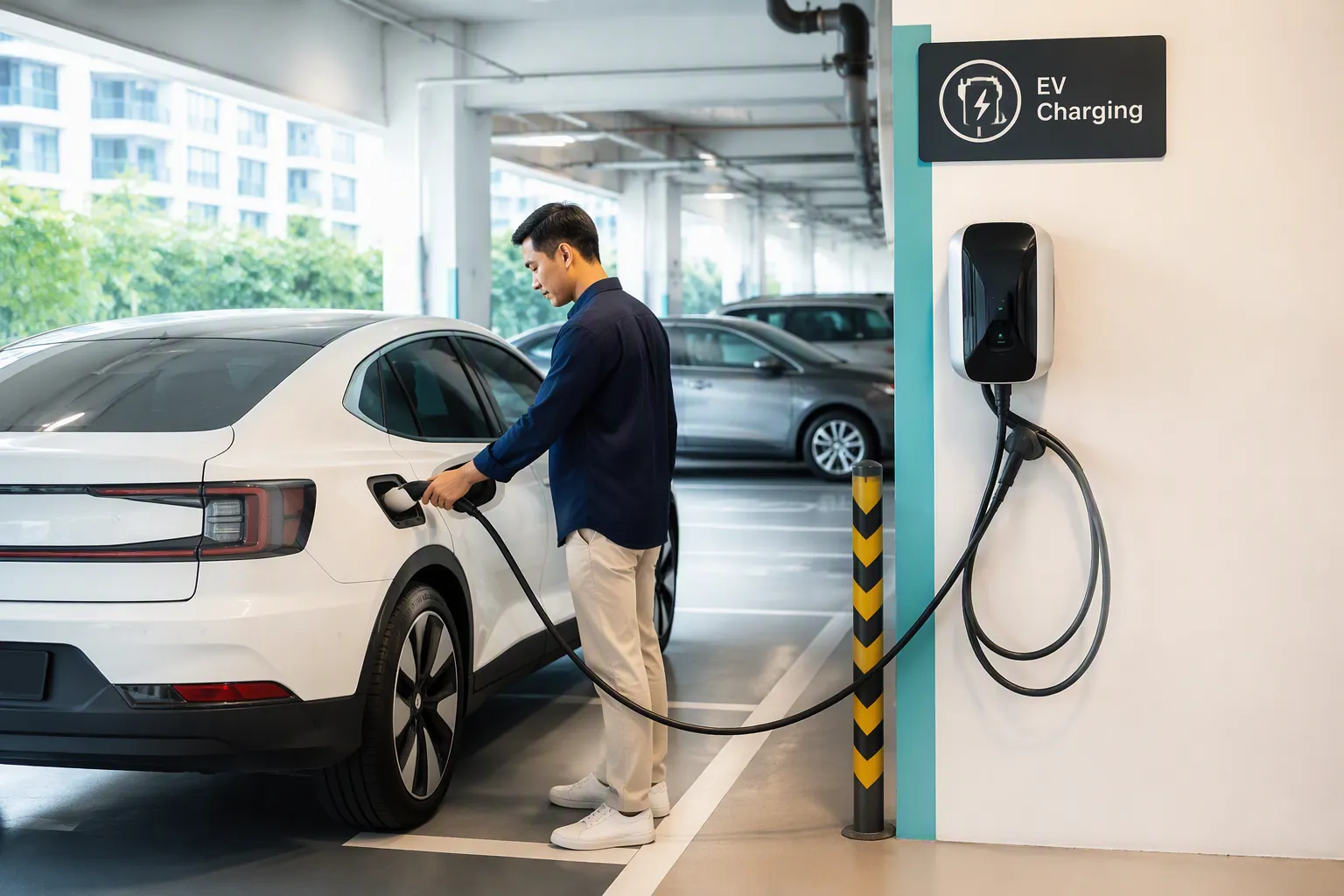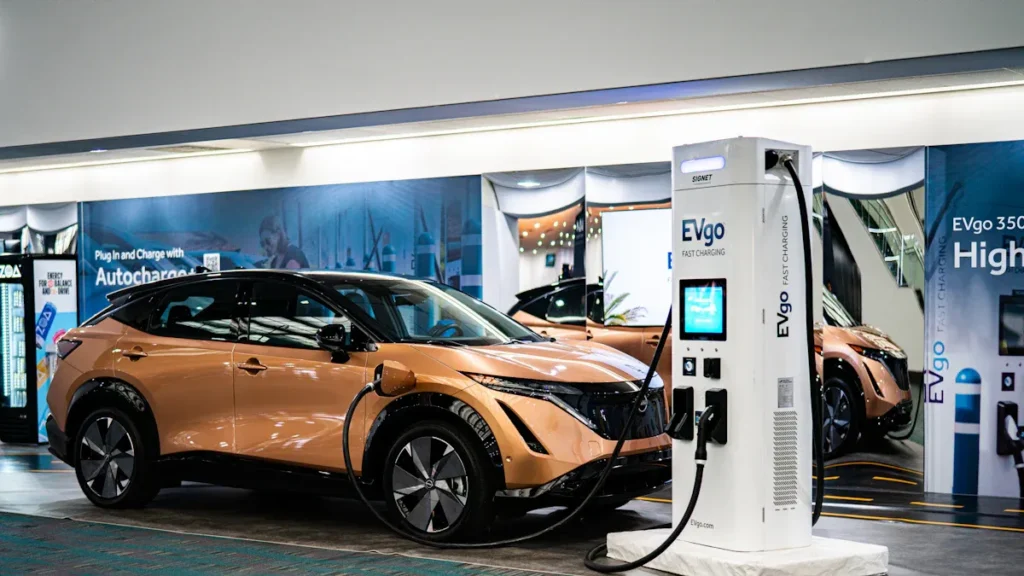
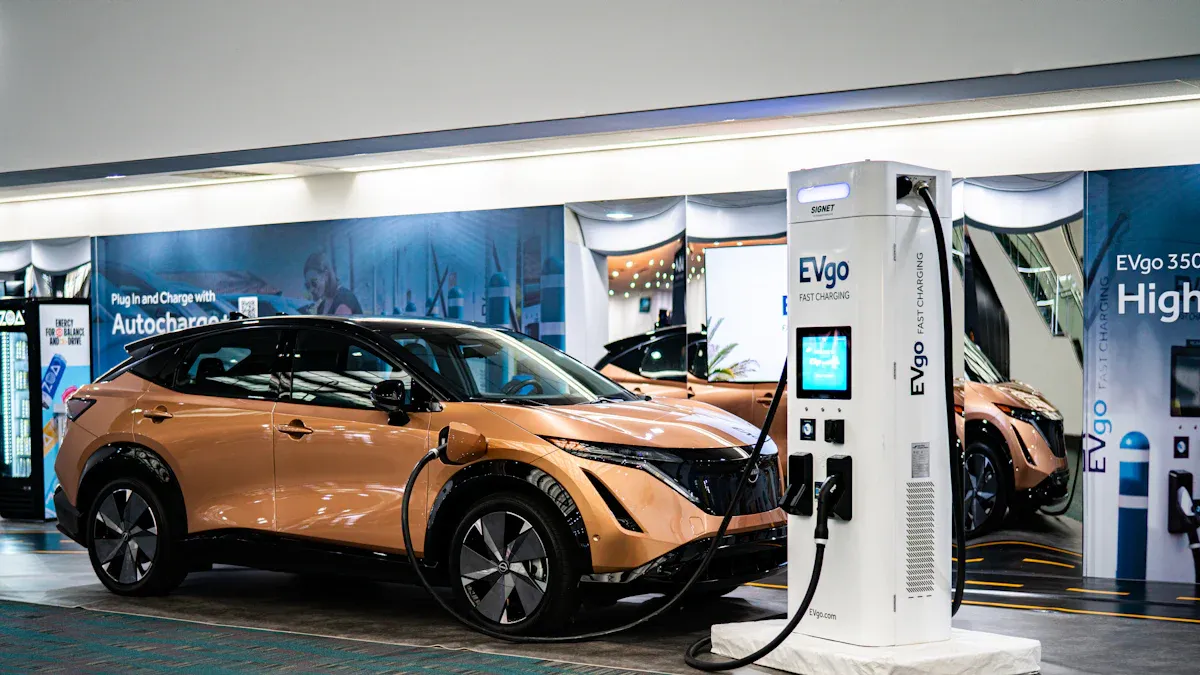
Dutch drivers encounter variations in speed at level 3 chargers due to several factors. Higher power output from an Chargeur EV often delivers faster charging. Compatibility between the vehicle and the charger plays a crucial role in level 3 charging efficiency. EV charging stations rely on advanced technology from Fabricants de chargeurs de VE and robust Solutions de recharge pour véhicules électriques. Real-world conditions, such as local grid limitations, affect performance. Les chargeurs de VE portables offer flexibility but may not match the speed of fixed units.
Level 3 Chargers and Power Output
Maximum kW Rating Explained
Common Power Levels: 50 kW, 100 kW, 150 kW, 350 kW
Level 3 chargers deliver direct current (DC) to electric vehicles at much higher rates than level 2 chargers. The most common power outputs for level 3 chargers installed in the Netherlands range from 50 kW à plus de 350 kW. The table below shows typical power levels available at ev charging stations:
| Type de chargeur | Gamme de puissance de sortie |
|---|---|
| Niveau 3 (Charge rapide en courant continu) | 50kW to 350kW+ |
Drivers encounter these power levels at many public charging locations. A 50 kW charger suits older EVs and smaller batteries. Newer models and high-capacity batteries benefit from 150 kW or even 350 kW chargers. TPSON, as a technologically advanced electric vehicle charging solution provider, offers products that support these high power outputs, ensuring compatibility with modern EVs.
How Power Output Impacts Charging Time
Charging time depends on the power output of the charger and the vehicle’s ability to accept that power. The higher the power output, the faster the battery charges—up to the limit set by the car’s battery management system. The following points illustrate how charging speed correlates with power output:
- The EV will only draw the power that its battery can handle safely.
- Local load management at charging stations can reduce the power delivered to the EV.
- Level 3 chargers have a range of charge rates from 50 kW to 500 kW.
- The charging speed is limited by the EV’s maximum charging capability.
- Charging speeds decrease significantly as the battery approaches full capacity, especially beyond 80%.
- An EV will only charge as fast as its own maximum charge rate allows, regardless of the charger’s capacity.
- Charging time from 80% to 100% can be as long as from 10% to 80% due to reduced charging speeds.
A driver with a vehicle capable of 150 kW charging will not benefit from a 350 kW charger. The car will limit the charging rate to its maximum. Charging sessions become slower as the battery fills, especially after reaching 80%. This behavior protects battery health and prolongs its lifespan.
Differences Among Charger Brands and Locations
Examples of Fast and Slower Level 3 Chargers
Charger brands and locations influence the charging experience. Some brands offer higher power outputs, while others focus on reliability or accessibility. The table below highlights several brands operating in the Netherlands and their maximum charging speeds:
| Charger Brand | Vitesse de chargement |
|---|---|
| Fastned | Jusqu'à 350 kW |
| Ionité | Jusqu'à 400 kW |
| Applegreen Electric | Jusqu'à 400 kW |
Fastned stations often provide rapid charging for drivers on major routes. Ionity and Applegreen Electric deliver even higher speeds, supporting the latest EV models. TPSON’s advanced charging solutions ensure that drivers access reliable and efficient charging at these locations.
Why Some EV Charging Stations Offer Higher Power
EV charging stations with higher power output require robust infrastructure and strong connections to the local grid. Urban areas often support higher power chargers due to greater grid capacity. Rural stations may offer lower power outputs because of grid limitations. Charger manufacturers like TPSON design their products to maximize efficiency and reliability, adapting to the needs of each location.
Charging stations with multiple high-power chargers must balance the load among vehicles. When several cars charge simultaneously, the station may reduce individual charging speeds to prevent overloading the grid. Drivers benefit from stations that manage power effectively, ensuring consistent performance and minimizing wait times.
Tip: Drivers should check the power output of a charger before arrival. Using apps and maps helps locate the fastest level 3 chargers and plan efficient charging sessions.
Vehicle Compatibility and Level 3 Charging
Car’s Maximum Charging Speed
How Your Car Limits Charging Rate
Every electric vehicle has a maximum charging speed determined by its internal systems. The battery management system and the car’s electronics set this limit. When a driver connects to a level 3 charger, the car communicates with the station to negotiate the highest safe power level. The vehicle will only accept as much power as its battery and systems can handle. This process ensures safety and battery longevity.
The onboard charger in an electric vehicle plays a crucial role during Level 1 and Level 2 charging. It converts alternating current (AC) from the grid into direct current (DC) for the battery. However, during level 3 charging, the station delivers DC power directly to the battery, bypassing the onboard charger. This direct connection allows much higher power transfer, sometimes up to 350 kW, depending on the vehicle’s design. The car’s battery management system still controls the maximum rate, preventing overcharging or overheating.
Examples of Popular EVs and Their Charging Limits
Different electric vehicles support different maximum charging speeds. The table below compares several popular models in the Netherlands and their performance at both standard rapid and high-power charging stations:
| Modèle | 50kW DC (“Rapid”) | 350kW DC (“High Power Charging”) |
|---|---|---|
| Niro EV | 1 hour 5 min (10 to 80% charge) | 72kW (43 min for 10 to 80% charge) |
| EV3 SR | 50kW (1 hour 19 min for 10 to 80% charge) | 127kW (29 min for 10 to 80% charge) |
| EV6 | 50kW (1 hour 16 min for 10 to 80% charge) | 258kW (18 min for 10 to 80% charge) |
| EV9 | 50kW (1 hour 23 min for 10 to 80% charge) | 210kW (24 min for 10 to 80% charge) |
A driver with an EV6 can take full advantage of high-power level 3 chargers, reaching up to 258 kW. In contrast, the Niro EV charges at a lower maximum rate, even when connected to a 350 kW station. This difference highlights the importance of knowing a vehicle’s charging capabilities before selecting a charging station.
Battery Size and Chemistry
Impact of Battery Capacity on Charging Speed
Battery size influences how long a charging session lasts, but it does not always affect the charging speed at ultra-rapid stations. Larger batteries store more energy, so they require more time to fill from empty. However, at ultra-rapid chargers (150 kW or higher), the difference in charging time between small and large batteries becomes less significant for the 20% to 80% range. The table below shows how battery size impacts charging duration at different charger types:
| Type de chargeur | Charging Time (20% to 80%) | Battery Size Impact |
|---|---|---|
| Ultra-rapid (150 kW+) | 20 to 30 minutes | Minimal impact on duration |
| 7 kW home wallbox | 6 à 12 heures | Significant impact on duration |
| Standard 3-pin socket | 24+ hours | Major impact on duration |
Ultra-rapid level 3 chargers minimize the effect of battery size on charging time. Home charging solutions, such as wallboxes or standard sockets, show a much greater difference in duration for larger batteries.
Battery Chemistry Differences and Their Effect on Level 3 Charging
Battery chemistry also plays a key role in charging performance. Most electric vehicles in the Netherlands use lithium-based chemistries, each with unique characteristics. The table below summarizes the most common types:
| Chimie de la batterie | Specific Energy Range (Wh/kg) | Lifetime (full cycles) | Notes |
|---|---|---|---|
| Lithium nickel cobalt aluminium oxide (NCA) | 200-250 | 1000-1500 | Favored in premium EVs like Tesla, but more expensive. |
| Lithium nickel manganese cobalt oxide (NMC) | 140-200 | 1000-2000 | Most common in electric and plug-in hybrid vehicles. |
| Lithium iron phosphate (LFP) | 90-140 | 2000 | Lower energy density, suitable for stationary storage. |
| Lithium manganese oxide (LMO) | 100-140 | 1000-1500 | Cobalt-free, used in electric bikes and some commercial vehicles. |
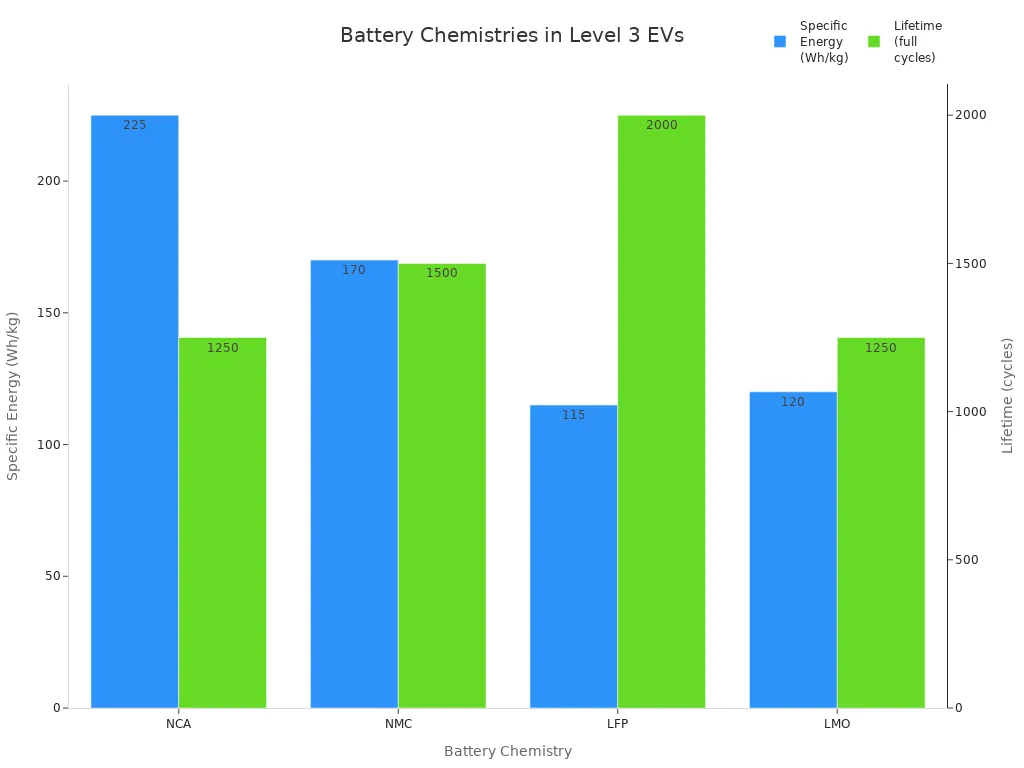
NCA and NMC batteries offer higher energy density, supporting faster charging and longer range. LFP batteries provide longer lifespans but lower energy density, making them less common in passenger EVs. Battery chemistry affects how quickly a battery can accept charge and how well it handles repeated fast charging sessions. Drivers should consider both battery size and chemistry when evaluating charging performance at level 3 charging stations.
Note: Understanding your vehicle’s battery technology and maximum charging speed helps you choose the most efficient charging solution and avoid unnecessary waiting at level 3 chargers.
Charging Technology and Standards at EV Charging Stations
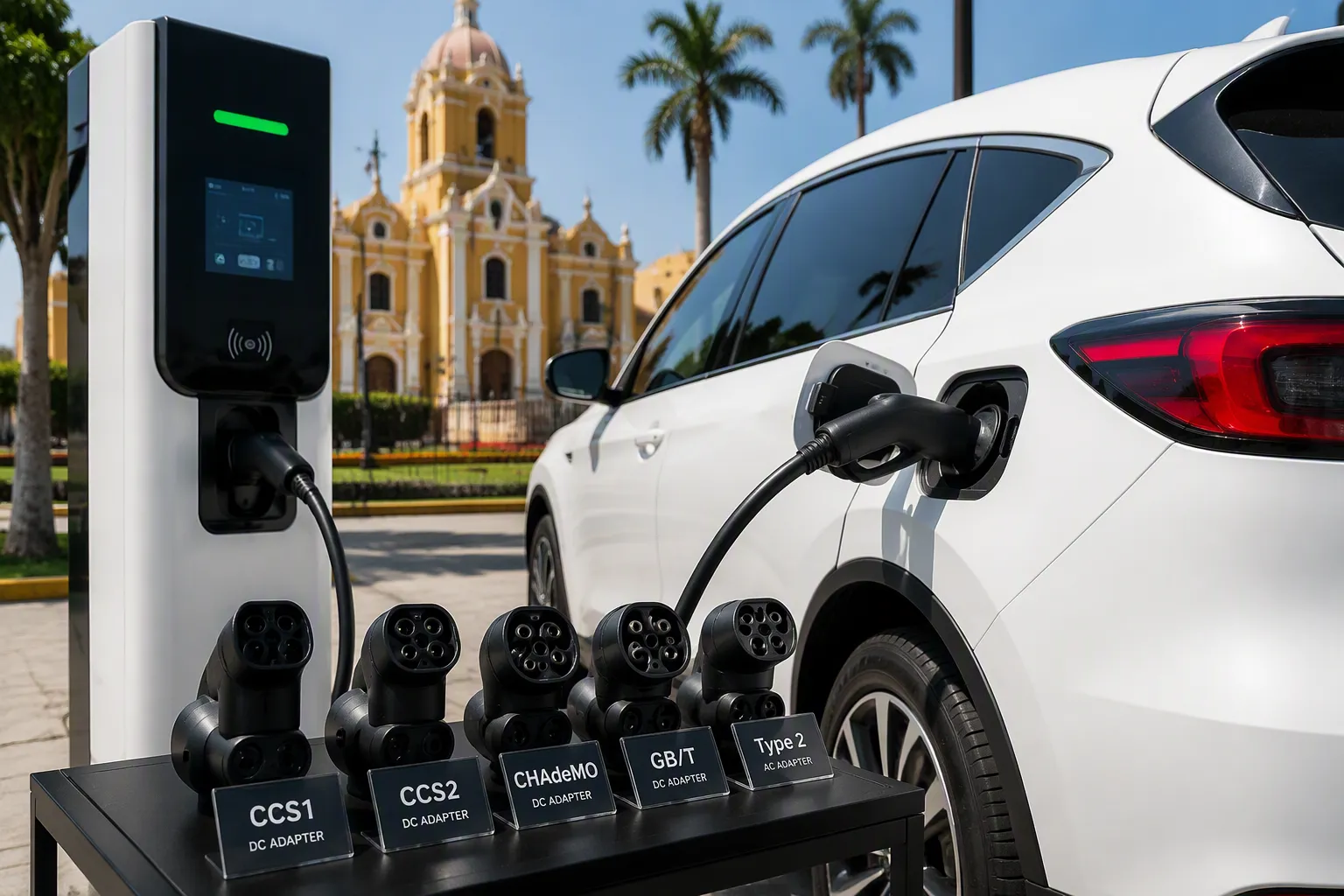
Connector Types: CCS, CHAdeMO, and Tesla Superchargers
The connector type at an EV charging station determines both compatibility and the maximum vitesse de chargement a vehicle can achieve. Dutch drivers encounter several connector types, each with unique features and limitations.
CCS vs. CHAdeMO: What Dutch Drivers Need to Know
CCS (Combined Charging System) and CHAdeMO represent the most common fast charging connectors in the Netherlands. CCS has become the European standard, supporting both AC and DC charging. CHAdeMO, while still present, appears less frequently at new installations.
- CCS supports high-power charging and works with most new European EVs.
- CHAdeMO allows rapid charging up to 250 kW, but fewer new vehicles use this standard.
- Type 2 (Mennekes) connectors remain standard for AC charging, offering up to 22 kW at home and 43 kW at public stations.
- The connector type impacts the power output available, which directly affects the charging experience for Dutch EV drivers.
Drivers should check their vehicle’s compatibility before arriving at a charging station. Using the correct connector ensures efficient charging and avoids unnecessary delays.
Tesla Supercharger Compatibility with Other EVs
Tesla Superchargers offer some of the fastest charging available. Originally, only Tesla vehicles could use these stations. However, many Supercharger locations in the Netherlands now support other brands equipped with CCS connectors. This expansion increases access to high-speed charging for non-Tesla drivers. Not all Superchargers offer this feature, so drivers should verify compatibility through charging apps or station signage.
Communication Protocols and Firmware
Modern charging stations rely on advanced communication protocols to optimize charging sessions. These protocols enable real-time data exchange between the vehicle and the charger, ensuring safe and efficient power delivery.
How Charger-Car Communication Affects Charging Speed
Communication protocols such as OCPP 2.0.1 and ISO 15118 play a vital role in the charging process.
- These protocols allow the vehicle to communicate its charging needs to the station.
- Smart charging and load balancing features depend on this digital communication.
- Real-time data exchange enables the charger to adjust power output, maximizing charging speed while protecting the battery.
Efficient communication ensures that both the vehicle and the charging station operate at their best, reducing charging times and improving the overall experience.
Firmware Updates and Charging Improvements
Keeping charging stations updated with the latest firmware is essential for optimal performance.
- Mises à jour du micrologiciel deliver bug fixes and enhancements that improve the charging process.
- Updates enhance compatibility with new EV models, which can lead to faster and more reliable charging.
- Security improvements in firmware protect both the station and the vehicle during charging sessions.
Charging station operators should prioritize regular firmware updates to maintain high standards of reliability and efficiency.
Tip: Drivers can benefit from using charging stations that advertise recent firmware updates, as these often provide the best charging experience and support for the latest vehicles.
Grid and Site Limitations at Level 3 Chargers
Local Grid Capacity and Power Supply
How Grid Limits Affect Level 3 Charging Speed
Grid capacity plays a critical role in determining the performance of level 3 charging stations. The Netherlands features one of the densest public charging networks in Europe, with over 4,400 fast chargers rated at 100 kW or higher. Fast charging remains essential for Dutch drivers, especially those without access to home charging. Level 3 charging starts at 50 kW and can reach up to 350 kW for ultra-rapid chargers. Charging speeds at these stations can add approximately 100 miles in 30-40 minutes at 50 kW, and up to 200 miles in just 20 minutes at 150-350 kW.
Grid limitations frequently impact charging speed at public stations. As demand for electric vehicle charging increases, the local power supply sometimes cannot deliver the maximum output to every charger. Operators must manage these constraints to ensure safe and reliable charging. Drivers may notice slower charging during peak hours or at stations with limited grid access.
Urban vs. Rural EV Charging Stations
Urban charging stations often benefit from stronger grid connections and higher available power. These locations support more ultra-rapid chargers and deliver consistent charging performance. Rural stations, on the other hand, may face grid limitations that restrict charging speed. The infrastructure in less populated areas sometimes cannot support multiple high-power chargers. Drivers in rural regions should plan their charging sessions carefully and expect longer wait times during busy periods.
Shared Power and Load Balancing
Multiple Cars Charging at Once
When several vehicles connect to the same level 3 charging station, the available power divides among them. Charging speed for each vehicle decreases as more cars use the station simultaneously. Operators use load balancing technology to manage power distribution and prevent grid overload.
- Charging speed drops when multiple vehicles charge together.
- Power allocation ensures safe operation but may result in slower charging for each car.
- Load balancing helps optimize charging sessions and maintain station reliability.
Load Balancing and Its Impact on Charging Speed
Load balancing technology monitors power consumption and adjusts output based on demand. This system protects the local grid and ensures that all vehicles receive a fair share of charging power. Drivers benefit from improved safety and reduced risk of outages, but they may experience slower charging during peak usage.
Site Infrastructure and Maintenance
Quality of Installation at EV Charging Stations
Le quality of installation affects the reliability and efficiency of level 3 charging stations. Proper site preparation, robust wiring, and advanced equipment ensure optimal charging performance. Operators who invest in high-quality infrastructure deliver faster and more consistent charging to their customers.
Maintenance and Reliability of Level 3 Chargers
Maintenance standards in the Netherlands require charge point operators to maintain a 99% availability rate. This translates to a maximum of four days of downtime per charger annually for repairs and maintenance. Reliable charging infrastructure minimizes disruptions and keeps charging stations operational for drivers. Regular maintenance and prompt repairs support consistent charging speed and enhance the overall user experience.
Tip: Drivers should check station status and availability before planning a charging session, especially in rural areas or during peak times.
Real-World Factors Affecting Level 3 Charging
Battery State of Charge and Charging Curve
Why Charging Slows Down Near Full
Charging performance at level 3 chargers depends on the battery’s state of charge. Most electric vehicles charge faster when the battery is at a lower percentage. As the battery approaches full capacity, charging slows to protect battery health. Rapid charging is most efficient between 10% and 80% state of charge. Charging speed drops significantly above 80% and becomes even slower past 90%. The battery management system controls this process to prevent overheating and extend battery life. Different vehicles may show unique charging curves, but the general pattern remains consistent across models.
- Charging speed is highest at low battery percentages.
- Charging slows as the battery nears full capacity.
- Charging performance varies between vehicles, even at the same charger.
How to Optimize Charging Sessions
Dutch drivers can optimize charging sessions by understanding the charging curve. Charging between 20% and 80% battery levels offers the fastest results. Planning for slower charging rates as the battery gets full helps drivers manage their time at ev charging stations. Charging with dynamic tariffs during off-peak hours can reduce energy costs. Drivers should monitor battery levels and avoid waiting for a full charge unless necessary.
- Plan for slower charging rates as the battery fills.
- Charge during off-peak hours to take advantage of dynamic tariffs.
Temperature and Environmental Effects
Cold Weather and Its Impact on Charging Speed
Temperature plays a crucial role in charging efficiency. Cold weather can reduce charging speed because batteries operate best within a specific temperature range. When a battery is cold, the charging process slows to prevent damage. Charging in winter or during cold mornings may take longer, especially at level 3 chargers.
Battery Preconditioning for Faster Charging
Battery preconditioning helps optimize charging speed. Modern electric vehicles often include heating or cooling elements that activate before charging. These systems raise the battery temperature to the optimal range of 15 to 35°C. Preconditioning allows for faster and more efficient charging, especially in cold weather. Drivers benefit from shorter charging times and improved battery performance.
- Battery preconditioning optimizes temperature for charging.
- Preconditioning enables faster charging speeds in cold conditions.
- Built-in heating or cooling elements prepare the battery for efficient charging.
Practical Influences on Charging Experience
Charger Availability and Wait Times at EV Charging Stations
Charger availability affects the charging experience. Busy ev charging stations may lead to longer wait times, especially during peak hours. Drivers should check station status before arrival and plan charging sessions to avoid delays. Urban locations often provide more chargers, while rural stations may have limited options.
User Behavior and Settings That Affect Charging Speed
User behavior influences charging outcomes. Drivers who set their vehicles to charge only up to 80% can maximize charging speed and reduce wait times. Adjusting vehicle settings for battery preconditioning improves efficiency. Monitoring battery levels and choosing the right time to charge helps drivers optimize their experience.
Tip: Drivers who understand battery state of charge, temperature effects, and station availability can achieve faster and more efficient charging at level 3 chargers.
What Dutch Drivers Should Look For at Level 3 Chargers
Choosing the Fastest Level 3 Charger
Checking Power Output Before Arrival
Dutch drivers often save time by checking the power output of level 3 chargers before reaching an ev charging station. Stations display their maximum kilowatt rating, which indicates how quickly a vehicle can charge. Drivers should look for stations offering 150 kW or higher, especially when their vehicle supports rapid charging. High-power chargers reduce waiting times and improve efficiency. Many stations post their specifications online or through mobile apps.
The quality of physical equipment also affects charging speed. Stations with durable materials and modern components deliver consistent performance. Drivers benefit from reliable connections and fewer interruptions during charging sessions.
| Critères | Description |
|---|---|
| Physical Equipment | Assess the quality, durability, and compliance of the charger materials and equipment. |
| Connectivité | Evaluate the communication channels, support for protocols, and security features of the chargers. |
| Charging Profiles | Check the types of charging profiles and schedules supported by the station and their customization options. |
Using Apps and Maps to Find Fast EV Charging Stations
Mobile apps and online maps help drivers locate the fastest level 3 chargers. These tools show real-time availability, power ratings, and connector types. Drivers can filter stations based on their needs and plan routes that minimize charging stops. Apps also provide updates on maintenance and downtime, ensuring that drivers avoid delays. Using technology streamlines the charging process and improves the overall experience.
Matching Level 3 Chargers to Your Car
Knowing Your Car’s Charging Limits
Each electric vehicle has a maximum charging speed. Drivers must know their car’s limits to select the best station. For example, a vehicle that supports up to 100 kW will not benefit from a 350 kW charger. Understanding these limits prevents wasted time and optimizes charging sessions. Manufacturers list charging specifications in the owner’s manual and on official websites.
Picking Compatible Connectors for Level 3 Charging
Connector compatibility remains essential for efficient charging. Most Dutch vehicles use CCS connectors, while some older models rely on CHAdeMO. Tesla drivers often use Superchargers, but many stations now support CCS-equipped vehicles. Drivers should verify connector types before arrival to avoid compatibility issues. Apps and station signage provide this information.
Optimizing Charging Times at EV Charging Stations
Charging When Battery Is Low for Maximum Speed
Charging speed peaks when the battery is low. Drivers achieve the fastest results by starting a session between 10% and 20% state of charge. Charging slows as the battery fills, especially above 80%. Planning sessions when the battery is nearly empty maximizes efficiency and reduces time spent at the station.
Avoiding Peak Times and Busy Sites
Busy ev charging stations often lead to longer wait times and slower charging. Drivers should avoid peak hours, such as evenings and weekends. Urban stations may experience higher demand, while rural locations offer quieter environments. Checking station status and planning ahead ensures a smoother charging experience.
Tip: Drivers who check power output, know their vehicle’s limits, and use technology to find compatible stations enjoy faster and more reliable level 3 charging.
Level 3 charging speed relies on power output, vehicle compatibility, charging technology, grid capacity, and real-world conditions. Dutch drivers who understand these factors select optimal charging stations and reduce wait times.
- Check charger specifications before arrival
- Know the vehicle’s charging limits
- Plan charging sessions for efficiency
Smart planning and informed choices lead to faster, more reliable charging experiences at EV charging stations.
FAQ
What is the main reason some level 3 chargers are faster than others?
The main reason involves the charger’s maximum power output. Higher kilowatt ratings deliver more energy per minute. Vehicle compatibility and local grid capacity also influence charging speed.
Can every electric vehicle use a 350 kW charger?
No. Each vehicle has a maximum charging rate. If a car supports only 100 kW, it will not benefit from a 350 kW charger. The car’s battery management system controls the charging speed.
Do weather conditions affect level 3 charging speed?
Yes. Cold temperatures slow down charging because batteries work best within a specific temperature range. Many modern EVs use battery preconditioning to improve charging speed in cold weather.
How can drivers find the fastest level 3 chargers in the Netherlands?
Drivers can use mobile apps and online maps to locate fast chargers. These tools show real-time availability, power ratings, and connector types. Planning ahead saves time and avoids delays.
Why does charging slow down after 80% battery?
Charging slows after 80% to protect battery health. The battery management system reduces power to prevent overheating and extend battery life. Fast charging is most efficient between 10% and 80%.
Are all level 3 chargers compatible with every EV?
No. Compatibility depends on the connector type (CCS, CHAdeMO, or Tesla) and the vehicle’s charging system. Drivers should check their car’s requirements before using a charger.
What should drivers do if a level 3 charger is busy or unavailable?
Drivers should check charger status using apps before arrival. If a station is busy, they can look for nearby alternatives or wait until off-peak hours for faster service.
Does charging at a higher power station cost more?
Often, yes. Many operators charge higher rates for ultra-rapid charging. Drivers should review pricing details in advance to avoid surprises.