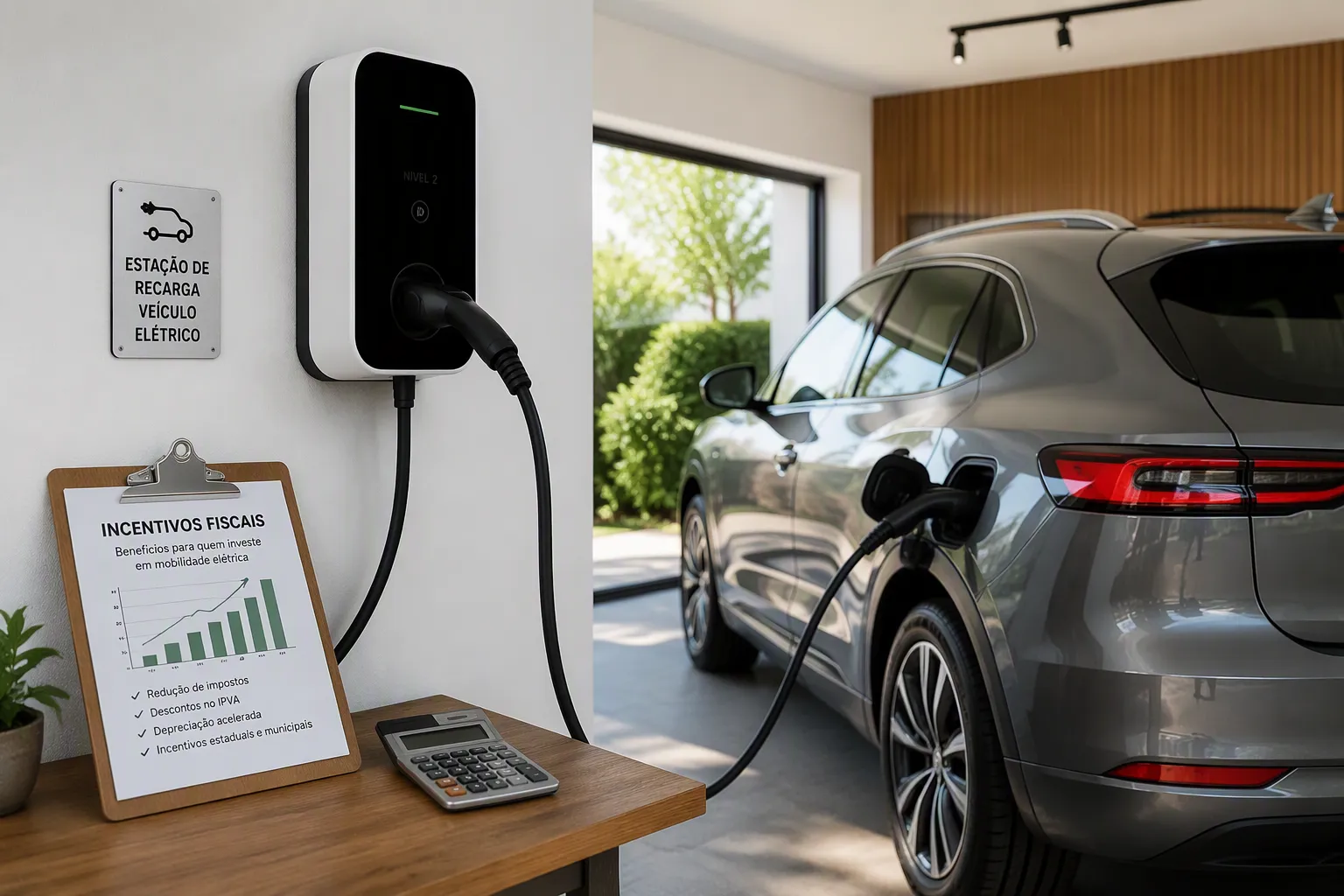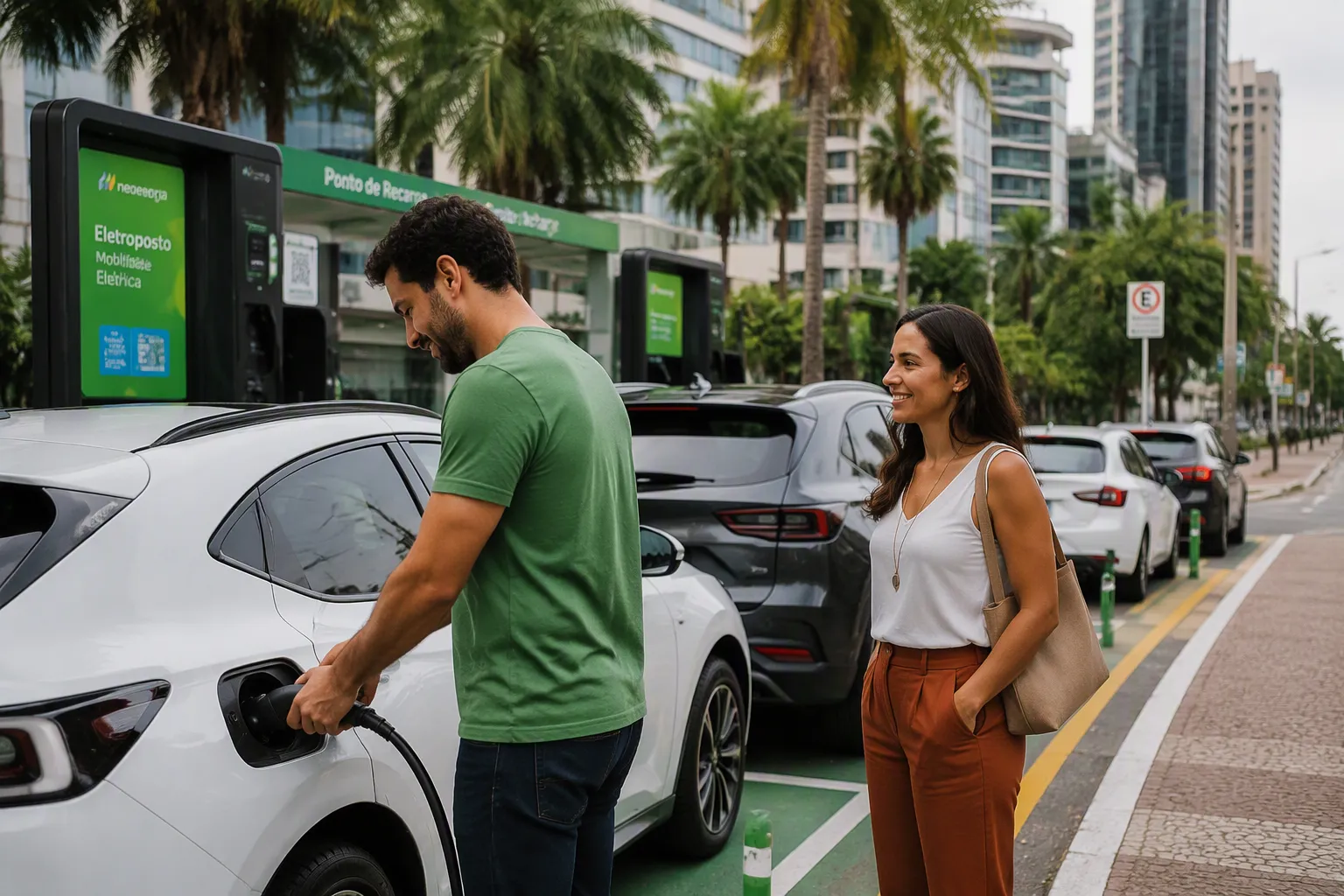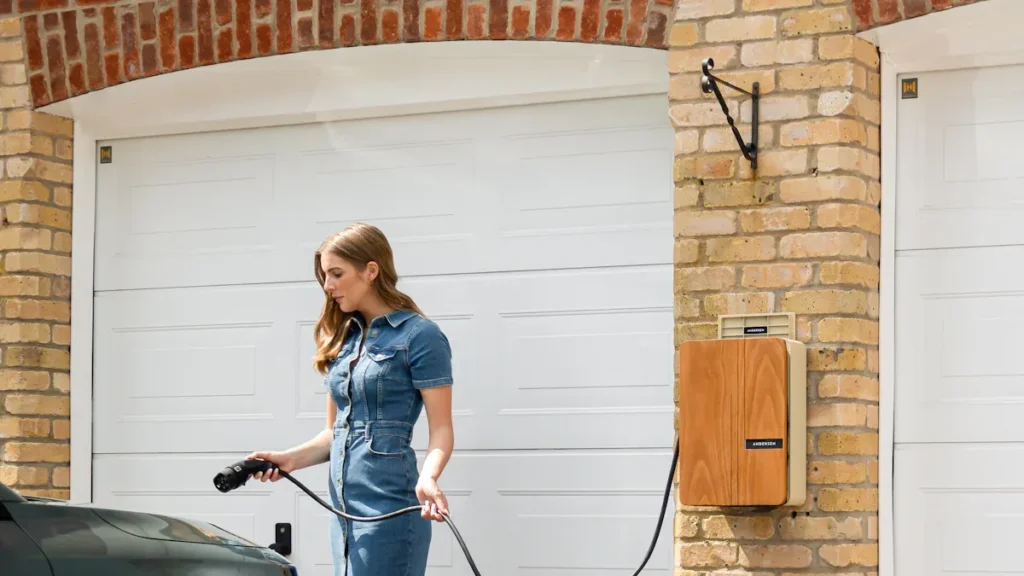
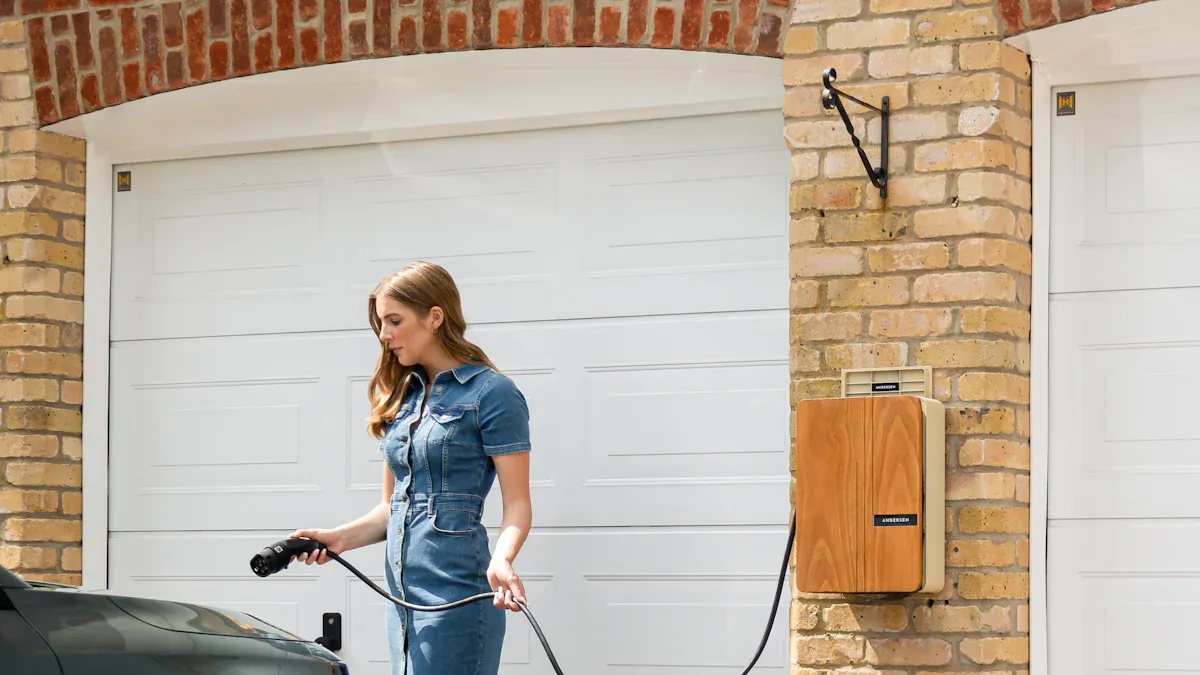
Brazilian households are rapidly adopting electric vehicles, with electric vehicle sales seeing a 40% rise in early 2025. For these new owners, a smart Chargeur de VE represents a wise investment. The higher initial investment cost is justified by significant long-term savings and superior convenience. While some Fabricants de chargeurs de VE offer basic chargeurs portables pour VE, advanced Solutions de recharge pour véhicules électriques from providers like TPSON deliver greater long-term value. The right EV Charger choice depends on access to “Tarifa Branca” and a home’s specific electric setup.
Understanding the Technology: What Makes a Smart EV Charger “Smart”?
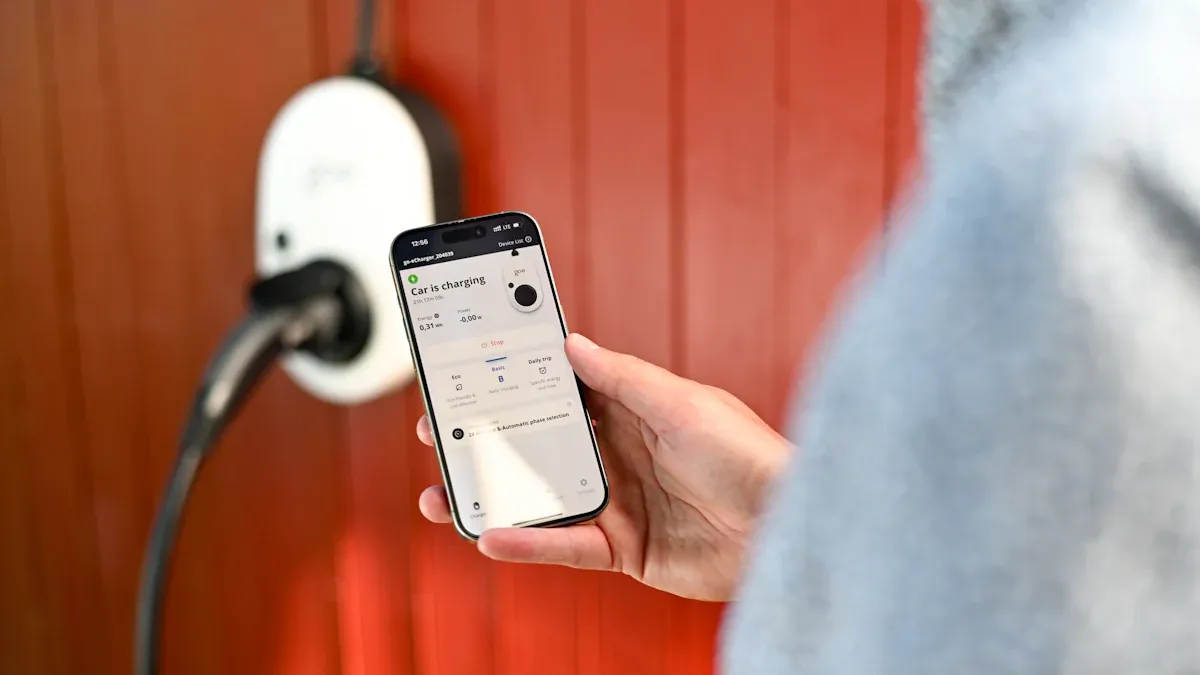
To appreciate the value of a smart EV charger, one must first understand the components of a standard home charging station and what sets the “smart” version apart. The difference lies in connectivity, which unlocks a new level of control, efficiency, and energy management.
Core Components of a Home Charging Station
Every home EV charger, regardless of its intelligence, is built upon a foundation of essential hardware designed for safe and reliable power delivery.
The Charger Unit (Wallbox)
The wallbox is the main unit mounted to a wall. It houses the critical electrical components that manage the flow of electricity from the home’s circuit to the vehicle. This enclosure protects the internal electronics from environmental factors.
Cabling and Connectors (Type 2 Standard)
A durable cable connects the wallbox to the vehicle. In Brazil, the “Type 2” connector is the established standard for AC charging. This ensures compatibility across most electric vehicle models available in the country.
Internal Safety Mechanisms
Safety is paramount. All certified chargers include internal mechanisms like circuit breakers and residual current devices (RCDs). These components protect against overcurrents, short circuits, and electrical faults, ensuring the safety of both the user and the home’s electrical system.
The “Smart” Difference: Connectivity and Control
The “smart” designation comes from a charger’s ability to communicate. Advanced EV charging solutions from providers like TPSON integrate this technology to maximize energy efficiency.
Wi-Fi and Bluetooth Connectivity
Smart chargers connect to the internet via your home’s Wi-Fi network. This connection allows the device to send and receive data from the cloud. Many also feature Bluetooth for initial setup and direct control when you are near the charger, even if your Wi-Fi is temporarily down.
The Role of the Smartphone App
The smartphone app is the command center. It transforms a user’s phone into a remote control for the charger. Through the app, homeowners can start or stop charging, monitor progress, and access detailed data about their energy usage.
Cloud-Based Management Platforms
Each command from the app travels to a secure cloud platform. This platform processes the request and communicates it back to the charger. It also stores historical charging data, enabling users to track energy consumption and costs over time, which is crucial for optimizing charging efficiency.
Key Smart Features Explained
Connectivity enables a suite of features that deliver convenience and cost savings. These functions are what truly define the smart charging experience.
Principaux enseignements : Smart features transform your charger from a simple power outlet into an intelligent energy management tool.
Remote Start, Stop, and Monitoring
Users can initiate or end a charging session from anywhere with an internet connection. They can also check the vehicle’s current charge level and estimated completion time directly from their phone.
Scheduled Charging Sessions
This is a cornerstone of smart charging. Homeowners can schedule charging to begin automatically during off-peak hours when electricity rates are lowest. This simple action significantly reduces the cost of vehicle energy.
Energy Consumption Tracking
Smart chargers provide detailed reports on energy usage. Users can see exactly how many kilowatt-hours (kWh) were used for each session, track monthly energy consumption, and calculate their true charging costs, promoting greater efficiency.
The Financial Case: How a Smart EV Charger Saves You Money in Brazil
The primary motivation for choosing a smart Chargeur de VE is financial. The technology enables homeowners to actively manage their electricity consumption. This management leads directly to significant long-term savings and excellent returns on the initial investment. The key to unlocking these benefits in Brazil is understanding and utilizing the “Tarifa Branca.”
Maximizing Savings with “Tarifa Branca”
The “Tarifa Branca,” or White Tariff, is a time-of-use electricity rate available to many Brazilian consumers. It charges different prices for electricity depending on the time of day. A smart charger is the perfect tool to take full advantage of this system, maximizing efficiency and minimizing cost.
What is the White Tariff (Tarifa Branca)?
The White Tariff divides the day into three distinct periods. Each period has a different cost per kilowatt-hour (kWh). The goal is to encourage consumers to shift their heavy energy usage away from times of high demand on the national grid.
The Core Idea: Use more electricity when it is cheap (off-peak) and less when it is expensive (peak). This simple shift dramatically impacts your monthly electricity bill.
Identifying Off-Peak, Mid-Peak, and Peak Hours
Electricity distributors define the exact times for these periods, but they generally follow a consistent pattern on weekdays. Weekends and national holidays are typically considered off-peak all day.
Here is a typical weekday schedule for the White Tariff:
| Tariff Period | Typical Timeframe (Weekdays) | Heures de Pointe | Best Time to Charge? |
|---|---|---|---|
| Peak (Peak) | 18:00 – 21:00 | 🔴 Highest | À éviter |
| Heures pleines (Mid-Peak) | 17h00 – 18h00 & 21h00 – 22h00 | 🟡 Moyenne | Acceptable |
| Heures creuses (Off-Peak) | 22:00 – 17:00 | 🟢 La plus basse | ✅ Idéal |
Remarque : Les propriétaires doivent confirmer les horaires exacts auprès de leur fournisseur d'électricité local.
Automatisation de la charge aux heures les moins chères
C'est là qu'un chargeur intelligent pour véhicule électrique démontre sa valeur. Au lieu de brancher manuellement la voiture tard le soir, les propriétaires utilisent l'application smartphone pour programmer un planning. Ils peuvent indiquer au chargeur de démarrer une session automatiquement à 22h00, lorsque la période d'énergie à bas coût en heures creuses commence. Le chargeur fournit ensuite l'énergie nécessaire pendant la nuit. Cette automatisation garantit le coût de charge le plus bas possible sans effort quotidien, assurant des économies maximales et une efficacité énergétique optimale.
Calculer votre retour sur investissement (ROI)
Le prix plus élevé d'un chargeur intelligent est un investissement pour des économies futures. Calculer les retours potentiels aide à justifier ce coût initial. Le processus implique d'estimer les habitudes de conduite et de comparer le coût d'une charge non gérée à celui d'une charge intelligente programmée.
Estimation de vos kilomètres mensuels
Premièrement, un propriétaire doit déterminer sa distance de conduite mensuelle moyenne. Un navetteur urbain typique au Brésil pourrait parcourir environ 1 200 kilomètres par mois. Ce chiffre est la base du calcul des besoins énergétiques mensuels.
Comparaison des coûts de charge : Intelligent vs Non géré
Ensuite, on peut comparer le coût de la charge. Un chargeur non géré pourrait être utilisé pendant les heures de pointe par commodité. Un chargeur intelligent, comme ceux des fournisseurs avancés tels que TPSON, sera programmé pour les heures creuses. La différence de coût est substantielle.
Supposons qu'un VE ait une efficacité de 6 km/kWh. Pour un mois de 1 200 km, le véhicule a besoin de 200 kWh d'énergie.
| Méthode de chargement | Tariff Period | Exemple de tarif (R$/kWh) | Coût énergétique mensuel |
|---|---|---|---|
| Charge non gérée | Peak (Peak) | R$ 1,20 | R$ 240,00 |
| Chargement intelligent | Heures creuses (Off-Peak) | R$ 0,60 | R$ 120,00 |
Cette simple comparaison montre des économies mensuelles immédiates de R$ 120,00. Sur un an, cela représente des économies totales de R$ 1.440,00, conduisant à des factures d'électricité nettement plus basses.
Le seuil de rentabilité : Quand votre chargeur s'amortit
Le seuil de rentabilité est atteint lorsque les économies accumulées égalent l'investissement initial dans le chargeur. Si la différence de prix entre un chargeur standard et un chargeur intelligent est de R$ 2.000, le calcul est simple :
Coût supplémentaire initial / Économies mensuelles = Mois pour atteindre le seuil de rentabilité
R$ 2.000 / R$ 120 = ~17 mois
Dans ce scénario, le chargeur intelligent amortit son coût supplémentaire en moins d'un an et demi. Passé ce point, toutes les économies futures sont des rendements financiers purs, en faisant un investissement à long terme très logique pour améliorer l'efficacité énergétique domestique.
Les avantages pratiques : Commodité et sécurité pour votre domicile
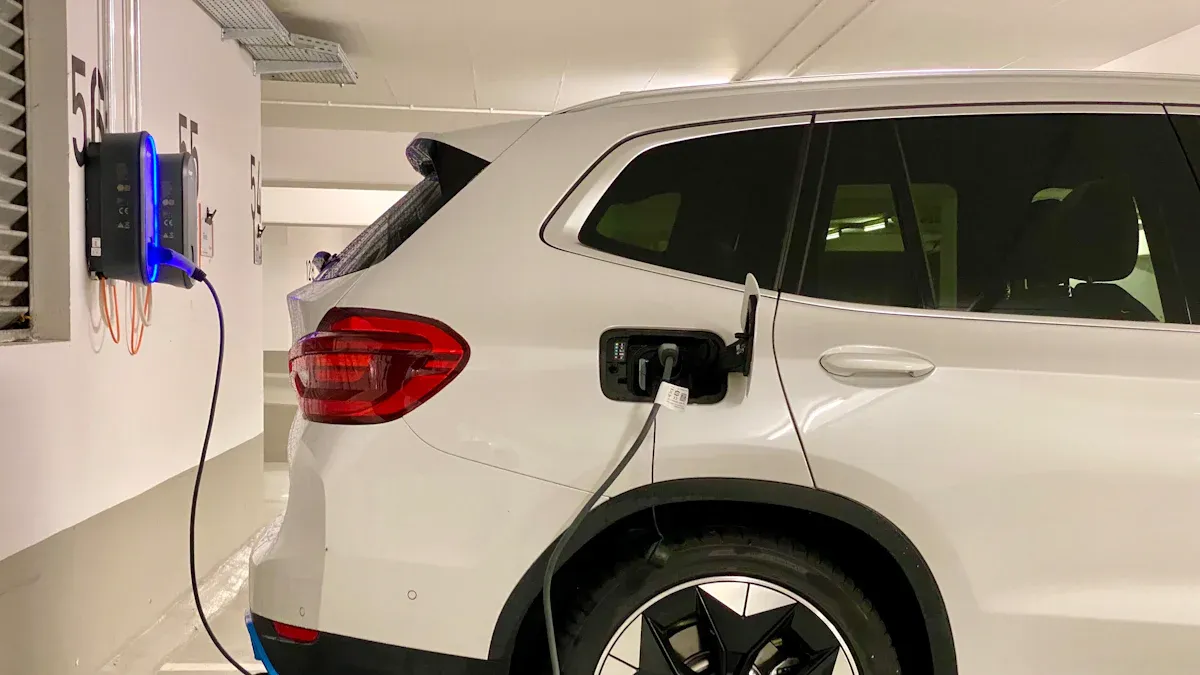
Au-delà des économies financières, un chargeur intelligent pour VE offre des avantages pratiques significatifs qui améliorent la vie quotidienne et protègent l'infrastructure électrique d'une maison. Ces avantages sont centrés sur une commodité supérieure et des fonctionnalités de sécurité avancées, transformant l'expérience de possession d'un VE d'une tâche en un processus automatisé et transparent.
Commodité et flexibilité inégalées
La technologie intelligente élimine l'effort manuel et les conjectures de la charge du véhicule. Les propriétaires obtiennent un contrôle complet de leur consommation d'énergie grâce à des outils numériques intuitifs.
Gérer votre charge de n'importe où
Le cœur de cette commodité est l'application smartphone. Elle agit comme une télécommande, permettant aux propriétaires de démarrer, arrêter ou mettre en pause une session de charge depuis n'importe quel endroit avec une connexion internet. Cela signifie qu'un utilisateur peut brancher son véhicule en rentrant chez lui et initier la charge plus tard depuis son canapé, assurant que la session s'aligne parfaitement avec son emploi du temps et les périodes d'énergie à bas coût.
Notifications et mises à jour de statut en temps réel
Un chargeur intelligent tient le propriétaire informé. Le système envoie des notifications en temps réel directement sur le téléphone de l'utilisateur, confirmant quand une session de charge commence, quand elle est terminée, ou si une erreur se produit. Ce retour constant fournit tranquillité d'esprit, car les propriétaires connaissent toujours le statut de charge de leur véhicule sans avoir besoin de le vérifier physiquement.
Partager l'accès avec les membres de la famille
Pour les foyers avec plusieurs conducteurs, un chargeur intelligent simplifie la gestion. Le titulaire du compte principal peut accorder l'accès à la charge à d'autres membres de la famille via l'application. Cette fonctionnalité permet à chacun de charger son véhicule en cas de besoin, tandis que le propriétaire peut toujours surveiller la consommation d'énergie globale et les coûts depuis un compte central.
Améliorer la sécurité électrique domestique avec l'équilibrage de charge
Peut-être l'avantage pratique le plus critique est l'intégration d'une technologie de sécurité avancée. L'Équilibrage Dynamique de Charge (EDC) est une fonctionnalité qui protège activement le système électrique d'une maison des surcharges.
Qu'est-ce que l'équilibrage dynamique de la charge ?
L'Équilibrage Dynamique de Charge est un système intelligent qui surveille la consommation totale d'électricité d'une maison en temps réel. Il mesure constamment la quantité d'énergie utilisée par tous les appareils, lumières et autres dispositifs.
Le principe de sécurité : L'EDC garantit que la demande totale en électricité de la maison plus le chargeur de VE ne dépasse jamais la capacité maximale du disjoncteur principal.
Comment il prévient les surcharges de circuit
Le système fonctionne automatiquement pour maintenir une charge électrique sûre.
- Un capteur mesure l'électricité totale entrant dans la maison.
- Le chargeur calcule la capacité disponible en soustrayant l'utilisation domestique actuelle de la limite du fusible principal.
- Il ajuste ensuite la puissance de charge fournie au VE pour s'inscrire dans cette marge sûre et disponible.
Si quelqu'un allume un appareil à haute puissance comme un chauffe-eau instantané, le système EDC réduit instantanément la vitesse de charge. Une fois l'appareil éteint, il restaure le chargeur à pleine puissance. Cet ajustement dynamique évite les déclenchements de disjoncteurs et les dommages potentiels au câblage domestique.
Pourquoi c'est crucial pour les maisons avec une capacité limitée
Many homes in Brazil were not designed to handle the high, sustained energy draw of an EV charger alongside other major appliances. Without DLB, charging an EV could frequently cause power outages. This feature is crucial because it allows homeowners to install a powerful charger without needing an expensive and complex upgrade to their home’s main electrical panel, saving both money and hassle while ensuring a safe distribution of energy.
Assurer la Pérennité de Votre Investissement
Choosing a smart EV charger is not just about immediate benefits; it is a strategic investment in future technology. These devices are designed to evolve, integrating with emerging energy trends and ensuring long-term relevance. This forward-thinking capability protects a homeowner’s investment against technological obsolescence and positions them to capitalize on the future of home energy management, especially concerning renewable energy and grid advancements.
Integration with Renewable Energy
The synergy between smart chargers and renewable energy, particularly solar power, is a key advantage. This combination unlocks true energy independence and promotes sustainability. A smart charger acts as the brain, directing the flow of green energy for maximum efficiency.
Pairing with Home Solar Panel Systems
Homeowners with solar panels can pair them with a smart charger to create a self-sufficient ecosystem. A smart charger communicates with the solar inverter and any connected energy storage system. This integration is crucial for optimizing the use of renewable energy. The system intelligently manages the flow of solar energy, ensuring this renewable resource meets the home’s energy demands first before directing any surplus to the vehicle. This creates a powerful setup for sustainability and energy independence.
A complete solar charging setup includes solar panels, an inverter, the smart EV charger, and often a battery for energy storage. This combination provides the ultimate control over your home’s renewable energy.
Prioritizing Solar Energy for “Free” Charging
A smart charger can prioritize charging using only excess solar energy. This process turns sunlight into free vehicle fuel, a significant step towards sustainability and lower costs. The system follows a smart hierarchy:
- First, solar energy powers the home’s immediate needs during the day.
- Next, surplus solar energy is directed to charge the electric vehicle.
- Finally, any remaining green energy is stored in a home battery for later use or sent to the grid.
This automated prioritization ensures every kilowatt of renewable energy is used effectively. It maximizes the use of green energy and enhances a household’s energy independence from the public grid.
Preparing for the Future of the Grid
Smart chargers are also ready for the next generation of electrical grid technologies. Their connectivity makes them adaptable, a crucial feature as energy systems become more interactive and reliant on renewable energy sources.
Préparation des véhicules au réseau (V2G)
Vehicle-to-Grid (V2G) is an emerging technology that allows an EV’s battery to send energy back to the grid during peak demand. While not yet widespread in Brazil, having a smart charger provides the foundational hardware that may support future V2G capabilities. This positions homeowners to potentially participate in future energy programs, further enhancing their energy independence and contributing to grid stability.
Over-the-Air Software Updates for New Features
Smart chargers from advanced providers like TPSON receive over-the-air (OTA) software updates. This function is similar to updating a smartphone. The manufacturer can remotely add new features, improve charging algorithms, and enhance compatibility with new renewable energy technologies or utility programs. These updates ensure the charger remains current and functional for years, protecting the initial investment and continuously improving the user experience with the latest eco-friendly solutions.
The Drawbacks: Potential Cons of a Smart EV Charger
While smart EV chargers offer compelling advantages, homeowners must also consider their potential drawbacks. The higher initial investment and a dependency on technology are two significant factors that require careful evaluation. Understanding these cons ensures a balanced perspective before making a final purchasing decision.
The Higher Upfront Investment
The most immediate barrier for many potential buyers is the price. A smart charger represents a larger financial commitment compared to its simpler counterparts, encompassing both the unit’s price and the cost of professional installation.
Price Comparison: Smart vs. Standard Chargers
A smart EV charger typically carries a higher price tag than a standard, or “dumb,” charger. This price difference is due to the advanced hardware and software required for connectivity, data processing, and remote control. The initial investment for a smart unit can be significantly more, a factor that homeowners must weigh against the promise of long-term energy savings. This upfront cost is a primary consideration in the overall budget for EV ownership.
Professional Installation Costs in Brazil
Regardless of the charger type, professional installation is essential for safety and compliance. The installation cost in Brazil can vary based on the complexity of the job, the home’s existing electrical infrastructure, and regional labor rates. A proper installation ensures the charger operates safely and efficiently. This installation expense adds to the total initial investment, making the financial planning for a home charging setup a critical step. Homeowners should budget for both the charger and the installation to get a complete picture of the total cost.
The Reliance on Technology
The “smart” capabilities of these chargers are entirely dependent on technology. This reliance introduces potential points of failure and a learning curve that may not be suitable for every user.
Requirement for a Stable Wi-Fi Connection
A smart charger needs a consistent and stable Wi-Fi connection to function correctly. This ‘always-on’ connectivity is crucial for accessing its advanced features. The charger communicates with cloud servers to receive commands, send data, and download updates. An unstable or weak Wi-Fi signal can disrupt these processes, limiting the device’s smart functionality and affecting its ability to manage energy consumption effectively.
What Happens if the Internet Fails?
Internet connectivity issues can lead to downtime for the charger’s software. If the internet connection fails, the charger loses its “smart” capabilities.
Without a connection, advanced features like automated scheduling, remote monitoring, cost optimization, and dynamic adjustments based on household energy demand become unavailable. The charger typically reverts to a “dumb” mode, allowing basic charging to continue but without the intelligent energy management that justifies its higher cost.
While many chargers from providers like TPSON include Bluetooth for direct local control, the core benefits tied to cloud management and remote access are lost during an outage.
App Complexity for Non-Tech-Savvy Users
The user experience with smart charger apps can be a significant hurdle for some individuals. The overall ease of use has been described as poor in some cases, characterized by the hassle of managing apps and payment methods. For users who are not comfortable with technology, navigating these interfaces can be frustrating. Some common challenges include:
- App Limitations: Certain apps, even when paired with high-quality hardware, may lack in-depth features or intuitive data access, restricting a user’s ability to manage their charging sessions easily.
- Complex Features: While features like scheduling and energy tracking are powerful, their setup can be confusing for those seeking a simple plug-and-charge experience.
This complexity can make the process feel cumbersome, potentially detracting from the convenience that smart technology is meant to provide.
How Does a Smart Charger Compare to Other Options in Brazil?
Choosing the right charger involves comparing the available options against a homeowner’s specific needs. The decision often comes down to a trade-off between initial cost, long-term savings, and daily convenience. A smart charger from a provider like TPSON offers advanced features, but it is important to see how it stacks up against more basic alternatives.
Smart Charger vs. Standard (Dumb) Charger
The most common comparison for a permanent home installation is between a smart and a standard wallbox. The primary differences are intelligence and price.
Cost vs. Control
A standard charger has a lower upfront cost, making it an attractive option for budget-conscious buyers. However, this initial saving comes at the expense of control. A smart charger gives homeowners the power to manage their energy consumption precisely. They can schedule charging for off-peak hours to leverage “Tarifa Branca,” monitor energy usage, and ultimately reduce their electricity bills. This control translates into significant long-term financial benefits that a standard charger cannot offer.
Simplicity vs. Functionality
Standard chargers offer straightforward simplicity: a user plugs in the vehicle, and it charges. This appeals to those who want a no-fuss solution. In contrast, a smart charger provides a wealth of functionality through its app. Features like remote start/stop, energy tracking, and load balancing deliver a superior and safer user experience. The choice is between basic power delivery and an intelligent energy management system.
Chargeur intelligent vs. Chargeur portable (de secours)
Tout propriétaire de véhicule électrique rencontrera un chargeur portable, car il est souvent fourni avec le véhicule. Cependant, son utilisation prévue est très différente d'une wallbox dédiée.
Vitesse de charge et utilité quotidienne
La différence la plus significative est la vitesse de charge. Un chargeur portable, qui se branche sur une prise domestique standard, délivre l'énergie très lentement. Un chargeur intelligent de niveau 2 fournit une charge beaucoup plus rapide et fiable, le rendant adapté à un usage quotidien. La différence de puissance de sortie impacte directement le temps nécessaire pour que le véhicule soit prêt à rouler.
| Type de chargeur | Puissance (kW) | Temps de charge complet typique (batterie de 40 kWh) |
|---|---|---|
| Portable (Niveau 1) | ~1,4 kW | 8 à 24 heures |
| Chargeur intelligent de niveau 2 | 7 kW | ~6 heures |
Cette augmentation spectaculaire de vitesse signifie qu'un chargeur intelligent peut recharger complètement la batterie d'un véhicule pendant la nuit. Un chargeur portable pourrait avoir du mal à ajouter suffisamment d'énergie pour le trajet du lendemain, le rendant peu pratique comme solution principale.
Quand un chargeur portable est une nécessité
Malgré sa lenteur, le chargeur portable est un outil essentiel. Sa valeur réside dans sa portabilité.
Un chargeur portable est la solution de secours idéale en cas d'urgence ou pour recharger lors de visites chez des amis ou de la famille qui ne disposent pas d'une wallbox dédiée. Il fournit un filet de sécurité, garantissant qu'un conducteur peut ajouter de l'autonomie à son véhicule depuis presque n'importe quelle prise électrique standard. C'est un outil de nécessité, pas de commodité quotidienne ou de gestion efficace de l'énergie.
Pour la plupart des propriétaires brésiliens de véhicules électriques, un chargeur intelligent pour VE est un investissement supérieur. Il offre une valeur à long terme significative en maximisant les économies d'électricité grâce à la programmation via la “Tarifa Branca”. Cette technologie améliore également la sécurité domestique en gérant la consommation totale d'électricité et d'énergie.
Choisissez un chargeur intelligent pour des économies et un contrôle énergétique maximaux si :
- Vous pouvez utiliser des tarifs d'électricité en heures creuses.
- Vous avez ou prévoyez d'installer des panneaux solaires.
- Votre maison possède d'autres appareils électriques à haute puissance.
En évaluant ces points, les propriétaires peuvent choisir en toute confiance le chargeur adapté pour maximiser les avantages de posséder un VE au Brésil.
FAQ
Que faire si ma maison a une connexion Wi-Fi instable ?
Une connexion stable permet toutes les fonctionnalités intelligentes. Cependant, de nombreux chargeurs reviennent à une charge basique en cas de panne d'internet. Les solutions avancées de fournisseurs comme TPSON incluent souvent le Bluetooth pour un contrôle local direct, garantissant la fonctionnalité même sans Wi-Fi.
Dois-je mettre à niveau le tableau électrique de ma maison ?
Pas nécessairement. Un chargeur intelligent avec Équilibrage Dynamique de Charge (EDC) gère activement la puissance. Il ajuste la vitesse de charge pour éviter les surcharges de circuit, éliminant souvent le besoin de mises à niveau électriques coûteuses dans les maisons à capacité limitée.
L'installation professionnelle est-elle obligatoire pour un chargeur domestique ?
Oui, un électricien certifié doit installer le chargeur. Cela garantit que l'installation est sûre, conforme aux normes électriques brésiliennes et protège à la fois votre maison et votre véhicule. L'auto-installation peut annuler les garanties et créer de graves risques pour la sécurité.
Un chargeur intelligent est-il utile sans accès à la “Tarifa Branca” ?
Absolument. Bien que la “Tarifa Branca” maximise les économies, un chargeur intelligent offre toujours une valeur significative. Les propriétaires bénéficient d'une surveillance à distance, de rapports énergétiques détaillés et de fonctionnalités de sécurité avancées comme l'équilibrage de charge, améliorant ainsi la commodité et le contrôle.
Quel connecteur de charge est standard au Brésil ?
Le connecteur de Type 2 est la norme établie pour la charge domestique en courant alternatif (AC) au Brésil. Cela garantit la compatibilité avec la grande majorité des véhicules électriques disponibles sur le marché. Les chargeurs de qualité utiliseront toujours ce type de connecteur.
Comment fonctionne un chargeur intelligent avec des panneaux solaires ?
Un chargeur intelligent s'intègre intelligemment avec un système solaire domestique. Il peut être programmé pour n'utiliser que l'excédent d'énergie solaire pour charger le véhicule. Cette fonctionnalité fournit un carburant “gratuit” et durable et maximise l'indépendance énergétique d'un foyer.
Puis-je toujours charger ma voiture si l'application cesse de fonctionner ?
Oui. Le chargeur continuera généralement de fonctionner comme une source d'alimentation de base. De nombreux modèles permettent également aux utilisateurs de démarrer ou d'arrêter une session avec un bouton physique sur l'appareil lui-même, garantissant que le véhicule est chargé.