
Wi-Fi and Bluetooth connectivity elevates a standard charger into a smart device. This technology enables remote control, scheduled charging, and real-time energy monitoring over Wi-Fi. Consumer interest in smart solutions is high; one trial showed 95% of users preferred smart charging. This demand pushes Fabricants de chargeurs de VE comme TPSON, un fournisseur de solutions avancées, Solutions de recharge pour véhicules électriques, to integrate Wi-Fi and bluetooth into every product. This includes everything from a home Chargeur EV à chargeurs ev portables, making control via wifi seamless.
Remote Management and Cost Savings with Wi-Fi

Wi-Fi connectivity transforms a standard wall outlet into an intelligent asset. It grants users direct command over their power consumption through a dedicated app. This remote access is the foundation for significant cost savings, enhanced device protection, and unparalleled convenience. Advanced EV charging solution providers like TPSON integrate robust Wi-Fi into their products, recognizing it as a critical component for modern energy management.
Control Your Charger from Anywhere
The most immediate benefit of a Wi-Fi connection is the ability to manage your charger from any location with an internet connection. This capability moves power control from the physical wall socket directly into the user’s hands.
Turn Power On and Off Remotely
A Wi-Fi enabled charger allows users to remotely turn the power supply on or off using a smartphone app. This simple function provides immense peace of mind. Users can verify a device is not charging or cut power to an outlet after leaving home, ensuring both safety and control. This remote management is a core feature of any modern smart charging system.
- Control and monitor your charger remotely pour une commodité ultime.
- Set and adjust charging parameters through a dedicated app or web portal.
- Instantly stop a charging session from anywhere in the world.
Prevent Overcharging and Standby Power Drain
Many electronic devices continue to draw power even when fully charged or in standby mode. This phenomenon, often called “vampire power,” contributes needlessly to a household’s energy bill. For instance, common gadgets can accumulate significant standby costs over a year.
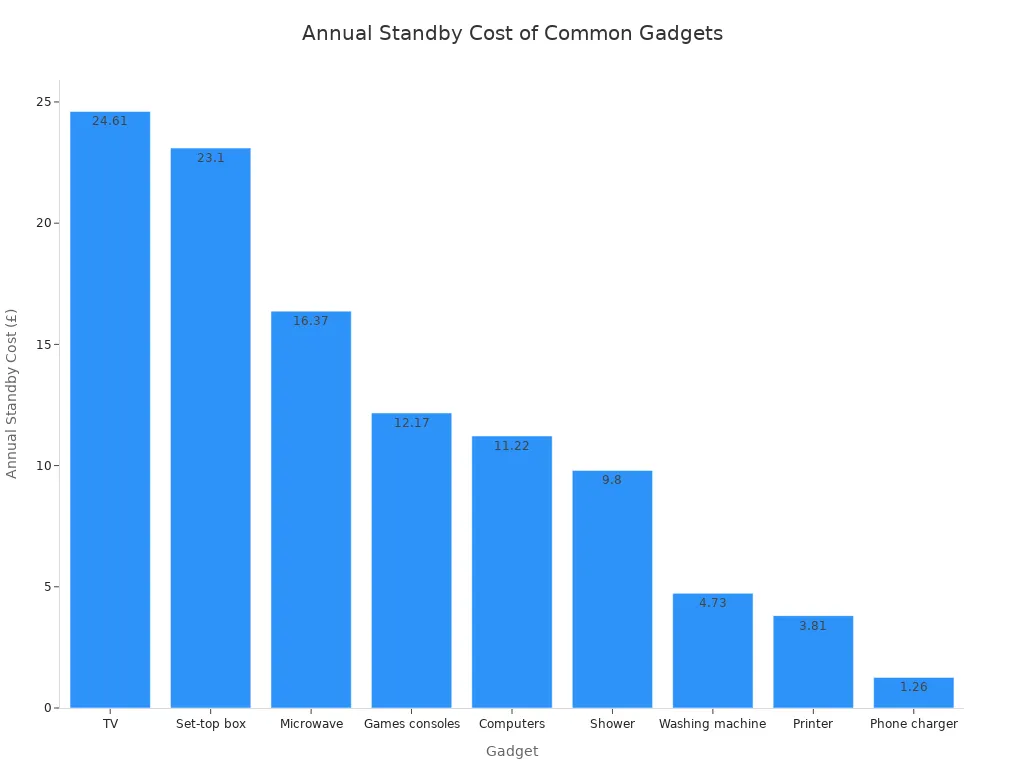
The table below illustrates the typical annual costs associated with leaving devices on standby.
| Gadget | Annual Standby Cost |
|---|---|
| TV | £24.61 |
| Set-top box | £23.10 |
| Microwave | £16.37 |
| Games consoles | £12.17 |
| Computers | £11.22 |
A smart charger with Wi-Fi empowers users to eliminate this waste. By remotely cutting power once charging is complete, they prevent both overcharging, which can degrade battery health, and unnecessary standby energy consumption.
Implement Smart Charging Schedules
Wi-Fi connectivity unlocks intelligent charge scheduling, a powerful tool for automating charging routines and minimizing electricity costs. This feature allows the charger to operate autonomously based on user-defined rules.
Align Charging with Off-Peak Electricity Rates
Many energy providers offer time-of-use tariffs with lower electricity rates during off-peak hours, typically overnight. A smart charger can automatically align its charging cycles with these low-cost periods.
For example, tariffs like Octopus Energy’s Intelligent Go offer super low rates for smart charging between 11:30 PM and 5:30 AM. A compatible smart charger automatically starts the charging process during this window, significantly reducing the cost of powering an electric vehicle or other devices.
This automated scheduling ensures users always get the cheapest possible energy without any manual effort.
Automate Your Daily Charging Routines
Beyond cost savings, charge scheduling adds a layer of convenience to daily life. Users can create custom routines that fit their lifestyle. For example, a user can program their EV charger to begin charging at midnight and finish by 6:00 AM, ensuring their vehicle is always ready for the morning commute. This “set it and forget it” approach removes the mental load of managing charging times.
Gain Insights with Real-Time Energy Monitoring
Knowledge is power, especially when it comes to energy consumption. A Wi-Fi connection enables the charger to transmit detailed usage data to an app, offering users a clear view of their power habits.
Track Power Consumption by Device
Smart charger apps provide real-time charge monitoring, displaying exactly how much energy a connected device is consuming. This granular monitoring helps users understand the power requirements of different gadgets. Some advanced systems even offer:
- Real-time energy usage insights.
- Integration with residential solar PV systems to optimize self-consumption.
This data empowers users to make informed decisions about their energy use.
Identify and Manage Energy-Hungry Gadgets
Continuous monitoring helps identify which devices are the most power-hungry. With this information, users can adjust their charging habits or replace inefficient appliances to achieve greater energy savings. The market offers many smart chargers with excellent app interfaces for this purpose.
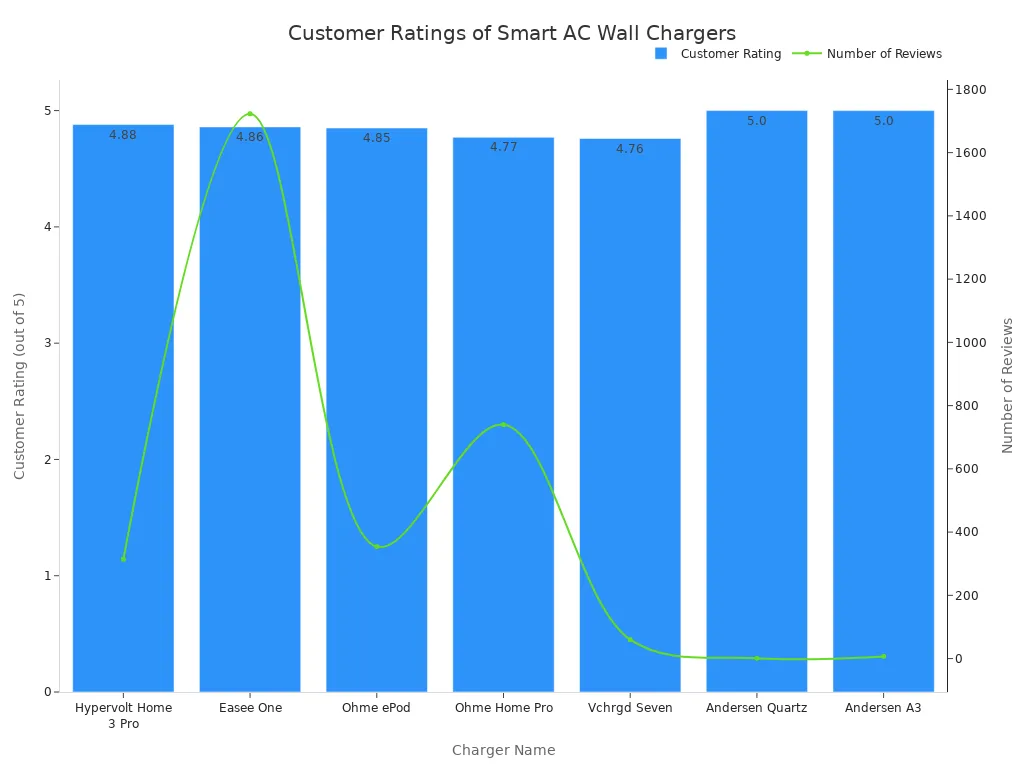
Many top-rated smart chargers excel at providing these insights, often integrating directly with favorable energy tariffs.
| Nom du chargeur | Key Remote Management Features |
|---|---|
| Hypervolt Home 3 Pro | Excellent app interface, compatible with Intelligent Octopus. |
| Ohme ePod | Best for energy tariff integration, smart and intuitive app. |
| Indra Smart LUX | Smart tariff compatible (OVO and Octopus Intelligent Go). |
This combination of Wi-Fi connectivity, smart scheduling, and detailed monitoring makes a modern charger an indispensable tool for any energy-conscious household.
Effortless Local Control and Setup with Bluetooth
While Wi-Fi offers powerful remote management, Bluetooth connectivity excels at providing simple, reliable local control. It acts as the essential bridge for initial setup and a dependable backup when an internet connection is unavailable. This dual-capability is why advanced EV charging solution providers like TPSON integrate both technologies, ensuring a seamless user experience from the moment a device is unboxed. The primary role of Bluetooth is to make direct interaction with your charger effortless and secure.
Simplify Initial Device Pairing
The first interaction with any smart device sets the tone for the entire user experience. Bluetooth removes common setup frustrations, making the initial pairing process quick and intuitive.
Quick and Easy Out-of-the-Box Setup
A new chargeur intelligent can be operational within minutes thanks to Bluetooth. The technology facilitates a direct handshake between a smartphone and the charger, bypassing the need to immediately connect to a complex wifi network. The typical setup process is straightforward:
- Download the manufacturer’s dedicated mobile app.
- Power on the smart charger and wait for its indicator light to signal it is ready for pairing.
- Use the app to find and connect to the charger via the local Bluetooth signal.
- Enter a unique password, often supplied with the device, to securely complete the pairing.
This simple procedure gets the device running quickly, allowing users to then configure Wi-Fi settings from the app at their convenience.
Manage Chargers Without an Internet Connection
A major advantage of Bluetooth is its ability to function without an active internet connection. If your home internet goes down, a Wi-Fi-only device becomes unresponsive. A charger with Bluetooth, however, remains fully controllable as long as you are within physical range. This ensures you can always start, stop, or monitor a charging session directly from your phone, providing critical reliability and peace of mind. This feature is indispensable for maintaining control when internet connectivity is lost.
Enable Proximity-Based Automation
Bluetooth enables powerful automation based on your physical presence. By detecting the proximity of your smartphone, the charger can execute commands automatically, adding a layer of “smart” convenience to your daily routines.
Automatically Start Charging on Arrival
Users can configure their system to recognize when their smartphone enters the Bluetooth range of the charger. This feature allows for hands-free activation of a charging session. For example, when an EV owner pulls into their garage, the charger can automatically detect their presence and begin the charging process without requiring any manual interaction with the app or the unit itself.
Automatically Stop Power When You Leave
Conversely, the system can be set to cease charging when the user’s phone leaves the immediate area. This proximity-based shut-off feature ensures that power is cut once you depart, preventing unnecessary energy consumption and enhancing safety. It automates the process of ending a charging cycle, guaranteeing that devices are not left drawing power when unattended.
Secure Your Local Connection
Security is a primary concern for any connected device. Bluetooth provides a secure, short-range connection that minimizes exposure to external threats while protecting user data.
Reduce Exposure to Broader Network Risks
A direct Bluetooth connection is inherently more contained than a device connected to a wide-area home network. While rare, vulnerabilities like the ‘PerfektBlue’ flaw have shown that wireless protocols can sometimes be targeted by attackers. By using a short-range, non-internet-facing connection for local management, users reduce the device’s exposure to broader online threats. This localized control model adds a valuable layer of security.
Ensure Private, Short-Range Device Management
Manufacturers implement robust security protocols to protect the Bluetooth connection. This ensures that all local device management is private and secure. Key security features often include:
- Secure Authentication: Mandated access controls require proper user verification before a connection is established or charging can be initiated.
- Encrypted Communication: Data transmitted between the charger and a mobile device is encrypted, safeguarding it from potential eavesdropping.
- Advanced Data Protection: Many systems employ high-level encryption standards, such as Elliptic Curve Cryptography, to secure data transmissions and protect user privacy throughout the charging process.
The Power of Wi-Fi and Bluetooth Connectivity Working Together
The true strength of a modern chargeur intelligent lies in how it combines technologies. Wi-Fi and Bluetooth connectivity are not redundant features; they are a powerful duo that works in concert to deliver a comprehensive, reliable, and intelligent user experience. This dual-technology approach ensures users have the right tool for every situation, from initial setup to advanced data analysis.
Seamless Hand-Off Between Local and Remote Control
The combination of Wi-Fi and Bluetooth creates a flexible control system that adapts to the user’s location and needs, ensuring uninterrupted access to charging functions.
Bluetooth for Proximity, Wi-Fi for Distance
Bluetooth excels at direct, short-range communication. It is perfect for initial device setup or managing the charger when you are physically near it. Wi-Fi, on the other hand, connects the device to your home network and the broader internet. This Wi-Fi connection unlocks powerful remote capabilities. Users can:
- Schedule charging sessions to align with off-peak hours.
- Monitor energy consumption in real-time from any location.
- Receive instant notifications about the charging status.
This seamless hand-off provides ultimate convenience, using Bluetooth for local tasks and Wi-Fi for control from a distance.
Ensuring Control Even if Wi-Fi is Down
A significant advantage of this dual system is reliability. If the home internet service is interrupted, a Wi-Fi-only device becomes unresponsive. However, a charger equipped with Bluetooth remains fully functional for local control. Users can still start, stop, or monitor a charging session directly from their smartphone, ensuring they are never locked out of managing their device.
Firmware Updates for a Smarter Charger
Connectivity transforms a static piece of hardware into an evolving smart device. The ability to receive updates ensures the charger improves over time with new features and enhanced security.
Receive Over-the-Air (OTA) Updates
A Wi-Fi connection allows manufacturers to push firmware updates directly to the device. These “Over-the-Air” (OTA) updates happen automatically in the background. Some advanced chargers even include a built-in cellular connection to guarantee they are always online and ready to receive the latest software, ensuring optimal performance without user intervention.
Access New Features and Security Patches
Firmware updates deliver tangible benefits long after the initial purchase. Manufacturers can roll out new functionalities, such as compatibility with new energy tariffs or improved charging algorithms. More importantly, these updates deliver critical security patches. Modern regulations require smart chargers to receive automatic security updates, protecting the device and the user’s data from emerging threats.
Enhanced Data Syncing and Analytics
Effective energy management relies on accurate data. The synergy between Wi-Fi and Bluetooth connectivity provides a robust framework for collecting, syncing, and analyzing charging information.
Local Data Logging via Bluetooth
A smart charger can log essential charging data internally. This information can be synced to a nearby smartphone via a low-energy Bluetooth connection, offering a quick snapshot of recent activity without needing a constant wifi link.
Cloud Syncing and Analysis via Wi-Fi
For deep insights, the charger uses its Wi-Fi connection to transmit detailed data to a secure cloud platform. Each charging session generates numerous data points, which are sent in real-time. This allows charging operators and users to:
Analyze energy consumption, track costs, and manage charging schedules remotely. The data exchange often follows industry standards like the Protocole de point de charge ouvert (OCPP) to ensure compatibility across different systems.
This cloud-based analysis is what enables truly smart charging and integration with the wider energy grid.
Maximize Charging Efficiency and Preserve Battery Health
A connected charger does more than just supply power; it manages the flow of energy to maximize charging efficiency while actively protecting the long-term health of a device’s battery. This intelligent power management is a core benefit of modern smart charging technology. Technologically advanced providers like TPSON build these capabilities into their solutions to deliver both speed and safety.
Achieve Optimized Power Delivery
Optimized power delivery ensures that a device receives the fastest possible charge without risking damage. This is accomplished through sophisticated communication between the charger and the connected device.
Smart Negotiation for Optimal Charging Speed
A smart charger uses protocols like USB Power Delivery (PD) to communicate directly with a device. This digital handshake allows the system to negotiate the ideal charging parameters. The process involves:
- The charger and device identifying each other’s power capabilities.
- Negotiating the optimal voltage and current for the fastest, safest charge.
- Safeguarding battery health by preventing an excessive supply of power.
This negotiation ensures the power delivered precisely matches the device’s requirements for maximum charging efficiency.
Dynamic Voltage and Current Adjustment
The USB Power Delivery (PD) standard enables a charger to offer a wide range of power profiles. Instead of a fixed output, a smart charger can dynamically adjust its voltage and current, supporting levels like 5V, 9V, 15V, and 20V. This flexibility allows a single charger to power everything from a smartphone to a laptop by delivering the exact amount of energy needed. This adaptive charging capability is crucial for both performance and universal compatibility.
Extend Long-Term Battery Longevity
Beyond speed, a key function of a smart charger is to preserve the lifespan of a device’s battery. It uses intelligent algorithms to minimize the stress that contributes to long-term degradation.
Reduce Battery Stress with Smart Algorithms
Smart charging algorithms dynamically adjust the charging speed based on real-time conditions. This adaptive approach minimizes battery wear caused by excess heat and overvoltage. For example, an overnight charging protection feature can stop the charging process at 90% to prevent the battery from remaining at a high state of charge for extended periods, which reduces chemical stress.
Implement Intelligent Trickle Charging Modes
Modern smart chargers have redefined trickle charging. Instead of a constant, low-current flow that can lead to overcharging, they use electronic pulse technology. The system analyzes the battery’s condition and delivers small bursts of energy only when needed to maintain a full charge. This maintenance mode is far safer for the battery. As one expert notes:
“If you don’t drive often, investing in a trickle charger is a no-brainer. It keeps your battery topped up and ready to go, even if your car sits idle for weeks.”
This intelligent approach extends battery life and improves overall performance.
Bolster Safety with Intelligent Protection and Alerts
A connected charger’s most critical function is ensuring the safety of both the user and their devices. Wi-Fi and Bluetooth connectivity enable a system of intelligent protection and instant alerts, creating a robust safety net. Des fournisseurs technologiquement avancés comme TPSON engineer their solutions with these features at the core. This proactive approach transforms the charger into a vigilant guardian during every charging cycle.
Receive Instant Safety Notifications
A smart charger uses its connectivity to send immediate alerts directly to a user’s smartphone. This capability allows for swift action in response to potentially hazardous conditions, preventing damage before it occurs.
Overheating and Temperature Alerts
Heat is a major enemy of electronic components and batteries. Smart chargers incorporate built-in temperature sensors for continuous thermal monitoring. For instance, some advanced chargers use sensors to constantly check the device’s temperature. If the temperature rises to an unsafe level, the system can automatically reduce the charging power or shut down completely to prevent overheating.
Some chargers even combine these sensors with fan cooling technology. The system adjusts charging power based on the detected temperature, ensuring safe operation across a wide temperature range, often from -10℃ to 40℃.
Power Surge and Fluctuation Warnings
Unstable power from the grid can damage sensitive electronics. A smart charger actively monitors the incoming electrical supply. It can detect dangerous power surges or voltage fluctuations. When it identifies an anomaly, it instantly sends a warning to the user’s app and can disconnect the power flow to protect the connected device from electrical damage.
Monitor Charging Status in Real-Time
Connectivity provides a clear window into the charging process. Users can receive timely updates, eliminating guesswork and enhancing convenience.
Alerts for Charging Completion
A simple yet highly useful feature is the notification for charging completion. The charger sends an alert to the user’s phone the moment a device’s battery reaches 100%. This signal helps prevent overcharging and allows the user to unplug the device, making it available for use.
Notifications for Unexpected Interruptions
A charging session can be interrupted for various reasons, such as a power outage or a disconnected cable. A smart charger immediately detects such interruptions. It then sends a notification to the user, informing them that charging has stopped unexpectedly. This ensures the user is always aware of the device’s status.
Benefit from Built-In Protective Features
Beyond alerts, smart chargers have multiple layers of hardware-level protection that operate automatically. These features serve as the first line of defense against common electrical faults.
Over-Current Protection (OCP)
Over-Current Protection (OCP) prevents the charger from drawing or supplying too much electrical current. If the current exceeds a safe threshold, the OCP circuit immediately cuts off the power. This protects both the charger’s internal components and the device’s battery from damage caused by excessive current.
Over-Voltage Protection (OVP)
Over-Voltage Protection (OVP) shields devices from dangerously high voltage levels. Advanced chargers integrate programmable protection circuits to manage this. These systems often include multiple layers of defense:
- Input overvoltage protection (BUSOVP)
- Battery overvoltage protection (BATOVP)
- Input overcurrent protection (BUSOCP)
- Battery overcurrent protection (BATOCP)
- Output overvoltage protection (VOUTOVP)
These built-in safeguards work silently in the background, providing essential protection during every charging session.
Smart Home Integration: From Wall Chargers to EV Chargers
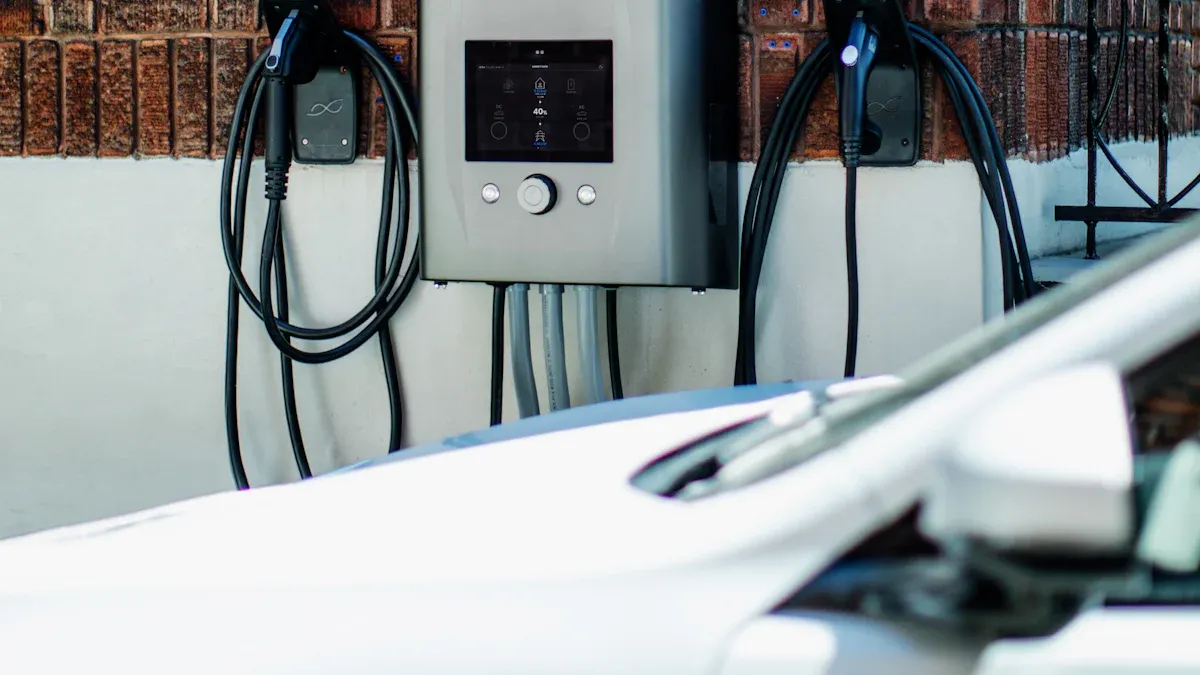
A Wi-Fi connected charger transcends its basic function, becoming an integral component of a modern smart home ecosystem. This integration extends from simple wall chargers to advanced home EV charging solutions. The connectivity provided by Wi-Fi allows a home charging station to communicate with other smart devices, unlocking new levels of automation and convenience for users. Technologically advanced providers like TPSON design their electric vehicle charger products for seamless smart home charging integration.
Unify Your Smart Home with Voice Control
Voice control adds a layer of hands-free convenience to managing a home charging station. A Wi-Fi connection enables the charger to link with popular smart home platforms, responding to simple verbal commands. This makes managing EV charging effortless.
Integration with Amazon Alexa
Users can connect their smart home charging station to Amazon Alexa. This allows them to initiate or stop a charging session with a simple command. They can ask Alexa for the current charging status of their EV without needing to open an app, making the process seamless.
Integration with Google Assistant
Similarly, integration with Google Assistant offers powerful voice-activated control over a home charging station. A user can say, “Hey Google, start charging my EV,” to begin a session. This feature is a core part of a comprehensive smart home charging experience.
Create Automated Home Routines
A smart electric vehicle charger can participate in automated routines, or “scenes,” that control multiple devices simultaneously. This automation simplifies daily tasks and enhances energy management within the home.
Link Charging to “Good Morning” Scenes
A user can create a “Good Morning” routine that prepares the house for the day. This routine could include turning on lights, adjusting the thermostat, and instructing the home charging station to stop the EV charging session, ensuring the vehicle is ready for the morning commute.
Power Down Chargers in “Away” Mode
An “Away” mode can automatically power down non-essential devices when a user leaves home. This includes the home charging station, preventing any standby power drain. This smart automation ensures energy is not wasted while the home is empty.
The Future of Home EV Charging
The principles of smart home integration are revolutionizing home EV charging. A Wi-Fi enabled EV charging point becomes more than just a power source; it becomes an intelligent energy management hub for the entire household. These network-connected EV charging stations are central to efficient home EV charging.
Managing Your Wi-Fi Enabled EV Charging Point
A Wi-Fi enabled EV charging point gives users complete remote control over their home EV charging station. Through a dedicated app, they can monitor their EV’s charging progress, view historical data, and manage settings from anywhere. This level of control is essential for modern EV owners. Smart charge points with wifi connectivity offer unparalleled management capabilities.
Scheduling Your Electric Vehicle Charger for Savings
The most significant benefit of a smart electric vehicle charger is scheduling. Many energy providers offer time-of-use tariffs with cheaper electricity rates during off-peak hours, typically late at night. Scheduling EV charging during these periods can dramatically reduce household energy bills. For example, some specialized EV tariffs offer rates as low as 7p par kWh overnight.
Charging an electric vehicle during off-peak hours, which usually begin late at night and end around 7 AM, allows consumers to benefit from these cheaper rates. This makes home EV charging far more economical.
The cost difference is substantial. The table below illustrates the potential savings for a typical EV charge.
| Scénario de charge | Tarif (c€/kWh) | Cost for 40kWh Charge |
|---|---|---|
| Heures de pointe | ~30p | £12 |
| Heures creuses | As low as 7p | £2.80 |
| Potential Savings per Charge | £9 |
Smart charge points with wifi use this scheduling capability to automatically start and stop charging during the most cost-effective times, maximizing savings for the EV owner. This smart functionality is key to affordable home EV charging.
In summary, wi-fi and bluetooth connectivity elevate a basic charger into a smart, efficient tool. The key benefits of smart charging offer tangible value for any EV owner. Remote control via wi-fi, energy savings from scheduled EV charging, and real-time monitoring provide superior convenience. This wi-fi and bluetooth connectivity transforms the charger into an integral part of a modern smart home. It extends to applications like home ev charging. Technologically advanced providers like TPSON design their EV charging solutions with wifi for this purpose. The combination of wifi convenience, smart charging for an EV, and peace of mind makes a strong case for upgrading your EV charging setup.
FAQ
What is the main benefit of a smart charging station?
A smart charging station gives users full control over charging. A mobile app allows for remote management, scheduling, and energy monitoring. This makes the charging station more convenient and efficient.
La station de recharge fonctionne-t-elle sans connexion Internet ?
Oui. En cas de panne Internet, une connexion Bluetooth permet un contrôle local. Les utilisateurs peuvent démarrer ou arrêter la recharge à l'aide de leur appareil mobile à proximité de la station, garantissant ainsi son fonctionnement.
Quelle est la sécurité d'une station de recharge connectée ?
Les fournisseurs leaders comme TPSON accordent la priorité à la sécurité. Une connexion sécurisée utilise le chiffrement et l'authentification pour protéger les données. Cela empêche tout accès non autorisé à la station de recharge via un appareil mobile.
Comment une station de recharge reçoit-elle des mises à jour ?
Une station de recharge intelligente reçoit des mises à jour Over-the-Air (OTA). La station télécharge de nouveaux logiciels et correctifs de sécurité via sa connexion données ou Wi-Fi. Ce processus maintient les fonctionnalités de la station à jour sans intervention manuelle depuis l'appareil mobile de l'utilisateur.
Puis-je surveiller la recharge de mon véhicule électrique avec une application mobile ?
Oui, une fonctionnalité clé est la surveillance mobile. L'application fournit des données en temps réel sur l'état de recharge du véhicule électrique. Les utilisateurs peuvent suivre la consommation d'énergie et la durée de session directement depuis leur appareil mobile pour leur véhicule électrique.
Une seule application mobile peut-elle gérer plusieurs stations de recharge pour véhicules électriques ?
La plupart des applications mobiles peuvent gérer plusieurs stations. Cette fonctionnalité est idéale pour les foyers possédant plus d'un véhicule électrique. Un utilisateur peut contrôler chaque station de recharge indépendamment depuis une seule interface mobile.
Quel est le rôle de l'application mobile pour une station de véhicule électrique ?
L'application mobile est le centre de contrôle principal de la station de véhicule électrique. Elle permet aux utilisateurs de planifier la recharge de leur véhicule électrique, de consulter les données historiques et de recevoir des notifications. L'application mobile simplifie la gestion de la station.
Que se passe-t-il si je perds mon téléphone mobile ?
La perte d'un téléphone mobile ne compromet pas la station de véhicule électrique. Les utilisateurs peuvent se connecter depuis un autre appareil pour gérer la station. L'accès est sécurisé par un mot de passe, protégeant la station et ses paramètres de connexion Internet.




