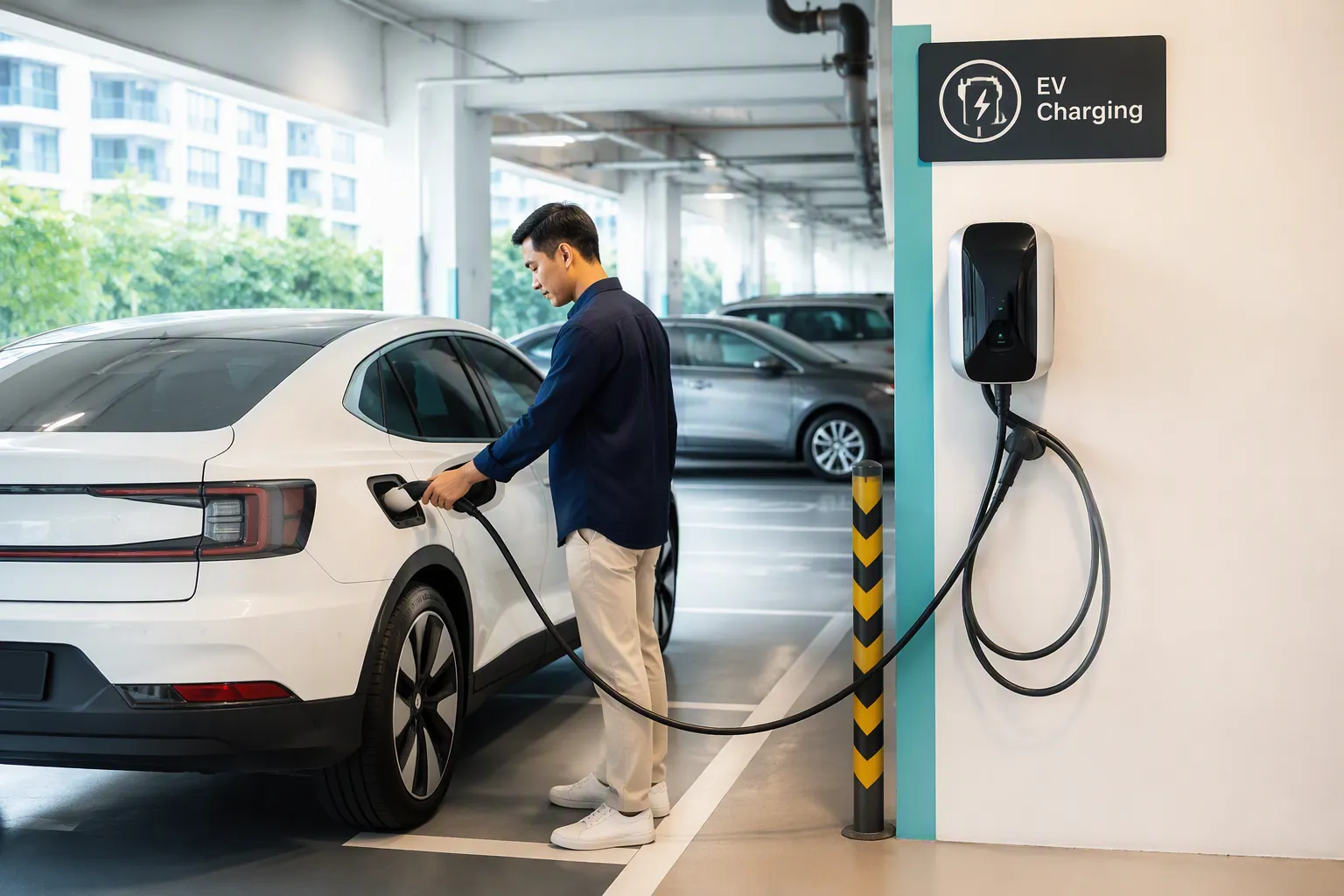

Choisir le bon chargeur de véhicule électrique domestique dépend de la compréhension de ses habitudes personnelles, des besoins du véhicule et des capacités électriques du logement. Lorsque les utilisateurs adaptent les caractéristiques du chargeur à leur routine quotidienne, ils bénéficient de :
- Des plans de recharge adaptatifs qui personnalisent les vitesses et les horaires pour une plus grande satisfaction.
- Des fonctionnalités d'automatisation qui programment la recharge pendant les heures creuses, offrant commodité et économies.
- Une intégration avec les systèmes domotiques ou les énergies renouvelables, ce qui maximise l'efficacité.
Chargeur EV Les options varient, donc un choix attentif aide à éviter des dépenses inutiles. Fabricants de chargeurs de VE Les chargeurs proposent désormais des solutions adaptées à divers modes de vie et configurations domestiques.
Comprendre vos besoins en recharge pour un chargeur de véhicule électrique domestique
Évaluer vos habitudes de conduite quotidiennes
Distance typique des trajets domicile-travail
Les conducteurs doivent évaluer leur kilométrage quotidien moyen pour sélectionner la solution de recharge la plus adaptée. Pour ceux qui parcourent de courtes distances, un chargeur basique suffit souvent. Les trajets plus longs exigent des capacités de recharge plus rapides. Le tableau suivant présente les types de chargeurs recommandés en fonction des habitudes de conduite:
| Besoins de conduite | Chargeur recommandé |
|---|---|
| Trajets courts | Chargeur 3,6 kW |
| Trajets longs | Chargeur 7 kW ou 22 kW |
Un véhicule qui parcourt 40 miles par jour peut se recharger pendant la nuit avec un chargeur de Niveau 1. Un chargeur de Niveau 2 recharge la même distance en moins de deux heures.
Comprendre l'autonomie de votre véhicule et votre kilométrage quotidien est essentiel pour choisir la bonne solution de recharge domestique correspondant à vos besoins quotidiens.
Des habitudes de conduite souples, comme une accélération progressive et une vitesse constante, aident à maximiser l'efficacité de la batterie. Les conducteurs qui évitent les accélérations brusques et les freinages brutaux prolongent l'autonomie de leur VE, réduisant ainsi la fréquence et la durée des sessions de recharge.
Fréquence d'utilisation du véhicule
Les personnes utilisant leur véhicule plusieurs fois par jour ont besoin d'un chargeur permettant des recharges fréquentes. Ceux qui conduisent moins souvent peuvent ne pas nécessiter une recharge rapide. Considérez les étapes suivantes pour évaluer vos besoins quotidiens en recharge :
- Évaluez votre distance de conduite quotidienne.
- Déterminez le niveau de recharge approprié en fonction de vos besoins.
- Évitez de charger à 100 % sauf nécessité pour réduire les coûts.
- Recharger régulièrement à pleine capacité n'est pas toujours nécessaire.
- Optimiser la recharge en fonction des habitudes quotidiennes aide à réduire la facture d'électricité.
Compatibilité des véhicules
Taille de la batterie et taux de recharge
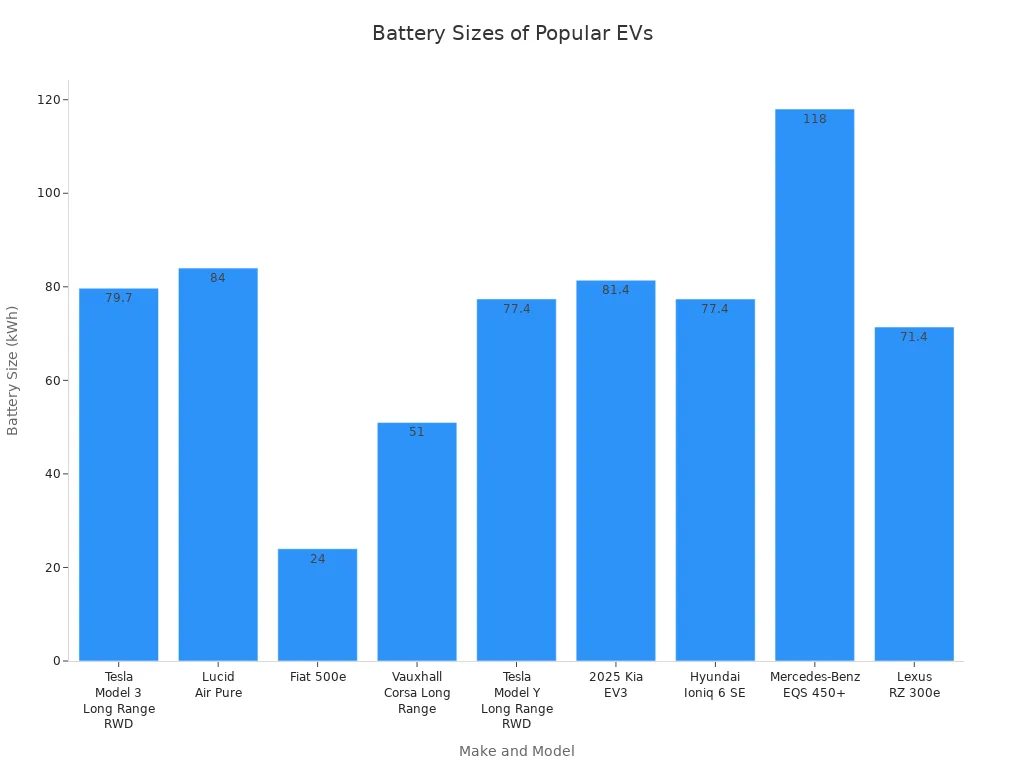
La capacité de la batterie et le taux de recharge varient selon les modèles de véhicules électriques. Les batteries plus grandes nécessitent des chargeurs plus puissants pour un rechargement efficace. Le tableau ci-dessous compare des modèles populaires :
| Marque et Modèle | Gamme | Taille de la batterie | Efficacité | Autonomie estimée en hiver |
|---|---|---|---|---|
| Tesla Model 3 Long Range RWD | 436 miles | 79,7 kWh | 5,4 miles/kWh | 350 miles |
| Lucid Air Pure | 420 miles | 84 kWh | 5,0 miles/kWh | 287-328 miles |
| Fiat 500e | 118 miles | 24 kWh | 4,9 miles/kWh | 83-94 miles |
| Vauxhall Corsa Long Range | 245 miles | 51 kWh | 4,8 miles/kWh | 172-197 miles |
| Tesla Model Y Long Range RWD | 375 miles | 77,4 kWh | 4,41 miles/kWh | 197-226 miles |
| Kia EV3 2025 | 375 miles | 81,4 kWh | 4,6 miles/kWh | 263-300 miles |
| Hyundai Ioniq 6 SE | 342 miles | 77,4 kWh | 4,41 miles/kWh | 239-274 miles |
| Mercedes-Benz EQS 450+ | 511 miles | 118 kWh | 4,3 miles/kWh | 358-409 miles |
| Lexus RZ 300e | 297 miles | 71,4 kWh | N/A | N/A |
Recommandations des constructeurs
Les constructeurs spécifient souvent des chargeurs compatibles pour chaque modèle de véhicule. Certains fournisseurs d'énergie exigent des bornes de recharge spécifiques ou des listes de compatibilité. Le tableau ci-dessous résume ces exigences :
| Fournisseur d'Énergie | Exigence du Chargeur | Compatibilité des véhicules |
|---|---|---|
| OVO | Borne de recharge Indra | Nécessite des panneaux solaires |
| Ictopus | Véhicule/chargeur compatible | Compatibilité spécifique requise |
| Octopus Intelligent Go | Borne de recharge compatible | Doit figurer sur la liste de compatibilité |
Choisir un chargeur conforme aux directives du constructeur garantit des performances et une sécurité optimales.
Préparer l'avenir pour les nouveaux véhicules
Planifier les mises à niveau
Les propriétaires doivent tenir compte des futurs achats de véhicules lors du choix d'un chargeur de véhicule électrique domestique. Passer à un chargeur de niveau 2 offre une recharge plus rapide et prend en charge une plus large gamme de modèles. Le tableau suivant met en lumière les considérations importantes:
| Considération | Description |
|---|---|
| Évaluation de la capacité électrique | Évaluez si l'installation électrique de votre domicile peut supporter un chargeur de niveau 2, ce qui peut nécessiter des mises à niveau. |
| Planifier le choix de la borne de recharge adéquate | Choisissez un chargeur qui répond aux besoins actuels et futurs, comme un chargeur de niveau 2 pour une recharge plus rapide. |
| Assurer une installation correcte | Respectez les codes du bâtiment locaux et engagez des professionnels qualifiés pour une installation sûre et conforme. |
Ménages à plusieurs véhicules
Les familles possédant plusieurs véhicules électriques sont confrontées à des défis particuliers. Elles doivent gérer la disponibilité des chargeurs, les options de paiement et l'historique des sessions. Les fonctionnalités suivantes sont adaptées aux foyers multi-véhicules:
- Informations sur la disponibilité des chargeurs pour vérifier quand ils sont libres.
- Gestion des paiements pour ajouter ou supprimer des méthodes de paiement.
- Initialisation de session pour démarrer une session de recharge.
- Historique des sessions pour consulter les sessions de recharge passées.
- Support pour une assistance rapide en cas de problème de recharge.
Les solutions de gestion du stationnement, telles que la réservation de chargeurs partagés via des applications et la mise en place de frais d'inactivité, améliorent l'accès pour tous les utilisateurs. La gestion de charge sur plusieurs chargeurs aide à éviter des mises à niveau électriques coûteuses et permet d'accéder à des tarifs d'électricité moins chers. Les contrôles d'accès utilisateur, les mises à jour de statut en direct et les outils de reporting simplifient les opérations dans les foyers multi-véhicules.
Types et vitesses des chargeurs de véhicules électriques domestiques
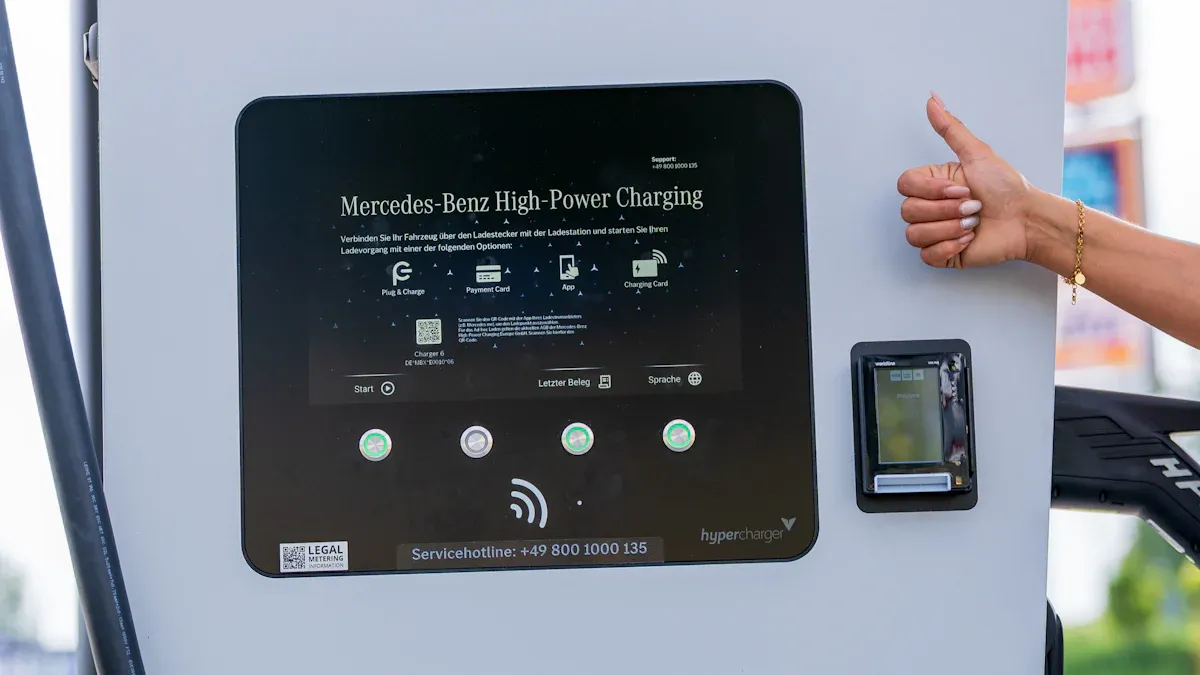
Choisir les bons types de chargeurs pour un usage domestique dépend de la compréhension des différences en termes de vitesse de chargement, d'exigences d'installation et de limitations pratiques. Chaque type offre des avantages uniques et convient à différents modes de vie.
Chargeur de véhicule électrique domestique de niveau 1
Avantages et inconvénients
Les chargeurs de niveau 1 utilisent une prise domestique standard de 120 volts. Ce type de chargeur offre un point d'entrée simple pour les propriétaires de véhicules électriques. De nombreux véhicules incluent un chargeur de niveau 1 à l'achat.
Pour :
- Aucune installation particulière n'est requise
- Utilise les prises existantes
- Faible coût initial
Cons :
- Vitesse de charge lente, idéale uniquement pour de courts trajets quotidiens
- Le temps de charge pour une batterie pleine peut atteindre jusqu'à 40 heures
- Moins économe en énergie que les options de niveau supérieur
| Fonctionnalité | Chargeur de niveau 1 | Chargeur de niveau 2 |
|---|---|---|
| Vitesse de chargement | Lent, idéal pour une utilisation nocturne | Ajoute 10 à 30 miles d'autonomie par heure |
| Temps de charge | Jusqu'à 40 heures pour une charge complète | 4-8 heures pour une charge complète |
| Efficacité énergétique | Efficacité de 80% | Efficacité de 90% |
À qui s'adresse le niveau 1
Les chargeurs de niveau 1 conviennent aux conducteurs effectuant de courts trajets quotidiens et avec un faible kilométrage. Les personnes qui se garent la nuit et n'ont pas besoin d'une recharge rapide en bénéficient le plus. Cette option fonctionne bien pour ceux qui souhaitent éviter des coûts d'installation supplémentaires ou vivent dans des maisons anciennes avec une capacité électrique limitée.
Astuce : La recharge de niveau 1 convient le mieux aux véhicules hybrides rechargeables ou comme solution de secours pour les véhicules électriques à batterie.
Chargeur de véhicule électrique domestique de niveau 2
Avantages de la vitesse de charge
Les chargeurs de niveau 2 fonctionnent sur un circuit de 240 volts. Ce type de chargeur augmente considérablement la vitesse de charge, ajoutant 10 à 30 miles d'autonomie par heure. La plupart des propriétaires de véhicules électriques préfèrent les chargeurs de niveau 2 pour un usage quotidien car ils réduisent le temps de charge à entre 4 et 8 heures pour une batterie pleine. Une efficacité énergétique plus élevée, d'environ 90%, signifie moins de pertes d'énergie pendant la charge.
Exigences en matière d'installation
Installation d'un chargeur de niveau 2 nécessite une prise dédiée de 240 volts. De nombreux foyers ont besoin d'un nouveau circuit, voire d'une mise à niveau du tableau électrique, pour supporter ce type de chargeur. Le processus d'installation implique souvent des permis et des inspections pour garantir la sécurité et la conformité aux normes.
| Catégorie | Fourchette de coûts |
|---|---|
| Prix du chargeur de niveau 2 | $300-$1,200 |
| Installation d'un nouveau circuit | $200-$800 |
| Modernisation du tableau électrique | $500-$2,000 |
| Coûts salariaux | $400-$1,500 |
| Permis et inspections | $50-$500 |
| Installation de base | $500-$1 000 |
| Installation standard | $1,000–$1,500 |
| Installation complexe | $1,500–$2,500 |
- Les coûts d'équipement dépendent des fonctionnalités et de la marque du chargeur.
- Les mises à niveau électriques peuvent inclure de nouveaux circuits ou le remplacement du tableau.
- Les coûts de main-d'œuvre varient selon la complexité de l'installation.
- Les permis et inspections sont souvent obligatoires.
De nombreux propriétaires peuvent bénéficier d'incitations réduisant les coûts d'installation. Les crédits d'impôt fédéraux peuvent couvrir jusqu'à 30 % (jusqu'à 1 000 $) de l'installation, et les remises étatiques ou locales peuvent offrir 200 à 1 500 $ supplémentaires.
Chargeurs rapides/ultra-rapides et utilisation domestique
Limites de l'utilisation domestique
Les chargeurs rapides ou ultra-rapides, également appelés chargeurs DC rapides, offrent une vitesse de charge extrêmement élevée. Cependant, ces types de chargeurs présentent des défis importants pour une utilisation résidentielle.
- Les systèmes électriques domestiques ne peuvent pas supporter la forte demande en puissance des chargeurs rapides.
- Installer un tel équipement à domicile est peu pratique ou rentable.
- L'utilisation fréquente de la charge rapide peut réduire la durée de vie de la batterie d'un véhicule électrique.
Quand envisager la charge rapide publique
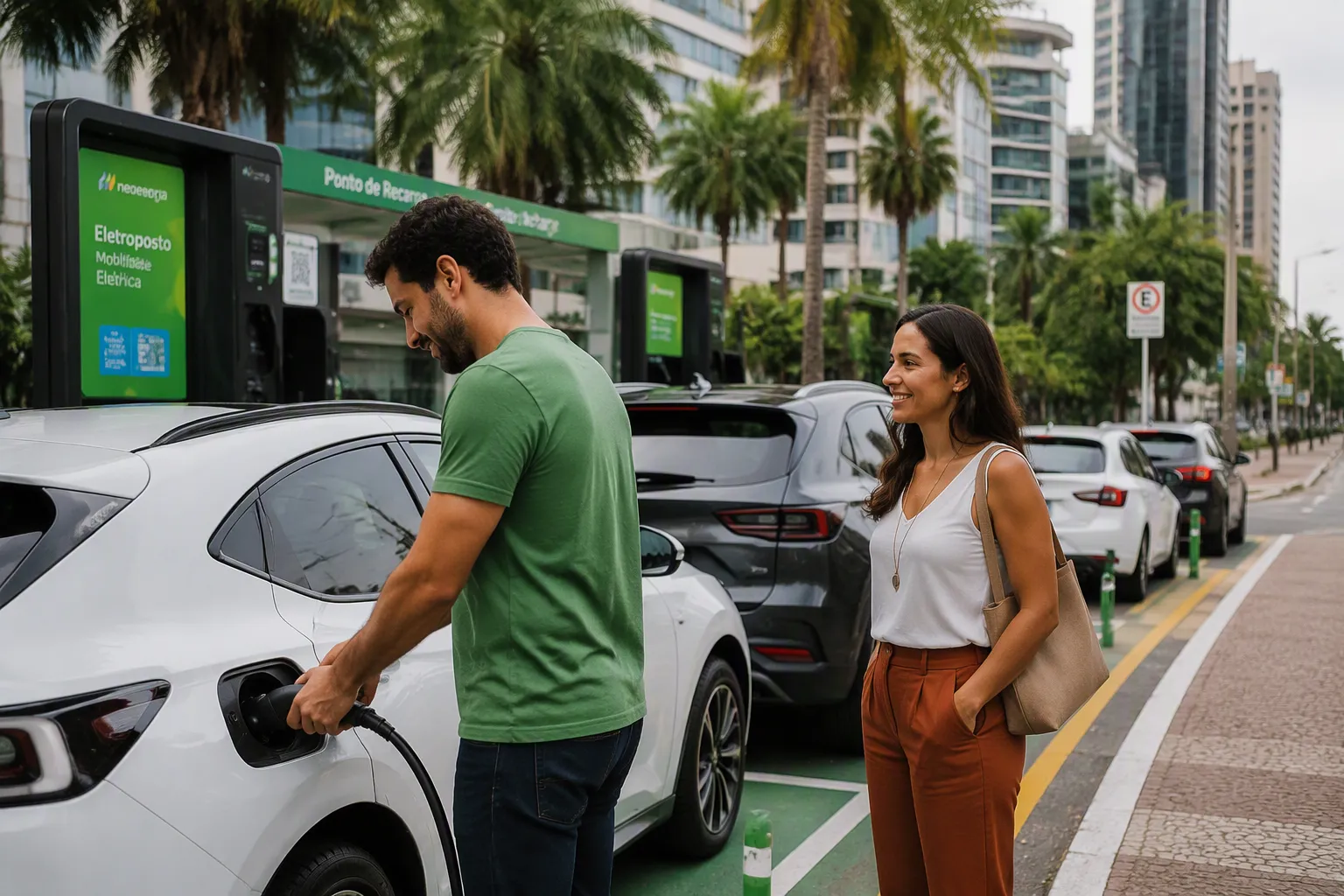
Les bornes de recharge rapide publique permettent un rechargement rapide pour les conducteurs en déplacement. Ces bornes offrent une vitesse de charge bien supérieure aux options domestiques, les rendant idéales pour les longs trajets ou les urgences.
| Fonctionnalité | Chargement à domicile | Charge rapide publique |
|---|---|---|
| Vitesse | Généralement plus lente, adaptée à une charge nocturne | Plus rapide, idéale pour un rechargement rapide |
| Commodité | Très pratique, peut charger pendant la nuit | Moins pratique, peut nécessiter de trouver une borne |
| Coût | Plus économique, surtout avec des tarifs hors pointe | Souvent plus cher par kWh |
| Fiabilité | Généralement fiable, toujours disponible à domicile | Peut être moins fiable en raison de problèmes de disponibilité |
- La recharge à domicile reste plus abordable, surtout avec des tarifs électriques hors pointe.
- La recharge publique peut coûter plus cher et n'est pas toujours disponible.
- Recharger à domicile pendant la nuit offre tranquillité d'esprit et commodité.
Choisir le bon chargeur de véhicule électrique domestique implique d'équilibrer vitesse de charge, besoins d'installation et mode de vie. Comprendre les types de chargeurs disponibles garantit le meilleur choix pour les besoins actuels et futurs.
Capacité électrique et configuration électrique domestique pour votre chargeur
Évaluer le tableau électrique de votre domicile
Exigences en ampérage
Chaque chargeur de véhicule électrique domestique consomme une quantité spécifique de courant électrique. L'exigence en ampérage détermine la vitesse de charge et la puissance de sortie globale. La plupart des chargeurs domestiques se situent à trois niveaux d'ampérage courants :
| Ampères nécessaires | Puissance de sortie | Vitesse de chargement |
|---|---|---|
| 30 ampères | 7,2 kW | 25-30 miles par heure |
| 40 ampères | 9,6 kW | 32-40 miles par heure |
| 50 ampères | 12 kW | 45-50 miles par heure |
Une puissance de sortie plus élevée permet une charge plus rapide mais sollicite davantage le système électrique de votre domicile. Les propriétaires doivent adapter l'ampérage du chargeur aux besoins de leur véhicule et à la capacité de leur installation.
Mettre à niveau votre tableau
De nombreuses habitations, surtout les plus anciennes, peuvent ne pas supporter la charge supplémentaire d'un chargeur VE moderne. Les propriétaires doivent :
- S'assurer que le tableau électrique peut gérer la demande supplémentaire.
- Savoir que la plupart des chargeurs VE domestiques nécessitent un circuit de 40 ampères.
- Reconnaître que les chargeurs de niveau 2 nécessitent souvent 60 ampères.
- Comprendre que les habitations avec un tableau de 100 ampères peuvent nécessiter une mise à niveau.
- Évaluer le la capacité électrique du logement avant l'installation.
- Consulter un électricien agréé pour déterminer si une mise à niveau est nécessaire.
- Ajouter un sous-tableau ou passer d'un service de 100 ampères à un service de 200 ampères si le tableau est saturé.
Une évaluation professionnelle aide à prévenir les surcharges et garantit un fonctionnement sûr.
Besoins en circuit dédié
Considérations de sécurité
Un chargeur VE doit toujours fonctionner sur son propre circuit dédié. Cette configuration prévient les surcharges et réduit les risques d'incendie. Les principales mesures de sécurité incluent :
| Considérations de sécurité | Description |
|---|---|
| Circuit dédié | Prévent les surcharges et réduit les risques d'incendie. |
| Installation professionnelle | Garantit une installation plus sûre par rapport à l'utilisation d'une prise standard. |
| Tableau de fusibles dédié | Non requis, mais peut améliorer la sécurité en isolant le chargeur du reste du système. |
| Protection contre les surtensions | Protège le chargeur des surtensions et des pics de tension. |
| Vérifications régulières de l'équipement | Assure la sécurité en identifiant rapidement l'usure ou les dommages. |
Conseil : Inspectez régulièrement l'équipement de recharge pour détecter tout signe d'usure ou de dommage afin de maintenir la sécurité.
Installation professionnelle
Électriciens agréés apportent une expertise et des outils spécialisés à chaque installation. Ils suivent des protocoles de sécurité stricts et garantissent la conformité aux codes locaux. Les installateurs professionnels adaptent la configuration à chaque domicile, optimisant ainsi les performances et la fiabilité. Ils effectuent également des évaluations complètes pour identifier les risques potentiels et les traiter avant l'installation.
Gestion de la charge
Éviter les Surcharges
Les maisons modernes font souvent fonctionner simultanément plusieurs appareils haute puissance. Pour éviter les surcharges, les propriétaires peuvent utiliser plusieurs stratégies :
- Gestion dynamique de la charge (DLM) ajuste la fourniture d'énergie en temps réel en fonction de la consommation énergétique actuelle.
- La recharge programmée déplace la recharge des véhicules électriques aux heures creuses, réduisant la pression sur le réseau et abaissant les coûts.
- Les systèmes de stockage d'énergie aident à gérer les pics de demande d'électricité.
Ces méthodes aident à équilibrer la puissance de sortie de tous les appareils et à maintenir la sécurité du système électrique.
Équilibrage Intelligent de la Charge
Les systèmes d'équilibrage intelligent de la charge utilisent des données en temps réel pour distribuer l'énergie efficacement. Ils surveillent l'utilisation et ajustent les charges pour éviter les dangers. Ces systèmes maximisent la puissance de sortie disponible et améliorent l'efficacité des installations de recharge domestique. Les logiciels de recharge intelligente peuvent équilibrer les charges sur plusieurs appareils, en utilisant des stratégies comme le partage égalitaire ou la recharge prioritaire. Cette technologie permet une recharge sûre et fiable, même dans les maisons équipées de plusieurs appareils haute puissance.
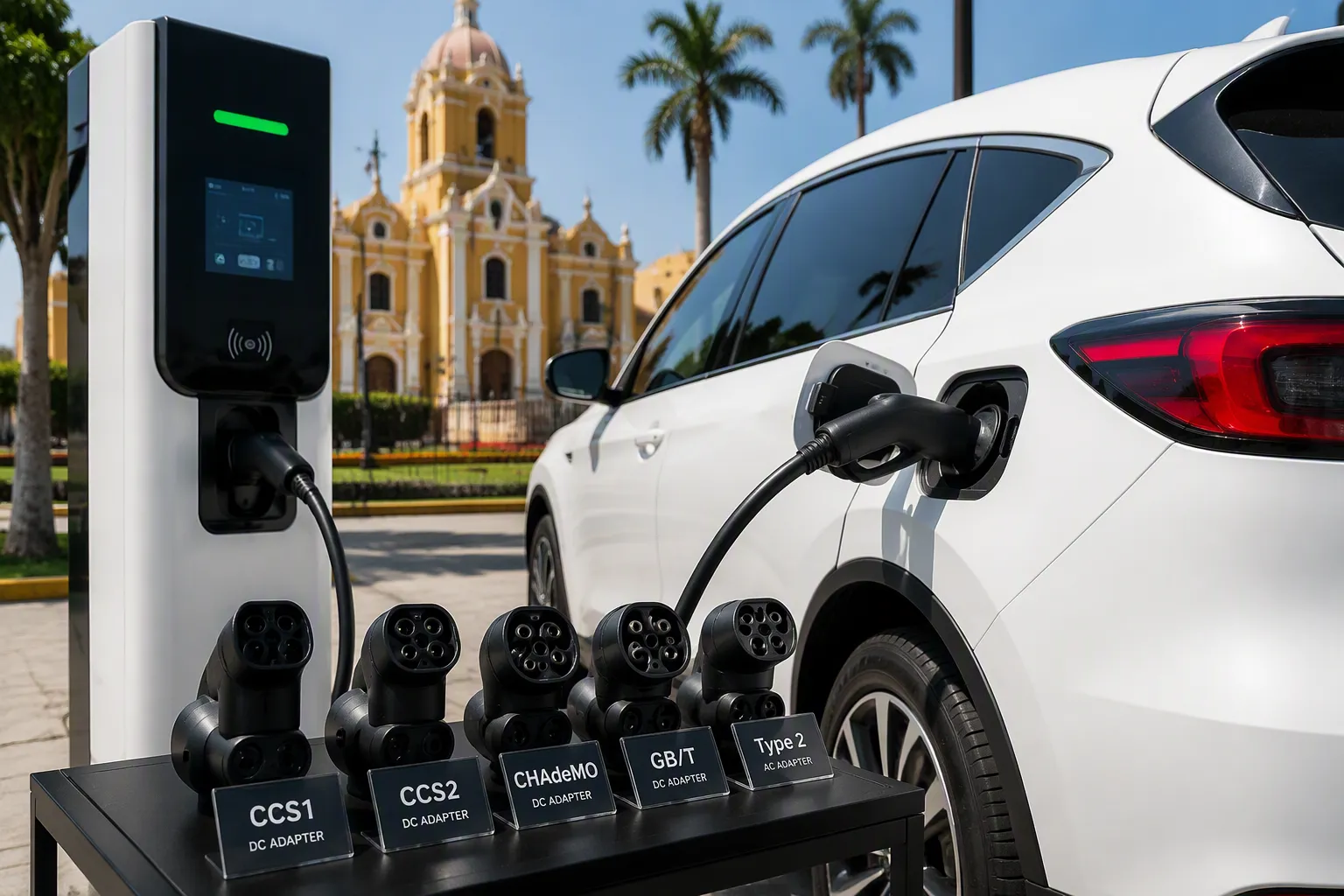
Types de Connecteurs et Compatibilité avec les Bornes de Recharge Domestique pour Véhicules Électriques
Choisir le bon connecteur pour une borne de recharge domestique garantit une recharge transparente et une compatibilité future. Comprendre les types de connecteurs disponibles aide les propriétaires de véhicules électriques à éviter les frustrations et à maximiser l'efficacité.
Normes de Connecteurs Courantes
Les véhicules électriques reposent sur plusieurs normes de connecteurs pour la recharge domestique. Chaque norme offre des caractéristiques uniques et une compatibilité régionale.
J1772
Le Connecteur J1772 sert de norme pour la recharge en courant alternatif en Amérique du Nord. La plupart des bornes de recharge domestique aux États-Unis et au Canada utilisent ce connecteur. Il prend en charge la recharge de niveau 1 et de niveau 2, ce qui le rend polyvalent pour un usage résidentiel.
| Type de connecteur EV | SAE J1772 (Type 1) |
|---|---|
| Type de courant de sortie | Courant Alternatif (CA) |
| Entrée d'Alimentation | 120 Volts ou 208/240 Volts (Monophasé uniquement) |
| Courant de Sortie Maximum | 16 Ampères (120 Volts) 80 Ampères (208/240 Volts) |
| Puissance de sortie maximale | 1,92 kW (120 Volts) 19,2 kW (208/240 Volts) |
| Niveau(x) de Recharge VE | Niveau 1, Niveau 2 |
| Pays primaires | États-Unis, Canada, Japon |
La plupart des véhicules électriques vendus en Amérique du Nord sont équipés d'une prise J1772, à l'exception des modèles Tesla.
Connecteur Tesla
Les véhicules Tesla utilisent un connecteur propriétaire pour la recharge domestique. Ce connecteur prend en charge la recharge de niveau 1 et de niveau 2. Les propriétaires Tesla installent souvent une borne de recharge domestique dédiée avec le connecteur Tesla pour des performances optimales. Des adaptateurs permettent aux véhicules Tesla d'utiliser des connecteurs J1772, augmentant ainsi la flexibilité.
| Connecteur | Application |
|---|---|
| Connecteur J1772 | La norme pour la recharge CA en Amérique du Nord |
| Connecteur de type 2 | La norme pour la recharge CA et CC dans toute l'Europe |
| Connecteur CCS1 | Utilisé pour la recharge rapide CC aux stations publiques en Amérique du Nord |
| Connecteur CCS2 | Utilisé pour la recharge rapide CC aux stations publiques en Europe |
Adaptateurs et Compatibilité Multi-Marques
De nombreux foyers possèdent des véhicules de différentes marques. La compatibilité entre les types de connecteurs devient essentielle pour une recharge pratique.
Utiliser les Adaptateurs en Toute Sécurité
Les adaptateurs comblent l'écart entre différents types de connecteurs. Par exemple, Tesla fournit des adaptateurs permettant à ses véhicules de se connecter aux bornes de recharge domestique équipées de J1772. Les utilisateurs doivent choisir des adaptateurs certifiés pour garantir la sécurité et maintenir la vitesse de recharge. Des adaptateurs inappropriés peuvent provoquer une surchauffe ou endommager le système de recharge du véhicule.
Conseil : Consultez toujours les directives du fabricant avant d'utiliser un adaptateur avec votre borne de recharge domestique.
Bornes de Recharge Universelles
Les bornes de recharge universelles prennent en charge plusieurs types de connecteurs, ce qui les rend idéales pour les foyers multi-marques. Ces bornes incluent souvent des câbles interchangeables ou des adaptateurs intégrés. Les bornes universelles simplifient la recharge pour les familles possédant différents modèles de véhicules électriques. Elles protègent également l'investissement dans la borne domestique contre les futurs achats de véhicules.
| Type de connecteur EV | Mennekes (Type 2) |
|---|---|
| Type de courant de sortie | Courant Alternatif (CA) |
| Entrée d'alimentation | 230 Volts (Monophasé) ou 400 Volts (Triphasé) |
| Courant de Sortie Maximum | 32 Ampères (230 Volts) 32 Ampères (400 Volts) |
| Puissance de sortie maximale | 7,6 kW (230 Volts) 22 kW (400 Volts) |
| Niveau(x) de Recharge VE | Niveau 2 |
| Pays primaires | Europe, Royaume-Uni, Moyen-Orient, Afrique, Australie |
Les bornes de recharge universelles aident les utilisateurs à éviter les problèmes de compatibilité et prennent en charge une large gamme de types de connecteurs. Lors du choix d'une borne de recharge domestique, tenez compte des types de connecteurs utilisés par les véhicules actuels et futurs.
Remarque : Compatibilité multimarques garantit que chaque véhicule du foyer peut se recharger efficacement, quelle que soit la norme de connecteur.
Bornes de Recharge Domestique pour VE avec Câble Fixe vs. Détachable
Le choix entre une borne de recharge domestique pour véhicule électrique avec câble fixe ou détachable façonne l'expérience de recharge quotidienne. Chaque option offre des avantages et des défis uniques qui correspondent aux différentes préférences des utilisateurs et aux configurations domestiques.
Chargeurs attachés
Facteurs de Commodité
Les bornes avec câble fixe comportent un câble et une prise intégrés, qui restent attachés en permanence à l'unité de recharge. Cette conception offre un haut niveau de commodité. Les utilisateurs se garent simplement, saisissent le câble et le branchent sur leur véhicule. La borne est toujours prête à être utilisée immédiatement, ce qui permet de gagner du temps et de réduire les tracas quotidiens. De nombreux propriétaires disposant d'une place de stationnement fixe préfèrent cette expérience "plug-and-play".
- Les bornes avec câble fixe éliminent le besoin de chercher ou de transporter un câble séparé.
- Le câble reste organisé et accessible, réduisant l'encombrement dans le garage ou l'allée.
- La configuration favorise une routine de recharge rationalisée, en particulier pour ceux qui rechargent leur véhicule chaque nuit.
| Fonctionnalité | Chargeur à câble | Chargeur autonome |
|---|---|---|
| Câble | Fixe, intégré | Séparé, fourni par l'utilisateur |
| Commodité pour l'utilisateur | Toujours prêt | Nécessite son propre câble |
| Installation | Simple, compact | Nécessite une prise et un câble |
| Flexibilité | Options de câble limitées | Choix de câble flexible |
| Maintenance | Câble attaché au chargeur | Remplacement facile du câble |
| Utilisation idéale | Domicile, stationnement fixe | Multi-utilisateurs, public, flexible |
| Risques de compatibilité | Connecteurs normalisés | Dépend du câble utilisateur |
Sécurité et protection contre les intempéries
Le câble fixe d'un chargeur attaché inclut souvent une isolation robuste et une étanchéité aux intempéries. Les fabricants conçoivent ces unités pour une utilisation extérieure, protégeant le câble de la pluie, de la neige et des rayons UV. L'attache permanente du câble réduit également les risques de vol ou de perte. Des fonctionnalités de sécurité, comme des mécanismes de verrouillage, protègent davantage le chargeur et le câble lorsqu'ils ne sont pas utilisés.
Remarque : Les chargeurs attachés peuvent entraîner des coûts de maintenance plus élevés si le câble est endommagé, car le câble ne peut pas être remplacé séparément de l'unité.
Les chargeurs non attachés
Flexibilité et portabilité
Les chargeurs détachés, parfois appelés chargeurs à prise, n'incluent pas de câble intégré. À la place, les utilisateurs fournissent leur propre câble de recharge, qui se branche à la fois sur le chargeur et le véhicule. Cette approche offre une flexibilité significative.
- Les utilisateurs peuvent choisir des câbles de différentes longueurs ou types de connecteurs, s'adaptant à divers véhicules ou configurations de stationnement.
- Les chargeurs détachés conviennent aux foyers multi-véhicules ou aux utilisateurs prévoyant de changer de véhicule à l'avenir.
- Si le câble s'use ou est endommagé, les utilisateurs peuvent le remplacer sans changer l'ensemble du chargeur, ce qui réduit les coûts de maintenance à long terme.
Les chargeurs détachés ont également tendance à avoir un prix d'achat initial plus bas, car le câble n'est pas inclus.
Solutions de rangement du câble
Avec les chargeurs détachés, les utilisateurs doivent gérer eux-mêmes le rangement du câble. Cette responsabilité peut entraîner un léger inconvénient, car oublier le câble ou le laisser exposé aux intempéries peut perturber les plans de recharge. Cependant, de nombreux conducteurs utilisent des crochets muraux, des enrouleurs ou des sacs de rangement pour garder les câbles organisés et protégés.
- Un rangement approprié du câble prévient les risques de trébuchement et prolonge sa durée de vie.
- Des solutions de rangement organisées aident à maintenir un espace de recharge ordonné, même avec la flexibilité supplémentaire des systèmes détachés.
Conseil : Les chargeurs détachés fonctionnent mieux pour les utilisateurs qui valorisent l'adaptabilité et ne sont pas gênés de manipuler leur propre câble de recharge à chaque fois.
Fonctionnalités intelligentes et intégration solaire pour les chargeurs de véhicules électriques domestiques
Wi-Fi et connectivité des applications
Surveillance à distance
Les chargeurs de véhicules électriques domestiques modernes incluent souvent une connectivité Wi-Fi et des applications mobiles dédiées. Ces fonctionnalités permettent aux utilisateurs de surveiller les sessions de recharge depuis n'importe où. Ils peuvent vérifier l'état de la charge, suivre la consommation d'énergie et recevoir des alertes en cas de problème. Les données en temps réel aident les utilisateurs à comprendre leurs habitudes de recharge et à optimiser l'utilisation de l'énergie. De nombreux chargeurs affichent des données de recharge historiques, ce qui facilite une meilleure prise de décision concernant les futurs horaires de recharge.
Planification et notifications
Le contrôle par application permet aux utilisateurs de planifier les temps de recharge de leurs véhicules. Ils peuvent programmer la recharge pendant les heures creuses, ce qui réduit les coûts d'électricité. Des notifications alertent les utilisateurs lorsque la recharge commence, se termine ou rencontre un problème. Cette approche proactive garantit que les véhicules sont toujours prêts à l'emploi et aide à éviter des dépenses énergétiques inutiles.
Conseil : Planifier la recharge pendant les périodes de tarifs électriques réduits peut générer des économies significatives sur le long terme.
| Fonctionnalité | Description |
|---|---|
| Contrôle | Gérer la recharge via smartphone ou tablette. |
| Sécurité | Prévenir les pannes de courant et protéger les circuits électriques. |
| Efficace | Optimiser les vitesses de recharge pour éviter une surconsommation du réseau. |
| Durable | Se connecter aux systèmes solaires pour une recharge par énergie renouvelable. |
| Réduire les coûts | Recharger lorsque les prix de l'électricité sont les plus bas. |
| Connectivité | S'intégrer aux systèmes de gestion de l'énergie domestique. |
Caractéristiques de la gestion de l'énergie
Ajustement dynamique de la charge
Les chargeurs intelligents utilisent l'ajustement dynamique de la charge pour équilibrer l'utilisation de l'énergie au sein du domicile. Ils surveillent la consommation totale du foyer et ajustent la vitesse de recharge pour éviter les surcharges. Cette technologie protège le système électrique et assure une distribution efficace de l'énergie. Les utilisateurs bénéficient d'une performance de recharge stable, même lorsque d'autres appareils fonctionnent simultanément.
- Gérer les plannings de recharge à distance.
- Surveiller l'utilisation et les coûts de l'énergie en temps réel.
- Tirer l'énergie des panneaux solaires lorsqu'elle est disponible.
- Utiliser la recharge bidirectionnelle pour revendre de l'énergie au réseau.
Intégration avec les systèmes domotiques
L'intégration avec les systèmes domotiques améliore la commodité et l'efficacité. Les chargeurs peuvent se connecter à des plateformes comme Google Home ou Amazon Alexa. Cette connexion permet aux utilisateurs de contrôler la recharge par commandes vocales ou d'automatiser les routines de recharge en fonction des schémas de consommation énergétique du foyer. Relier le chargeur à un système de gestion de l'énergie domestique offre une vue unifiée de la consommation et facilite une meilleure gestion budgétaire.
Options de recharge solaire
Compatibilité avec les panneaux solaires
De nombreux chargeurs de véhicules électriques domestiques prennent désormais en charge l'intégration directe avec des panneaux solaires. Cette compatibilité permet aux propriétaires d'utiliser de l'énergie renouvelable pour la recharge des véhicules. Les chargeurs détectent quand l'énergie solaire est disponible et la priorisent par rapport à l'électricité du réseau. Cette configuration réduit la dépendance aux sources d'énergie traditionnelles et abaisse les factures mensuelles d'électricité.
Maximiser l'utilisation des énergies renouvelables
Recharger un véhicule électrique avec l'énergie solaire diminue les émissions de carbone et soutient les objectifs de durabilité. Les propriétaires qui produisent leur propre électricité peuvent maximiser leurs économies d'énergie en rechargeant pendant les heures de production solaire maximale. Cette approche réduit davantage l'impact environnemental de la possession d'un véhicule et augmente la valeur des investissements solaires.
Remarque : Intégrer des panneaux solaires avec des chargeurs de VE permet aux propriétaires de générer de l'énergie renouvelable pour la recharge, entraînant des factures plus basses et une empreinte carbone réduite.
Coût, garantie et valeur des chargeurs de véhicules électriques domestiques
Coûts initiaux vs Économies à long terme
Comparaison des prix des chargeurs
Les propriétaires doivent considérer plusieurs aspects de prix lors du choix d'un chargeur de véhicule électrique domestique. Le coût initial de l'installation varie entre varie de moins de 1 000 à plus de 3 000 euros. Cette variation dépend de la complexité de l'installation, du type de chargeur et de toute mise à niveau nécessaire du système électrique. De nombreux acheteurs se concentrent sur la dépense initiale, mais ils devraient également évaluer l'impact financier à long terme.
- Recharger à domicile coûte significativement moins cher que d'utiliser des bornes de recharge publiques.
- Les économies annuelles moyennes sur le carburant pour une recharge à domicile vont de 506 à 720 euros, contre 1 600 à 2 100 euros pour les véhicules à essence.
- Le coût total de possession diminue avec le temps, faisant de la recharge à domicile une solution rentable.
Efficacité énergétique
L'efficacité énergétique joue un rôle crucial dans l'optimisation de la valeur. Les chargeurs modernes offrent un meilleur rendement, ce qui permet de réduire le gaspillage d'électricité et de diminuer les factures mensuelles. Une recharge efficace raccourcit également le temps de recharge, permettant ainsi aux véhicules d'atteindre leur pleine capacité plus rapidement. Les propriétaires qui investissent dans des chargeurs à haut rendement énergétique bénéficient de coûts d'exploitation réduits et d'une meilleure durabilité.
Garantie et assistance
Garanties du fabricant
Les fabricants proposent des garanties qui protègent les acheteurs contre les défauts et les dysfonctionnements. La plupart des chargeurs domestiques pour véhicules électriques sont assortis de garanties allant d'un à cinq ans. Ces garanties couvrent les pièces et la main-d'œuvre, assurant ainsi un fonctionnement fiable pendant toute la durée de la garantie. Les acheteurs devraient vérifier conditions de garantie avant de souscrire une assurance, afin de bien comprendre les limites de couverture et les exclusions.
Qualité du service client
La qualité du service client influe sur l'expérience globale du client. Les principaux fabricants offrent une assistance réactive par téléphone, par e-mail et via le chat en ligne. Ils apportent leur aide pour le dépannage, les conseils d'installation et les demandes de garantie. Un service client fiable permet de résoudre rapidement les problèmes, réduisant ainsi au minimum les temps d'arrêt et les désagréments.
Conseil : pour avoir l'esprit tranquille, il est conseillé aux acheteurs de privilégier les marques réputées pour la qualité de leur garantie et de leur service client.
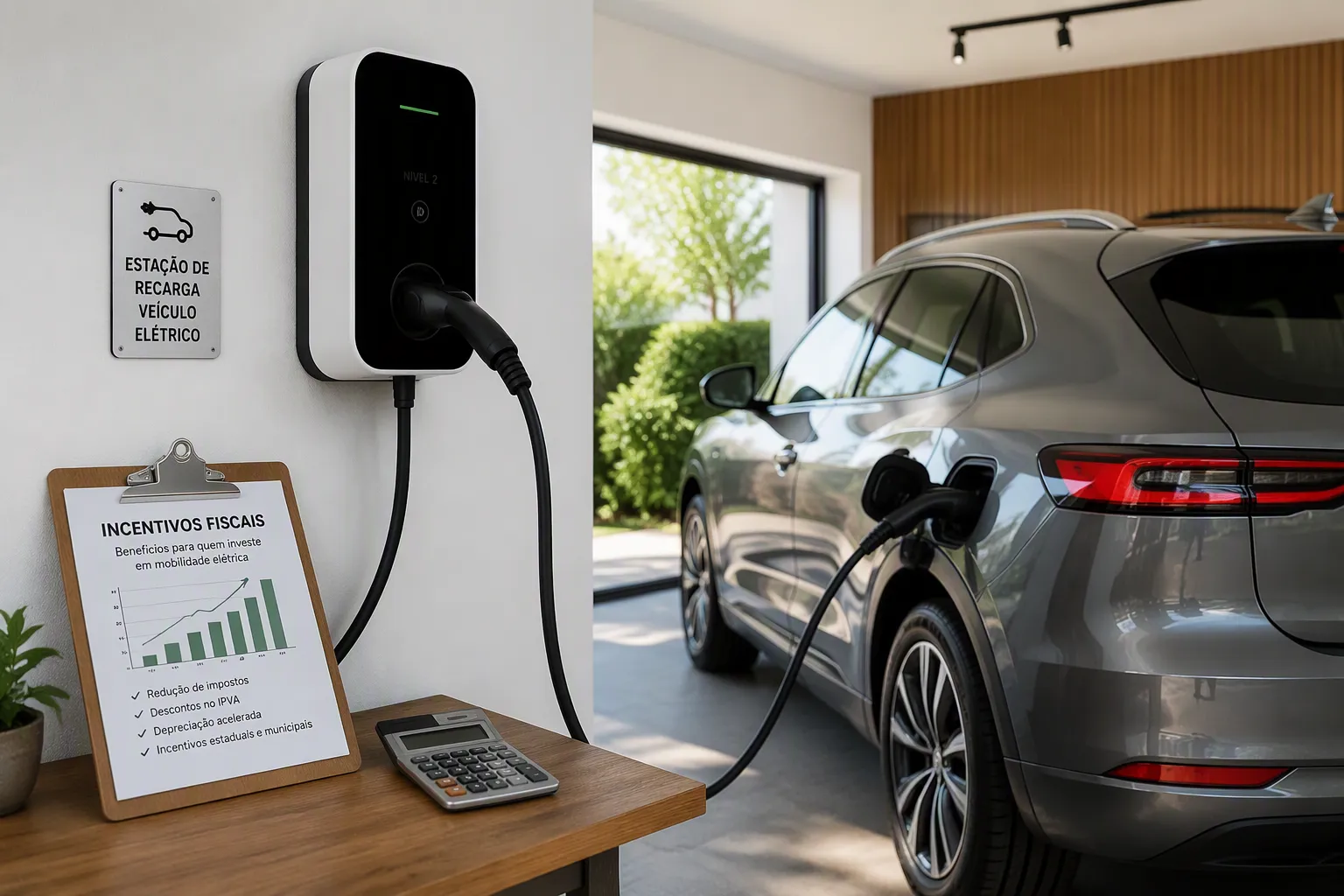
Remises et incitations
Programmes fédéraux et nationaux
Les aides publiques permettent d'alléger le coût d'installation des bornes de recharge pour véhicules électriques à domicile. Le tableau ci-dessous présente les programmes disponibles :
| Type d'incitation | Description |
|---|---|
| Crédit fédéral pour les véhicules propres | Jusqu'à 1 475 £ de crédit d'impôt pour les véhicules électriques neufs éligibles. |
| Crédit d'impôt pour les bornes de recharge à domicile | Jusqu'à 1 000 £ pour l'achat et l'installation d'un équipement de recharge domestique pour véhicules électriques. |
| Crédits d'impôt de l'État | Dans certains États, des crédits d'impôt supplémentaires sont disponibles pour compléter les crédits d'impôt fédéraux. |
| Remises | Des remises directes en espèces accordées par les États pour l'achat de véhicules électriques ou l'installation de bornes de recharge. |
| Incitations des services publics | Remises et tarifs réduits proposés par les fournisseurs d'énergie pour la recharge des véhicules électriques en dehors des heures de pointe. |
| Alabama Power | Tarif spécial en fonction des heures de consommation pour les propriétaires de véhicules électriques. |
| Alaska Power and Telephone | Prime $500 pour les véhicules électriques neufs ou d'occasion équipés d'une batterie d'au moins 14 kW. |
| Arizona Public Service Company | Jusqu'à 1 TP4T25 de crédit d'inscription dans le cadre du programme Smart Charge. |
| Conseil californien des ressources en air | 1 475 000 livres sterling pour les véhicules électriques, 1 420 000 livres sterling pour les installations de recharge. |
| Programme CHEAPR du Connecticut | Propose des remises à l'achat pour les véhicules électriques (VE), les véhicules hybrides rechargeables (VHR) et les véhicules à pile à combustible (VPC), ainsi qu'une aide de 1 000 $ pour l'installation d'un chargeur de niveau 2. |
Offres des entreprises de services publics
Les fournisseurs d'énergie proposent des mesures incitatives supplémentaires pour encourager la recharge à domicile. Ces offres comprennent des remises sur l'installation des bornes de recharge et des tarifs d'électricité réduits pendant les heures creuses. Certains fournisseurs inscrivent leurs clients à des programmes de recharge intelligente, qui optimisent la consommation d'énergie et permettent de réduire encore davantage les coûts. Les propriétaires sont invités à contacter leur fournisseur d'énergie local pour en savoir plus sur les programmes disponibles et les conditions d'éligibilité.
Remarque : la combinaison des aides fédérales, régionales et des aides proposées par les fournisseurs d'énergie peut réduire considérablement le coût total de l'installation d'un chargeur domestique pour véhicule électrique.
Emplacement d'installation et conseils pratiques pour les chargeurs de véhicules électriques à domicile
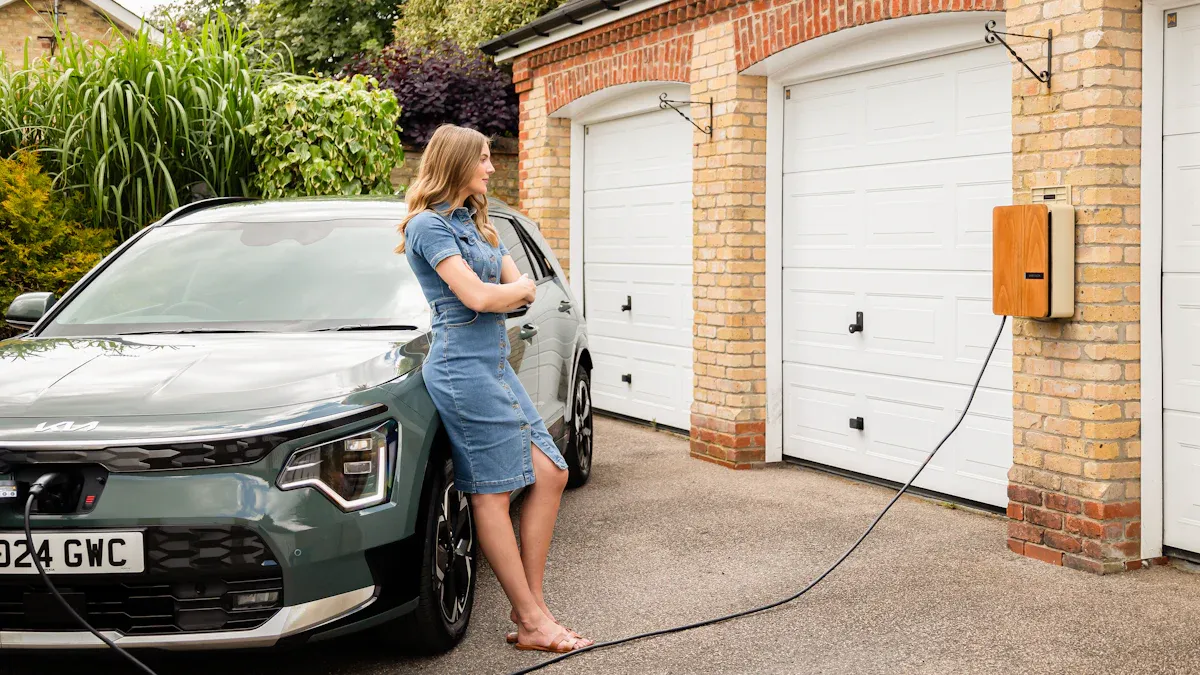
Installation à l'intérieur ou à l'extérieur
Protection contre les intempéries
Les propriétaires doivent souvent choisir entre installer leur borne de recharge pour véhicule électrique à l'intérieur ou à l'extérieur. Les installations en extérieur nécessitent des bornes dotées d'une protection robuste contre les intempéries. Les fabricants conçoivent ces appareils pour qu'ils résistent à la pluie, à la neige et aux températures extrêmes. Un emplacement couvert, tel qu'un abri pour voiture ou un garage, prolonge la durée de vie de la borne en la protégeant de l'exposition directe aux intempéries. Les installations à l'intérieur, généralement dans les garages, offrent une protection naturelle contre les intempéries. Cette configuration réduit les besoins d'entretien et minimise le risque de dommages liés aux conditions météorologiques.
Accessibilité
L'accessibilité joue un rôle crucial dans le choix de l'emplacement du chargeur. Les installateurs recommandent de placer le chargeur à proximité de l'endroit où le véhicule est garé. Cette approche permet de raccourcir la longueur du câble et de réduire les risques de trébuchement. Un accès facile au tableau électrique simplifie l'installation et réduit les coûts. Les propriétaires doivent éviter de placer les chargeurs dans des zones très fréquentées ou des endroits sujets à la formation d'eau stagnante. Un emplacement discret peut également contribuer à préserver l'attrait extérieur de la maison.
Conseil : Choisissez un emplacement qui allie commodité, sécurité et esthétique pour profiter pleinement de votre expérience à long terme.
Facteurs clés pour le choix de l'emplacement d'installation:
- Proximité du véhicule électrique
- Accès à l'électricité
- Abri contre les intempéries
- Considérations relatives à la sécurité
- Esthétique et attrait extérieur
Gestion des câbles
Sécurité et organisation
Une bonne gestion des câbles permet de disposer d'un espace de recharge propre et sûr. Des crochets muraux, des enrouleurs ou des organiseurs de câbles permettent d'éviter que le câble de recharge ne traîne par terre. Un rangement bien organisé empêche le câble de s'emmêler ou de s'abîmer. Une installation soignée améliore également l'aspect du garage ou de l'allée.
Prévenir les Risques de Trébuchement
Les câbles qui traînent peuvent présenter un risque de trébuchement, en particulier dans les espaces communs. Les installateurs recommandent de fixer les câbles le long des murs ou d'utiliser des systèmes rétractables. Les propriétaires doivent toujours replacer le câble dans son support après utilisation. Cette habitude permet de protéger à la fois les personnes et le matériel.
Remarque : Une bonne gestion des câbles permet de prolonger la durée de vie du câble de recharge et d'assurer la sécurité de tous.
Installation par un professionnel ou par un bricoleur
Quand faire appel à un électricien
La plupart des experts recommandent de faire appel à un électricien agréé pour l'installation d'un chargeur. Les électriciens évaluent la capacité électrique du logement, installent des circuits dédiés et veillent au respect des normes de sécurité. Une installation réalisée par un professionnel réduit le risque de défaillances électriques et protège votre investissement.
Permis et inspections
De nombreuses collectivités locales exigent un permis pour l'installation de bornes de recharge pour véhicules électriques à domicile. Des contrôles permettent de vérifier que les travaux respectent les normes de sécurité. Les électriciens se chargent des démarches administratives et organisent les contrôles si nécessaire. Cette étape garantit que l'installation est sûre et conforme à la réglementation.
Alerte : Le non-respect des autorisations ou des contrôles peut entraîner des risques pour la sécurité et entraîner l'annulation de la garantie du chargeur.
En tenant compte de ces éléments conseils pratiques, les propriétaires peuvent mettre en place une installation de recharge sûre, efficace et esthétique, adaptée à leur mode de vie et à leur propriété.
Selecting a home electric vehicle charger involves several important steps. Drivers should assess their daily routines, vehicle requirements, and home electrical systems. Matching charger features to these factors ensures reliable performance and long-term value. A home electric vehicle charger that fits the household’s needs supports efficient charging and future upgrades. For optimal results, individuals should consult qualified professionals before installation.
FAQ
Quelle est la différence entre les chargeurs domestiques de niveau 1 et de niveau 2 ?
Level 1 chargers use a standard 120-volt outlet and charge slowly. Level 2 chargers require a 240-volt outlet and charge much faster. Most electric vehicle owners prefer Level 2 for daily use due to its efficiency.
Can a homeowner install an EV charger without upgrading the electrical panel?
Some homes support Level 2 chargers without upgrades. Older homes or those with limited capacity may need an electrical panel upgrade. A licensed electrician can assess the existing system and recommend the safest solution.
Are home EV chargers safe to use outdoors?
Manufacturers design many home EV chargers for outdoor use. These units feature weatherproof casings and robust insulation. Always check the charger’s IP rating and follow installation guidelines for outdoor environments.
Combien de temps faut-il pour recharger un véhicule électrique à domicile ?
Charging time depends on the charger type and vehicle battery size. Level 1 chargers may take up to 40 hours for a full charge. Level 2 chargers typically complete charging in 4 to 8 hours.
Do all electric vehicles use the same charging connector?
Most electric vehicles in North America use the J1772 connector. Tesla vehicles use a proprietary connector but include adapters for compatibility. Always verify connector type before purchasing a charger.
Un chargeur domestique pour VE peut-il fonctionner avec des panneaux solaires ?
Many modern chargers integrate with solar panel systems. These chargers prioritize solar energy when available, reducing reliance on grid electricity. Homeowners can maximize renewable energy use and lower utility costs.
Is it necessary to get a permit for installing a home EV charger?
Most local authorities require permits for installing Level 2 chargers. Permits ensure compliance with safety codes. Licensed electricians usually handle the permitting process and schedule inspections.
Quel est l'entretien d'un chargeur domestique de VE ?
Routine maintenance includes inspecting cables for wear, checking connections, and cleaning the unit. Most chargers require minimal upkeep. Regular checks help ensure safe and reliable operation.