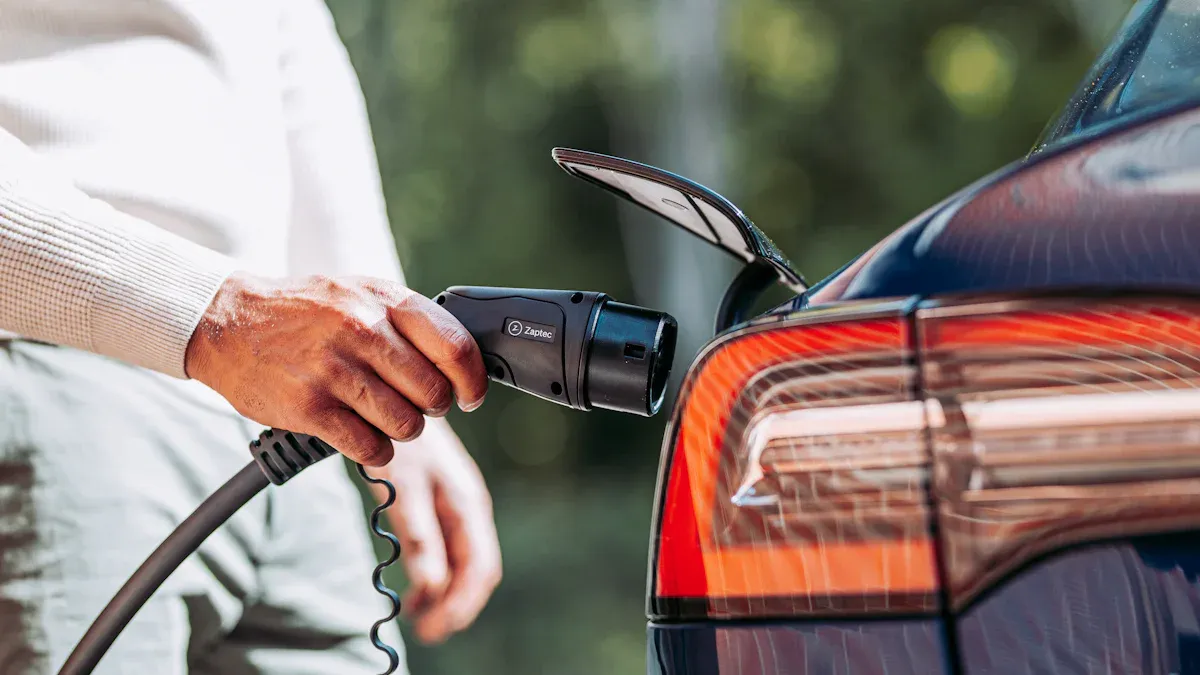
Homeowners can access financial incentives for installing a home EV charger. The federal government provides a primary tax credit for this purpose, offering tax relief of 30% of the cost, up to $1,000, for a qualifying EV Charger. These incentives help offset the total expense for a home electric car charger, where the charger and installation can average around $2,000. TPSON, a technologically advanced electric vehicle charging solution provider, is one of many EV charger manufacturers offering products that may qualify for this funding. From a fixed home charging point to portable ev chargers, various EV charging solutions can provide EV owners with significant tax relief for their EV.
The Federal EV Charger Tax Credit Explained

The primary national incentive for EV owners is a government grant designed to make home charging more accessible. This program offers significant financial assistance, but understanding its specific rules is key to successfully claiming the benefit. It provides substantial tax relief for individuals investing in a home charging point.
What is the 30C Tax Credit?
This key government incentive, often referred to as the charger grant, provides direct financial support for the purchase and setup of residential EV charging equipment. It functions as a valuable form of tax relief that lowers the upfront financial barrier for adopting an electric vehicle. This program is specifically structured to encourage the expansion of the home charging network.
Credit Amount and Maximums
The grant provides a generous contribution toward the total cost. An eligible applicant can receive funding that covers up to 75% of the cost to buy and install a qualifying charger.
Important Note: There is a maximum cap on this benefit. The grant is limited to a total of $350 (including sales tax) per installation, which helps manage the program’s budget while still offering meaningful support for your new EV.
What Costs Are Covered?
The available tax breaks cover more than just the charging hardware itself. The program is designed to assist with the complete project cost. This includes:
- The price of the EV charger unit. Technologically advanced solutions from providers like TPSON are often designed to meet grant eligibility standards.
- The full cost of the professional installation, which ensures the system is safe and compliant.
Who Qualifies for the Federal Credit?
Eligibility for this national tax credit has evolved. The program now targets specific residential situations to promote EV adoption in higher-density housing. An individual’s property type is a primary determining factor.
The Homeowner Requirement
The grant now focuses on renters and people living in apartments. To qualify, an applicant must meet certain criteria.
- You live in an apartment that you own or a property that you rent.
- You have a dedicated, private off-street parking space.
- You own or are the primary user of an eligible EV.
Homeowners of single-unit properties, such as detached houses, are generally no longer eligible for this specific grant, as its focus has shifted to support tenants and flat-dwellers.
The Eligible Census Tract Rule
In some cases, eligibility may also depend on the property’s geographic location. Certain programs use location-based rules to direct funds toward areas where the need for charging infrastructure is greatest. Applicants should always verify if their address falls within a designated zone before making a purchase.
How to Claim the Federal Tax Credit
Claiming the financial benefit involves a clear, multi-step process. Following these steps ensures an application is complete and accurate, which is essential for receiving the tax relief.
Step 1: Confirm Your Eligibility
Before purchasing any equipment, an EV owner must first confirm they meet all program requirements. This includes verifying rules related to your property type (renter or flat owner), your vehicle, and your parking situation.
Step 2: Gather Your Documentation
Proper record-keeping is not optional; it is a requirement for approval. To substantiate a claim, an individual must retain detailed proof of all expenses. Be prepared to provide the following:
- Cost Records: Itemized receipts for the charger and all materials.
- Contracts: The signed agreement with your approved installer.
- Installation Proofs: Documentation from the installer confirming the work was completed to standard.
Step 3: File IRS Form 8911
The final step is to formally claim the benefit when filing annual taxes. An applicant will need to complete and submit the specific government form designated for this purpose. This form reports the qualifying expenses and calculates the final amount of the tax credit, delivering the promised tax relief for your EV charging investment.
Finding State and Local Electric Vehicle Grants and Rebates
Beyond the federal tax credit, a rich landscape of state, local, and utility programs offers additional financial support. These incentives can dramatically reduce the net cost of purchasing and installing a home EV charger. An EV owner’s location is the single most important factor in determining eligibility for these valuable programs.
How State Rebates Work
Many states offer their own electric vehicle grants and rebates to encourage EV adoption. These programs are funded at the state level and operate independently from federal incentives. The funding often comes in the form of a direct cash-back rebate, which an owner applies for after the purchase and installation are complete.
Examples of State-Level Programs
State programs establish specific rules to ensure the grants are distributed effectively. While requirements vary, applicants often need to meet several common criteria.
- The applicant must have suitable off-street parking.
- The property may need to be a specific type, such as an apartment or rental unit.
- The EV charger must be a “smart” model with advanced features. Technologically advanced solutions from providers like TPSON are often designed to meet these standards.
- A certified or program-approved installer must perform the installation work.
Program Focus: Some state-level funding is targeted at businesses, charities, and public authorities to expand workplace charging infrastructure. These programs often require an organization to demonstrate a clear business need for EV charging points.
Stacking Rebates with Federal Credits
One of the most significant advantages of these programs is the ability to “stack” them. An EV owner can often combine a state rebate with the federal tax credit. For example, a homeowner could receive a $500 rebate from their state and still claim the full 30% federal tax credit (up to $1,000) on the remaining project cost. This layering of grants maximizes savings.
How Local and Utility Rebates Work
The search for savings should not stop at the state level. Many cities, counties, and utility companies provide their own unique incentives. These programs are highly localized and offer direct, tangible benefits to residents in specific service areas.
Cash Back from Your City or County
Some municipal governments offer straightforward cash-back rebates for installing a home charger. These programs function similarly to state rebates but are funded by the local city or county. For instance, some utility providers in states like Texas and Florida offer financial incentives from $500 to $1,000 in credits. This direct funding helps lower the initial cost of setting up a home charging station.
Bill Credits from Your Utility Provider
Utility companies are key players in the EV transition. Many offer programs that provide financial benefits directly on a customer’s electricity bill.
- Smart Charging Rewards: Some utilities, like Pacific Gas and Electric Company (PG&E) in California, have programs that reward EV owners for smart charging. Participants can receive an initial enrollment bonus and annual rewards for allowing their electric vehicle charging to occur during off-peak hours.
- Service Plans: Other utilities offer service plans for a small monthly fee. CenterPoint Energy in Texas, for example, provides a plan that covers up to $500 to repair or replace a malfunctioning Level 2 EV charger.
Where to Search for Your Local Incentives
Finding these localized programs requires some targeted research. Since these opportunities are tied to a specific address, knowing where to look is essential for uncovering every available dollar of support.
Using Government Energy Databases
Comprehensive online databases are powerful tools for this research. The DSIRE database is a well-regarded resource for tracking energy-related incentives across the U.S. It provides detailed information on various programs, including those for EV charging infrastructure, and allows users to filter results by state.
Checking Your Utility Company’s Website
The most direct way to find utility incentives is to visit the company’s website. Most power providers have a dedicated section for EV owners. This area typically lists available rebates, special electricity rates for EV charging, and instructions on how to apply for their specific programs.
What Specific Costs Qualify for EV Charger Grants and Credits?
Understanding which expenses are eligible for reimbursement is critical for maximizing financial benefits. EV charger grants typically cover both the hardware and the associated installation costs. A detailed breakdown reveals the specific components and services that qualify, helping an EV owner budget effectively for their new electric charging setup. These grants are designed to support a complete and professional project from start to finish.
Eligible Charger Hardware
The physical charging unit is the core of the system. Incentive programs have specific requirements for the type of hardware that qualifies for funding.
Level 2 Chargers
Most residential grants target Level 2 chargers. These units provide significantly faster charging speeds than a standard wall outlet, making them a practical choice for most EV drivers. Programs often require the charger to have “smart” capabilities, such as Wi-Fi connectivity for managed charging. Technologically advanced solutions from providers like TPSON are frequently designed to meet these specific grant eligibility standards.
Bi-directional Charging Equipment
A newer category of hardware, bi-directional charging equipment, is gaining support from some incentive programs. This technology allows an EV to not only draw power from the grid but also send power back to a home during an outage.
Future-Forward Tech: While not universally covered, the inclusion of bi-directional equipment in some grants signals a growing interest in vehicle-to-grid (V2G) technology. An EV owner should check program rules carefully if considering this advanced option.
Eligible Installation and Labor Costs
The total cost of a project extends well beyond the charger itself. Fortunately, many grants recognize this and cover a wide range of professional services required for a safe and compliant installation.
Electrician Labor and Wiring
The cost of hiring a licensed electrician is almost always an eligible expense. This includes the labor for mounting the unit, running new dedicated wiring from the electrical panel to the charging location, and ensuring all connections are secure.
Electrical Panel Upgrades
Older homes may not have an electrical panel with enough capacity to support a new EV circuit. In these cases, an upgrade is necessary. The significant cost of modernizing a home’s main service panel is often included in the total project costs eligible for grants.
Permits and Inspection Fees
A proper installation requires municipal permits and a final inspection to ensure it meets all safety codes. These administrative fees, while small, are essential parts of the process. Most incentive programs allow an applicant to include these required permit and inspection fees in their total reimbursement claim.
Tax Credit vs. Rebate: What’s the Difference for Your Electric Vehicle Charger?
When exploring incentives for a new EV charger, an owner will encounter two primary types of financial aid: tax credits and rebates. While both reduce the overall cost, they function in fundamentally different ways. Understanding this distinction is essential for accurately planning a budget and maximizing savings. One provides delayed tax relief, while the other offers more immediate cash back.
Understanding Tax Credits
A tax credit is a powerful financial tool offered by a government to incentivize specific behaviors, such as installing home EV charging infrastructure. It directly impacts an individual’s annual tax filing.
How They Reduce Your Tax Bill
A tax credit provides a dollar-for-dollar reduction of a person’s income tax liability. For example, a $1,000 credit reduces the amount of tax owed by $1,000. It is a direct form of tax relief.
The IRS defines a nonrefundable tax credit as one that can reduce a taxpayer’s tax liability to zero but cannot result in a refund. If the credit is larger than the tax owed, the taxpayer does not receive the difference as a cash payment.
This means the credit’s full value depends on having a sufficient tax bill to offset.
When You Receive the Financial Benefit
An individual receives the financial benefit from a tax credit long after the initial purchase. The owner must pay for the charger and installation upfront, keep all records, and then claim the credit when filing their annual income taxes. The tax relief is realized either as a smaller tax payment or a larger tax refund months later.
Understanding Rebates
Rebates are more straightforward incentives, often provided by state agencies, local municipalities, or utility companies. They function like a refund after a purchase is made.
How You Receive a Direct Payment
A rebate provides a direct cash payment to the consumer. After purchasing and installing a qualifying charger, such as a technologically advanced model from TPSON, the owner submits an application with proof of purchase. The program administrator then sends a check or direct deposit for the specified rebate amount.
Typical Application Timelines
The timeline for receiving a rebate varies by program. An EV owner typically needs to submit an application within a specific window after installation. Processing the application and issuing the payment can take anywhere from a few weeks to several months. This still provides a more direct return of funds than a tax credit.
Which is Better for You?
Choosing between these incentives—or determining which is more valuable—depends entirely on an individual’s financial situation and priorities.
Assessing Your Tax Liability
The usefulness of a tax credit is directly tied to an individual’s tax liability. A person who owes a significant amount in taxes will likely benefit from the full value of the credit, making it an excellent form of tax relief. However, someone with a very low tax bill may not be able to use the entire credit, diminishing its value.
The Advantage of Immediate Cash Back
Rebates offer a clear advantage for those concerned with upfront costs. Receiving a few hundred dollars back shortly after the installation helps offset the initial expense of the hardware and labor. This immediate tax relief can make the project more financially manageable from the start.
Common Mistakes to Avoid When Claiming Incentives
An EV owner can easily miss out on valuable savings by making simple errors during the application process. Navigating the world of EV charger incentives requires careful attention to detail. A few common pitfalls can derail an otherwise successful claim, turning a cost-saving opportunity into a frustrating experience. Understanding these mistakes is the first step toward avoiding them and securing all available financial support.
Missing Application Deadlines
Time is a critical factor when applying for grants and credits. Each program operates on a strict schedule, and missing a deadline is one of the most frequent reasons for a rejected application.
State and Local Program Timelines
State and local rebate programs often have specific application windows or are funded on a first-come, first-served basis. An EV owner must submit their paperwork promptly after the installation is complete.
⚠️ Act Quickly: Many of these programs have limited funds. Once the budget is exhausted for the year, the program closes to new applicants. It is crucial to check the program’s website for deadlines and submit the application as soon as possible.
Federal Tax Filing Deadlines
The federal tax credit follows the standard tax filing calendar. An individual must claim the credit for the year the charger was placed in service. For example, if the charger was installed in 2023, the owner must file Form 8911 with their 2023 tax return, which is typically due in April 2024. Missing this window means losing the credit for that year.
Not Keeping Detailed Records
Thorough documentation is the backbone of any successful claim. Program administrators require clear proof of all expenses to verify eligibility and prevent fraud. Sloppy record-keeping can lead to a denied application.
The Importance of Itemized Receipts
A simple credit card statement is not enough. Applicants need itemized receipts and invoices that clearly list each cost.
- Hardware: The receipt for the charger, such as a technologically advanced model from TPSON, should show the model number and purchase price.
- Materials: Invoices should detail costs for wiring, conduits, breakers, and other supplies.
This level of detail proves that the expenses are directly related to the charger project.
Documenting Labor and Material Costs Separately
It is essential to have an invoice from the electrician that separates labor charges from material costs. Many programs have different rules or caps for hardware versus labor. A combined, single-line-item invoice may not provide the necessary detail for administrators to approve the full claim.
Misunderstanding Eligibility Rules
Program requirements can be complex and highly specific. An applicant who makes assumptions without verifying the rules risks purchasing a non-qualifying product or discovering they are ineligible after the work is done.
Double-Checking Census Tract Data
The federal 30C tax credit has a strict location requirement. The property must be in an eligible, non-urban census tract. An EV owner must use the official government mapping tool to confirm their address qualifies before buying any equipment. Assuming eligibility based on a general neighborhood description is a recipe for disappointment.
Assuming All Chargers Qualify
Not every EV charger on the market is eligible for every incentive. Many state and utility programs require chargers to be “smart” or have specific network certifications. An owner should always consult the program’s approved product list before making a purchase to ensure their chosen hardware meets the requirements.
A Step-by-Step Guide to Maximizing Your Savings

Securing financial incentives for a home EV charger requires a methodical approach. Following a clear plan from research to paperwork ensures an EV owner can capture every available dollar of support. This guide breaks the process down into three manageable stages for maximum savings.
Step 1: Pre-Purchase Research
The most critical work happens before any money is spent. Proper upfront research lays the foundation for a successful claim and prevents costly mistakes.
Identify All Potential Federal, State, and Local Incentives
An owner should begin by creating a comprehensive list of all potential programs. This involves investigating national-level grants, regional incentives, and local utility rebates. Each layer of government or utility provider may offer unique funding opportunities. Compiling this information first provides a complete picture of the available financial support.
Get Pre-Approval if Required by a Rebate Program
Some rebate programs require applicants to get pre-approval before purchasing or starting work.
Action Item: An owner must review the rules for each prospective program. Submitting an application for pre-authorization, if needed, is a non-negotiable step. Skipping it can lead to automatic disqualification from receiving funding.
Step 2: The Purchase and Installation
With research complete, an owner can proceed with the acquisition and setup of their charging equipment. Every choice made during this stage must align with program requirements.
Choose Qualifying Hardware
Incentive programs often maintain lists of approved EV chargers. An owner must select a model that meets these specifications. Technologically advanced electric vehicle charging solution providers, like TPSON, often design their products to comply with these standards. Choosing a non-approved unit is a common reason for a denied claim.
Hire a Licensed Electrician
Most grants mandate that a licensed and insured electrician performs the installation. This requirement ensures the system is safe and code-compliant. An owner should obtain an itemized quote that separates labor from material costs before the installation begins.
Step 3: Post-Installation Paperwork
After the charger is installed, the final step is to complete the necessary paperwork. Diligence in this phase is essential for turning eligible expenses into actual savings.
Collect and Organize All Invoices and Receipts
An owner must keep every piece of documentation related to the project. This includes the itemized receipt for the charger and the final, detailed invoice from the electrician. These documents serve as the primary proof of cost for all applications.
Submit Rebate Applications Promptly
Many local and regional programs operate on a first-come, first-served basis. An owner should submit all rebate applications immediately after the project is finished. Delaying submission risks the program running out of its allocated budget.
Prepare for Tax Season
For tax-based credits, organization is key. An owner should create a dedicated folder containing all receipts, invoices, and application confirmations. Having this package ready will streamline the process of claiming the credit when filing annual taxes.
Significant financial incentives exist to lower the cost of a home EV charger. An EV owner can secure grants and a tax credit for their EV charger. The most vital step is researching all options before the charger installation. This provides the best path to tax relief for your EV charger. Following a checklist ensures an EV owner maximizes their tax relief for a new home EV charger.
- Confirm eligibility for any location-based federal programs.
- Search for all available state and utility rebates for your EV.
- Keep every itemized receipt for the home EV charger and all related work.
- File for all benefits promptly to receive the promised tax relief for your EV charger.
FAQ
Can renters get an EV charger grant?
Yes. Many programs now specifically target renters and people living in apartments. Applicants typically need dedicated off-street parking and must be the primary user of an eligible EV. An owner should always check local program rules for specific property requirements before applying for funding.
Do all EV chargers qualify for incentives?
No. Most programs require chargers to have specific features, such as “smart” charging capabilities for network management. Technologically advanced providers like TPSON often design their products to meet these standards. An owner must check a program’s approved hardware list before making a purchase.
What is the difference between a tax credit and a rebate?
A tax credit reduces an individual’s annual tax bill, providing delayed tax relief. A rebate is a direct cash payment sent to the owner after installation. Rebates offer more immediate financial relief, while credits are claimed when filing annual taxes.
Can an owner install the charger themselves?
Most incentive programs require a licensed electrician to perform the installation. This requirement ensures the work is safe and meets all electrical codes. A self-installed charger will typically disqualify an owner from receiving financial support from a grant or rebate program.
What documents are needed to apply?
Applicants must provide detailed proof of all project costs. Proper documentation is essential for a successful claim.
Key Documents Checklist:
- An itemized receipt for the charger hardware.
- The final, detailed invoice from the electrician.
- Proof of a completed and inspected installation.
Can an owner combine multiple incentives?
Yes, this is often possible and highly recommended. An EV owner can frequently “stack” a national tax credit with a regional or utility rebate. This strategy maximizes the total savings on the purchase and installation of a home charging point.