
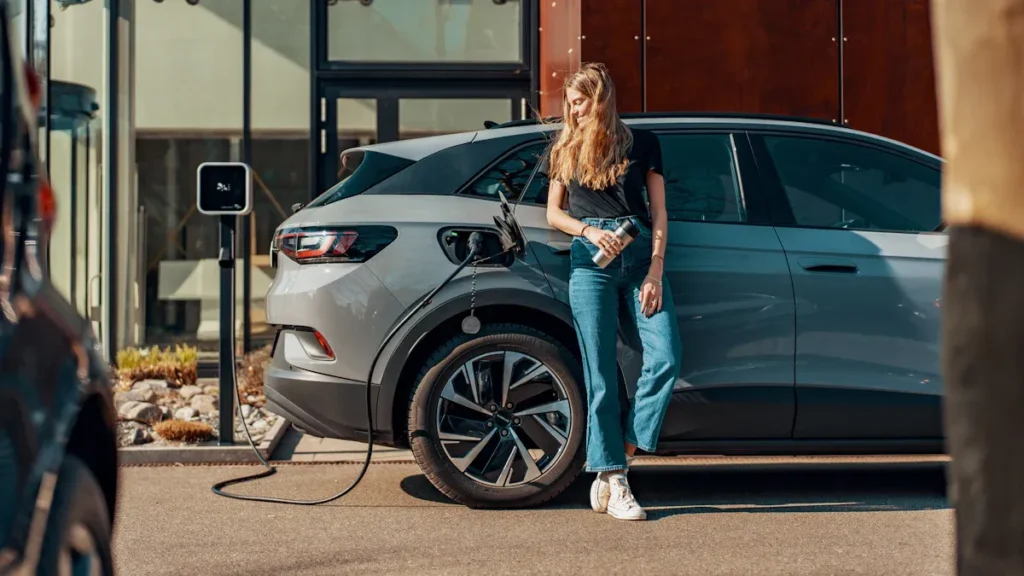
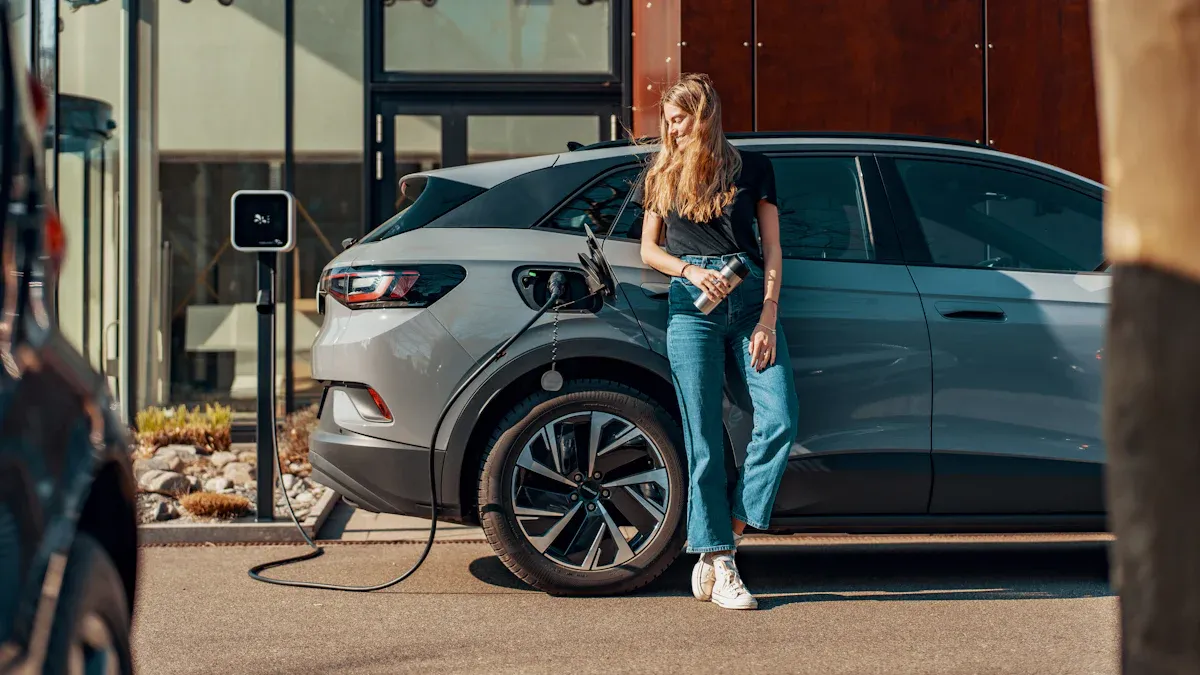
Understanding what-are-the-electrical-requirements-for-level-2-and-dc-fast-charging-stations helps ensure safe and efficient operation. Level 2 chargers typically operate between 3.3 kW and 22 kW, while DC fast charging stations handle power from 50 kW up to 350 kW. The table below outlines the most common requirements and connector types for these stations:
| Art der Aufladung | Leistungsbereich | Common Connectors |
|---|---|---|
| Level-2-Ladegeräte | 3.3 kW to 22 kW | Type 1 (SAE J1772), Type 2 (Mennekes) |
| DC-Schnellaufladung | 50 kW bis 350 kW | CCS (Kombiniertes Ladesystem) |
Hersteller von EV-Ladegeräten recommend considering panel capacity, dedicated wiring, and local safety codes before installing any EV-Ladegerät. Whether choosing tragbare ev-ladegeräte or advanced EV-Ladelösungen, property owners must secure the proper permits and use a licensed professional to meet all requirements.
Level 2 Charging Station Electrical Requirements
Power Supply and Voltage Requirements for Level 2 Charging
Required Voltage for Level 2 EV Chargers
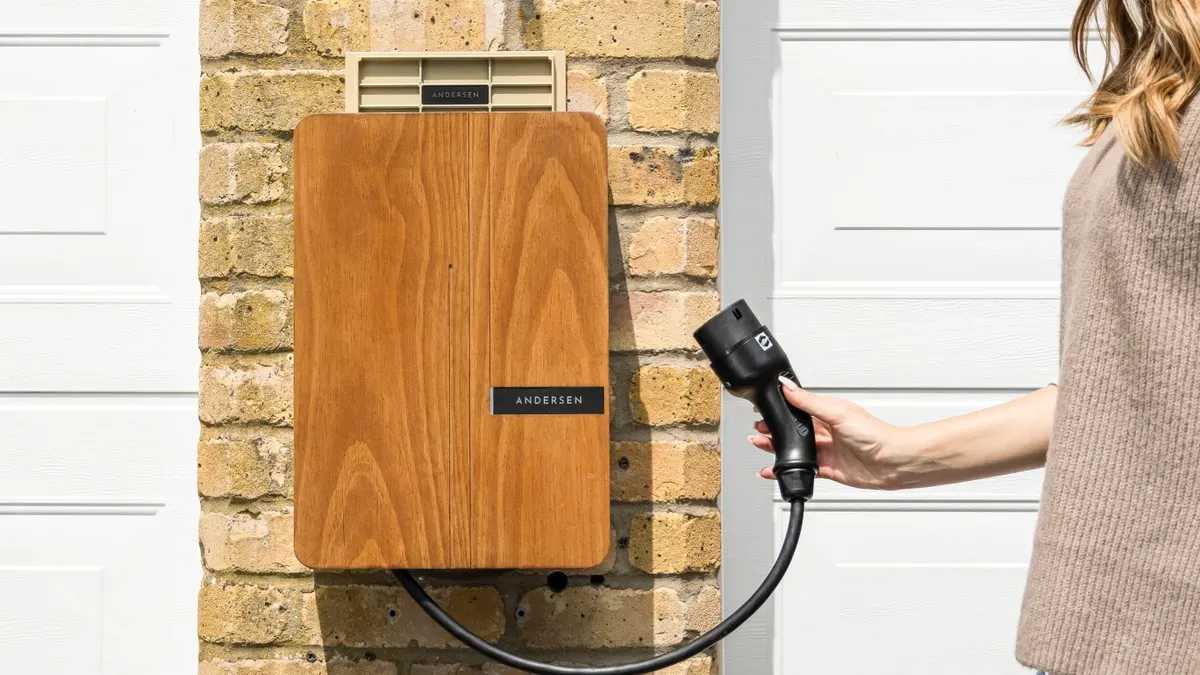
Level 2 chargers require a dedicated power supply to deliver efficient charging for electric vehicles. The voltage level depends on the installation environment. The following table shows typical voltage requirements for Level 2 charging:
| Voltage Level | Common Application |
|---|---|
| 208V | Commercial settings |
| 240V | Residential environments |
Charging at 240 volts in residential areas allows electric car charger units to operate at optimal efficiency. In commercial settings, 208 volts is standard for public charging stations and workplace charging.
Compatible Outlets and Circuit Types
Level 2 chargers connect to specific outlets and circuit types. In North America, the SAE J1772 connector is standard for AC charging, while Europe uses the Type 2 connector for AC charging. The transition to the North American Charging Standard (NACS) is ongoing for AC and DC charging. Most residential installations use a dedicated 240-volt outlet, such as a NEMA 6-50 or NEMA 14-50. Commercial stations often rely on hardwired connections to the electrical panel. These circuit types ensure safe and reliable electric vehicle charging.
- In Europe, the Type 2 connector is standard for AC charging.
- In North America, SAE J1772 is commonly used for AC charging.
- Public charging stations in Europe mandate CCS2 for DC fast charging.
Amperage and Panel Capacity Requirements for Level 2 EV Charger Installation
Minimum Amperage Needed
Level 2 chargers require a voltage of 220–240 volts and handle amperages ranging from 6 to 30 amps. The minimum amperage for safe and efficient operation is 6 amps. Most electric car charger installations use higher amperage to reduce charging time. Charging stations in commercial environments may require higher amperage to support multiple vehicles.
- Level 2 chargers operate efficiently at 6 amps or above.
- Higher amperage reduces charging time for electric vehicles.
- Charging stations in public areas often use 30 amps for faster charging.
Panel Upgrade Considerations for Level 2 Charging
Die capacity of an existing electrical panel determines whether the system can support a Level 2 charger. Older panels may lack the capacity for additional load. Property owners must assess panel capacity before installing a charger. Upgrading the panel may be necessary for safe operation. Load analysis and dynamic load management optimize panel capacity and may prevent the need for upgrades. TPSON offers advanced solutions for electric vehicle charging that help maximize efficiency and safety.
Tip: Always consult a licensed electrician to evaluate panel capacity before installing a Level 2 charger.
Wiring and Circuit Specifications for Level 2 EV Charging
Wire Gauge and Dedicated Circuit Requirements
Level 2 chargers require a dedicated circuit to prevent overloads and ensure safety. The wire gauge depends on the amperage rating of the charger. For a 30-amp charger, installers typically use 10 AWG copper wire. Lower amperage chargers may use 12 AWG wire. Dedicated circuits isolate the charger from other appliances, reducing the risk of electrical faults.
- Use 10 AWG wire for 30-amp Level 2 chargers.
- Install a dedicated circuit for each electric car charger.
- Charging stations in commercial settings may require heavier gauge wire.
Circuit Breaker Sizing for Level 2 EV Chargers
Circuit breaker sizing is critical for safe electric vehicle charging. Most Level 2 chargers require a 40-amp circuit breaker for a 32-amp charger. The breaker must match the charger’s amperage rating and comply with local electrical codes. Public charging stations often use larger breakers to support multiple chargers. TPSON recommends sizing breakers according to manufacturer specifications and local regulations.
| Ladegerät-Stromstärke | Empfohlene Unterbrechergröße |
|---|---|
| 16 Ampere | 20 Ampere |
| 24 amps | 30 Ampere |
| 32 Ampere | 40 Ampere |
Note: Proper breaker sizing prevents overheating and electrical hazards during charging.
Charging at Level 2 provides faster and more reliable electric vehicle charging compared to standard AC outlets. Electric car charger installations require careful planning to ensure panel capacity, wiring, and breaker sizing meet all safety standards. TPSON delivers advanced charging solutions for residential and commercial stations, supporting efficient and safe electric vehicle charging.
Installation Steps for Level 2 EV Charger Requirements
Site Assessment for Level 2 Charging
A thorough site assessment forms the foundation of a successful Level 2 EV charger installation. The process begins with evaluating the location where the charger will be mounted. Installers check for proximity to the electrical panel, available wall space, and accessibility for users. They also consider environmental factors such as exposure to weather, potential for water ingress, and the presence of flammable materials.
Installers review the existing electrical infrastructure to determine if it can support the additional load required for a Level 2 charger. They inspect the panel capacity, wiring condition, and grounding system. If the panel lacks sufficient capacity, they recommend an upgrade before proceeding with the installation.
A site assessment also includes planning the cable route. Installers avoid routing cables near heat sources or sharp edges to prevent damage. They ensure the charger location allows for easy connection to the vehicle and does not obstruct walkways or driveways.
Tip: A detailed site assessment reduces the risk of costly modifications during installation and ensures compliance with safety standards.
Professional Installation Process for Level 2 EV Chargers
A professional installation follows a series of precise steps to guarantee safety and reliability. Installers adhere to manufacturer guidelines and local codes throughout the process. The following ordered list outlines the typical steps involved in a Level 2 EV charger installation:
- Prepare the wall facade by cleaning the surface and referencing the installation manual.
- Outline hole positions using the backplate as a template.
- Drill holes at the marked locations with the appropriate drill bit.
- Insert bolts or anchors into the drilled holes to secure the mounting hardware.
- Install the backplate firmly onto the wall using screws or fasteners.
- Mount the EV charger onto the backplate, following the manufacturer’s instructions.
- Route the charging cable away from heat sources and sharp objects to prevent wear.
- Connect the charger to the electrical supply, ensuring all connections meet code requirements.
- Test the charger by performing a trial charge to verify proper operation.
- Clean up the work area and perform a final inspection for any installation errors.
Professional installers possess specialized certifications that demonstrate their expertise in EV charger installation. The table below highlights common certifications and their key features:
| Certification Name | Validity | Organizations Offering | Topics Covered |
|---|---|---|---|
| Level 2 Electric Vehicle Supply Equipment Installer Certification | 3 Jahre | Electric Vehicle Infrastructure Training Program (EVITP), International Association of Electrical Inspectors (IAEI) | Basic Electrical Theory, NEC Requirements, Installation Procedures, Troubleshooting |
| Electric Vehicle Supply Equipment Technician Certification | 5 years | Electric Vehicle Infrastructure Training Program (EVITP), National Institute for Automotive Service Excellence (ASE) | Electrical Theory, Installation Procedures, Compliance with NEC |
| Electric Vehicle Supply Equipment Master Technician Certification | 5 years | National Institute for Automotive Service Excellence (ASE) | Advanced Electrical Theory, Complex Troubleshooting, Compliance with Standards |
These certifications ensure that installers understand electrical theory, National Electrical Code (NEC) requirements, and best practices for installation. They also prepare technicians to troubleshoot issues and maintain compliance with evolving standards.
A professional installation not only guarantees safety but also maximizes the lifespan and efficiency of the charging equipment. Installers document each step, provide guidance on charger operation, and offer maintenance recommendations. By following these procedures, property owners can trust that their Level 2 EV charger installation meets all technical and regulatory requirements.
DC Fast Charging Station Electrical Requirements
Power Supply and Voltage Requirements for DC Fast Charging
Required Voltage Range for DC Fast Chargers
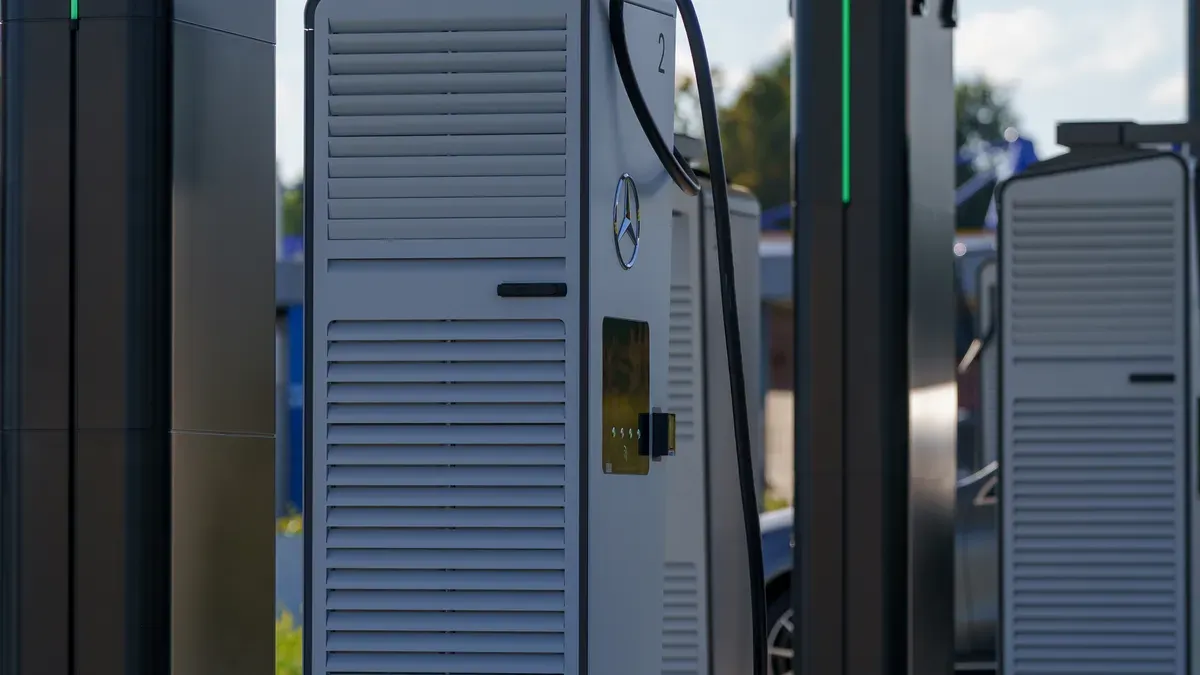
DC fast charging stations deliver high power directly to the battery, bypassing the vehicle’s onboard charger. These stations operate at voltages up to 1000 V, supporting power ratings from 50 kW to 350 kW. The charging process requires robust infrastructure to handle these demands. Commercial applications often use single or three-phase input voltage types. The high-power charging unit must provide efficient cooling and surge protection, meeting OVC III or IV safety standards. Charging speeds vary, with fast DC charging ranging from 3.5 kW to 22 kW, semi-rapid DC charging from 22 kW to 50 kW, and rapid DC charging from 50 kW to 62.5 kW. Public dc chargers must support these voltage ranges to accommodate different ev connector types.
Three-Phase Power Needs for DC Fast Charging
Three-phase power is essential for most DC fast charging stations. This configuration allows the charger to convert AC input into DC output efficiently. Level 3 DC chargers use advanced AC-DC converters housed in roadside units. The conversion process enables rapid charging, making these stations suitable for public locations and commercial fleets. Three-phase power ensures consistent delivery of high current and voltage, supporting the demands of modern ev charging infrastructure. The charger must communicate with the vehicle using standards like CCS and CHAdeMO connectors, providing safe and reliable charging.
Note: Three-phase power supports higher charging speeds and reduces strain on the electrical grid during peak usage.
Amperage and Panel Capacity Requirements for DC Fast Charging Stations
High Amperage Requirements for DC Fast Charging
DC fast charging stations require high amperage to deliver rapid charging. The amperage depends on the voltage and power rating of the charger. For example, a 250 kW charger operating at 1000 V requires 250 A, while the same power at 400 V demands 625 A. These high currents necessitate thicker cables and advanced cooling systems. Public charging stations must ensure their electrical panels can handle these loads without overheating. The charger must connect to a dedicated circuit sized for continuous operation, supporting CCS and CHAdeMO connectors.
| Spannung (V) | Leistung (kW) | Stromstärke (A) |
|---|---|---|
| 1000 | 250 | 250 |
| 400 | 250 | 625 |
Charging stations must comply with safety standards and use connectors that support high amperage, such as CCS and CHAdeMO connectors.
Panel Sizing and Upgrades for DC Fast Charging
Panel capacity plays a critical role in DC fast charging station installation. Older buildings may lack the electrical capacity to support high-power chargers. Upgrades to the electrical panel are often necessary, especially for public charging stations. Coordination with the local Distribution Network Operator (DNO) ensures the infrastructure can accommodate increased demand. The panel must handle the load of multiple chargers, supporting various ev connector types. Upgrades may involve new connections, switchgear, and transformers. The table below summarizes key points for panel sizing and upgrades:
| Kernpunkt | Beschreibung |
|---|---|
| Elektrische Kapazität | The electrical system must handle the load of EV chargers, especially Level 2 and Level 3. |
| Upgrades May Be Needed | Insufficient capacity may require upgrading the electrical panel, especially in older buildings. |
| DNO Electrical Upgrades and New Connections | Coordination with the DNO is essential for potential upgrades to accommodate increased demand. |
Charging stations must evaluate panel capacity before installation to ensure safe and reliable operation.
Wiring and Infrastructure Requirements for DC Fast Charging
Heavy-Duty Wiring Specifications for DC Fast Charging
DC fast charging stations require heavy-duty wiring to support high power and continuous loads. Installers select cables based on charger power, cable length, and installation environment. The charger must connect to a dedicated circuit, sized for the specific power requirements. Cables rated for continuous operation prevent overheating and electrical faults. Charging equipment uses powerful AC-DC converters, housed in roadside units, to deliver rapid charging. Safety mechanisms, such as an electronic handshake, confirm safe charging before power flows. Standards like CCS and CHAdeMO connectors ensure compatibility and communication between the charger and vehicle.
| Anforderung | Einzelheiten |
|---|---|
| Nennleistung | DC chargers can provide fast charging from 20-350 kW. |
| Ladeausrüstung | Must use powerful AC-DC converters housed in roadside units. |
| Mechanismus der Sicherheit | An electronic ‘handshake’ confirms safe charging. |
| Standards | CCS and CHAdeMO are common standards for connectors and communication. |
DC charging equipment must comply with BS EN 61851 and use BS EN 62196 Mode 4 charging.
Charging stations must use connectors that meet international standards, such as CCS and CHAdeMO connectors, to ensure safety and interoperability.
Transformer and Distribution Needs for DC Fast Charging
Transformers and distribution systems are essential components of DC fast charging stations. The charger relies on transformers to step up or step down voltage, supporting high power levels up to 1000 V and high currents. Level 3 DC fast chargers convert three-phase AC input to DC, using an AC-DC Power Factor Correction (PFC) front-end. The PFC maintains a consistency of over 0.98 with low total harmonic distortion, meeting grid standards. Modular architecture allows stacking power blocks of 15 to 75 kW in a single cabinet, providing flexibility for public charging stations. The charger must manage thick cables and advanced cooling systems to handle high amperage. Essential components include charging units, transformers, distribution panels, and wiring. Level 3 charging units deliver higher power and speed, making them ideal for short-stop locations and public charging infrastructure.
- Charging stations consist of charging units, transformers, distribution panels, and wiring.
- Level 3 charging units are designed for fast charging, delivering significant power for efficient EV recharging.
- DC fast charging stations require transformers and distribution systems that can handle high power levels, typically up to 1000 V and high currents.
- Modular architecture stacks power blocks to meet high power demands in public charging stations.
- The charger must use connectors like CCS and CHAdeMO connectors to ensure compatibility with various EV connector types.
Charging stations must coordinate with local utilities to ensure the infrastructure supports the demands of DC fast charging. The charger must meet all safety and performance standards, providing reliable service for public charging locations.
Installation Steps for DC Fast Charging Station Requirements
Site Preparation for DC Fast Charging
Site preparation forms the foundation for a successful DC fast charging station installation. Installers begin by conducting a comprehensive site survey. This survey evaluates the electrical capacity of the location, ensuring the existing infrastructure can support the high power demands of a DC charger. They check the proximity of the charger to the main electrical panel, as longer distances increase wiring complexity and installation costs.
Installers also assess the feasibility of the installation by examining the available space for mounting the charger and routing cables. They consider the location’s exposure to weather, accessibility for vehicles, and the safety of users. Public charging stations require additional planning to accommodate multiple vehicles and ensure compliance with local regulations.
A table below summarizes key site preparation considerations:
| Betrachtung | Beschreibung |
|---|---|
| Electrical Capacity Assessments | Evaluates if the infrastructure can handle the load of a DC charger without risk of overload. |
| Installation Location | Determines the best spot for the charger, factoring in distance to the panel and user access. |
| Importance of Site Survey | Provides accurate cost estimates and identifies potential challenges before installation begins. |
| DNO Electrical Upgrades | May require coordination with the Distribution Network Operator for infrastructure modifications. |
Installers set up safety measures before any work begins. They confirm cable routes and ensure the area is clear of hazards. For public installations, they plan for signage, lighting, and traffic flow to maximize safety and convenience.
Tip: A thorough site survey and preparation phase reduces unexpected costs and ensures the charger operates reliably in public environments.
Commercial Installation Process for DC Fast Charging
The commercial Installationsvorgang for a DC fast charging station involves several critical steps. Installers follow a structured approach to guarantee safety, efficiency, and compliance with industry standards. The process typically includes the following stages:
Assess the Electrical System
Installers verify that the electrical system can support the charger’s power requirements. They identify if upgrades or new connections are necessary, especially in older buildings or public spaces.Determine Installation Location
The team selects a location that minimizes the distance between the charger and the electrical panel. This step reduces installation costs and ensures efficient power delivery.Obtain Permits and Schedule Work
Installers secure all required permits from local authorities. They coordinate with the Distribution Network Operator if the installation impacts the public grid.Conduct a Detailed Site Survey
The survey confirms the installation plan, checks for obstacles, and finalizes the placement of the charger and connector. Installers also plan for future expansion, especially in public charging hubs.Prepare the Site and Ensure Safety
The team sets up barriers, marks cable routes, and verifies that all safety protocols are in place. They prepare mounting surfaces for the charger and connector.Perform Electrical Work and Circuit Installation
Electricians install dedicated circuit breakers and run heavy-duty cabling from the panel to the charger. They ensure all wiring meets code requirements and supports the high current needed for DC charging.Mount the Charger and Make Connections
The charger is securely mounted on its foundation. Installers connect the charger to the power supply and attach the appropriate connector, such as CCS or CHAdeMO, to support a wide range of electric vehicles.Test and Commission the System
The team conducts comprehensive testing to verify the charger’s performance and safety features. They check the connector’s communication with vehicles and ensure the charger delivers the correct power levels.Complete Documentation and Certification
Installers provide detailed documentation of the installation. They obtain certification from local inspectors and demonstrate the charger’s operation to the site owner.Plan for Ongoing Maintenance
The installation team offers guidance on routine maintenance and troubleshooting. They ensure the charger and connector remain in optimal condition for public use.
Note: Simple installations may take only a few hours, while complex public charging hubs with multiple chargers and connectors can require several days of work.
Installers must use connectors that comply with international standards, such as CCS and CHAdeMO, to ensure compatibility with a wide range of electric vehicles. Public charging stations often require advanced smart systems for monitoring and payment integration. The installation process concludes with a demonstration of the charger’s features and a review of safety procedures.
A successful DC fast charging station installation supports rapid charging, reliable operation, and seamless public access. Careful planning, skilled execution, and adherence to safety standards ensure the charger and connector deliver optimal performance for years to come.
Safety Standards, Permits, and Compliance for EV Charger Installation Requirements
National Electrical Code (NEC) Requirements for EV Charging
NEC Guidelines for EV Charger Installation
Die National Electrical Code sets the foundation for safe and compliant EV charger installation requirements. Installers must follow NEC articles that address wiring, grounding, and overcurrent protection. These requirements apply to both Level 2 and DC fast charging stations. Installers must evaluate the electrical system and ensure the use of dedicated circuits. For outdoor installations, ground-fault circuit interrupters are mandatory. The NEC also requires that all wiring and breaker sizes match the charger’s specifications.
- Installation must comply with the National Electrical Code.
- Installers should consult with local authorities or licensed electricians.
- Adherence to local building codes is essential.
The table below highlights key differences in requirements for Level 2 and DC fast charging:
| Anforderung | Level-2-Ladegerät | DC-Schnellladegerät |
|---|---|---|
| Spannungsanforderung | 240 Volt | Specialized equipment required |
| Schaltungsanforderung | Typically requires a 40-amp circuit | Requires significantly more power |
| Electrical System Evaluation | Must evaluate existing system | Must evaluate existing system |
| Permits and Regulations | Must comply with NEC and local codes | Must comply with NEC and local codes |
| Dedizierter Kreislauf | Ja | Ja |
| GFCI Requirement | Mandatory for outdoor installations | Mandatory for outdoor installations |
| Professional Installation Recommended | Strongly recommended | Strongly recommended |
Local Code Considerations for EV Charging
Local regulations play a critical role in every EV charger installation. Municipalities may have unique requirements for wiring, panel upgrades, and charger placement. Installers must check for specific zoning requirements and ensure compliance with all local regulations. Consultation with local authorities helps avoid costly mistakes and ensures the installation meets both national and local standards.
Permits and Inspections for EV Charger Installation Requirements
Permit Application Process for EV Charging
Most municipalities require a permit for any EV charger installation. The process involves submitting detailed plans and specifications to the local building department. Installers must demonstrate compliance with all requirements, including NEC and local regulations. For home EV charger projects, the permit process ensures that the installation will not overload the electrical system or violate zoning laws. Commercial installations often require additional documentation and coordination with utility providers.
- Most municipalities require a permit for EV charger installations.
- Compliance with local regulations is essential for both residential and commercial installations.
- Installers must check for specific zoning requirements in the area.
Inspection Requirements for EV Charging Installations
After installation, a certified inspector must review the work to verify compliance with all requirements. The inspector checks wiring, breaker sizing, and grounding. They also confirm that the installation meets NEC and local regulations. Passing inspection is necessary before the charger can be used. This process protects property owners and ensures the safety of the electrical system.
Tip: Always schedule an inspection after installation to avoid delays and ensure compliance.
Importance of Professional Installation for EV Charging Requirements
Role of Licensed Electricians in EV Charger Installation
Licensed electricians bring expertise to every EV charger installation. They understand the requirements for both Level 2 and DC fast charging stations. Their training covers basic electrical theory, safety practices, and NEC requirements for EV charger installation requirements. Professional installation ensures that the electrical infrastructure can handle the power needs of the charger and that all work meets safety standards.
- Professional installation ensures that the charger meets all safety standards.
- Certified electricians have the expertise to handle the specific requirements of EV chargers.
- Professional installation is essential to ensure the electrical infrastructure can handle the power requirements.
Risks of DIY EV Charger Installation
DIY installation of a home EV charger or commercial station introduces significant risks. Incorrect wiring can create safety hazards and lead to non-compliance with NEC guidelines. Unpermitted work may result in costly repairs and complications when selling property. Overloading circuits can affect charging performance and create fire risks. Using low-quality materials can void warranties and increase repair costs. Non-compliant installations may damage the EV charger, the vehicle, or the property’s electrical system.
| Risiko-Typ | Beschreibung |
|---|---|
| Wiring and Breaker Requirements | Incorrect wiring can lead to safety hazards and non-compliance with NEC guidelines. |
| Unpermitted Work | DIY installations may not meet local codes, leading to costly repairs and complications when selling property. |
| Überlastungsschaltungen | Using incorrect circuits can create major safety risks and affect charging performance. |
| Low-Quality Materials | Choosing subpar materials can void warranties and lead to further expenses for repairs. |
| Non-Compliant Installations | Risk of damaging the EV charger, vehicle, and home’s electrical infrastructure, resulting in costly repairs. |
Note: Professional installation reduces these risks and ensures long-term reliability for every home EV charger or public station.
Quick Checklist for Electrical Requirements for Level 2 and DC Fast Charging Stations
Level 2 Charging Station Requirements Checklist
Power Supply for Level 2 Charging
- Level 2 chargers operate at 230 volts, providing faster charging compared to standard outlets.
- Each charger requires a dedicated circuit to ensure safe and efficient charging.
- The power supply must remain stable to prevent interruptions during charging sessions.
Panel Capacity for Level 2 Charging
- The electrical system must support the additional load from a Level 2 charger.
- A minimum of 40 amps on a dedicated circuit is necessary for most Level 2 charging installations.
- Property owners may need to upgrade the electrical panel if the existing capacity cannot handle the charger’s requirements.
- Load calculations help determine if the panel can support the charger without overloading.
Wiring for Level 2 Charging
- Installers must use the correct wire gauge for the charger’s amperage, typically 10 AWG for a 30-amp charger.
- Each charger should connect to its own dedicated circuit to avoid interference with other appliances.
- Proper wiring ensures safe charging and reduces the risk of electrical faults.
Safety and Permits for Level 2 Charging
- Regelmäßige Inspektionen and testing of charging points help maintain safety.
- Compliance with regulations, such as the Electricity at Work Regulations 1989, is mandatory for all charging stations.
- Duty holders must manage the safety of charging points to protect users from potential hazards.
- Permits and inspections are required before operating any new charger installation.
Tip: Always schedule professional inspections after installing a Level 2 charger to ensure compliance and safety.
DC Fast Charging Station Requirements Checklist
Power Supply for DC Fast Charging
| Anforderung | Beschreibung |
|---|---|
| Nennleistung | DC chargers deliver fast charging from 20 kW up to 350 kW. |
| Aufladegeschwindigkeit | The most powerful chargers can recharge a vehicle in under 20 minutes. |
| AC-DC Converters | Large converters must be housed in roadside units for efficient charging. |
Panel Capacity for DC Fast Charging
| Anforderung | Beschreibung |
|---|---|
| Electrical Load | Stations must support high-capacity charging for multiple vehicles. |
| Panel-Upgrades | Upgrades are often necessary to handle the demands of DC fast charging. |
Wiring for DC Fast Charging
| Anforderung | Beschreibung |
|---|---|
| Heavy-Duty Wiring | Installers must use thick cables to support high current during charging. |
| Electronic Handshake | Chargers use electronic systems to confirm safe charging before power flows. |
Safety and Permits for DC Fast Charging
| Anforderung | Beschreibung |
|---|---|
| Batteriemanagement | Chargers rely on battery management systems to control safe charging. |
| Lade-Standards | CCS and CHAdeMO connectors are standard for public charging stations. |
| Einhaltung der Vorschriften | All installations must meet local and national safety regulations. |
| Genehmigungen und Inspektionen | Authorities require permits and inspections before operating new stations. |
Note: Public charging stations must follow strict safety protocols and use approved connectors to ensure compatibility with all vehicles.
Understanding what-are-the-electrical-requirements-for-level-2-and-dc-fast-charging-stations helps property owners plan safe and efficient charging installations. Level 2 and DC fast charging stations require proper power supply, panel capacity, wiring, and compliance with safety standards. EV charging demands professional installation and permits to protect users and equipment. The checklist for what-are-the-electrical-requirements-for-level-2-and-dc-fast-charging-stations guides every EV charging project.
- Site assessment ensures charging stations meet what-are-the-electrical-requirements-for-level-2-and-dc-fast-charging-stations.
- Panel upgrades and wiring support reliable EV charging.
- Permits and inspections confirm compliance for all charging installations.
Always review what-are-the-electrical-requirements-for-level-2-and-dc-fast-charging-stations and the checklist before starting any EV charging installation.
FAQ
What is the minimum electrical panel capacity for a Level 2 charger?
Most Level 2 chargers require a dedicated 40-amp circuit. The electrical panel must support this additional load. Electricians recommend performing a load calculation before installation.
Can a homeowner install a Level 2 charger without upgrading the panel?
If the panel has enough capacity, upgrades are not necessary. An electrician should assess the panel to confirm it can handle the charger’s amperage.
Are DC fast chargers compatible with all electric vehicles?
DC fast chargers use CCS or CHAdeMO connectors. Most modern electric vehicles support at least one of these standards. Always check the vehicle’s specifications before installation.
Do EV charging stations require permits and inspections?
Local authorities require permits for most installations. Inspections ensure compliance with safety codes and regulations. Licensed electricians handle the permit process.
What safety features must EV charging stations include?
Charging stations must have ground-fault protection, proper circuit breakers, and dedicated wiring. Outdoor units require weatherproof enclosures. Safety features protect users and equipment.
How long does installation of a DC fast charging station take?
Commercial DC fast charging installations usually take several days. The process includes site preparation, electrical upgrades, permitting, and final inspection.
Can Level 2 chargers use standard household outlets?
Level 2 chargers require 240-volt outlets, such as NEMA 6-50 or NEMA 14-50. Standard 120-volt outlets do not support Level 2 charging.
What certifications should installers of EV charging stations hold?
Installers should possess certifications like EVITP or ASE. These credentials demonstrate knowledge of electrical theory, safety standards, and proper installation procedures.




