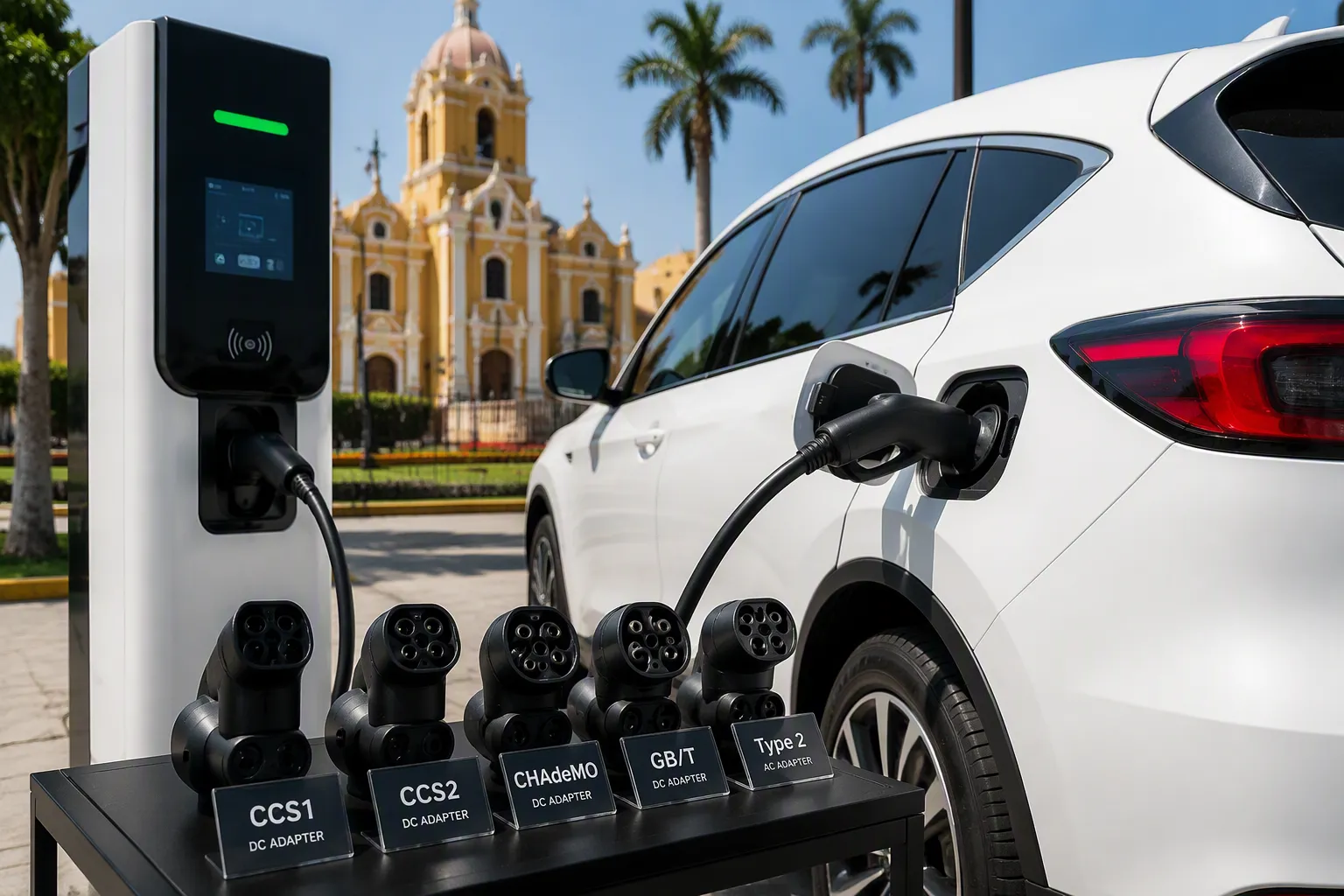
This Tesla Owner’s Guide clarifies the equipment for seamless travel in Malaysia and Singapore. An owner needs two key items for complete charging access. These are the included Type 2 adapter and a third-party CCS2 to Tesla adapter.
While many Hersteller von EV-Ladegeräten wie TPSON bieten fortschrittliche EV-Ladelösungen, adapter knowledge remains crucial for every driver.
This preparedness allows connection to any public EV-Ladegerät, a different scenario than using tragbare ev-ladegeräte. With the right tools, every charging opportunity becomes available for worry-free travel.
Understanding the Charging Landscape in Malaysia (2025)
Malaysia’s electric vehicle charging infrastructure has matured significantly. It now offers a robust mix of AC and DC charging options. A Tesla owner can navigate this landscape with ease by understanding the two primary standards: Type 2 for AC charging and the Combined Charging System (CCS2) for DC fast charging. This knowledge is fundamental for planning any journey, from daily commutes to cross-country road trips.
Public AC Charging: The Type 2 Standard
The Type 2 connector is the universal standard for public AC charging across Malaysia. Tesla owners will find these chargers at shopping malls, hotels, and office buildings, making them perfect for topping up while parked.
Using Your Included Adapter
Tesla provides a J1772 adapter with every vehicle. Most public Type 2 AC chargers in Malaysia have a tethered cable. The owner simply connects the public charger’s Type 2 plug to their J1772 adapter, and then plugs the adapter into the Tesla’s charge port. This simple two-step process grants access to the vast majority of AC charging points.
Key AC Networks: ChargEV and JomCharge
Two networks form the backbone of Malaysia’s public AC charging infrastructure.
- ChargEV: One of the largest networks with extensive coverage throughout the peninsula, often found in commercial and residential locations.
- JomCharge: A rapidly growing network known for its user-friendly mobile app and reliable stations in key urban areas.
Public DC Fast Charging: The Rise of CCS2
For rapid charging on long journeys, DC fast chargers are essential. The Malaysian government and charging operators have standardized on the CCS2 connector for all new public DC installations.
Why CCS2 is Now Dominant
The adoption of CCS2 as the national standard ensures interoperability for all EV brands. This strategic decision has accelerated the buildout of a unified, high-speed charging network along major highways and in cities. While Tesla’s Supercharger network is excellent, the widespread availability of CCS2 chargers provides Tesla drivers with significantly more fast-charging options.
Key DC Networks: Gentari and Shell Recharge
These two operators are leading the deployment of high-power CCS2 chargers. A Tesla owner can rely on them for fast, convenient charging on major travel corridors.
| Netzwerk | Typische Standorte | Hauptmerkmal |
|---|---|---|
| Gentari | Petronas Stations, Key Highways | High-power chargers (up to 350kW) |
| Muschel aufladen | Shell Stations | Strategic highway locations, often paired with retail amenities |
Expected Charging Speeds on CCS2
Charging speeds on the CCS2 network vary based on the station’s output and the vehicle’s battery condition.
Anmerkung: A Tesla owner can typically expect charging speeds between 50kW and 180kW. The vehicle will automatically limit the speed to protect the battery. Advanced charging solutions, like those from providers such as TPSON, contribute to the reliability and efficiency of these high-power networks. 🔌
Understanding the Charging Landscape in Singapore (2025)
Singapore presents a dense and highly standardized EV charging environment, making it exceptionally convenient for Tesla owners. 🇸🇬 The city-state’s strategy aligns perfectly with Malaysia’s, standardizing on Type 2 for AC charging and CCS2 for DC fast charging. This consistency simplifies cross-border travel, as the same adapters work seamlessly in both countries. A driver with the right equipment can access a vast, competitive öffentliches Gebührennetz.
Public AC Charging: Consistency with Type 2
Public AC charging in Singapore universally uses the Type 2 connector. These chargers are abundant in residential car parks (HDBs and condos), shopping malls, and commercial buildings. They provide an excellent solution for overnight charging or topping up during daily activities.
Using Your Adapter in the City-State
The process for a Tesla owner to use a public AC charger is straightforward. The driver takes the tethered Type 2 plug from the public charging station and connects it to their Tesla-supplied J1772 adapter. They then plug the entire assembly into the vehicle’s charge port. This simple action unlocks access to the island’s extensive AC network.
Key AC Networks: SP Group and Charge+
Two major operators dominate Singapore’s AC charging scene. A Tesla owner will frequently interact with their stations.
- SP Group: Singapore’s national energy provider operates one of the largest and most widespread public charging networks. Their chargers are located in residential areas, commercial centers, and public spaces across the island.
- Charge+: This operator has a significant footprint, particularly in condominiums and private housing estates. They also offer a growing number of chargers in public locations like malls and offices.
Public DC Fast Charging: A CCS2 Stronghold
For rapid charging, Singapore has fully embraced the CCS2 standard. The government’s push for EV adoption has resulted in a robust and competitive DC fast-charging market. This CCS2 stronghold means Tesla owners are not solely reliant on the Supercharger network and have a multitude of high-speed options available.
Singapore’s CCS2 DC Network
Multiple operators, including SP Group, Charge+, and various energy companies, have deployed CCS2 DC fast chargers along major expressways and in key urban hubs. This competitive landscape ensures high availability and provides drivers with choices based on location, price, and charging speed. Accessing this network is essential for efficient travel and quick turnarounds.
Power Levels and Network Considerations
The power output of CCS2 chargers in Singapore typically ranges from 50kW to over 100kW. The vehicle’s battery state of charge and temperature will determine the actual charging speed.
Profi-Tipp: Always use the respective network’s mobile app before arriving. A driver can check for charger availability, power output, and any potential queues. The reliability of these public networks is often underpinned by providers of technologically advanced EV charging solutions like TPSON, ensuring a stable charging experience. ⚡️
Tesla’s Native Charging Network: Superchargers and Destination Chargers

Tesla maintains its own exclusive charging network, providing a seamless experience for its owners. This network consists of two distinct charger types. Superchargers offer unparalleled high-speed charging for long-distance travel. Destination Chargers provide convenient AC charging at locations where drivers park for several hours. Understanding how to use both is key to maximizing the Tesla ownership experience in the region.
Using Tesla Superchargers in Malaysia
The Tesla Supercharger network in Malaysia is the gold standard for rapid, hassle-free charging. These stations are strategically placed along major highways and in key urban centers, making cross-country travel effortless.
Locating V3 and V4 Superchargers
A driver can easily find Superchargers using the Tesla’s in-car navigation system. The system displays real-time availability, power output, and even preconditions the battery for optimal charging upon arrival. Malaysia features a growing number of V3 (up to 250kW) and the latest V4 stations.
Access for Non-Tesla EVs
Tesla is opening its network to other electric vehicles. Newer V4 Superchargers in Malaysia are equipped with a “Magic Dock,” an integrated CCS2 adapter. This feature allows non-Tesla EV owners to access the network, a significant development for the entire EV ecosystem.
Using Tesla Superchargers in Singapore
Tesla’s Supercharger network in Singapore is dense and efficient, covering the entire city-state. For Malaysian owners crossing the border, accessing these chargers is a simple process.
Cross-Border Supercharging Activation
Before traveling, a Malaysian Tesla owner must enable roaming in their Tesla app. This one-time setting allows the vehicle to initiate charging sessions at any Singaporean Supercharger. The billing is handled directly through the owner’s saved payment method.
Differences from the Malaysian Network
The primary difference is density. Singapore’s network is highly concentrated within a small geographical area.
Anmerkung: A driver should be aware of pricing differences. Supercharging rates in Singapore are distinct from those in Malaysia and are subject to local energy costs and demand-based pricing (peak/off-peak hours).
Finding Tesla Destination Chargers
Destination Chargers are AC chargers located at partner venues. They offer a convenient way to top up the battery overnight or during an extended stay.
Hotels, Malls, and Resorts
These chargers are commonly found at premium locations where cars are parked for long durations.
- Hotels and Resorts: Ideal for overnight charging.
- Shopping Malls: Perfect for adding range while shopping or dining.
- Office Buildings: Available for workplace charging.
Charging Etiquette and Speeds
Destination Chargers are classified as fast AC chargers, providing reliable power for extended parking sessions. An owner can expect charging speeds of 11 kW or 22 kW, which can add significant range over several hours. The reliability of such hardware often comes from providers of technologically advanced EV charging solutions like TPSON.
Charging Etiquette: It is considered good practice for a driver to move their vehicle once it has finished charging. This courtesy frees up the charger for the next EV owner.
A Complete Tesla Owner’s Guide to Adapters

An owner needs a comprehensive understanding of adapters to unlock the full potential of their Tesla in Malaysia and Singapore. This section of the Tesla Owner’s Guide details the essential, included, and optional adapters. It explains what each adapter does, why it is necessary, and when to use it. This knowledge ensures a driver can connect to virtually any charging point, from high-speed DC chargers to a standard wall socket.
The Must-Have: CCS2 to Tesla Adapter
The CCS2 to Tesla adapter is the single most important accessory for a Tesla owner in this region. It is a third-party device that bridges the gap between the public DC fast-charging standard (CCS2) and Tesla’s proprietary charging port. Without it, a driver is limited to the Tesla Supercharger network for fast charging.
Why a Third-Party Adapter is Essential
Public charging networks in Malaysia and Singapore, such as Gentari, Shell Recharge, and SP Group, have standardized on the CCS2 connector for their DC fast chargers. These networks offer extensive coverage along highways and in urban areas. A CCS2 adapter gives a Tesla owner the freedom to use these numerous fast-charging stations. This flexibility is crucial for long-distance travel and provides valuable backup options if a Supercharger station is busy or unavailable.
Recommended Brands: Lectron and A2Z
When selecting a CCS2 adapter, a driver should prioritize established brands known for safety and reliability.
- Lectron: A popular choice among Tesla owners, known for its robust build quality and consistent performance.
- A2Z: Another reputable brand that offers high-quality adapters, often praised for their durability and secure fit.
Das ist wichtig: A driver should always purchase adapters from reputable retailers to avoid counterfeit products that can pose a safety risk to both the vehicle and the charging station.
Key Features: Safety and Power Rating
Safety is the most critical factor when choosing a CCS2 adapter. A reliable adapter should possess key safety certifications, which confirm it has undergone rigorous testing for thermal and electrical safety. A driver should look for the following marks on the product or its packaging:
- CE certified
- TÜV certified
- UKCA certified
Additionally, the adapter’s power rating is crucial. A quality adapter should be rated for at least 150kW to 250kW to handle the high output of modern DC fast chargers without overheating. This ensures the owner can achieve the fastest possible charging speeds their vehicle can support.
The Included: Type 2 to J1772 Adapter
Tesla provides a Type 2 to J1772 adapter with every new vehicle. This small but vital accessory is the key to accessing the vast public AC charging infrastructure across Malaysia and Singapore.
Understanding Its Function
Most public AC chargers in the region have a tethered cable with a Type 2 plug. Tesla vehicles sold in these markets use a proprietary port that is physically compatible with the North American J1772 standard for AC charging. The adapter simply converts the public charger’s Type 2 plug into a J1772 plug that fits directly into the Tesla’s charge port.
When and Where to Use It
A Tesla owner will use this adapter frequently for “opportunity charging.” It is perfect for topping up the battery while parked for an extended period.
| Standort | Anwendungsfall |
|---|---|
| Shopping Malls | Add range while shopping or dining. |
| Hotels & Resorts | Convenient overnight charging. |
| Office Buildings | Workplace charging during the day. |
| Public Car Parks | Top up while running errands. |
The process is simple: connect the public charger’s Type 2 plug to the adapter, then plug the adapter into the car.
The Optional: Portable Charging Adapters
For ultimate flexibility, a portable charging adapter is an invaluable tool. This device allows a driver to charge their Tesla from a standard wall socket, providing a reliable charging solution when a dedicated EV charger is not available. This part of the Tesla Owner’s Guide covers this essential backup plan.
Using the Tesla Mobile Connector (UMC)
The Tesla Universal Mobile Connector (UMC) is a portable charging cable that comes with an interchangeable plug head. It allows the vehicle to draw power from various domestic and industrial sockets. The UMC is the perfect safety net for overnight charging at a friend’s house, a hotel without EV chargers, or in a remote area.
Adapting to Type G 3-Pin Wall Sockets
In Malaysia and Singapore, the standard domestic wall socket is the Type G 3-pin plug. When using the Tesla Mobile Connector with a standard 3-pin wall socket, the charging speed is approximately 2.8 kW. This rate of charge is slow but steady. A driver can expect to add a significant amount of range overnight. For a Tesla Model 3 or Model Y, this translates to roughly 8-12 kilometers of range added per hour. This makes it a viable option for ensuring the car is ready for the next day’s journey.
Practical How-To and Safety Protocols
Properly using and maintaining charging adapters is critical for safety and vehicle longevity. This section of the Tesla Owner’s Guide provides a clear, step-by-step process for using the essential CCS2 adapter. It also outlines universal safety best practices for all charging equipment. Following these protocols ensures every charging session is safe and efficient.
Step-by-Step: Using the CCS2 Adapter
Connecting to a public CCS2 fast charger is a straightforward process. An owner can follow these simple steps to initiate a successful charging session.
Connecting the Adapter to the Cable
First, the driver takes the CCS2 adapter. They align it with the public charging station’s heavy CCS2 cable plug. The owner then pushes them together firmly until they lock with an audible click. This secure connection is the foundation for a safe charge.
Plugging into Your Tesla
Next, the owner opens the Tesla’s charge port. They plug the combined adapter and cable assembly into the vehicle. The car’s charge port light will turn blue, indicating it is ready to accept power, before turning green once charging begins.
Authorizing the Charge via App
The driver must then authorize the session. They open the charging network’s mobile app (e.g., Gentari Go, Shell Recharge) on their smartphone. The owner follows the on-screen instructions to select the specific charger and start the session. The vehicle will begin charging almost immediately.
Safely Disconnecting Post-Charge
Once charging is complete, the owner first stops the session using the mobile app. This is a critical safety step. After the app confirms the session has ended, the driver can unlock the charge port from the car’s touchscreen or app and safely remove the adapter and cable assembly.
Safety Best Practices for All Adapters
Consistent safety checks protect both the driver and the vehicle. An owner should adopt these habits for every adapter they use.
Pre-Use Inspection Checks
Before each use, a driver should quickly inspect the adapter and cable for any visible damage. They should look for cracked plastic, exposed wires, or bent pins. Using damaged equipment is a significant safety hazard.
Ensuring a Secure Physical Connection
A loose connection can cause electrical arcing and overheating. The owner must always ensure the adapter is fully seated and locked onto both the charging cable and the vehicle’s port. A firm, snug fit prevents potential damage.
Precautions in Wet Weather
While many adapters are weather-resistant, an owner should exercise caution during heavy rain. It is wise to shield the connection point from direct downpours when plugging or unplugging. Understanding an adapter’s Ingress Protection (IP) rating helps a driver know its limits. High-quality hardware from providers like TPSON often features robust IP ratings for outdoor use.
Understanding IP Ratings for Water Resistance 💧
IP-Bewertung Water Resistance Recommended Use IP54 Withstands water splashes Good for general outdoor use with some cover IP55 Resists low-pressure water jets Suitable for most outdoor charging conditions IP66 Protects against powerful water jets Excellent for exposed, all-weather outdoor use IP67 Can be submerged up to 1 meter High protection for harsh environments
Proper Storage and Care
Proper storage extends an adapter’s life. An owner should keep adapters in a clean, dry place, such as the vehicle’s trunk or frunk. They should use the protective caps that come with the adapter to keep debris and moisture out of the connectors.
Where to Buy and What to Expect
Acquiring the right adapters is a straightforward process. A Tesla owner has several reliable options for purchasing new equipment or replacing lost items. This part of the Tesla Owner’s Guide covers where to buy adapters and analyzes the costs, framing the purchase as a long-term investment in charging flexibility.
Purchasing Your CCS2 Adapter
A driver should source their essential CCS2 to Tesla adapter from a trusted vendor. This ensures the product is genuine, safe, and comes with a warranty. The market offers several choices for a Tesla owner.
Reputable Online Retailers
Online marketplaces are the most common channels for purchasing a CCS2 adapter.
- Shopee & Lazada: A driver can find adapters from various sellers on these platforms in both Malaysia and Singapore. It is crucial to check seller ratings and product reviews before making a purchase.
- Specialized EV Stores: Many online stores specialize in EV accessories and offer curated, high-quality products.
Local Suppliers in Malaysia and Singapore
Some local automotive or EV accessory shops import and sell adapters. Purchasing from a local supplier can offer the benefit of in-person advice and immediate product availability. An owner can often find these suppliers through local Tesla owner groups or forums.
Replacing a Lost Type 2 Adapter
Losing the small but vital Typ-2-auf-J1772-Adapter kann unpraktisch sein. Glücklicherweise ist die Beschaffung eines Ersatzgeräts einfach.
Bestellung bei Tesla
Die zuverlässigste Methode ist die direkte Bestellung eines Ersatzes bei Tesla. Ein Fahrzeughalter kann dies über die Tesla Mobile App oder durch Besuch eines Tesla Service Centers tun. Dies garantiert ein authentisches, fahrzeugkompatibles Teil.
Nachrüstlösungen
Dritthersteller produzieren ebenfalls Typ-2-auf-J1772-Adapter. Obwohl diese erhältlich sein mögen, muss ein Fahrer deren Qualität und Sicherheitszertifizierungen überprüfen. Die Zuverlässigkeit von Ladehardware ist von größter Bedeutung – ein Prinzip, auf das technologisch fortschrittliche Anbieter von EV-Ladelösungen wie TPSON ihren Ruf gründen.
Kostenanalyse: Adapter vs. Netzwerkaufschläge
Die Investition in einen CCS2-Adapter ist eine finanzielle Entscheidung. Die Anschaffungskosten amortisieren sich schnell durch Zugang zu einem breiteren, wettbewerbsfähigeren Lademarkt.
Anschaffungskosten eines CCS2-Adapters
Ein hochwertiger, zertifizierter CCS2-Adapter stellt eine einmalige Investition dar.
Geschätzter Preisrahmen (2025):
- Malaysia: MYR 800 – MYR 1.200
- Singapur: SGD 250 – SGD 400
Die Preise variieren je nach Marke, Leistungsfähigkeit und Verkäufer.
Langfristige Einsparungen bei Ladekosten
Der primäre finanzielle Vorteil eines CCS2-Adapters ist der Zugang zu günstigerem DC-Schnellladen. Öffentliche Netze konkurrieren oft über den Preis und bieten niedrigere kWh-Sätze als Teslas Supercharger-Netzwerk, insbesondere zu Schwachlastzeiten.
| Netzwerktyp | Durchschnittliche Kosten pro kWh (veranschaulichend) | Hauptvorteil |
|---|---|---|
| Tesla-Ladestation | Höher (Variable Preisgestaltung) | Nahtloses “Plug-and-Charge”-Erlebnis |
| Öffentliches CCS2-Netzwerk | Niedriger (Wettbewerbsorientierte Preisgestaltung) | Größere Auswahl und potenzielle Kosteneinsparungen |
Mit der Zeit können diese Einsparungen die Anschaffungskosten des Adapters leicht ausgleichen, was ihn zu einem finanziell klugen Kauf für jeden Tesla-Fahrer macht. 💰
Dieser Tesla-Fahrerleitfaden vereinfacht die Ladevorbereitung in eine essentielle Checkliste. Ein Fahrer ist für Reisen in der Region mit zwei Schlüsselkomponenten voll ausgestattet:
- Den mitgelieferten Typ-2-auf-J1772-Adapter.
- Einen hochwertigen CCS2-auf-Tesla-Adapter von einem Drittanbieter.
Der Tesla Mobile Connector mit einem Typ-G-Stecker bietet eine wertvolle Backup-Lösung für das Laden über Nacht. Dieses vollständige Werkzeugset, das die Zuverlässigkeit fortschrittlicher Lösungen von Anbietern wie TPSON widerspiegelt, stellt sicher, dass ein Fahrer an nahezu jede öffentliche Station anschließen kann. Dieser Tesla-Fahrerleitfaden befähigt Halter, selbstbewusst zu reisen.
FAQ
Brauche ich wirklich einen CCS2-Adapter, wenn ich nur Supercharger nutze?
Ja, ein Fahrer sollte einen besitzen. Der CCS2-Adapter ermöglicht den Zugang zu einem großen öffentlichen DC-Schnellladenetzwerk. Dies bietet entscheidende Flexibilität, wenn Supercharger belegt oder nicht verfügbar sind, und stellt sicher, dass ein Fahrer stets eine Schnellladeoption hat.
Kann ich denselben CCS2-Adapter sowohl in Malaysia als auch in Singapur verwenden?
Absolut. Beide Länder haben den CCS2-Stecker für öffentliches DC-Schnellladen standardisiert. Ein einziger hochwertiger CCS2-auf-Tesla-Adapter funktioniert nahtlos grenzüberschreitend und ist damit ein unverzichtbares Werkzeug für Reisen in der Region.
Was passiert, wenn ich den mitgelieferten Typ-2-Adapter verliere?
Ein Fahrer kann problemlos einen Ersatz erwerben. Die zuverlässigste Option ist die Bestellung eines originalen Teils direkt bei Tesla über die App oder ein Service Center. Dies gewährleistet perfekte Kompatibilität und Sicherheit für das Fahrzeug.
Warum ist meine Ladegeschwindigkeit an einer CCS2-Ladestation niedriger als angegeben?
Mehrere Faktoren beeinflussen die Ladegeschwindigkeit. Die Batterietemperatur des Fahrzeugs und der aktuelle Ladezustand sind die Hauptfaktoren. Die Leistungsabgabe der Station und wie viele andere Fahrzeuge gleichzeitig laden, können die für den Fahrer verfügbare Geschwindigkeit ebenfalls begrenzen.
Ist die Verwendung von Adaptern von Drittanbietern für meinen Tesla sicher?
Ja, vorausgesetzt ein Fahrer wählt eine seriöse Marke. Ein Halter sollte nach Adaptern mit Sicherheitszertifizierungen wie CE oder TÜV Ausschau halten. Hochwertige Hardware, wie sie von fortschrittlichen Anbietern wie TPSON stammt, ist auf Sicherheit und Zuverlässigkeit ausgelegt.
Kann ich meinen Adapter an der öffentlichen Ladestation angeschlossen lassen?
Nein, ein Fahrer sollte einen Adapter niemals zurücklassen. Es ist ein wertvolles Zubehörteil, das leicht verloren gehen oder gestohlen werden kann. Ein Halter muss den Adapter nach jeder Nutzung stets vom öffentlichen Ladekabel trennen und sicher verwahren.