You often wonder if portable electric vehicle chargers justify their cost. For most drivers, you find the investment worthwhile when you value convenience and flexibility in electric car charging. Price remains a key factor, but the ability to charge your electric car anywhere reduces range anxiety and adds peace of mind. Frequent travelers, apartment dwellers, and those who rely on multiple charging options benefit most. Leading Hersteller von EV-Ladegeräten now offer portable solutions that keep you powered up wherever you go.
Portable Electric Vehicle Chargers: What You Need to Know

What Are Portable EV Chargers?
Portable EV chargers give you the flexibility to charge your car wherever you find a compatible power source. You do not need a fixed installation at home or work. These chargers come in several types, each designed for specific needs and environments. You can use them for daily charging, emergency backup, or travel.
Key Features of Portable EV Chargers
When you look for portable EV chargers, you notice several important features:
Lightweight and compact design for easy transport.
Multiple connector options to fit different EV models.
Adjustable power settings for safe charging at home or on the road.
Built-in safety mechanisms to prevent overheating and electrical faults.
You also need to consider safety certifications. Most chargers meet ETL certification standards, which ensure compliance with North American safety requirements. International standards allow you to use chargers safely across different regions.
Art der Zertifizierung | Bedeutung | Beschreibung |
|---|---|---|
ETL Certification | Ensures safety and compliance with North American standards | Guarantees that EV chargers meet strict safety standards, reducing risks of electrical malfunctions and fire hazards. |
International Standards | Relevant for global safety and interoperability | Ensures chargers can be used safely across different regions and systems. |
Typical Use Cases for Electric Car Charging
You benefit from portable EV chargers in several scenarios:
Charging your EV at home when you lack a dedicated wallbox.
Providing backup charging during travel or emergencies.
Supporting multi-vehicle households with different charging needs.
Assisting apartment or condo residents who do not have private parking.
Tip: You can keep a portable charger in your trunk for peace of mind during long trips or unexpected power outages.
How to Charge Your Electric Car with a Portable Charger
Erläuterung des Ladevorgangs
You start by plugging the charger into a standard outlet or a compatible power source. You connect the charger to your EV using the appropriate cable. Most portable chargers feature simple controls and clear indicators. You monitor the charging status on the device or through a mobile app. Charging times depend on the power output and your vehicle’s battery capacity.
Power Sources for Portable EV Chargers
Portable EV chargers support various power sources. You can use a regular home outlet for slow charging or a higher-capacity socket for faster results. Some advanced models connect to three-phase supplies or use battery power banks. Commercial solutions offer DC fast charging for business users.
Typ | Beschreibung | Leistung | Verfügbarkeit |
|---|---|---|---|
ZipCharge Go, ideal for drivers without off-street parking or as backup. | Up to 500W | Consumer market in the UK | |
Kempower Bewegliches Ladegerät | Transportable DC fast charger requiring three-phase supply. | Up to 50kW | Commercial use |
SparkCharge Roadie | Modular design, available only to registered businesses in North America. | 20kW | Business users |
Generatorgestützte Lösungen | Emergency roadside assistance systems like RAC’s EV Boost. | Up to 10 miles range | Service-based solutions |
You choose the best charger based on your home setup, travel habits, and how to charge your electric car most efficiently.
Price Breakdown of Portable EV Chargers
Portable Electric Vehicle Chargers Price Range
When you shop for portable electric vehicle chargers, you notice a wide range of prices. Entry-level models offer basic charging for a lower cost, while premium chargers provide advanced features and higher performance. The price you pay depends on your needs and how often you plan to use the charger.
Entry-Level Portable EV Chargers
Entry-level portable electric vehicle chargers usually provide Level 1 or basic Level 2 charging. These chargers work well for daily home use or as a backup during travel. You can expect simple controls and fewer smart features. The cost for these chargers often starts at a few hundred dollars, making them accessible for most EV owners.
Premium Portable EV Chargers
Premium portable EV chargers deliver faster charging speeds and advanced technology. You get features like smart charging, weather resistance, and compatibility with a wide range of vehicles. Some models support bidirectional charging, which lets you use your EV battery to power your home. The price for these chargers can reach several thousand dollars.
Here is a table showing the price range for some popular models:
Ladegerät Modell | Price Range (USD) |
|---|---|
Delta V2H bidirectional charger | $10,000 – $12,000 |
Wallbox Quasar | $4,000 – $7,000 |
Sigenergy SigenStor | $4,000 – $5,000 |
Emporia V2X bi-directional charger | $2,500 |
You can also see the price comparison in the chart below:

What Influences the Price of Portable EV Chargers?
Several factors affect how much you pay for a portable electric vehicle charger. Understanding these can help you choose the right charger for your needs and budget.
Technology and Build Quality
Charger type and speed play a big role in the final cost. Level 1 chargers cost less, but they charge your EV slowly. DC fast chargers cost much more, but they can charge your car quickly.
Build quality matters. A charger with strong materials and weather resistance will last longer, but it may cost more.
Extra features like smart charging, mobile app support, and safety systems can increase the price.
Markenreputation und Garantie
Well-known brands often charge more for their chargers. You pay for quality, reliability, and better customer support.
A good warranty adds value. It protects you from unexpected repair costs and gives you peace of mind.
Some brands offer longer warranties or better service, which can justify a higher price.
Tip: Always check the warranty and support options before you buy a portable EV-Ladegerät. This can save you money on repairs and replacements in the long run.
Comparing the Price to Other Electric Car Charging Options
You may wonder how the cost of portable electric vehicle chargers compares to other charging solutions. Looking at wallbox chargers and public charging stations can help you decide which option fits your budget and lifestyle.
Wallbox Chargers vs. Portable EV Chargers
Wallbox chargers are fixed units installed at your home. They often provide faster charging than entry-level portable chargers. The cost to install an electric car charger at home includes both the price of the unit and professional installation. For example, a basic wallbox charger can cost around €499 (about $540), but installation fees can add to the total cost.
Ladegerät Typ | Price (EUR) | Anmerkungen |
|---|---|---|
Wallbox-Ladegerät | €499 | |
Tragbares EV-Ladegerät | K.A. | Cost-effective for home use, reducing long-term costs. |
Öffentliche Ladestation | Variiert | Usage fees can significantly increase costs compared to home charging. |
Portable electric vehicle chargers do not require permanent installation. You avoid extra installation costs and can use the charger anywhere with a compatible outlet. This flexibility can save you money if you move often or need to charge at different locations.
Public Charging Stations vs. Portable EV Chargers
Public charging stations offer fast charging, but the cost can add up quickly. Many public stations charge fees that double or triple your home electricity costs. If you rely on public electric vehicle charging, you may pay much more over time than if you charge at home.
Using a portable EV charger at home lets you take advantage of regular electricity rates, which are usually lower than public charging fees.
Home charging can be even more affordable if your utility company offers off-peak rates.
Public charging is convenient for road trips, but it is not always the most cost-effective choice for daily use.
Note: If you want to know how much does it cost to charge an electric car, consider both the price of the charger and the ongoing electricity costs. Charging at home with a portable charger often gives you the best value over time.
Benefits of Portable EV Chargers for Electric Car Charging
Bequemlichkeit und Flexibilität
Charging Anywhere, Anytime
You gain unmatched flexibility with portable electric vehicle chargers. These chargers allow you to charge your EV wherever you find a compatible outlet, whether at home, work, or on the road. You do not need to rely on a fixed charging station. The compact and lightweight design means you can store the charger in your trunk and use it whenever you need. This flexibility proves especially valuable if you do not have a dedicated parking space or if you travel frequently.
Merkmal | Tragbares EV-Ladegerät | Fixed Charging Solution |
|---|---|---|
Mobility | Easily carried and used anywhere | Stationary, requires installation |
Versatility | Works at home, work, or public locations | Limited to one location |
Einrichtung | No installation; plug-and-play | Needs professional installation |
Ideal for | Travelers, renters, those without fixed parking | Hauseigentümer mit eigenem Parkplatz |
Tip: You can use a portable charger at a friend’s house, a vacation rental, or even during a road trip, making electric car charging more accessible.
Travel and Emergency Use
Portable EV chargers provide peace of mind during travel and emergencies. If you encounter a low battery situation far from a public charging station, you can use your portable charger with any standard outlet. This feature helps you avoid getting stranded and reduces range anxiety. You also benefit from having a backup charging solution during power outages or when public stations are unavailable.
Mobility: Carry the charger in your trunk for use anywhere.
Versatility: Charge at any location with a compatible outlet.
No installation required: Plug-and-play operation.
Ease of Use for How to Charge Your Electric Car
Simple Setup and Operation
You do not need technical expertise to use portable EV chargers. The setup process is straightforward. You plug the charger into a standard socket, connect it to your EV, and start charging. Most models feature clear indicators and simple controls, making the process easy for anyone.
Methode der Aufladung | Setup and Usage Time |
|---|---|
AC-Ladegeräte | |
DC-Schnellaufladung | 60–80 miles in 20 minutes |
Tragbares EV-Laden | 2–5 miles/hour, depends on outlet |
Note: Portable chargers typically offer slower charging speeds, but their ease of use and flexibility often outweigh this limitation for many users.
Benutzerfreundliche Funktionen
Manufacturers design portable chargers with user experience in mind. You find features like adjustable power settings, weather-resistant casings, and built-in safety mechanisms. Many chargers also include mobile app support, allowing you to monitor charging status remotely. These features help you charge your EV safely and efficiently, even if you are new to electric car charging.
Compatibility with Different Electric Vehicles
Supported Vehicle Types
You can use portable EV chargers with most electric vehicles on the market. Manufacturers follow local standards for charging plugs, ensuring that you can charge your EV at home or at public stations without compatibility issues. Most EVs accept Level 1 and Level 2 AC charging, and some support DC fast charging as well.
All plug-in electric vehicles can charge using at least one standard connector with the right cable. Home charging units often feature the same Type 2 inlet found on public chargers, making it easy to use one charger for multiple EV models.
Plug and Power Options
You should always check that your portable charger matches your EV’s plug type and power requirements. Most chargers support a range of plug types and power outputs, but differences exist between regions and vehicle models. Common compatibility issues include mismatched plug types, incorrect power output, and unsupported charging protocols.
Compatibility Issue | Beschreibung |
|---|---|
Plug Types | Different EVs may require different plug types, leading to incompatibility. |
Leistungsanforderungen | Not all vehicles support every charger’s power output, causing inefficiency. |
Charging Protocols | Some chargers do not support all protocols, which can cause failures. |
Always verify your EV’s requirements before purchasing a portable charger to ensure seamless electric car charging.
Drawbacks and Limitations of Portable Electric Vehicle Chargers
Charging Speed and Performance
Level 1 vs. Level 2 Aufladung
You will notice a clear difference between Level 1 and Level 2 charging when using a portable EV charger. Level 1 chargers use a standard household outlet and deliver slow charging speeds, often adding only a few miles of range per hour. Level 2 chargers connect to higher voltage outlets and provide much faster charging, but not all portable chargers support this option. If you compare portable chargers to wallbox chargers or public DC fast chargers, you see that portable models often lag behind in speed.
Ladegerät Typ | Power Output Range | Charging Speed (km per hour) |
|---|---|---|
Tragbares EV-Ladegerät | 2.3 kW to 22 kW | |
Wallbox-Ladegerät | 3.7 kW to 22 kW | Up to 100 km (22 kW) |
Public DC Fast Charger | K.A. | Significantly higher |
Ladezeiten in der realen Welt
In real-world scenarios, you may find that portable chargers take longer to fully charge your EV compared to fixed solutions. For example, a Type 2 portable charger can deliver between 3.6 kW and 22 kW, depending on the outlet and your vehicle’s capabilities. Many users appreciate the reliability and sturdy build of models like the Deheng charger, but you should still expect longer charging times than at public fast charging stations. If you wonder how long does it take to charge an electric car, the answer depends on your charger type, your EV, and the available power source.
Energy Efficiency and Battery Health
Power Losses During Charging
Portable EV chargers like the EVDANCE Flux 40A focus on convenience, but they may not always match the energy efficiency of dedicated home chargers. Level 2 chargers, whether portable or wall-mounted, tend to be more efficient than Level 1 options. Homeowners who use Level 2 chargers often save up to 25% on monthly power costs, especially when they take advantage of off-peak electricity rates. However, using extension cords or improper outlets with portable chargers can increase power losses and reduce efficiency.
Impact on Battery Longevity
You should consider how frequent fast charging affects your EV’s battery health. Studies show that repeated fast charging, even with portable chargers, can accelerate battery degradation due to increased heat and stress. Under heavy fast-charging use, an EV battery may require replacement within 5–8 years, while slower charging can extend battery life to 10–15 years. High-quality, NEMA-compliant portable chargers help reduce these risks by using advanced battery management systems, but you still need to monitor your charging habits.
Safety and Durability Concerns
Overheating and Safety Risks
Safety remains a top concern with portable EV chargers. Improper installation can lead to electrical hazards, such as overloaded circuits or short circuits. Frayed cables or faulty equipment may cause electrical fires. Overheating, especially during fast charging or in direct sunlight, increases the risk of thermal runaway—a dangerous condition where battery cells ignite. According to the EV Safety Institute, improper outdoor charging practices account for 25% of reported charger failures. In 2022, UL reported that thermal issues caused half of the top battery charger recalls in North America. Chargers without third-party safety testing are four times more likely to fail or overheat.
Weather Resistance and Build Quality
You must also consider the durability of your portable charger. Not all models offer adequate water resistance, so using them outdoors in wet conditions can be risky. Chargers without proper IP ratings should never be used in the rain. Many users praise the Deheng EV Charger Pro for its weatherproof design, which helps it withstand harsh environments. Still, you should always check the build quality and certification before relying on a portable charger for regular outdoor use.
Note: Always follow manufacturer guidelines and avoid using extension cords to minimize safety risks when charging your EV.
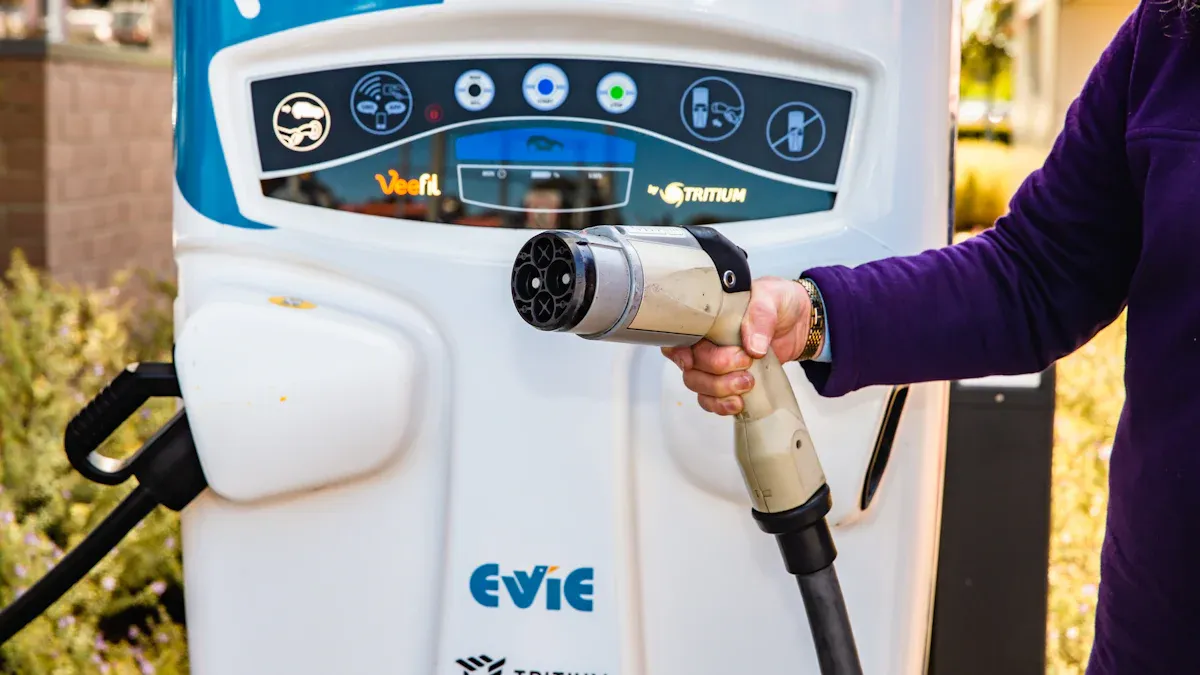
Portable EV Chargers vs. Wallbox Chargers: Value Comparison
Installation and Setup Differences
Portability vs. Permanent Installation
You face a clear choice between flexibility and permanence when selecting an EV charging solution. Portable chargers offer unmatched mobility. You can carry them in your trunk and use them wherever you find a compatible outlet. Wallbox chargers, on the other hand, require a fixed installation at your home or workplace. This difference shapes how you use each device in daily life.
Here is a comparison to help you visualize the differences:
Merkmal | Tragbares EV-Ladegerät | EV Charging Station (Wallbox) |
|---|---|---|
Mobility | Highly portable | Fixed installation |
Installation Required | Nein | Ja |
Leistung | 2.3 kW – 22 kW | 3.7 kW – 22 kW |
Aufladegeschwindigkeit | Langsam | Schneller |
Am besten für | Travel, emergencies, occasional use | Daily use, long-term reliability |
Sicherheit | Basic, can overheat household sockets | Advanced safety features |
Intelligente Funktionen | BASIC control | RFID control, APP control |
Kosten | Unter | Higher (includes installation) |
Note: If you move frequently or need flexibility, a portable charger gives you the freedom to charge your EV in multiple locations.
Professional Installation Requirements
You do not need professional installation for a portable charger. You simply plug it into a compatible outlet and start charging. This ease of setup saves you time and money. Wallbox chargers, however, require a licensed electrician for installation. The process involves mounting the unit, connecting it to your home’s electrical system, and ensuring compliance with safety codes. This step adds to the overall cost and complexity but provides a more integrated charging experience.
Performance and Reliability
Vergleich der Ladegeschwindigkeit
Charging speed plays a crucial role in your daily EV routine. Portable chargers typically deliver speeds between 3.5kW and 7kW. This range works well for overnight charging or as a backup during travel. Wallbox chargers can reach up to 22kW, offering much faster charging times. If you drive long distances or need quick turnarounds, a wallbox charger provides a significant advantage.
Ladegerät Typ | Aufladegeschwindigkeit | Verlässlichkeit |
|---|---|---|
Wallbox-Ladegerät | Higher (up to 22kW) | More stable and reliable |
Tragbares Ladegerät | Lower (3.5kW to 7kW) | Less reliable |
Tip: For daily charging at home, a wallbox charger can fully recharge most EVs overnight. Portable chargers suit occasional use or emergency situations.
Consistency and Reliability
You can expect greater reliability from a wallbox charger. These units feature advanced safety systems and robust construction. They maintain stable charging performance over years of use. Portable chargers, while convenient, may experience fluctuations in charging speed and reliability. Household outlets can overheat or trip circuit breakers if used for extended periods. Wallbox chargers, designed for continuous operation, offer peace of mind for long-term EV ownership.
Long-Term Cost Considerations
Upfront Price and Investment
You will notice a difference in upfront costs between portable and wallbox chargers. Portable chargers usually cost less because they do not require installation. Wallbox chargers involve a higher initial investment, including the price of the unit and professional installation fees. However, both options allow you to take advantage of lower home electricity rates compared to public charging.
Here is a cost comparison for different charging options:
Option Aufladen | Cost per 40 kWh Battery | Annual Cost for 13,489 Miles | Savings Compared to Gas Vehicles |
|---|---|---|---|
Aufladen zu Hause | $6.80 | $506–$720 | Significant fuel savings |
Öffentliches Level-2-Laden | $8–$10 | $770–$2,300 | Up to three times pricier |
DC-Schnellaufladung | $16–$24 | $1,600–$2,100 | Much higher costs |
Charging your EV at home, whether with a portable or wallbox charger, results in substantial savings over gasoline vehicles.
Maintenance and Longevity
You should consider the lifespan and maintenance needs of each charging solution. Portable EV chargers typically last 5 to 10 years with proper care. Wallbox chargers, especially smart models, can last 10 to 15 years. Regular maintenance, such as checking cables and connections, extends the life of both types. Wallbox chargers, built for daily use, often require less frequent replacement. This durability can offset the higher upfront cost over time.
Portable EV chargers (Mode 2): Average lifespan of 5 to 10 years.
Wallbox chargers (Ev Smart Wallbox): Can last between 10 to 15 years with proper maintenance.
Regular inspection and care help you maximize the value of your charging equipment and ensure safe, reliable EV charging for years.
Practical Considerations for Choosing Portable Electric Vehicle Chargers
Assessing Your Electric Car Charging Needs
Daily Driving and Charging Habits
You should start by evaluating your daily driving patterns. If you drive short distances each day, a lower-powered tragbares Ladegerät may meet your needs. For longer commutes or frequent use, you will benefit from a charger with higher output. Geschwindigkeit der Aufladung directly affects how quickly you can get back on the road. Consider how often you need to recharge and how much range you require overnight.
Charging speed: Select a charger that matches your daily mileage.
Charging location: Think about where you will charge most often—at home, work, or on the go.
Wall-mounted vs portable: Decide if you need a permanent home charge point or a flexible solution.
Travel Frequency and Lifestyle
Your travel habits play a major role in choosing a portable EV charger. If you travel frequently or enjoy road trips, portability becomes essential. A compact charger fits easily in your trunk and provides peace of mind during long journeys. For those who stay close to home, a fixed charging solution may offer more convenience.
Tip: Frequent travelers should prioritize lightweight chargers with weather-resistant features for reliable charging in any environment.
Evaluating Compatibility and Home Setup
Vehicle Requirements for Portable EV Chargers
You must ensure that the charger you select is compatible with your electric vehicle. Check the connector type and verify that the charger supports your EV’s charging protocol. Many modern chargers offer adjustable power settings and multiple plug options, but always confirm compatibility before making a purchase.
Connector type and compatibility: Match the charger to your vehicle’s charging port.
Smart features: Look for options that allow you to monitor charging through an app.
Überlegungen zum elektrischen System im Haus
Your home’s electrical system determines which chargers you can safely use. Most home EV chargers operate at 7kW and require a dedicated power supply. You need to check if your electrical panel can handle the additional load. Proper circuit protection, such as RCB and MCB devices, is essential for safety. Earthing requirements must also be met to prevent electrical hazards.
Anforderung | Beschreibung |
|---|---|
Power Supply | A typical home EV charger operates at 7kW and requires a sufficient power supply. |
Schutz des Stromkreises | Must comply with IET Wiring Regulations, including a dedicated circuit with RCB and MCB protection. |
Earthing Requirements | Charger must connect to the property’s earthing system or include PME fault detection. |
Note: Always consult a qualified electrician before installing a new charger at home to ensure compliance with safety standards.
Safety, Certification, and Support
UL Certification and Safety Standards
You should only consider chargers that meet recognized safety standards. UL certification ensures that the charger has passed rigorous testing for electrical safety and reliability. Chargers with high IP ratings offer better protection against dust and water, making them suitable for outdoor use.
Garantie und Kundenbetreuung
A strong warranty and responsive customer support add value to your purchase. Look for brands that offer clear warranty terms and accessible support channels. This protection helps you address any issues quickly and keeps your charging routine uninterrupted.
Choosing a certified charger with solid support gives you confidence in your investment and peace of mind at home.
Who Should Consider Portable EV Chargers for Electric Car Charging?
Ideal Users of Portable Electric Vehicle Chargers
Portable electric vehicle chargers fit a range of lifestyles. You may find them especially useful if you need flexibility or face restrictions on installing fixed chargers. The table below highlights the main user types and their characteristics:
Benutzertyp | Characteristics |
|---|---|
Occasional EV drivers | Require flexibility in charging options and do not drive long distances daily. |
Apartment dwellers | Live in rental properties where fixed chargers cannot be installed. |
Road-trippers and campers | Seek backup charging solutions while traveling. |
Budget-conscious users | Prefer lower initial costs and ease of use without installation requirements. |
Frequent Travelers and Road Trippers
If you travel often or enjoy long road trips, portable EV chargers offer a practical solution. You can charge your electric car at a hotel, campground, or any location with a compatible outlet. This flexibility helps you overcome gaps in public charging infrastructure. You avoid the stress of searching for a public station in remote areas. Many travelers keep a portable charger in their trunk for peace of mind.
Apartment and Condo Residents
You may live in an apartment or condo where installing a home charging station is not possible. Portable chargers give you the freedom to charge your vehicle using shared or personal outlets. You do not need to rely solely on public charging stations. This option works well if your building does not support permanent installations or if you plan to move soon.
Best Situations for Portable EV Chargers
Portable EV chargers shine in specific scenarios. Industry experts recommend them for the following situations:
Road trips: You need a reliable charging option for long-distance travel. High-amperage portable models help you recharge quickly.
Emergencies: A portable charger can prevent you from being stranded. Lightweight and easy-to-use designs make them ideal for urgent situations.
Overcoming infrastructure gaps: You may find yourself in areas where public charging stations are unavailable. Portable chargers provide immediate solutions.
Emergency Backup Charging
You never know when you might need a backup charging option. Power outages, unexpected detours, or busy public stations can disrupt your plans. Keeping a portable charger in your vehicle ensures you always have a way to recharge. This backup can be a lifesaver during emergencies, especially if you drive in rural or less-developed regions.
Haushalte mit mehreren Fahrzeugen
If your household owns more than one electric car, portable chargers add flexibility. You can share a single charger among multiple vehicles. This approach saves money and reduces the need for multiple home installations. You can also use the charger for guests or family members who visit with their own EVs.
Tip: Evaluate your daily routine, travel habits, and living situation. Portable electric vehicle chargers may offer the convenience and peace of mind you need for reliable electric car charging.
Portable electric vehicle chargers offer you flexibility and peace of mind. You gain convenience, easy setup, and compatibility with many EVs. However, you may face slower charging speeds and higher upfront costs for advanced models. If you travel often, live in an apartment, or need backup charging, a portable charger makes sense. Always review your driving habits and charging needs before you invest.
Tip: Choose a charger that matches your lifestyle and vehicle for the best value.
FAQ
Was ist der Unterschied zwischen Level 1- und Level 2-Ladegeräten für Elektrofahrzeuge?
Level 1 chargers use standard 120V outlets and charge slowly. Level 2 chargers connect to 240V outlets and deliver faster charging. You get more miles per hour with Level 2, making it better for daily use.
Can you use a portable EV charger in any weather?
Most portable chargers offer weather-resistant designs. You should check the IP rating before outdoor use. Chargers with high IP ratings withstand rain and dust. Always follow manufacturer guidelines for safety.
Do portable EV chargers work with all electric vehicles?
You can use most portable chargers with any EV that supports standard connectors. Always verify your vehicle’s plug type and charging protocol before purchase. Compatibility ensures safe and efficient charging.
How long does it take to charge your EV with a portable charger?
Charging time depends on charger power output and battery size. Level 1 chargers may take over 24 hours for a full charge. Level 2 chargers usually complete charging in 4 to 8 hours.
Is it safe to leave your portable EV charger plugged in overnight?
Manufacturers design portable chargers with safety features like overcurrent protection. You can leave them plugged in overnight if you follow safety instructions. Inspect cables and outlets regularly to prevent hazards.
Do you need a dedicated circuit for a portable EV charger at home?
You should use a dedicated circuit for Level 2 portable chargers. This setup prevents overloads and ensures safe operation. Consult a licensed electrician to confirm your home’s electrical capacity.
What maintenance does a portable EV charger require?
You should inspect cables and connectors for wear. Clean the charger regularly and store it in a dry place. Follow the manufacturer’s maintenance recommendations to extend the charger’s lifespan.
Can you travel with a portable EV charger internationally?
You can travel with a portable charger, but you must check plug compatibility and voltage requirements for each country. Some chargers support multiple standards. Always carry the correct adapters for safe charging.