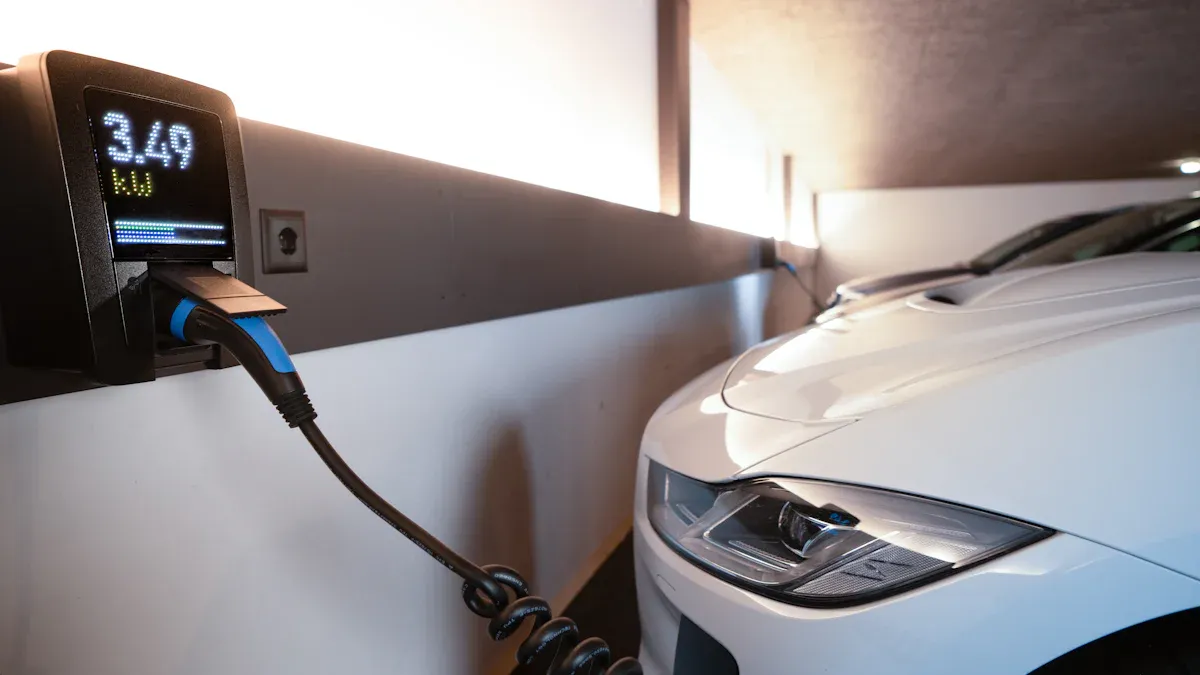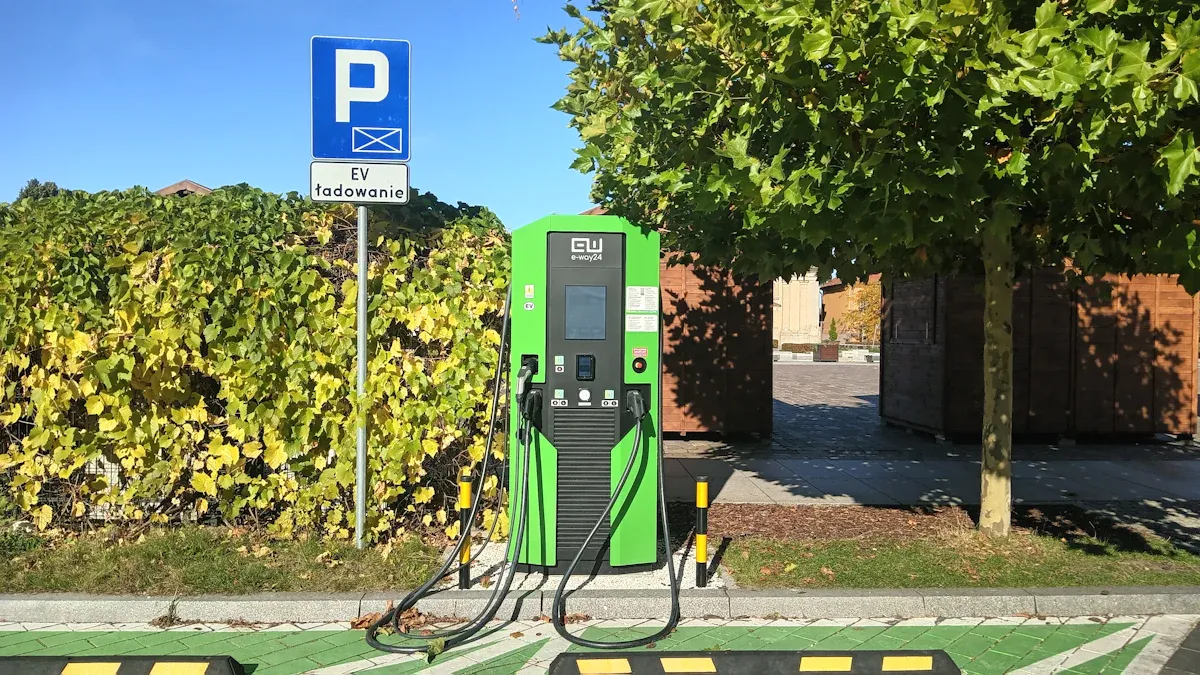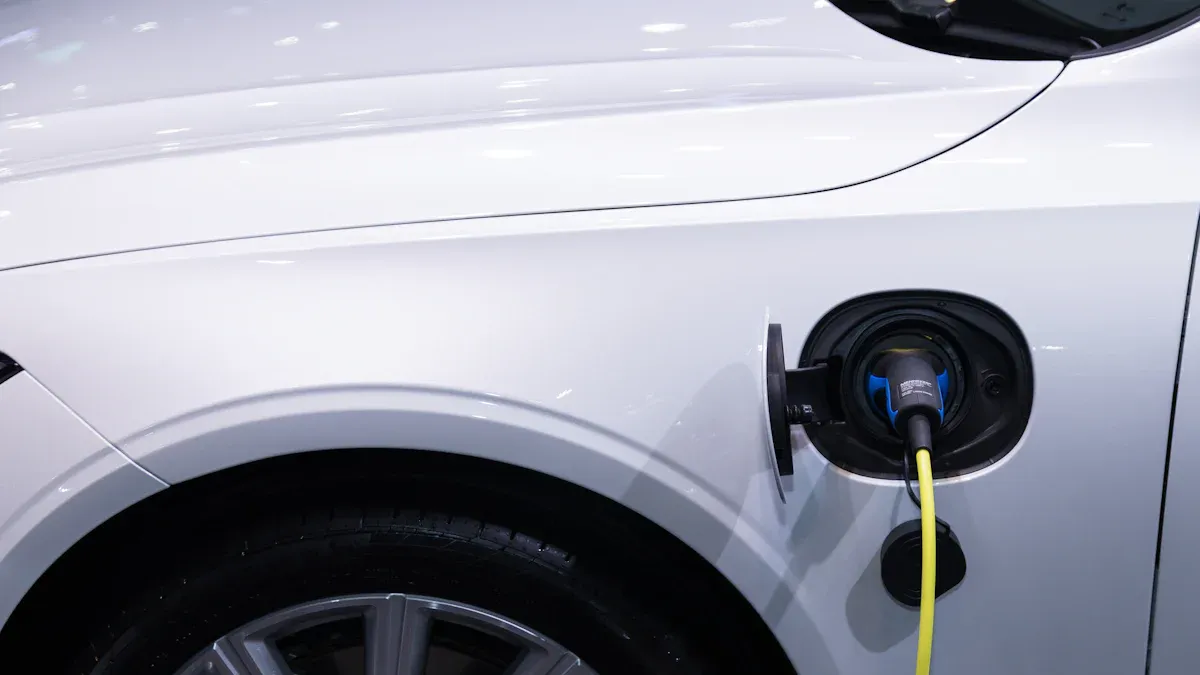
You now see a significant shift in the UK as England updates its EV-Ladegerät regulation. With more than 381,000 new electric vehicles registered in 2024, Hersteller von EV-Ladegeräten must meet new standards. The EV charger regulation change allows you to install an EV Charger at home or work with less hassle. Check out the latest adoption rates:
Jahr | BEV-Verkäufe | BEV Market Share (%) |
|---|---|---|
2024 | 381,970 | 19.6 |
This change means you experience faster access and greater convenience as the EV market expands.
Understanding the EV Charger Regulation Change

What the New EV Charger Regulation Means for Drivers
The latest ev charger regulation in England brings major changes for you as an EV driver. You now face fewer barriers when installing electric vehicle chargepoints at home, work, or in public spaces. The new legislation aims to make the transition to electric vehicles smoother and more accessible across the UK.
Home Installations Without Planning Permission
You can now install an EV charger at your home without the need for planning permission. The Town and Country Planning Order 2015 removes this hurdle, so you no longer deal with lengthy approval processes. This change streamlines the installation process and encourages more homeowners to adopt EVs.
Workplace and Commercial Installations
If you manage a business or commercial property, the ev charger regulation change allows you to install charging infrastructure with less bureaucracy. You benefit from a simplified process, which helps you support employees and visitors who drive EVs. The Automated and Electric Vehicles Act 2018 sets clear standards for safety and accessibility, ensuring that workplace chargers meet modern requirements.
Public and Street EV Chargers
Public and street charging points now follow stricter rules to improve your experience. The 2023 Public Charge Point Regulations (PCPRs) focus on user convenience and reliability. These regulations address common concerns, such as charger failures and software glitches, and aim to reduce range anxiety. You can expect more reliable and accessible public charging options as a result.
Anmerkung: Studies show that improved public and workplace charging infrastructure increases your confidence in using EVs and reduces concerns about running out of power.
Here is a summary of the main provisions shaping the current regulation landscape:
Verordnung | Beschreibung |
|---|---|
Mandates new developments to install EV charging infrastructure. | |
The Automated and Electric Vehicles Act 2018 | Establishes framework for EV charger installation, focusing on safety and accessibility. |
Town and Country Planning Order 2015 | Allows certain EV installations without planning permission. |
Verordnung über Elektrizität am Arbeitsplatz von 1989 | Sets safety standards for electrical installations, including EV chargers. |
Key Dates for the EV Charger Regulation Change
You need to stay aware of important dates to take full advantage of the new rules. The government has set clear deadlines for when different parts of the regulation take effect.
Effective Dates for Home and Business Installations
Starting May 29, 2025, changes to Permitted Development Rights will make it even easier for you to EV-Ladegeräte installieren at home or at your business. You will see a smoother process and fewer administrative steps.
New Rules for Public EV Chargers
From November 2024, all new public charge points with a power rating of 8kW and above must offer contactless payment. This requirement ensures that you can access public charging stations without needing special apps or memberships.
Datum | Beschreibung |
|---|---|
November 2024 | All new public charge points with a power rating of 8kW and above must offer contactless payment. |
May 2025 | Changes to Permitted Development Rights effective May 29, 2025, allowing easier installation of EV chargers. |
Tipp: Mark these dates on your calendar to plan your home or business EV charger installation and take advantage of the new benefits.
You should also know how these new regulations compare to previous rules:
Aspekt | Previous Rules | New Regulations |
|---|---|---|
Baugenehmigung | Required for most installations | |
Bureaucratic Hurdles | Hoch | Significantly reduced |
Encouragement for Adoption | Limited | Streamlined process to encourage EV use |
The ev charger regulation change addresses many of your concerns. However, you may still encounter issues such as charger failures, user errors, or software glitches. The new regulation aims to minimize these problems, but you should remain aware of potential risks.
User errors and software glitches may disrupt your charging experience.
Vandalism, theft, and accidents remain concerns for public installations.
The government continues to monitor these issues and update the regulations to improve safety and reliability for all drivers.
Who Is Affected by the EV Charger Regulation Change?
Homeowners and Renters
Installing EV Chargers at Home
You benefit directly from the ev charger regulation change if you own your home. The new legislation removes many barriers, making it easier to install an EV charger on your property. However, only 18% of homeowners in England currently have access to private home charging. If you belong to this group, you gain faster installation and fewer administrative steps. For renters, the situation differs. Only 15% of renters report having on-street charging available near their residence. The regulation aims to improve these numbers by encouraging more accessible charging infrastructure in residential areas.
Landlord and Tenant Considerations
If you rent, you may need to discuss installation with your landlord. The ev charger regulation encourages landlords to support tenants who drive EVs. Landlords now face clearer guidelines and incentives to provide charging options. This shift helps bridge the gap for renters who want to switch to electric vehicles but lack private parking or charging access.
Tipp: Open communication with your landlord can help you secure EV charging at your rental property.
Characteristic | Beschreibung |
|---|---|
Wohneigentum | Individuals who own their homes are more likely to share chargers. |
Höheres Einkommen | Those with higher income levels show greater intention to share. |
Older Age | Older individuals tend to have a higher intention to share. |
Substantial Driving Experience | More experienced drivers are more inclined to share chargers. |
Presence of Children | Households with children are more likely to share EV chargers. |
Businesses and Employers
Workplace EV Charger Installations
You see significant changes if you manage a business or oversee a workplace. The ev charger regulation requires you to provide Ladeinfrastruktur for employees and visitors. Many businesses face challenges, such as complexities in reimbursing home charging, varying electricity tariffs, and difficulties in tracking business versus personal use. Technical complications with contactless payments and limited funding for upgrades also present hurdles.
Employee Access and Benefits
As an employee, you benefit from increased access to workplace EV chargers. Employers must now consider your needs and provide reliable charging options. This support encourages more people to adopt EVs and helps the UK meet its sustainability goals.
Complexities in reimbursement for home charging
Varying electricity tariffs
Technical complications with contactless payments
Limited funding for infrastructure upgrades
Local Authorities and Developers
New-Build Requirements for EV Chargers
Local authorities and developers play a crucial role in expanding charging infrastructure. The regulations require all new homes with parking to include an EV charger. Major renovations and new commercial properties with over ten parking spaces must also provide chargepoints and cable routes.
Anforderung Typ | Einzelheiten |
|---|---|
New Homes | All new homes with parking must have an EV charger. |
Major Renovations | Properties with over 10 parking spaces must have at least one EV charger and cable routes for all spaces. |
Non-Residential | New commercial properties with over 10 parking spaces must have at least one chargepoint and cable routes for one in every five spaces. |
Developer Perspective | Developers are encouraged to view EV charging as an opportunity rather than a compliance requirement. |
Zukunftssicher | Changes are designed to make properties more attractive as electric vehicles become the norm. |
Public Infrastructure Responsibilities
You see local authorities using government funds to expand public charging infrastructure. The UK government has allocated £1.5 billion to support the transition, including £500 million for local authorities and a £450 million Local EV Infrastructure (LEVI) fund. These investments ensure you have more reliable and accessible public charging options as EV adoption grows.
How the EV Charger Regulation Change Impacts Daily Life
At Home: Easier and Faster EV Charger Installations
Cost Savings for Homeowners
You now experience significant cost savings when installing an EV charger at home. The new legislation in England eliminates the need for planning permission for standard home installations. This change means you avoid expensive application fees and reduce administrative costs. Homeowners with driveways can install chargepoints more quickly and at a lower price. You no longer need to submit planning applications, which can save you up to £1,100 each year. The reduction in paperwork and bureaucracy leads to faster, more affordable installations for EV owners.
The regulation changes in May 2025 removed planning permission requirements for most home EV charger installations.
Homeowners benefit from lower costs and fewer delays.
Drivers avoid planning application fees and lengthy approval processes.
Streamlined Installation Process
You benefit from a much smoother installation process due to the ev charger regulation change. The removal of planning permission requirements has expedited the timeline for getting a charger installed. Industry experts confirm that this shift saves you months of waiting, allowing you to access home charging sooner. The reduction in bureaucratic hurdles means you can plan, purchase, and install your charger with minimal delay. This streamlined process encourages more people to make the switch to EVs, supporting the UK’s transition to cleaner transportation.
By simplifying the installation process, the regulation helps you enjoy the convenience of charging at home without unnecessary obstacles.
At Work: Supporting the Switch to EVs
Employer Support for EV Chargers
You see more businesses supporting the switch to EVs by installing workplace charging infrastructure. The ev charger regulation requires companies to comply with Public Charge Point Regulations if they provide public charging. Many businesses now install charging points for their fleets and employees. Fleet operators play a major role in this trend, as commercial registrations of electric vehicles grow at double the rate of private purchases. This shift demonstrates a strong commitment to sustainability and employee well-being.
Businesses must follow compliance responsibilities for workplace chargers accessible to the public.
The commercial sector has seen a rapid increase in workplace charging facilities.
Companies support both fleet operations and employee-owned EVs.
Employee Benefits and Incentives
You benefit from increased access to workplace EV chargers, which makes it easier to drive an electric vehicle. Employees now expect companies to take meaningful action on sustainability. The availability of charging stations at work motivates you to consider an EV for your next vehicle. Many workers value a company’s environmental record and prefer employers who invest in green initiatives.
Statistik | Wert |
|---|---|
Percentage of workers considering a company’s environmental record | |
Employees satisfied with societal and environmental impact staying longer | More likely than not |
Millennials preferring to work at a company with a strong sustainability agenda | 70% |
Millennials willing to take a smaller salary for environmental responsibility | 75% |
Employees increasingly view workplace charging as essential for EV adoption.
There is a growing expectation for companies to support climate solutions.
In Public: Improved Access to EV Chargers
More Public Charging Points
You now have access to a rapidly expanding öffentliche Ladeinfrastruktur across the UK. The deployment of public EV chargers has accelerated since the regulation change. As of August 2025, there are 85,163 electric vehicle charging points in the UK, up from 28,460 at the end of 2021. The number of public chargepoints grew to 53,865 by the end of 2023 and is projected to exceed 73,000 by the end of 2024. In 2025 alone, 11,464 new charge points have been added. Rapid and Ultra-rapid chargers have also increased, reaching 17,132 by August 2025, which marks a 30% growth since the previous year.
The public network expanded by 25% since August 2024.
The increase in the number of EV chargers supports greater convenience for all drivers.
Impact on Street Parking and Accessibility
You may notice that while the number of public chargepoints has grown, accessibility remains a challenge. Not one electric vehicle public charging point across the UK currently meets the government’s accessibility standard. This issue is especially important for the 1.35 million disabled drivers expected to rely on public chargepoints within the next decade. Advocacy groups consider the lack of accessible public charging infrastructure unacceptable.
Beweise | Beschreibung |
|---|---|
Accessibility Standard Compliance | Not one electric vehicle public charging point across the UK meets the government’s accessibility standard. |
Disabled Drivers Dependency | 1.35 million disabled drivers are expected to rely on public charge points within 10 years. |
Lack of Accessible Infrastructure | The almost total lack of accessible public charging infrastructure is deemed unacceptable by advocacy groups. |
As the UK continues to increase the number of EV chargers, addressing accessibility will become a top priority for future regulations.
Practical Benefits of the EV Charger Regulation Change
Cost Savings and Financial Support
Lower Installation Costs
You benefit from lower installation costs due to the new rule change. The removal of planning permission requirements for home electric vehicle chargepoints means you avoid unnecessary fees and delays. This regulation helps you save money when you install chargepoints at home or work. The average savings for drivers have increased since the deployment of the updated requirements.
Quelle | Durchschnittliche Einsparungen |
|---|---|
Aufladen zu Hause | £3,125 |
Öffentliche Abgaben | £431 |
Overall Average | £5,850 |
You also see a reduction in annual fuel costs. Petrol drivers spend about £1,161 per year, while electric car drivers pay only £592. This difference highlights the financial advantage of switching to EVs.
Available Grants and Incentives
You can access several financial support programs to help with the cost of installing chargers. These grants and incentives make the transition to electric motoring more affordable for both individuals and businesses.
Name des Programms | Beschreibung | Grant Amount |
|---|---|---|
Arbeitsplatzabgabensystem (WCS) | Grants for businesses to install charging sockets, covering up to 75% of costs. | Up to £350 per socket, max 40 sockets |
On-Street Residential Charge Point Scheme | Funding for local authorities to install EV charge points in residential areas. | Varies based on project scope |
Domestic Chargepoint Funding Grant | Financial support for home EV charger installations, available to various EV owners. | Up to 75% of costs, capped at £350 |
Scottish EV Charger Grant | Grants for EV charger installation in Scotland, available for both homeowners and businesses. | Up to £300 + £350 from OZEV |
Electric Vehicle Homecharge Scheme (EVHS) | Assistance for home charging point installations, covering a significant portion of costs. | Up to 75% of costs, capped at £350 |
Tip: Check your eligibility for these programs before you install chargepoints to maximize your savings.
Increased Access and Convenience
More EV Chargers in More Places
You now find more electric vehicle charging points in both rural and urban areas. The updated regulations have accelerated installations and removed barriers to EV adoption. Homeowners can install private chargepoints faster, and businesses can deploy workplace chargers with less red tape. The UK’s public charging network has grown rapidly, with nearly 80,000 chargepoints available and new ones added every 29 minutes. EV charging hubs have more than doubled since 2023, and larger hubs are now signposted from major A-roads. Increased visibility of public chargers supports urban residents who do not have driveways.
Homeowners experience expedited installation of private chargepoints.
Businesses and local authorities accelerate deployment of public and workplace chargers.
Charging hubs are easier to find, especially for city dwellers.
Enhanced Reliability and Transparency
You expect improved reliability and transparency from the Ladeinfrastruktur. The public charge point regulations address issues such as hardware failures and technical problems, especially in disadvantaged communities. Although some areas still face challenges, the new requirements aim to provide consistent service and clear information for all users.
Disadvantaged communities have fewer public EV charging stations per capita.
Renters in multi-dwelling units face greater disparities.
Reliability issues are being addressed through updated regulations and better oversight.
Supporting the Switch to EVs
Making EV Ownership Easier
You find it easier to own an EV thanks to the new regulation. The removal of planning requirements for home chargepoints simplifies the process for homeowners. New buildings must include charging infrastructure, ensuring future homes are ready for electric vehicles. The expected creation of 145,000 new charging points each year expands the network and makes it easier for you to find a place to charge.
Beweismittel Beschreibung | Impact on EV Ownership |
|---|---|
Removal of planning requirements for home chargepoints | Simplifies installation for homeowners |
Mandate for new buildings to include charging infra | Ensures future homes are equipped for EVs |
145,000 new charging points expected annually | Expands network, making charging more accessible |
Encouraging More Drivers to Switch to EVs
You see more drivers making the switch to EVs due to supportive policies and incentives. The Zero Emission Vehicle mandate requires 28% of new car sales to be zero-emission by 2025, with petrol and diesel cars phased out by 2030. Company salary sacrifice schemes and lower company car tax rates make EVs attractive for fleets. Clean air zones in major cities encourage businesses to choose cleaner vehicles. Lower Vehicle Excise Duty rates for EVs, effective from April 2025, add to the financial appeal. These measures, combined with improved charging infrastructure, accelerate EV adoption and support the transition to electric motoring.
Government Support and Future Plans for EV Chargers
Investment in EV Charging Infrastructure
Funding for Local and National Projects
You benefit from significant government investment in EV charging infrastructure across England. The UK government has committed £2.3 billion to support the transition to EVs. This funding includes a £200 million budget dedicated to expanding public charging and a Local Electric Vehicle Infrastructure (LEVI) Fund of £381 million for local authorities. You also see targeted investments, such as a £63 million initiative to enhance access to chargers and support installations at over 200 NHS fleet sites. These projects aim to make EV charging more accessible in both urban and rural areas.
£2.3 billion total government commitment for EV transition
£200 million allocated for public charging expansion
£381 million LEVI Fund for local authorities
£63 million to support NHS fleet electrification and site installations
The estimated investment needed for charging infrastructure in England ranges from £8 billion to £18 billion over the next decade. This scale of funding demonstrates the government’s commitment to building a robust network that supports your daily EV needs.
National Targets for EV Adoption
You see clear national targets guiding the future of EV adoption and charging infrastructure. The government aims to increase the number of public EV charge points from 80,000 today to 300,000 by 2030. The Zero Emission Vehicle (ZEV) mandate sets ambitious goals for new vehicle sales:
Zieltyp | Current Status | Target Goal | Deadline |
|---|---|---|---|
Public EV Charge Points | 80,000 | 300,000 | 2030 |
Investment in EV Adoption | K.A. | £2.3 billion | K.A. |
28% of new car sales must be zero-emission vehicles by 2025.
16% of new van sales must be zero-emission by 2025.
These targets increase each year, reaching 100% by 2035.
These goals ensure that you will have access to a growing network of reliable charging options as more drivers switch to EVs.
Ongoing Updates to EV Charger Regulation
Monitoring and Feedback Mechanisms
You benefit from robust systems that monitor the effectiveness of EV charger regulation. The Office for Product Safety and Standards (OPSS) enforces compliance by issuing Civil Penalty Notices for breaches. A Charge Point Management System (CPMS) provides a centralized platform for managing charge points and ensuring regulatory compliance. Default charging schedules and randomized delays help prevent grid overload and promote efficient energy use. Cybersecurity measures protect your data and ensure safe operation of charging infrastructure.
Mechanismus | Beschreibung |
|---|---|
Durchsetzung der Vorschriften | OPSS issues Civil Penalty Notices for breaches, ensuring accountability. |
Ladesäulen-Management-System | Centralized platform for managing charge points and compliance. |
Default Charging Schedules | Promotes off-peak charging for grid efficiency. |
Randomized Delays | Prevents grid overload during peak hours. |
Maßnahmen zur Cybersicherheit | Enforces strong security protocols for safe operation. |
Future Changes to EV Charger Regulation
You can expect ongoing updates to regulations as technology and user needs evolve. For example, Amendment 1 to BS 7671:2018, published in February 2020, specifically addressed Section 722 for Electric Vehicle Charging Installations. Installations that began after July 2020 must comply with these updated requirements. The government continues to review feedback and monitor the effectiveness of current regulations. You will see future changes designed to improve safety, accessibility, and reliability as the EV market grows.
Stay informed about updates to ensure your charging solutions remain compliant and efficient.
What Drivers Should Do Next After the EV Charger Regulation Change
Steps for Homeowners and Renters
How to Install an EV Charger at Home
You can now install an EV charger at home with fewer obstacles. Start by checking if your property has a suitable parking space and electrical supply. Contact your energy provider to confirm your home’s capacity for an EV charger. Choose a charger that meets the latest UK safety standards. The new regulation removes the need for planning permission for most home installations, so you can move forward quickly. If you rent, discuss your plans with your landlord. Many landlords now receive guidance and incentives to support tenants who want to switch to EVs.
Tip: Always check if your home insurance covers the installation and use of an EV charger.
Finding Approved Installers
You should select an installer who is certified under the government’s approved installer scheme. Qualified professionals ensure your charger meets all safety and technical requirements. Use the official list of approved installers to compare services and prices. Ask for a detailed quote and confirm that the installer will register your charger with the local authority if required. This step helps you comply with current regulations and ensures your installation is safe.
Steps for Businesses and Employers
Setting Up Workplace EV Chargers
You can support employees and visitors by installing workplace EV chargers. Begin by assessing your site’s parking and electrical infrastructure. Consult with an approved installer to design a solution that fits your business needs. The regulation now streamlines the process, so you face fewer delays. Apply for grants such as the Workplace Charging Scheme to reduce costs. Make sure your chargers meet the latest standards for safety and accessibility.
Engaging Employees in the Switch to EVs
You can encourage your team to switch to EVs by offering incentives like free or discounted charging at work. Provide clear information about how to use the chargers and any company policies. Host informational sessions to answer questions about EV ownership and the benefits of the new regulations. Employees value companies that invest in sustainability and support clean transportation.
Steps for Public and Street Parking Users
Accessing Public EV Chargers
You will find more public EV chargers available across the UK. When you use a public charger, check that the total price for charging is displayed clearly in pence per kilowatt-hour. Use contactless payment options at new public charge points above 8kW and at rapid charge points above 50kW. Confirm that the payment service works with roaming providers, so you can use different networks with ease.
Schritt | Beschreibung |
|---|---|
1 | Ensure that the total price for charging is displayed prominently in pence per kilowatt-hour (p/kWh). |
2 | Utilize contactless payment options at new public charge points above 8kW and existing rapid charge points above 50kW. |
3 | Confirm that payment services are provided by a roaming provider for interoperability. |
Reporting Issues or Barriers
You play a key role in improving the EV charging experience. If you encounter a faulty charger, unclear pricing, or accessibility barriers, report the issue to the charge point operator or your local authority. Many operators now offer online forms or customer service hotlines. Your feedback helps ensure that the charging network remains reliable and accessible for everyone.
Addressing Concerns About the EV Charger Regulation Change
Safety and Compliance for EV Chargers
Meeting Technical Standards
You want to know that your EV charger meets the latest technical standards. The UK government sets clear requirements for all new installations. You must use chargers that comply with BS 7671 and the latest amendments. These standards help protect you from electrical hazards and ensure that your charger works safely with your vehicle. You should check that your installer follows these regulations and uses certified equipment.
Tip: Always ask your installer for proof of compliance with current technical standards before installation.
Sicherstellung einer ordnungsgemäßen Installation
Proper installation keeps you safe and helps your charger last longer. You should choose a qualified professional who understands the unique requirements of EV charging systems. Certified installers know how to connect your charger to your home or business electrical supply. They also test the system to make sure it works correctly. You reduce the risk of electrical faults and avoid costly repairs when you follow these steps.
Use an installer listed on the government’s approved register.
Request a completion certificate after installation.
Schedule regular maintenance checks for your charger.
Environmental Impact of the Switch to EVs
Supporting Clean Transportation
Switching to EVs supports clean transportation across the UK. You help reduce air pollution when you drive an electric vehicle. EVs produce zero tailpipe emissions, which improves air quality in cities and towns. The government encourages you to use public chargepoints and home chargers to make clean travel easier. You contribute to a healthier environment for everyone.
Reduzierung des Kohlenstoff-Fußabdrucks
You lower your carbon footprint when you choose an EV. Electric vehicles use renewable energy sources more efficiently than petrol or diesel cars. You can charge your EV at home using green energy tariffs. Many public chargepoints now offer electricity from renewable sources. You make a positive impact on climate change by switching to electric motoring.
Nutzen Sie | Beschreibung |
|---|---|
Lower Emissions | EVs produce fewer greenhouse gases |
Renewable Energy Use | Many chargers use green electricity |
Improved Air Quality | Less pollution in urban areas |
Cost and Financial Considerations
Upfront vs. Long-Term Savings
You may worry about the upfront cost of installing an EV charger. The initial expense can seem high, but you save money over time. EVs cost less to run than petrol or diesel vehicles. You spend less on fuel and maintenance. The new regulation reduces installation fees and removes planning permission costs. You see long-term savings as you use your charger daily.
Financial Support for EV Chargers
You can access financial support to help with installation costs. The government offers grants for home and workplace chargers. You may qualify for programs like the Electric Vehicle Homecharge Scheme or the Workplace Charging Scheme. These incentives make it easier for you to afford an EV charger. You should check your eligibility before starting the installation process.
Note: Financial support programs change often. You should visit official government websites for the latest information.
You gain significant advantages from the EV charger regulation change in the UK. The new rules deliver environmental sustainability, flexible payment options, and enhanced reliability. Operators now provide transparent data, so you can plan routes and monitor charging status with ease.
Nutzen Sie | Beschreibung |
|---|---|
Environmental Sustainability | You reduce your carbon footprint and choose stations that match your values. |
Improved Control | You monitor charging status and receive notifications for a better experience. |
Flexible Payment Options | You pay with contactless or other methods for greater convenience. |
Data Transparency | You access key information to find available chargers and plan your journey. |
Enhanced Reliability | You rely on public charge points that operate at least 99% of the time. |
Take advantage of these changes by installing a charger at home or work, using public stations, and exploring financial support. You help drive the transition to cleaner transportation and benefit from a more reliable charging network.
FAQ
What is the main change in England’s EV charger regulation?
You no longer need planning permission for most home or workplace EV charger installations. The new rules also require contactless payment at many public chargers and set higher standards for reliability and accessibility.
Do you need a special permit to install an EV charger at home?
You do not need a special permit for standard home installations. The new regulation removes this barrier for most properties. Always check if your home has unique restrictions, such as listed building status.
How do you find an approved EV charger installer?
You can search the government’s official list of approved installers. Choose a certified professional to ensure your charger meets safety and technical standards. Ask for proof of certification before installation.
What financial support is available for EV charger installation?
You can apply for grants like the Electric Vehicle Homecharge Scheme or the Workplace Charging Scheme. These programs help reduce installation costs. Check your eligibility and apply before starting your project.
Are public EV chargers now easier to use?
Yes. New public chargers above 8kW must offer contactless payment. You see clear pricing in pence per kilowatt-hour. Many networks now support roaming, so you can use different providers with one account.
What should you do if a public charger does not work?
Report the issue to the charge point operator using their website or customer service hotline. Your feedback helps improve reliability and ensures faster repairs for all drivers.